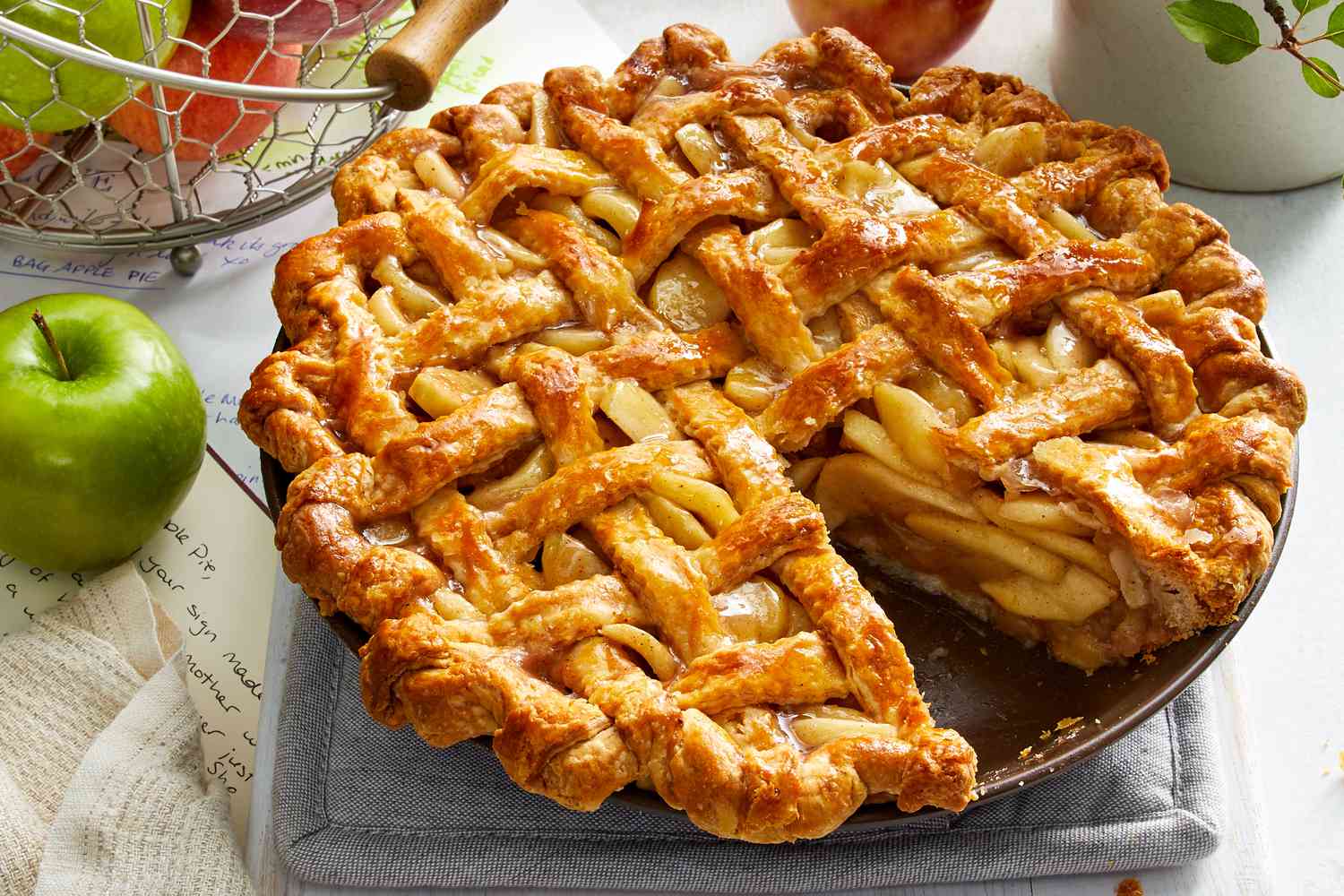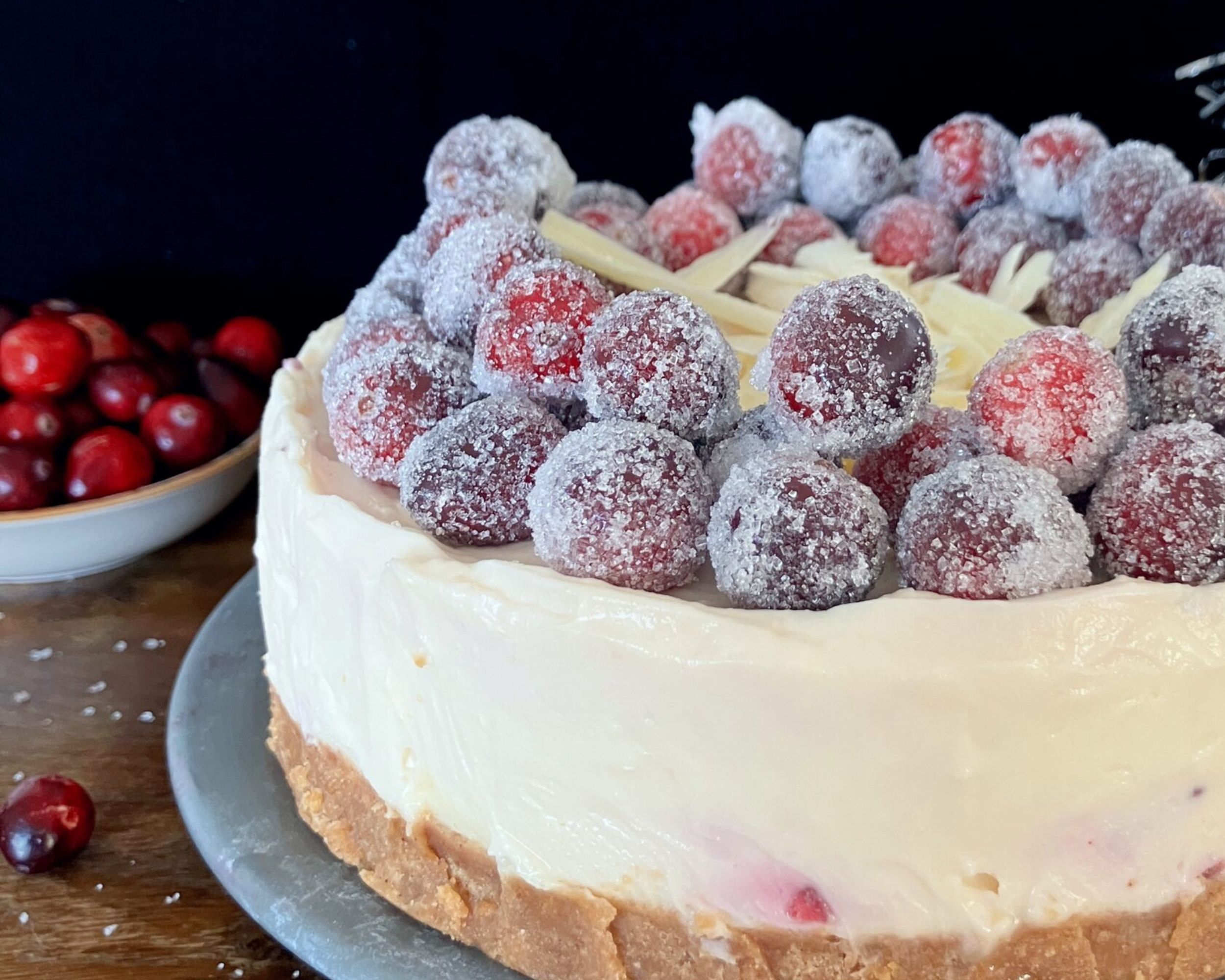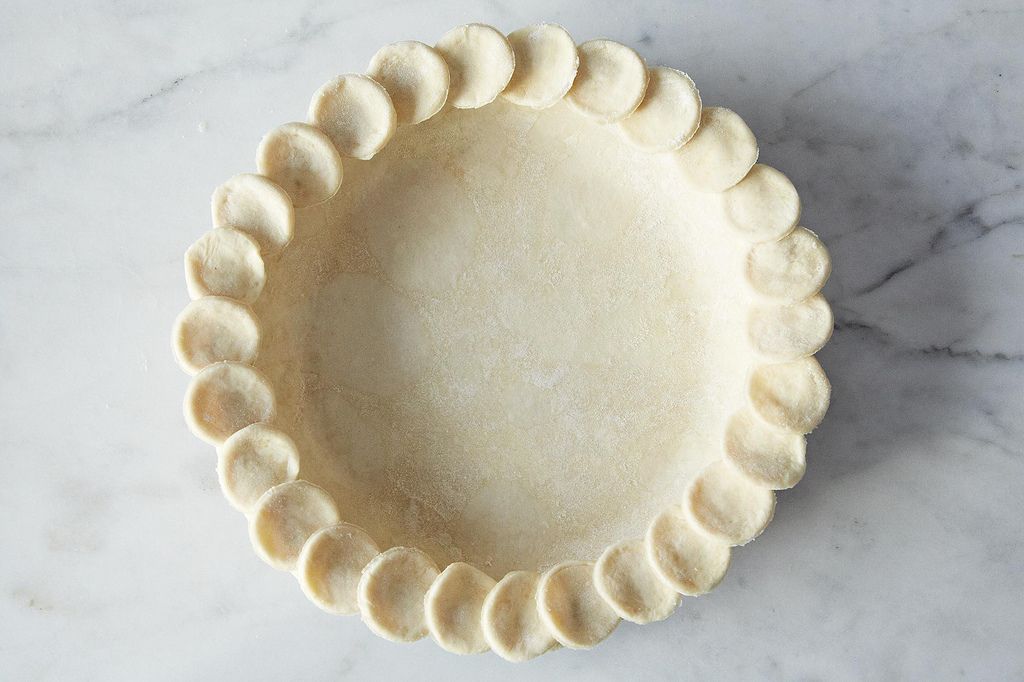
An all-butter pie crust tastes like, well, butter: clean, rich, and crisp in a way I personally never quite get from shortening-based crusts. The tradeoff is that butter melts quickly, so success is all about keeping it cold and not overworking the dough.
If you have ever had a crust shrink, slump, crack, or bake up tough, you are not alone. I taught pie crust to nervous students for years, and the fix is usually the same: bigger butter pieces, less handling, and enough chill time to let the gluten relax.
Why this recipe works
- Cold butter stays in distinct pieces. In the oven, those pieces melt and release steam, creating flaky layers.
- Just enough water brings the dough together. Too little and it cracks, too much and it gets sticky and tougher.
- Minimal mixing keeps gluten from developing. Less gluten equals more tenderness.
If your dough ever feels warm, soft, or shiny, pause and chill it. Pie crust is not about speed. It is about timing. Cold butter plus calm hands equals flaky layers.
Ingredient notes
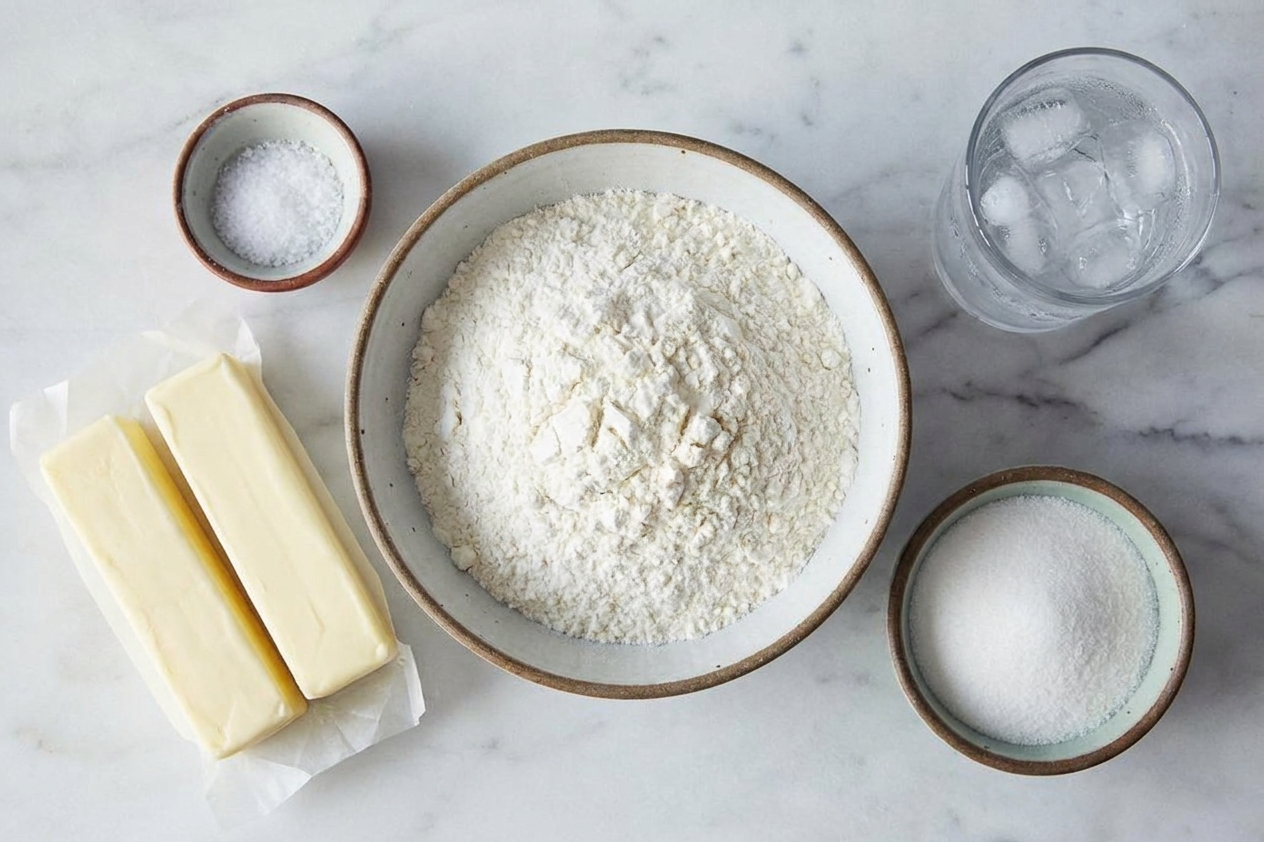
Flour: Use all-purpose flour. If you can, use the gram measurements; a kitchen scale removes a lot of guesswork, especially with flour.
Butter: Use unsalted butter and keep it very cold. Cut it into 1/2-inch cubes; you want a mix of pea-size pieces plus some bigger, flatter flakes in the dough.
Water: Use ice water and add it gradually. Too little liquid leads to cracking; too much makes the dough sticky and tougher.
Sugar (optional): Included for browning even in savory pies.
Vinegar or lemon juice (optional): Can help tenderness and counts toward the total liquid.
Equipment you will need
- Large bowl and pastry cutter (or your fingers)
- Bench scraper (nice for tidy, low-waste cleanup)
- Plastic wrap or a reusable wrap
- Rolling pin
- Food processor (optional method)
- Parchment paper (for blind baking)
- Pie weights, dried beans, or rice (for blind baking)
- Pie plate (glass or metal both work)
- Metal sheet pan (preheat for better bottom browning)
- Pie shield or foil (to protect the edge if it browns too fast)
Pro tips
- Start cold: Put the butter in the freezer for 10 minutes. If your kitchen runs warm, pop the mixing bowl in there too.
- Stop mixing early: The dough should look shaggy, not sandy. Overmixing makes crust tough.
- Dial in water slowly: Start with 3 tablespoons, then add 1 tablespoon at a time, and when close, fine-tune with 1 teaspoon at a time.
- Fraisage for extra flake: Smear small sections forward once with the heel of your hand, gather back up, and repeat only 2 to 3 times max. You are creating butter sheets, not kneading.
- Chill for structure: Chill the dough disk at least 1 hour (2 hours is even better). Chill the shaped crust 30 minutes before baking or blind baking.
- Roll smart: Roll from the center outward, rotate a quarter turn, and use minimal flour. Lift and rotate with a bench scraper instead of adding lots of flour.
- Prevent shrinkage: Do not stretch the dough to fit the pie plate. Lift and settle it into the corners so it fits naturally.
- Blind-bake insurance: Push weights up the sides to support the walls, and use visual cues over exact minutes since pie plates vary.
- Crisp bottoms: Brush a warm partially baked crust with beaten egg and bake 2 minutes more, and bake on a preheated metal sheet pan to jump-start bottom browning.
Substitutes that work
- Salted butter: You can use it. Salt levels vary by brand, so start by halving the added salt (use about 1/4 teaspoon), then adjust next time if you want it saltier.
- Vinegar or lemon juice: Either works, and it is optional.
- Blind-baking weights: Use pie weights, dried beans, or rice.
- Pie plate: Glass and metal both work. Glass helps you see browning on the bottom, while metal tends to brown a bit faster.
Variations
- Extra savory: Add 1/2 teaspoon black pepper or smoked paprika, or swap 2 tablespoons flour for finely grated Parmesan.
- Citrus: Rub 1 teaspoon lemon or orange zest into the sugar before mixing.
- Whole grain boost: Replace 1/4 cup (30 g) of the flour with whole wheat pastry flour. Add 1 extra teaspoon water if needed.
Scale note for any variation: If you can, use the gram measurements for best consistency.
Serving ideas
- Blind bake fully: Cream pies, no-bake fillings, pastry cream pies.
- Blind bake partially: Custard pies (pumpkin, chess) and quiche, especially if your oven runs cool.
- No blind bake: Most fruit pies that bake long enough to cook the crust through (use the preheated sheet pan trick for better bottoms).
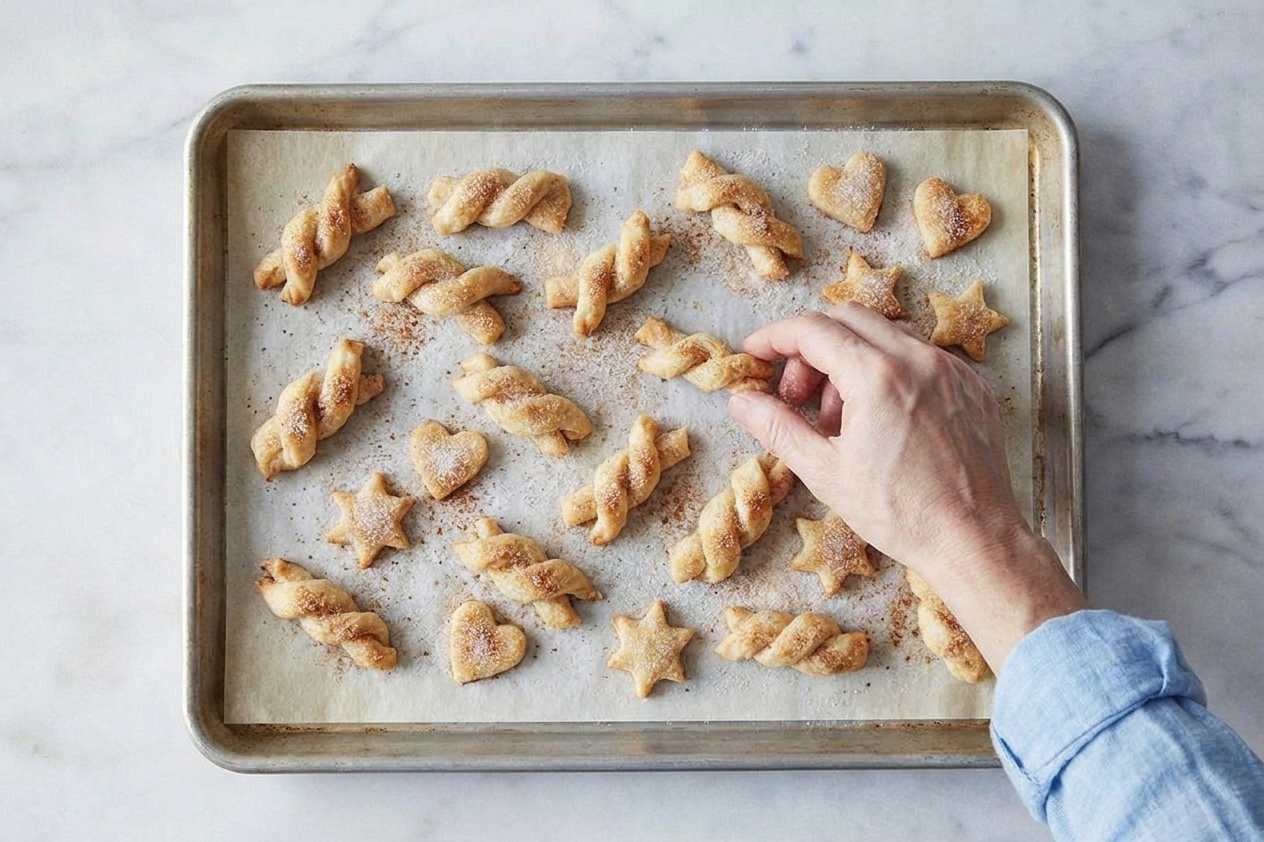
- Use leftover scraps: Toss with cinnamon sugar and bake at 350°F (175°C) until golden for quick little pie-crust cookies.
Storage and reheating
- Refrigerate: Dough disk keeps 3 days tightly wrapped.
- Freeze the dough disk: Up to 3 months. Thaw overnight in the fridge.
- Freeze a fitted crust: Fit dough into the pie plate, crimp, freeze until solid, then wrap well. Bake from frozen, adding a few minutes to blind bake times.
Common mistakes
- Crumbly dough: Add more ice water a little at a time, tossing between additions. Start with 1 tablespoon additions, and when it is almost there, fine-tune with 1 teaspoon. When you squeeze a handful, it should hold.
- Sticky dough: Wrap and chill it for 30 minutes. Sticky dough is usually warm dough. If it is still sticky after chilling, dust with a small amount of flour as you roll, and use a bench scraper to prevent sticking.
- Crust shrinkage: Stretching is the number one cause. Next time, lift and settle the dough into the corners. Also chill the shaped crust at least 30 minutes before baking, and consider a longer rest after mixing (2 hours is great if you have it).
- Cracking while rolling: Usually too cold or too dry. Let it sit 5 to 10 minutes, then roll again. Patch cracks by pressing a small scrap of dough over the area and rolling gently to blend.
- Tough crust: Overmixing and excess flour while rolling are common culprits. Stop mixing as soon as it holds together, and use minimal flour on the counter.
- Blind-bake bubbles: If you regularly get big bubbles, lightly dock the bottom with a fork, or skip docking if pie weights prevent bubbling for you.
FAQ
Can I use salted butter?
Yes. Salt levels vary by brand, so start by halving the added salt (use about 1/4 teaspoon), then adjust next time if you want it saltier.
Do I need vinegar or lemon juice?
No. It is optional. I like it because it can slightly limit gluten development and gives you a little insurance on tenderness, especially if you are new to pie crust.
What pie plate works best?
Glass and metal both work. Glass helps you see browning on the bottom, while metal tends to brown a bit faster. No matter what, a preheated sheet pan underneath makes a noticeable difference.
How do I know I added enough water?
Look for a dough that holds together when squeezed and has visible butter pieces. It should not feel wet. It should feel like damp sand that can form a ball when pressed.
All-Butter Pie Crust
This all-butter pie crust makes one 9-inch pie crust (single crust). It is rich, crisp, and flaky when you keep everything cold, use minimal mixing, and chill the dough to relax the gluten. For a double crust pie, double everything.
- Prep
- 20 minutes
- Cook
- 0 minutes
- Total
- 1 hour 20 minutes
- Yield
- 1 (9-inch) single crust
Ingredients
- 1 1/4 cups (150 g) all-purpose flour
- 1/2 teaspoon fine sea salt
- 1 teaspoon sugar (optional, but I like it for browning even in savory pies)
- 1/2 cup (113 g) unsalted butter, very cold, cut into 1/2-inch cubes
- 3 to 5 tablespoons ice water (start with 3)
- 1 teaspoon apple cider vinegar or lemon juice (optional, can help tenderness; it counts toward the total liquid)
Instructions
Chill first. Put the butter in the freezer for 10 minutes. If your kitchen runs warm, pop the mixing bowl in there too.
Mix the dry ingredients. In a large bowl, whisk flour, salt, and sugar (if using) until evenly combined.
Cut in the butter. Add cold butter cubes and toss to coat in flour. Use a pastry cutter (or pinch with fingertips) until you have a mix of pea-size pieces plus some bigger, flatter flakes. The dough should look shaggy, not sandy.
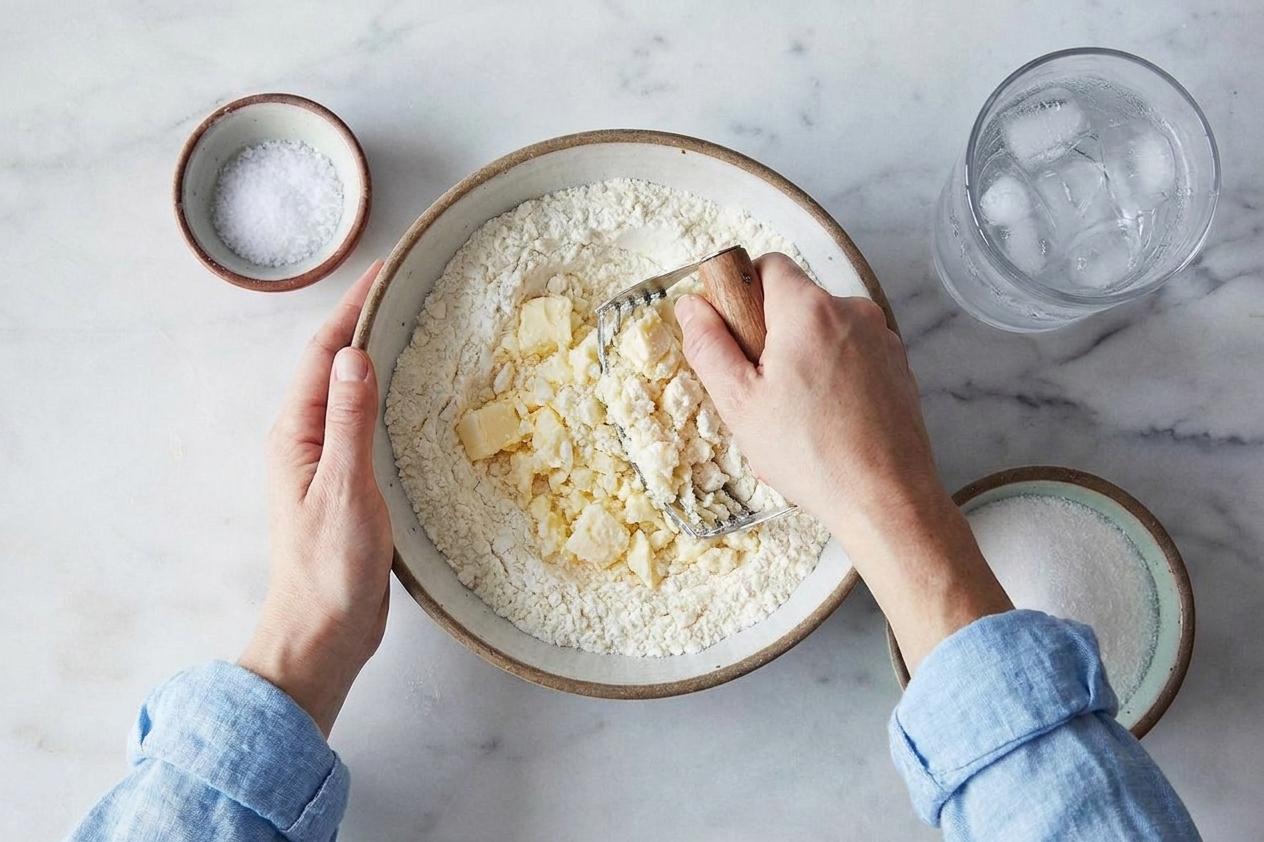
Add ice water gradually. Drizzle in 3 tablespoons ice water (and vinegar if using). Toss with a fork. Squeeze a handful. If it holds together with a few crumbly bits, you are done. If it falls apart, add more water 1 tablespoon at a time, and when you feel close, fine-tune with 1 teaspoon at a time.
Fraisage option (my favorite for extra flake). Dump the shaggy dough onto the counter. Using the heel of your hand, smear small sections forward once, then use a bench scraper to gather it back up. Do this 2 to 3 times max.
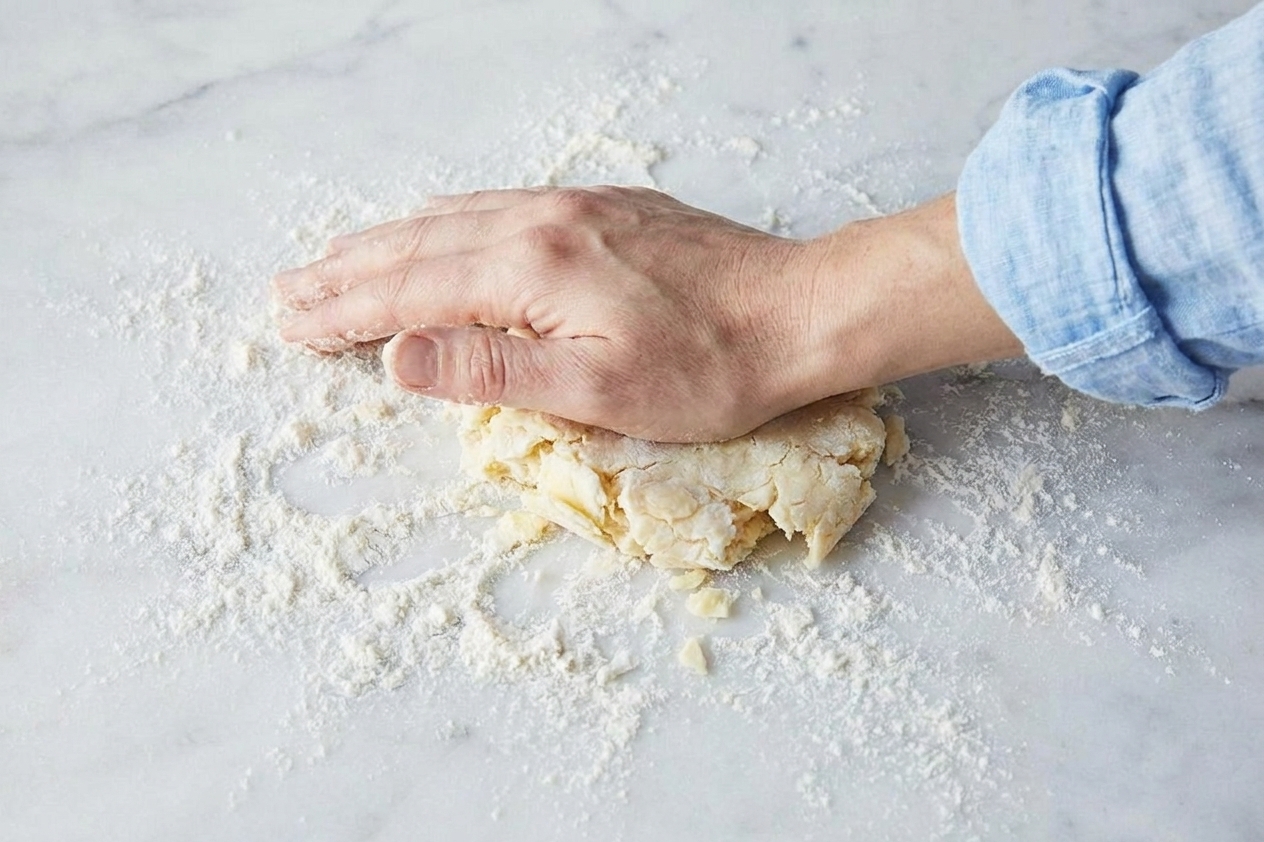
Form and chill. Press into a 1-inch-thick disk, wrap tightly, and chill for at least 1 hour (2 hours is even better).
Notes
Food processor option: Add flour, salt, and sugar to the processor and pulse 2 to 3 times. Add cold butter cubes and pulse 8 to 12 times, until you see pea-size pieces plus a few larger flakes. With the machine running, drizzle in 3 tablespoons ice water (plus vinegar if using). Stop as soon as the dough looks like damp crumbs that hold when pinched. If needed, add 1 tablespoon more and pulse once or twice. Turn out, press into a disk, wrap, and chill 1 to 2 hours.
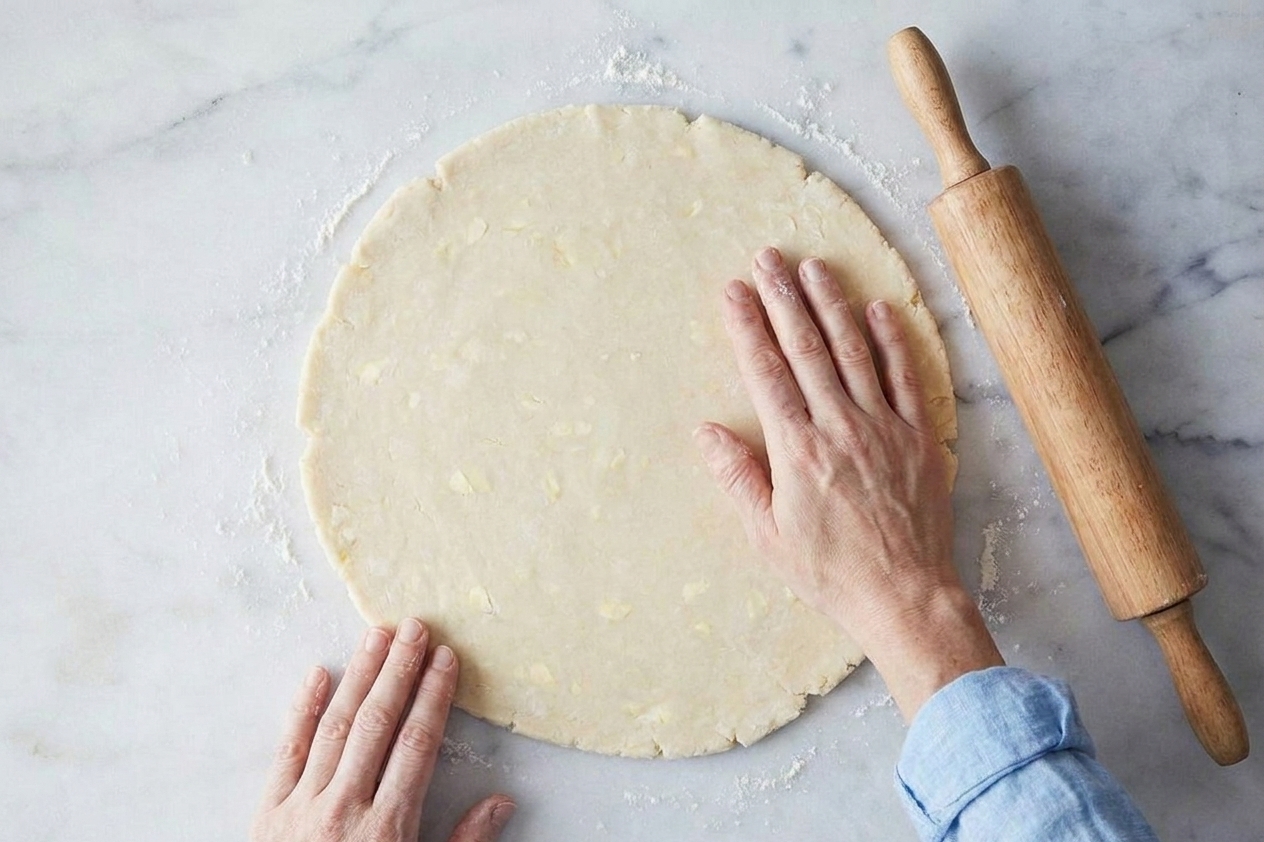
Rolling and fitting notes: Let the dough sit at room temp for 5 to 10 minutes if it is rock hard. Roll from the center outward and rotate a quarter turn. Roll to about 1/8 inch (about 3 mm) thick and roughly 12 inches wide for a standard 9-inch pie plate (aim for 1 to 1 1/2 inches of overhang), or closer to 13 inches for deep-dish. Transfer by folding into quarters or rolling around the pin, then unroll into the plate. Do not stretch it. Trim to a 1-inch overhang, fold under, and crimp. Chill the shaped crust 30 minutes before baking or blind baking.
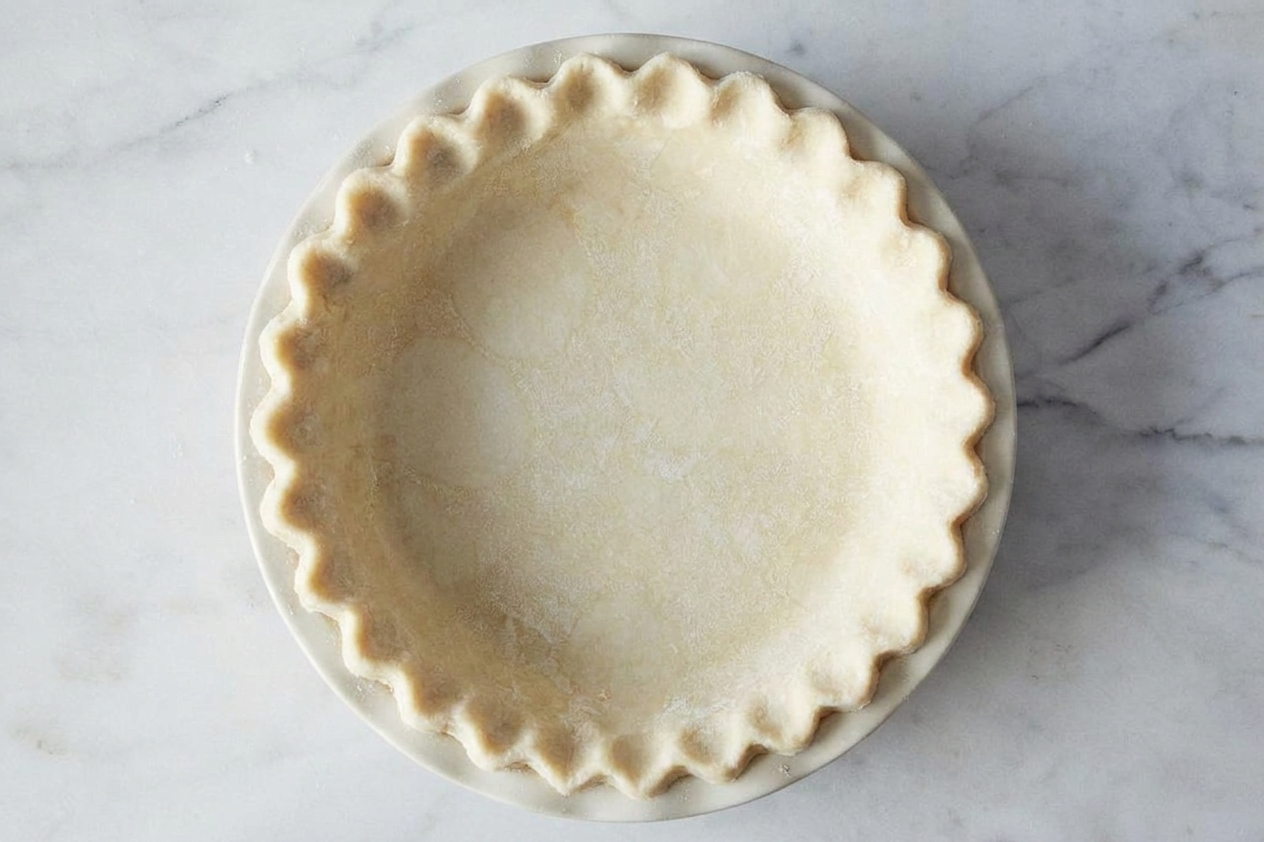
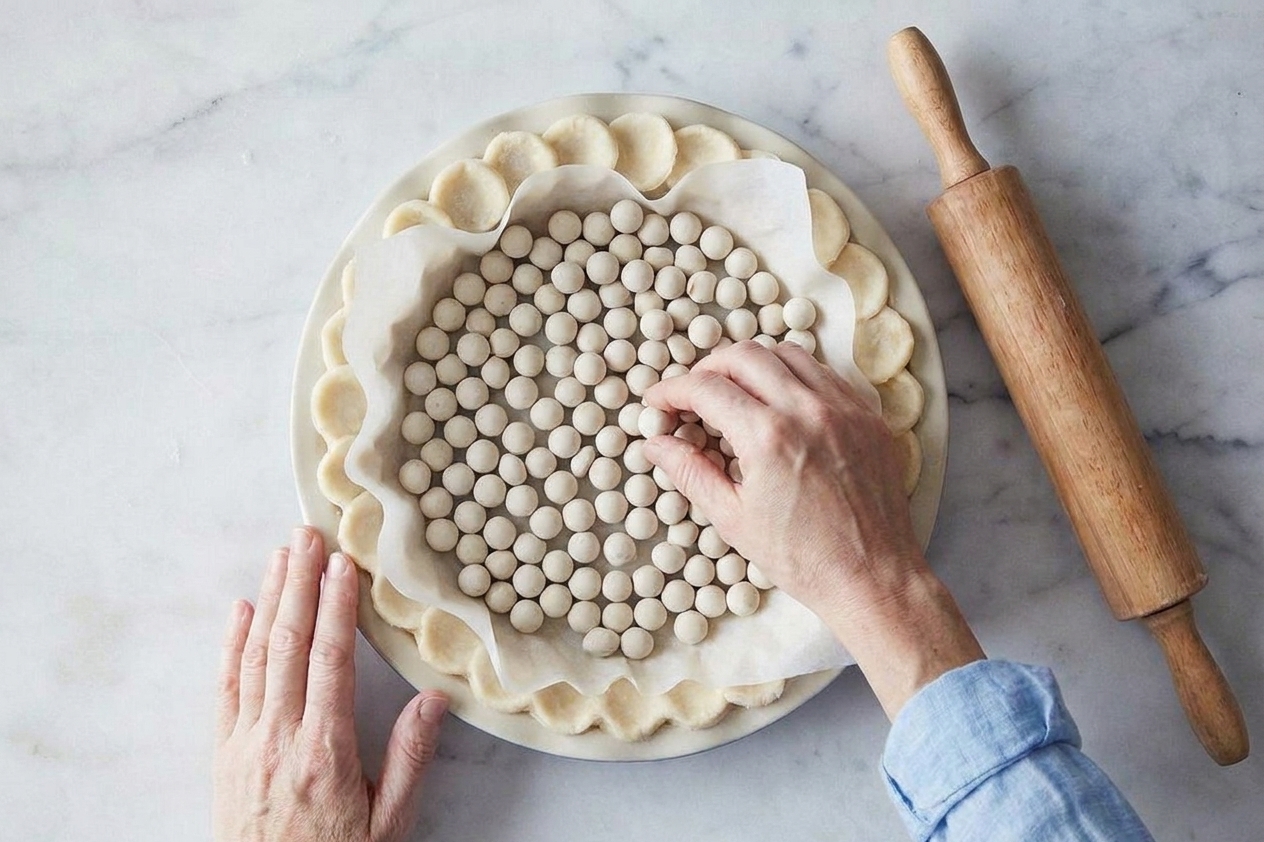
Blind baking notes: Line with parchment paper (let it overhang), fill with pie weights, dried beans, or rice, and push weights up the sides to support the walls. Bake at 400°F (205°C) for 15 to 18 minutes, until the edges look set and just barely turning blond. Lift out parchment and weights, then bake 5 to 10 minutes more until the bottom looks dry and matte with the first hints of color. Pie plate material and thickness change bake times, so trust the visual cues.
Extra insurance for crisp bottoms: Brush the warm partially baked crust with beaten egg, then bake 2 minutes more. Bake the pie plate on a preheated metal sheet pan to jump-start browning on the bottom.
Scale note: If you can, use the gram measurements.
Nutrition
- Calories: ~1220
- Fat: ~81 g
- Carbs: ~105 g
- Protein: ~15 g
- Fiber: ~4 g
- Sugar: ~4 g
- Sodium: ~1180 mg
Nutrition values are approximate and will vary with exact ingredient brands and how much ice water is used.