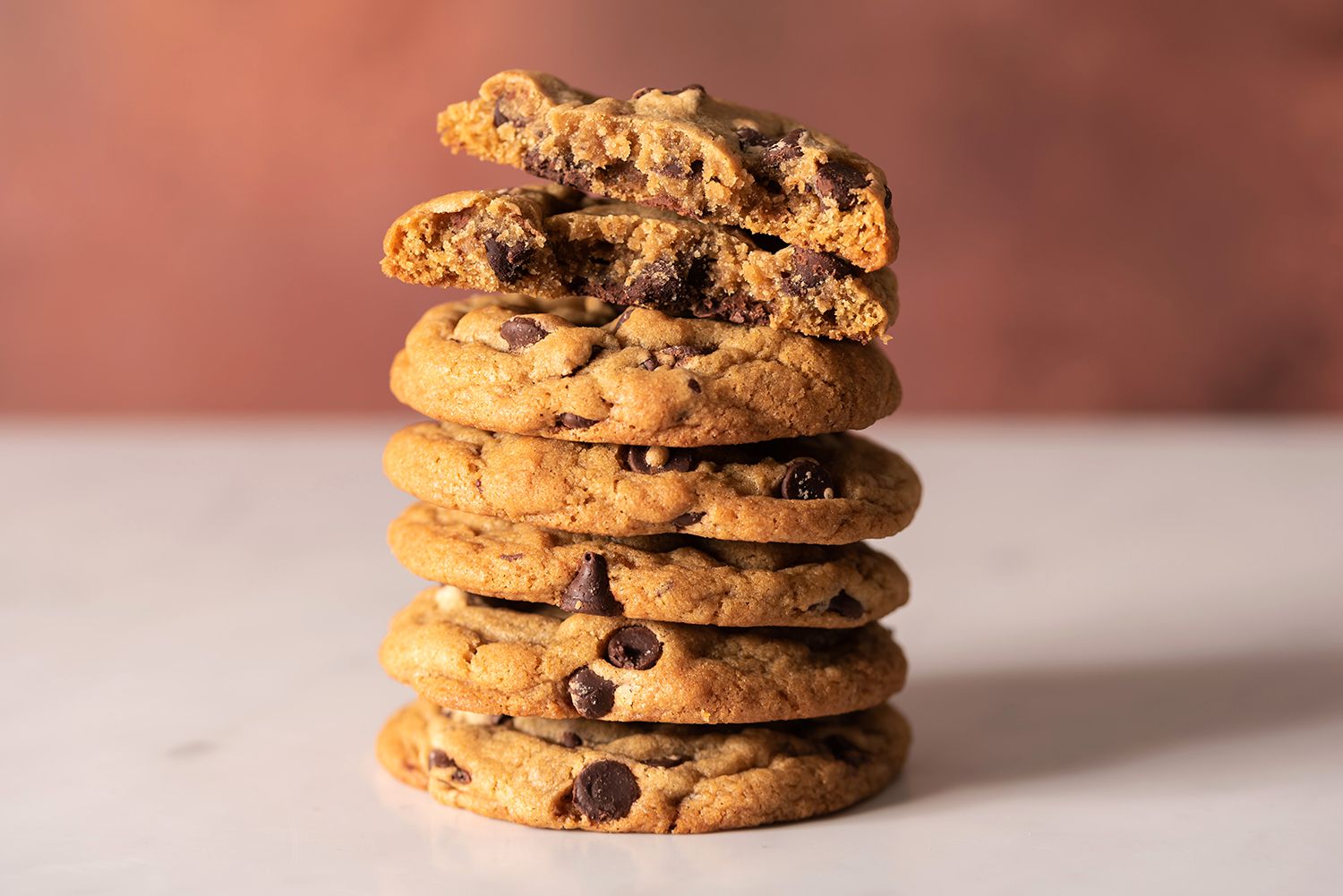
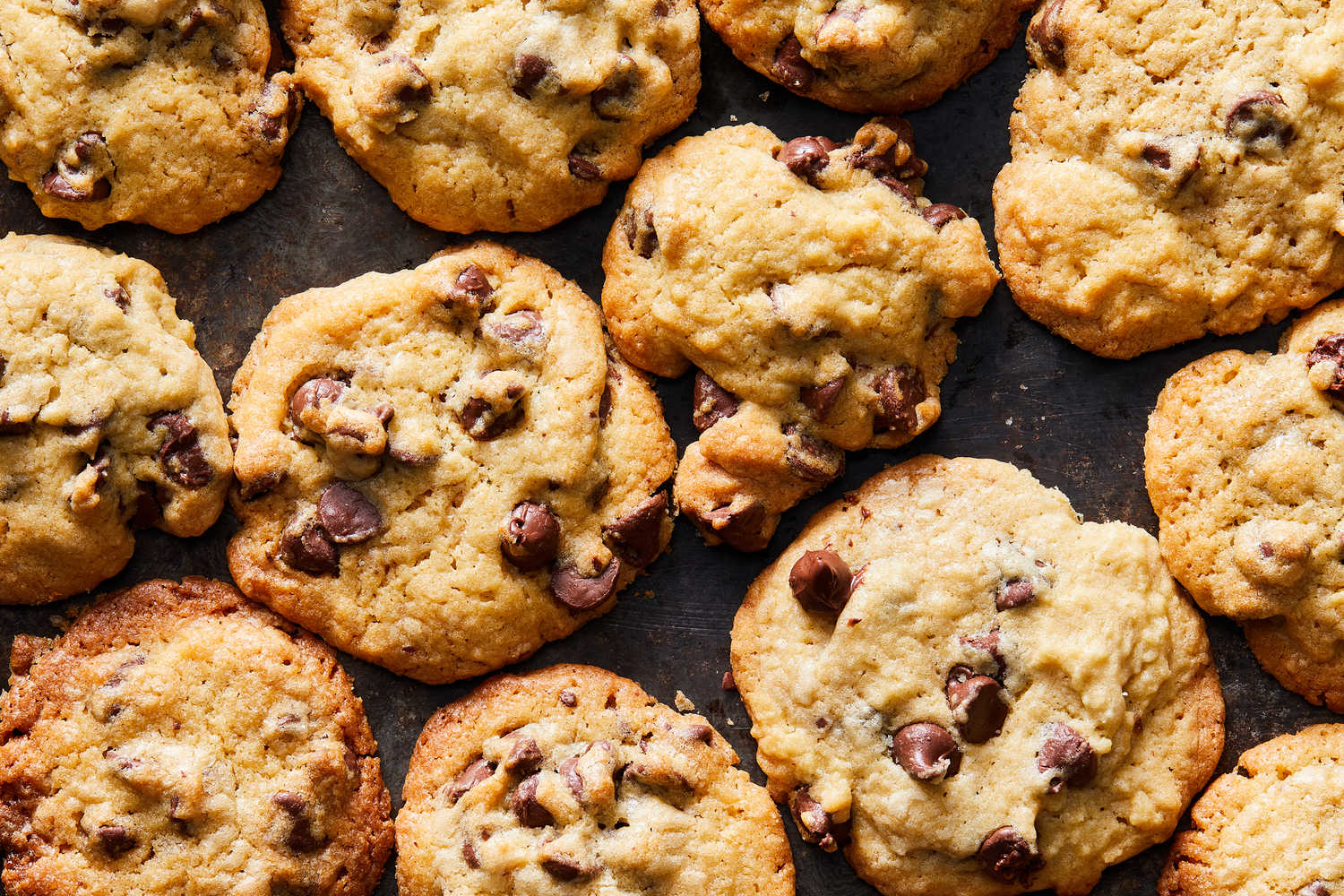
There is a special kind of comfort in having cookie dough ready to go. It is dessert insurance. It is a snack while you pack lunches. It is the quickest way to make your kitchen smell like everything is fine.
This guide gives you one excellent base dough, plus the small technique choices that make it taste like a bakery cookie rather than a sweet lump of butter and flour. I will also show you how to make a safer-to-eat version if your main goal is spooning it straight from the bowl.
Why this recipe works
Cookie dough is simple, but the roles are specific. When you understand them, you can improvise without wrecking texture.
- Butter: Flavor and spread. Melted butter makes chewier, more toffee-like cookies. Cool room temperature butter helps cookies stay thicker.
- Sugar: Granulated sugar helps cookies spread and crisp. Brown sugar adds chew and a caramel note because of molasses.
- Egg: Binds and adds moisture. An extra yolk boosts chewiness and richness.
- Flour: Structure. Too much flour makes dry, bready cookies. Too little makes greasy puddles.
- Salt: Turns sweetness into flavor. If your dough tastes flat, it usually needs salt, not more vanilla.
- Leavening: Baking soda helps spread and browning. Baking powder adds lift and a cakier vibe.
- Chocolate: Chips are classic, chopped bars melt into pockets. A mix gives you both tidy chips and gooey ribbons.
Ingredient notes
Butter: Cool room temperature butter helps cookies stay thicker. Melted butter makes chewier, more toffee-like cookies.
Sugar: Granulated sugar helps cookies spread and crisp. Brown sugar adds chew and caramel flavor.
Eggs: The base dough uses 1 whole egg plus 1 yolk for chewiness and richness. For eating raw, consider the egg-free swap in the substitutes section.
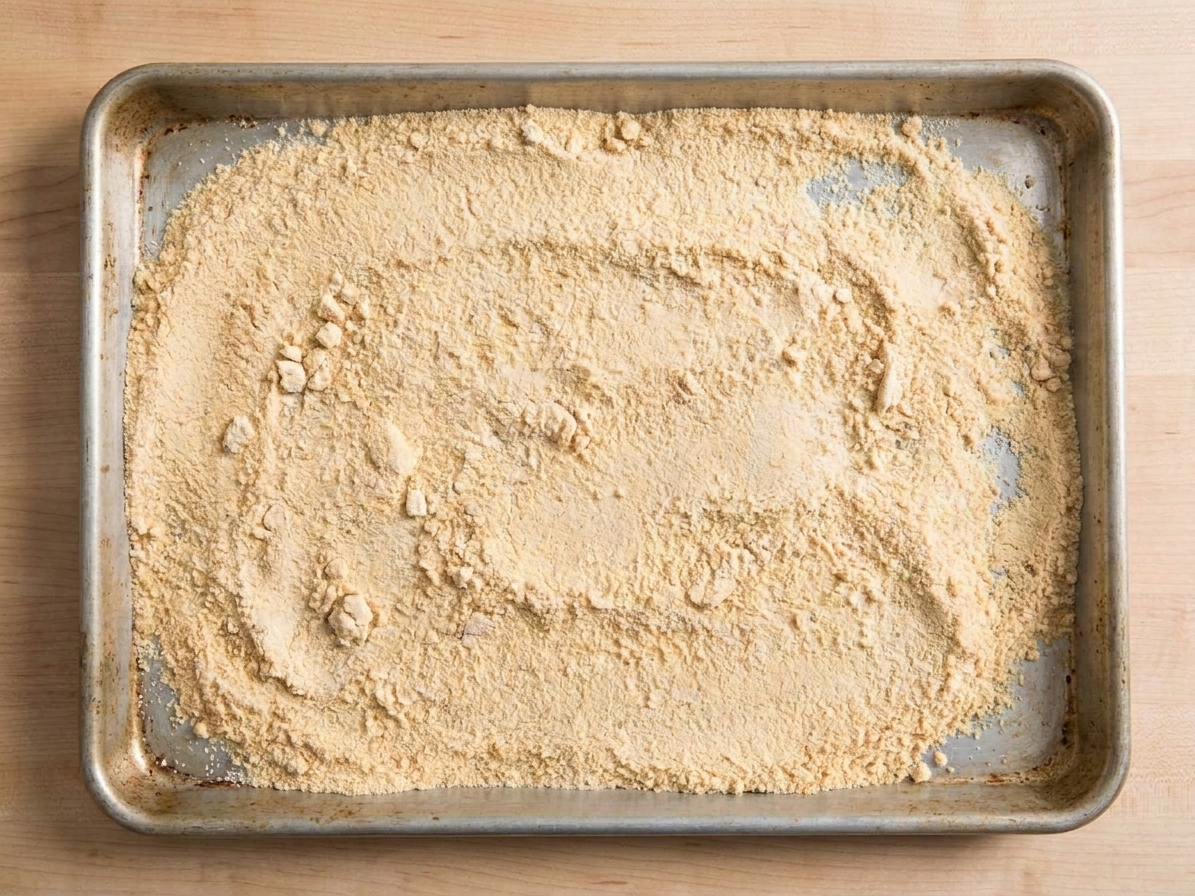
Flour (raw safety): If you want cookie dough primarily for eating raw, know that both raw flour and raw eggs can carry pathogens. For a safer-to-eat option, heat treat flour: spread flour on a rimmed sheet pan and bake at 300°F (150°C) for 8 to 10 minutes, stirring once halfway through. For best accuracy, check that the flour reaches 160°F (71°C) with an instant-read thermometer, then let it cool completely before using. Warm flour melts butter and makes greasy dough.
Chocolate: Chips give classic, tidy bites; chopped chocolate melts into pockets. A mix gives you both.
Nuts (optional): Toasted chopped walnuts or pecans add crunch and depth.
Equipment you will need
- Large mixing bowl
- Medium bowl (for whisking dry ingredients)
- Hand mixer or stand mixer (for creaming butter and sugars)
- Spatula (to finish mixing by hand)
- Sheet pans
- Parchment paper
- Cookie scoop (to portion dough)
- Wire rack (for cooling)
- Rimmed sheet pan (for heat-treating flour or freezing dough)
- Airtight container or zip-top bag (for storage/freezing)
- Instant-read thermometer (recommended for checking heat-treated flour reaches 160°F / 71°C)
Pro tips
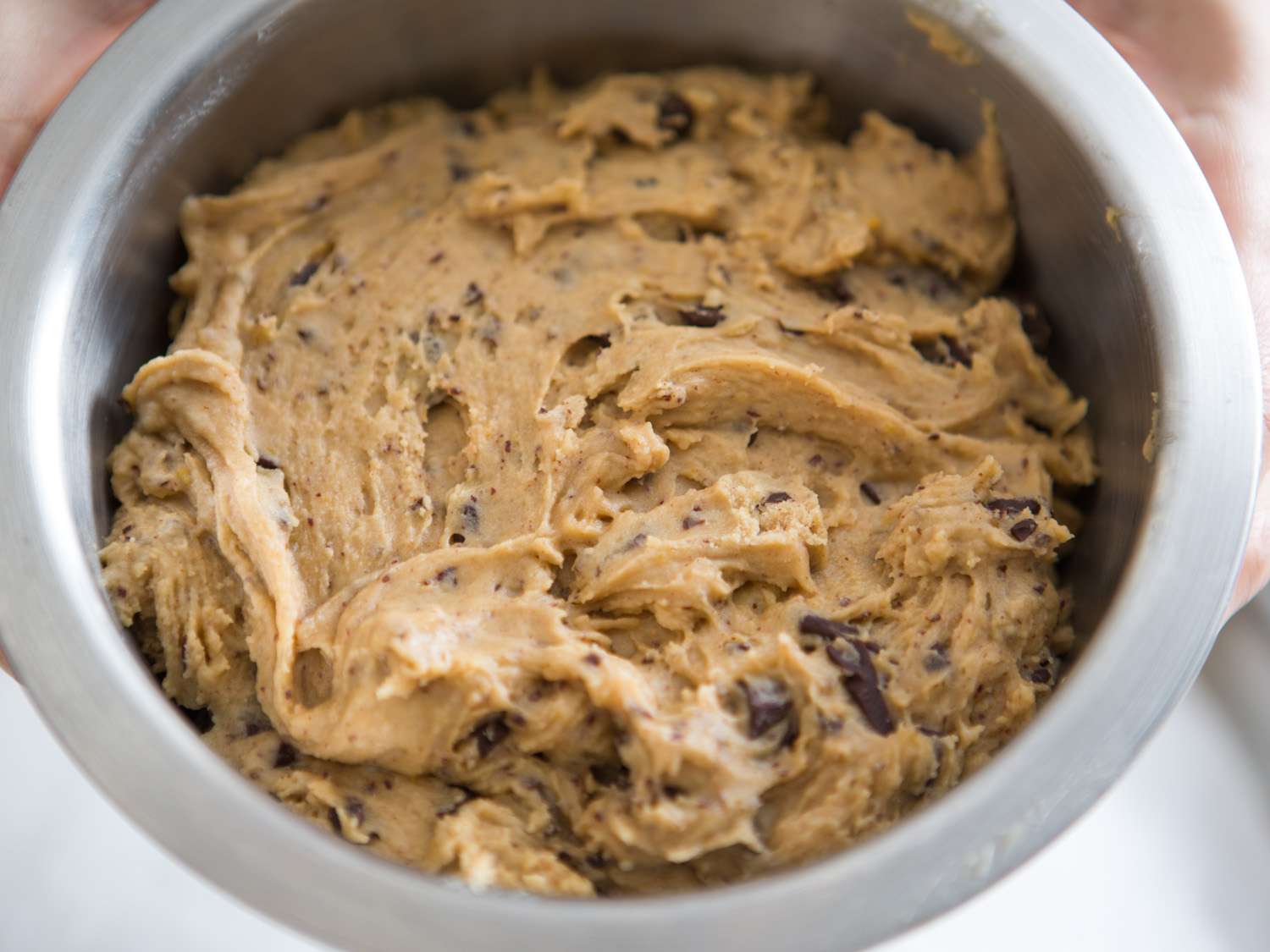
- Mixing: Cream butter and sugars until fluffy and slightly lighter in color (about 2 minutes). You are looking for a creamy texture, not greasy shine.
- Scrape the bowl: After adding egg, yolk, and vanilla, scrape the bowl once so nothing streaky hides on the sides.
- Don’t overmix: After adding flour, mix just until you see only a few floury patches, then finish by hand for the most tender cookies. After adding chocolate (and nuts), stop mixing the moment everything is evenly distributed. Overmixing makes cookies tougher.
- Chill for thickness: For thicker cookies, chill the scoops 30 minutes, or freeze 15 minutes before baking. You can also chill the dough at least 1 hour.
- Pan and oven tweaks: If you are using convection, reduce the oven temperature by 25°F (about 15°C) and start checking on the early end. For crispier edges, use a light-colored aluminum sheet pan (dark pans overbrown too fast).
- Pull cookies a little early for chew: Bake until edges are set and lightly golden but centers still look soft and a little underdone. Residual heat finishes the job.
Substitutes that work
Edible dough swap (no egg)
For the recipe below, replace the whole egg and yolk with 3 to 4 tablespoons milk (dairy or unsweetened oat) plus 1 extra tablespoon softened butter. Add the milk gradually. You want a thick, scoopable dough that holds its shape. Brand of flour and humidity can shift the exact amount, so let the dough tell you when it is right.
Important: This swap is designed for eating raw, not as a 1 to 1 baking substitute. Egg-free edible dough can spread differently and bake up drier. If you want dough that is great both ways, make the standard dough and bake it. If you want a spoonable treat, make the edible version and keep it refrigerated.
Dairy-free option
Use a plant-based butter that is designed for baking (not whipped spread). Add 1/4 teaspoon extra salt if the butter is unsalted. Expect slightly more spread, so chilling helps.
Brown sugar substitute
You can use all granulated sugar, but you will lose chew and caramel flavor. If you have molasses, you can DIY light brown sugar by mixing 1 cup granulated sugar + 1 tablespoon molasses.
Pasteurized eggs
For raw cookie dough concerns, use pasteurized eggs if you have them, or skip eggs entirely for edible dough. If you are serving kids, pregnant people, older people, or anyone immunocompromised, avoid raw egg entirely.
Variations
Texture tweaks
For thicker cookies
- Chill the dough at least 1 hour, or scoop and freeze 15 minutes before baking.
- Use cool room temperature butter, not super soft butter.
- Add 2 tablespoons flour if your kitchen is warm and your dough feels very soft.
For chewier cookies
- Use more brown sugar than white sugar (try 1 cup brown sugar and 1/2 cup white).
- Add an extra egg yolk.
- Pull cookies when the centers still look underbaked. Residual heat finishes the job.
For crispier edges
- Use more granulated sugar (try 1 cup white sugar and 1/2 cup brown).
- Bake 1 to 2 minutes longer, just until the edge is a deeper golden brown.
- Use a light-colored aluminum sheet pan. Dark pans overbrown too fast.
Flavor upgrades
- Brown the butter: Brown 1 cup butter, then cool until opaque and softly solid (not liquid), and proceed. Browned butter loses some water, so if the dough seems a little dry or crumbly, add 1 to 2 tablespoons milk, a teaspoon at a time, until it turns scoopable again.
- Espresso powder: Add 1 to 2 teaspoons to the flour. It makes chocolate taste more chocolatey, not like coffee.
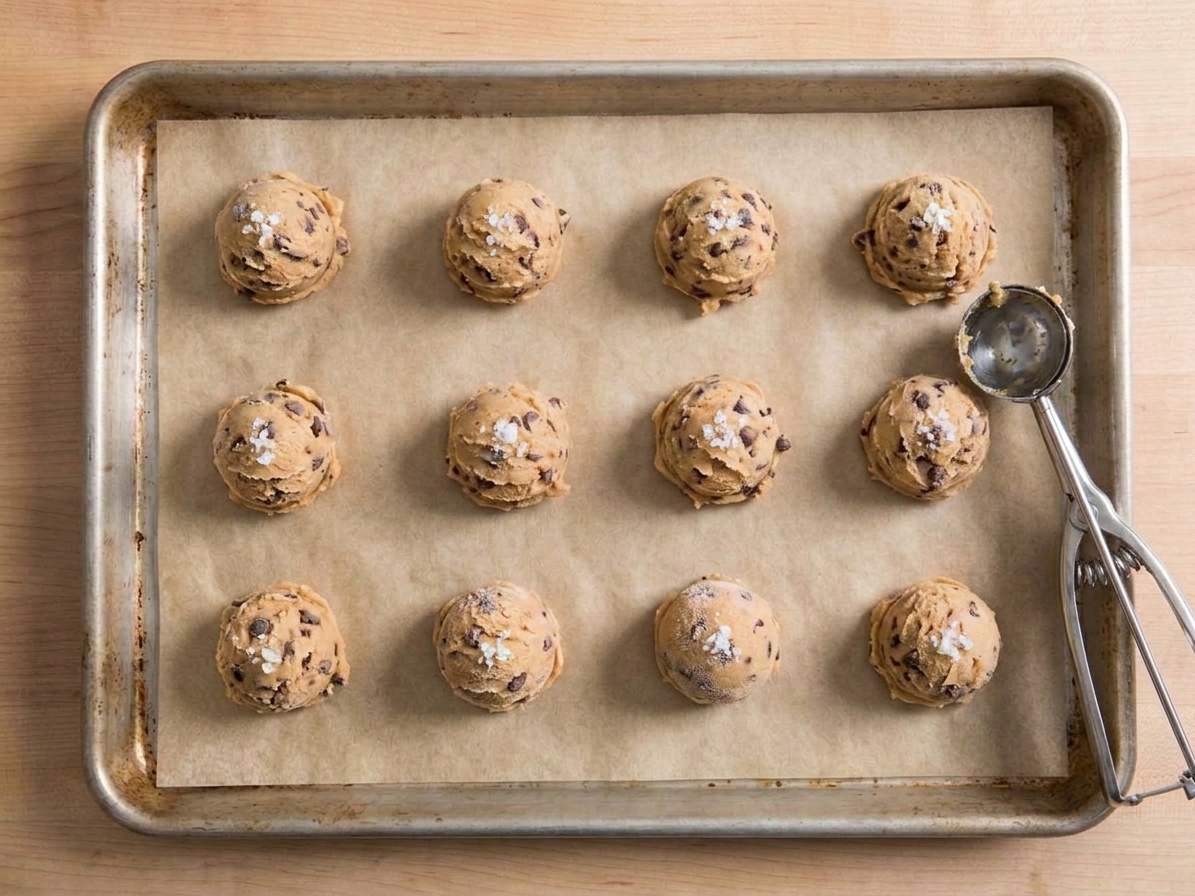
- Better salt moments: Add a pinch of flaky salt to each scoop right before baking.
- Chocolate mix: Use half chips and half chopped dark chocolate for puddles and clean bites.
Serving ideas
- Bake right away for warm cookies that are done in about 12 minutes.
- Keep scoops of dough in the freezer so you can bake a few at a time whenever you want fresh cookies.
- For extra punch, add a pinch of flaky salt to each scoop right before baking.
Storage and reheating
Refrigerator
Standard dough with egg keeps up to 3 days in an airtight container.
Egg-free edible dough often keeps 4 to 7 days refrigerated. It is still perishable, especially since it contains butter and usually milk, so keep it cold and use your senses. If it smells off or looks weepy or separated, toss it.
Freezer
Dough keeps 2 to 3 months frozen.
How to freeze
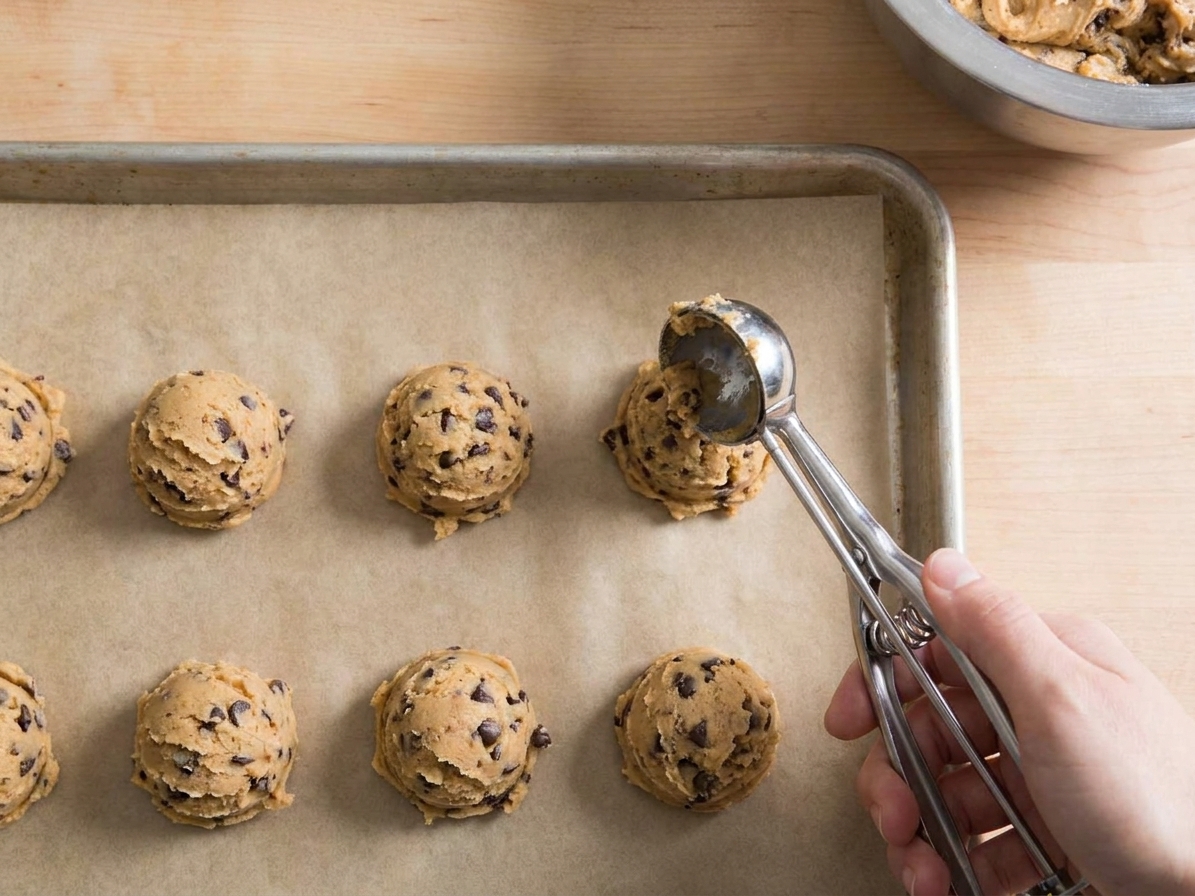
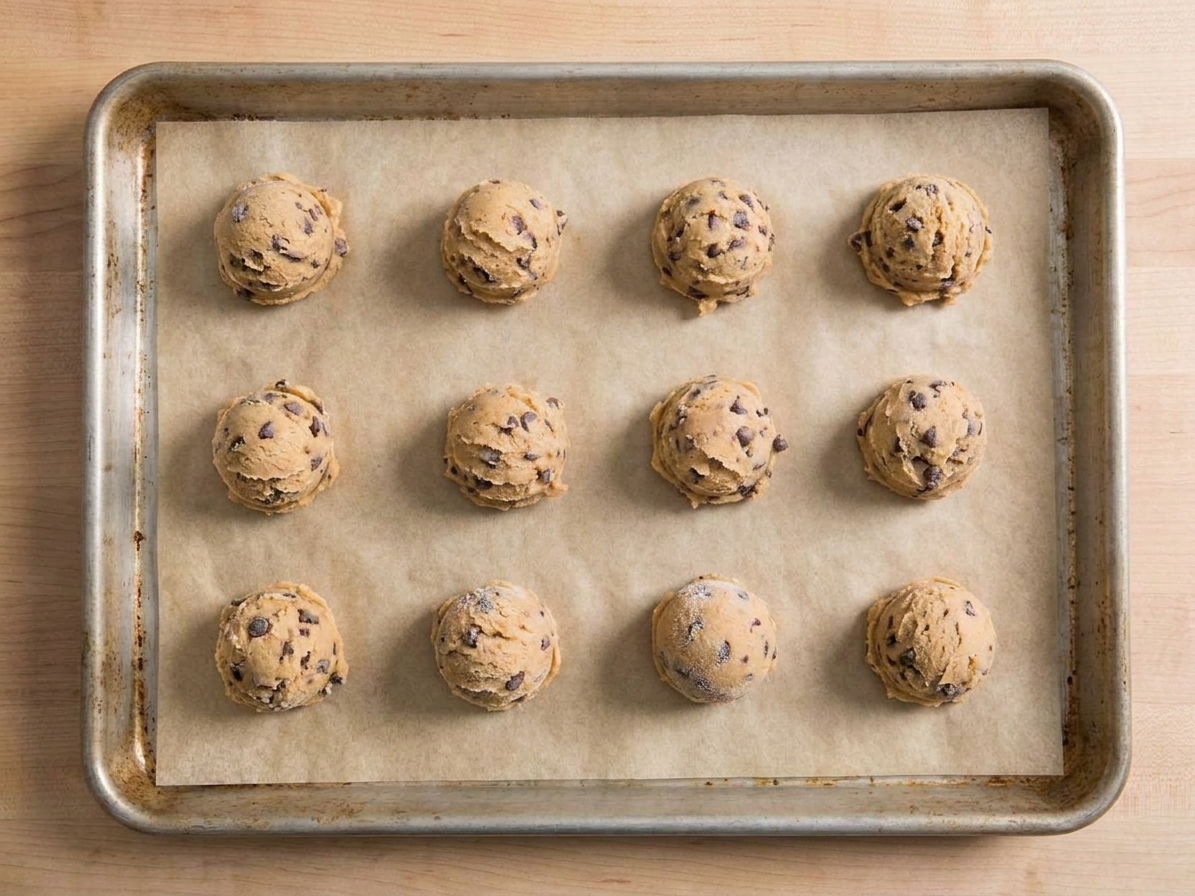
- Scoop the dough onto a parchment-lined sheet pan.
- Freeze until firm, 45 to 60 minutes.
- Transfer to a zip-top bag or airtight container. Press out extra air.
- Label with the date and bake temperature.
How to bake from frozen
Bake straight from frozen at 350°F (175°C). Add 1 to 3 minutes to the bake time. If cookies are browning too quickly before the centers set, lower the oven to 340°F (170°C) and bake a minute longer.
Common mistakes
Dough is too sticky to scoop
- Fix: Chill 30 to 60 minutes. Sticky dough is often just warm butter.
- If it is still sticky: Mix in 1 to 2 tablespoons flour.
Dough is dry and crumbly
- Fix: Add 1 tablespoon milk at a time until it comes together.
- Next time: Weigh flour if you can. Scooping flour with a cup can pack in extra.
Cookies spread too much
- Fix: Chill the dough, and make sure your baking sheet is cool before the next batch.
- Next time: Check that your baking soda is fresh. Also, do not cream butter and sugar until greasy and shiny.
Cookies are puffy and cakey
- Fix: Flatten scoops slightly before baking.
- Next time: Reduce flour by 2 tablespoons, or use only baking soda (skip baking powder if you were adding it).
FAQ
How long does cookie dough last in the fridge?
For standard dough with egg, keep it up to 3 days in an airtight container. For egg-free edible dough, it often keeps 4 to 7 days refrigerated. It is still perishable, especially since it contains butter and usually milk, so keep it cold and use your senses. If it smells off or looks weepy or separated, toss it.
Can I freeze cookie dough with eggs in it?
Yes. Freezing raw cookie dough is very common. Freeze scoops for easiest baking later.
Can I make cookie dough without brown sugar?
You can, but you will lose chew and caramel flavor. In a pinch, use all granulated sugar. If you have molasses, you can DIY brown sugar by mixing 1 cup granulated sugar + 1 tablespoon molasses (for light brown).
Can I make it dairy-free?
Yes. Use a plant-based butter that is designed for baking (not whipped spread). Add 1/4 teaspoon extra salt if the butter is unsalted. Expect slightly more spread, so chilling helps.
Why does my dough taste bland?
Nine times out of ten: not enough salt, or you used unsalted butter but forgot to add salt. Add a pinch, mix, taste again. Vanilla helps too, but salt is the volume knob.
Chocolate Chip Cookie Dough
This is a go-to base chocolate chip cookie dough: balanced, reliably scoopable, and it freezes beautifully. Makes about 24 to 28 cookies (2-tablespoon scoops).
- Prep
- 20 minutes
- Cook
- 10 to 12 minutes
- Total
- 35 minutes
- Yield
- Makes about 24 to 28 cookies
Ingredients
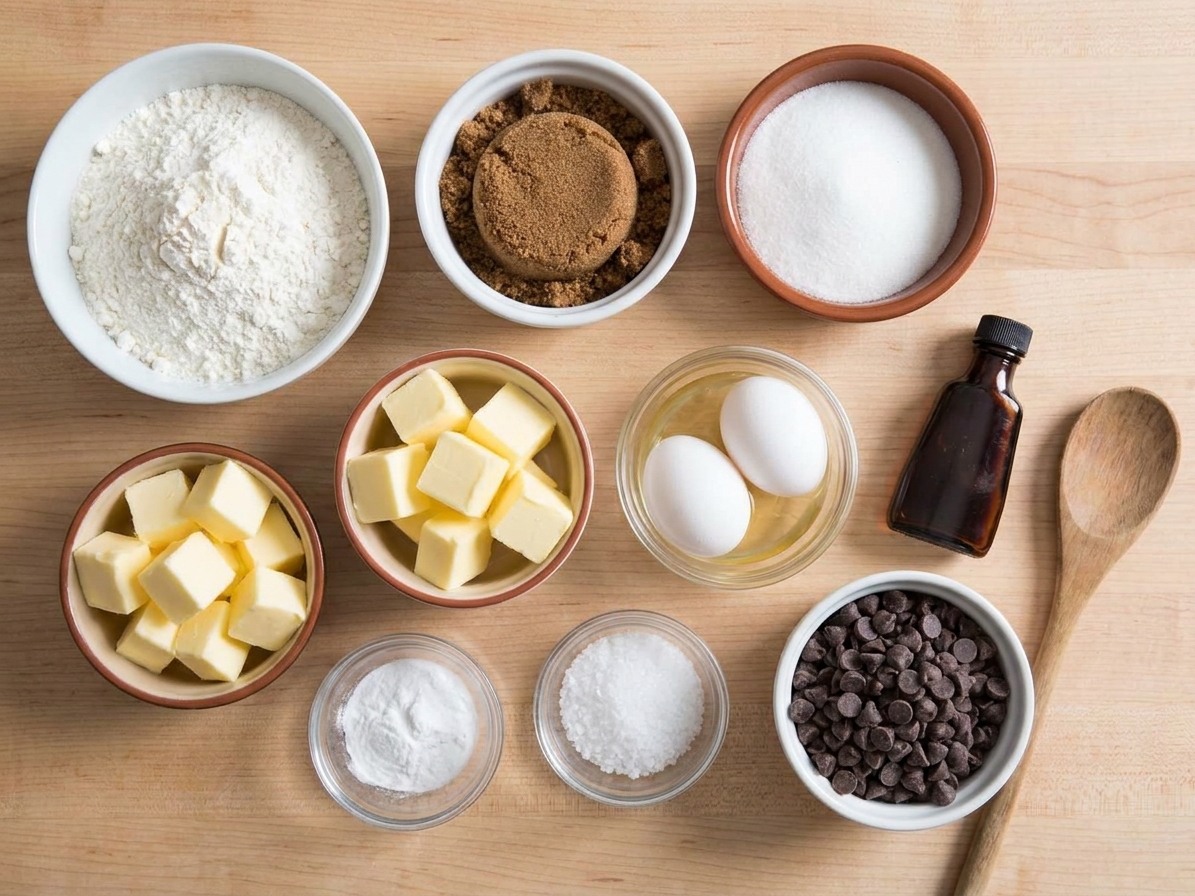
- 2 1/4 cups (270 g) all-purpose flour
- 1 tsp baking soda
- 3/4 tsp kosher salt (or 1/2 tsp fine salt)
- 1 cup (226 g) unsalted butter, at cool room temperature
- 3/4 cup (150 g) granulated sugar
- 3/4 cup (165 g) packed light brown sugar
- 1 large egg, at room temperature
- 1 large egg yolk, at room temperature
- 2 tsp vanilla extract
- 1 1/2 to 2 cups (255 to 340 g) chocolate chips or chopped chocolate
- Optional: 1 cup (100 g) toasted chopped walnuts or pecans
Instructions
- Prep. If baking right away, heat oven to 350°F (175°C). Line 2 sheet pans with parchment. If you are freezing, clear space in the freezer for a tray. If you are using convection, reduce the oven temperature by 25°F (about 15°C) and start checking on the early end.
- Whisk dry ingredients. In a medium bowl, whisk flour, baking soda, and salt until evenly combined.
- Cream butter and sugars. In a large bowl, beat butter, granulated sugar, and brown sugar until fluffy and slightly lighter in color, about 2 minutes. You are looking for a creamy texture, not greasy shine.
- Add egg, yolk, and vanilla. Beat in the egg and yolk until smooth, then mix in vanilla. Scrape the bowl once so nothing streaky hides on the sides.
- Mix in dry ingredients. Add the flour mixture and mix on low just until you see only a few floury patches. For the most tender cookies, switch to a spatula and finish mixing by hand.
- Add chocolate. Fold in chocolate chips and any nuts. Stop mixing the moment everything is evenly distributed. Overmixing makes cookies tougher.
- Scoop. Scoop 2-tablespoon portions, aiming for about 35 g each. For thicker cookies, chill the scoops 30 minutes, or freeze 15 minutes.
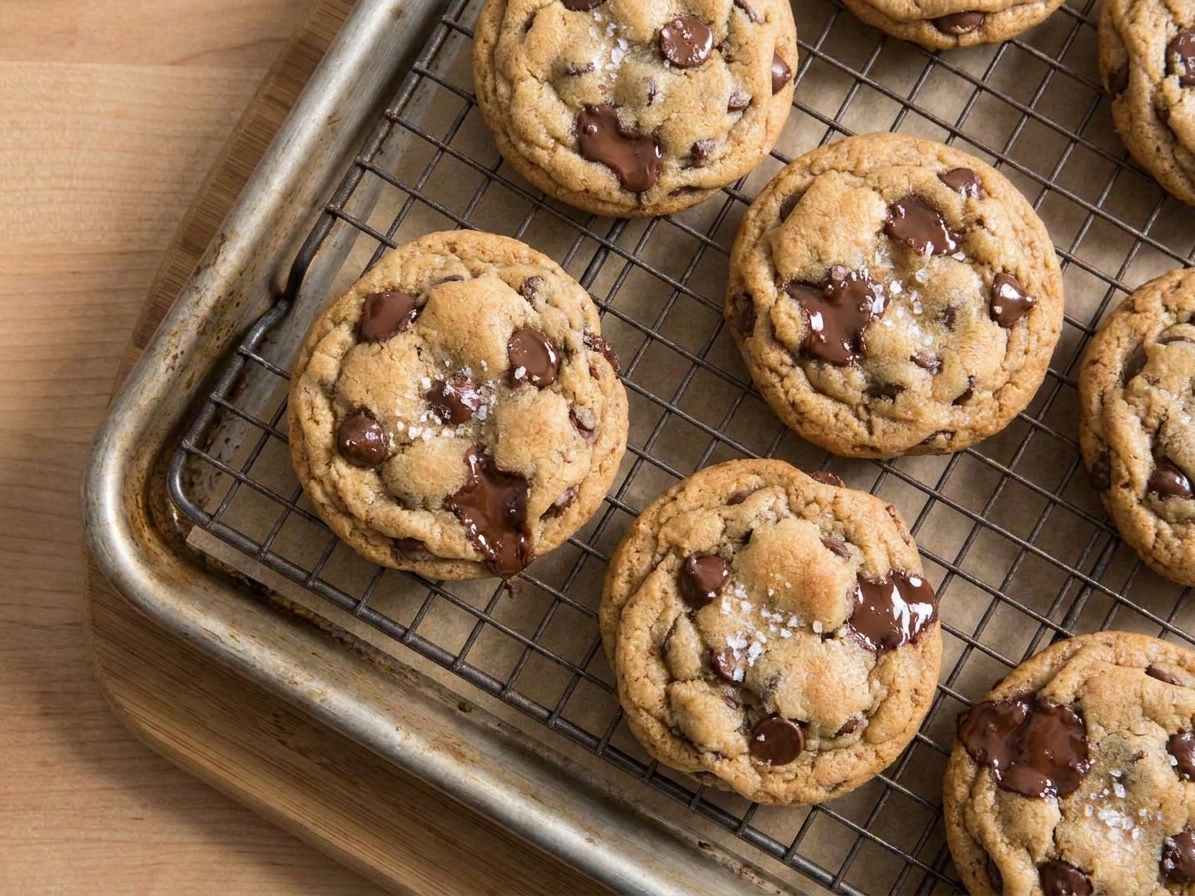
- Bake. Bake 10 to 12 minutes, until edges are set and lightly golden but centers still look soft and a little underdone. Cool on the pan 5 minutes, then move to a rack.
Notes
Yield and storage: Makes about 24 to 28 cookies (2-tablespoon scoops). Dough keeps 3 days refrigerated, or 2 to 3 months frozen.
Baking from frozen: Bake straight from frozen at 350°F (175°C) and add 1 to 3 minutes. If cookies brown too quickly before centers set, lower the oven to 340°F (170°C) and bake a minute longer.
Friend at the stove note: Cookie dough does not need to be precious. If you are short on time, scoop and freeze the dough right away. If you are chasing the perfect texture, chill it. Either way, you are 12 minutes away from warm cookies.
Nutrition
- Calories: 205
- Fat: 10 g
- Carbs: 26 g
- Protein: 2 g
- Fiber: 1 g
- Sugar: 15 g
- Sodium: 140 mg
Nutrition values are approximate and will vary based on chocolate amount (1 1/2 to 2 cups) and optional nuts.