
When I want a dinner that feels like it’s giving me a hug and also uses up the odds and ends in my crisper drawer, I make a big pot of hearty vegetable soup. It’s the kind of recipe that rewards you for being organized, but also forgives you when you’re not. You can swap vegetables, change the beans, and adjust the texture from brothy to stew-like just by simmering a little longer.
Below is my go-to template, plus the little restaurant tricks that make it taste rich and deeply savory without needing meat or hours of prep.
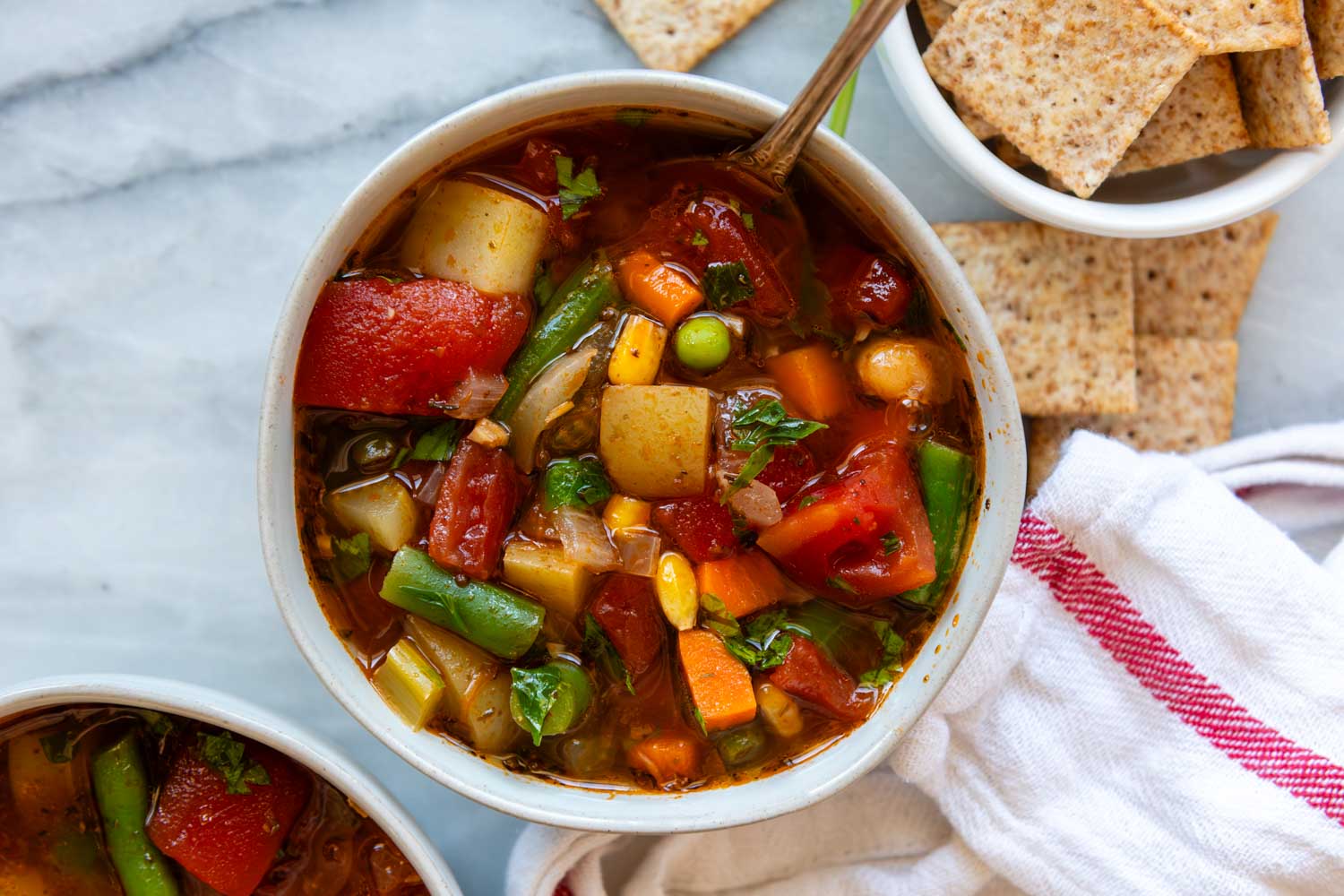
Why this recipe works
Hearty vegetable soup is really just vegetable soup with a few intentional choices:
- A strong aromatic base: onion, carrot, celery, and garlic build sweetness and depth.
- Body: potatoes, beans, lentils, barley, or pasta make it feel like a meal.
- Umami: tomato paste, mushrooms, miso, soy sauce, Parmesan rind, or smoked paprika add that savory backbone.
- A bright finish: lemon juice or vinegar at the end keeps the flavors awake.
Ingredient notes
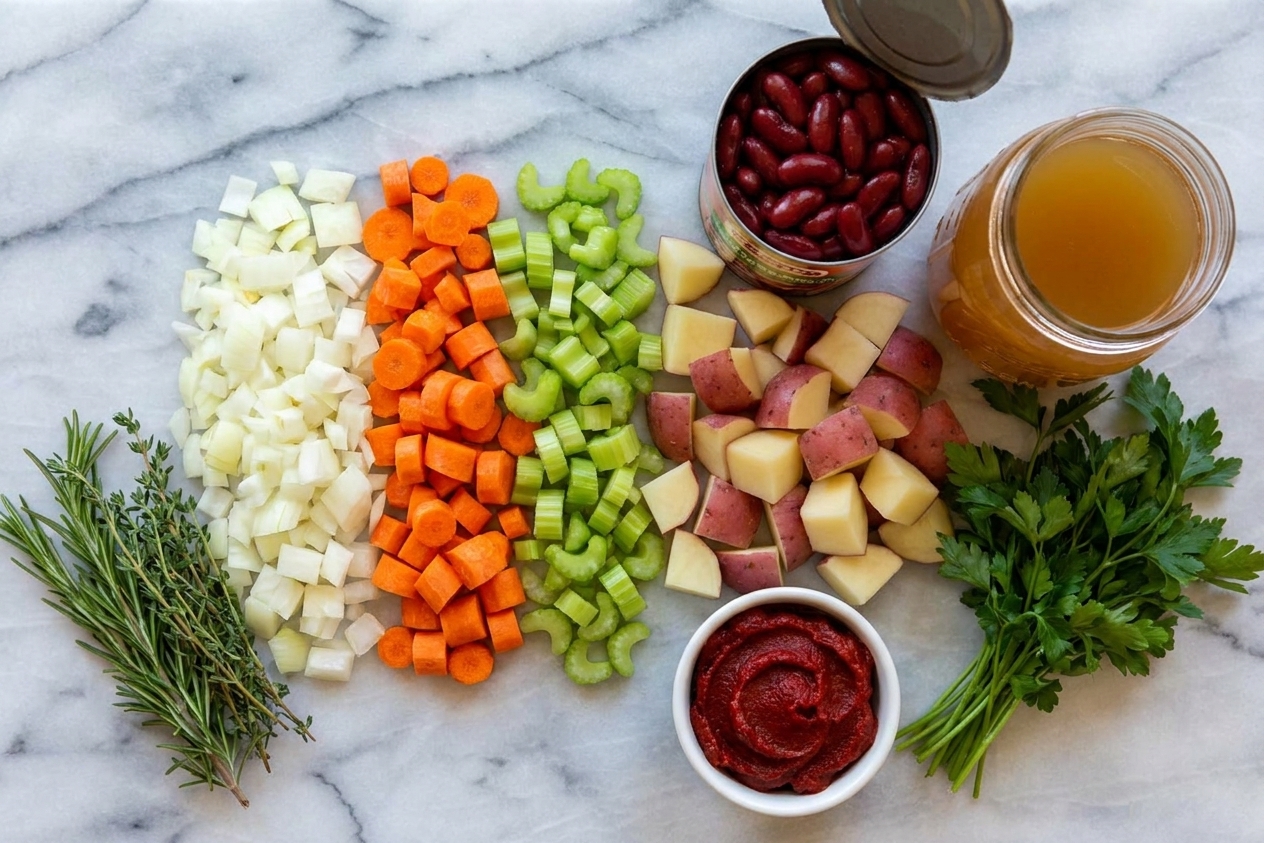
This soup is built from a few core components you can mix and match.
- Aromatics: onion, carrot, celery, and garlic form the base.
- Tomato paste: cooking it briefly in the pot makes it taste sweet and jammy instead of raw or metallic.
- Beans: cannellini beans or chickpeas are the weeknight go-to, but other beans work well too.
- Greens: cabbage or kale hold up to simmering; spinach is best added at the very end and only needs 1 to 2 minutes.
- Acid: lemon juice or red wine vinegar added off heat keeps the finish bright.
- Umami boosters (optional): pick one, such as white miso, soy sauce, a Parmesan rind, or mushrooms sautéed with the onion.
Equipment you will need
- Large Dutch oven or soup pot
- Stirring spoon
- Knife and cutting board
- Can opener
- Measuring spoons and measuring cup
- Optional: blender (to blend 2 cups of soup for thickening)
- Optional: skillet (if using the slow cooker method for sautéing first)
Pro tips
- Cook the tomato paste. Raw tomato paste tastes metallic. Two minutes in the pot turns it sweet and jammy.
- Salt in layers. Start with salt on the aromatics, then adjust at the end. Beans and potatoes soak up seasoning.
- Use one “secret umami.” Pick one: 1 teaspoon white miso, 1 teaspoon soy sauce, a Parmesan rind, or 8 ounces chopped mushrooms sautéed with the onion.
- Finish with acid. Add lemon juice or vinegar off heat so it stays bright.
- Thicken on purpose. For a stewier soup, mash a cup of the potatoes and beans against the side of the pot, or blend 2 cups of soup and stir it back in.
Substitutes that work
This is a clean-out-the-fridge recipe in disguise. A few smart substitutions keep it flexible:
Vegetables
- No potatoes: use sweet potatoes, winter squash, or cauliflower florets.
- No cabbage or kale: add spinach at the very end (it only needs 1 to 2 minutes).
- Extra vegetables to use: zucchini, green beans, corn, bell pepper, mushrooms, or leftover roasted veg.
Beans and grains
- Beans: kidney beans, black beans, navy beans, or lentils work well. If using lentils, add them with the broth so they soften in time.
- Grains: barley, farro, or rice make it extra filling. Cook grains separately if you want the soup to stay brothy for leftovers.
- Pasta: small shapes like ditalini or orzo are great, but cook separately to avoid mushy leftovers.
Broth options
- All water: totally fine, just increase seasoning. Add a Parmesan rind or miso to boost depth.
- Chicken broth: if you are not vegetarian, it adds richness without extra work.
Variations
If you want the soup to be the meal without needing a side, here are favorite upgrades:
- Protein: cooked shredded chicken, turkey, or browned Italian sausage (add sausage after browning, before the broth).
- More plant protein: extra beans, red lentils, or cubed tofu simmered gently at the end.
- Extra richness: a drizzle of good olive oil, pesto, or a spoonful of Greek yogurt.
- Crunch: homemade croutons, toasted pepitas, or crushed crackers.
- Cheese: grated Parmesan, pecorino, or a sprinkle of feta.
Serving ideas
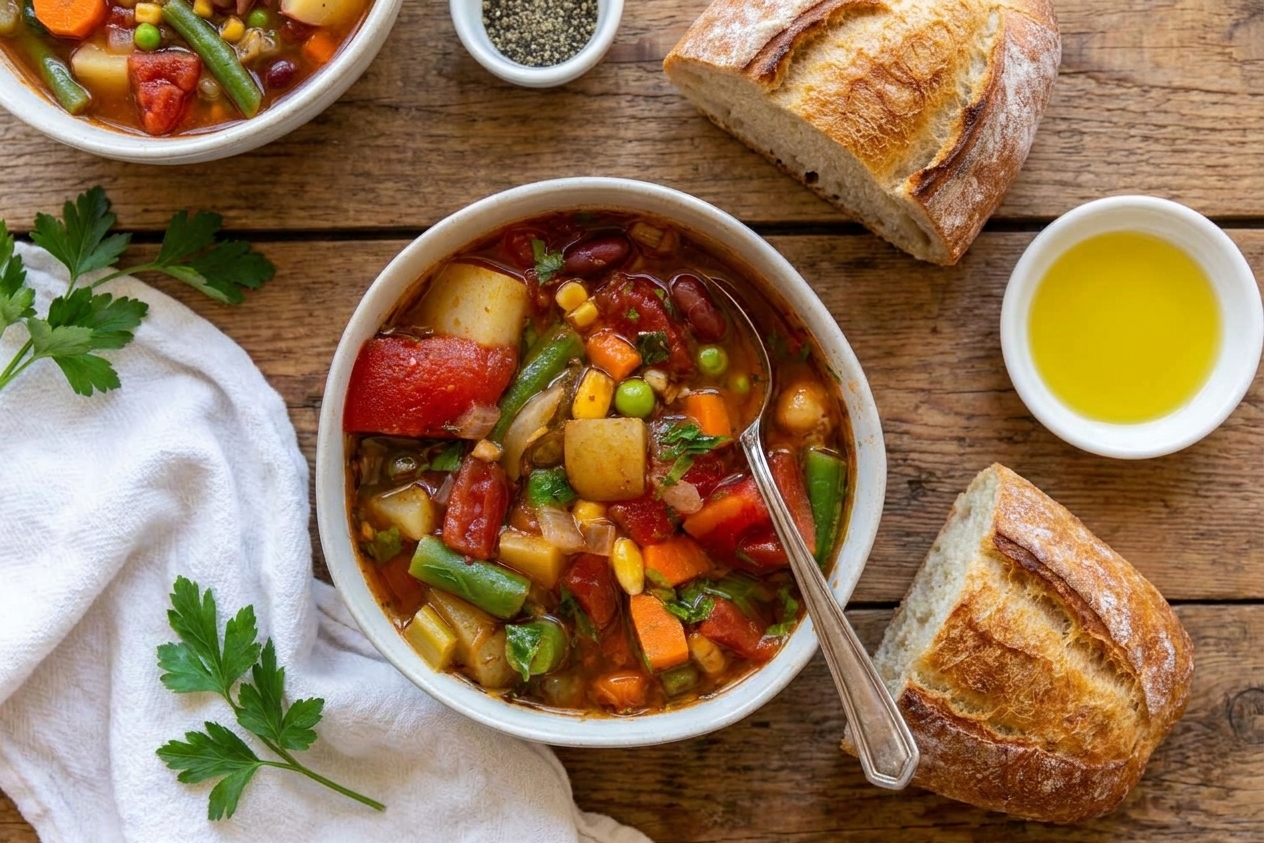
- Crusty bread, garlic toast, or cornbread
- A simple green salad with a sharp vinaigrette
- Grilled cheese or a melty cheddar toastie
Storage and reheating
Hearty vegetable soup is one of those rare dishes that gets better after a night in the fridge. The flavors meld, the potatoes relax, and everything tastes more intentional.
- Refrigerate: Cool, then store in airtight containers for up to 5 days.
- Freeze: Freeze up to 3 months. If you plan to freeze, skip pasta and add it freshly cooked when reheating.
- Reheat: Warm gently on the stove. Add a splash of broth or water if it thickened overnight, then re-check salt and finish with a fresh squeeze of lemon.
One small food-waste win
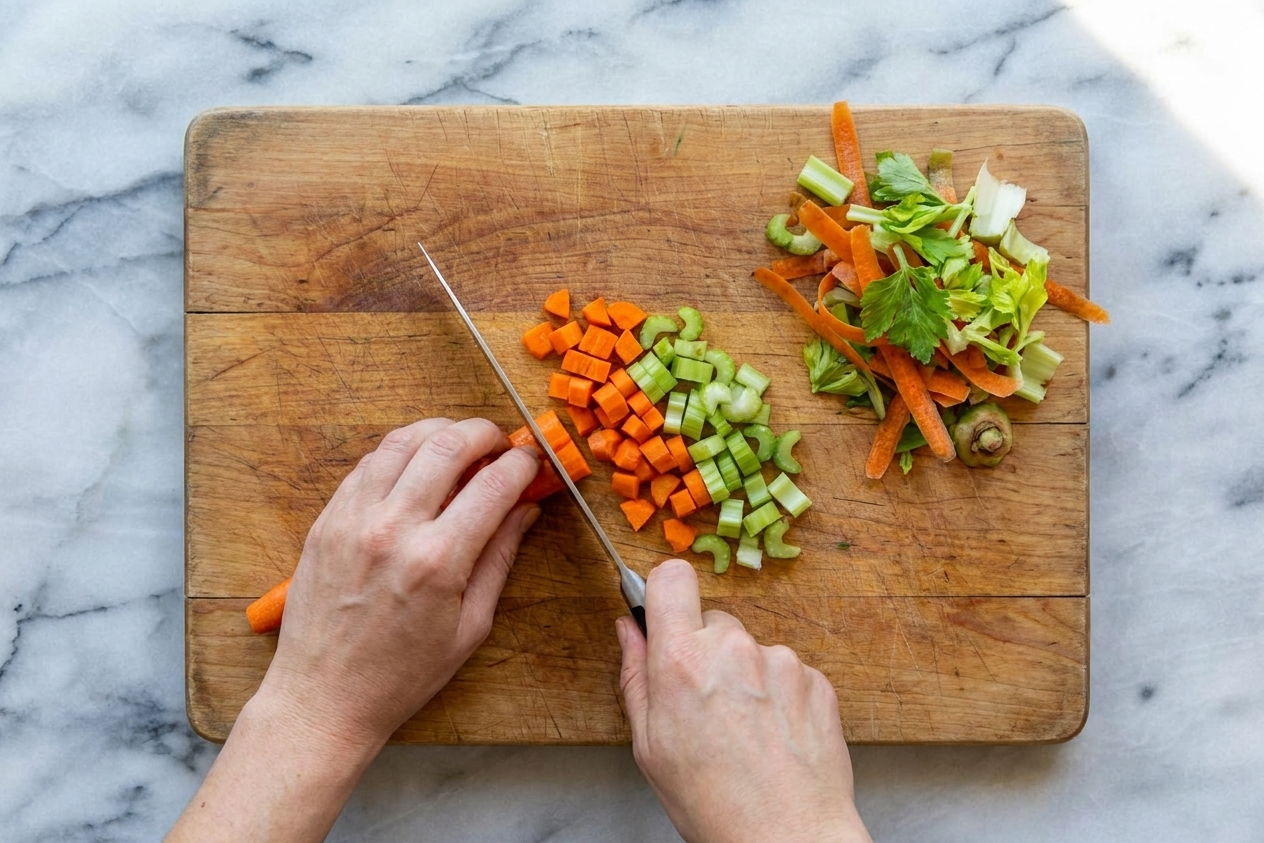
Keep a freezer bag for clean vegetable scraps like onion ends, carrot peels, celery leaves, and herb stems. When the bag is full, simmer it with water, a bay leaf, and a few peppercorns for a quick homemade veggie stock. Your next pot of soup will taste even better, and your crisper drawer will feel a little less chaotic.
Common mistakes
- Not cooking the tomato paste. Raw tomato paste can taste metallic; cook it for 1 to 2 minutes until it darkens slightly.
- Skipping layered seasoning. Salt at the start and then adjust at the end, since beans and potatoes soak up seasoning.
- Forgetting the acid. Lemon juice or vinegar added off heat keeps the soup from tasting flat.
- Over-thickening by accident. If you want it brothy for leftovers, avoid cooking grains or pasta in the pot; cook them separately to prevent mushiness and excess thickening.
FAQ
How do I make vegetable soup more flavorful?
Start by cooking the aromatics until soft and sweet, then cook the tomato paste for a minute or two. Add one umami booster (miso, soy sauce, mushrooms, or Parmesan rind), and always finish with lemon juice or vinegar. If it still tastes dull, it needs salt, not more herbs.
Why did my soup taste bland even after simmering?
Most often it’s one of two things: not enough salt, or missing acid. Add salt in small pinches, stirring and tasting. Then add a splash of vinegar or lemon off heat. Those two adjustments usually snap everything into focus.
Can I make this in a slow cooker?
Yes. For best flavor, sauté the onion, carrot, celery, garlic, and tomato paste in a skillet first, then transfer to the slow cooker with the rest (except greens and acid). Cook on low 6 to 8 hours or high 3 to 4 hours. Stir in greens for the last 20 to 30 minutes and add lemon or vinegar at the end.
Can I make it gluten-free?
It’s naturally gluten-free if you skip pasta and use gluten-free broth. If you use soy sauce, choose a gluten-free tamari.
Hearty Vegetable Soup
A weeknight-friendly hearty vegetable soup with a sweet aromatic base, potatoes and beans for body, and a bright lemon or vinegar finish. Flexible enough to swap vegetables and adjust the texture from brothy to stew-like.
- Prep
- 15 minutes
- Cook
- 35 to 45 minutes
- Total
- 50 to 60 minutes
- Yield
- About 6 servings
Ingredients
- 2 tablespoons olive oil
- 1 large yellow onion, diced
- 2 carrots, diced
- 2 celery stalks, diced
- 1 teaspoon kosher salt, plus more to taste
- 4 cloves garlic, minced
- 2 tablespoons tomato paste
- 1 teaspoon smoked paprika (optional, but great)
- 1 teaspoon dried thyme or Italian seasoning
- 1 bay leaf
- 1 pound Yukon gold or red potatoes, cut into 3/4-inch pieces
- 1 (14.5-ounce) can diced tomatoes (with juices)
- 6 cups vegetable broth (or water plus 2 teaspoons Better Than Bouillon style paste)
- 1 (15-ounce) can cannellini beans or chickpeas, drained and rinsed
- 2 cups chopped green cabbage or kale (or a mix)
- 1 to 2 tablespoons lemon juice or red wine vinegar
- Black pepper, to taste
Instructions
- Sweat the aromatics. Heat olive oil in a large Dutch oven or soup pot over medium heat. Add onion, carrots, celery, and salt. Cook 8 to 10 minutes, stirring occasionally, until softened and smelling sweet. You’re not looking for browning here, just tenderness.
- Bloom the flavor boosters. Stir in garlic and cook 30 seconds. Add tomato paste, smoked paprika, thyme, and bay leaf. Cook 1 to 2 minutes, stirring constantly, until the tomato paste darkens slightly and sticks to the pot a bit.
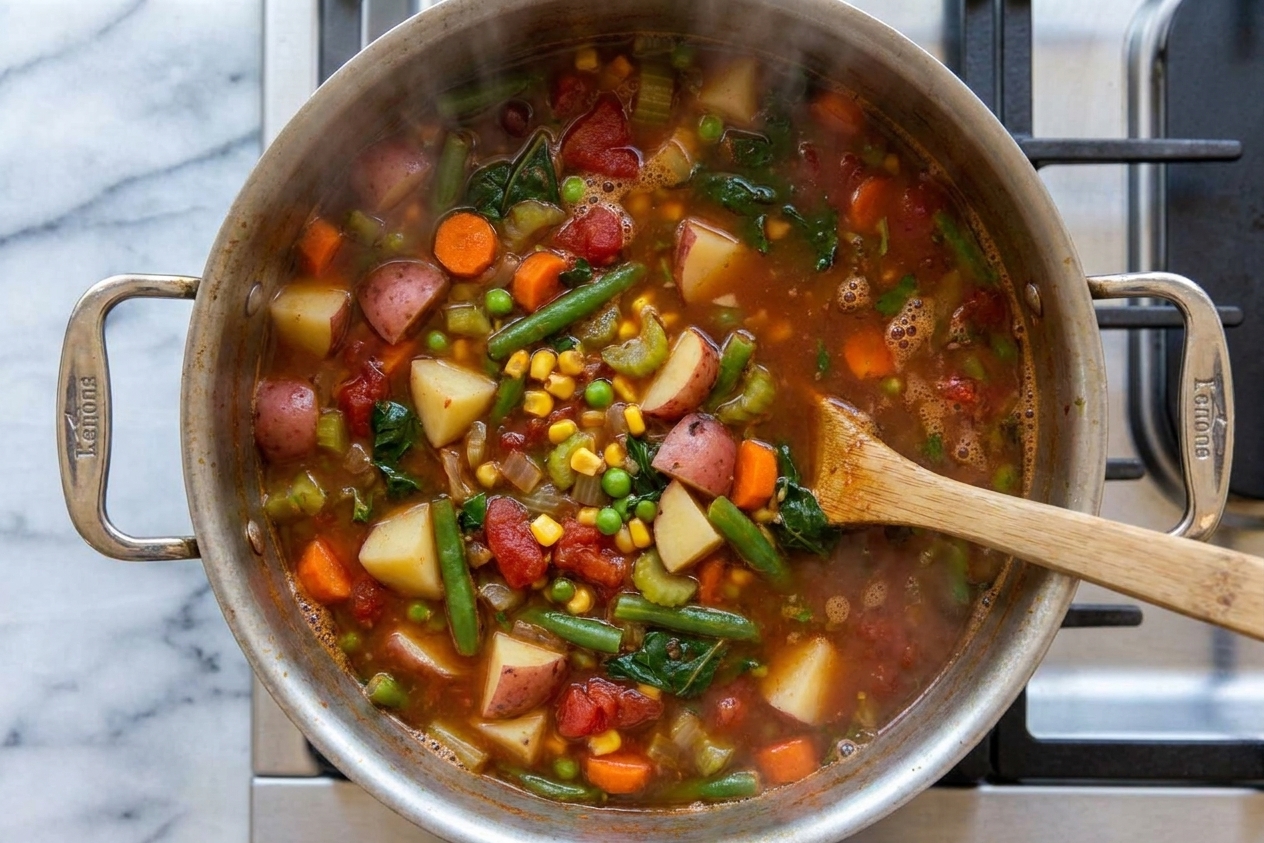
- Simmer. Add potatoes, diced tomatoes, and broth. Bring to a boil, then reduce to a lively simmer. Cook 15 to 20 minutes, or until potatoes are fork-tender.
- Add beans and greens. Stir in beans and cabbage or kale. Simmer 8 to 10 minutes more, until greens are tender and the soup tastes cohesive.
- Finish with acid and adjust. Turn off the heat. Stir in lemon juice or vinegar, then add black pepper. Taste and adjust salt. If it tastes a little flat, it usually needs either a pinch more salt or a splash more acid.
Notes
- Texture: For a stewier soup, mash a cup of the potatoes and beans against the side of the pot, or blend 2 cups of soup and stir it back in.
- Umami option: Use one “secret umami” if you want extra depth: 1 teaspoon white miso, 1 teaspoon soy sauce, a Parmesan rind, or 8 ounces chopped mushrooms sautéed with the onion.
- Make-ahead: The soup tastes even better after a night in the fridge.
- Freezing note: Freeze up to 3 months; if you plan to freeze, skip pasta and add it freshly cooked when reheating.
- Slow cooker: Sauté the onion, carrot, celery, garlic, and tomato paste first, then slow cook with the rest (except greens and acid) on low 6 to 8 hours or high 3 to 4 hours. Add greens for the last 20 to 30 minutes and add lemon or vinegar at the end.
- Gluten-free: Skip pasta and use gluten-free broth; if using soy sauce, choose gluten-free tamari.
Nutrition
- Calories: ~250
- Fat: ~6 g
- Carbs: ~41 g
- Protein: ~9 g
- Fiber: ~9 g
- Sugar: ~8 g
- Sodium: ~750 mg
Nutrition values are approximate and will vary based on specific broth, bean type, and seasoning used.


