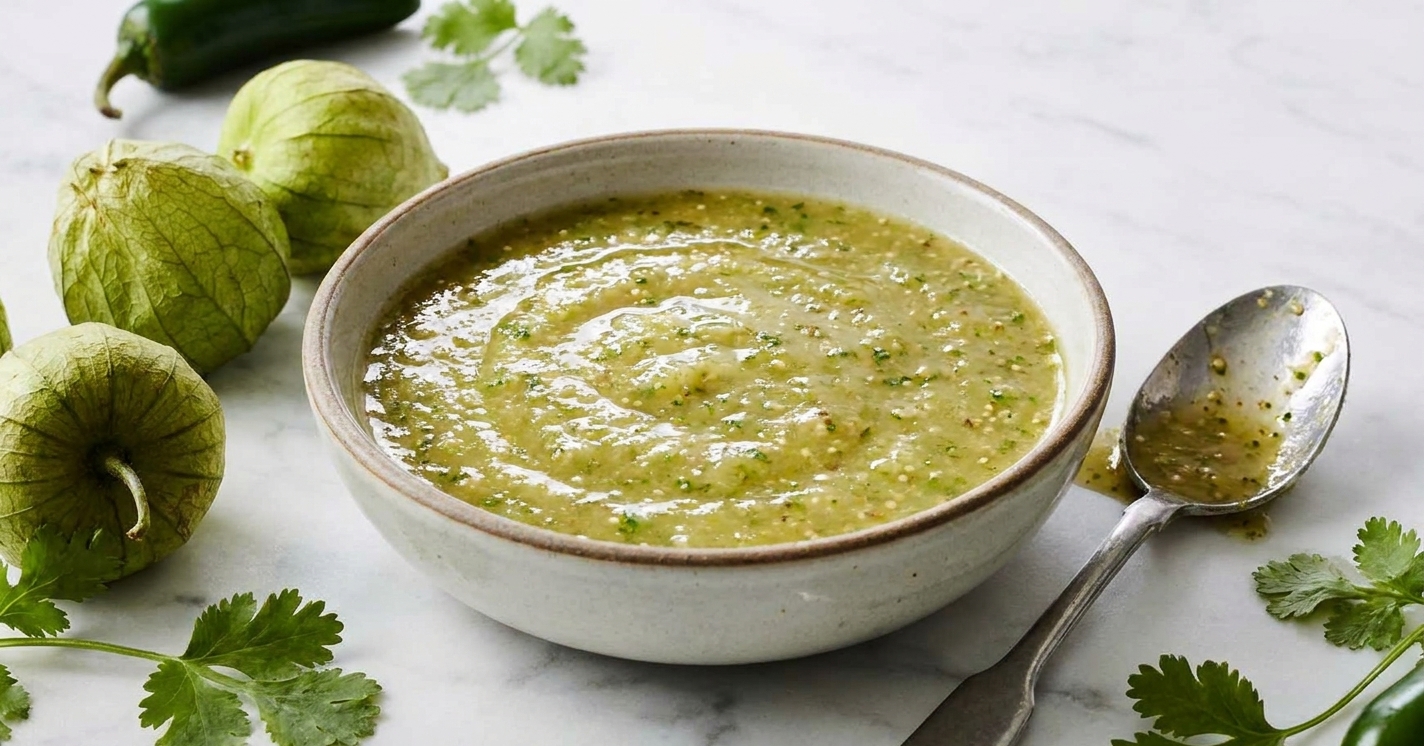

Green enchilada sauce is my weeknight secret weapon when I want something that tastes restaurant-level bright without the weeknight-level effort. It is tangy from tomatillos, savory from green chiles, and finished with just enough lime and salt to make everything underneath it taste more like itself (and yes, a tiny splash of vinegar can help if it needs it). If red enchilada sauce is cozy and deep, green is zippy and fresh.

This version is simmered then blended, which means you get a smooth, pourable sauce without babysitting a complicated reduction. I also built in two things home cooks need: heat control (mild to spicy, your call) and thickness control (thin enough to pour, thick enough to cling). In plain English, the chile choice sets the heat, and a brief simmer plus a splash more stock (or a little extra time) lets you dial in the texture.
Green vs red sauce
Many pantry-style red enchilada sauces are built on dried chiles (or chili powder), often with warm spices like cumin, and sometimes with a little tomato or tomato paste for body. They taste rounded, roasty, and a little sweet. Green enchilada sauce is a different personality entirely.
- Base: Tomatillos plus green chiles instead of tomatoes.
- Flavor: Brighter and more tart, with a vegetal, citrusy edge.
- Best with: Chicken, turkey, beans, roasted veggies, and anything that wants lift.
- Color and finish: Green stays more vibrant when you keep the post-blend simmer brief and gentle. Prolonged heat and exposure to air can dull it, so once it tastes cohesive, get it off the heat.
My favorite way to use it is for green chicken enchiladas or quick weeknight chilaquiles, but it is also fantastic spooned over roasted potatoes with a fried egg. Yes, that is breakfast. Yes, it is correct.
Why this recipe works
- Simmer then blend: Simmering softens tomatillos and tames raw bite, then blending gives you a smooth, cohesive sauce.
- Layered green flavor: Tomatillos bring tang, green chiles bring body and gentle heat, and a small amount of garlic and onion fills in the savory middle.
- Heat you can actually control: You choose mild or hot chiles, and you decide whether to include seeds and membranes.
- Thickness options: A quick simmer after blending concentrates the sauce, and you can fine-tune with broth or a small cornstarch slurry if needed.
Ingredient notes
Tomatillos: Look for firm tomatillos with tight, papery husks. Sticky skins are normal. Rinse well to remove tackiness, which can taste slightly bitter.
Green chiles: You have options. Roasted fresh chiles (Hatch, Anaheim, poblano, jalapeño, serrano) give the most flavor. Canned roasted green chiles are the best shortcut and keep this sauce weeknight-friendly.
Onion and garlic: This is your savory backbone. If you are sensitive to sharp onion, simmering makes it mellow and sweet.
Cilantro: Adds that classic green-sauce freshness. If cilantro tastes soapy to you, swap in flat-leaf parsley and add extra lime at the end.
Stock or water: Stock adds depth. Water works fine, especially if you are using canned chiles with plenty of flavor already.
Lime juice: I prefer adding it after blending and off heat. Lime stays brighter that way.
Salt: Start modestly, then adjust at the end. Tomatillos wake up with enough salt, and under-salted green sauce can taste oddly flat.
Equipment you will need
- Medium saucepan or small pot
- Blender or immersion blender
- Fine-mesh strainer (optional for extra-smooth sauce)
- Cutting board and knife
- Measuring cups and spoons
Pro tips
Heat control
- For mild: Use canned mild roasted green chiles or Anaheim chiles. Remove seeds and membranes from any fresh hot peppers.
- For medium: Add 1 jalapeño with seeds removed.
- For hot: Add 1 to 2 serranos, and include some seeds.
Thickness control
- Too thick: Blend in a splash of stock or hot water until it pours easily.
- Too thin: Simmer the blended sauce uncovered for 5 to 10 minutes, stirring occasionally.
- Still thin after simmering: Whisk in a cornstarch slurry (1 teaspoon cornstarch mixed with 1 tablespoon cold water), simmer 1 minute, then reassess.
Keep it bright green
After blending, avoid a long, aggressive boil. A gentle, brief simmer is fine, but prolonged heat and oxidation can dull the color and mute the fresh top notes.
Substitutes that work
- No tomatillos: Use 1 (14 to 16 ounce) can tomatillos, drained. Flavor is slightly less bright but still very good.
- No cilantro: Use flat-leaf parsley plus extra lime juice to finish.
- No stock: Use water and add a little extra salt at the end.
- No blender: An immersion blender works great. Blend carefully in the pot and let it cool a minute first to avoid splatters.
Variations
Creamy green enchilada sauce
Stir in 1/4 to 1/2 cup sour cream, crema, or plain Greek yogurt off heat. Keep the heat low after adding dairy to prevent curdling.
Roasted tomatillo green sauce
Instead of simmering, roast tomatillos, onion, and peppers at 425°F until blistered, then blend with stock. This version tastes smokier and slightly sweeter.
Salsa verde style
Skip the thickening simmer and keep it looser, with extra lime and a handful of cilantro. Perfect for chips or spooning over tacos.
Serving ideas
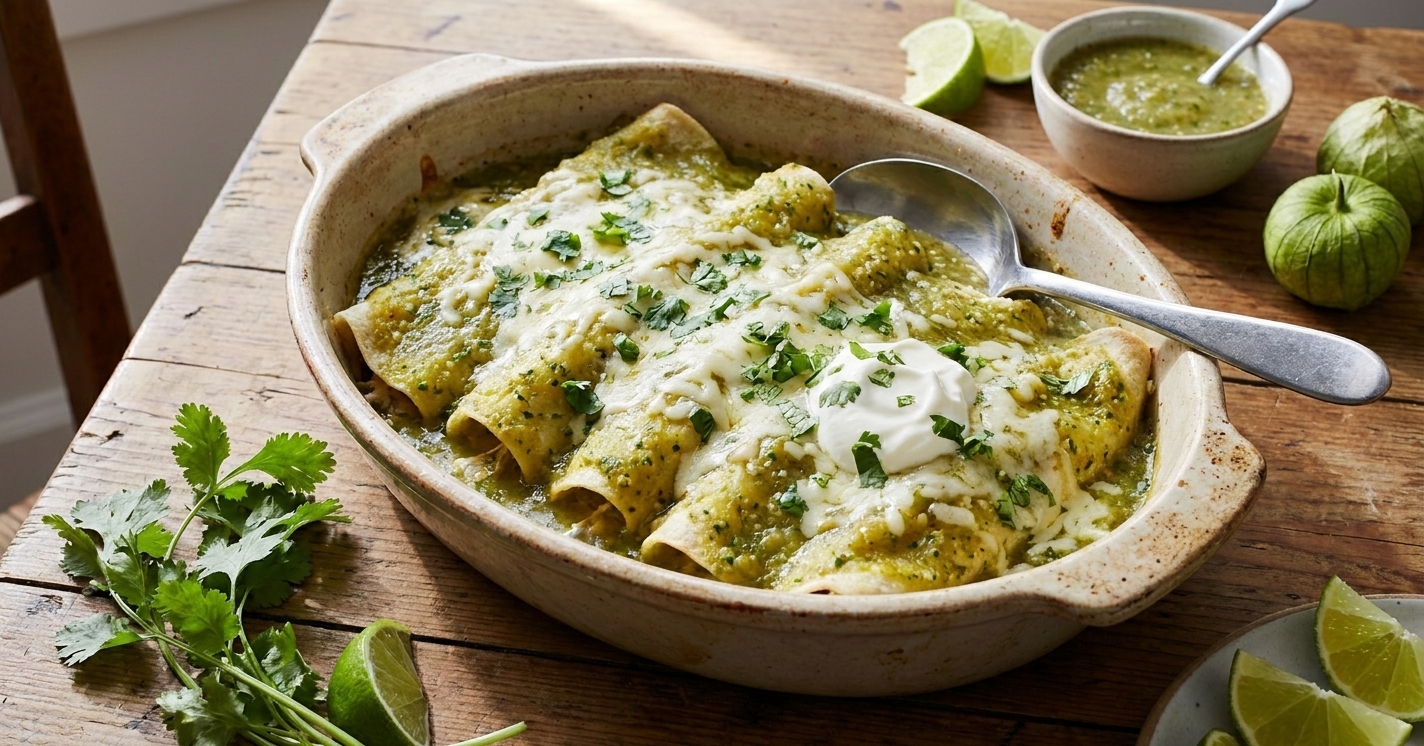
- Enchiladas: Classic use. Dip tortillas quickly in warm sauce before rolling for the best coating.
- Chilaquiles verdes: Toss with chips, top with a fried egg and queso fresco.
- Chicken or bean bowls: Drizzle over rice, beans, shredded chicken, and crunchy cabbage.
- Tamales: Warm the sauce and spoon over tamales with a little crema.
- Roasted vegetables: Especially good on roasted zucchini, cauliflower, or sweet potatoes.
Storage and reheating
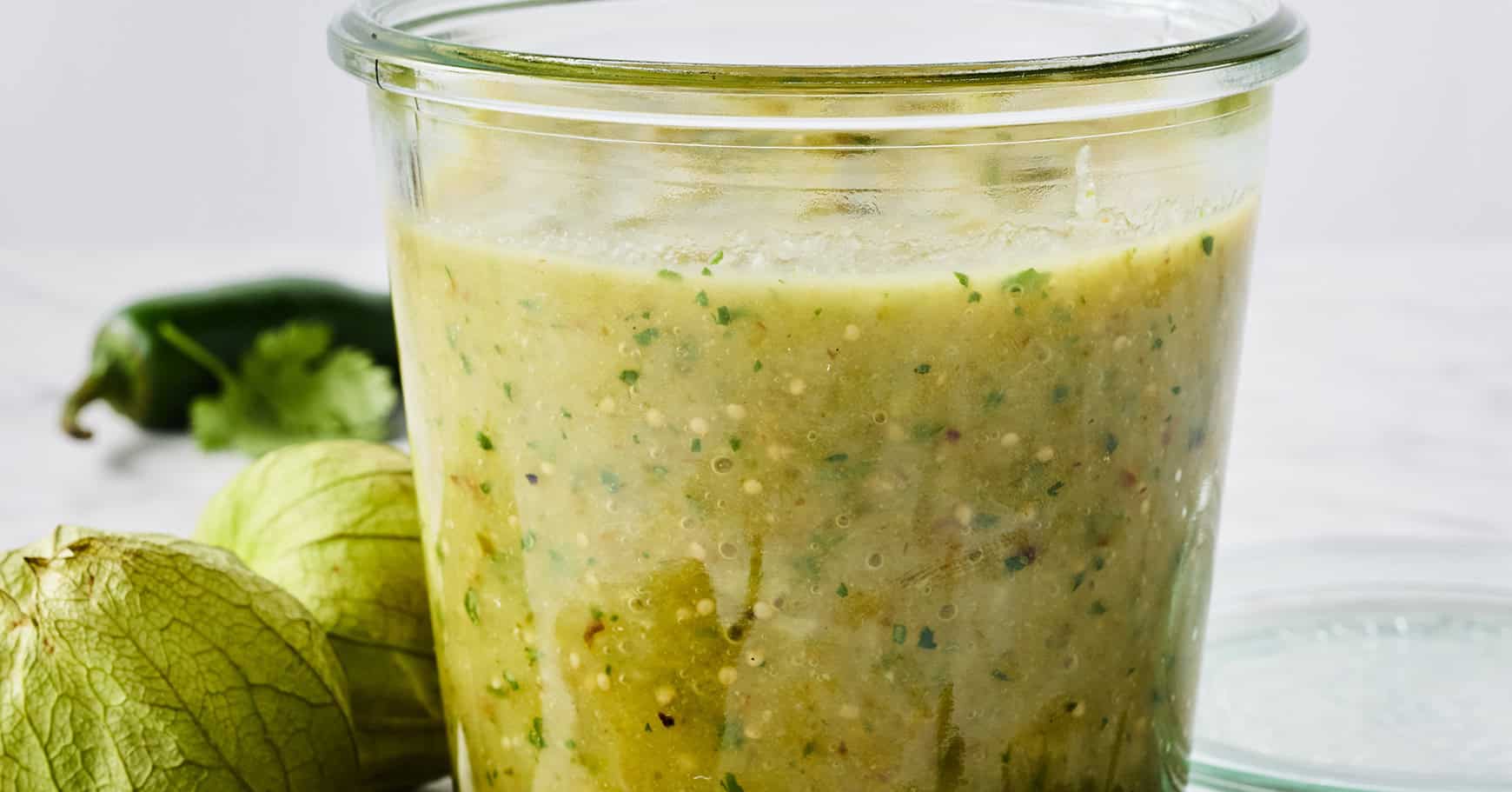
- Refrigerator: Store in an airtight container for up to 5 days. The flavor often improves after a night in the fridge.
- Freezer: Freeze up to 3 months. I like freezing in 1 cup portions so I can thaw exactly what I need.
- Reheating: Warm gently in a saucepan, stirring often. If it thickens in the fridge, loosen with a splash of water or stock.
Common mistakes
- Not rinsing tomatillos: That sticky residue can add bitterness. Rinse thoroughly under warm water.
- Blending hot liquid unsafely: Let the mixture cool slightly and vent the blender lid. Start on low and increase gradually.
- Under-salting: Tomatillo sauces need enough salt to taste vibrant, not sharp.
- Boiling hard after blending: It can dull the bright flavor and color. Keep it at a gentle simmer and do not drag it out.
- Skipping the final acid adjustment: Finish with lime juice to make the flavor pop.
FAQ
Is green enchilada sauce the same as salsa verde?
They are close cousins. Salsa verde is usually looser and brighter, meant for dipping or spooning. Green enchilada sauce is often slightly more seasoned and thick enough to cling to tortillas and hold up through baking.
How do I make it less spicy after it is blended?
Add more tomatillos (or a little extra stock plus a pinch of sugar), then re-simmer briefly. You can also stir in a little sour cream or crema off heat to soften the heat.
How thick should enchilada sauce be?
Think pourable gravy, not salsa. It should coat the back of a spoon and flow easily into the corners of the baking dish.
Can I use this straight from the fridge for enchiladas?
Warm it first. Warm sauce coats tortillas more evenly and helps prevent tearing when you roll.
Homemade Green Enchilada Sauce
A bright, tangy tomatillo and green-chile enchilada sauce that simmers quickly, blends smooth, and is easy to adjust for heat and thickness.
- Prep
- 10 minutes
- Cook
- 20 minutes
- Total
- 30 minutes
- Yield
- Makes about 3 cups
Ingredients
- 1 1/2 pounds tomatillos (about 10 to 12), husks removed and rinsed well
- 1/2 medium yellow onion, roughly chopped
- 3 cloves garlic, peeled
- 1 to 2 jalapeños or serranos, stemmed (seeded for less heat)
- 1 (4 ounce) can roasted green chiles (mild or hot)
- 1 1/2 cups low-sodium chicken or vegetable stock, plus more as needed
- 1/2 cup packed fresh cilantro leaves and tender stems
- 1 tablespoon neutral oil (avocado, grapeseed, or canola)
- 1 teaspoon ground cumin
- 1/2 teaspoon dried oregano
- 1 to 1 1/2 teaspoons kosher salt, plus more to taste
- 1 to 2 tablespoons fresh lime juice, to taste
- Optional for thickening: 1 teaspoon cornstarch mixed with 1 tablespoon cold water
Instructions
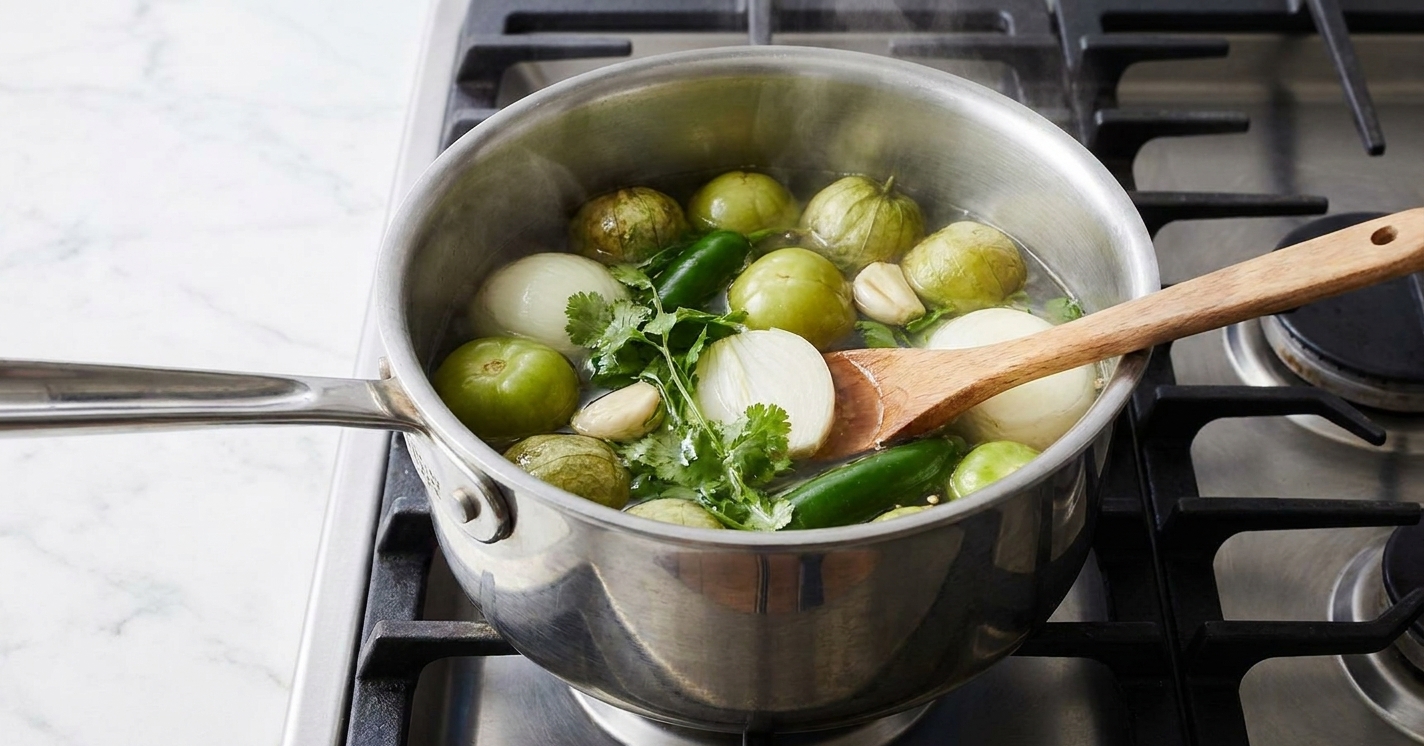
- Simmer the base. Add the tomatillos, onion, garlic, jalapeños or serranos, and stock to a medium saucepan. Bring to a boil, then reduce to a steady simmer. Cook uncovered for 10 to 12 minutes, until the tomatillos turn from bright green to more olive and are very tender when pierced with a fork.
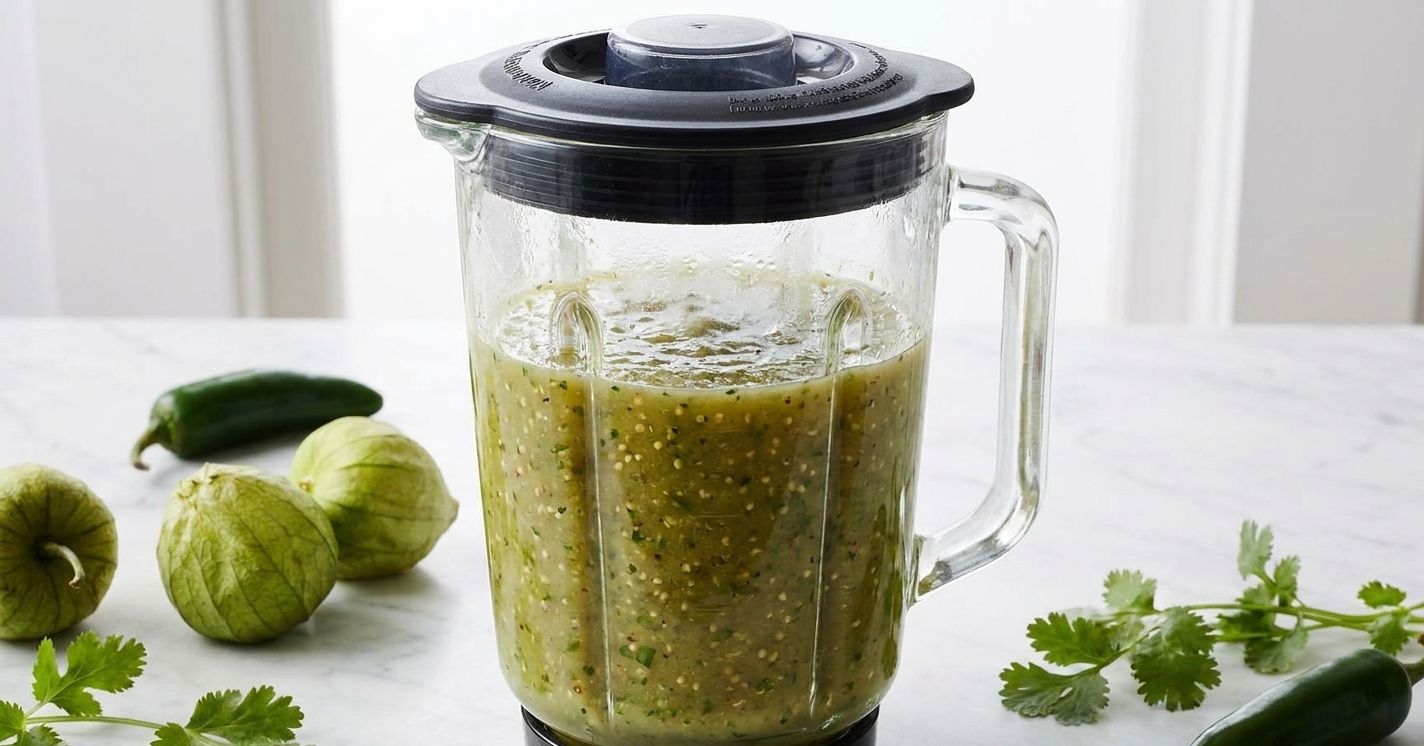
- Blend carefully. Remove the pot from the heat and let cool for 5 minutes. Transfer everything to a blender (or use an immersion blender in the pot). Add the canned green chiles and cilantro. Vent the blender lid, start on low, then blend until completely smooth.
- Bloom the spices. In the same saucepan, heat the oil over medium heat. Add the cumin and oregano and stir for 20 to 30 seconds, just until fragrant.
- Simmer to finish. Pour the blended sauce into the saucepan (careful, it may sputter). Simmer 5 to 10 minutes, stirring occasionally, until it lightly thickens and the flavors taste cohesive.
- Season and brighten. Stir in 1 teaspoon kosher salt, then taste and add more salt if needed. Off heat, stir in 1 tablespoon lime juice. Add more lime juice if you want it tangier.
- Adjust thickness if needed. If the sauce is too thick, add stock a splash at a time. If it is too thin, simmer a few minutes longer. If you want a quicker fix, whisk in the cornstarch slurry and simmer 1 minute, then reassess.
Notes
Yield note: Sauce yield varies slightly depending on tomatillo size and how long you simmer to thicken.
Extra-smooth option: Strain through a fine-mesh strainer after blending for a very silky sauce, especially nice for enchiladas.
Heat control: For mild sauce, use 1 jalapeño seeded or skip fresh hot peppers entirely and rely on mild canned green chiles.