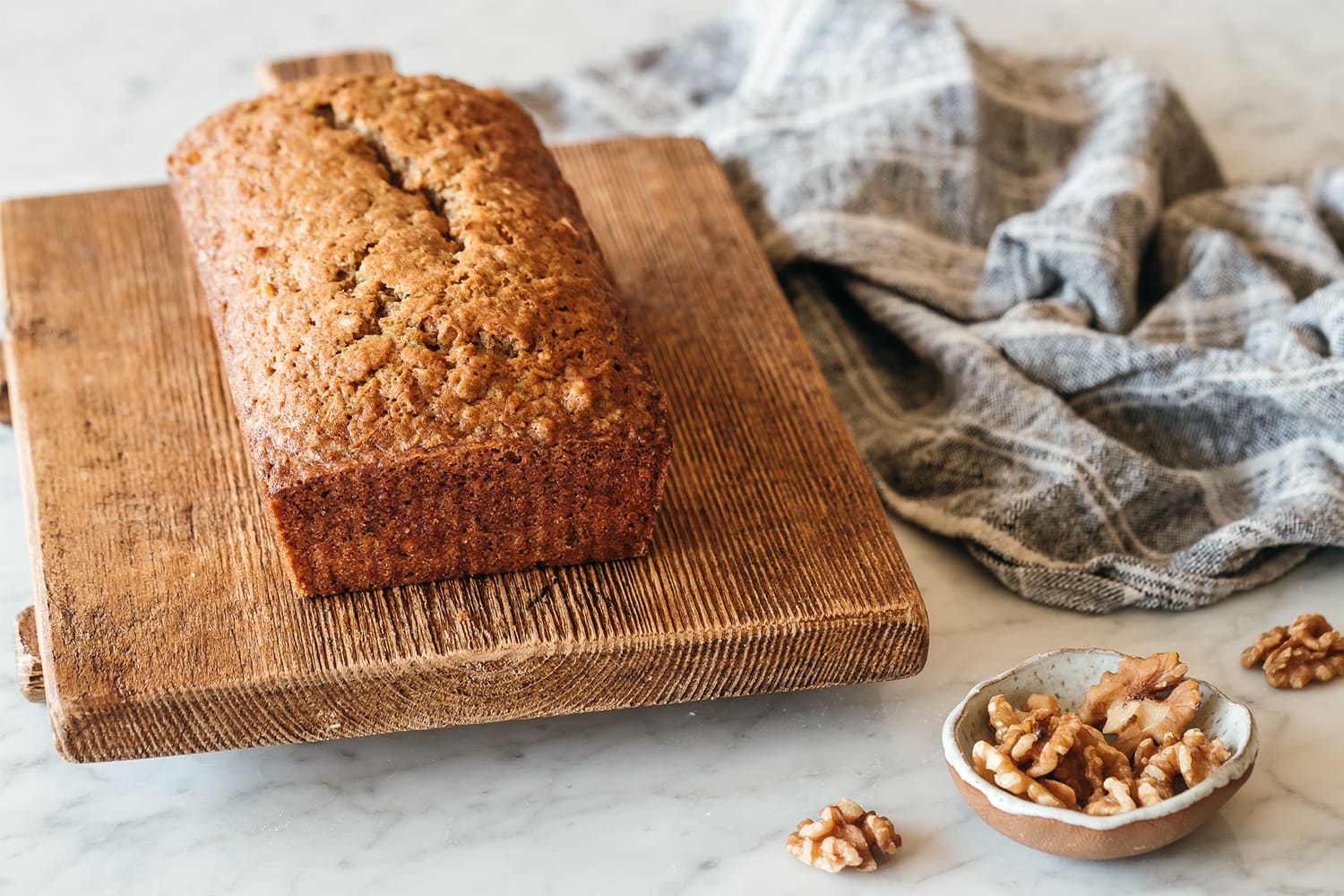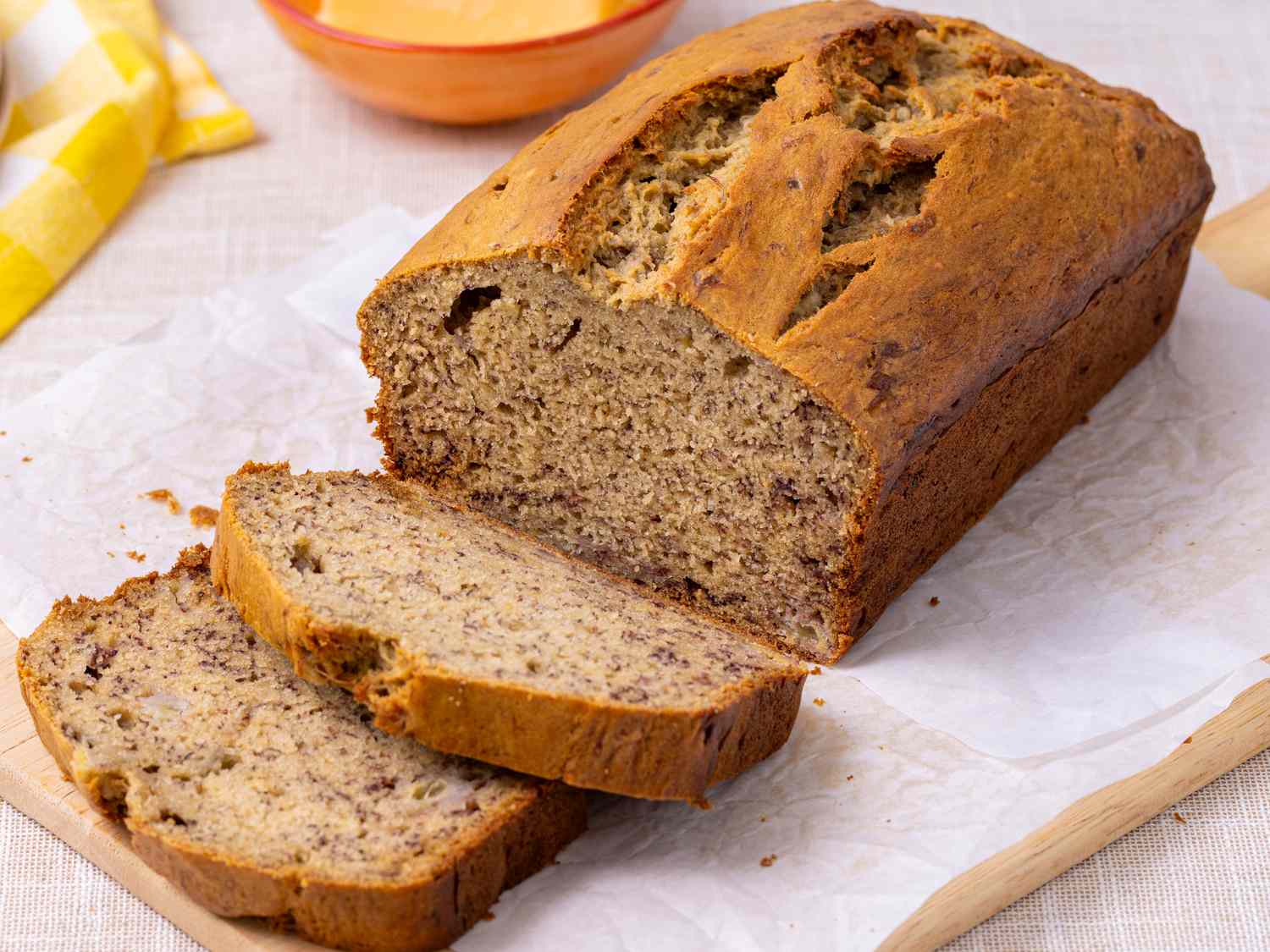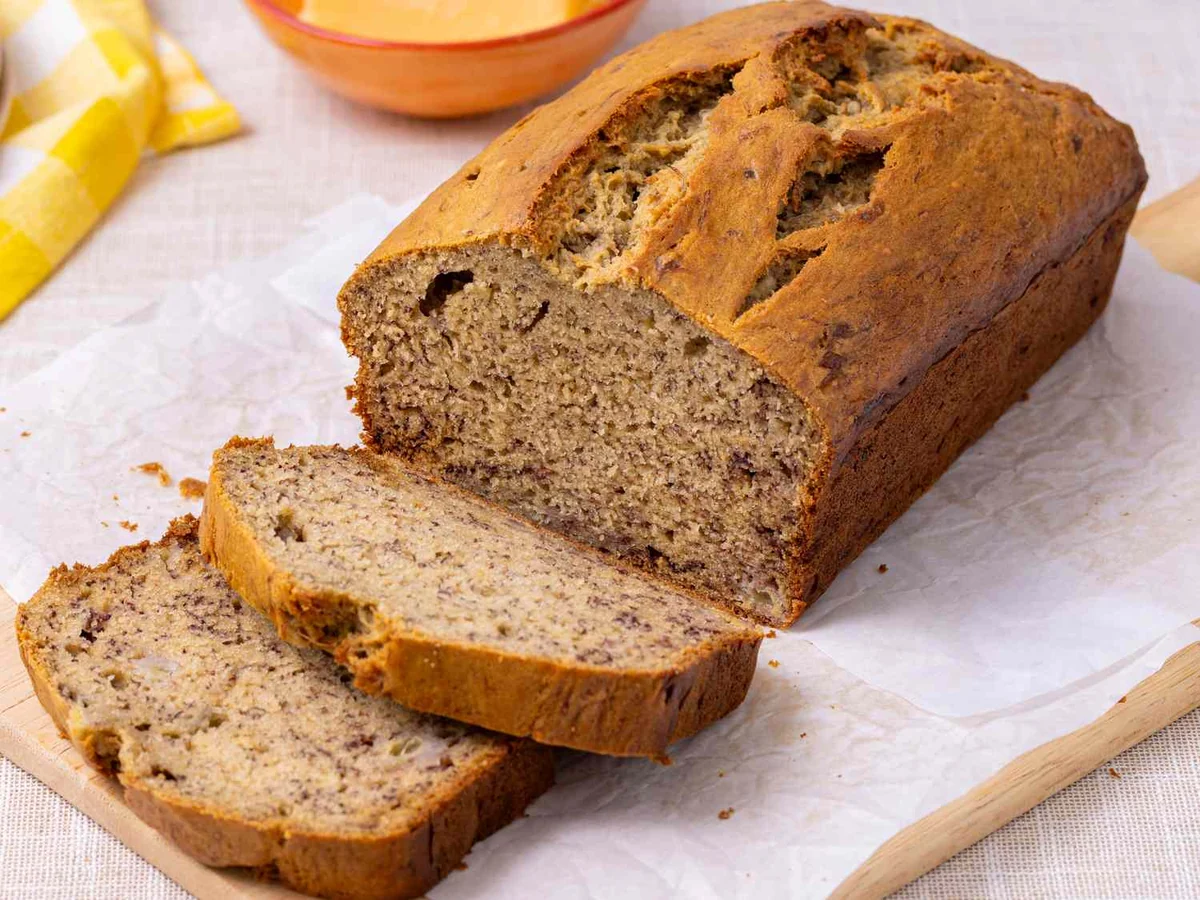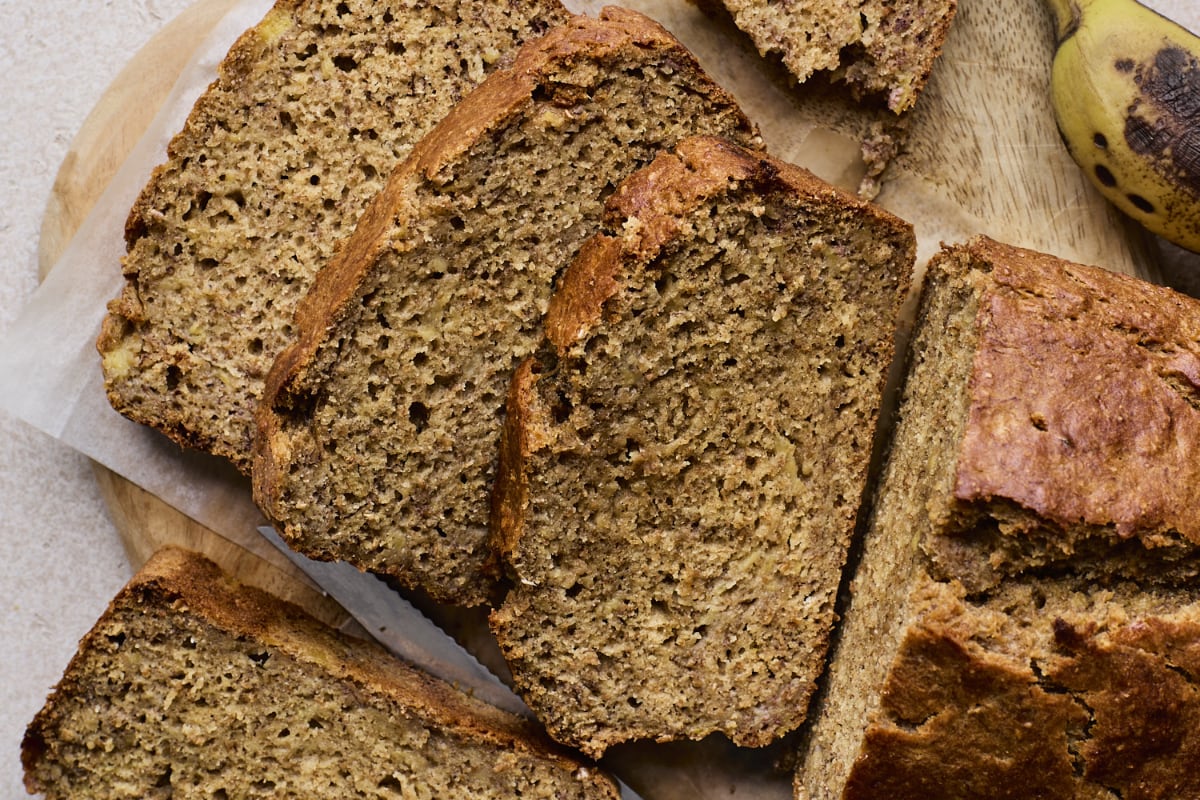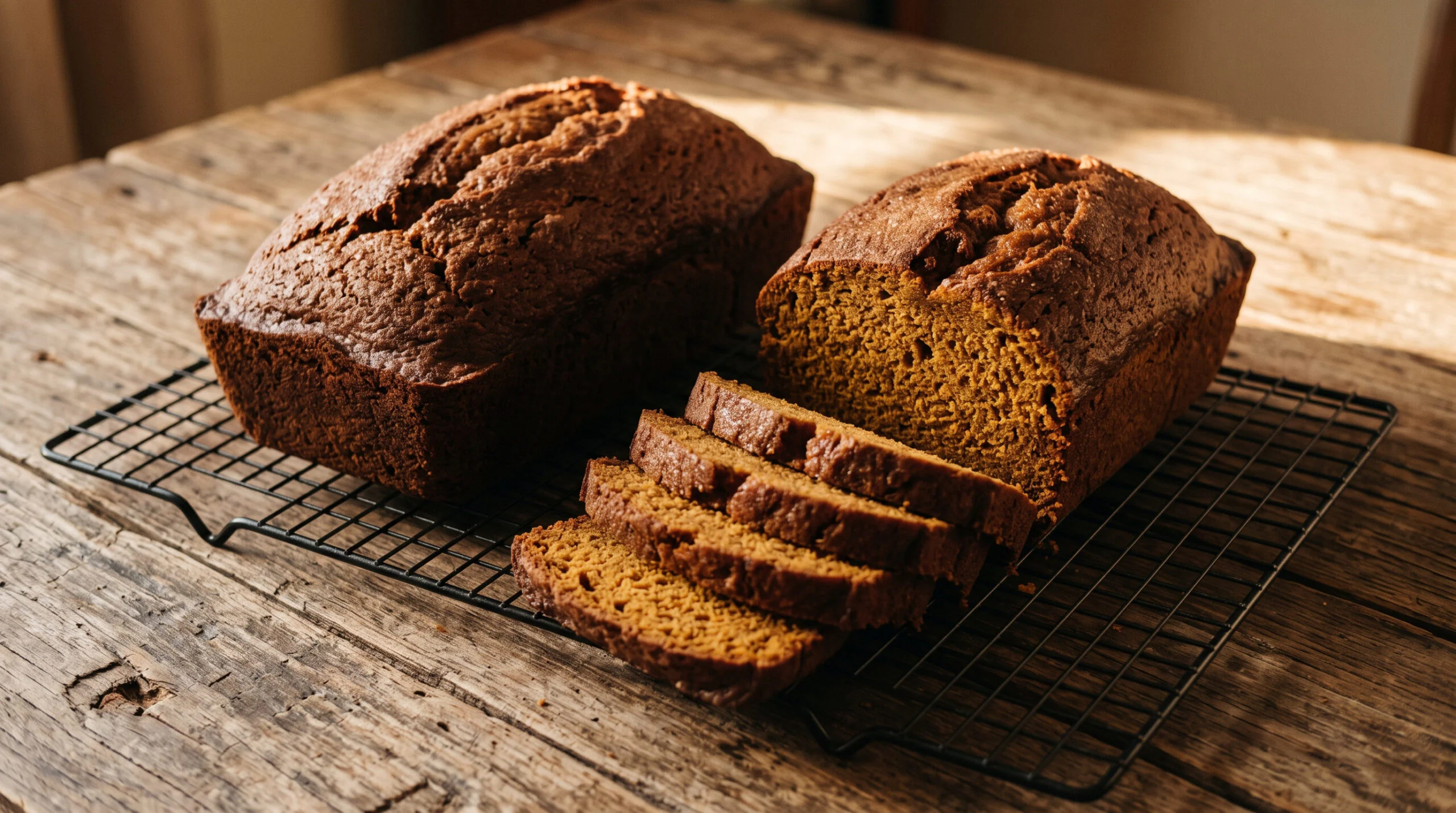
If you have ever baked pumpkin bread that looked gorgeous on top but somehow ate like sawdust, you are not alone. Pumpkin puree brings flavor, not automatic moisture, and it is surprisingly easy to overbake, overmix, or under-season and end up with a loaf that tastes flat and feels dry.
This version is my weeknight-friendly, one-bowl pumpkin bread: warmly spiced, deeply pumpkin-y, and genuinely moist for days. I will walk you through the why behind the key steps, plus swaps for what you have on hand so you can bake it without a special trip to the store.
What makes pumpkin bread moist
- Oil (not just butter). Oil stays liquid at room temperature, which keeps the crumb soft even after the loaf cools.
- Brown sugar. The molasses adds flavor and helps hold on to moisture.
- Correct flour measurement. Too much flour is the fastest path to dryness. Spoon flour into the cup and level it, or weigh it.
- Doneness by cues, not the clock. Pumpkin bread can go from perfect to dry in 5 minutes. Pull it when a tester has a few moist crumbs, not wet batter.
- Rest time. Like banana bread, pumpkin bread tastes and slices better after it cools completely, then rests a few hours.
Quick details
- Yield: 1 loaf (about 10 to 12 slices)
- Prep time: about 10 minutes
- Bake time: 55 to 70 minutes
- Cool time: at least 1 hour (plus a few hours of rest for best texture)
Ingredients
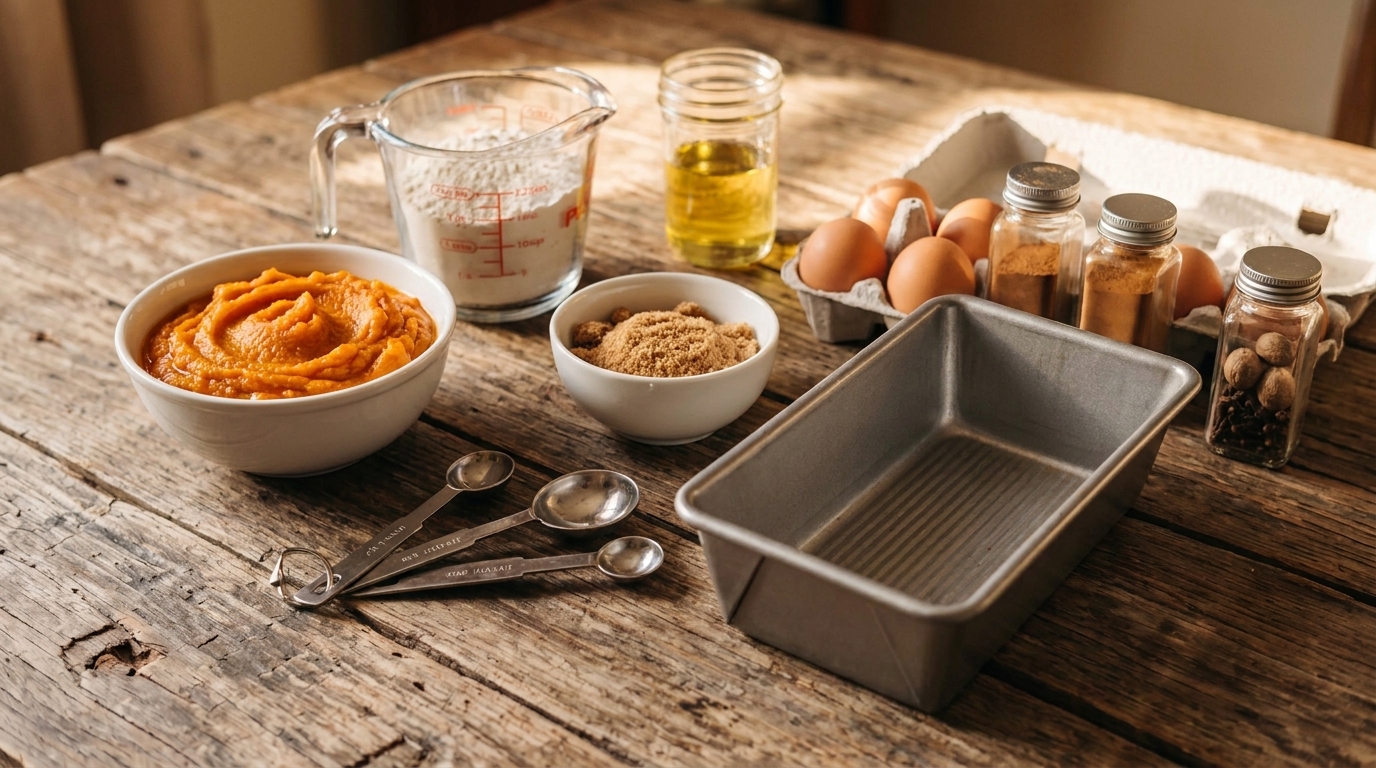
- All-purpose flour (2 cups, about 240 to 250 g)
- Baking soda (1 teaspoon)
- Baking powder (1/2 teaspoon) for extra lift
- Fine salt (1 teaspoon) for flavor and balance
- Spices: cinnamon (2 teaspoons), ginger (1 teaspoon), nutmeg (1/2 teaspoon), cloves (1/4 teaspoon)
- Pumpkin puree (1 can, 15 ounces or 425 g, about 1 3/4 cups)
- Brown sugar (1 cup, packed)
- Granulated sugar (1/2 cup)
- Neutral oil like avocado, canola, or grapeseed (1/2 cup)
- Eggs (2 large), room temp helps but is not required
- Vanilla extract (2 teaspoons)
- Optional: chocolate chips, toasted nuts, or pepitas (up to 1 cup total)
Quick note on pumpkin: Use plain pumpkin puree, not pumpkin pie filling. The can should list pumpkin as the ingredient, not a pre-sweetened spice mix.
Step-by-step
1) Heat the oven and prep the pan
Heat oven to 350°F. Grease a 9x5-inch metal loaf pan and line it with a parchment sling (paper hanging over the long sides). That parchment is your insurance policy for easy removal.
Pan note: Glass pans can bake differently and often need a little more time. If glass is what you have, start checking on the early side and trust the doneness cues below.
2) Mix the dry ingredients
In a large bowl, whisk flour, baking soda, baking powder, salt, and all the spices until evenly combined. This keeps you from getting bitter baking soda pockets later.
3) Add wet ingredients and fold gently
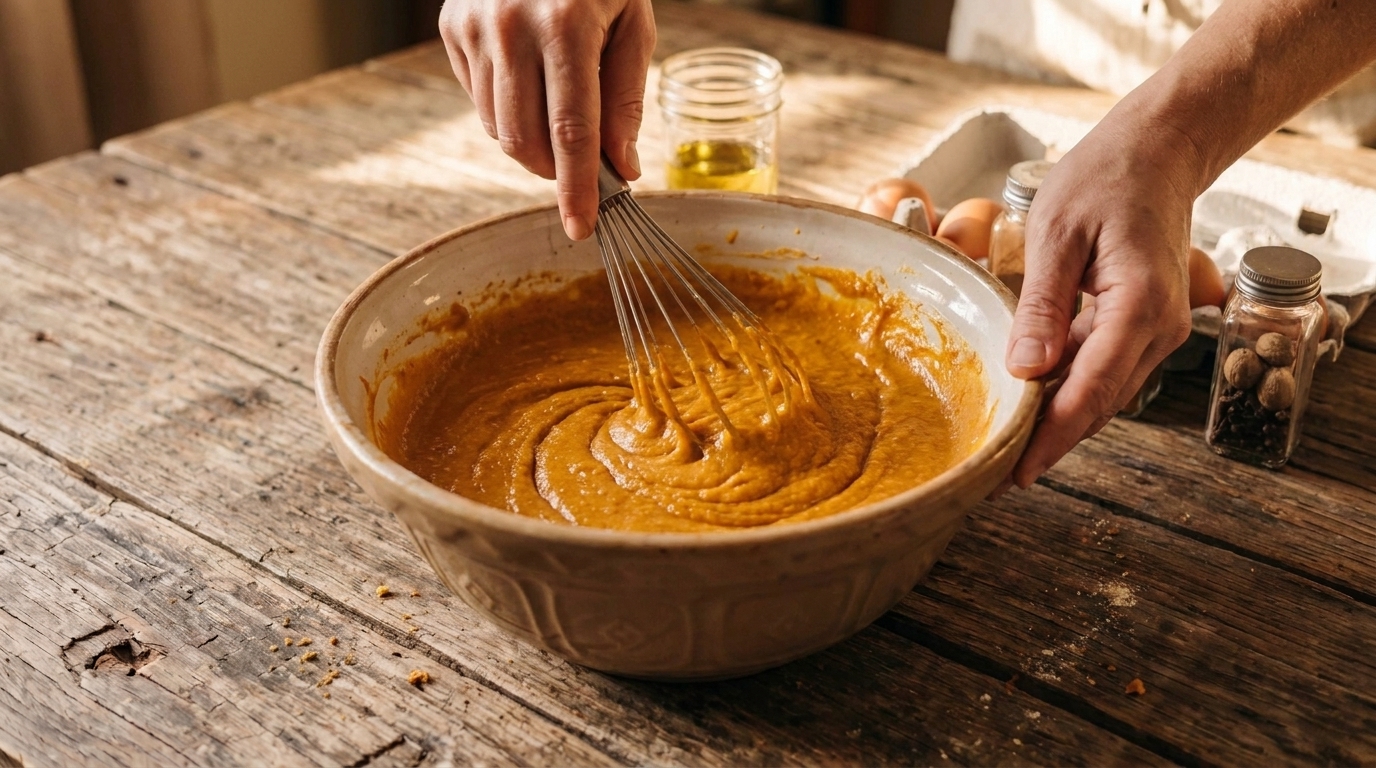
Add pumpkin puree, brown sugar, granulated sugar, oil, eggs, and vanilla. Use a spatula or wooden spoon to fold just until no dry streaks remain. A few small lumps are fine.
Sensory cue: The batter should look thick and glossy, like a loose brownie batter.
4) Fold in mix-ins (optional)
If using chocolate chips or nuts, fold them in just until evenly distributed. Optional but nice: reserve a small handful to sprinkle over the top before baking.
5) Bake
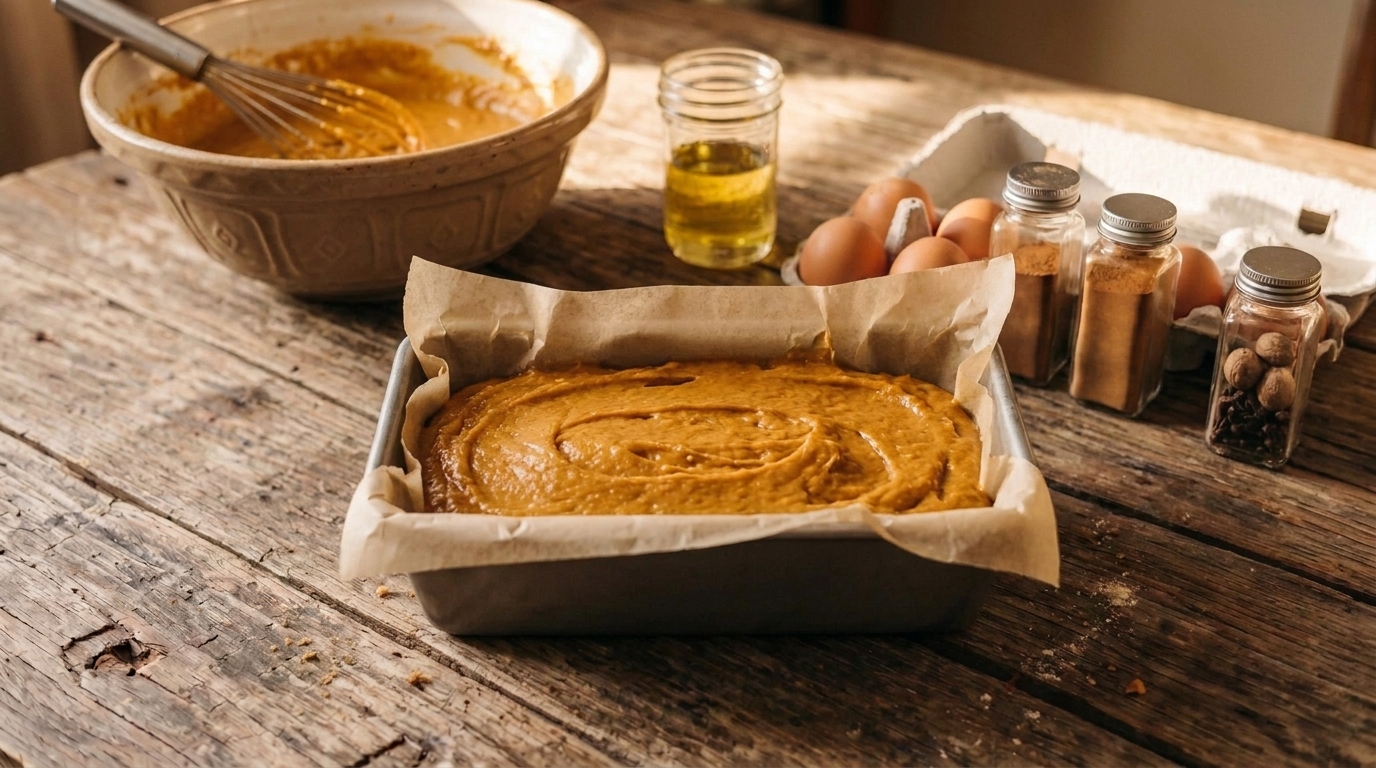
Scrape batter into the pan and smooth the top. Bake for 55 to 70 minutes, depending on your oven and pan color.
Doneness cues:
- The center should dome slightly and spring back when gently pressed.
- A toothpick inserted in the center should come out with a few moist crumbs (not wet batter).
- Optional temperature check: the center is typically done around 200 to 205°F.
- If the top is browning too fast, tent loosely with foil for the last 15 minutes.
6) Cool fully
Cool in the pan for 15 minutes, then lift out using the parchment and cool completely on a rack.
Best slicing tip: For clean slices, wait until fully cool. Warm pumpkin bread is delicious but it will compress and feel gummy.
Tips for a tender loaf
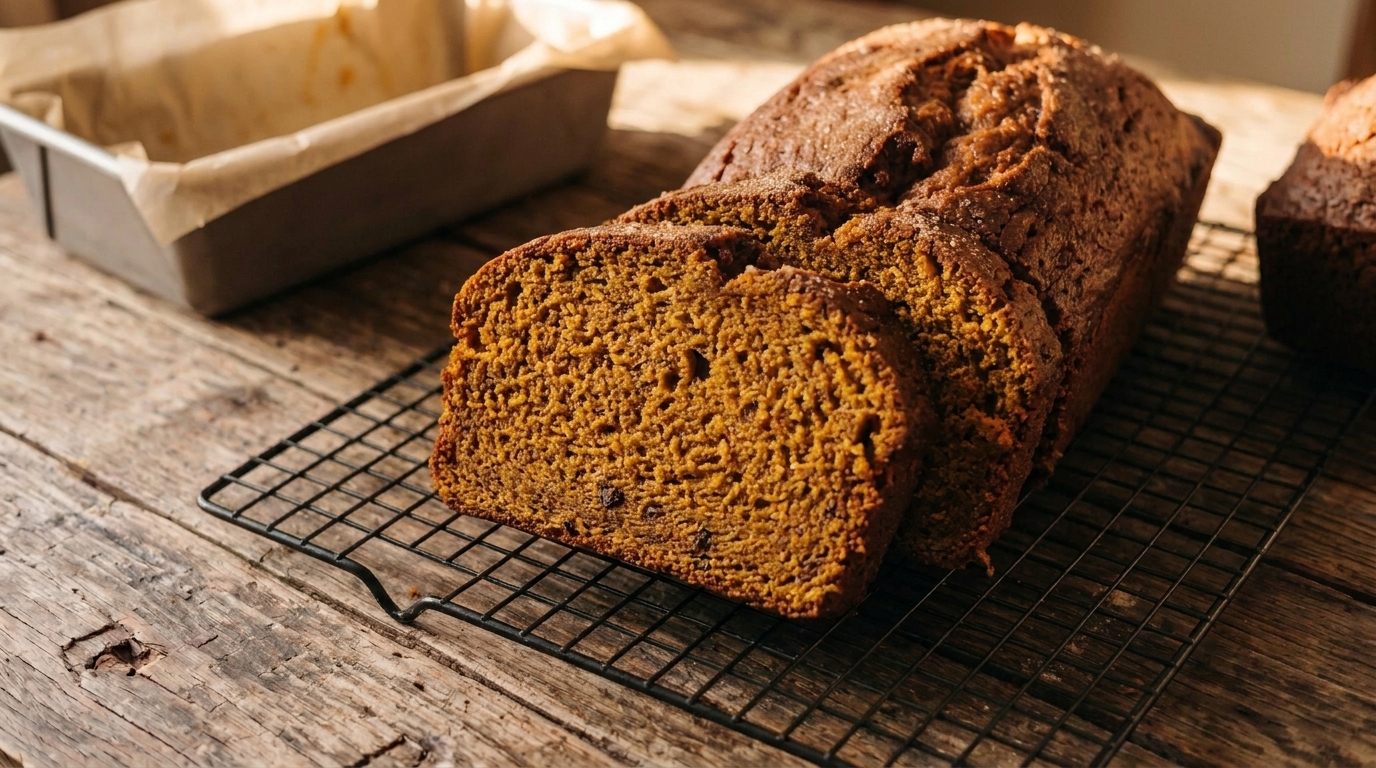
- Do not overmix. Once flour is in the bowl, mix only until combined. Overmixing develops gluten and makes the loaf tough.
- Measure flour correctly. Spoon and level, or use a scale (about 240 to 250 g for 2 cups, depending on your flour and how you measure).
- Use the right pan size. A 9x5-inch pan gives a classic loaf. An 8.5x4.5-inch pan can work but may need a longer bake and risks a taller, cracked top.
- Stop at a few crumbs. A tester with a few moist crumbs is perfect. A completely clean toothpick often means overbaked pumpkin bread.
- Salt is non-negotiable. Pumpkin and warm spices need salt to taste like themselves, not like sweet orange bread.
Easy variations
Use these without changing the base recipe.
- Chocolate chip pumpkin bread: Fold in 3/4 to 1 cup semi-sweet or dark chocolate chips. Toss chips with 1 teaspoon flour first to help prevent sinking.
- Pumpkin walnut bread: Fold in 3/4 cup toasted chopped walnuts or pecans.
- Cranberry pumpkin bread: Fold in 3/4 cup dried cranberries. If they are very dry, soak in hot water for 10 minutes, then drain well.
- Extra spice: Add 1/4 teaspoon cardamom or 1/8 teaspoon black pepper for a subtle bakery-style edge.
- Streusel topping: Mix 1/3 cup flour, 1/3 cup brown sugar, 3 tablespoons melted butter, pinch of salt, and 1/2 teaspoon cinnamon. Sprinkle over batter before baking.
Substitutions
Oil swaps
Any neutral oil works. Melted coconut oil works too, but it firms up more when cool so the loaf feels slightly less plush on day two unless brought to room temp.
Sugar swaps
You can use all brown sugar (1 1/2 cups total) for a deeper molasses note. If you cut sugar significantly, expect a drier loaf and less caramel flavor.
Egg-free
For an egg-free loaf, swap each egg for 1/4 cup unsweetened applesauce (1/2 cup total). The crumb will be denser and more cake-like, and it may brown a bit less, but it should still be moist.
Whole wheat flour
Swap up to 1 cup of the all-purpose flour for white whole wheat flour. Add 1 extra tablespoon oil for the same tenderness.
Fresh pumpkin puree
Homemade puree is often wetter than canned. If it looks loose or watery, drain it in a fine-mesh sieve for 20 to 30 minutes before using to avoid a gummy center.
Storage and freezing
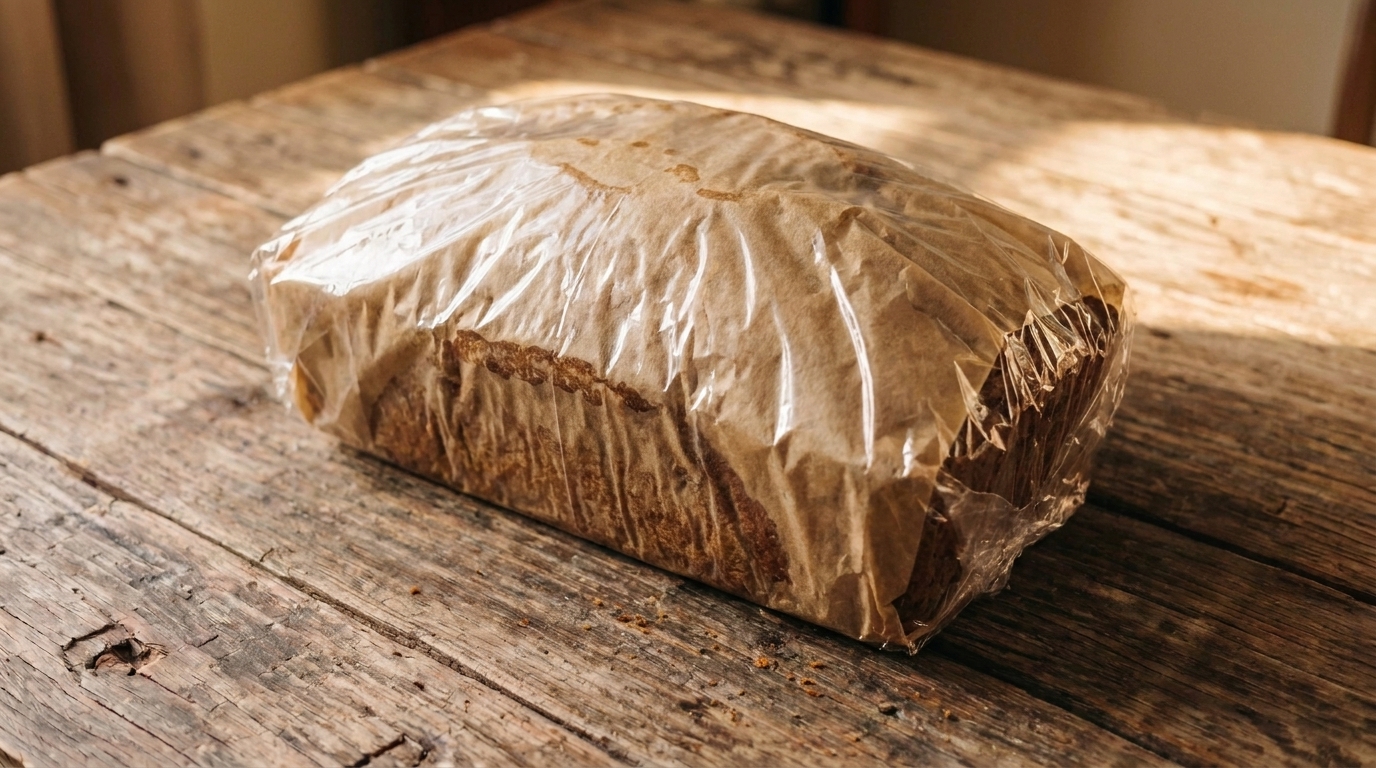
How to store
Once completely cool, wrap tightly and store at room temperature for 3 to 4 days. For maximum moisture, wrap in parchment, then in plastic wrap or an airtight container.
How to freeze
Freeze the whole loaf or individual slices for up to 2 months.
- Whole loaf: Wrap in plastic wrap, then foil.
- Slices: Wrap individually and freeze in a zip-top bag. Thaw at room temp or toast gently.
Food waste tip: Stale slices make excellent French toast. The spices are already built in, which feels like cheating in the best way.
Troubleshooting
Why is my pumpkin bread dry?
Most often it is overbaked or you accidentally added extra flour. Next time, start checking at 50 to 55 minutes and pull when you see a few moist crumbs on the tester.
Why did it sink in the middle?
Usually underbaked, too much moisture (especially with homemade pumpkin puree), or opening the oven door repeatedly early in the bake. Use an oven thermometer if you suspect your oven runs cool.
Why is the center gummy?
Gummy usually means the loaf needed more time, or the pumpkin puree was unusually watery. Tent with foil and keep baking until the tester shows a few moist crumbs, then cool completely before slicing.
Can I make muffins instead?
Yes. Line a muffin tin and fill cups about 2/3 full. Bake at 350°F for 18 to 24 minutes. Check early and pull when the tops spring back and a tester comes out with a few moist crumbs.
Moist Pumpkin Bread Recipe
Ingredients
- 2 cups all-purpose flour (about 240 to 250 g)
- 1 teaspoon baking soda
- 1/2 teaspoon baking powder
- 1 teaspoon fine salt
- 2 teaspoons ground cinnamon
- 1 teaspoon ground ginger
- 1/2 teaspoon ground nutmeg
- 1/4 teaspoon ground cloves
- 1 can (15 ounces or 425 g) pumpkin puree (about 1 3/4 cups)
- 1 cup packed brown sugar
- 1/2 cup granulated sugar
- 1/2 cup neutral oil
- 2 large eggs
- 2 teaspoons vanilla extract
- Optional: up to 1 cup total chocolate chips or toasted nuts
Instructions
- Heat oven to 350°F. Grease a 9x5-inch metal loaf pan and line with parchment.
- In a large bowl, whisk flour, baking soda, baking powder, salt, and spices.
- Add pumpkin puree, brown sugar, granulated sugar, oil, eggs, and vanilla. Fold just until combined. A few small lumps are fine.
- Fold in mix-ins, if using. Scrape batter into pan and smooth the top.
- Bake 55 to 70 minutes, tenting with foil if the top browns too quickly. The loaf is done when a toothpick in the center comes out with a few moist crumbs, or the center reads about 200 to 205°F.
- Cool 15 minutes in the pan, then lift out and cool completely on a rack before slicing.
Notes
- For the moistest texture, wrap the fully cooled loaf and let it rest a few hours before slicing.
- Homemade pumpkin puree can be watery. Drain in a sieve before using to prevent a gummy center.