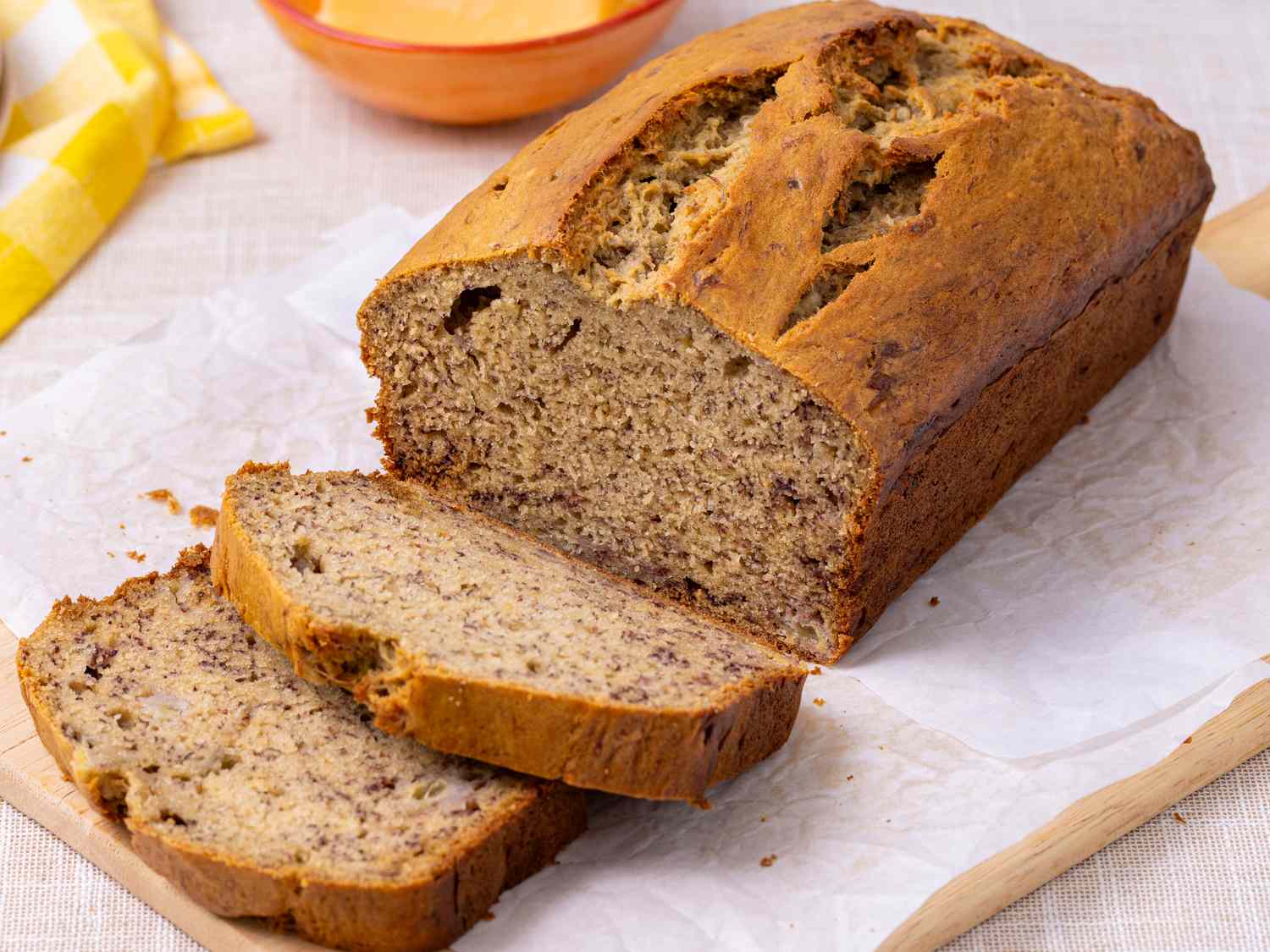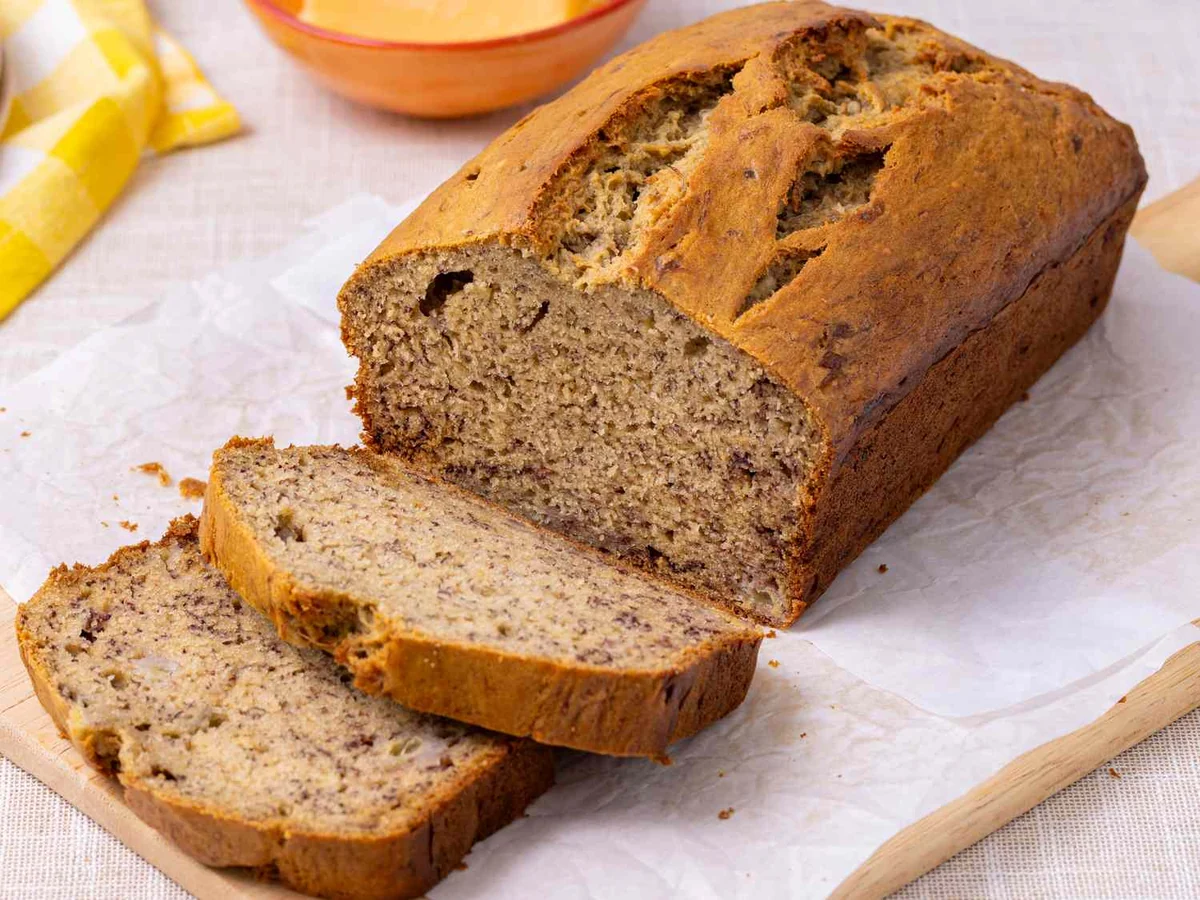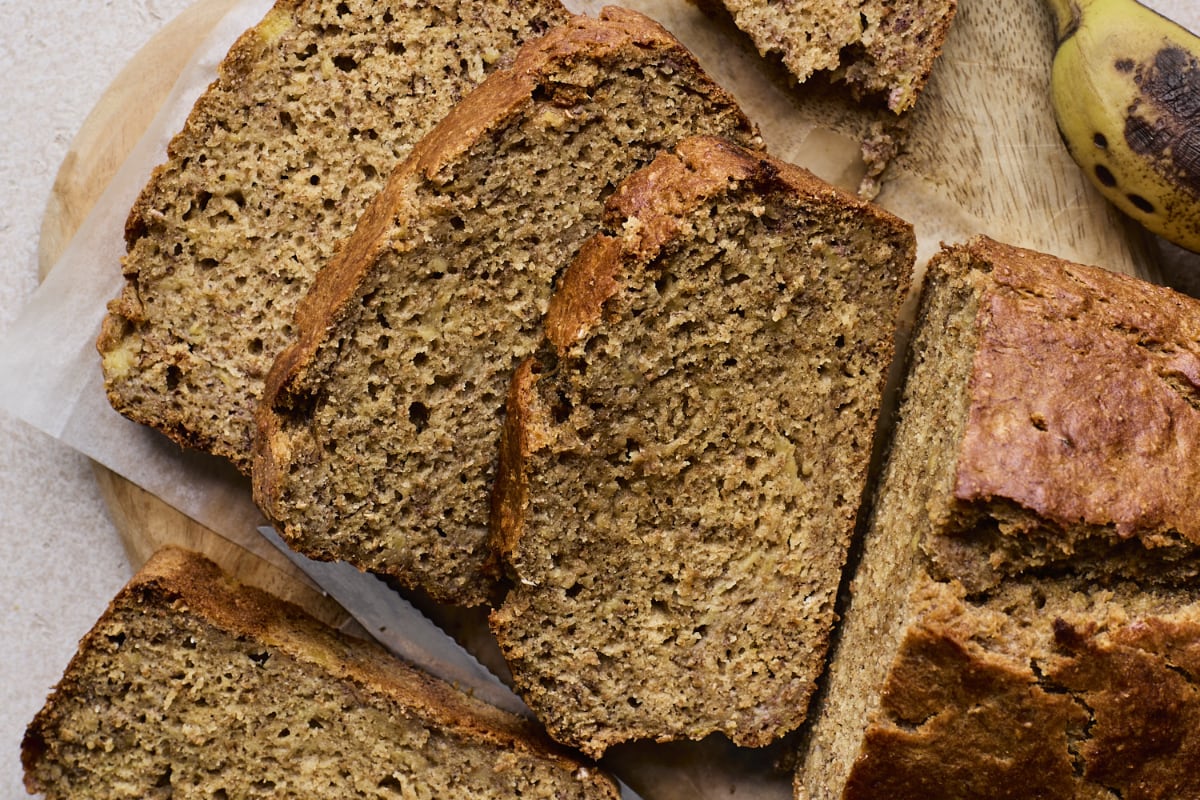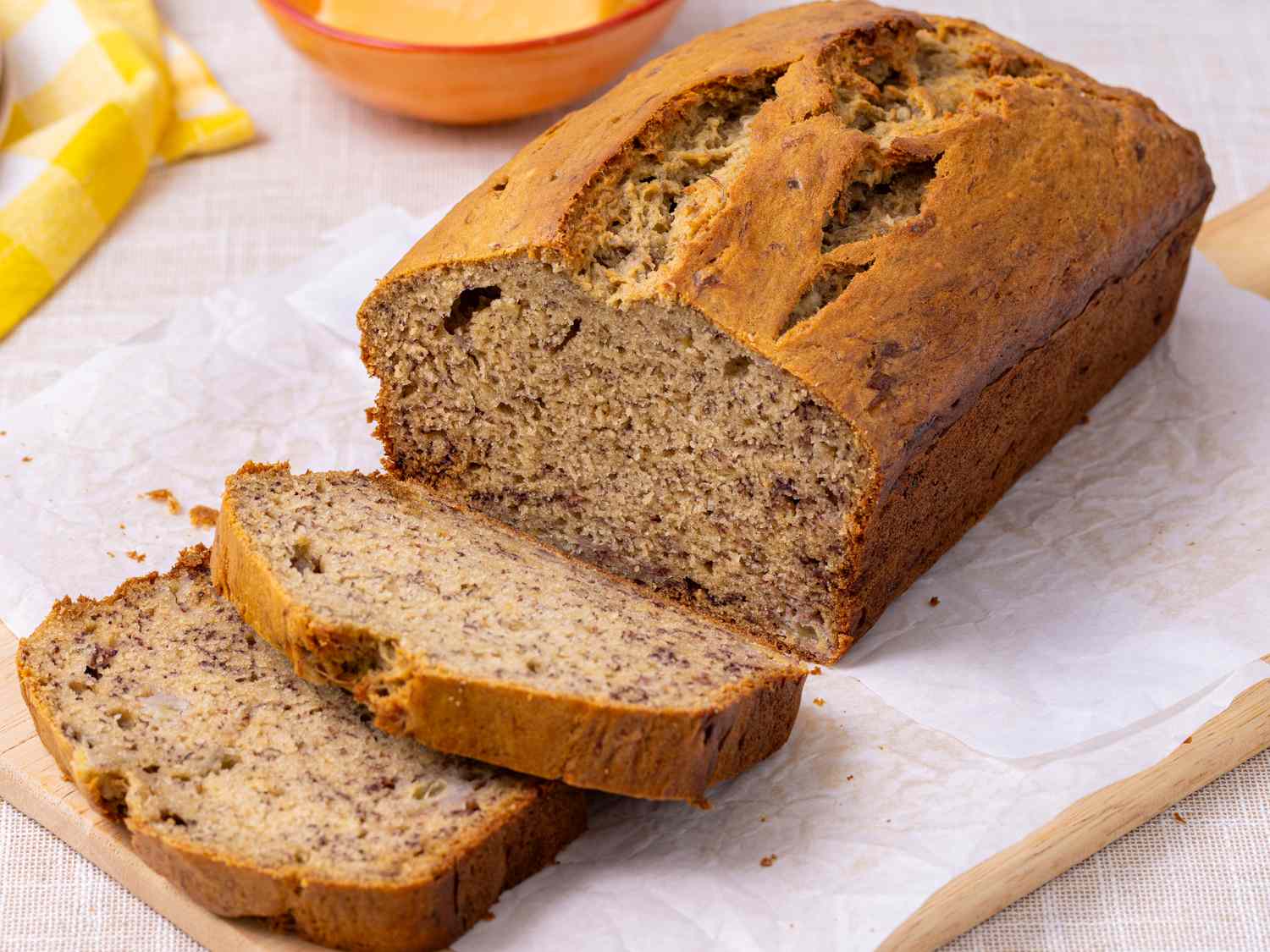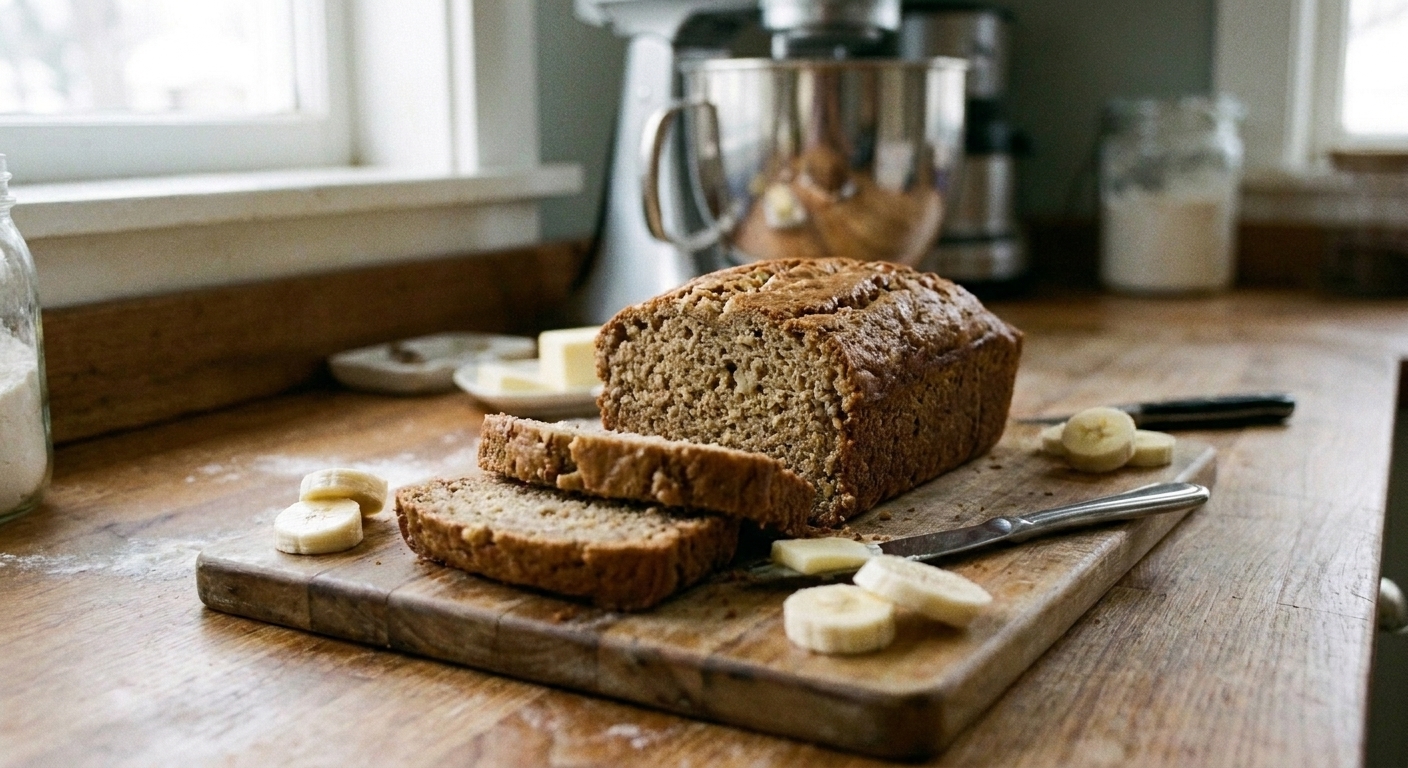

Banana bread is my favorite kind of kitchen rescue mission. A few neglected bananas on the counter, a bowl, a loaf pan, and suddenly you have something that smells like comfort for days. If I have sourdough discard in the fridge, I fold it in here because it can make the crumb a little more tender and help the loaf stay moist, without reading as “sourdough” in a big way.

This recipe is designed specifically for unfed sourdough discard, meaning the portion you remove before feeding your starter, often straight from the fridge. No long fermentation, no complicated timing. Just a classic, weeknight-friendly quick bread with a gentle tang that plays really nicely with banana and brown sugar.
One quick note so you are not surprised: discard varies. If yours is very old and intensely acidic, you will taste more tang. With a reasonably fresh discard, the flavor stays firmly in banana bread territory.
Two things I care about most with banana bread are (1) using bananas at the right stage and (2) getting the center baked through without drying out the edges. You will get clear ripeness cues below, plus a doneness test that focuses on the very center of the loaf, where banana bread loves to hide a gummy streak.
Why this recipe works
- Discard can add tenderness and moisture. Unfed starter brings hydrated flour plus natural acidity, which helps soften the crumb and keep the loaf from feeling dry on day two.
- The flour swap is built in. This recipe assumes discard that is 100% hydration (equal weights flour and water). That means we can account for what it contributes so the batter stays properly thick, not soupy.
- Banana-forward with a mild tang. The acidity from the discard reads as balance, not sour. It brightens the flavor the same way buttermilk does.
- Reliable center doneness cues. Banana bread can look browned and still be underbaked in the middle. This method uses temperature, a skewer test, and visual cues together for a confident finish.
Ingredient notes
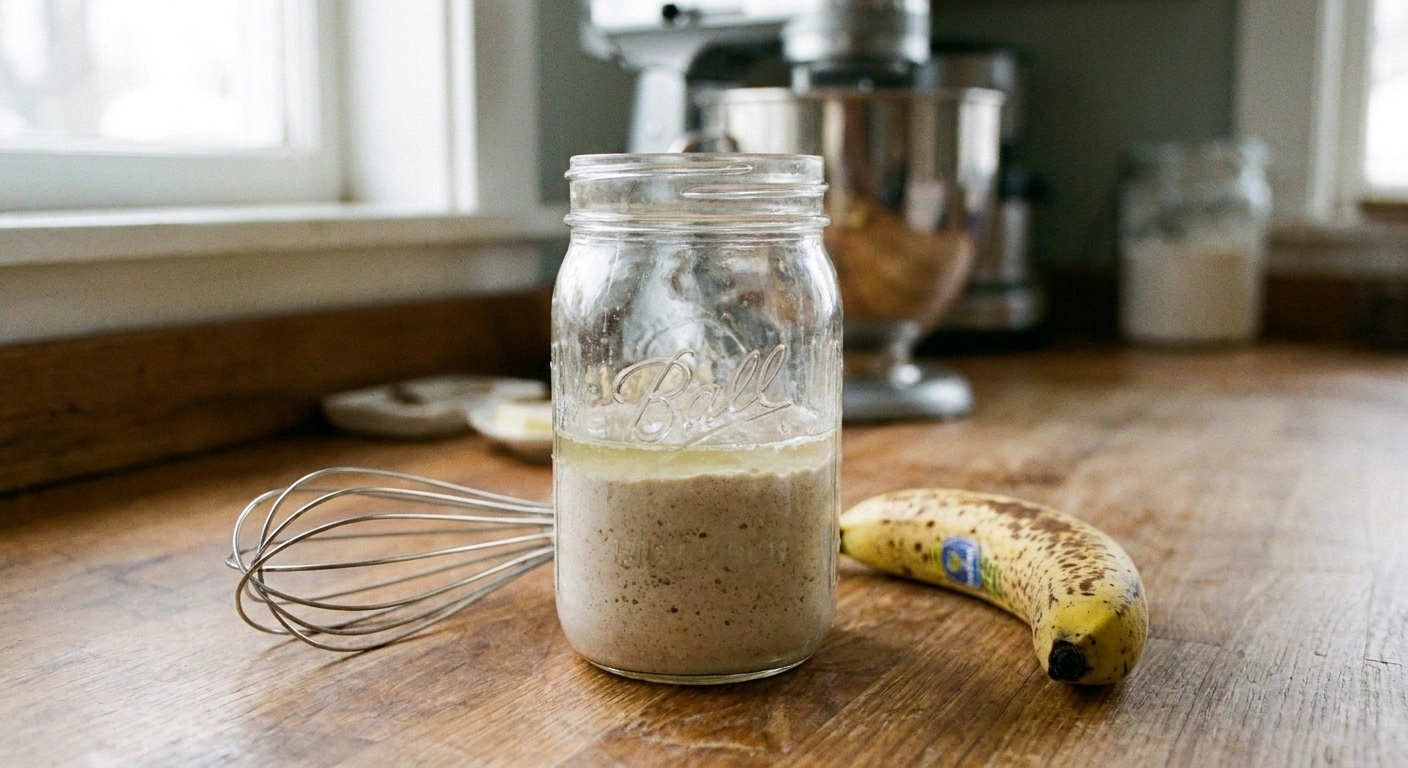
Sourdough discard (unfed): Use discard straight from the fridge is fine. Ideally it is 100% hydration, meaning it was maintained with equal weights flour and water. In this recipe, we use 240 g discard, which contributes 120 g flour + 120 g water.
Exact replacement math (for 100% hydration discard):
- Discard used: 240 g
- Flour contributed by discard: 120 g
- Water contributed by discard: 120 g
- Therefore, compared to a discard-free banana bread, the discard replaces 120 g flour and 120 g liquid.
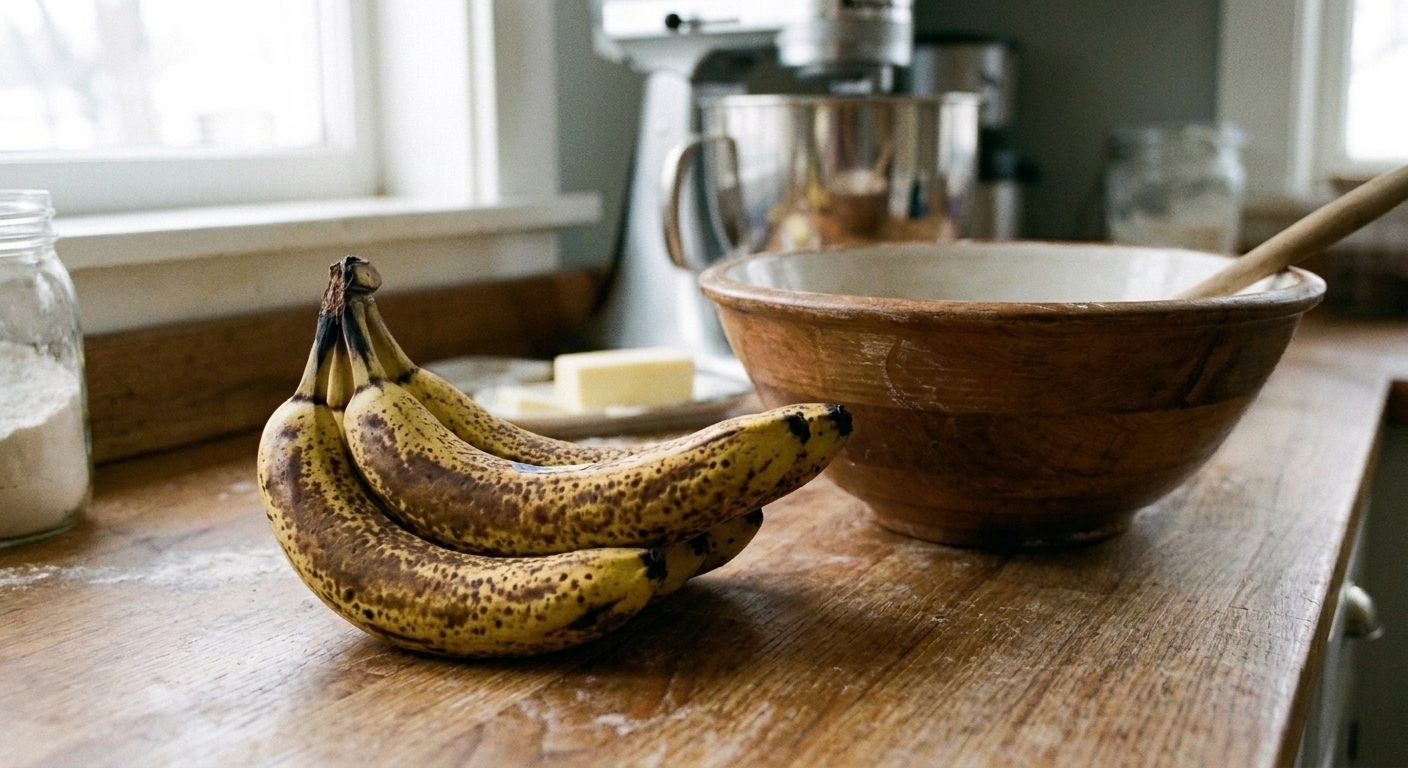
Bananas: You want bananas that are very ripe. Look for peels that are heavily freckled, turning brown or nearly black. When you press the peel, the banana should feel soft all the way through. If your bananas are bright yellow and firm, the bread will taste flat and less sweet.
Butter: Melted butter gives richer flavor than oil. Let it cool slightly so it does not scramble your eggs.
Brown sugar: Adds moisture and caramel notes that pair beautifully with the discard tang. Dark brown sugar gives the deepest flavor.
Leavening: Even though sourdough is involved, this is still a quick bread. We use baking soda and baking powder for a reliable rise.
Salt: Banana bread needs more salt than you think. It makes the banana taste more like banana.
Equipment you will need
- 9 by 5 inch loaf pan
- Mixing bowl
- Whisk and flexible spatula
- Kitchen scale (highly recommended for discard accuracy)
- Wire rack for cooling
- Instant-read thermometer (optional but very helpful for the center doneness test)
Pro tips
- Mash bananas until mostly smooth. A few small lumps are fine. Big chunks can create wet pockets.
- Do not overmix once flour is added. Stir just until you stop seeing dry flour. Overmixing makes banana bread tough and can exaggerate tunneling.
- Use the center doneness test, not just the color. Aim for an internal temperature of 200 to 205 F in the very center of the loaf. If you do not have a thermometer, use a skewer and look for moist crumbs, not wet batter.
- Shield the top if it browns early. If the top is deep brown but the center is lagging, tent loosely with foil for the remaining bake.
- Let it cool before slicing. Give it at least 45 minutes. Slicing hot banana bread is the fastest route to a gummy center.
Substitutes that work
- No brown sugar: Use white sugar. The loaf will be a little less caramelly but still great.
- Butter substitute: Use a neutral oil (like avocado or canola) in an equal amount for a slightly lighter texture.
- Dairy-free: This recipe is naturally dairy-free if you use oil instead of butter.
- Whole wheat flour: Swap up to 50% of the all-purpose flour in the recipe with whole wheat flour for a heartier loaf. Expect a slightly denser crumb.
- If your discard is not 100% hydration: The loaf can still work, but the batter thickness may change. Use visual cues. You want a thick, spoonable batter that slowly levels in the pan, not pourable like pancake batter.
Variations
- Chocolate chip: Fold in 3/4 cup semisweet chocolate chips.
- Toasted walnut: Fold in 3/4 cup toasted chopped walnuts for crunch and a deeper nutty aroma.
- Cinnamon swirl: Layer half the batter, sprinkle 2 tablespoons cinnamon sugar, then add remaining batter and gently swirl with a butter knife.
- Top it: Sprinkle the top with coarse sugar before baking for a crackly crust.
Serving ideas
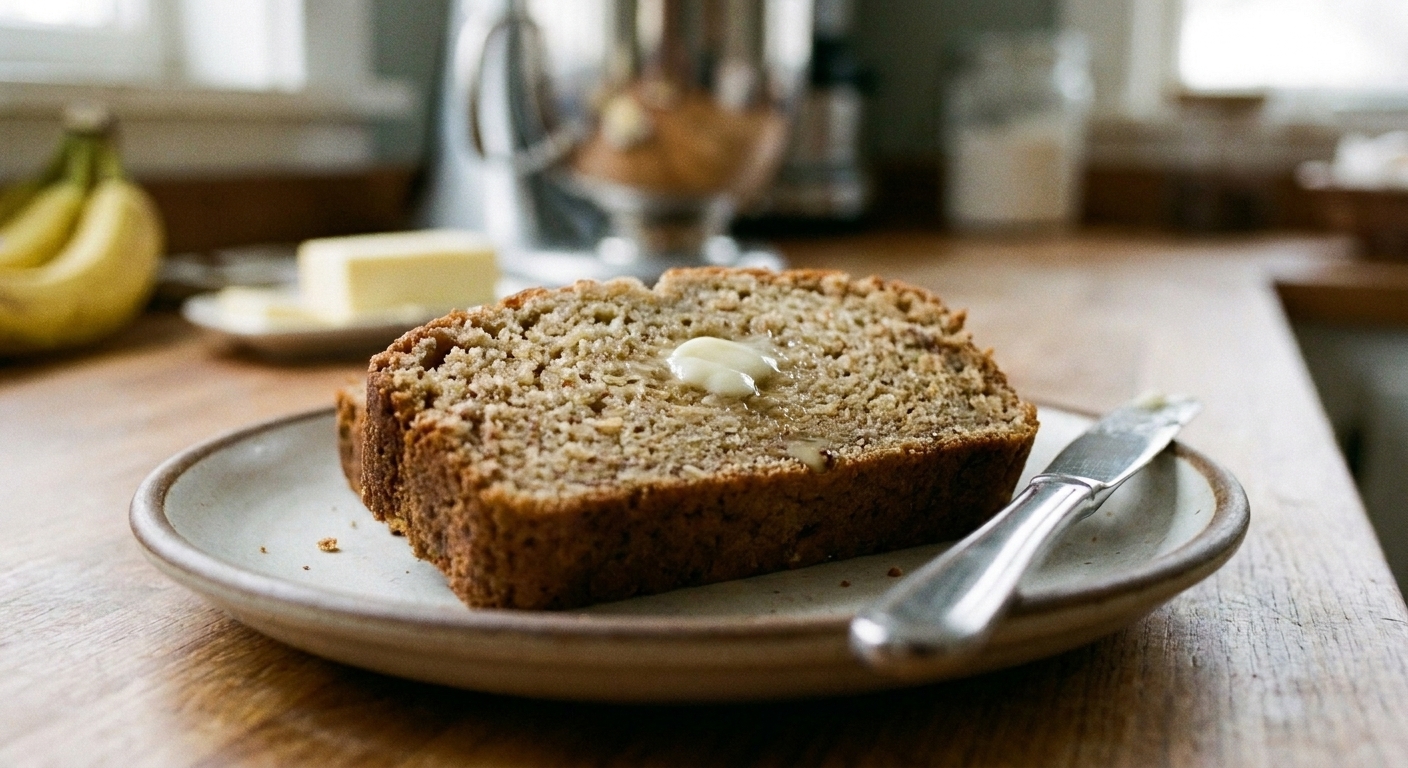
- Warm slice with salted butter and a tiny pinch of flaky salt
- With Greek yogurt and berries for breakfast
- Toasted, then spread with peanut butter or almond butter
- Turn thick slices into banana bread French toast on the weekend
Storage and reheating
- Room temperature: Store tightly wrapped for up to 3 days. I like wrapping the cooled loaf in parchment, then sliding it into a zip-top bag.
- Refrigerator: Not ideal because it can dry out quick breads, but it works for up to 5 days if your kitchen runs warm. Warm slices gently before serving.
- Freezer: Freeze whole or in slices for up to 2 months. Wrap well, then thaw at room temperature. Toasting frozen slices is fair game and honestly delicious.
Common mistakes
- Using barely ripe bananas: Yellow, firm bananas do not have enough sweetness or aroma. Wait for deep speckles or brown skins.
- Measuring discard by volume: Discard density varies a lot. A scale keeps the flour and water contribution consistent.
- Overmixing the batter: Once flour is in, gentle mixing only. Tough banana bread is almost always an overmix situation.
- Pulling it when the toothpick looks clean at the edge: Test the center of the loaf. The edges bake faster. If you hit a wet streak in the middle, it needs more time.
- Slicing too soon: The loaf finishes setting as it cools. If you cut it hot, steam escapes and the crumb can turn gummy.
FAQ
Can I use discard straight from the fridge?
Yes. Cold discard is fine here. The batter is forgiving. Just stir your discard first if it has separated so you are measuring a consistent mixture.
Will this taste sour?
It should taste like banana bread first, with a mild tang in the background. If your discard is extremely old and very acidic, the tang will be more noticeable, but it still reads pleasantly with banana and brown sugar.
My banana bread always sinks in the middle. What helps?
Most sinking is underbaking. Use the center temperature target of 200 to 205 F and cool fully before slicing. Also check that your baking soda and powder are fresh.
Can I make muffins instead of a loaf?
Yes. Divide into a lined muffin pan and bake at the same temperature, checking early. They are done when a skewer in the center comes out with moist crumbs and the tops spring back lightly when pressed.
How do I ripen bananas quickly?
For same-day baking, bake unpeeled bananas on a sheet pan at 300 F until the skins turn black and the fruit feels very soft. Cool, then use as directed.
Sourdough Discard Banana Bread
A one-loaf banana bread made with unfed sourdough discard for a tender crumb, extra moisture, and a gentle tang. Includes clear banana ripeness cues and a foolproof doneness test for the center.
- Prep
- 15 minutes
- Cook
- 55 to 70 minutes
- Total
- 1 hour 25 minutes
- Yield
- 1 loaf (about 10 slices)
Ingredients
- Nonstick spray or softened butter, for the pan
- 3 very ripe medium bananas (about 330 g peeled), mashed
- 240 g unfed sourdough discard (100% hydration)
- 113 g unsalted butter, melted and cooled slightly (8 tablespoons)
- 150 g packed brown sugar
- 2 large eggs
- 1 teaspoon vanilla extract
- 150 g all-purpose flour
- 1 teaspoon baking soda
- 1/2 teaspoon baking powder
- 1 teaspoon fine salt
- 1 teaspoon ground cinnamon (optional)
- 1/2 cup chopped walnuts or chocolate chips (optional)
Instructions
- Heat the oven and prep the pan. Heat oven to 350 F. Grease a 9 by 5 inch loaf pan (and line with a parchment sling if you want easy lifting).
- Check banana ripeness and mash. Your bananas should be heavily speckled to mostly brown and very soft when pressed. Mash until mostly smooth.
- Mix the wet ingredients. In a large bowl, whisk together the mashed bananas, sourdough discard, melted butter, brown sugar, eggs, and vanilla until well combined.
- Combine the dry ingredients. In a small bowl, whisk together the flour, baking soda, baking powder, salt, and cinnamon (if using).
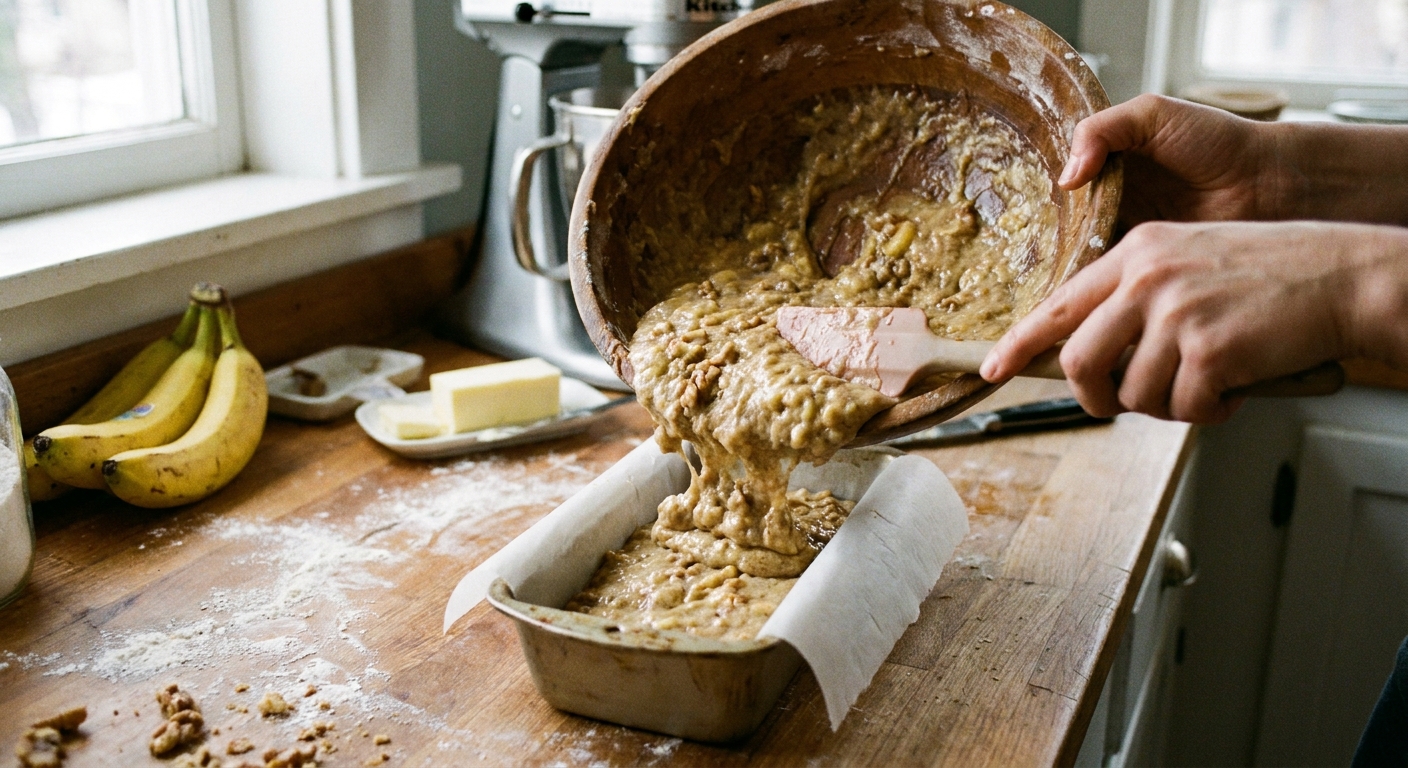
- Make the batter. Add the dry mixture to the wet mixture. Fold gently with a spatula just until you no longer see dry flour. If using walnuts or chocolate chips, fold them in with just a few strokes.
- Bake. Scrape batter into the prepared pan and smooth the top. Bake 55 to 70 minutes, rotating the pan once around the 40 minute mark if your oven browns unevenly. If the top is getting too dark before the center is done, tent loosely with foil.
- Test for doneness in the center. The loaf is done when the center reaches 200 to 205 F on an instant-read thermometer. If you do not have a thermometer, insert a skewer into the center and look for moist crumbs, not wet batter. The top should feel set and spring back lightly when pressed.
- Cool. Cool in the pan for 10 minutes, then lift out (or turn out) onto a wire rack. Cool at least 45 minutes before slicing for the cleanest crumb.
Notes
Discard flour and liquid contribution (exact): This recipe uses 240 g 100% hydration sourdough discard, which contains 120 g flour and 120 g water. In other words, the discard replaces 120 g flour and 120 g liquid compared to a discard-free banana bread.
Make ahead: Banana bread tastes even better the next day. Once fully cooled, wrap tightly and leave at room temperature overnight.
Doneness reminder: Always test the very center. Banana bread edges can be fully baked while the middle is still underdone.