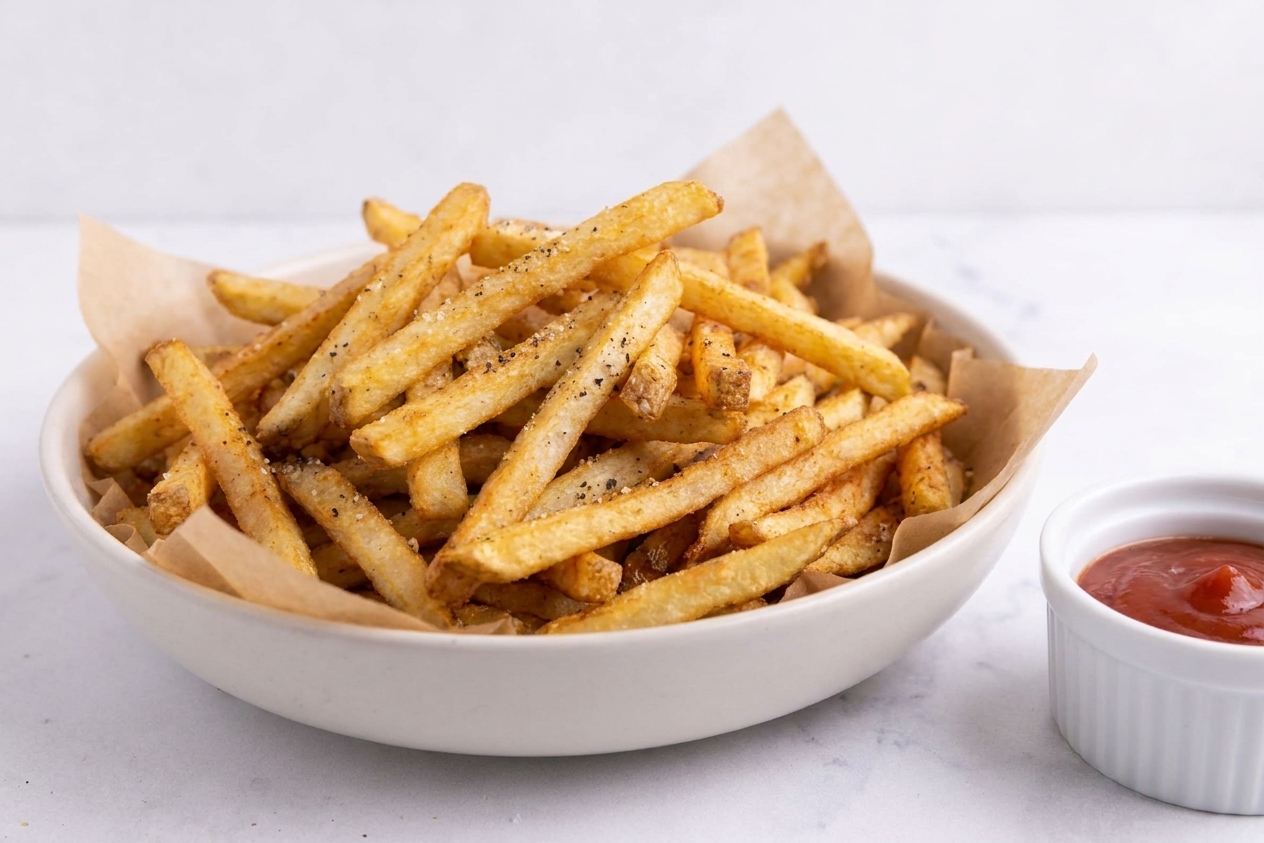


I love a whole baked potato, but when I want that same cozy potato satisfaction with serious crunch, I reach for hand-cut fries. The air fryer makes weeknight fries totally doable, as long as you respect two things: surface dryness and breathing room.
This recipe gives you two paths: a quick soak method (best crunch and most classic fry texture) and a no-soak method (when you just want fries now). Either way, we use a modest amount of oil, cook in sensible batches, and do a second toss mid-cook so the edges get those crackly, browned corners instead of steaming into softness.
One more thing from my slightly obsessive salt and acid brain: fries taste flat if they are only salty. I always serve them with something tangy on the side, even if it is just ketchup with a squeeze of lemon or a quick pickle situation from the fridge.
Soak or no soak
Soaking (and especially rinsing after) helps remove surface starch from the cut potatoes. That usually means less sticking and a crispier exterior, but it is not magic on its own. Drying well and leaving space in the basket still do most of the heavy lifting.
If you have 20 to 30 minutes, soak. If you do not, skip it and be extra thorough about drying, then keep your batch smaller.
Batch size matters
Air fryers behave like compact convection ovens. If you pack the basket, you trap moisture and the fries turn limp. Plan on cooking in two batches for a typical 5 to 6 quart basket air fryer when making fries from about 1 1/2 pounds of potatoes.
That second toss
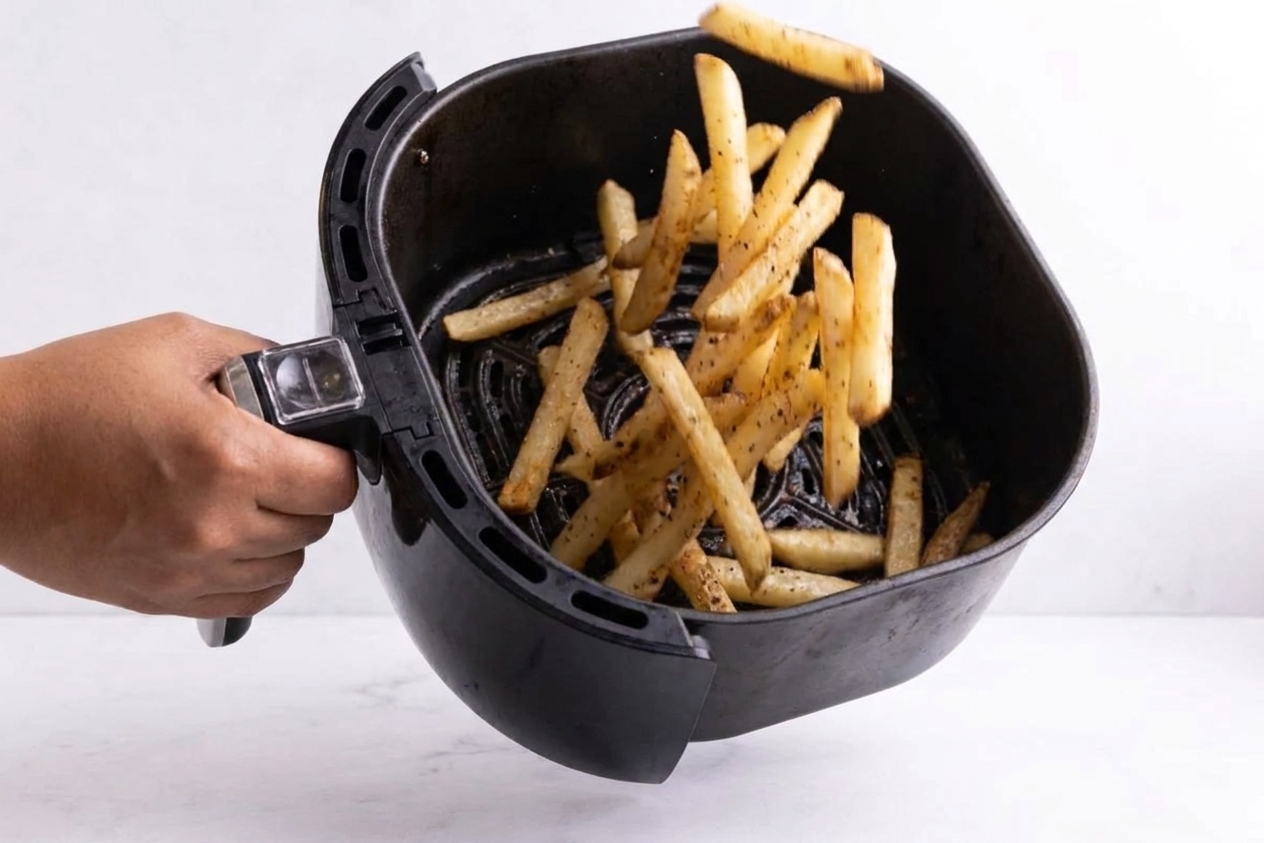
Halfway through cooking, pull the basket and toss hard. You are redistributing oil, moving paler fries into hotter zones, and venting built-up moisture so it does not hang around and soften the surface.
For extra-crisp edges, I like to toss again during the last few minutes, then cook just until you see deeper golden spots on the corners.
Why this recipe works
- Soak or no-soak flexibility: You can choose the best texture path for your schedule, without changing the core method.
- Dry surface equals crisp: Thorough drying (especially after soaking) prevents steaming, which is the number one enemy of crunchy fries.
- Measured oil, not guesswork: Enough oil to promote browning, not so much that the fries feel heavy or greasy.
- Small batches and active tossing: Proper airflow plus a mid-cook toss creates evenly browned fries with crisp edges.
Ingredient notes
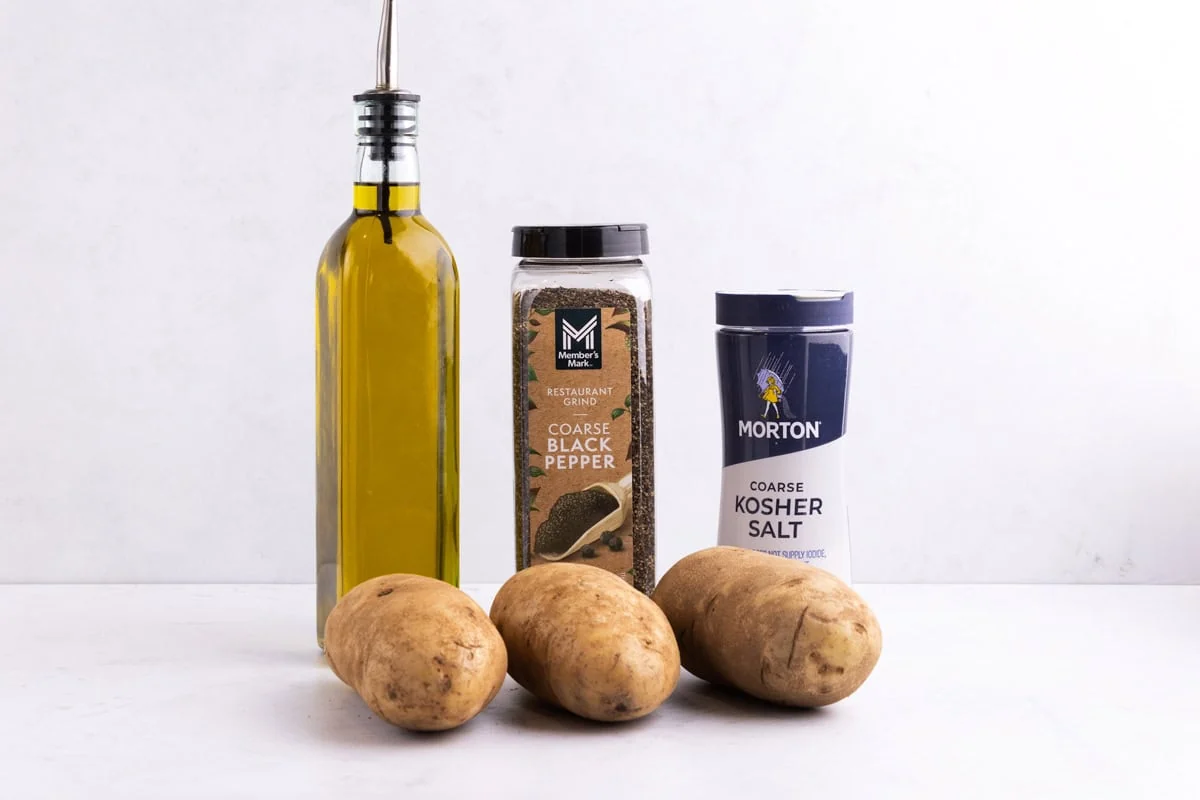
- Potatoes: Russets give you the driest interior and the most classic fry texture. Yukon Golds work too and taste a little richer, but they brown faster and can soften sooner, so keep a close eye near the end.
- Oil: Use a neutral oil with a higher smoke point like avocado, canola, grapeseed, or vegetable oil. Olive oil works in a pinch, but it can taste a little assertive at higher heat.
- Salt: Salt right after cooking so it sticks. If you love a super even salt coat, use fine sea salt. For that diner-style bite, kosher salt is perfect.
- Optional starch boost: A small spoonful of cornstarch can help with crispness, especially for no-soak fries. It is optional, not required.
Equipment you will need
- Basket-style air fryer (any size works, but you may need more batches)
- Sharp chef's knife and cutting board
- Large bowl (for soaking and tossing)
- Clean kitchen towel or paper towels (for thorough drying)
- Spider strainer or colander (helpful for draining soaked fries)
Pro tips
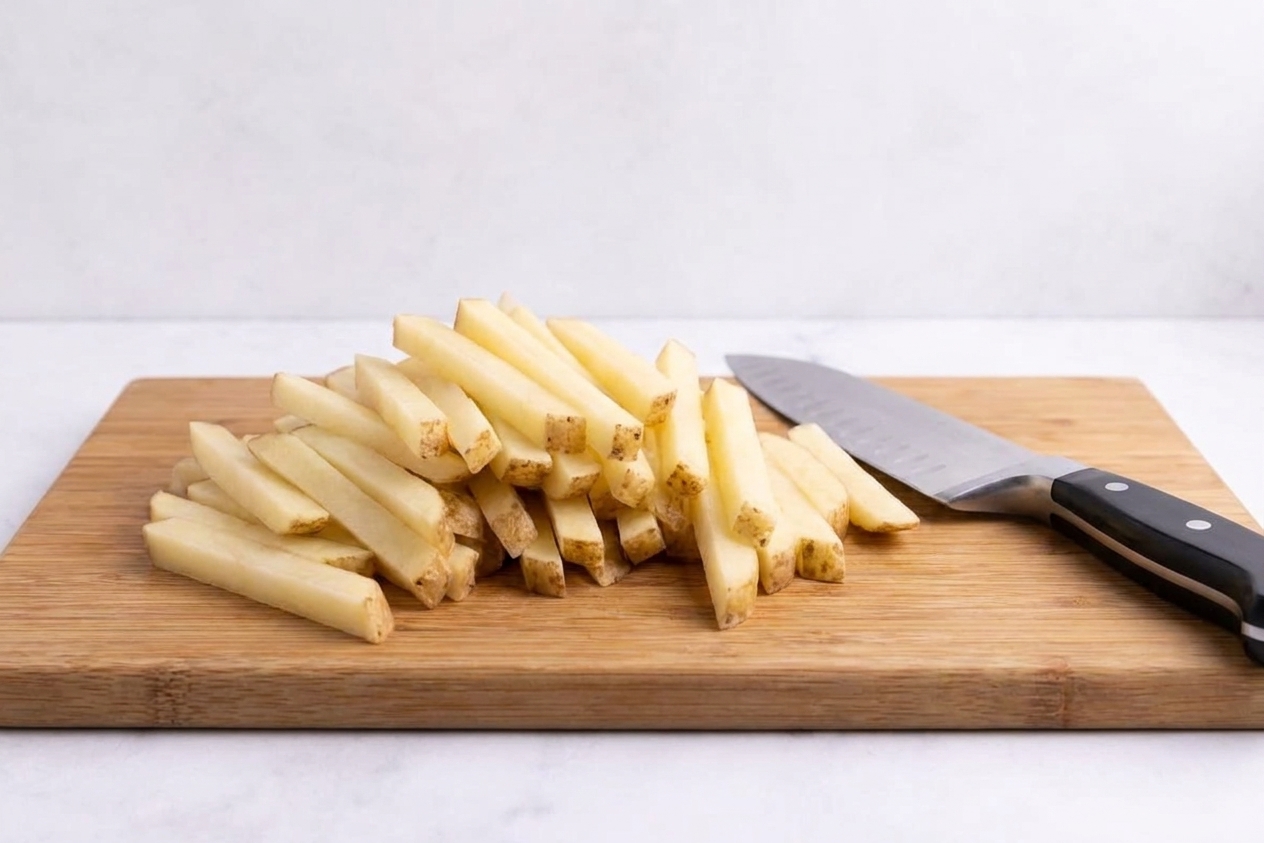
- Cut evenly: Aim for 1/4-inch thick fries. If some are skinny and some are thick, the skinny ones will overbrown before the thick ones crisp.
- Dry like you mean it: After soaking, drain well, then dry until the fries do not look glossy or wet. Any water left on the surface becomes steam.
- Oil after drying: Toss fries with oil only once they are dry, otherwise the oil traps moisture against the potato.
- Do not skip preheating if your model needs it: A hot basket kick-starts browning.
- Toss assertively: A gentle stir is not enough. Give the basket a real shake to expose new surfaces.
- Season immediately: Salt adheres best when fries are hot and just out of the air fryer.
Substitutes that work
- Russet potatoes: Substitute Yukon Gold. Expect slightly less shatter-crisp edges and a creamier interior.
- Neutral oil: Substitute light olive oil or melted ghee. Watch closely for faster browning with ghee.
- Cornstarch (optional): Substitute potato starch or rice flour in the same small amount for a similar crisping effect.
Variations
- Seasoned fries: Toss hot fries with a mix of salt, smoked paprika, and garlic powder.
- Salt and vinegar vibes: Season with salt, then mist lightly with malt vinegar (or serve vinegar on the side to dip).
- Parmesan herb fries: Toss with finely grated Parmesan and chopped parsley right after cooking.
- Spicy fries: Add cayenne or chili powder to your seasoning blend, then serve with something cooling like yogurt dip.
Serving ideas
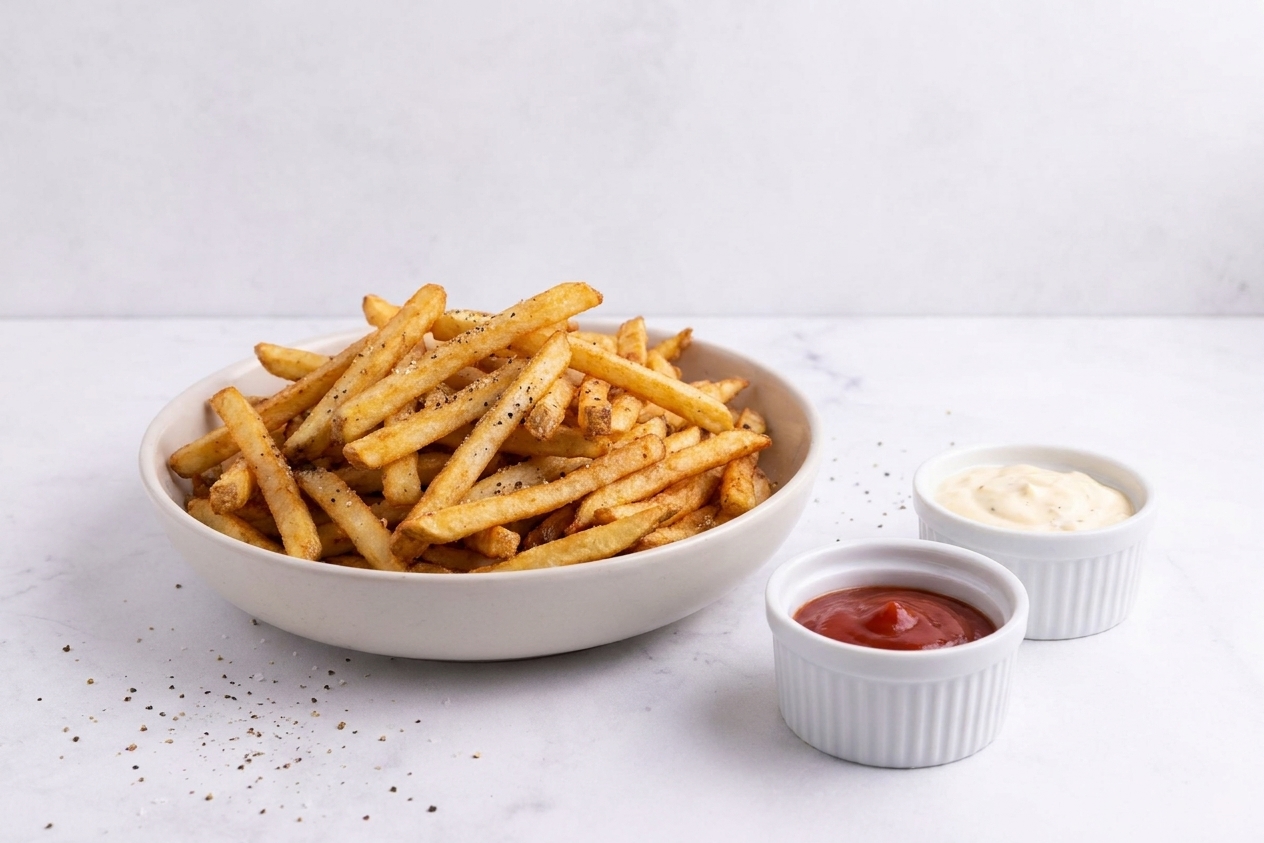
- With burgers, salmon patties, or a simple rotisserie chicken dinner
- Alongside a big chopped salad for a fun fries-and-salad combo
- As a snack with ketchup, mayo, garlic aioli, or mustard
- Topped like loaded fries with scallions and a drizzle of sauce, served immediately
Storage and reheating
- Best fresh: Fries are at their crispiest right out of the air fryer.
- Refrigerate: Cool completely, then store in an airtight container for up to 3 days.
- Reheat: Air fry at 375 F until hot and crisp, usually 3 to 6 minutes depending on thickness and quantity. Shake once.
- Avoid the microwave: It makes fries soft. If you must, microwave briefly to warm, then crisp in the air fryer.
Common mistakes
- Overcrowding the basket: Fries need airflow. Cook in batches for real crispness.
- Not drying enough: Wet fries steam. Dry thoroughly, especially after soaking.
- Too much oil: Excess oil can make fries heavy and can encourage uneven browning. Stick to a light, even coat.
- Skipping the toss: Without a mid-cook toss, you get patchy color and softer spots.
- Seasoning too early: Salt before cooking can draw moisture to the surface. Season right after.
FAQ
Do I have to soak the potatoes?
No. Soaking helps remove surface starch and can improve crisping, but the no-soak method works if you dry well, use a small batch, and toss mid-cook.
Why are my air fryer fries not crispy?
Usually one of three things: they were not dried enough, the basket was overcrowded, or they needed more time at the end. Add a few extra minutes, tossing once, until the edges look deeper golden and feel crisp when you tap one with a fork.
What temperature is best for air fryer fries?
I like a two-stage cook: a slightly lower temp first to cook through, then higher heat to brown and crisp. It is forgiving across different air fryer models.
Can I cut the potatoes ahead?
Yes. Keep cut fries submerged in cold water in the fridge for up to 24 hours. Drain and dry very well before oiling and cooking.
Do I need to use spray oil?
No. A bowl toss with measured oil coats more evenly than most aerosol sprays, and you avoid propellants. If you do use a sprayer, use an oil mister meant for cooking oils.
Air Fryer French Fries
Hand-cut air fryer French fries with a soak or no-soak option, the right amount of oil, realistic batch sizing, and a mid-cook second toss for crisp, golden edges.
- Prep
- 15 minutes
- Cook
- 20 minutes
- Total
- 35 minutes
- Yield
- 4 servings
Ingredients
- 1 1/2 pounds russet potatoes (about 2 large), scrubbed
- Cold water (for soaking, optional)
- 1 1/2 tablespoons neutral oil (avocado, canola, grapeseed, or vegetable)
- 1/2 teaspoon kosher salt, plus more to taste
- 1 tablespoon cornstarch (optional, for extra crisp)
- Freshly ground black pepper (optional)
Instructions
- Cut the fries. Cut potatoes into 1/4-inch thick sticks. Try to keep them as even as possible so they cook at the same speed.
- Choose your prep: soak or no-soak.
Soak method (best crisp): Place cut fries in a bowl of cold water and soak 20 to 30 minutes. Drain, then rinse briefly until the water runs mostly clear. Drain again.
No-soak method (fast): Skip soaking and move straight to drying. - Dry very well. Spread fries on a clean kitchen towel or a thick layer of paper towels. Pat until the surface looks dry and feels dry to the touch. This step matters more than any other.
- Preheat the air fryer. Preheat to 360 F for 3 to 5 minutes if your air fryer requires preheating.
- Oil and season lightly. In a large bowl, toss dry fries with oil until lightly and evenly coated. If using cornstarch, sprinkle it over the fries and toss again until no powdery spots remain. Season with 1/2 teaspoon kosher salt (save heavier salting for after cooking).
- Air fry in batches. Arrange fries in the basket in as close to a single layer as you can manage, with some overlap but not packed tight. Cook at 360 F for 10 minutes, shaking the basket hard halfway through if you can.
- Second toss, then crisp. Increase heat to 400 F. Cook 6 to 10 minutes more, shaking the basket well at the halfway point. For extra-crisp edges, give the basket one more toss during the last 2 to 3 minutes, then finish cooking until the fries are deeply golden at the edges and crisp when you pick one up.
- Season and serve. Immediately transfer fries to a bowl and season with more salt to taste (and pepper, if using). Serve right away while hot and crisp.
Notes
Batch size tip: For a typical 5 to 6 quart basket air fryer, plan on 2 batches for 1 1/2 pounds of potatoes. If your air fryer is smaller, do 3 batches. Crowding is the quickest way to limp fries.
Make-ahead: You can cut the fries up to 24 hours ahead and store them submerged in cold water in the refrigerator. Drain and dry extremely well before oiling.
Doneness cue: Look for deeper golden spots on the edges and corners. If they look pale, they will taste soft.