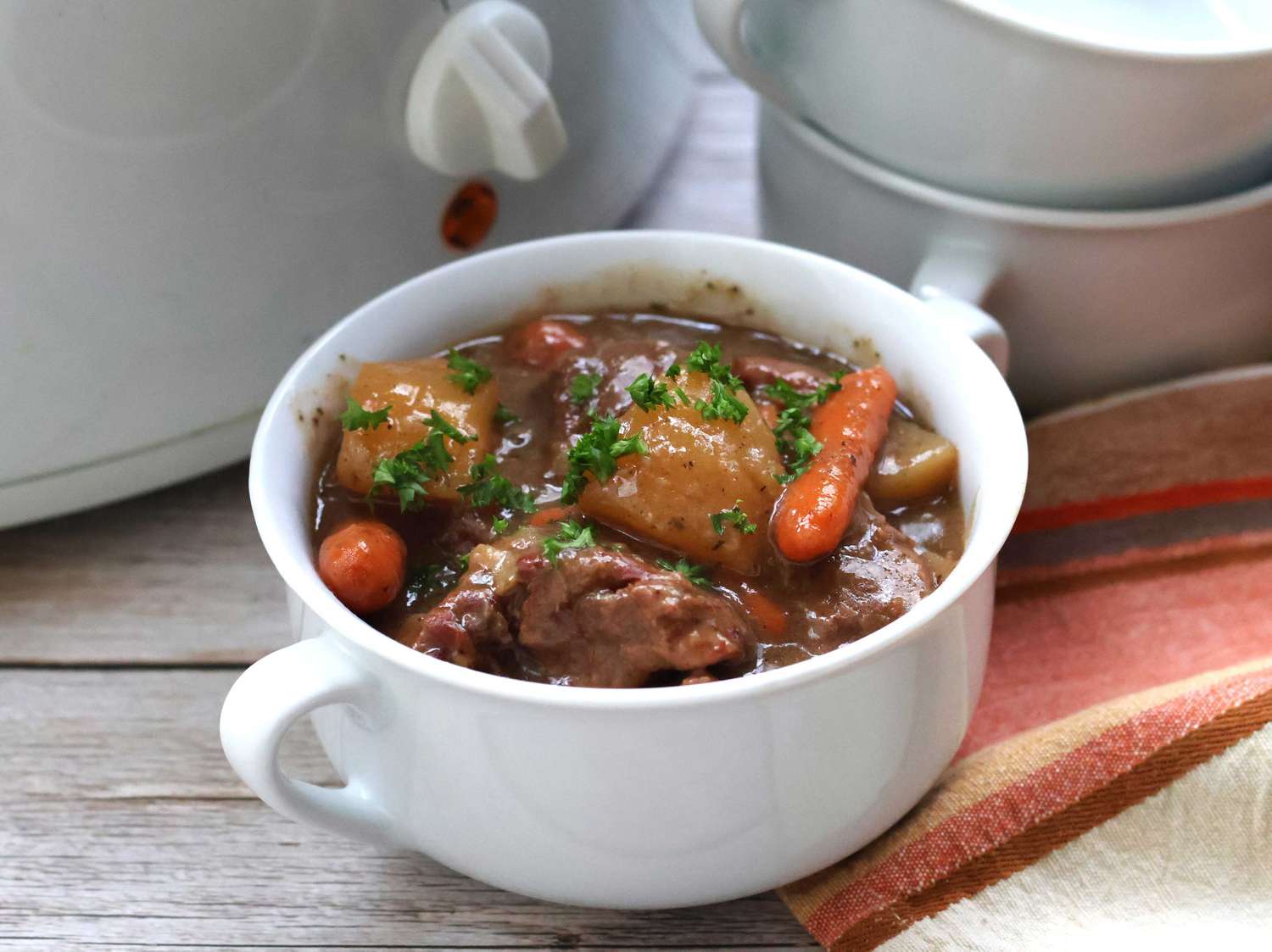
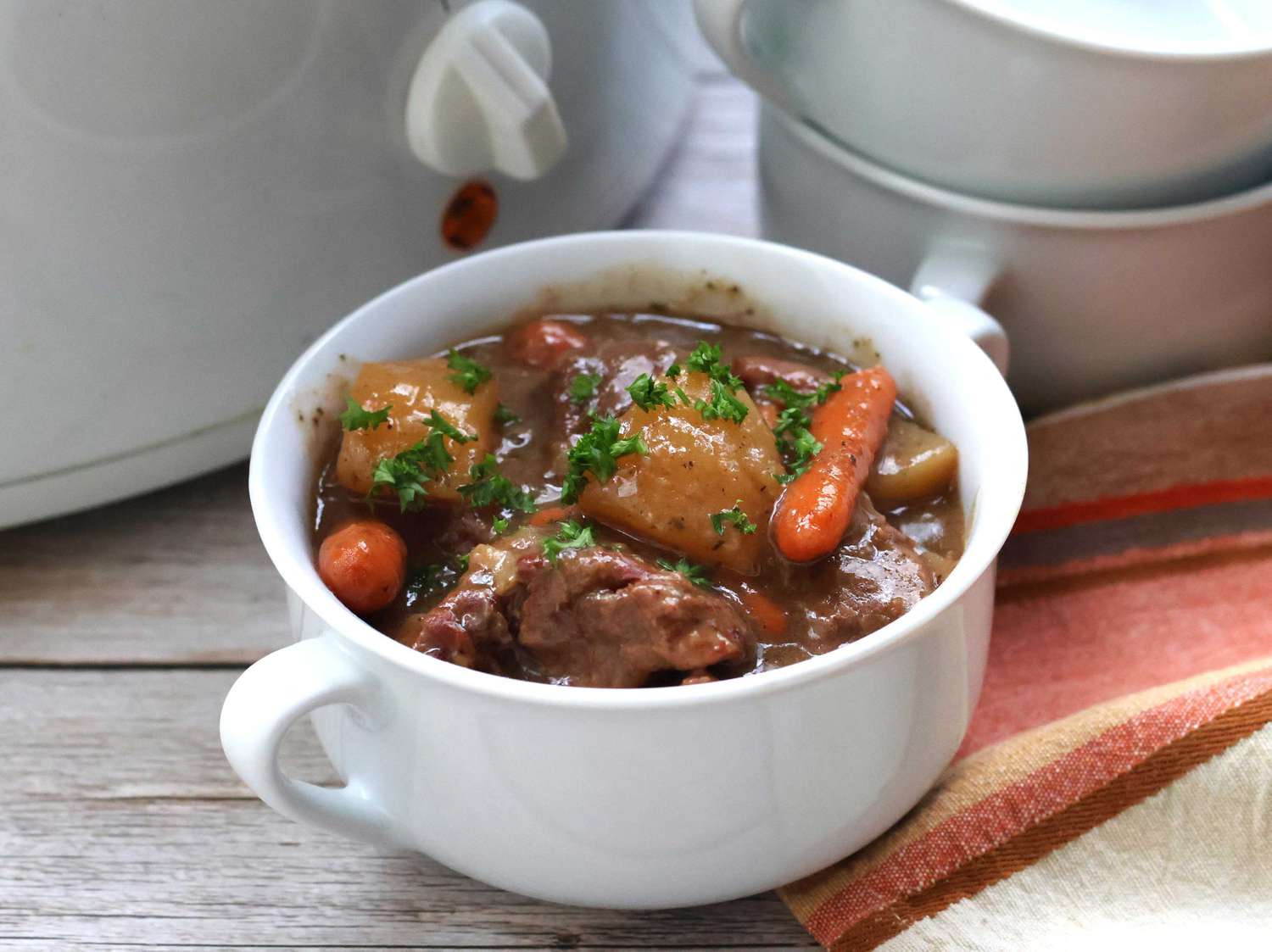
If you want that classic, slow-simmered beef stew comfort without babysitting a pot, this Crock Pot version is your answer. We build real depth with a few small choices: a good sear (optional but worth it), enough salt early, and a splash of acid at the end to wake everything up. The result is tender beef, vegetables that stay intact, and a broth that tastes like you planned ahead even if you didn’t.
Why this recipe works
- Brown the beef (even briefly): Searing creates caramelized flavor that slow cookers cannot replicate on their own. If you have 10 minutes, do it.
- Tomato paste and Worcestershire: Tomato paste adds body and a subtle sweetness. Worcestershire brings savory depth.
- Slurry at the end (cornstarch or flour): Instead of adding flour early (which can taste pasty), thicken at the end for a silky, stew-y finish.
- Finish with acid: A spoon of vinegar or a squeeze of lemon at the end makes the whole pot taste more like itself.
Ingredient notes
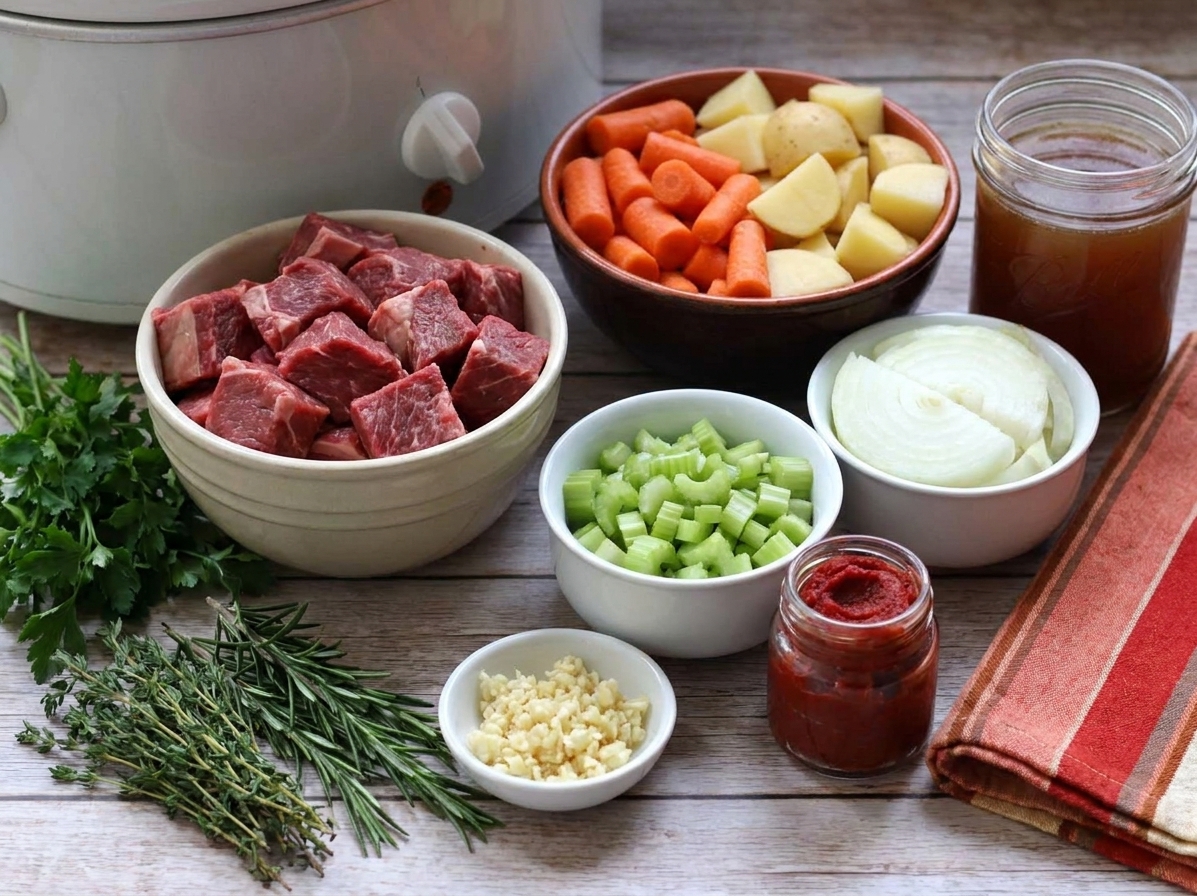
Beef chuck: Look for chuck with visible marbling for the most consistent tenderness. Lean “stew meat” can dry out and stay tough, and packages labeled stew meat may be mixed cuts.
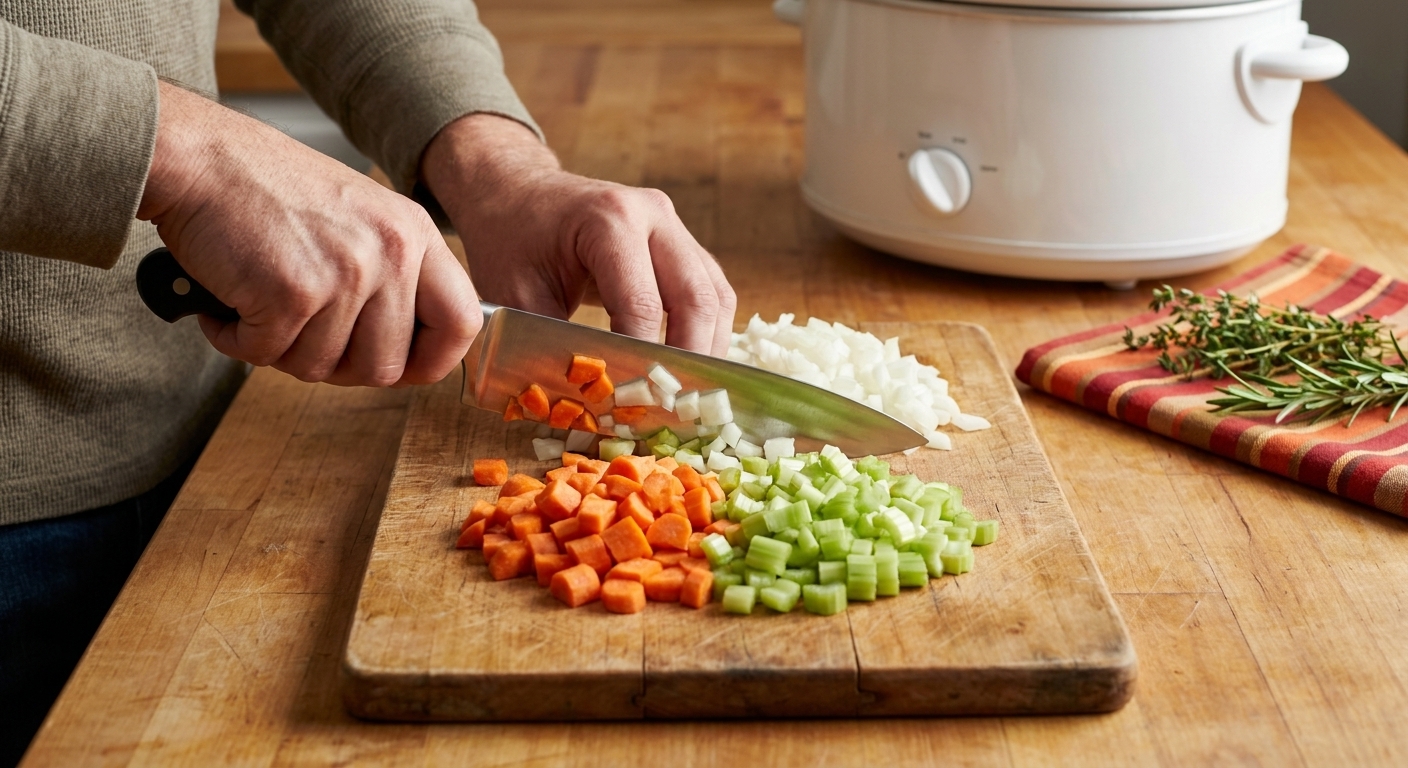
Cut size matters: In a slow cooker, small pieces turn to mush fast. Aim for 1 to 1 1/2-inch chunks for potatoes and carrots so they stay hearty and spoonable.
Salt early, acid late: Season at the beginning so the beef and broth taste properly seasoned, then add vinegar or lemon at the end for brighter balance and more control.
Equipment you will need
- Slow cooker (Crock Pot)
- Large skillet (for searing and deglazing, optional but recommended)
- Knife and cutting board
- Measuring cups and spoons
- Small bowl (for mixing the slurry)
Pro tips
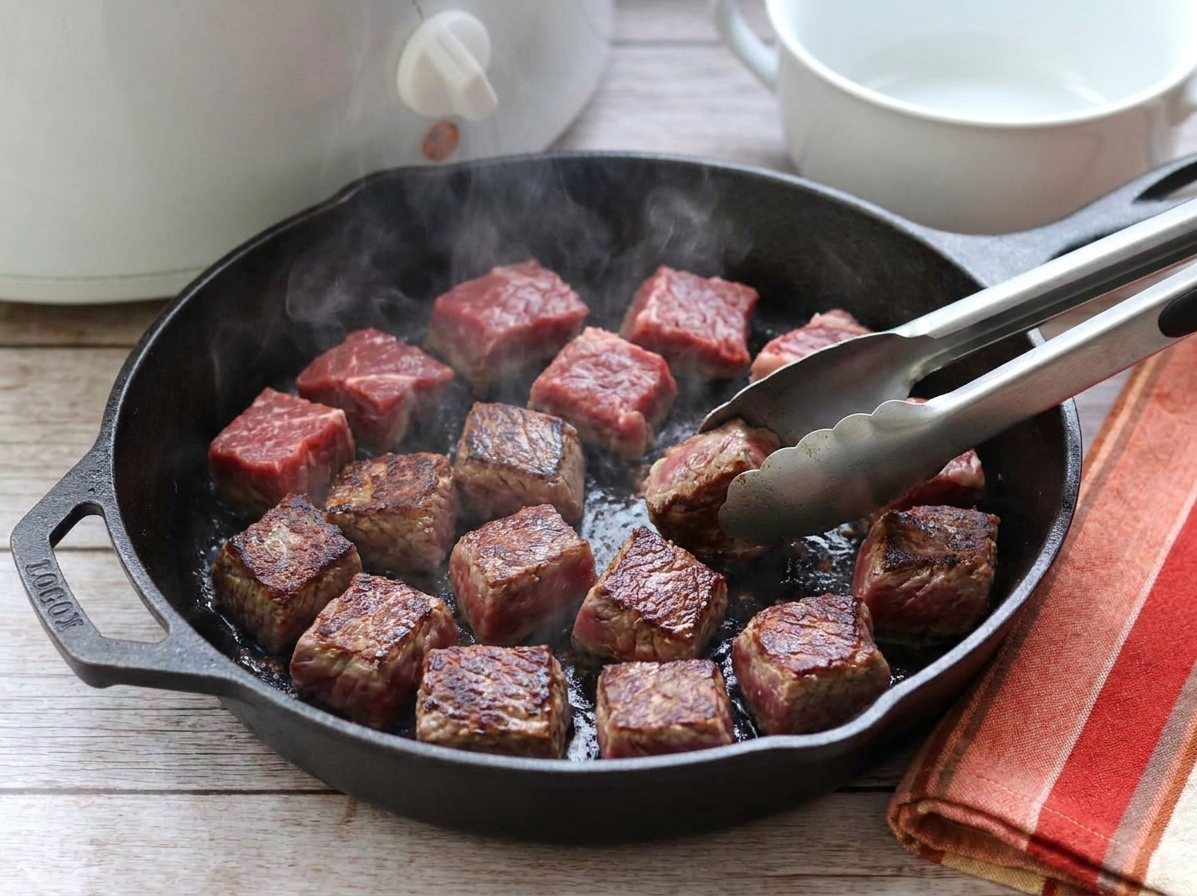
- Sear in batches: Brown beef briefly to build roasty depth that the slow cooker cannot create on its own.
- Deglaze for extra flavor: Stir tomato paste in the hot skillet for 30 seconds, then add wine (or a splash of broth) and scrape up the browned bits before adding to the slow cooker.
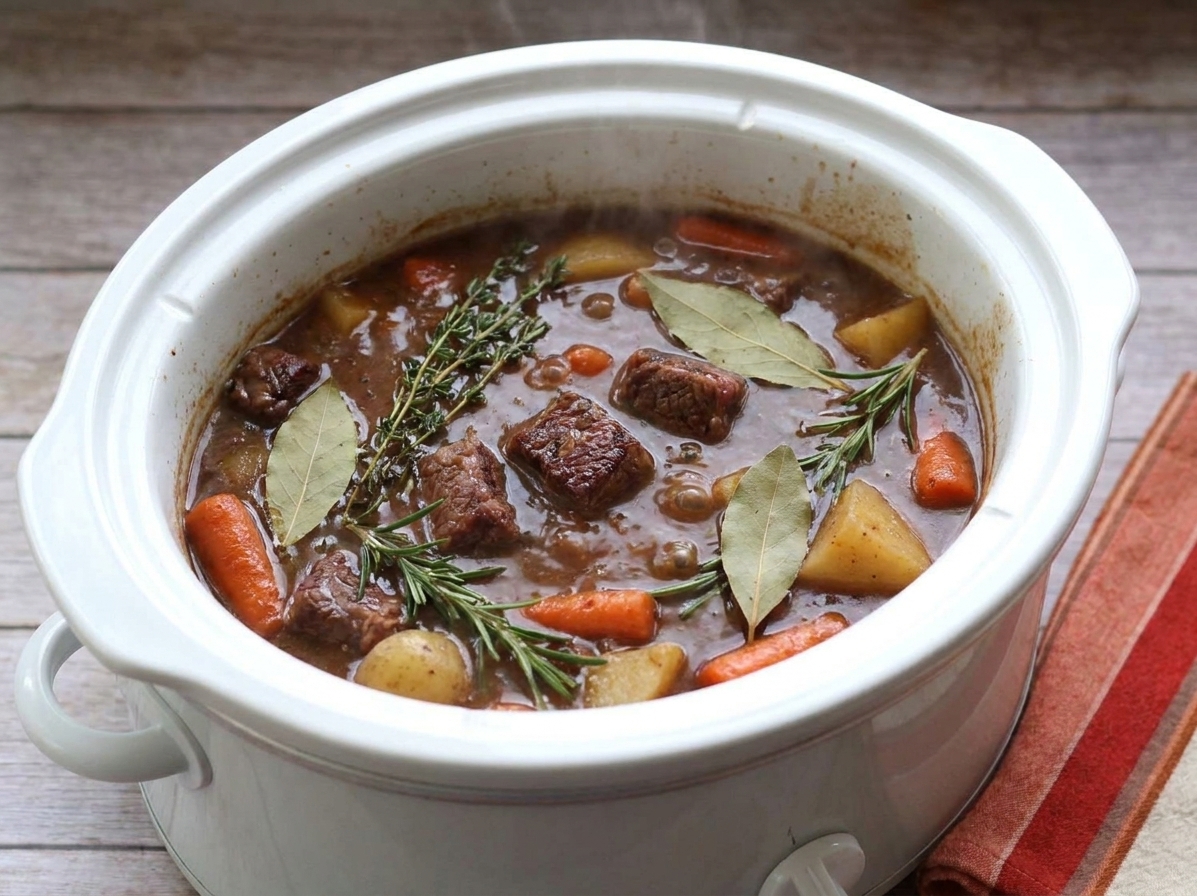
- Cook to tenderness, not the clock: The stew is done when the beef yields easily when pressed with a fork. If it is chewy at the end, it usually needs more time, not more liquid. Add another 30 to 60 minutes on LOW and check again.
- Thicken at the end: Use a cornstarch or flour slurry near the end so the broth turns glossy and slightly thickened, without a pasty flavor.
- Adjust at the finish: Remove bay leaves, then add vinegar 1 teaspoon at a time, tasting as you go. Add more salt and pepper if needed.
Substitutes that work
- No red wine: Use more broth. For a similar roundness, add 1 teaspoon balsamic vinegar at the end.
- No Yukon Gold potatoes: Red potatoes hold their shape well. Russets get softer and thicken the stew more.
- Gluten-free: Skip flour for dredging and thicken with cornstarch slurry.
Variations
- More vegetables: Add mushrooms (brown them if you can), parsnips, or turnips. Add peas during the last 10 minutes so they stay bright.
- Deeper, darker broth: Add 1 to 2 teaspoons soy sauce or 1 teaspoon Better Than Bouillon (watch salt).
- Less waste version: Use what is lingering in the crisper drawer, like the last celery ribs, half an onion, or a couple carrots. If using leftover cooked vegetables (like roasted carrots), stir them in at the end just to warm through so they do not overcook.
Serving ideas
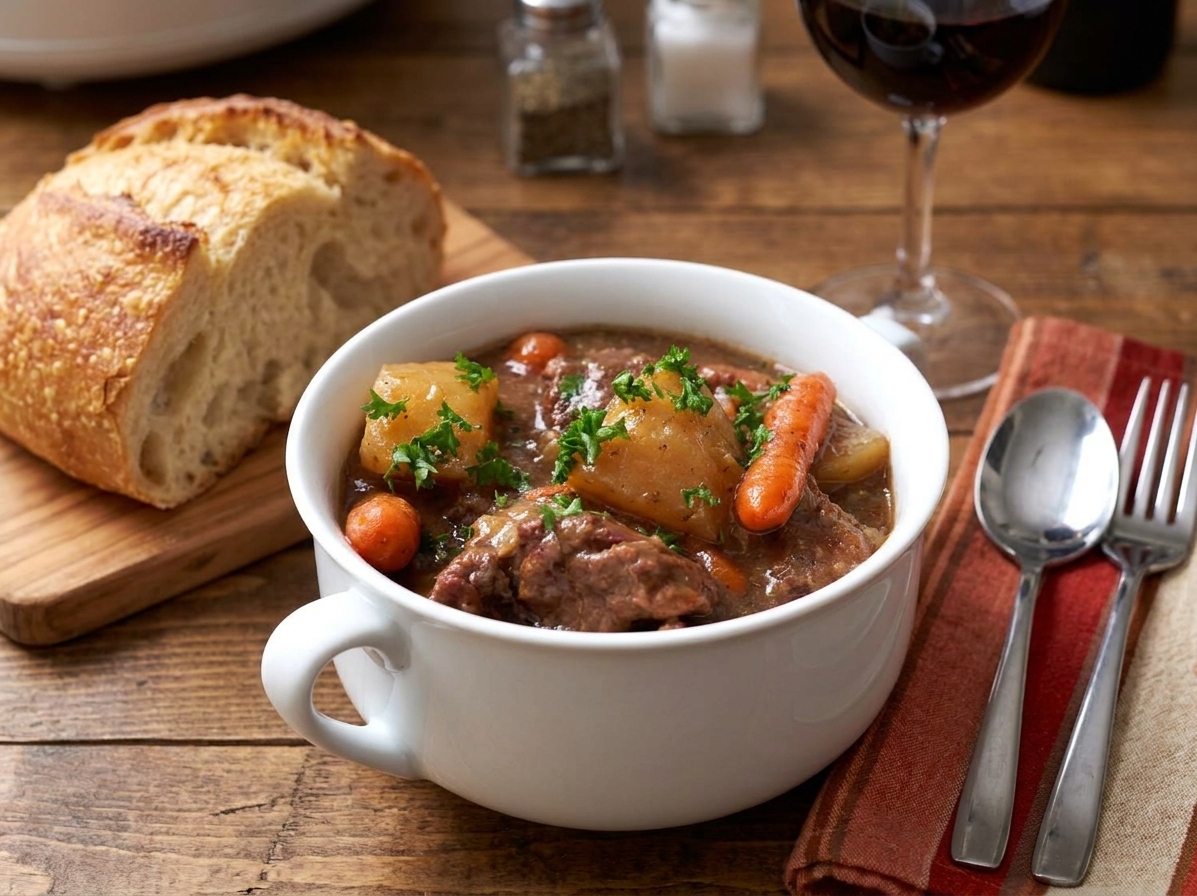
- Something to mop the bowl: crusty bread, biscuits, or garlic toast
- Something fresh: a simple green salad with a sharp vinaigrette
- Something cozy: buttered egg noodles or mashed potatoes under the stew
Storage and reheating
Make ahead
This stew gets even better overnight. Cool it, refrigerate, and reheat gently the next day. If it thickens a lot in the fridge, loosen with a splash of broth or water.
Store
- Fridge: 4 days in an airtight container.
- Reheat: Stovetop over medium-low or microwave in bursts, stirring often so the beef stays tender.
Freeze
Freeze up to 3 months. Potatoes can get a little grainy after freezing, but it is still absolutely worth it. If you are sensitive to potato texture, swap potatoes for parsnips or freeze the stew without potatoes and add fresh ones later.
Prep ahead (up to 24 hours)
You can cube the beef and chop the onions, carrots, and celery up to 24 hours ahead. Keep potatoes peeled and submerged in cold water in the fridge so they do not brown, then drain before adding. For the best texture, keep everything refrigerated separately, then assemble in the morning.
Common mistakes
- Stopping the cook too soon: Beef stew is done when the beef yields easily with a fork. If it is tough at the end of the listed time, it usually needs more cooking time.
- Cutting vegetables too small: Small pieces can turn to mush in a slow cooker. Stick to larger chunks (about 1 to 1 1/2 inches for potatoes and carrots).
- Expecting it to reduce like stovetop stew: Slow cookers trap moisture, so the stew can be watery if you do not thicken at the end.
- Adding thickener too early: Thickening at the end avoids a pasty taste and gives a glossy finish.
- Forgetting the finish: A stew that tastes flat is often missing salt, acid, or both. Add salt first, then a small splash of vinegar or lemon.
FAQ
Do I have to brown the beef first?
No, it will still cook through and become tender. But browning adds roasty, restaurant depth. If you skip it, consider adding an extra teaspoon of Worcestershire and finishing with vinegar to brighten the flavor.
Why is my stew watery?
Slow cookers trap moisture, so the stew will not reduce much. Thicken at the end with a cornstarch slurry.
If you still want it thicker, you have two good options: simmer on HIGH for a bit longer to encourage gentle bubbling (only crack the lid if your model allows it safely), or ladle some broth into a saucepan and reduce it on the stovetop for 5 to 10 minutes, then stir it back in.
Why is my beef still tough?
It usually needs more time. Collagen-rich cuts like chuck get tender as they cook longer. Keep cooking until it turns buttery, even if that means an extra hour on LOW.
Can I put potatoes in from the start?
Yes, as long as you cut them large. If your slow cooker runs hot or you prefer firmer potatoes, add them halfway through the cook time.
Can I prep this the night before?
Yes. You can cube the beef and chop the onions, carrots, and celery up to 24 hours ahead. Keep potatoes peeled and submerged in cold water in the fridge so they do not brown, then drain before adding. For the best texture, keep everything refrigerated separately, then assemble in the morning.
Should I skim the fat?
If your chuck is very marbled, you may see a little fat pooling on top. You can skim it with a spoon, but the easiest move is chilling the stew overnight and lifting off the firm fat cap before reheating.
How do I fix a stew that tastes flat?
Add salt first, then add a small splash of vinegar or lemon. Flat stew is almost always missing one of those two.
Comforting Crock Pot Beef Stew
Tender beef chuck, hearty vegetables, and a rich, glossy broth made easy in the slow cooker. Optional searing and a quick deglaze build depth, and a slurry plus a splash of vinegar at the end delivers that classic, stew-y finish.
- Prep
- 20 to 30 minutes
- Cook
- 8 to 9 hours on LOW or 4 to 5 hours on HIGH
- Total
- 8 hours 30 minutes to 9 hours 30 minutes
- Yield
- About 6 to 8 servings
Ingredients
- Beef: 2 1/2 to 3 pounds beef chuck, cut into 1 1/2-inch cubes
- 1 1/2 teaspoons kosher salt, plus more to taste
- 3/4 teaspoon black pepper
- 2 to 3 tablespoons all-purpose flour (optional, for lightly dredging before searing)
- 2 tablespoons neutral oil (avocado, canola, grapeseed)
- 1 large yellow onion, diced
- 3 celery ribs, sliced
- 4 medium carrots, cut into 1-inch chunks
- 1 1/2 pounds Yukon Gold potatoes, cut into 1 1/2-inch chunks
- 4 cloves garlic, minced
- 2 tablespoons tomato paste
- 4 cups beef broth (low sodium preferred)
- 1 cup dry red wine (optional) or extra broth
- 2 tablespoons Worcestershire sauce
- 2 bay leaves
- 1 teaspoon dried thyme (or 1 tablespoon chopped fresh)
- 1 teaspoon smoked paprika (optional but lovely)
- To thicken: 2 tablespoons cornstarch mixed with 2 tablespoons cold water (or 3 tablespoons flour mixed with 3 tablespoons water)
- To finish: 1 to 2 teaspoons red wine vinegar or apple cider vinegar, plus chopped parsley (optional)
Instructions
- Season and (optionally) dredge the beef. Pat beef dry. Season with salt and pepper. For extra browning, toss lightly with flour.
- Sear the beef. Heat oil in a large skillet over medium-high. Brown beef in batches, 2 to 3 minutes per side. Transfer browned beef to the slow cooker.
- Build the base. Add onion, celery, carrots, potatoes, and garlic to the slow cooker.
- Deglaze the skillet (fast flavor upgrade). Add tomato paste to the hot skillet and stir 30 seconds. Take the pan off the heat for a moment, then carefully pour in wine (or a splash of broth), scraping up the browned bits. Pour everything into the slow cooker.
- Add liquids and seasonings. Add broth, Worcestershire, bay leaves, thyme, and paprika. Stir.
- Slow cook. Cover and cook on LOW for 8 to 9 hours or HIGH for 4 to 5 hours, until the beef is fork-tender.
- Thicken at the end. Stir in the cornstarch slurry. Cover and cook on HIGH for 15 to 25 minutes, until the stew is gently bubbling and the broth turns glossy and slightly thickened.
- Finish and adjust. Remove bay leaves. Stir in vinegar 1 teaspoon at a time, tasting as you go. Add more salt and pepper if needed. Top with parsley if you have it.
Notes
- Doneness check: The stew is ready when the beef yields easily when pressed with a fork. If it is chewy, cook longer. Try another 30 to 60 minutes on LOW and check again.
- If the stew is too thin: Slow cookers do not reduce much. After thickening with slurry, you can simmer on HIGH a bit longer for gentle bubbling (only crack the lid if your model allows it safely), or reduce some broth on the stovetop for 5 to 10 minutes and stir it back in.
- Potatoes: You can add potatoes from the start as long as you cut them large. For firmer potatoes, add them halfway through if your slow cooker runs hot.
- Fat management: Skim any fat pooling on top, or chill overnight and lift off the firm fat cap before reheating.
- Make-ahead: The stew tastes even better overnight. If it thickens in the fridge, loosen with a splash of broth or water.
Nutrition
- Calories: ~520
- Fat: ~22 g
- Carbs: ~30 g
- Protein: ~45 g
- Fiber: ~4 g
- Sugar: ~5 g
- Sodium: ~850 mg
Nutrition values are approximate and will vary by exact ingredients, broth, and portion size.