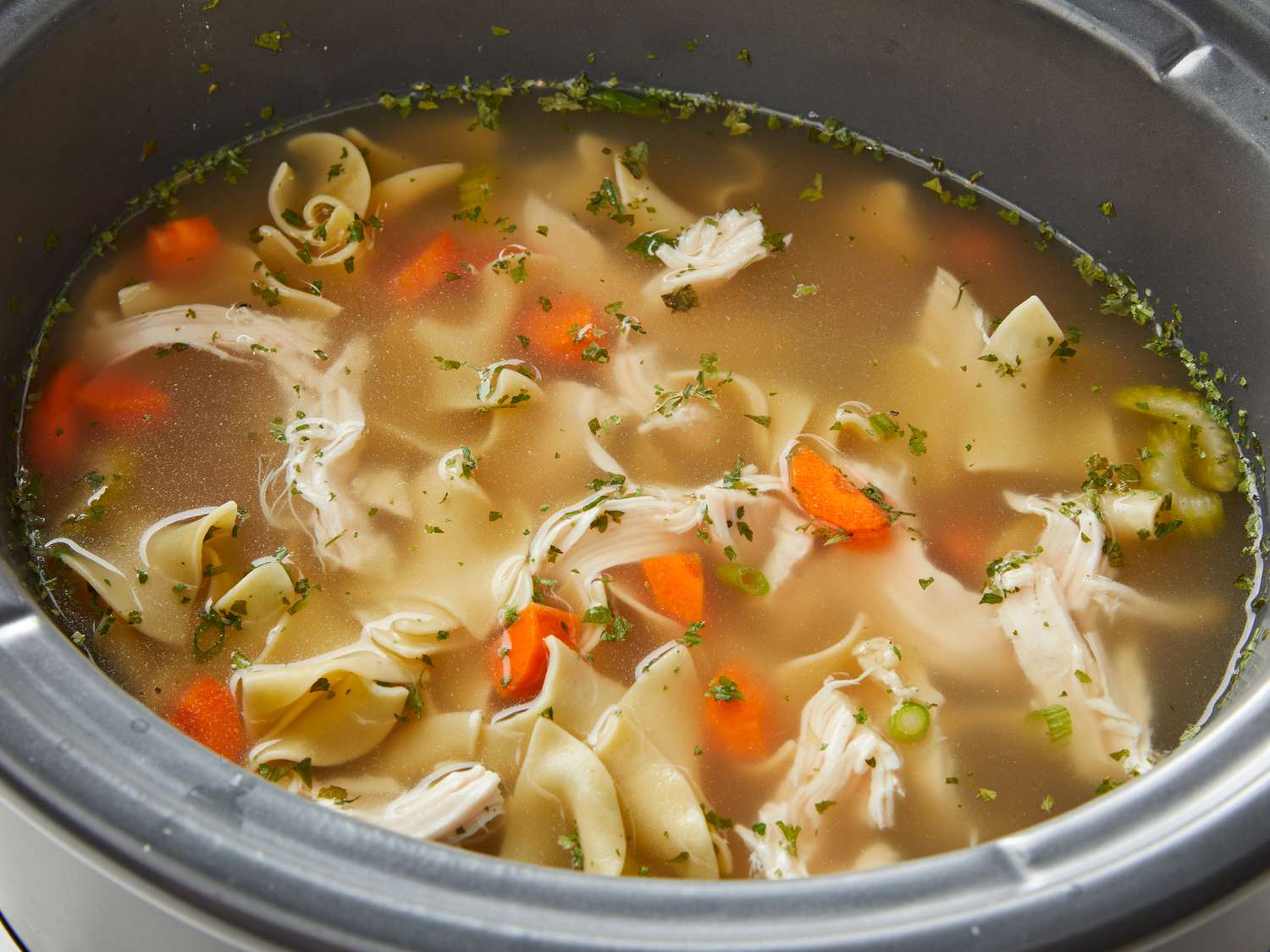
Chicken noodle soup is supposed to feel like a deep breath. This slow cooker version gives you that classic, comforting flavor with very little active work. The key is building a broth that tastes like you actually made an effort, then adding the noodles at the end so they stay springy instead of turning into soft little sponges.
If you have a slow cooker and a pack of chicken in the fridge, you're already dangerously close to dinner.
Why this recipe works
- Balanced broth: a little tomato paste for depth, plenty of aromatics, and lemon at the end for that clean finish.
- No mushy noodles: cook noodles separately or add them late, with a timer.
- Shred-and-stir method: cook the chicken whole for a juicy texture, then shred right in the pot.
- Built for leftovers: storage tips below keep it tasting fresh for days.
Ingredient notes
Chicken: Use 1 1/2 lb boneless skinless chicken breasts or thighs. Thighs are richer, more forgiving, and extra tender after hours in the slow cooker. Breasts have a lighter flavor and stay great if you watch timing and pull them as soon as they shred easily and hit 165°F / 74°C at the thickest part.
Bone-in option: You can use bone-in thighs or breasts for more body in the broth. Plan on a little more shredding time and remove skin if you do not want extra fat in the broth.
Broth and seasoning: Low-sodium chicken broth helps you control salt. Tomato paste adds depth; lemon juice at the end brightens the flavor. Salt and acid work as a team.
Parmesan rind (optional): A 2 to 3 inch piece adds subtle savory depth. Remove before serving.
Herbs: Finish with chopped fresh parsley or dill for serving.
Noodles: Egg noodles are classic, but rotini, shells, or ditalini hold up well (especially for leftovers). Wide egg noodles feel extra cozy but soften faster. Rice noodles soften quickly and can go gummy if simmered long. Gluten-free pasta should be cooked separately and slightly undercooked since it softens as it sits.
Equipment you will need
- Slow cooker: 6-quart recommended
- Medium pot for boiling noodles
- Plate and two forks for shredding chicken
- Shallow containers for faster cooling and storage
Pro tips
- Get the tomato paste moving early: Stir it into the vegetables as best you can when loading the slow cooker; it will dissolve as it cooks.
- Use sensory cues: Chicken should shred easily with gentle pressure and read 165°F / 74°C at the thickest part. If it fights you, cook 30 to 60 minutes longer on LOW. Carrots and celery should be tender but still hold their shape.
- Keep noodles springy: Cook noodles separately, then add to each bowl. If cooking noodles ahead for leftovers, rinse briefly under cool water to stop cooking, drain again, then toss with a tiny drizzle of olive oil to prevent sticking.
- Balance at the end: Lemon should brighten, not scream. If the soup tastes flat, add another squeeze of lemon and a pinch of salt.
- If you must cook noodles in the slow cooker: Switch to HIGH and add noodles during the last 15 to 25 minutes, stirring once or twice. Keep the lid on between stirs so the cooker does not lose heat.
Substitutes that work
- Broth: Use 8 cups low-sodium chicken broth, or substitute 6 cups broth + 2 cups water.
- Thyme: Use 1 teaspoon dried thyme or 4 to 6 fresh thyme sprigs (remove stems before serving).
- Noodles: Swap egg noodles for rotini, shells, ditalini, rice noodles, or gluten-free pasta (see notes on timing and separate cooking).
- Chicken: Boneless skinless breasts or thighs both work; bone-in can also be used (allow more shredding time).
Variations
- Ginger: Add 2 thin slices with the broth for gentle warmth.
- Miso: Whisk 1 to 2 tablespoons white miso into a ladle of hot broth, then stir back in at the end (do not boil it hard).
- Greens: Stir in a few handfuls of baby spinach during the last 2 minutes so it just wilts.
- Heat: Add a pinch of red pepper flakes or a dash of hot sauce at serving.
- Creamy: Stir in 1/2 cup half-and-half at the end (do not boil hard afterward). You may want an extra squeeze of lemon to keep the flavor bright.
- Potato version (no noodles): Add 1 to 1 1/2 lb Yukon Gold potatoes, diced, at the beginning and skip noodles entirely. Finish with lemon like usual.
- Rotisserie chicken shortcut: Cook vegetables and broth on LOW until veggies are tender, about 3 to 4 hours (or 4 to 6 hours if you like them softer). Stir in 2 to 3 cups shredded rotisserie chicken during the last 20 minutes just to warm through, then add lemon and herbs at the end.
Serving ideas
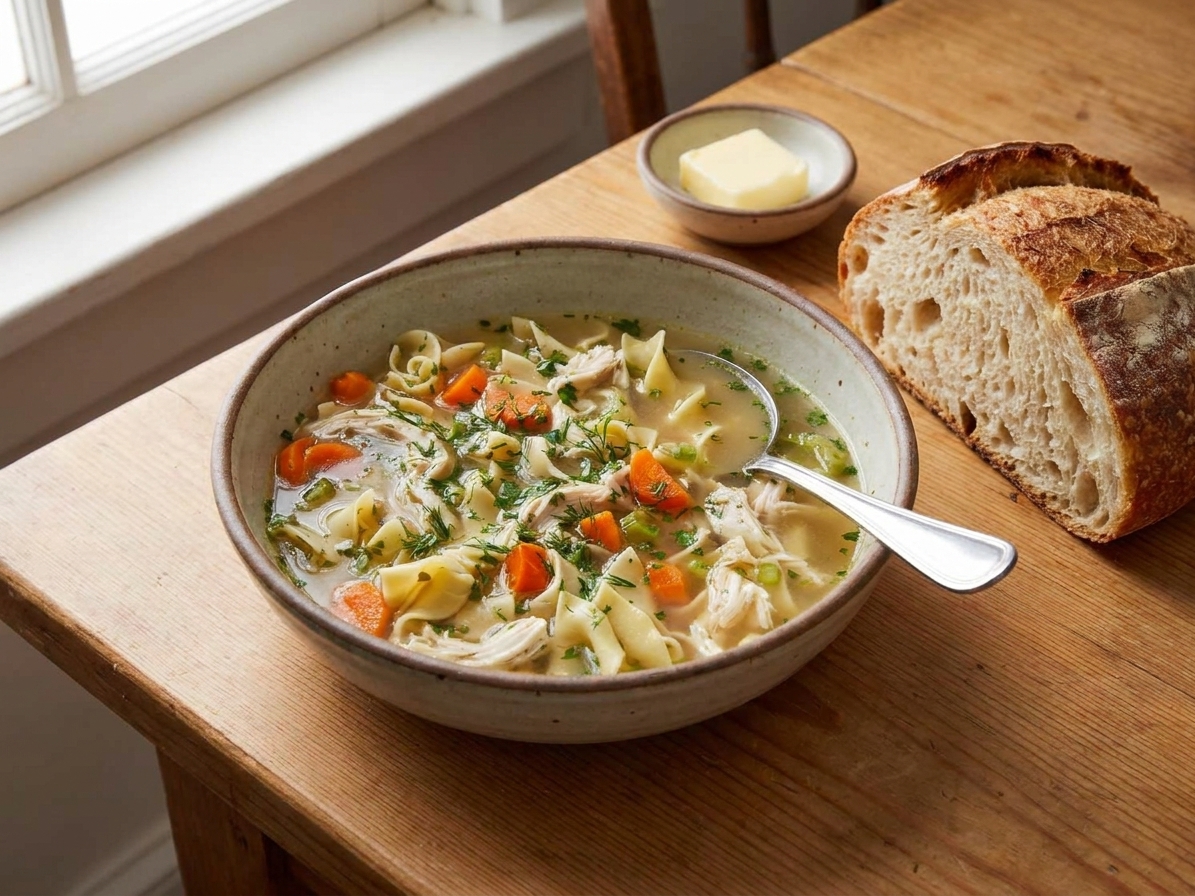
- Crusty bread, garlic toast, or crackers
- A simple green salad with lemony vinaigrette
- Roasted broccoli or sheet pan green beans for an easy side
Storage and reheating
Make ahead: Cook the soup base (everything except noodles, lemon, and herbs). Cool, then refrigerate up to 4 days. Reheat and add lemon and herbs right before serving. Cook noodles fresh, or warm stored noodles in hot water for 30 seconds.
Cool it safely: Get the soup into the fridge within 2 hours. For faster cooling, transfer to shallow containers and refrigerate uncovered until no longer steaming, then cover.
Store leftovers: Keep noodles and soup separate. Soup: 4 days refrigerated. Noodles: 3 to 4 days refrigerated, tossed with a tiny drizzle of olive oil to reduce sticking.
Freeze: Freeze the soup base only (no noodles). Cool completely, then freeze up to 3 months. Thaw overnight in the fridge, reheat gently, then add fresh lemon and cooked noodles.
Too salty after reducing? Add a splash of water or unsalted broth, then re-balance with lemon.
Common mistakes
- Adding noodles too early: Noodles keep soaking up broth as they sit, which can make leftovers thick and gummy. Cook separately or add late with a timer.
- Overcooking chicken on HIGH: This can lead to dry chicken, especially in hot-running slow cookers. Cook on LOW and start checking early; thighs are more forgiving.
- Leaving the soup unbalanced: If it tastes bland or flat, adjust with a pinch of salt first, then lemon.
- Not cooling safely: Do not leave soup out too long; refrigerate within 2 hours, using shallow containers for faster cooling.
FAQ
Can I start with frozen chicken?
For slow cookers, I don't recommend it. Frozen chicken can spend too long in an unsafe temperature range while it thaws. If you forgot to thaw, use the stovetop instead, or thaw safely in the fridge overnight.
Can I use rotisserie chicken?
Yes, and it's a great shortcut. Cook the vegetables and broth on LOW until the veggies are tender, about 3 to 4 hours (or go 4 to 6 hours if you like them softer). Stir in 2 to 3 cups shredded rotisserie chicken during the last 20 minutes just to warm through. Add lemon and herbs at the end.
How do I make it creamy?
Stir in 1/2 cup half-and-half at the end (don't boil hard afterward). You may want an extra squeeze of lemon to keep the flavor bright.
Can I add potatoes instead of noodles?
Absolutely. Add 1 to 1 1/2 lb Yukon Gold potatoes, diced, at the beginning. Skip noodles entirely. Finish with lemon like usual, since potatoes love salt and acid.
Slow Cooker Chicken Noodle Soup
Slow Cooker Chicken Noodle Soup (bright, classic, cozy) with a balanced broth (tomato paste, aromatics, and lemon), tender shredded chicken, and noodles added at the end for the best texture.
- Prep
- 15 to 20 minutes
- Cook
- 4 to 6 hours on LOW
- Total
- 4 hours 20 minutes to 6 hours 20 minutes
- Yield
- 4 to 6 servings (about 8 cups)
Ingredients
- 1 1/2 lb boneless skinless chicken breasts or thighs (see notes)
- 1 large yellow onion, diced
- 3 medium carrots, sliced into coins
- 3 celery ribs, sliced
- 4 cloves garlic, minced
- 1 tablespoon tomato paste
- 8 cups low-sodium chicken broth (or 6 cups broth + 2 cups water)
- 2 teaspoons kosher salt, plus more to taste
- 1/2 teaspoon black pepper
- 2 bay leaves
- 1 teaspoon dried thyme (or 4 to 6 fresh thyme sprigs)
- Optional but excellent: 1 Parmesan rind (about a 2 to 3 inch piece)
- 2 to 3 tablespoons lemon juice (about 1 lemon), added at the end
- 2 tablespoons chopped fresh parsley or dill, for serving
- Noodles: 6 oz egg noodles (or other pasta, see below)
Instructions
Load the slow cooker. Add onion, carrots, celery, garlic, and tomato paste to the slow cooker. Stir the tomato paste into the veggies as best you can (it'll dissolve as it cooks). Nestle the chicken on top. Pour in broth (and water, if using). Add salt, pepper, bay leaves, thyme, and Parmesan rind (if using).
Cook. Cover and cook on LOW until the chicken is tender and vegetables are soft.
- For thighs: 4 to 6 hours on LOW.
- For breasts: start checking at 3 1/2 hours; they're usually great around 3 1/2 to 5 hours on LOW.
If you need HIGH, keep it shorter: 2 1/2 to 3 1/2 hours, and start checking early.
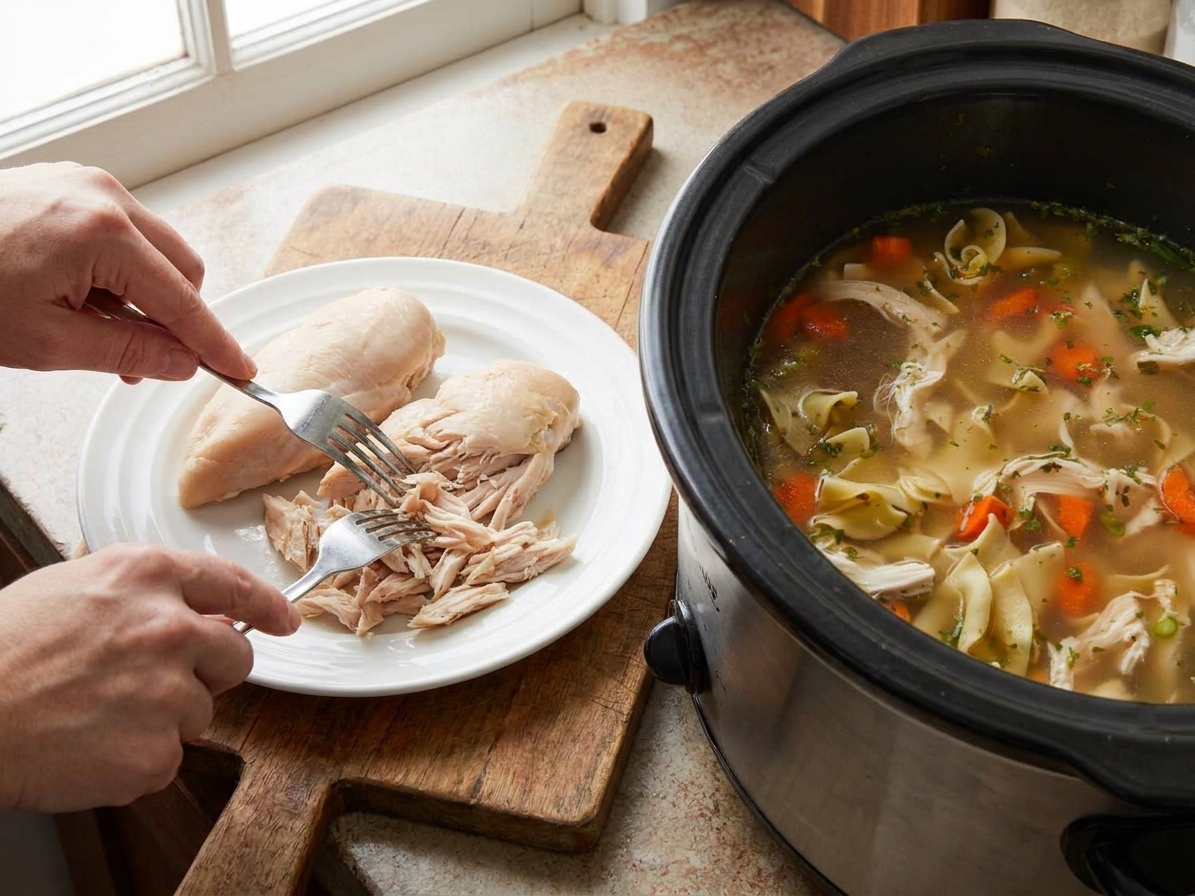
Shred the chicken. Transfer chicken to a plate, shred with two forks, then stir it back into the soup. Remove bay leaves and thyme stems (if using fresh). If you used a Parmesan rind, fish it out now.
Cook the noodles separately. Bring a pot of salted water to a boil and cook egg noodles until just tender. Drain well.
For the best texture: If you're serving right away, skip rinsing. If you're making noodles ahead for leftovers, rinse briefly under cool water to stop the cooking, drain again, then toss with a tiny drizzle of olive oil to prevent sticking.
Why separate? Noodles keep soaking up broth as they sit, which can make leftovers thick and gummy. Keeping them separate gives you better soup today and better soup tomorrow.
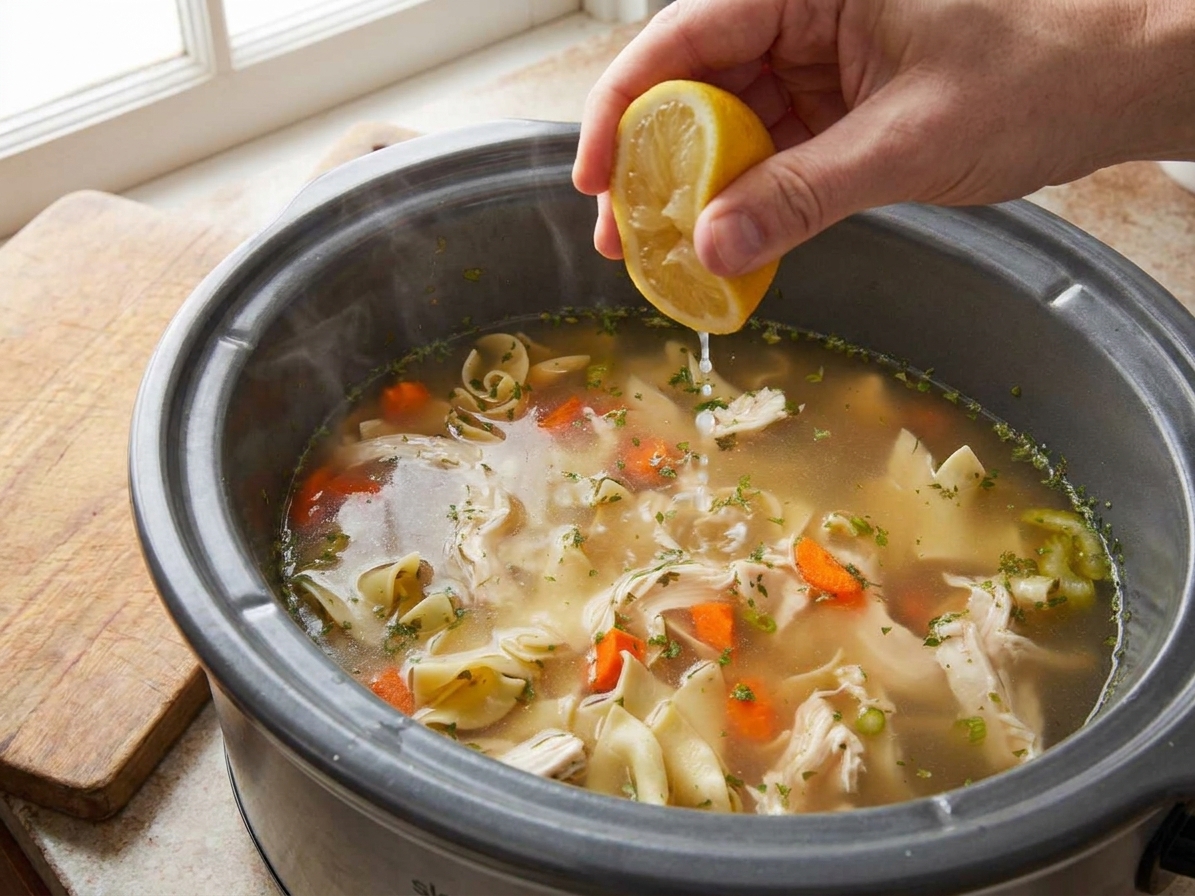
Finish and balance. Stir lemon juice into the soup. Taste and adjust salt. If the soup tastes flat, add another squeeze of lemon and a pinch of salt. Serve hot with noodles added to each bowl, and shower with parsley or dill.
Notes
Slow cooker size: 6-quart recommended.
Chicken options: Thighs are richer and more forgiving; breasts are lighter but should be pulled as soon as they shred easily and reach 165°F / 74°C. Bone-in thighs or breasts also work and add body to the broth; plan for more shredding time and remove skin if you do not want extra fat.
Sensory cues: The broth should taste savory and clean, not watery. Lemon should brighten, not scream. Carrots and celery should be tender but still hold their shape. If chicken fights you when shredding, cook 30 to 60 minutes longer on LOW.
Noodle options: Rotini, shells, or ditalini are sturdier for leftovers; wide egg noodles soften faster; rice noodles can go gummy if simmered long (add to bowls and pour hot soup over); gluten-free pasta should be cooked separately and slightly undercooked since it softens as it sits.
Cooking noodles in the slow cooker (if you really want to): Switch to HIGH and add noodles during the last 15 to 25 minutes, stirring once or twice and keeping the lid on between stirs.
Troubleshooting: If bland, add a pinch of salt, then a squeeze of lemon; for more depth, stir in 1 teaspoon soy sauce or a small spoon of miso (off heat). If greasy, chill and skim solidified fat, or blot with a paper towel. If chicken is dry, next time use thighs or cook on LOW and check early; to help now, stir in a splash of broth and warm the shredded chicken through for 10 minutes. If noodles got soggy, store them separately going forward and add a fresh handful of newly cooked noodles to each bowl.
Nutrition
- Calories: ~330
- Fat: ~7 g
- Carbs: ~26 g
- Protein: ~36 g
- Fiber: ~3 g
- Sugar: ~4 g
- Sodium: ~850 mg
Nutrition values are approximate and will vary by specific ingredients and serving size.