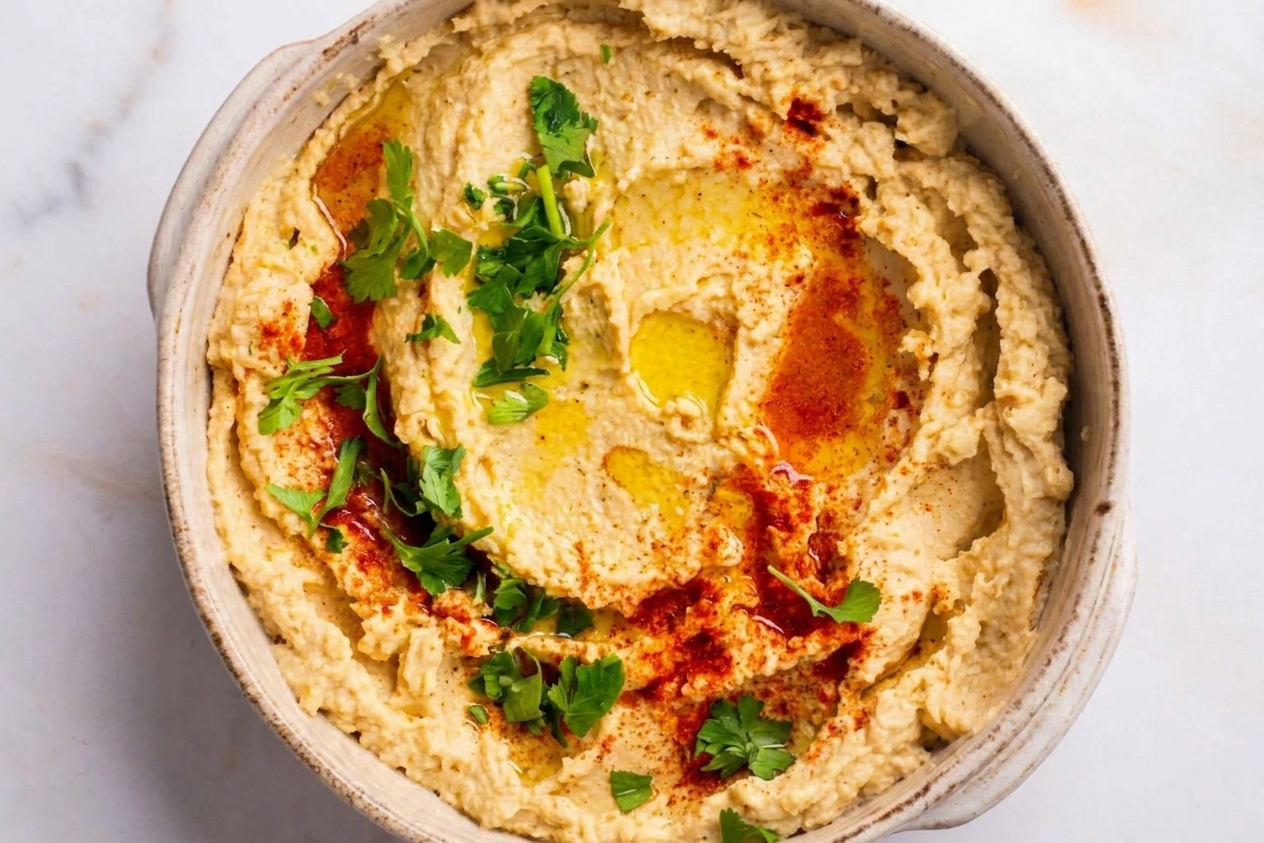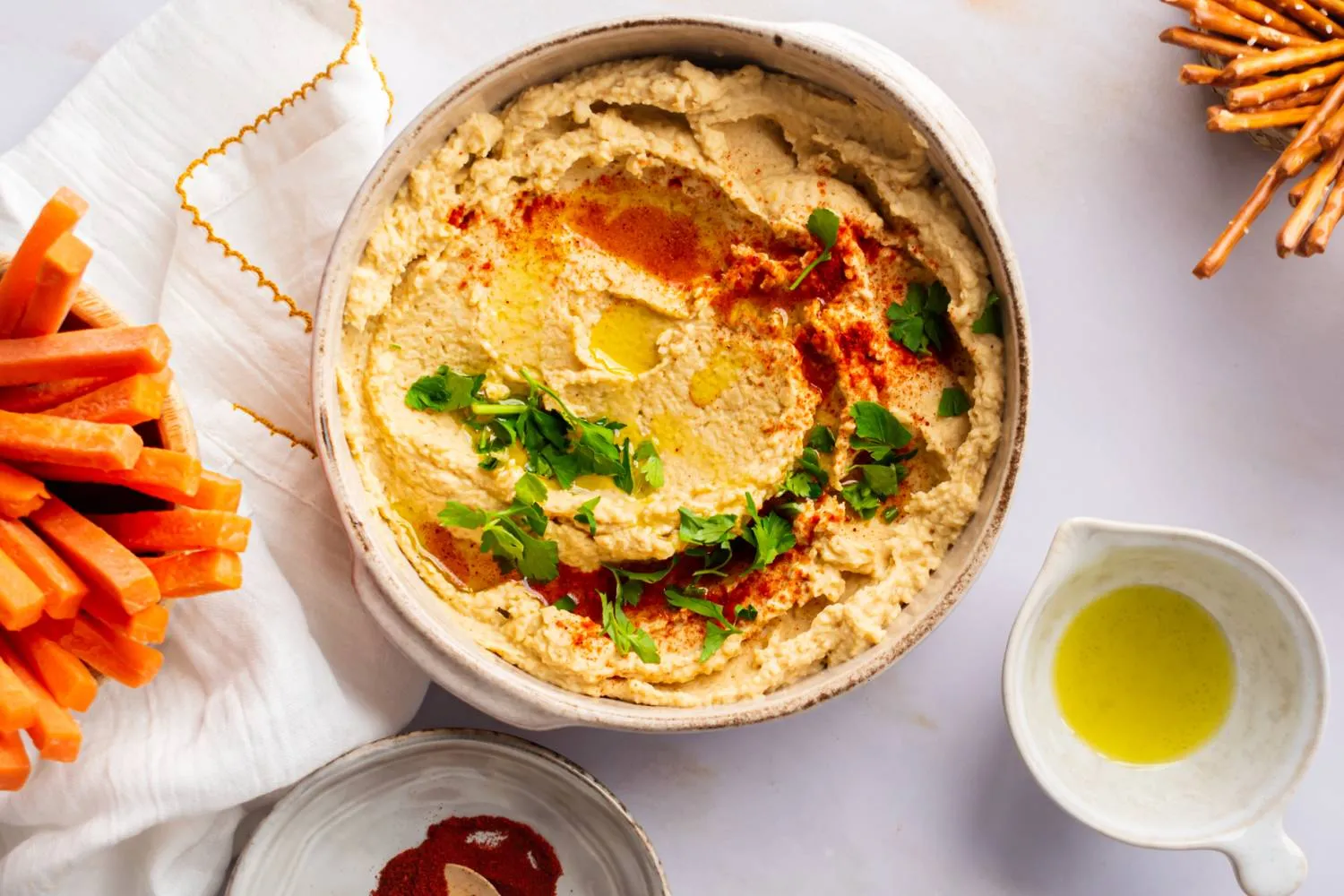
There are two kinds of hummus: the kind you buy because you need something for snacks, and the kind you make once and then quietly become a little smug about because it is so much smoother. This is that second kind.
My goal here is weeknight-friendly hummus that tastes like it came from a great Mediterranean spot: silky, light, and perfectly balanced between lemon, garlic, and tahini. No fussy steps you will never repeat, but yes to a few small techniques that make a big difference.
Yield: About 3 to 3 1/2 cups (roughly 8 to 10 snacky servings).
What makes it creamy
Creamy hummus is less about adding extra oil and more about building a smooth base, then thinning it the right way. These are the levers that matter most:
- Warm chickpeas blend smoother than cold. If you are using canned, a quick simmer helps.
- Tahini first, then whip it with lemon and water until it turns pale and fluffy. This is the easiest way to get that airy restaurant texture.
- Very cold water can help the tahini mixture turn lighter and fluffier as it blends.
- Time blending. Most hummus just needs an extra 60 to 90 seconds of processing to get silky.
- Balanced seasoning. Enough salt and lemon makes it taste creamier, even though texture is the same.
Ingredients
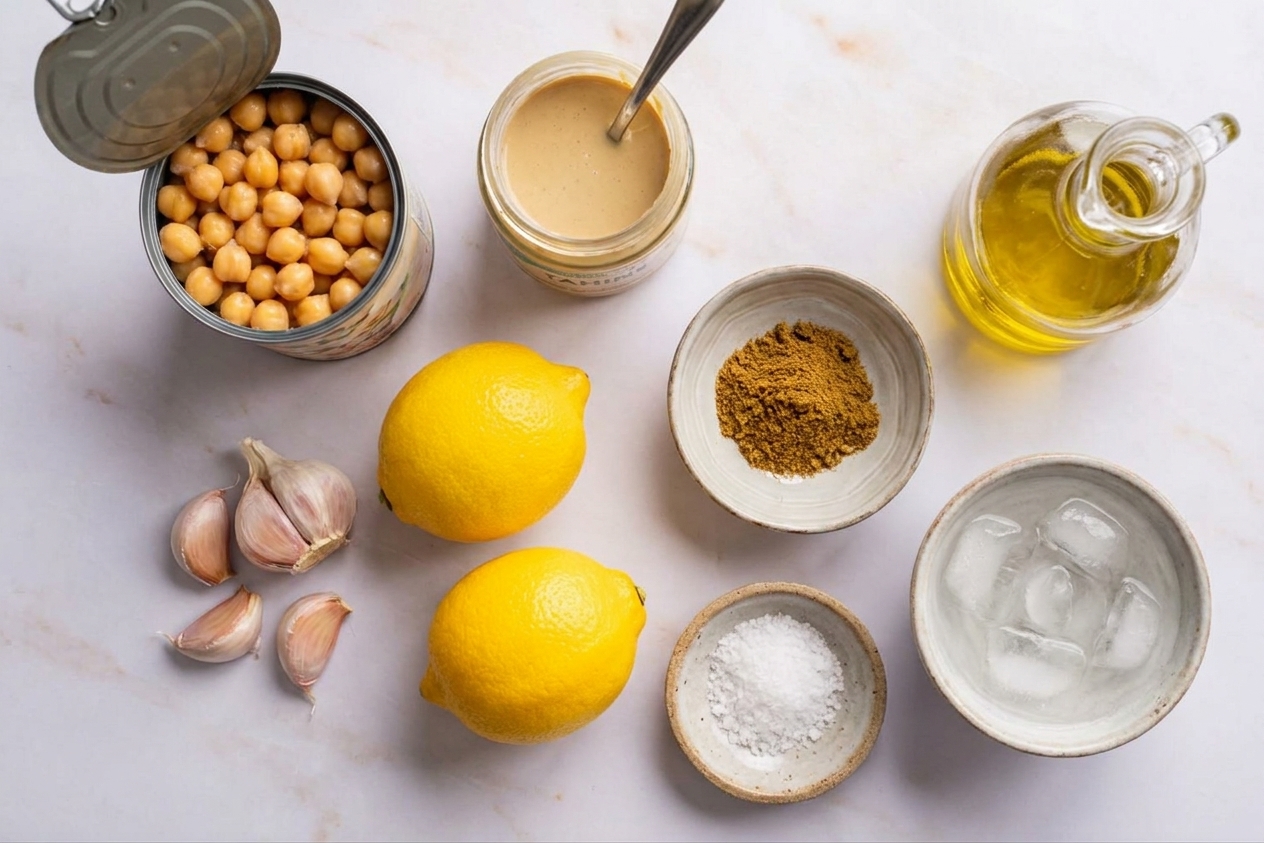
This is the classic, endlessly adaptable lineup. If you only remember one thing: use a tahini you actually like, because it is not a background ingredient here.
- Chickpeas: 2 cans (15 ounces each), or about 3 cups cooked chickpeas
- Tahini: 1/2 cup, well-stirred
- Lemon juice: 1/4 cup (4 tablespoons, from about 1 to 2 large lemons), plus more to taste
- Garlic: 1 to 2 cloves, depending on how punchy you like it
- Ground cumin: 1/2 teaspoon (optional but lovely)
- Kosher salt: 1 teaspoon to start, then adjust
- Olive oil: 2 tablespoons for blending, plus more for serving (a mild olive oil keeps bitterness at bay)
- Ice water: 4 to 8 tablespoons, as needed for texture
Optional add-ins: a pinch of smoked paprika, a spoonful of plain yogurt for extra tang, or a little roasted garlic for sweetness.
How to make it
You can do this in a food processor or a high-speed blender. The food processor is more common and totally works. A blender can get it even silkier if you have one strong enough to move a thick puree.
- Warm the chickpeas: Drain and rinse chickpeas. Add them to a small pot, cover with water, and simmer 5 to 8 minutes. Drain well. This quick warm-up softens them and helps dilute any canned flavor. The rinsing does most of the cleanup.
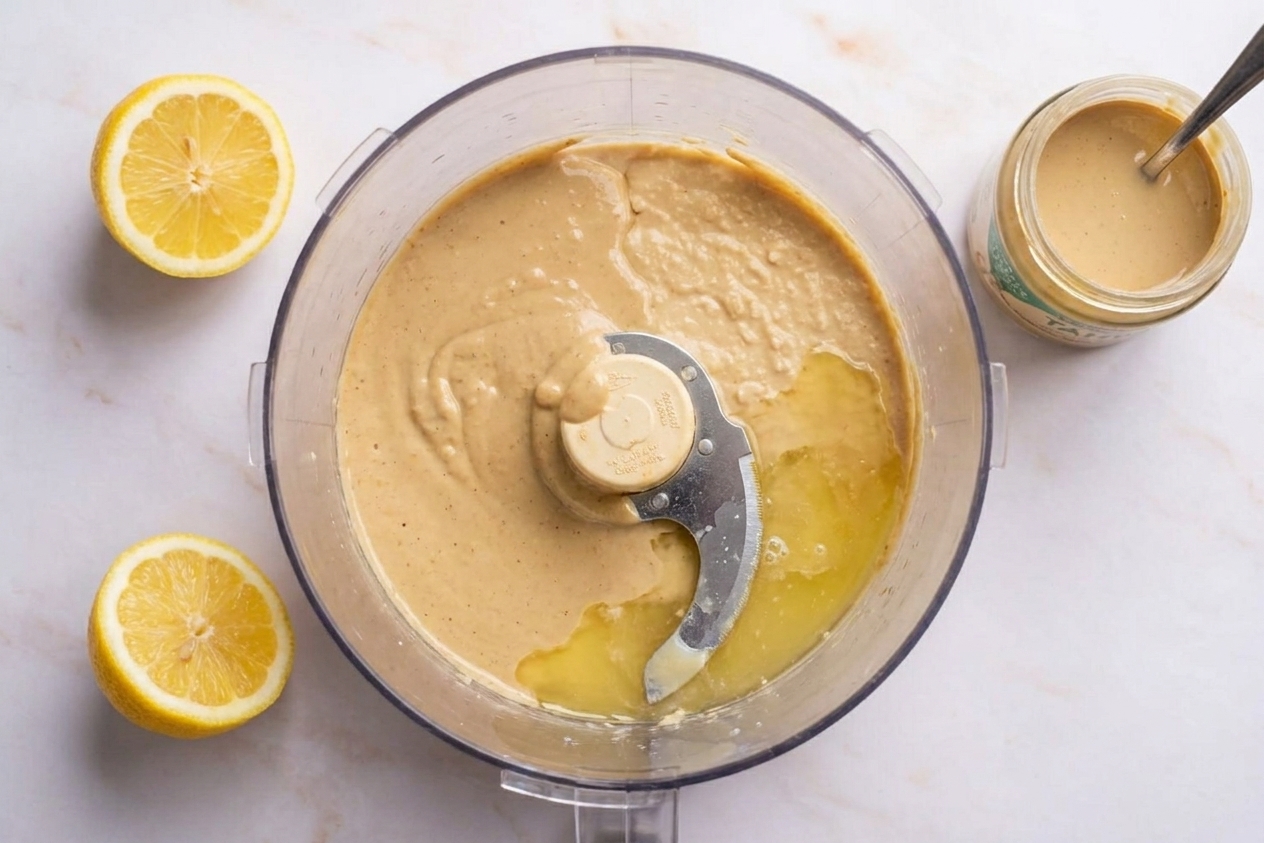
- Whip the tahini base: In a food processor, combine tahini and lemon juice. Process 30 to 45 seconds until it looks thick and lighter in color. Scrape down the bowl.
- Add garlic and seasoning: Add garlic, cumin (if using), and salt. Process 15 seconds. Scrape down again.
- Blend in chickpeas: Add warm chickpeas and 2 tablespoons olive oil. Process 1 full minute, scrape down, then process another 1 minute. Let it run. Smoothness needs time.
- Adjust with ice water: With the machine running, drizzle in ice water 1 tablespoon at a time until it turns creamy and fluffy. Most batches need 4 to 6 tablespoons, but it depends on your tahini and chickpeas.
- Taste and balance: Add more lemon for brightness, more salt for overall flavor, or a tiny extra drizzle of water if it feels thick. Process 10 seconds after each adjustment.
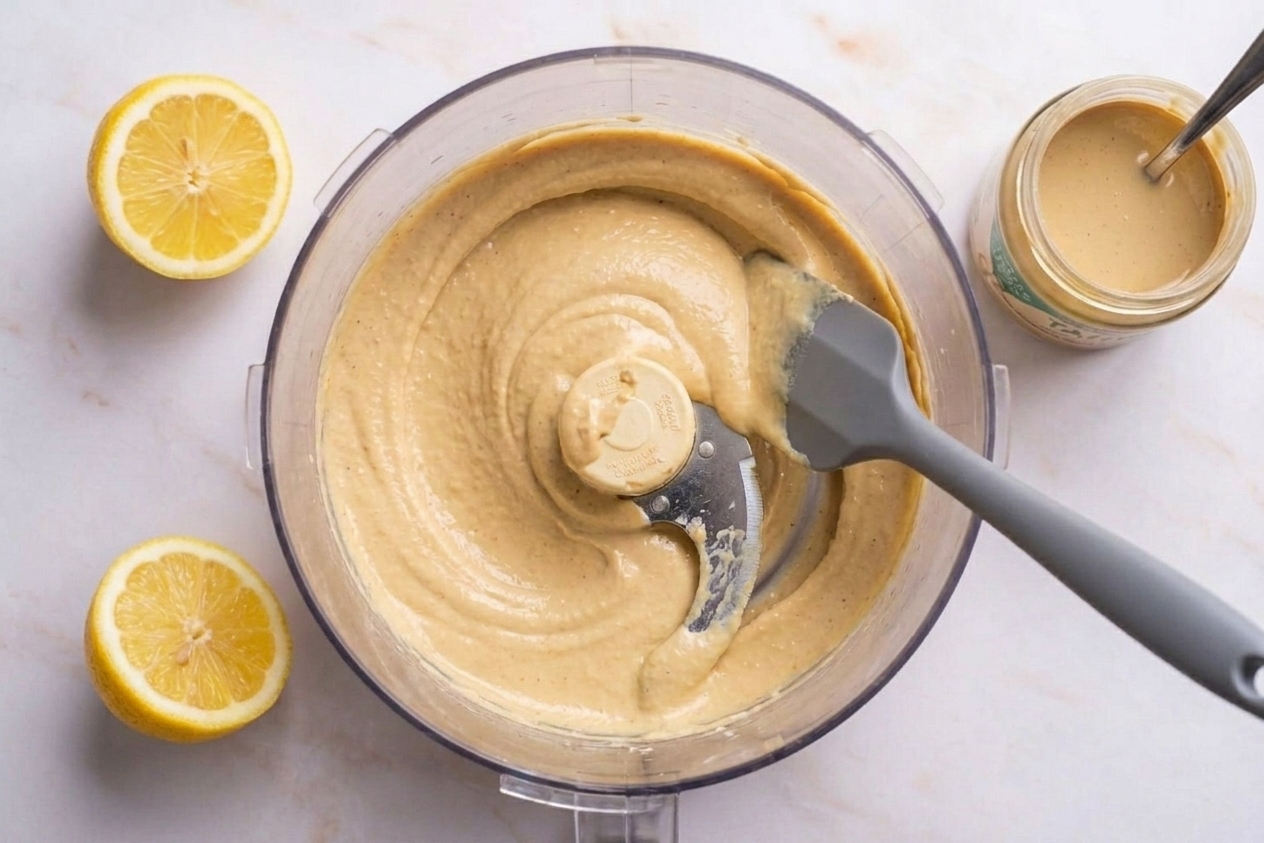
Texture cue: The hummus should look glossy and hold soft peaks. If it looks crumbly or pasty, it needs more water and more blending time, not more oil.
Optional extra-smooth step: If you want truly plush hummus and do not mind one more minute on the stove, add 1/4 teaspoon baking soda to the simmering water in step 1. It helps soften skins. Drain and rinse very well afterward so the hummus does not taste soapy.
Do you have to peel chickpeas?
No. Peeling chickpeas makes hummus slightly silkier, but it is not required for great texture. My compromise method is the quick simmer above, plus a longer blend, plus ice water.
If you do want to peel some for ultra-smooth hummus, here is the low-drama way: after simmering and draining, spread chickpeas on a clean towel and rub gently. Some skins will slip off easily. Toss them, keep going. No need to chase every last one.
Flavor variations
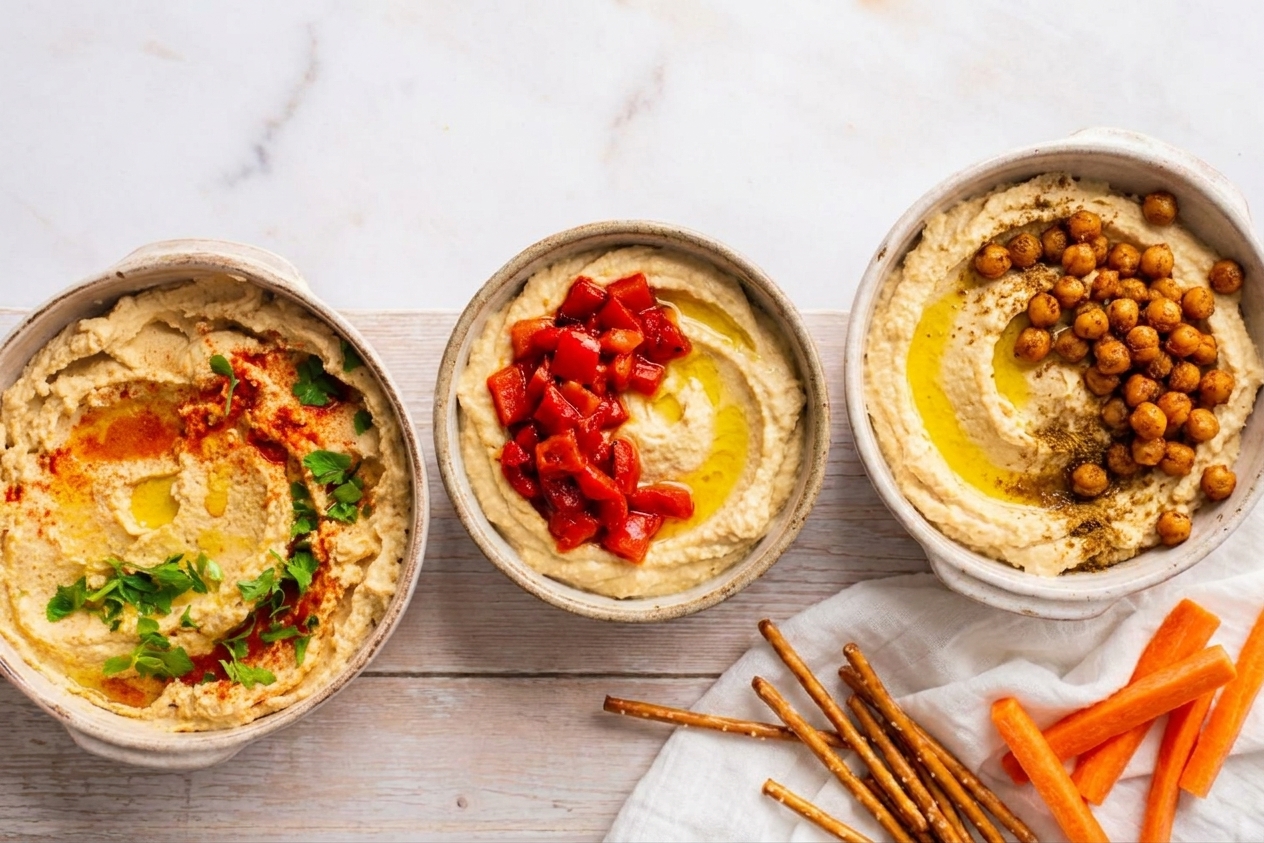
- Roasted red pepper: Blend in 1/2 cup drained roasted red peppers plus a pinch of smoked paprika.
- Herby green: Add 1 packed cup parsley and/or cilantro, plus extra lemon and a splash more water.
- Spicy: Add 1 to 2 teaspoons harissa or a pinch of cayenne. Finish with chili oil.
- Lemon dill: Add 2 tablespoons fresh dill and extra lemon zest. Great with cucumbers.
- Roasted garlic: Swap raw garlic for 4 to 6 roasted cloves for a sweeter, mellow flavor.
How to serve it
I love hummus because it turns random fridge bits into a real meal. A few favorites:
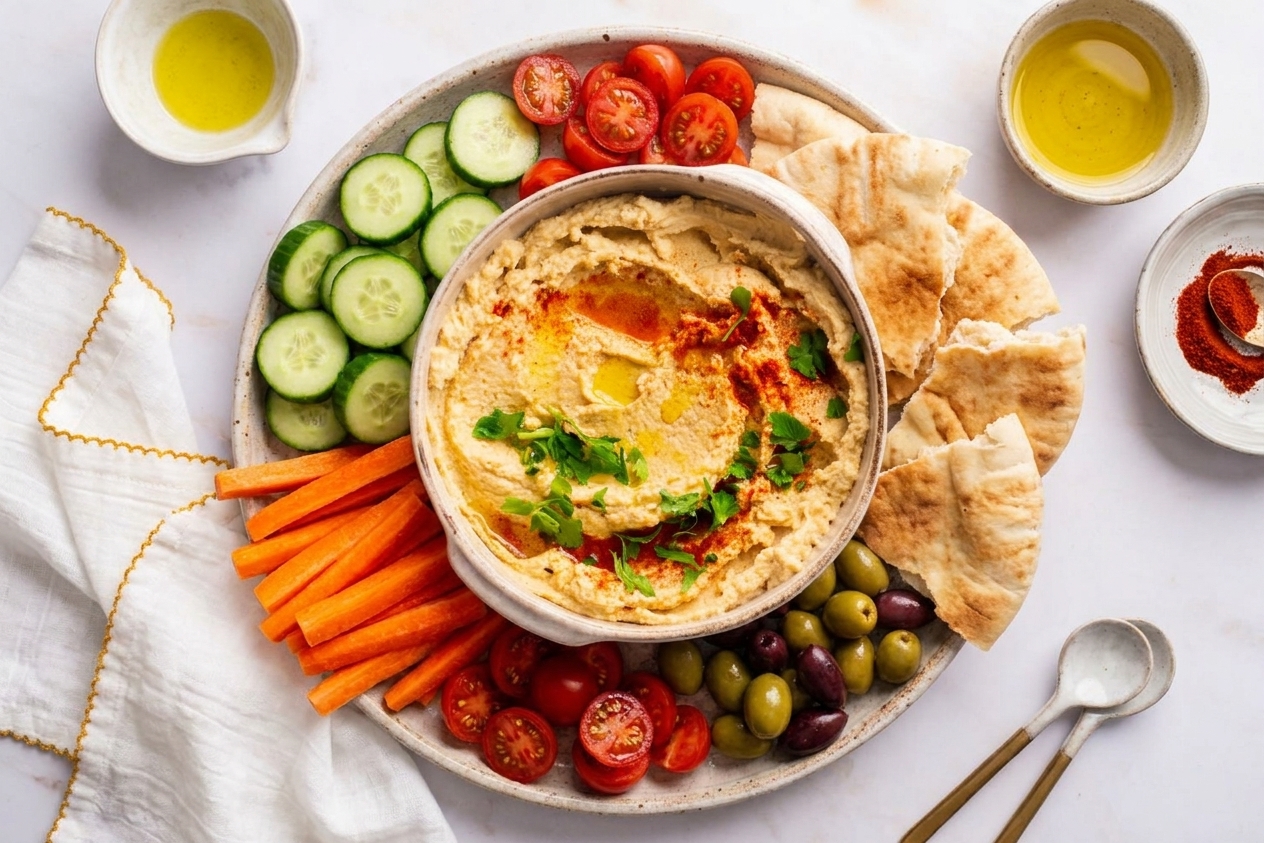
- Snack board: cucumbers, carrots, radishes, olives, feta, and warm pita
- Lunch wraps: smear hummus on a tortilla, add greens, shredded carrots, and leftover chicken or chickpeas
- Grain bowls: spoon hummus into the bowl first, then top with rice or quinoa, roasted vegetables, and a crunchy topping
- Sandwich upgrade: use hummus instead of mayo for a brighter, more flavorful bite
Storage and make-ahead
Refrigerator: Store hummus in an airtight container for up to 5 days. For the best texture, press a piece of parchment directly on the surface, then close the lid. It helps prevent drying and that darker top layer.
To refresh: If it thickens in the fridge, stir in 1 to 2 teaspoons cold water and a squeeze of lemon. Taste again for salt.
Freezer: Yes, you can freeze hummus for up to 2 to 3 months. Thaw overnight in the fridge, then stir vigorously. Some separation is normal. A quick blitz in a processor brings it back to creamy.
Waste less: Save aquafaba (the liquid from the cans) for other recipes like quick vegan mayo or to loosen dips. If you do not plan to use it, freeze it in ice cube trays so it is portioned and ready.
Troubleshooting
My hummus tastes bitter
Bitter usually comes from tahini that is old or naturally sharp. It can also happen if you blend a very peppery extra-virgin olive oil hard enough that it turns harsh. Garlic can read aggressive too, especially if it is older or extra spicy. Fix it with more lemon juice, a bit more salt, and a tablespoon of ice water. If it is still bitter, blend in 1 to 2 teaspoons maple syrup or honey. Not traditional, but it rounds edges fast without making it sweet.
My hummus is too thick
Add ice water 1 tablespoon at a time while blending. Thick hummus almost always needs more water and more processing time.
My hummus is grainy
Blend longer, and make sure chickpeas are warm. If you are using a food processor, stop once or twice and scrape down thoroughly so the sides do not stay chunky.
It tastes flat
Add salt first, then lemon. In my kitchen, bland hummus is usually under-salted, not under-garlicked.
FAQ
Can I make hummus without tahini?
You can, but it will taste more like a chickpea dip than classic hummus. For the closest swap, use a mild nut or seed butter like cashew butter or sunflower seed butter (start with 1/4 cup, then adjust). If you only want the sesame aroma, you can add 1 to 2 teaspoons toasted sesame oil, but treat it as flavor, not structure.
Food processor or blender?
Either works. A food processor is forgiving and easy. A high-speed blender can get it exceptionally smooth, but you may need to stop and tamp, and you will almost certainly need more liquid to keep it moving.
How do I mellow raw garlic?
Grate or mince it, then soak it in the lemon juice for 5 minutes before blending. It takes the sharp edge off and tastes more rounded.
Finishing touch
Right before serving, make a swoop with the back of a spoon, drizzle with good olive oil, then add a pinch of paprika and flaky salt. That little hit of salt on top makes the whole bowl taste more alive.