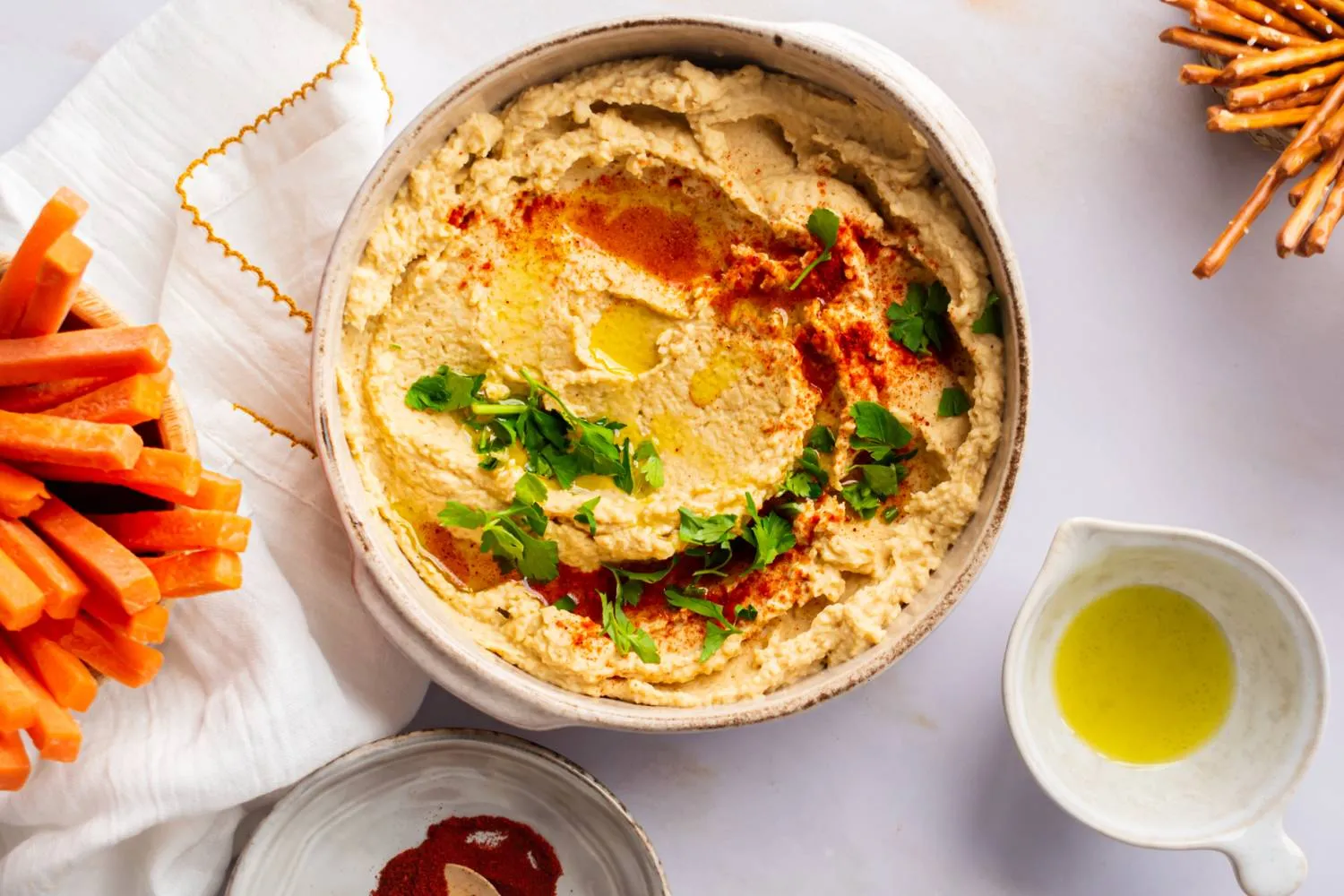
Great hummus is not complicated, but it is specific. If yours turns out grainy, bitter, or oddly thick, it usually comes down to a few things: how soft the chickpeas are, how you treat tahini, and how you handle seasoning and water as you blend.
Here is a dependable method for hummus that is luxuriously smooth, nutty, and bright, plus five variations that keep things interesting without turning your fridge into a graveyard of half-used jars.
Why this recipe works
- Ultra-soft chickpeas = smooth texture. You should be able to squish one between two fingers with almost no resistance.
- Tahini gets “whipped” first. Blending tahini with lemon and water before adding chickpeas makes a lighter, creamier base.
- Ice-cold water improves the emulsion. Ice water (or a couple ice cubes) helps loosen tahini into a smoother, lighter base.
- Baking soda boosts tenderness. Raising the pH softens chickpeas more thoroughly and encourages skins to break down, meaning smoother hummus with less blending time.
- Seasoning is built in layers. Enough salt, bright lemon, and thoughtful garlic keep hummus from tasting flat or harsh.
- Resting improves final body. Hummus thickens slightly as it sits, so blending a touch looser helps you land on a scoopable, not cement-like texture.
Ingredient notes

- Chickpeas: The key is softness. For the ratio, use 1 (15-ounce) can chickpeas (or 1 1/2 cups cooked).
- Baking soda: For canned chickpeas, simmer with 1/2 teaspoon baking soda for 15 to 20 minutes until very soft, then drain well and rinse briefly to remove any lingering taste.
- Tahini: Quality matters. Look for a pourable, well-stirred tahini with a mellow sesame aroma, not sharply bitter. A good starting point is 1/3 cup tahini per 1 (15-ounce) can chickpeas. Adjust from there (more tahini up to 1/2 cup for richer hummus, or down to 1/4 cup for a lighter, more bean-forward base).
- Lemon juice: Use fresh. The base uses 1/4 cup (about 1 large lemon), plus more to taste.
- Garlic: Raw garlic can dominate. A quick lemon soak mellows it fast.
- Salt: Not optional. Chickpeas are mild, so hummus needs more salt than you think. If using Morton, use 3/4 teaspoon instead of 1 teaspoon kosher salt.
- Water: Ice-cold water is part of the texture strategy. Most “too thick” hummus needs 1 to 3 more tablespoons of ice water while blending.
- Olive oil: Best as a drizzle on top for aroma and richness. Some people find aggressively blended olive oil can accent bitterness in certain oils.
Equipment you will need
- Food processor (easy to scrape down and manage in small batches)
- Small pot/saucepan (to simmer chickpeas with baking soda)
- Fine-mesh skimmer or spoon (optional, to skim loose skins after simmering)
- Measuring cups and spoons
- Airtight container (for storage)
If using a high-speed blender instead, add water gradually and use the tamper if you have one.
Pro tips
- Chickpeas must be very soft. You should be able to squish one between two fingers with almost no resistance.
- Simmer canned chickpeas with baking soda. Rinse first, then simmer in water with 1/2 teaspoon baking soda for 15 to 20 minutes until very soft. Drain well.
- Skim skins for extra smoothness. After simmering, skim off any loose skins that float, then drain and rinse briefly.
- Lemon-soak the garlic. Combine lemon juice and garlic and let sit 5 minutes to take the harsh edge off.
- Whip tahini before chickpeas. Blend tahini with lemon and water first so it turns lighter and creamier.
- Use ice-cold water. Add it slowly while blending to control thickness and improve texture.
- Blend longer than you think. Extended blending (with scraping as needed) is part of what makes it silky.
- Rest before serving. Let hummus rest 10 minutes so the texture settles and thickens slightly.
- Finish with olive oil on top. Drizzle at the end for aroma and richness, and add texture toppings for a restaurant-style feel.
Substitutes that work
- No tahini: Swap in 2 to 3 tablespoons olive oil plus 2 tablespoons plain yogurt, or use a spoonful of sunflower seed butter for a nut-free option.
- If raw garlic is too strong: Use roasted garlic instead, or lemon-soak the garlic before blending.
- Optional spice: Ground cumin is optional. You can omit it, or (for the chili crisp variation) swap cumin for a pinch of five-spice.
Variations
Each variation starts with the base hummus. Add the listed ingredients after you whip the tahini base, then blend with the chickpeas.

Roasted red pepper
- 1/2 cup drained roasted red peppers (jarred is perfect)
- 1/2 teaspoon smoked paprika (plus more on top)
- Optional: 1 teaspoon capers for a briny pop

Lemon herb
- 1 packed cup fresh parsley (tender stems are fine)
- 2 tablespoons fresh dill or mint
- Zest of 1 lemon
- Extra pinch of salt to make the herbs sing

Chili crisp and scallion
- 2 to 3 tablespoons chili crisp, plus more for serving
- 2 scallions (green and white parts), sliced
- Optional: swap cumin for a pinch of five-spice or omit cumin entirely

Roasted garlic and rosemary
- 6 to 8 roasted garlic cloves (instead of raw garlic)
- 1/2 teaspoon finely chopped fresh rosemary (or 1/4 teaspoon dried)
- Optional: a few grinds black pepper

Za’atar and pine nuts
- 1 1/2 teaspoons za’atar, plus more for topping
- 2 tablespoons toasted pine nuts (or toasted sliced almonds)
- Optional: a pinch of sumac for extra tang
Food waste note: Herb stems, roasted pepper brine, and leftover pickle juice are all fair game in tiny amounts. Add 1 teaspoon at a time, taste, then decide.
Serving ideas

Classic dippers
- Warm pita or lavash
- Cucumbers, carrots, radishes
- Cherry tomatoes and flaky salt
Make it a meal
- Hummus bowl: big swoosh of hummus, leftover roasted veg, a jammy egg, lemony greens
- Snack plate dinner: hummus + olives + feta + crunchy veg + a piece of fruit
- Sandwich spread: use instead of mayo on a veggie wrap or turkey sandwich
- Protein pairing: grilled chicken, salmon, or crispy chickpeas on top
Toppings
- Olive oil + toasted cumin seeds
- Chopped dill + lemon zest + flaky salt
- Crispy chickpeas with smoked paprika
- Sautéed mushrooms with garlic and thyme

Storage and reheating

- Fridge: 4 to 5 days in an airtight container.
- Keep it creamy: Smooth the top and add a thin drizzle of olive oil before sealing.
- To refresh: Stir in 1 to 2 teaspoons water and a squeeze of lemon to wake it up.
- Freeze: Up to 2 months. Expect the texture to be a little less silky after thawing. Thaw overnight in the fridge, then reblend or stir vigorously with a splash of water to bring it back.
Common mistakes
- Not softening chickpeas enough: Leads to grainy hummus. Chickpeas should be collapsing-tender (easy to squish between fingers).
- Skipping the tahini whip: Adding chickpeas too early can make the base heavier and less creamy than blending tahini with lemon and water first.
- Being afraid of water: “Too thick” hummus often just needs 1 to 3 tablespoons more ice water while blending.
- Overdoing raw garlic: Raw garlic can dominate. Lemon-soak it for 5 minutes or use roasted garlic.
- Under-salting: Hummus needs enough salt because chickpeas are mild.
- Blending olive oil aggressively (for some palates/oils): Some people find it can accent bitterness, so drizzling at the end can taste better.
FAQ
Do I need to peel chickpeas?
No, not if you do the baking soda simmer and blend long enough. If you want a little extra smoothness without the full peeling project, skim off loose skins after simmering.
Should I use a blender or a food processor?
Both work. A high-speed blender can be even smoother, but a food processor is easier to scrape down and manage in small batches. If using a blender, add water gradually and use the tamper if you have one.
Can I make hummus without tahini?
Yes. It will taste less sesame-nutty, but still good. Swap in 2 to 3 tablespoons olive oil plus 2 tablespoons plain yogurt, or try a spoonful of sunflower seed butter for a nut-free option.
Why does my tahini get thick when I add lemon?
That’s normal. Tahini can seize with acid at first. Keep blending and add ice water slowly. It will loosen and turn creamy.
Perfect Homemade Hummus

Ultra-smooth homemade hummus with a baking soda simmer for extra-soft chickpeas, a whipped tahini-lemon base, and ice-cold water to dial in a silky, scoopable texture. Makes about 2 cups.
- Prep
- 10 minutes
- Cook
- 20 minutes
- Total
- 30 minutes
- Yield
- Makes about 2 cups (about 6 servings)
Ingredients
- 1 (15-ounce) can chickpeas, rinsed and drained
- 1/2 teaspoon baking soda
- 1/3 cup tahini, well stirred
- 1/4 cup fresh lemon juice (about 1 large lemon), plus more to taste
- 1 small garlic clove, roughly chopped
- 1 teaspoon kosher salt, plus more to taste (use 3/4 teaspoon if using Morton)
- 1/2 teaspoon ground cumin (optional but cozy)
- 3 to 6 tablespoons ice-cold water, as needed
- Olive oil, for serving
Instructions
Soften the chickpeas (the smoothness step). Add chickpeas to a small pot and cover with 2 inches of water. Stir in baking soda. Bring to a simmer and cook 15 to 20 minutes, until chickpeas are very soft and a few are starting to split. Skim any loose skins if you feel like it. Drain, then rinse briefly with cool water to remove excess baking soda.
Mellow the garlic (optional, but I do it). In the food processor, combine lemon juice and garlic. Let sit 5 minutes.
Whip the tahini base. Add tahini, salt, and cumin (if using). Blend 30 to 60 seconds. The mixture may seize up and look thick. That is normal.
Loosen with ice water. With the processor running, drizzle in 3 tablespoons ice water. Blend 1 minute. You are looking for a lighter, creamy base.
Add chickpeas and blend longer than you think. Add the drained chickpeas. Blend 2 to 4 minutes, scraping down as needed. If it is too thick, add 1 tablespoon ice water at a time until it’s silky and swooshy.
Taste and dial it in. Adjust salt and lemon. If it tastes flat, it needs salt. If it tastes heavy, it needs lemon. If it tastes sharp, it may need a spoonful more tahini or a splash of water to soften the edges.
Serve. Spoon into a bowl, make a swirl with the back of a spoon, and drizzle generously with olive oil. Rest 10 minutes before serving if you can.
Notes
Texture cue: When you drag a spoon through the finished hummus, the sides should gently slump back in, not hold a stiff trench.
About baking soda: After simmering, you can skim off any loose skins that float. Drain and rinse briefly to wash away any lingering baking soda taste. Extra water is great in the blender, but you want to control it, not guess it.
Troubleshooting:
- Grainy hummus: Chickpeas were not soft enough, or you did not blend long enough. Simmer the chickpeas again with baking soda, then reblend with a few tablespoons ice water.
- Bitter hummus: Usually tahini, sometimes too much raw garlic. Try adding more lemon juice and a pinch more salt. If it’s still bitter, blend in 2 to 3 tablespoons plain yogurt (not traditional, but it works) or a spoonful of olive oil and serve with bold toppings.
- Too thick: Add ice water 1 tablespoon at a time while blending. Hummus should be loose in the processor and thicken slightly as it sits.
- Tastes bland: Add salt first, then lemon. Chickpeas need both.
- Garlic is too strong: Next time, lemon-soak it or use roasted garlic. For today, blend in more chickpeas or tahini and a bit more lemon.

Nutrition
- Calories: 155
- Fat: 8 g
- Carbs: 16 g
- Protein: 5 g
- Fiber: 4 g
- Sugar: 1 g
- Sodium: 360 mg
Nutrition values are approximate and will vary based on ingredient brands and how much olive oil is used for serving.