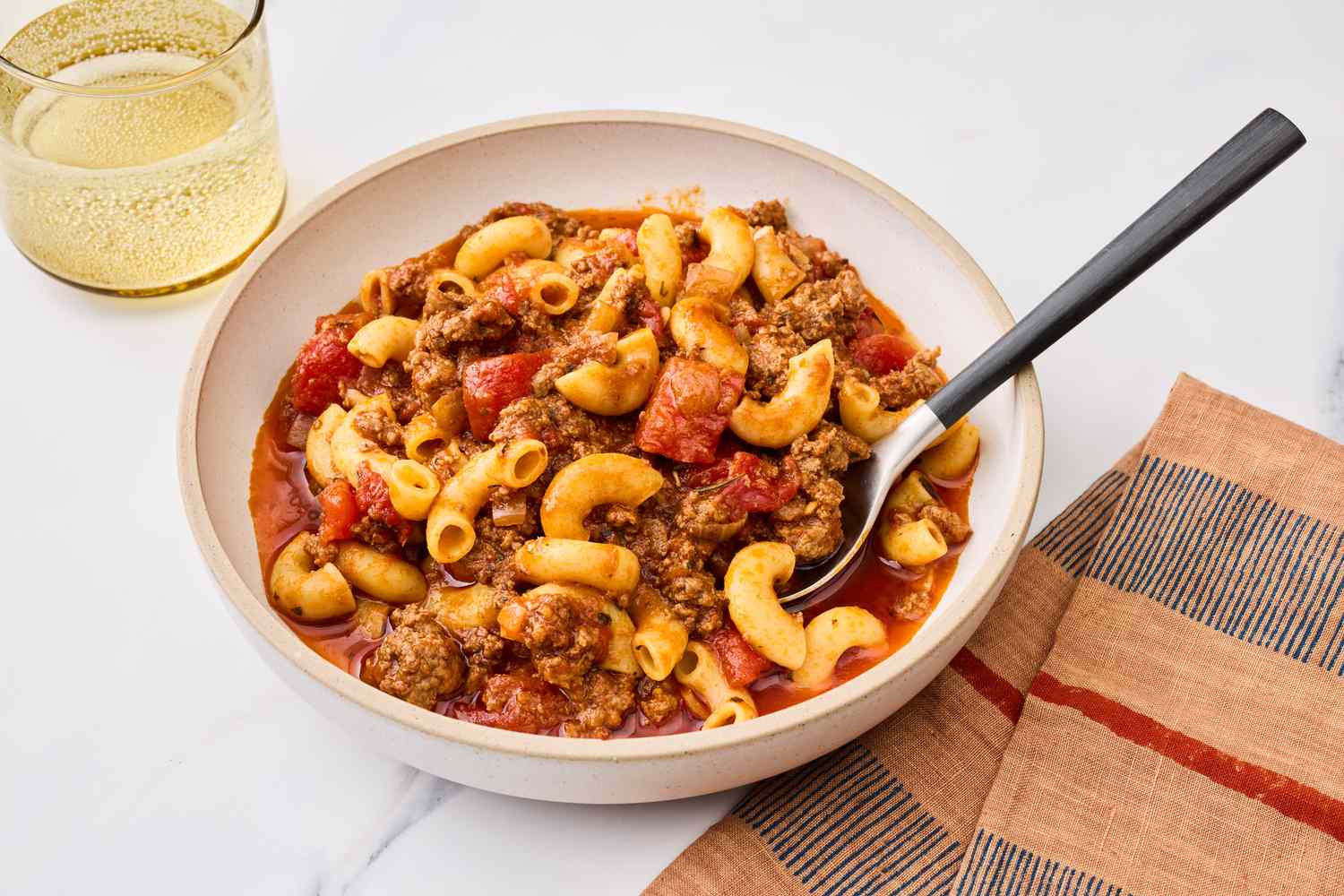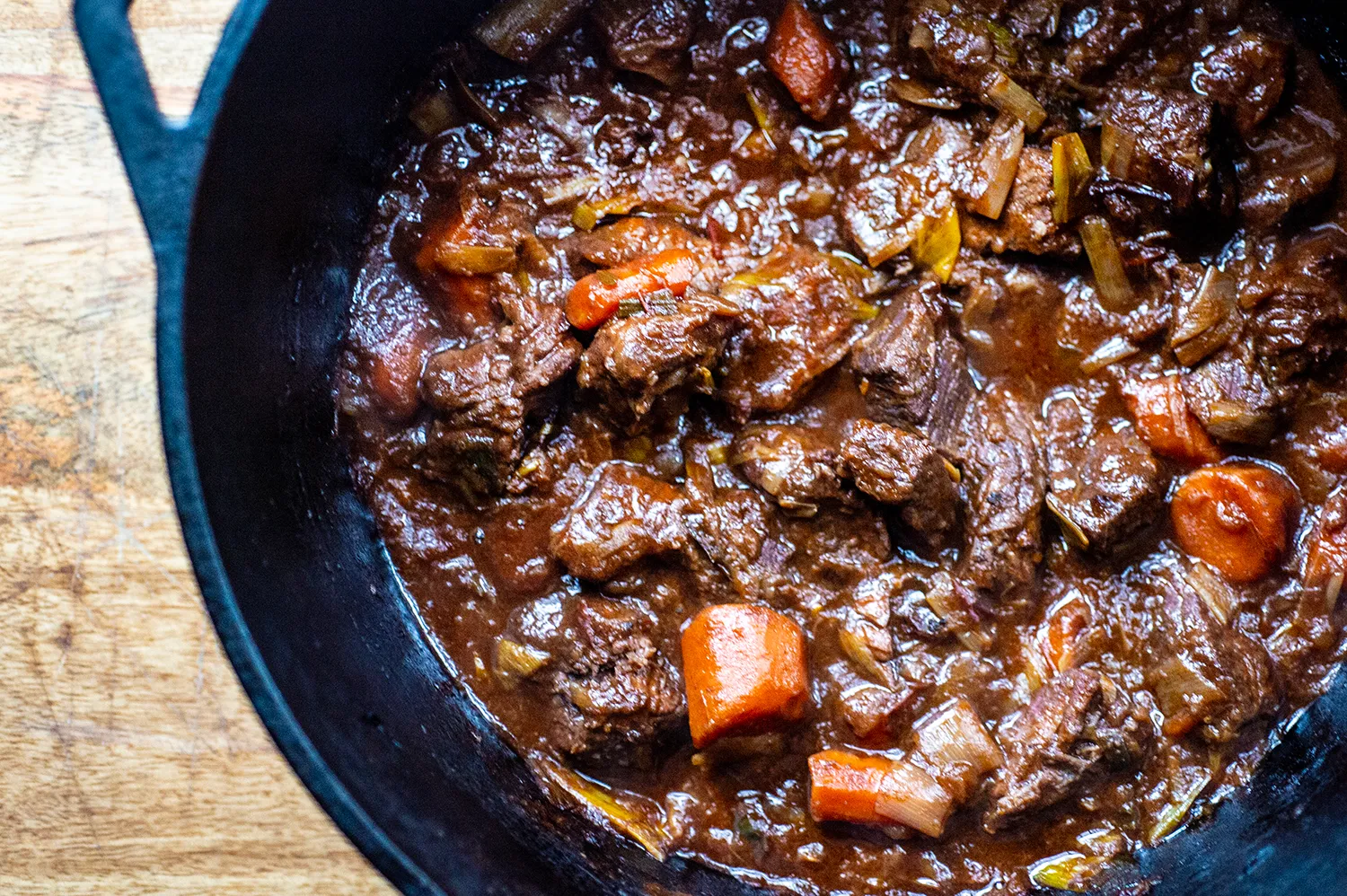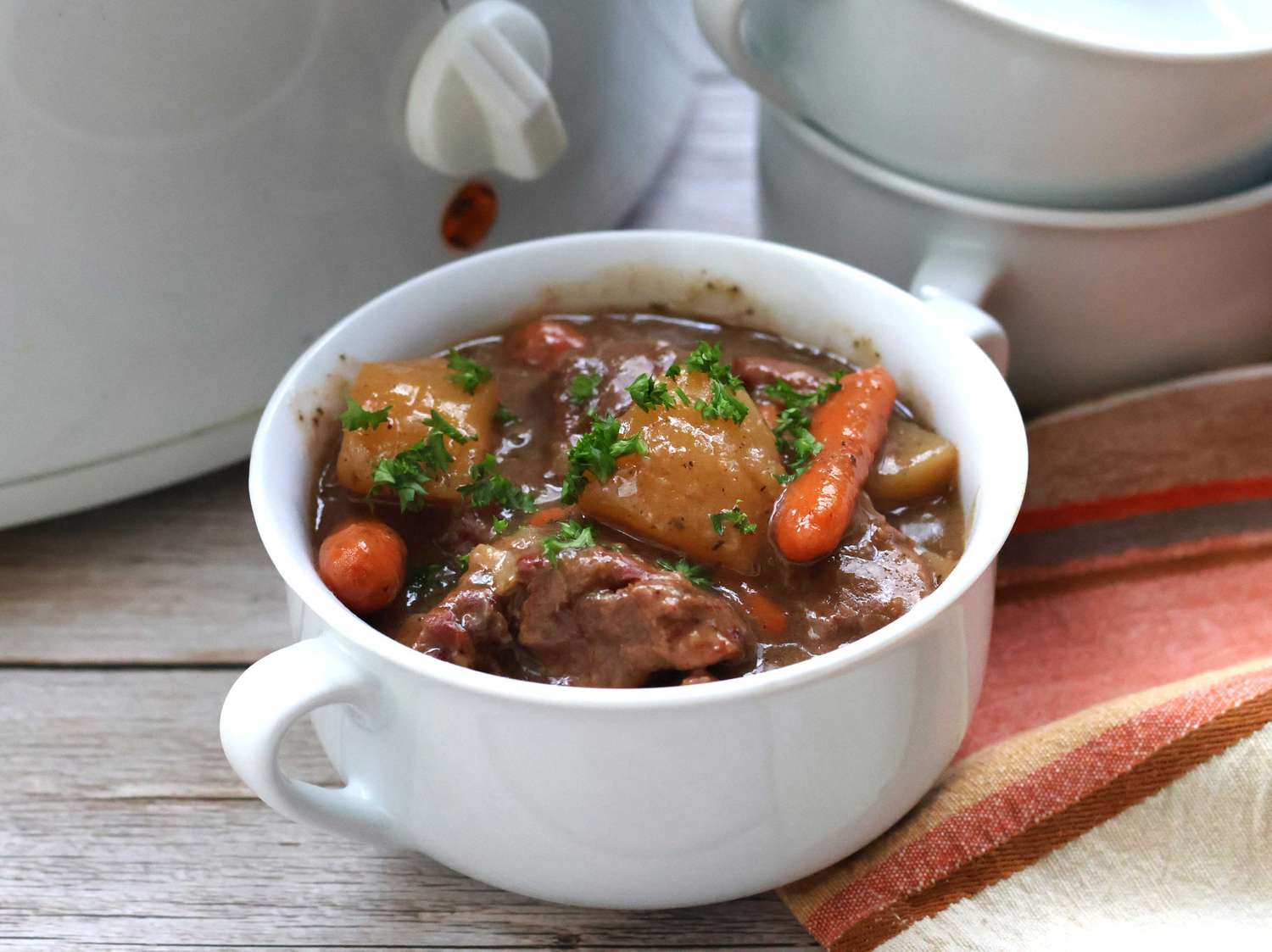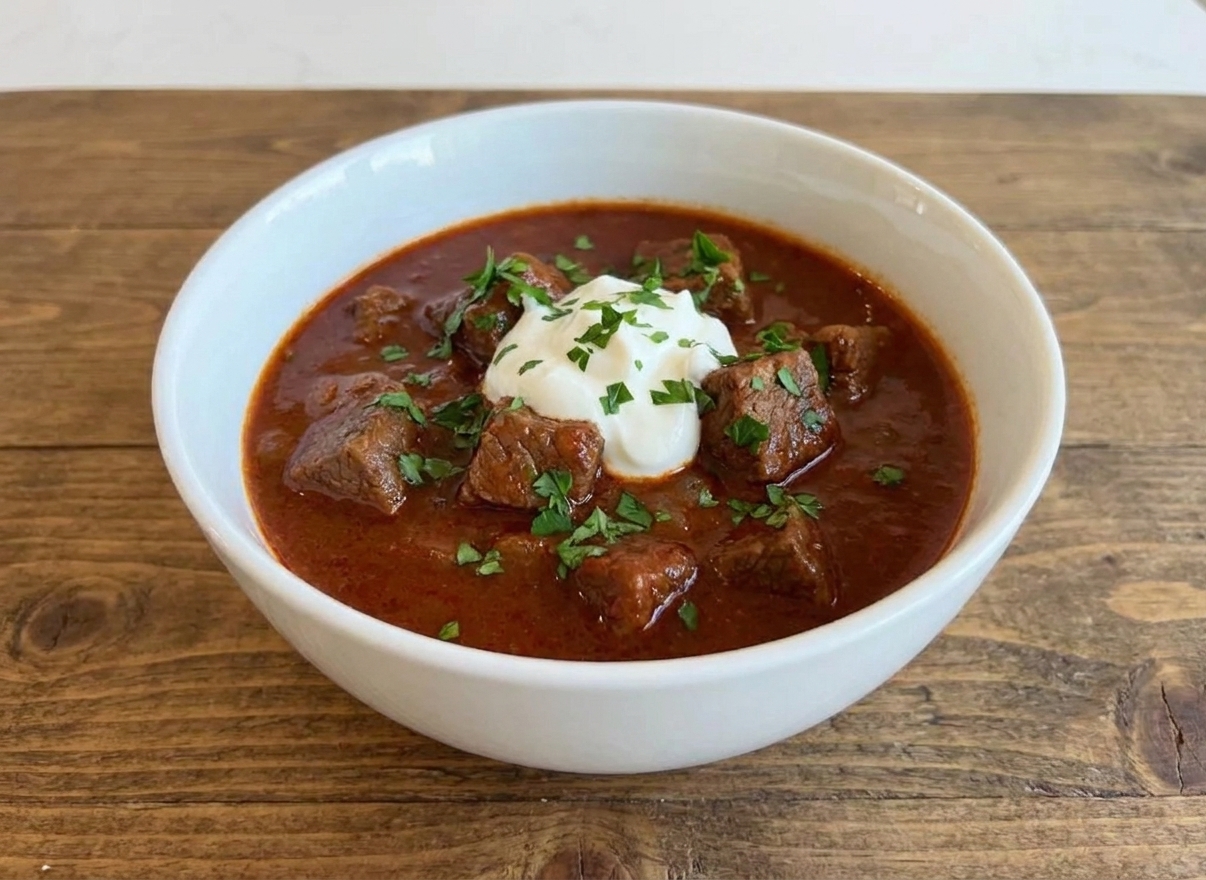


If you grew up calling any beefy, tomato-y, one-pot pasta situation “goulash,” you are not alone. But Hungarian beef goulash is a totally different dinner. It is a paprika-forward beef dish where onions melt into the broth and sauce, peppers turn sweet and tender, and browned chunks of beef become fork-soft.
This version is the one I make when Portland turns gray and I need a pot of something that smells like warmth. It is restaurant technique made weeknight-friendly: a focused ingredient list, one pot, and a mostly hands-off simmer once the foundation is built. Big flavor comes from browning the beef, cooking down the onions until they almost disappear, and blooming the paprika gently so it tastes round and fragrant, not bitter.
You will end up with a stew-leaning bowl, rich but not heavy, with that signature paprika glow and, my personal touch, a small splash of vinegar or lemon at the end to keep every bite lively. It is also a great-for-leftovers win: it reheats beautifully, and it is even better the next day.
Hungarian vs American goulash
American goulash is typically a quick, one-pot skillet: ground beef, tomato sauce, seasonings, and macaroni cooked right in. Hungarian gulyás is traditionally more soup-like and often includes potatoes, while the thicker “Hungarian goulash” many of us know in the US is frequently closer to pörkölt in spirit. This recipe leans thicker, with plenty of onions helping give the pot body as they cook down.
- Meat: Hungarian-style versions use stew beef, not ground beef.
- Texture: Hungarian can be a brothy soup/stew or thicker, stew-like, depending on the cook and region.
- Serving: Often served in bowls with bread, or with a starch on the side in some homes and restaurants.
- Flavor: Paprika leads the conversation.
What to expect
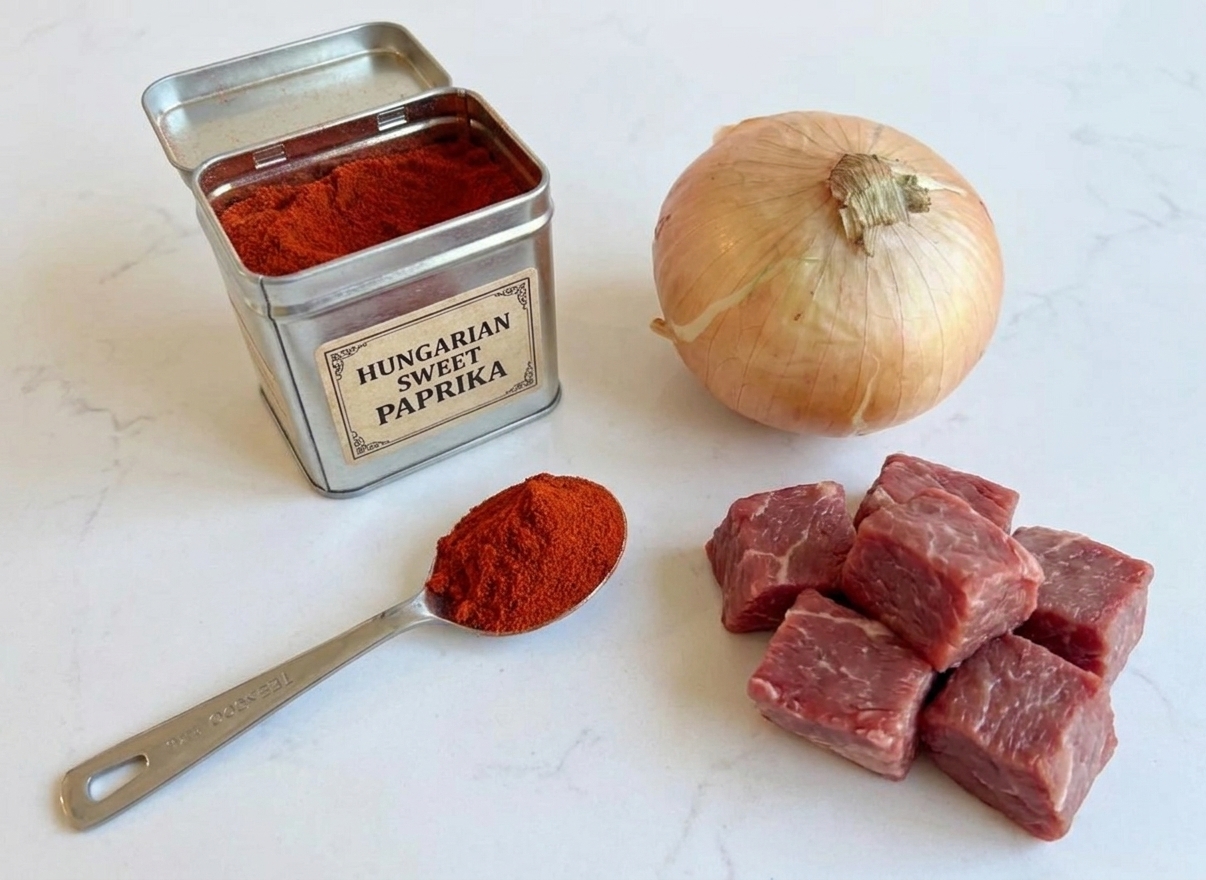
Plan for a little hands-on time up front, then a long, gentle simmer, about 1 hour 45 minutes to 2 hours. The onions practically dissolve into the broth and create a silky body, the peppers soften into sweetness, and the beef turns tender. Flavor-wise, think sweet Hungarian paprika first, peppers and garlic supporting, and optional caraway if you want that classic earthy edge.
Why this recipe works
- Onions do double duty: A generous amount of onions cook down to help give the pot body, giving you a velvety feel without heavy cream or lots of flour.
- Blooming paprika the right way: Paprika is fat-soluble. Briefly warming it in oil wakes up its aroma, but keeping the heat gentle prevents bitterness.
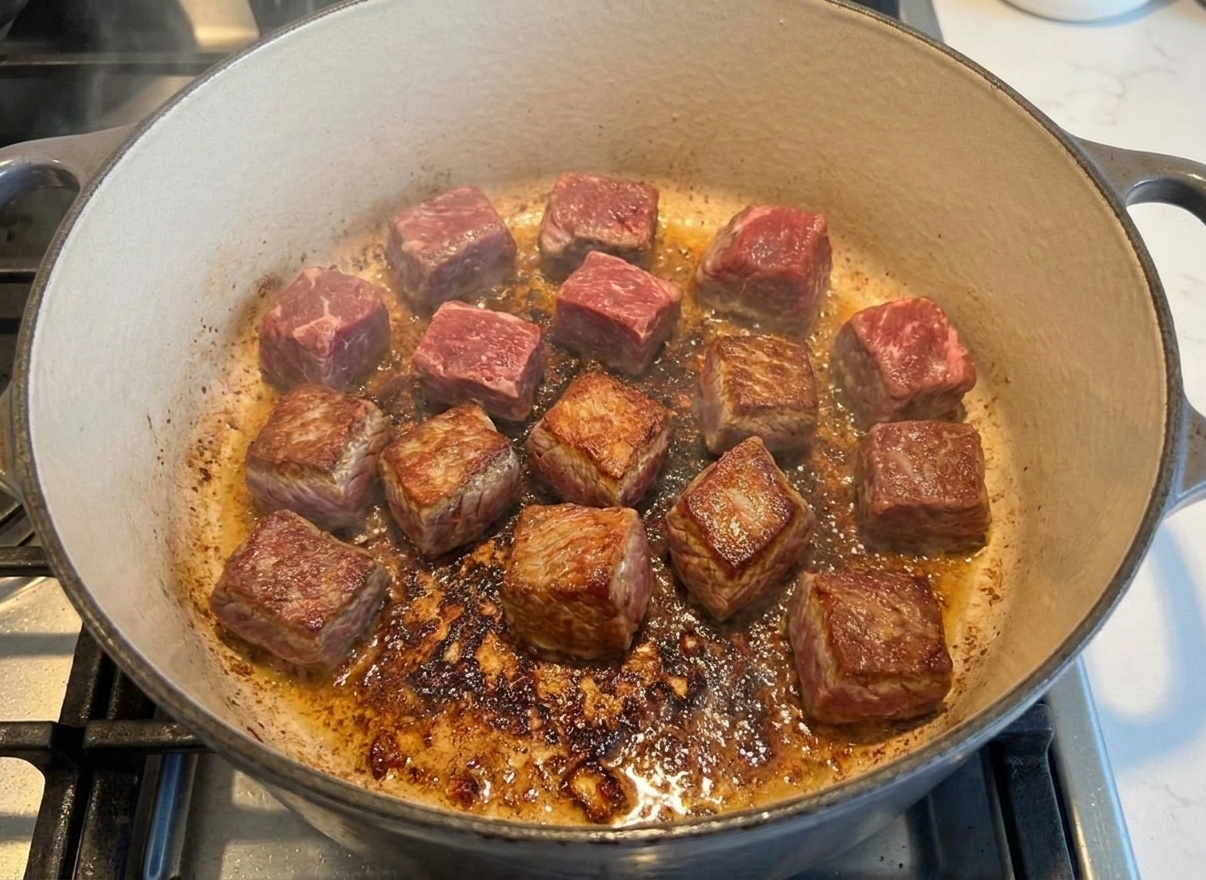
- Browned beef equals depth: Taking the time to sear the beef in batches builds fond on the pot, which becomes the backbone of the sauce once deglazed.
- Low and slow tenderizes tough cuts: Chuck or other stew cuts need time at a gentle simmer to relax into truly tender bites.
Ingredient notes
- Beef chuck (stew meat): Choose well-marbled pieces and cut them into even cubes so they finish at the same time. Lean stew meat can turn dry.
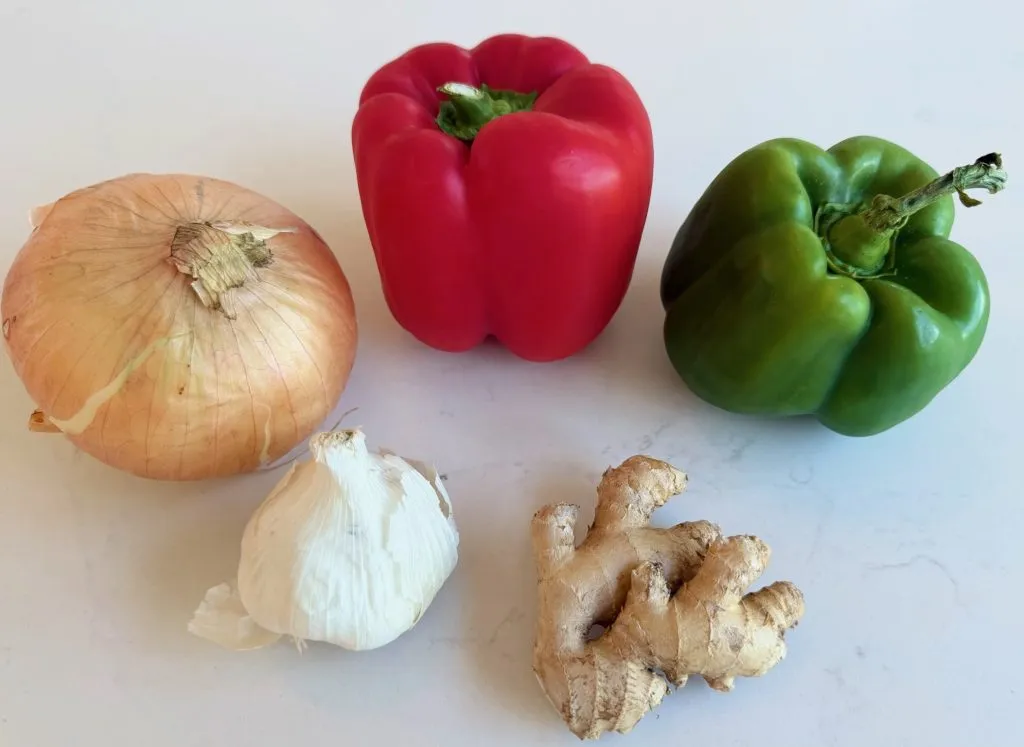
- Onions: Do not skimp. They are not just flavor, they are structure for the sauce. Yellow onions are ideal.
- Hungarian sweet paprika: If you can find it, use it. The flavor is sweeter, rounder, and more aromatic. Regular sweet paprika still works, but avoid old, dusty paprika. Fresh matters here.
- Caraway seeds (optional but classic): They add a subtle rye-like, earthy edge. If you are unsure, start small. You can always add more later.
- Bell peppers: Red is sweetest, green is more bitter. I like a mix if that is what is in the crisper.
- Tomato paste: Not the main flavor, just a supporting actor that adds umami and a little sweetness.
- Stock: Beef stock is traditional. Chicken stock is fine in a pinch. Salt levels vary wildly, so season at the end.
- Vinegar or lemon (optional): A small splash at the end balances the paprika and beef.
- Sour cream (for serving): Optional, but it makes the bowl extra cozy.
Equipment you will need
- Heavy Dutch oven or large, heavy-bottomed pot with a lid
- Wooden spoon or sturdy spatula for scraping fond
- Chef’s knife and cutting board
- Measuring spoons
Pro tips
- Sear in batches: Crowding steams the beef and you lose browning. Give the pieces space and let them sit until they release easily.
- Control the paprika: Once you add paprika, lower the heat and stir for 30 seconds to 1 minute. If it smells harsh or looks like it is darkening fast, add a splash of stock immediately.
- Simmer gently: You want small bubbles, not a rolling boil. Boiling can make beef tough and emulsions break.
- Taste at the end: Paprika stews often need more salt than you think, plus a final hit of acid if you want to sharpen everything.
- Make it ahead: Like many stews, it is even better the next day. The paprika flavor rounds out overnight.
Substitutes that work
- No Hungarian paprika: Use fresh sweet paprika. You can add a small pinch of smoked paprika for depth, but keep it subtle so it still tastes Hungarian, not barbecue.
- No caraway: Skip it or add a small pinch of ground coriander for a different but pleasant warmth.
- No beef stock: Use chicken stock plus 1 to 2 teaspoons soy sauce or Worcestershire for extra savoriness.
- Gluten-free: This stew is naturally gluten-free if your stock is. Serve with potatoes or gluten-free noodles. If you thicken with flour, use cornstarch slurry instead.
- Dairy-free: Skip the sour cream, or serve with a dairy-free yogurt alternative.
Variations
- Soupier goulash style: Add extra stock and a diced potato, and serve it as a hearty soup with bread.
- Extra pepper-forward: Add an additional bell pepper or a few strips of roasted red pepper stirred in at the end.
- Spicy: Add a pinch of hot Hungarian paprika or cayenne, but keep it restrained so it does not drown out the sweet paprika.
- Vegetable boost: Mushrooms or carrots can go in with the peppers. Not traditional, but very weeknight practical.
Serving ideas
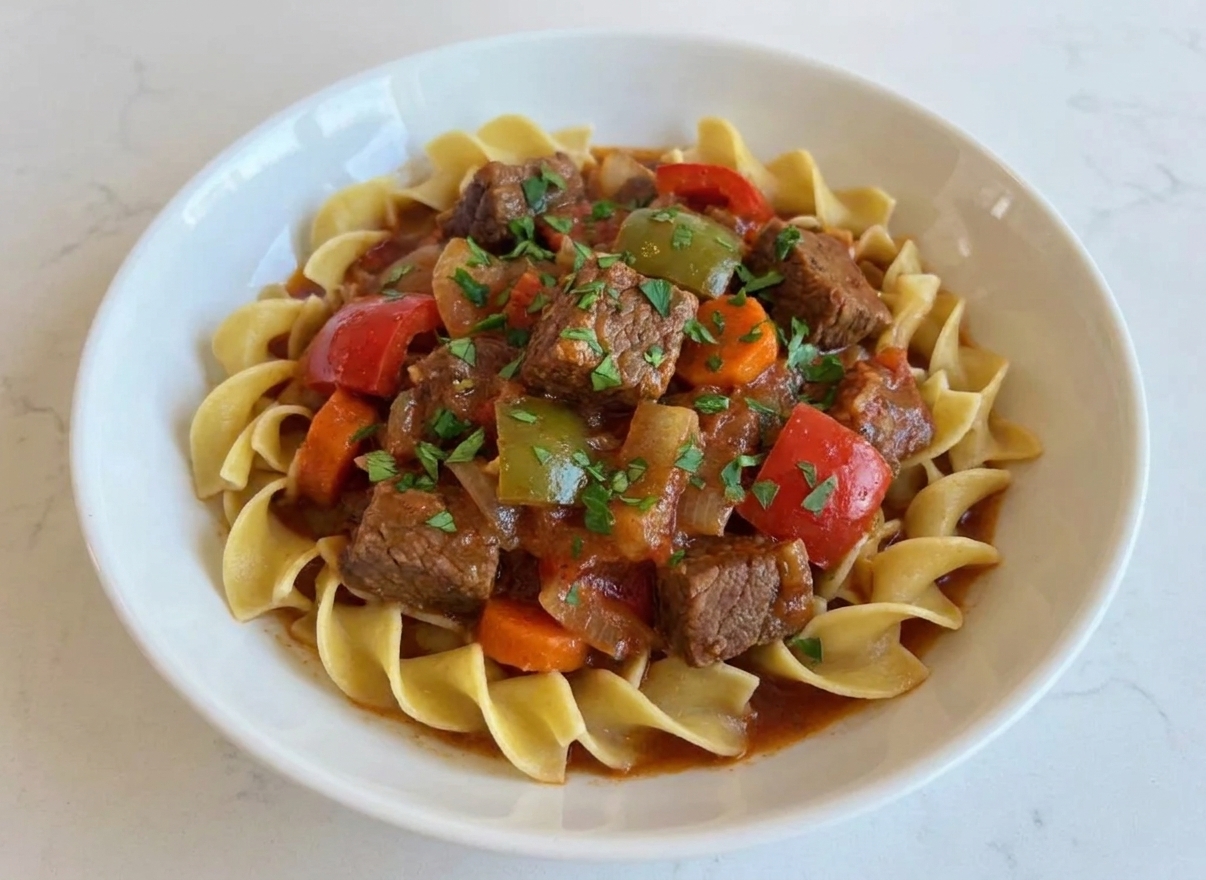
- Bread: A common, simple pairing, especially if you like your goulash a little more brothy.
- Egg noodles: My favorite for soaking up sauce.
- Boiled or mashed potatoes: Great if you want something extra cozy.
- Rice or barley: Not traditional, but they work beautifully with the paprika broth and gravy.
- Pickles and cabbage: A crunchy, tangy side balances the richness.
- Simple salad: Something sharp and acidic, like vinaigrette-dressed greens.
Storage and reheating
- Refrigerate: Cool, then store airtight for up to 4 days.
- Freeze: Freeze in portioned containers for up to 3 months. Thaw overnight in the fridge for best texture.
- Reheat: Warm gently on the stove over medium-low, adding a splash of stock or water if it has thickened. Avoid boiling hard.
- Food waste note: Leftovers make an excellent baked potato topper or filling for a soft roll the next day.
Common mistakes
- Burning the paprika: This is the fastest way to make the stew taste bitter. Keep the heat low when paprika hits the pot.
- Not browning the beef: You can still make a good stew without searing, but it will taste flatter. Brown at least one good batch if you are short on time.
- Rushing the simmer: If the beef is chewy, it usually needs more time, not more heat.
- Underseasoning: Paprika and onions need enough salt to taste like themselves. Season gradually and taste near the end.
- Cooking noodles in the stew: That is American goulash territory. Keep noodles or potatoes separate so leftovers reheat well.
FAQ
Is Hungarian goulash the same as pörkölt?
They are related but not the same. Many Hungarian cooks describe gulyás as more soup-like, often with potatoes, while pörkölt is usually thicker and more stew-like. In the US, “Hungarian goulash” often refers to the thicker paprika beef style like this recipe.
Do I need to use flour to thicken it?
Not necessarily. The onions help give the stew body as they break down and the sauce reduces. If you want it thicker, you can use a small amount of flour or a cornstarch slurry.
Why does my goulash taste bitter?
Most commonly: paprika scorched in the pot or paprika that is old. Keep the heat low when you add it, and replace paprika that has been sitting open for a year.
Can I make it in a slow cooker?
Yes, with one key note: still sear the beef and sauté the onions first for best flavor, then transfer and cook on low until tender.
What is the best cut of beef for goulash?
Chuck roast is the sweet spot for flavor and tenderness after a long simmer. Look for marbling.
Hungarian Beef Goulash
A paprika-rich Hungarian beef goulash with browned beef chunks, lots of onions, and tender peppers in a savory sauce. Finish with a splash of vinegar or lemon and serve with bread, egg noodles, or potatoes.
- Prep
- 25 minutes
- Cook
- 2 hours 15 minutes
- Total
- 2 hours 40 minutes
- Yield
- 6
Ingredients
- 2 1/2 pounds beef chuck, cut into 1 1/2-inch cubes
- 2 1/2 teaspoons kosher salt, plus more to taste
- 1 1/2 teaspoons black pepper
- 2 tablespoons neutral oil (such as canola or grapeseed), plus more as needed
- 3 large yellow onions, thinly sliced
- 1 large red bell pepper, stemmed, seeded, and sliced
- 1 large green bell pepper, stemmed, seeded, and sliced (optional)
- 5 cloves garlic, minced
- 3 tablespoons Hungarian sweet paprika
- 1 teaspoon hot paprika or cayenne (optional)
- 1 teaspoon caraway seeds, lightly crushed (optional)
- 2 tablespoons tomato paste
- 4 cups beef stock (or low-sodium chicken stock)
- 1 tablespoon Worcestershire sauce (optional, for extra savoriness)
- 2 bay leaves
- 1 tablespoon red wine vinegar or fresh lemon juice, plus more to taste (optional)
- Sour cream and chopped parsley, for serving (optional)
Instructions
- Season and dry the beef. Pat the beef cubes very dry with paper towels. Season with 2 teaspoons kosher salt and the black pepper.
- Sear the beef in batches. Heat 2 tablespoons oil in a Dutch oven over medium-high heat until shimmering. Add beef in a single layer (do not crowd) and sear 3 to 5 minutes per side until deeply browned. Transfer to a bowl and repeat, adding a little more oil if the pot looks dry.
- Build the onion base. Reduce heat to medium. Add the sliced onions to the pot with a pinch of salt and cook 8 to 12 minutes, stirring and scraping up browned bits, until softened and lightly golden.
- Add peppers and garlic. Stir in the bell peppers and cook 3 to 5 minutes until they begin to soften. Add the garlic and cook 30 seconds until fragrant.
- Bloom the paprika gently. Lower heat to low. Add the sweet paprika, optional hot paprika or cayenne, and optional caraway. Stir constantly for 30 to 60 seconds. If anything looks like it is darkening too quickly, immediately move to the next step and add a splash of stock.
- Toast the tomato paste. Stir in the tomato paste and cook 1 minute, scraping the bottom of the pot.
- Deglaze and return beef. Pour in about 1 cup of the stock and scrape up any stuck-on fond. Return the beef and any accumulated juices to the pot.
- Simmer low and slow. Add the remaining stock, Worcestershire (if using), and bay leaves. Bring to a gentle simmer, then cover and reduce heat to low. Cook 1 hour 45 minutes to 2 hours, stirring occasionally, until the beef is fork-tender.
- Finish and balance. Remove bay leaves. Stir in 1 tablespoon vinegar or lemon juice, if using. Taste and add more salt, pepper, and a little more vinegar or lemon if needed to brighten the stew.
- Serve. Ladle goulash into bowls with bread, or serve it over egg noodles or beside boiled or mashed potatoes. Top with sour cream and parsley if you like.
Notes
Paprika note: Fresh paprika is the difference between a good goulash and a great one. If yours smells faint or dusty, replace it.
Texture control: If you want a thicker stew, uncover for the last 15 to 20 minutes and let it reduce gently. For a looser, soupier bowl, add a splash more stock.
Make-ahead: Cool and refrigerate overnight. Reheat gently the next day. The flavor improves after resting.