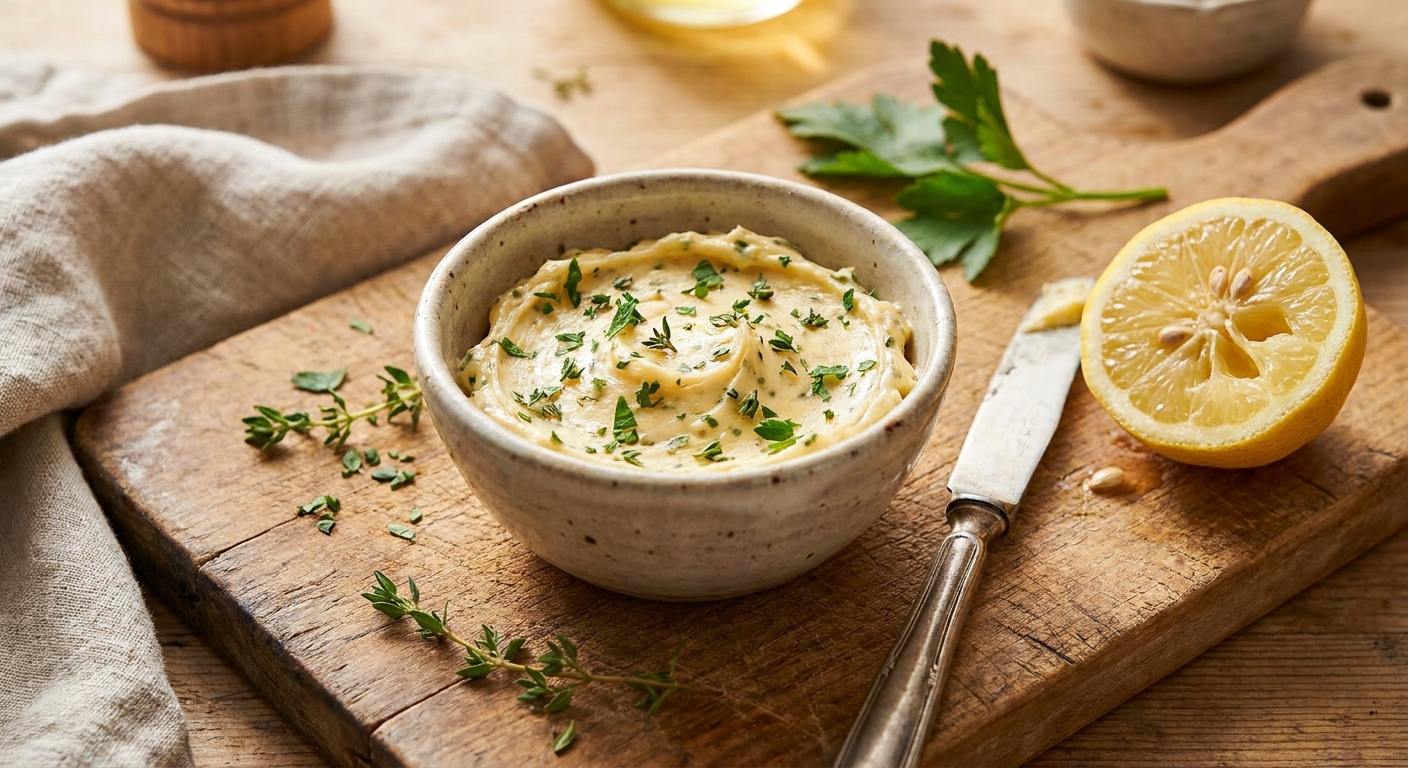
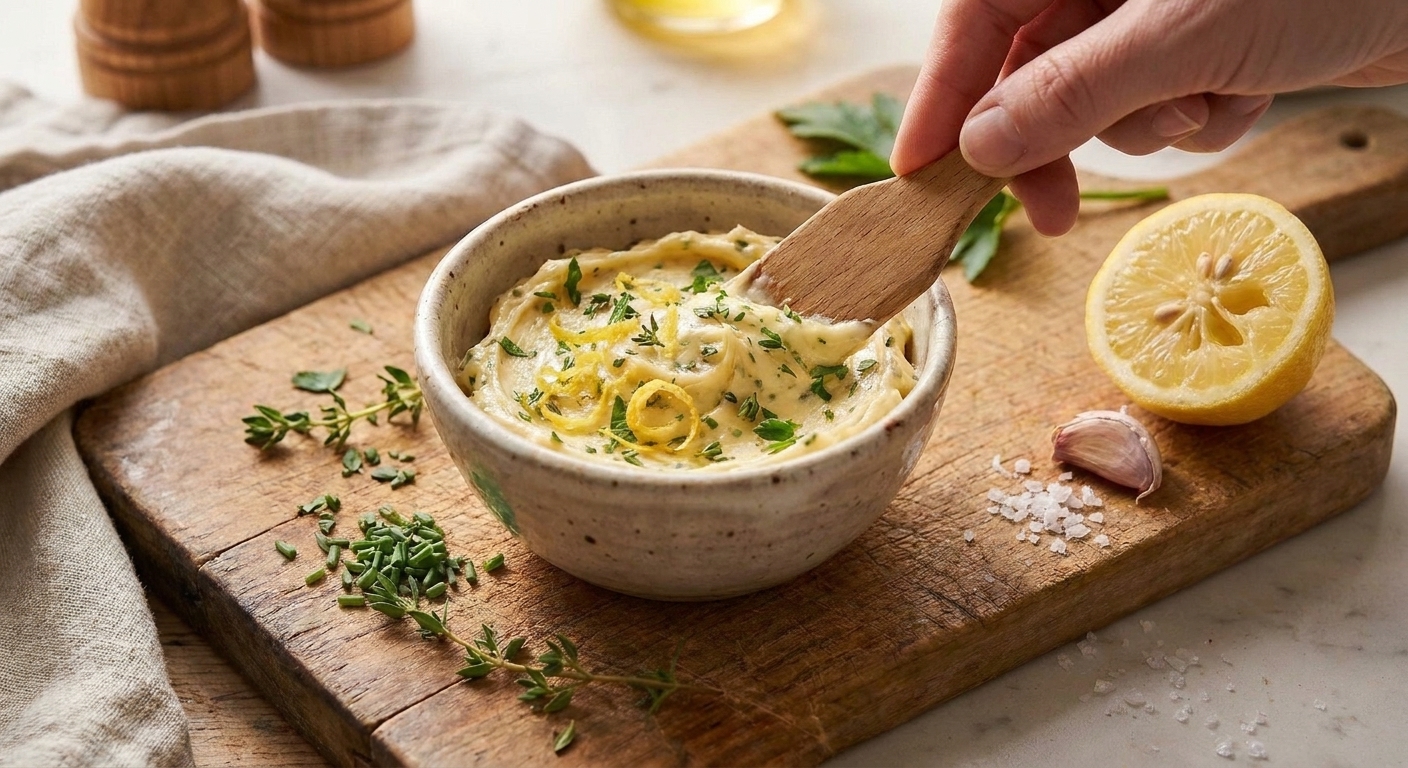
Think of this as the weeknight version of restaurant finishing butter (that pat of flavored butter restaurants melt over steak, chicken, or vegetables right at the end): a soft, savory spread that tastes like roast chicken and herbs, with a bright little zip of lemon. I call it Light Chicken Butter because we build big flavor without making it feel heavy. We whip the butter, lean on herbs and acid, and use just enough chicken essence (jellied pan juices or reduced stock) to make it unmistakably savory. It is “light” in texture and feel, not a low-fat, diet butter situation.
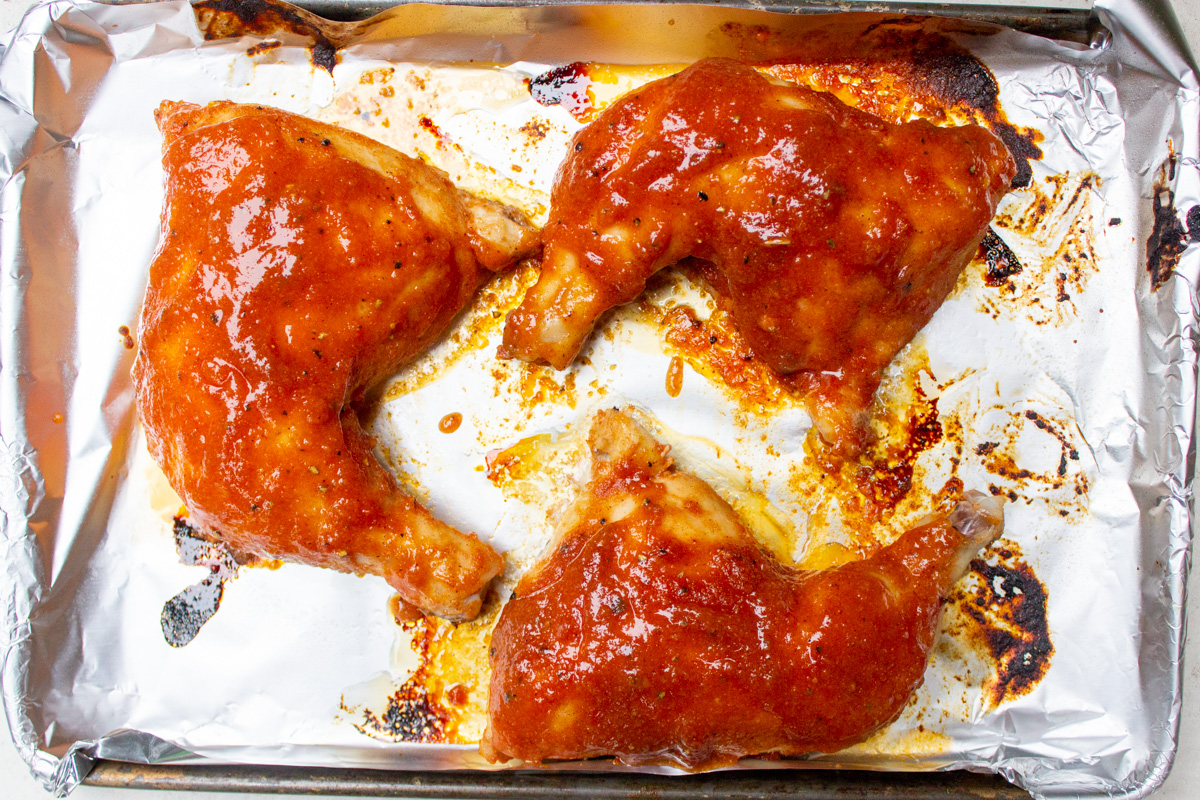
It is my favorite way to rescue the best part of a roast chicken: those browned bits and juices that usually get wiped up and forgotten. One spoonful on hot rice, a baked potato, or steamed green beans makes dinner feel finished.
Why this recipe works
This is a restaurant-style compound butter that melts into a quick, glossy “sauce,” but it is designed to feel lighter and brighter.
- Whipped butter gives a fluffier texture (the “light” part) and helps the spread melt smoothly.
- Concentrated chicken drippings or reduced stock add real roast-chicken savoriness without turning it into gravy.
- Lemon zest and juice keep the richness in check and add a clean, bright finish.
- Fresh herbs lift the flavor so it tastes finished and not heavy.
Ingredient notes
Butter: Use unsalted butter so you can control seasoning. It should be softened so it whips easily.
Chicken drippings: You want concentrated pan juices (often jellied when cold), not a lot of straight rendered fat. If your drippings are very fatty, spoon off most of the fat and use the darker, more concentrated juices underneath for better flavor and less grease.
Stock option: If you do not have drippings, reduce 1/2 cup chicken stock or broth down to 2 tablespoons so it is strong enough to stand up to butter.
Lemon: The recipe uses 1 teaspoon zest (about 1 lemon) and 1 to 1 1/2 teaspoons juice to taste.
Herbs: The go-to combo is parsley + chives + thyme. Rosemary works too, but use it sparingly so it does not dominate.
Dijon mustard (optional): A small amount helps the butter taste “finished.”
Equipment you will need
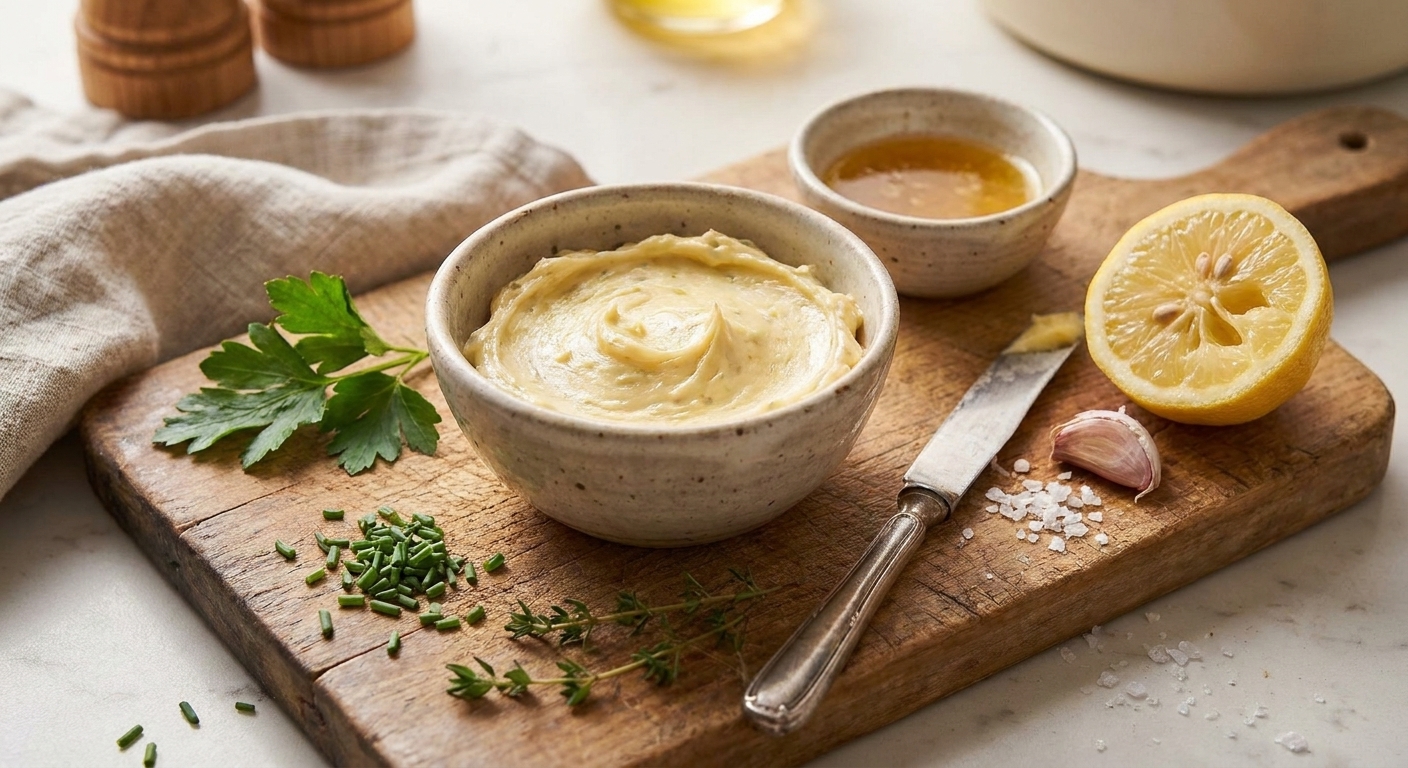
- Medium bowl
- Spoon or whisk (or a hand mixer, optional)
- Microplane or fine grater (for garlic and zest)
- Small saucepan (only if making the quick stock reduction)
- Fine-mesh strainer (optional, for smoother drippings/stock)
- Jar with lid or parchment paper (for storing as a log)
Pro tips
- Whip the butter for about 1 minute until lighter and fluffy. This step is what makes the butter feel “light.”
- Cool the drippings or stock reduction completely before mixing so the butter does not melt and turn greasy.
- Taste on something warm (warm bread or a hot spoon) before adjusting. Butter tastes different cold vs. melted.
- Adjust like a chef: add a pinch more salt for savoriness, a few drops more lemon for brightness, or more herbs for freshness.
- For a smoother spread, strain drippings or reduced stock before cooling. Leave browned bits in if you like a little roasty texture.
Substitutes that work
- No drippings: Use the quick stock reduction method (reduce 1/2 cup stock to 2 tablespoons).
- Garlic: Use 1 small grated clove or substitute 1/2 teaspoon garlic paste.
- Thyme/rosemary: Use 1/2 teaspoon of either, keeping rosemary subtle.
- Dijon mustard: Optional; you can leave it out.
- Dairy-free: Use a good plant-based butter and follow the same method. Expect the flavor to be a bit different, so lean on extra herbs, lemon zest, and black pepper.
- Richer chicken flavor: Replace some butter with schmaltz (rendered chicken fat) for deeper chicken flavor, noting it will taste richer.
Variations
- Lemony tarragon: Swap thyme for tarragon and add an extra 1/2 teaspoon lemon juice.
- Miso chicken butter: Add 1 teaspoon white miso and reduce added salt.
- Smoky: Add 1/4 teaspoon smoked paprika plus extra black pepper.
- Spicy: Add a pinch of cayenne or Aleppo pepper.
- Garlic confit vibe: Use roasted garlic instead of raw grated garlic for a sweeter, mellow spread.
Serving ideas
- Toast or warm dinner rolls: instant savory garlic bread energy.
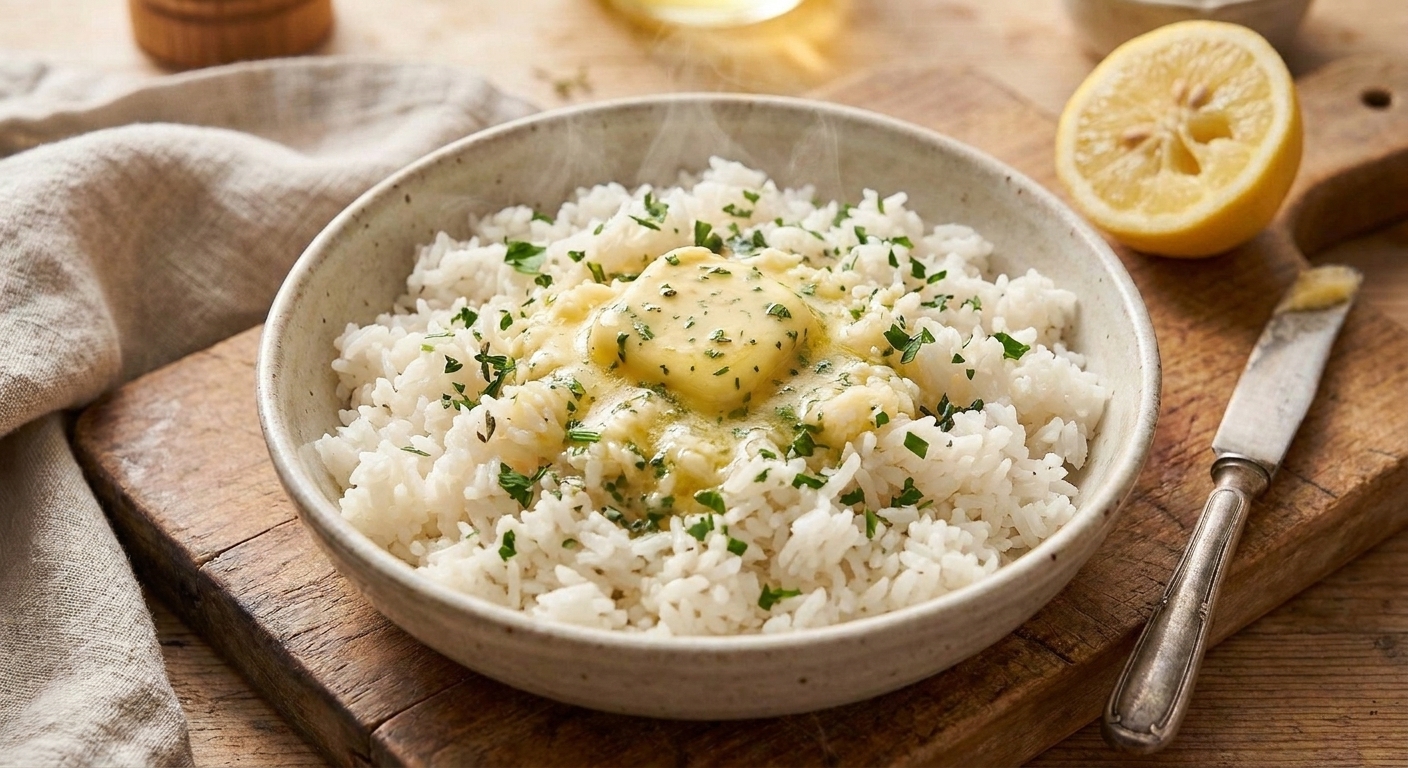
- Rice, couscous, or quinoa: stir in a tablespoon right off the heat.
- Roasted vegetables: toss with hot carrots, broccoli, or cauliflower.
- Pan-seared chicken: finish with a pat in the pan for a glossy, herby “sauce.”
- Pasta: melt into noodles with a splash of pasta water and extra lemon.
- Eggs: smear on an English muffin or melt over soft-scrambled eggs.
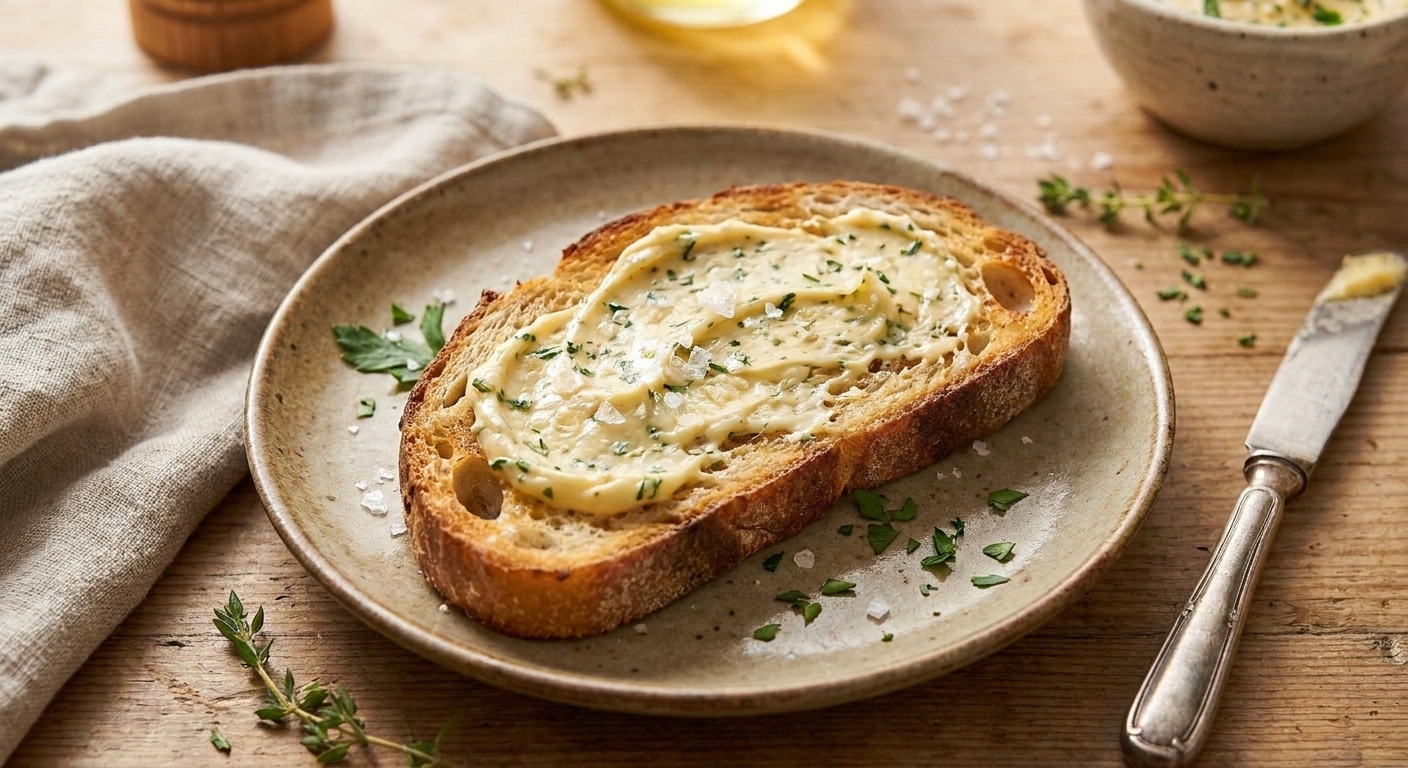
Weeknight move: make the butter, then use it as your “finishing sauce” for the next three dinners. A spoonful on hot rice with a jammy egg, melted over roasted broccoli, or smeared onto toast with sliced tomatoes turns simple food into something you actually look forward to.
Storage and reheating
Refrigerator: Store in an airtight container for up to 5 days. Because chicken drippings or stock are mixed in, keep the window shorter than plain herb butter. Use clean utensils, avoid double-dipping, and refrigerate promptly.
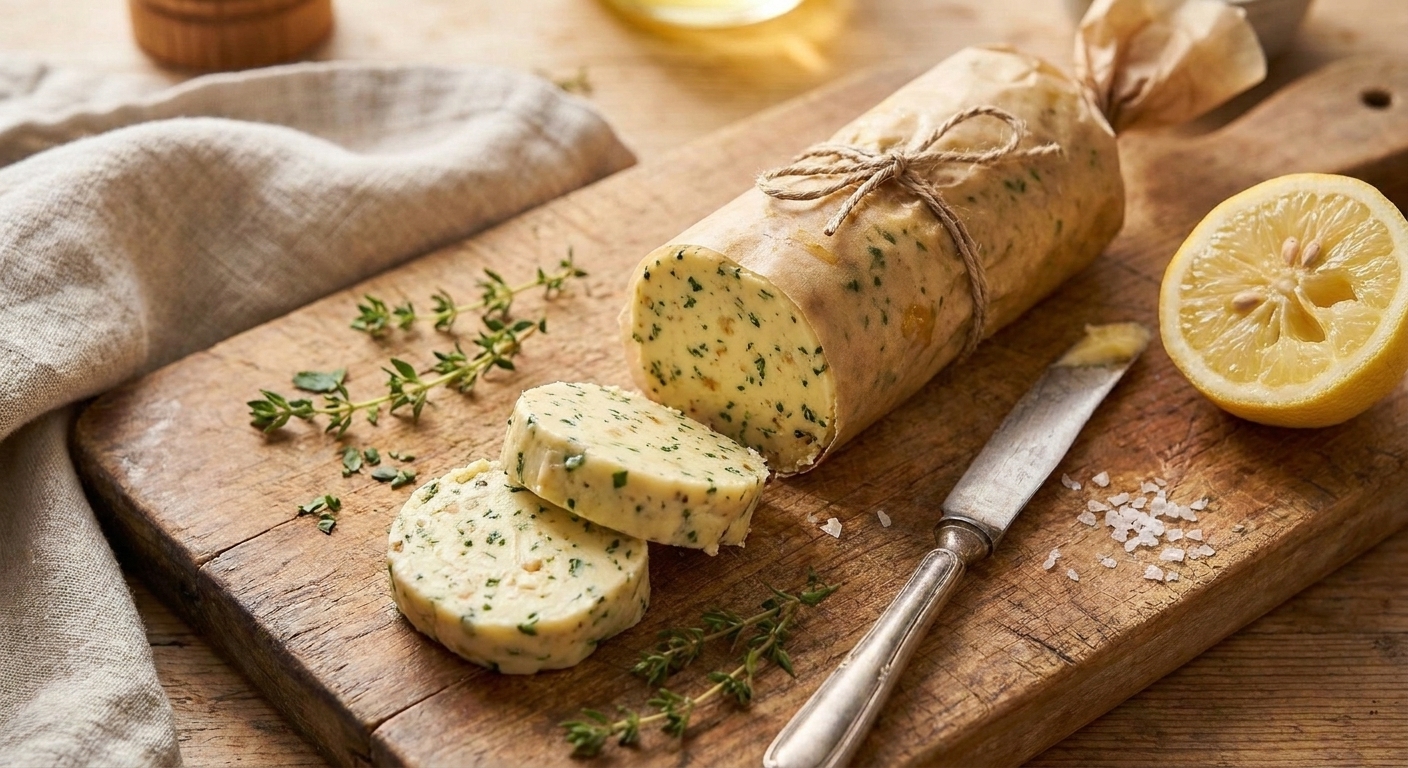
Freezer: Freeze for up to 2 months. A parchment log is easiest: roll, twist the ends, then slice off coins as needed. You can also freeze tablespoon portions in a silicone mold.
Serving from cold: Let it sit at room temperature 10 to 15 minutes for easy spreading, or melt straight from the fridge onto hot food.
Common mistakes
Using drippings that are mostly fat
If your drippings are very fatty, spoon off most of the fat and use the darker, more concentrated juices underneath. This gives better flavor and keeps the butter from feeling greasy.
Mixing in warm drippings or warm stock reduction
Warm concentrate can melt the butter and lead to a greasy or separated look. Cool completely before mixing.
Not reducing stock enough
If using broth/stock, it must be reduced until very concentrated (slightly syrupy and very chicken-y) so you only need a small amount in the butter.
Overdoing lemon or chicken flavor without tasting on warm food
Always taste on warm bread or a hot spoon before adjusting salt, lemon, and herbs.
FAQ
What is chicken butter?
Chicken butter is a riff on a compound butter: softened butter flavored with concentrated chicken drippings or reduced chicken stock, plus herbs and a little acid. When it melts, it behaves like a quick pan sauce: buttery, savory, and glossy.
Can I use rotisserie chicken drippings?
Yes. If your rotisserie container has juices, pour them into a cup and chill. Scoop off most of any solid fat and use the concentrated juices (or a mix of juices and a little fat). Aim for flavor first, not a ton of grease.
Can I make it dairy-free?
You can use a good plant-based butter and follow the same method. Flavor will be a bit different, so lean on extra herbs, lemon zest, and black pepper.
Is this the same as schmaltz?
Not quite. Schmaltz is rendered chicken fat. This is butter flavored with chicken, then brightened and whipped. You can replace some butter with schmaltz for a deeper chicken flavor, but it will taste richer.
What is the best herb combo?
Parsley + chives + thyme reads classic and clean. Rosemary is great too, but keep it subtle so it does not dominate.
Light Chicken Butter (Savory Herb Spread)
A soft, whipped compound butter flavored with concentrated chicken drippings (or reduced stock), fresh herbs, and lemon for a savory, bright finishing spread. Makes about 3/4 cup (12 tablespoons).
- Prep
- 10 minutes
- Cook
- 0 minutes (or 10 to 15 minutes if reducing stock)
- Total
- 45 to 75 minutes (includes chilling 30 to 60 minutes)
- Yield
- About 12 tablespoons
Ingredients
- 1/2 cup (1 stick) unsalted butter, softened
- 2 tablespoons cooled, concentrated chicken drippings or concentrated chicken stock (reduced; see notes)
- 1 teaspoon lemon zest (about 1 lemon)
- 1 to 1 1/2 teaspoons lemon juice, to taste
- 1 small garlic clove, finely grated (or 1/2 teaspoon garlic paste)
- 1 tablespoon finely chopped parsley
- 1 teaspoon finely chopped chives (optional but lovely)
- 1/2 teaspoon finely chopped thyme or rosemary (use rosemary sparingly)
- 1/4 teaspoon Dijon mustard (optional)
- 1/4 teaspoon fine salt, plus more as needed
- Black pepper, to taste
Instructions
- Whip the butter. In a medium bowl, beat the softened butter with a spoon, whisk, or hand mixer until lighter in color and fluffy, about 1 minute.
- Blend in chicken flavor. Add the cooled drippings (or stock reduction) and mix until fully incorporated. If it looks slightly separated at first, keep mixing and it will come together.
- Add aromatics and acid. Stir in lemon zest, 1 teaspoon lemon juice, garlic, herbs, Dijon (if using), salt, and pepper.
- Taste and adjust. Taste on warm bread or a hot spoon. Adjust with a pinch more salt, a few drops more lemon, or more herbs as needed.
- Chill to set. Scrape into a jar or roll into a log in parchment. Chill 30 to 60 minutes, then use. It is also usable right away, just softer.
Notes
Drippings note: Use concentrated pan juices (often jellied when cold), not a lot of straight rendered fat. If the drippings are very fatty, spoon off most of the fat and use the darker juices underneath.
Optional smoothing: If your drippings or reduced stock have lots of browned bits, strain before cooling for a smoother butter, or leave them in for roasty texture.
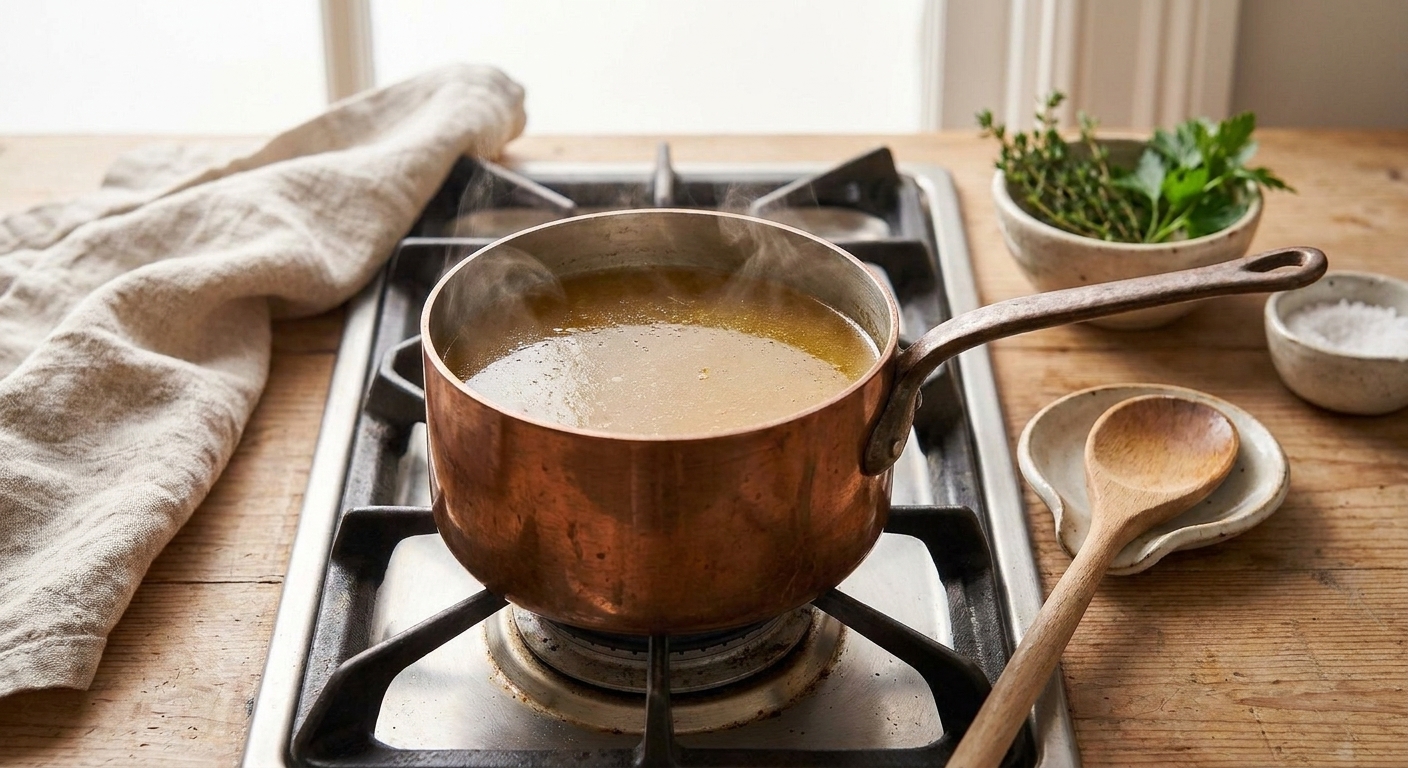
Quick stock reduction (if you have no drippings):
- Add 1/2 cup good chicken stock or broth to a small saucepan.
- Simmer until reduced to 2 tablespoons, about 10 to 15 minutes, until slightly syrupy and very chicken-y.
- Strain if needed, then cool completely before mixing into butter.
Salt tip: If your broth is salted, go easy on added salt until you taste the final butter.
Nutrition
- Calories: ~85
- Fat: ~9 g
- Carbs: ~0.5 g
- Protein: ~0.3 g
- Fiber: 0 g
- Sugar: ~0 g
- Sodium: ~70 mg
Approximate values per 1 tablespoon, depending on how salty your drippings/stock are and how much added salt you use.