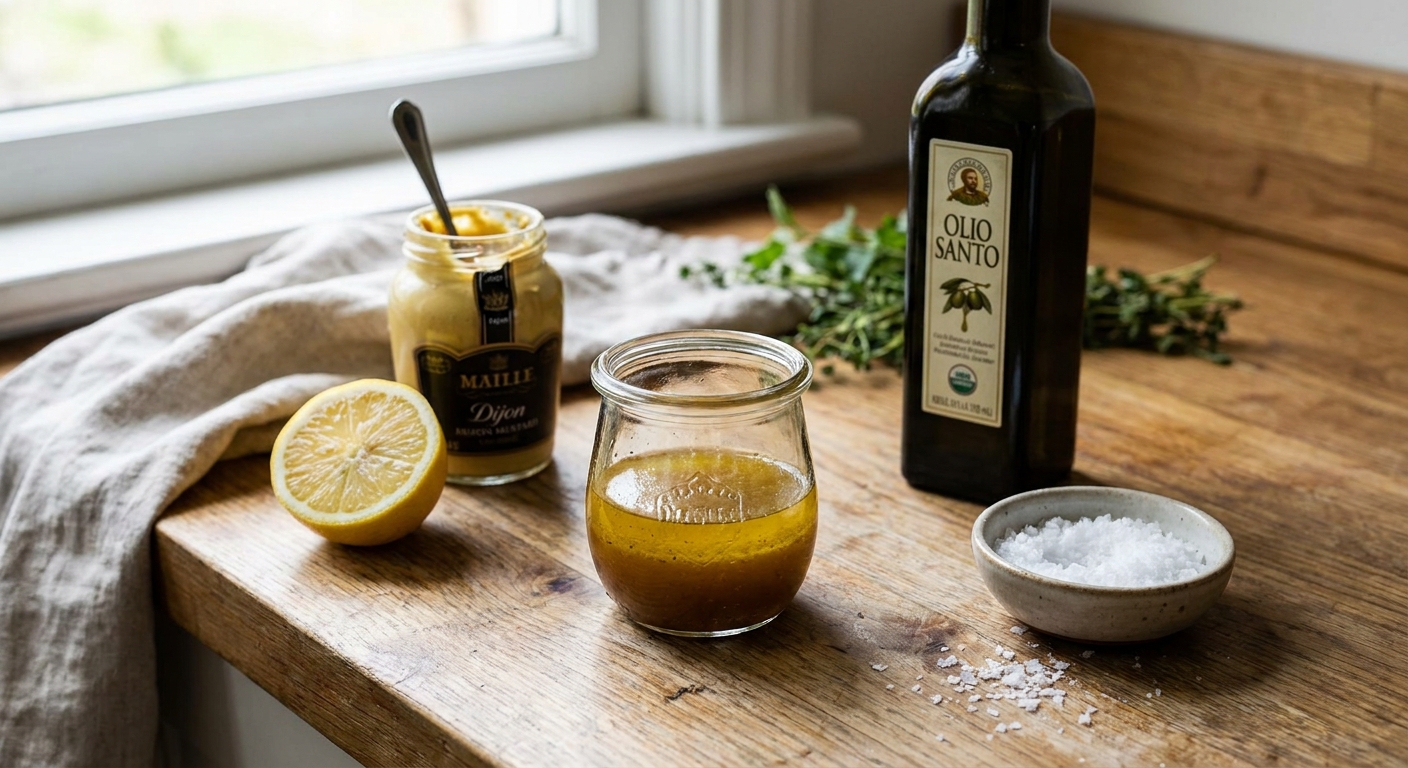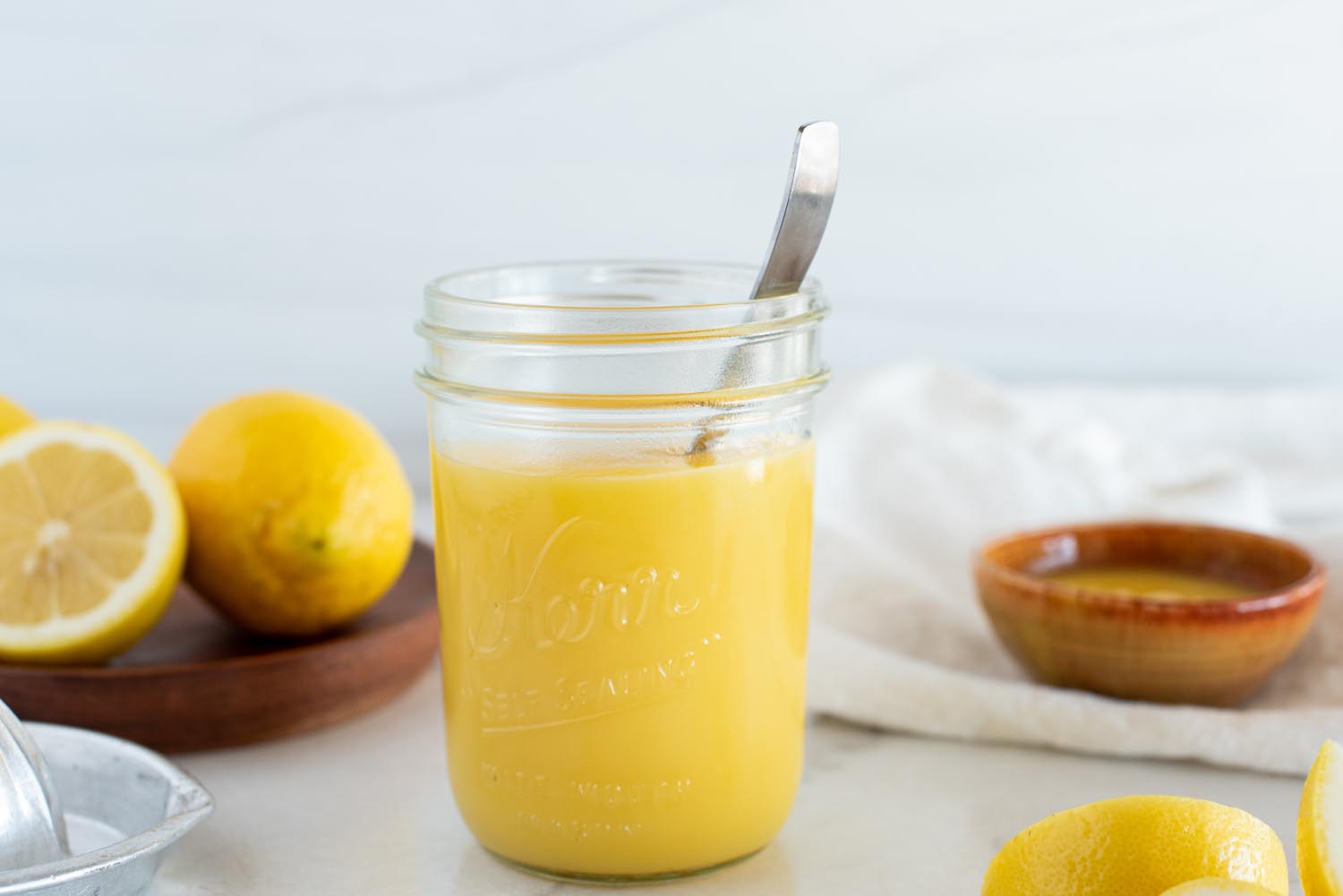
If you have only had lemon curd on scones, meet its dinner-party (but still weeknight) cousin. Savory lemon curd is a glossy, spoonable sauce made the same way as classic curd, with egg yolks, lemon juice, and butter. The difference is the seasoning: extra salt, less sugar than dessert curd, and often a savory accent like olive oil, garlic, herbs, or a hint of chili.
Think of it as the bridge between a bright pan sauce and a creamy spread. It brings acid (lemon), richness (butter and yolks), and just enough sweetness to round out sharp edges and make the citrus taste more lemony, not dessert-like.
Why this recipe works
- Egg yolks thicken without flour. You get a smooth, nappe-style sauce that clings to vegetables and fish.
- Butter softens sharp lemon. It turns a punchy citrus hit into something silky and mellow.
- Salt makes it taste like food, not candy. A savory curd should read like a bright sauce, not a frosting.
- It is a built-in “save the meal” condiment. A spoonful can wake up leftovers, bland grains, or roasted veg that needs a little sparkle.
Ingredient notes
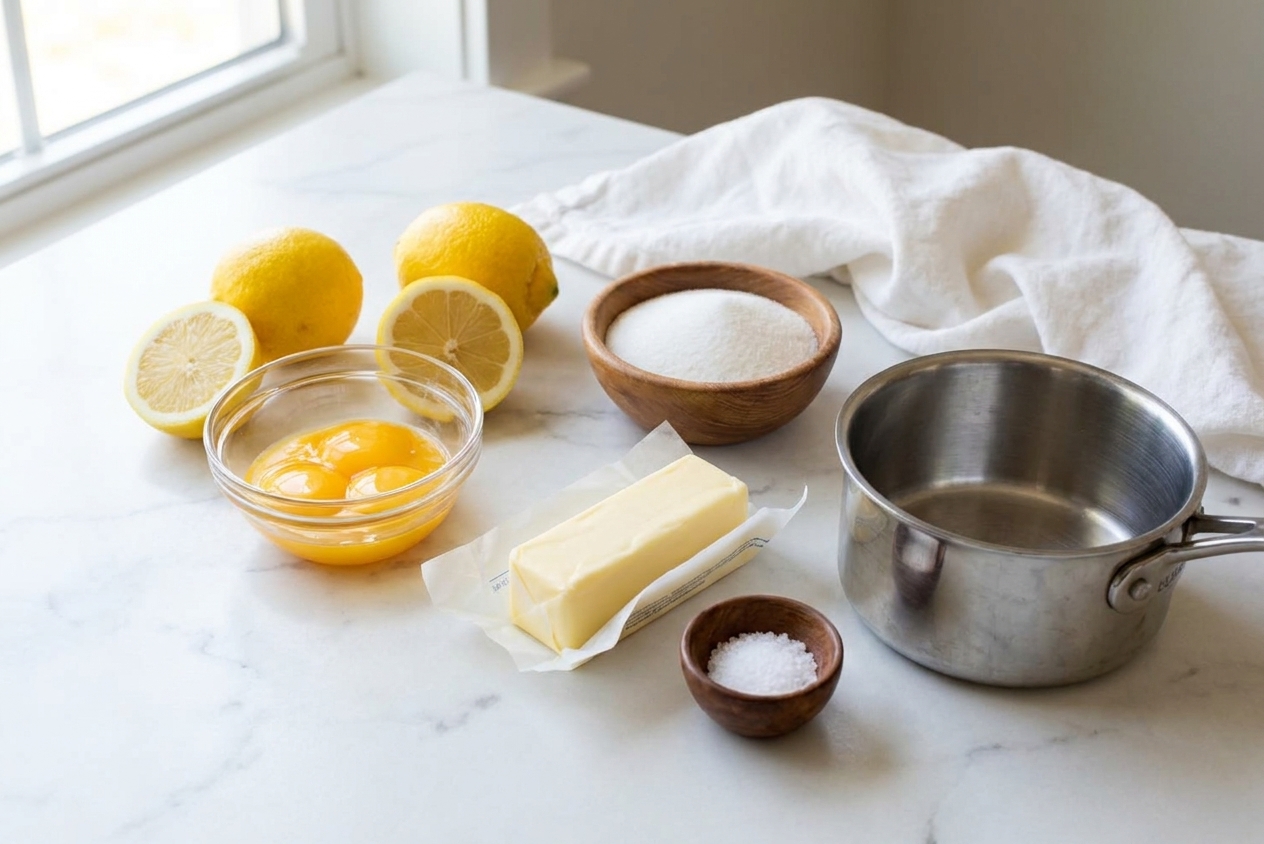
- Fresh lemon juice and zest: Use fresh if you can. Bottled juice can taste flatter, and some brands can pick up an odd edge once heated.
- Egg yolks: Yolks give body and that custardy richness. Save the whites for a quick omelet, meringue, or to brush on pastry.
- Unsalted butter: Lets you control salt. If you only have salted butter, cut the added salt in half, then taste.
- Sugar (small amount): This is not here to make it sweet. It rounds acidity and makes the lemon taste brighter. You can use honey, but start with less since it reads sweeter.
- Salt: Non-negotiable for savory. Start modest, then finish to taste.
- Optional savory boosters: A small grated garlic clove (or a smashed clove steeped in the butter), black pepper, chili flakes, chopped chives, dill, or thyme.
Equipment you will need
- Small saucepan
- Whisk
- Fine-mesh strainer (recommended, for the silkiest texture)
- Bowl or jar for storing
- Plastic wrap (optional, to press directly onto the surface) or a jar lid
- Instant-read thermometer (optional, for checking 170 to 180°F / 77 to 82°C)
Pro tips
- Keep the heat gentle. Aim for a steady warm-up over medium-low, not a simmer.
- Whisk constantly and scrape well. Keep the whisk moving and scrape the bottom and corners so the eggs do not overcook.
- Use temperature and visual cues. It should go from foamy to glossy and slightly thick in 6 to 10 minutes, coating the back of a spoon. If using a thermometer, target 170 to 180°F (77 to 82°C).
- Add butter off heat, a little at a time. Whisk in pieces until fully melted and smooth.
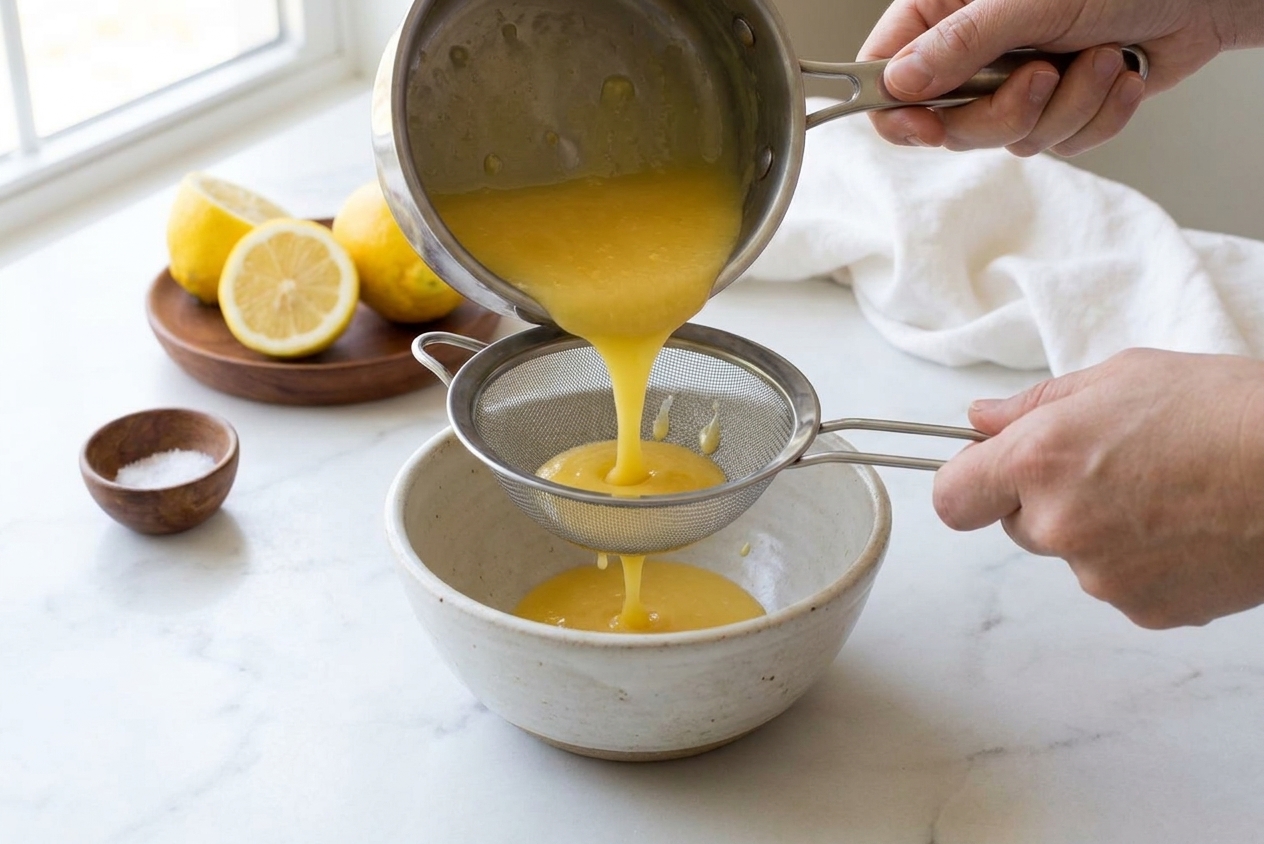
- Strain for best texture. Press through a fine-mesh strainer for a silky curd.
- Adjust after chilling. Salt and acidity can read sharper when cold, so make tweaks gradually.
Substitutes that work
- Salted butter: If you only have salted butter, cut the added salt in half, then taste.
- Honey instead of sugar: You can use honey, but start with less since it reads sweeter.
- Vegan butter (for dairy-free): Swap in a good vegan butter. Expect a slightly different set and flavor; season carefully since vegan butters vary in salt.
Variations
- Garlic and herb: Steep 1 smashed garlic clove in the lemon juice for 5 minutes, remove, then cook as written. Stir in chopped chives or dill after chilling.
- Chili lemon curd: Add a pinch of chili flakes while cooking, then finish with black pepper.
- Miso lemon curd: Whisk 1 to 2 teaspoons white miso into the finished curd off heat. Reduce added salt slightly.
- Preserved lemon: Replace half the zest with finely minced preserved lemon peel. Taste before adding extra salt.
Serving ideas
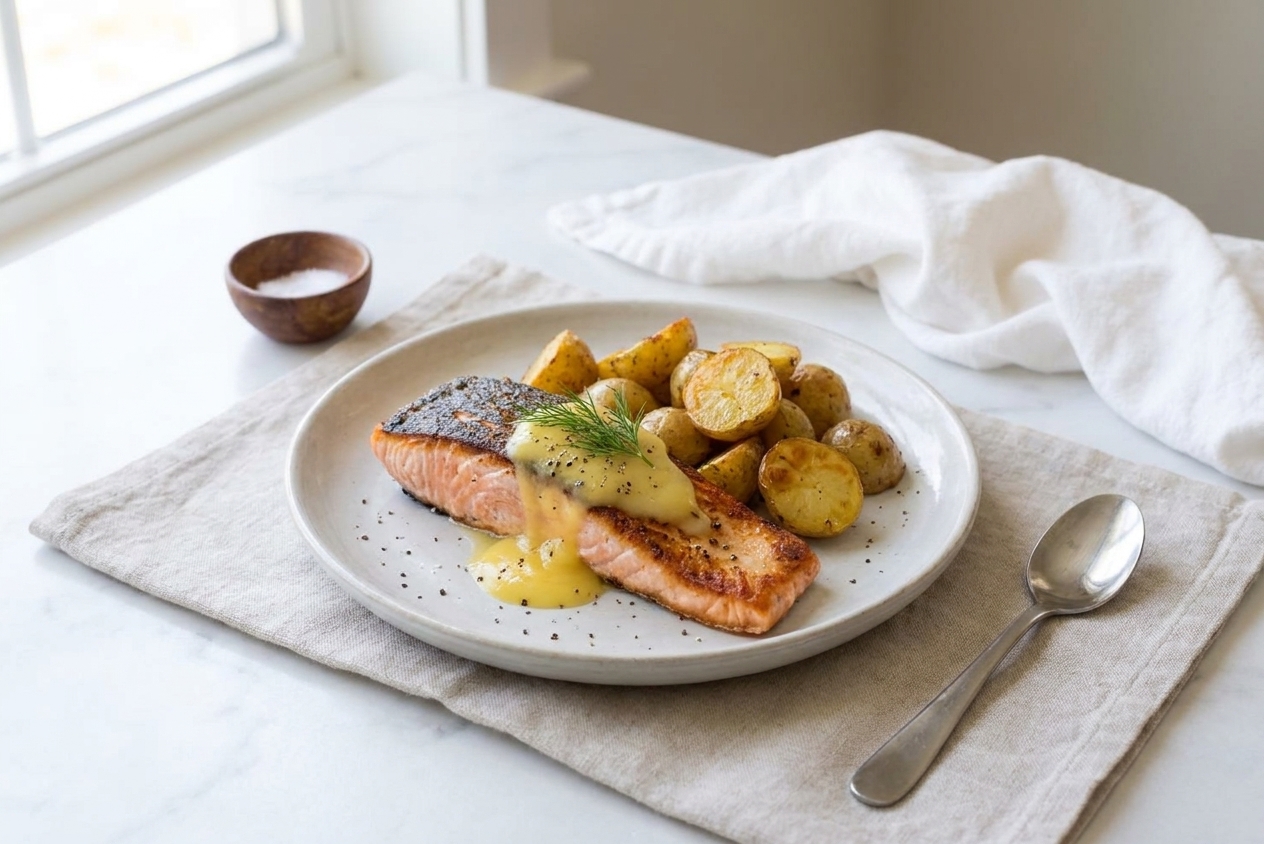
- Seafood: Spoon over seared salmon, scallops, shrimp, or roasted cod instead of a beurre blanc. It is especially good with crispy skin fish.
- Chicken or pork: A spoonful on pan-seared chicken cutlets or pork tenderloin is an instant sauce situation.
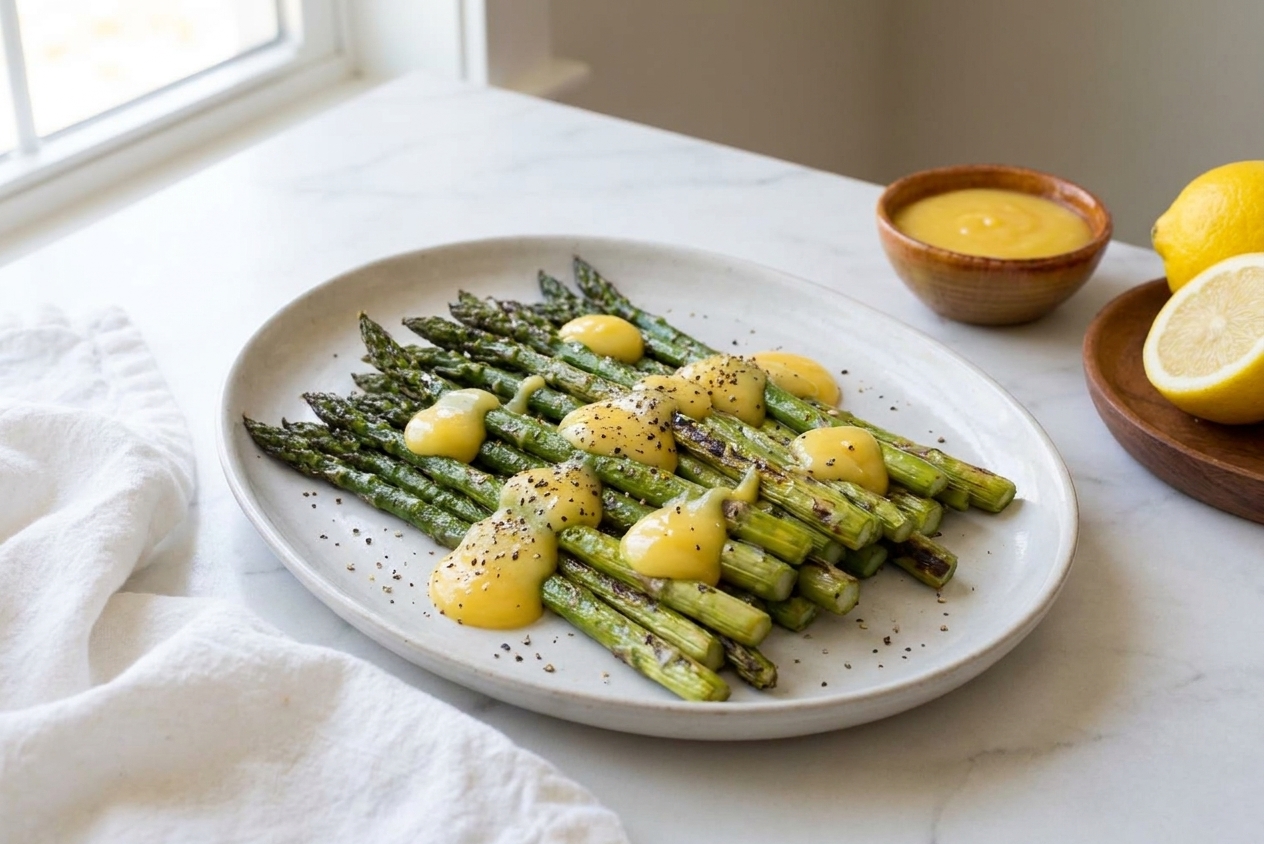
- Roasted vegetables: Try with asparagus, broccolini, Brussels sprouts, cauliflower, or carrots.
- Potatoes: Fold into warm roasted potatoes or drizzle over smashed potatoes. Add herbs and you have an instant side dish glow-up.
- Grain bowls: Thin with a teaspoon of warm water or olive oil and use as a bright dressing for farro, quinoa, lentils, or chickpeas.
- Sandwich spread: A thin swipe on a turkey sandwich, a veggie wrap, or a grilled halloumi pita.
- Cheese board: Serve as a tangy condiment with aged cheddar, goat cheese, or triple cream.
My favorite weeknight move: roast a sheet pan of broccoli and salmon, then add a spoonful of curd right at the end so it warms but stays bright.
Storage and reheating
Refrigerator: Store savory lemon curd in a clean jar in the refrigerator for up to 7 days. Keep it consistently cold and use a clean spoon each time. Discard if you notice off smells, visible mold, or a suspicious change in texture.
Freezing: You can freeze it for up to 2 months. Thaw overnight in the fridge and whisk well. It can loosen, and sometimes separate or get slightly grainy. It will still be great as a sauce, even if the texture is not quite as plush as day one.
Allergens: Contains eggs and dairy.
Common mistakes
- It looks curdled or has little egg bits: Heat was too high or cooking went too long. Strain immediately. Next time, drop the heat and whisk constantly.
- It is runny: It did not reach thickening temperature. Put it back on low heat and whisk until it coats a spoon. Remember it thickens more as it chills.
- It is too tart: Whisk in 1 to 2 tablespoons butter, or add a small pinch of sugar. Yes, a pinch. You are not making it sweet, just balanced.
- It is too salty: Whisk in a little more butter or a tablespoon of plain yogurt or crème fraîche right before serving.
- Metallic or bitter edge: Too much pith in the zest, or the mixture got too hot. Zest only the yellow part, and keep the heat gentle.
FAQ
Is savory lemon curd the same as lemon aioli?
Not quite. Aioli is an emulsion built from oil (and often egg), while savory lemon curd is a cooked, custard-like thickening built from yolks and butter. Curd is tangier and glossier, with a softer set.
Can I make it without sugar?
You can, but I do not recommend skipping it entirely. Even 1 to 2 tablespoons helps tame harsh acidity and keeps the lemon flavor tasting rounded. If you are avoiding sugar, try a small amount of honey. Start with less than you think you need.
Can I make it dairy-free?
You can swap in a good vegan butter. Expect a slightly different set and flavor, but it still makes a lovely citrus sauce. Season carefully, since vegan butters vary in salt. I do not love coconut oil here, since it can set waxy when chilled.
What should it look like when it is done?
Warm, it should be glossy and thick enough to coat a spoon. Chilled, it should be spoonable like soft jam, not pourable like lemonade.
Savory Lemon Curd
A glossy, spoonable savory lemon curd made with lemon juice and zest, egg yolks, butter, a small amount of sugar, and enough salt to keep it firmly in sauce territory. Great chilled, at cool room temperature, or gently warmed over hot food.
- Prep
- 10 minutes
- Cook
- 10 minutes
- Total
- 55 minutes
- Yield
- Makes about 1 cup (about 8 servings at 2 tablespoons each)
Ingredients
- 1/2 cup (120 ml) fresh lemon juice (from about 3 to 4 lemons)
- 1 tablespoon finely grated lemon zest
- 3 large egg yolks
- 1 large egg (optional, for a slightly firmer set and a touch more yield, with a slightly softer lemon punch)
- 2 tablespoons (25 g) sugar
- 1/2 teaspoon fine salt, plus more to taste
- 6 tablespoons (85 g) unsalted butter, cut into pieces
- Optional: 1 teaspoon olive oil for a more savory finish
- Optional: black pepper or chili flakes to taste
Instructions
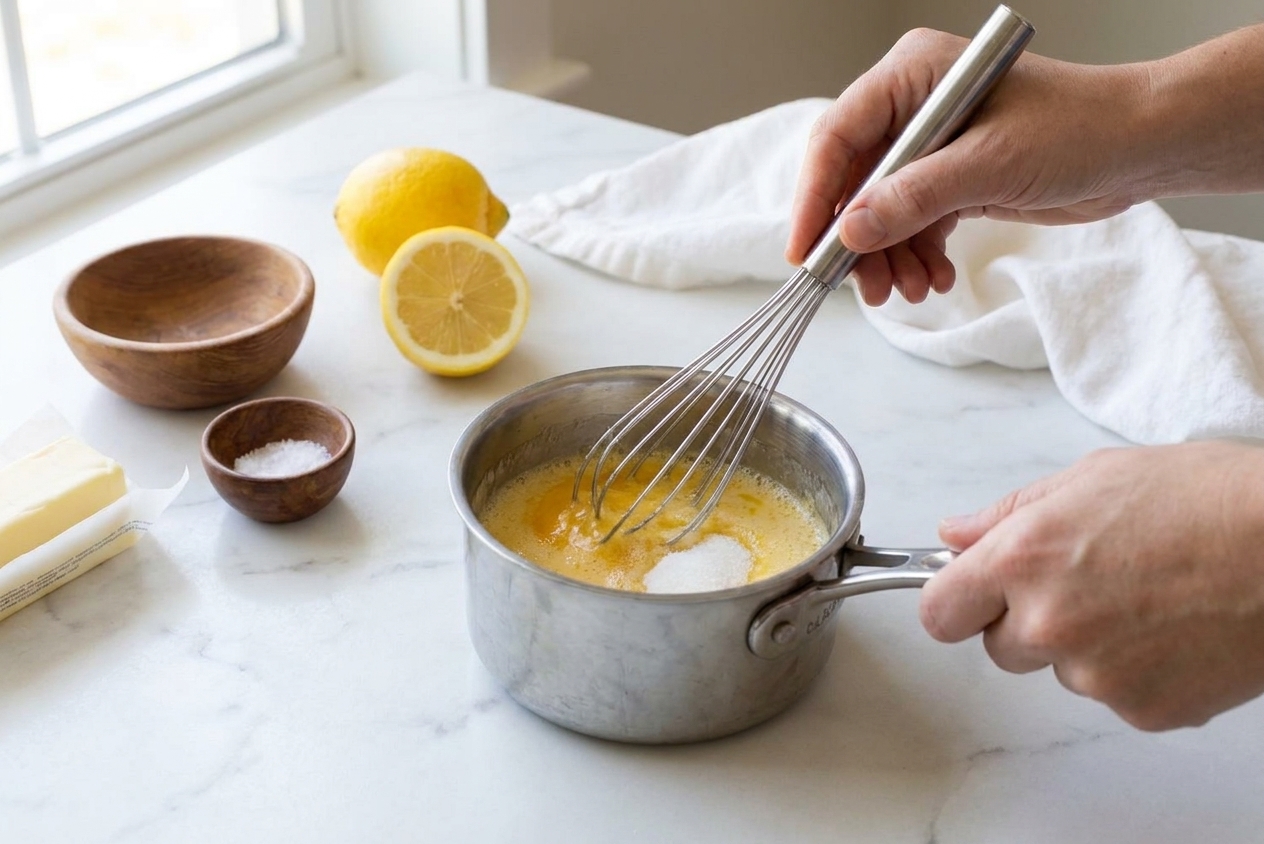
- Add lemon juice, zest, yolks (and the whole egg if using), sugar, and salt to a small saucepan. Whisk until smooth.
- Place over medium-low heat and whisk constantly, scraping the bottom and corners. Aim for a steady warm-up, not a simmer.
- Cook for 6 to 10 minutes, until it goes from foamy to glossy and slightly thick. It is ready when it coats the back of a spoon and you can draw a clean line through it with your finger. If using a thermometer, aim for 170 to 180°F (77 to 82°C); 170°F is the minimum, and closer to 180°F gives a firmer set.
- Remove from heat and whisk in butter a piece at a time until fully melted and smooth. If using olive oil, whisk it in now.
- Press through a fine-mesh strainer into a bowl or jar (recommended) for the silkiest texture.
- Cover with plastic wrap pressed directly onto the surface, or lid the jar. Refrigerate until cool and slightly thicker, about 30 minutes.
Notes
Note on sweetness: This amount is meant to keep the curd firmly in savory territory. If you want more of a sweet-and-sour vibe (still great with seafood), you can increase sugar to 3 to 4 tablespoons.
Seasoning check: Once chilled, taste and adjust gradually since salt and acidity can read sharper when cold. If it tastes too sharp, whisk in 1 tablespoon of softened butter. If it tastes flat, add a pinch more salt. If it tastes unexpectedly sweet, add black pepper, chili, or 1 teaspoon of olive oil to pull it back into savory territory.
Serving temperature: Serve chilled, at cool room temperature, or gently warmed by spooning over hot food. If you rewarm it, do it gently (low heat, whisking) and do not let it simmer or boil, since the eggs can curdle.
Use up egg whites:
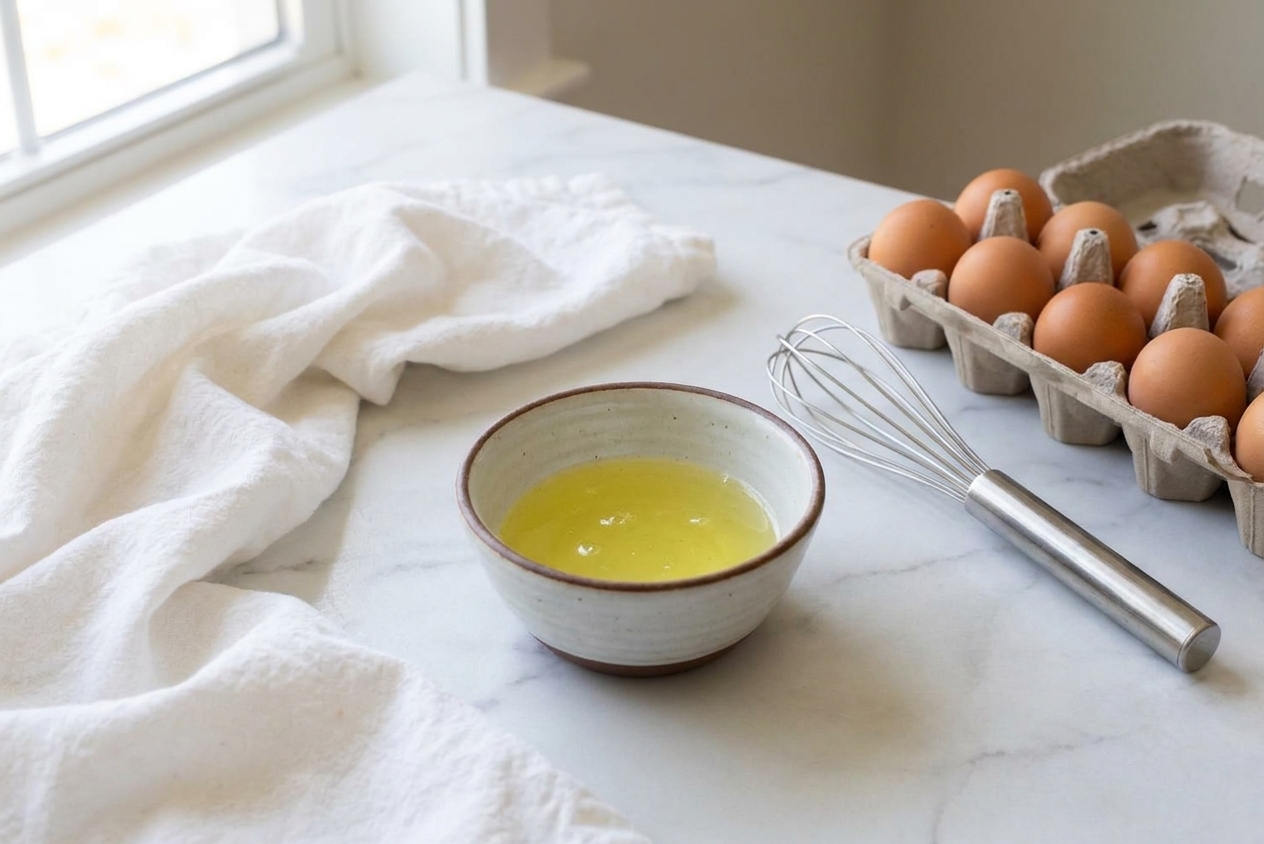
- Make a quick egg white scramble with spinach and feta.
- Stir into fried rice at the end for extra protein.
- Whisk into pancake or waffle batter as part of the liquid.
- Freeze in tablespoon portions for later baking.
Nutrition
- Calories: 95
- Fat: 8 g
- Carbs: 4 g
- Protein: 2 g
- Fiber: 0 g
- Sugar: 3 g
- Sodium: 150 mg
Approximate values per serving (about 2 tablespoons), based on the listed ingredients.