A great sheet pan dinner is basically controlled chaos: everything finishes at the same time, steaming is minimized, and the pan comes out with crispy edges and concentrated flavor. When it goes wrong, it is almost always one of these issues: the oven is not hot enough, the pan is crowded, or ingredients that cook at wildly different speeds went in together.
Once you learn the master formula, you can build a week’s worth of dinners from whatever you already have. This is a favorite way to reduce food waste because it turns “random produce drawer finds” into a real meal.
If you can remember hot oven, space on the pan, and stagger timing, you can make a sheet pan dinner out of almost anything. And once you start finishing with a squeeze of lemon or a splash of vinegar, you will notice your food tastes brighter, saltier (in a good way), and more like you meant to do it on purpose.

Why this recipe works
Sheet pan dinners work because they rely on high heat and enough space to drive off moisture, so you get browned, crispy edges and concentrated flavor instead of steamed, limp vegetables. The goal is controlled chaos where everything finishes at the same time.
Most failures come down to three fixable problems: the oven is not hot enough, the pan is crowded, or ingredients with very different cook times were started together. The “master formula” plus staggered timing solves all three.
Ingredient notes
Think of every sheet pan dinner as four building blocks plus one optional sauce:
- Protein: chicken thighs, sausage, tofu, salmon, shrimp, chickpeas
- Hearty vegetables: broccoli, cauliflower, Brussels sprouts, carrots, potatoes, winter squash
- Quick vegetables: green beans, asparagus, zucchini, bell pepper, cherry tomatoes, mushrooms
- Flavor builder: an all-purpose seasoning + a hit of acid after roasting
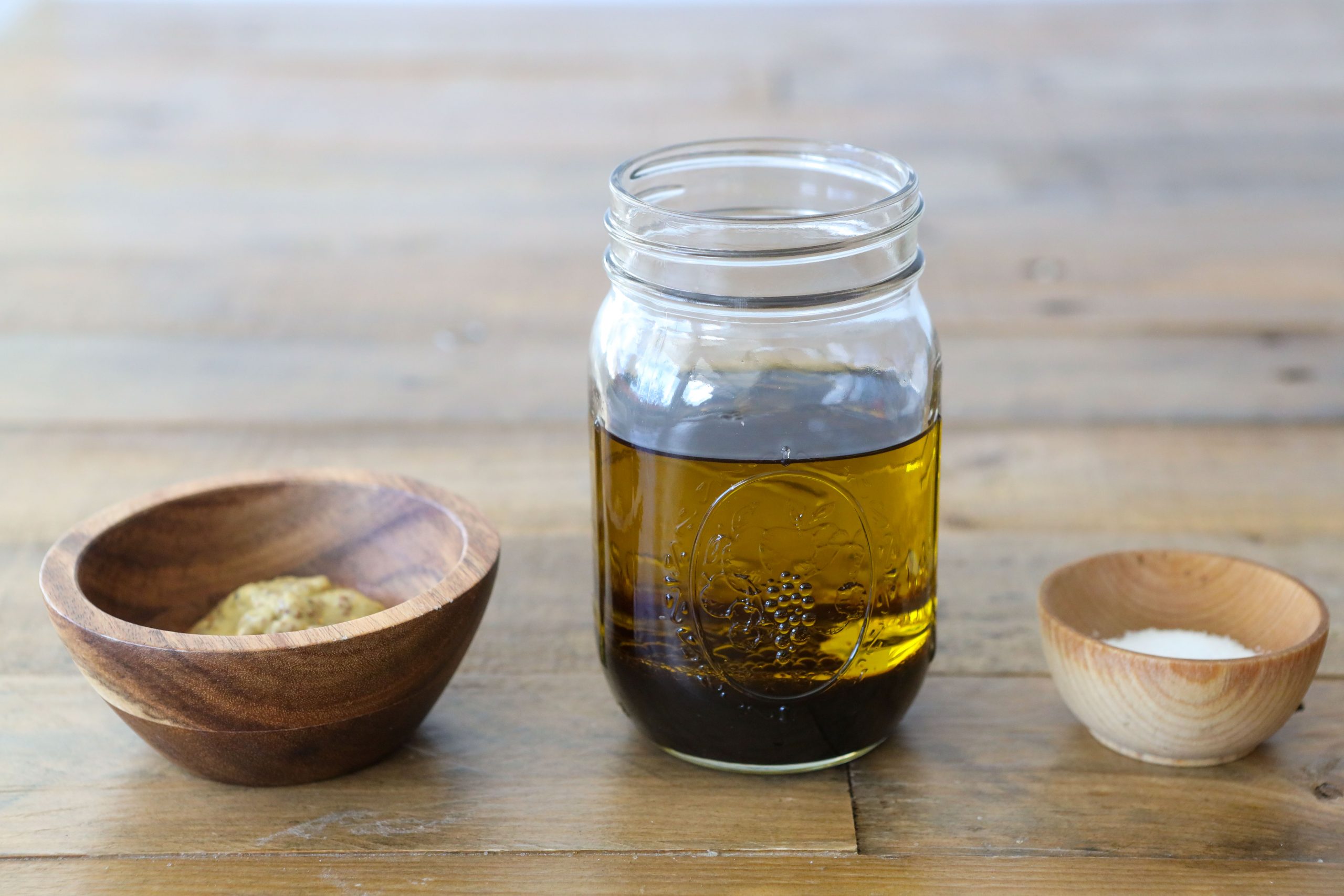
- Sauce (optional): yogurt sauce, tahini, pesto, chimichurri, spicy mayo, vinaigrette
Default ratios (feeds 4): 1.25 to 1.5 pounds protein + 6 to 8 cups vegetables (mixed) + 2 to 4 tablespoons oil + 2 to 3 teaspoons seasoning + acid to finish (lemon, vinegar, pickled something).
All-purpose seasoning base: salt + a little sugar + a savory backbone + a touch of heat makes roasted food taste like it came from a restaurant. Start with 2 teaspoons per sheet pan meal (serves 4), then adjust. If you are using salty ingredients like feta, soy sauce, or sausage, reduce the salt a touch.
Equipment you will need
- Rimmed sheet pan: half sheet size is ideal. Thin pans warp and lead to uneven browning.
- Parchment or foil: parchment for most dinners; foil is great for sticky marinades (and easiest cleanup). If you use foil, a quick slick of oil helps prevent sticking.
- One big bowl: toss ingredients in a bowl, not on the pan. You get even coating and less mess.
- Instant-read thermometer: the fastest path to juicy chicken and perfect salmon.
- High-heat oil: for 425°F to 450°F roasting, use a higher-smoke-point oil like avocado, grapeseed, canola, or vegetable oil. Olive oil is fine if it is what you have, but it can smoke more at the high end.

Pro tips
- Roast hot: most sheet pan dinners shine at 425°F to 450°F. If your oven runs hot or your pan is dark, lean toward 425°F. For convection (fan) ovens, consider reducing the temperature by about 25°F, or start checking a little earlier.
- Give the oven time: preheat to 425°F and give it a real 15 minutes so the oven walls are hot.
- Middle rack for even cooking: the middle rack is the sweet spot. For extra browning on hearty vegetables, you can roast on the lower rack, but keep an eye on the bottoms.
- Do not crowd: you want visible metal between pieces when possible. If your pan looks full, use a second pan.
- Stagger ingredients: slow-cooking items go in first, fast-cooking ones later.
- Dry for browning: pat vegetables and proteins dry (especially chicken skin, tofu, and shrimp). Less surface moisture equals more browning.
- Toss in a bowl: coat everything evenly with oil + salt + seasoning before it hits the pan.
- Finish after roasting: add acid and fresh texture after the pan comes out so it stays lively (lemon, vinegar, pickled onions, chopped herbs, toasted nuts, crumbled feta).
- Thermometer + release test: if a protein releases cleanly when you nudge it with a spatula, that is usually a sign it has browned and is ready to flip or pull. If it sticks hard, give it another minute.
Substitutes that work
- Proteins: swap chicken thighs, sausage, tofu, salmon, shrimp, or chickpeas based on what you have; keep the timing structure.
- Hearty vegetables: broccoli, cauliflower, Brussels sprouts, carrots, potatoes, and winter squash can trade places as long as you account for cook time.
- Quick vegetables: green beans, asparagus, zucchini, bell pepper, cherry tomatoes, and mushrooms are interchangeable in the “add later” slot.
- Oil: for 425°F to 450°F roasting, use avocado, grapeseed, canola, or vegetable oil; olive oil works too but can smoke more at the high end.
- Acid finishers: lemon juice, lime juice, balsamic, red wine vinegar, or rice vinegar all work as the bright finish.
- Frozen vegetables: best for quick-vegetable roles. Roast hot (450°F if your oven can handle it), spread them out, and expect a little less crisp than fresh. Frozen broccoli and green beans do well.
Variations
Use these mix-and-match templates; swap vegetables based on what needs using, but keep the timing structure.
- Template 1: Chicken + hearty vegetables + quick vegetables
- Start: potatoes or carrots (10 minutes alone)
- Add: chicken thighs + broccoli (roast 18 to 25 minutes)
- Finish: quick vegetables like peppers or zucchini (add for last 10 to 12 minutes)
- Finish touch: lemon zest + lemon juice + chopped parsley
- Template 2: Sausage + crucifers (maximum crisp)
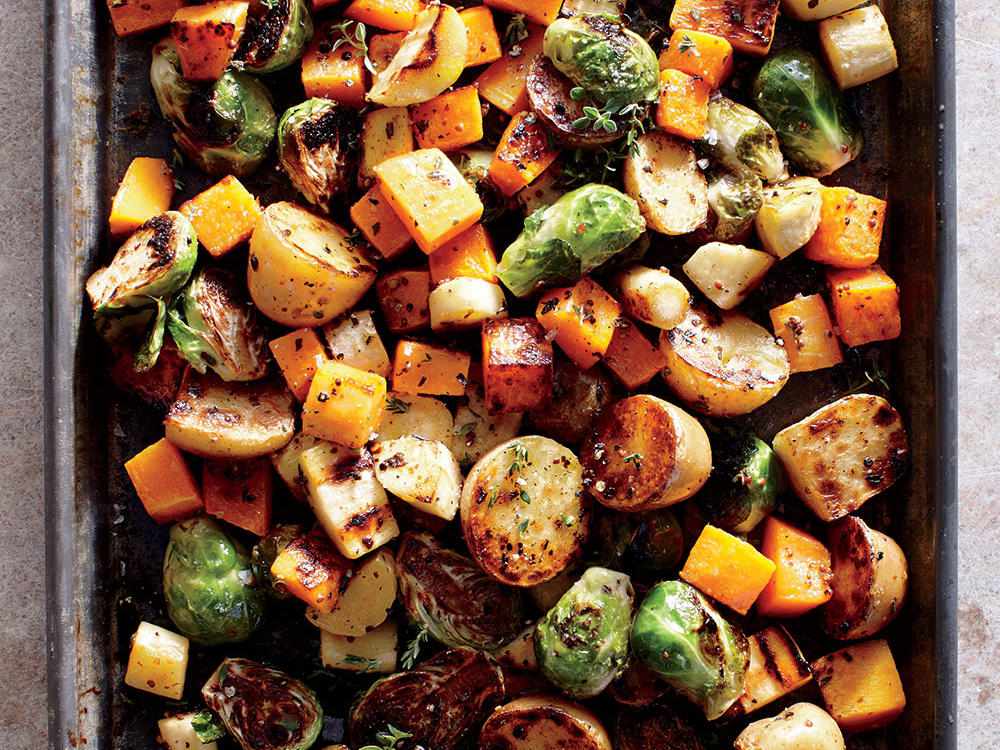
- Roast together: Brussels sprouts or cauliflower + sliced onions + sausage coins
- Flavor: mustard + maple (add in the last 5 minutes so it glazes, not burns)
- Finish touch: splash of red wine vinegar
- Template 3: Tofu or chickpeas + rainbow vegetables (plant-forward)
- Pro move: press tofu 10 minutes, then toss with oil + cornstarch for extra crisp
- Roast: tofu or chickpeas + cauliflower + peppers
- Finish touch: tahini sauce or a quick soy-lime drizzle
More mix-and-match dinner ideas:
- Lemon herb chicken: chicken thighs + potatoes + broccoli, finish with lemon juice and parsley.
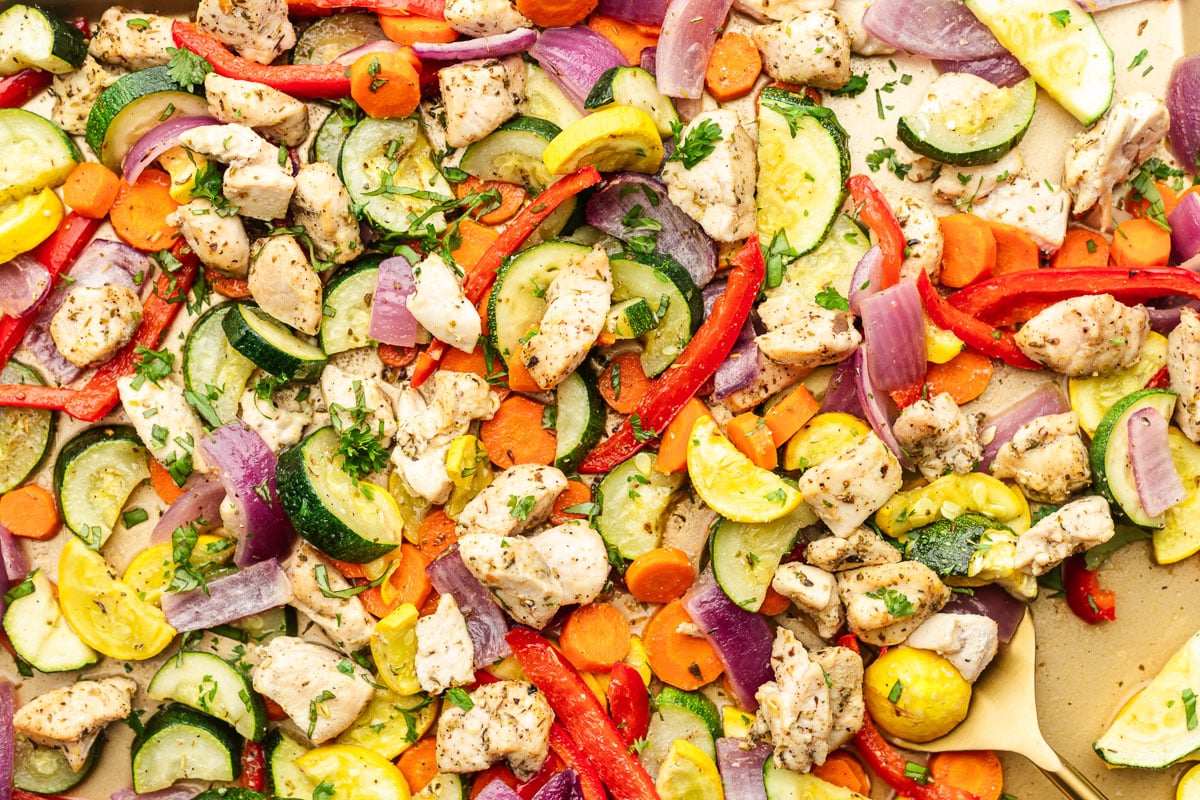
- Mediterranean-inspired: chicken or chickpeas + peppers + zucchini + red onion, finish with feta and oregano.
- Smoky sausage: kielbasa + Brussels sprouts + apple slices, finish with mustard and a splash of vinegar.
- Miso salmon: salmon + broccoli + mushrooms, finish with sesame seeds and scallions.
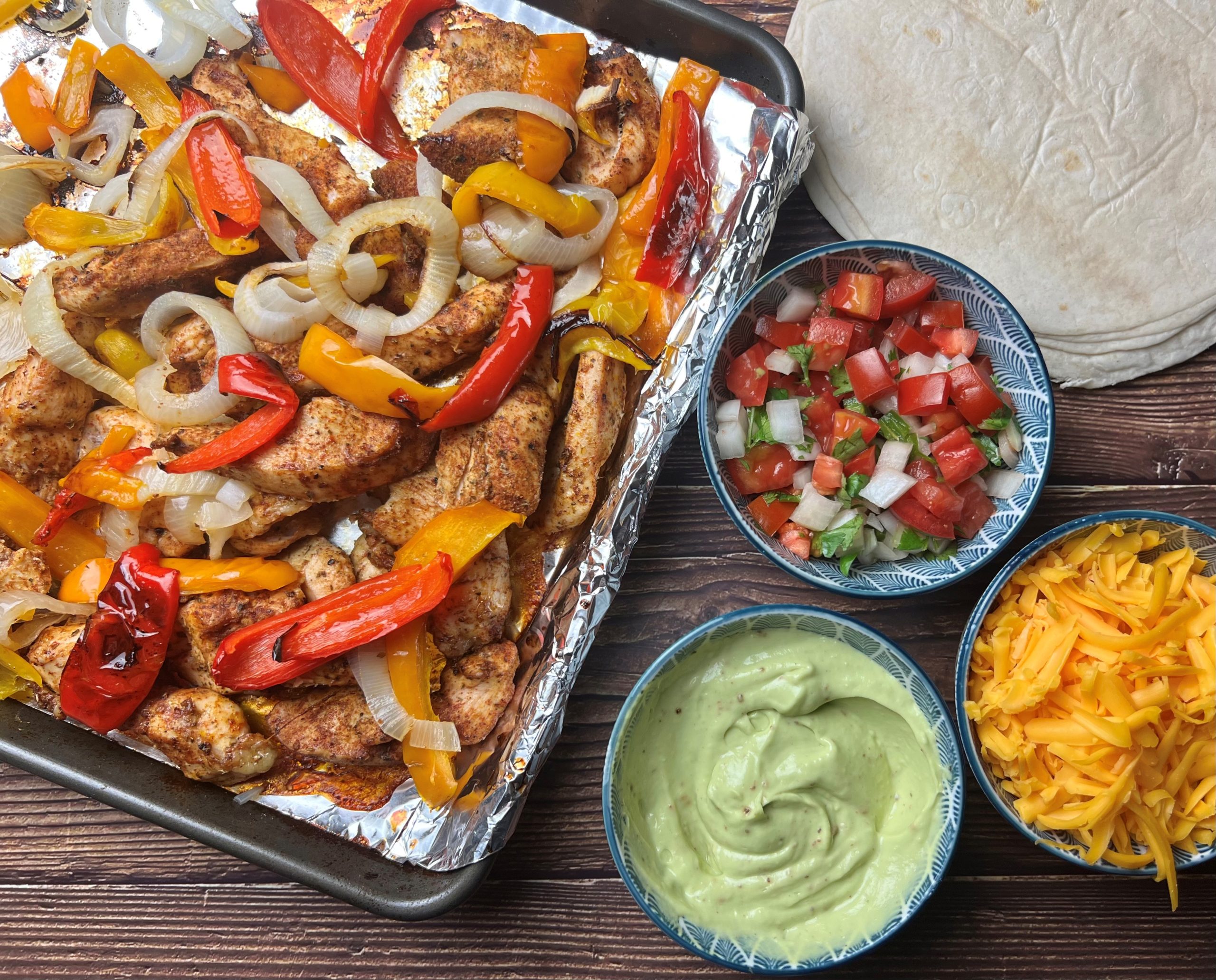
- Taco night shortcut: shrimp or chicken + peppers + onions, finish with lime and serve with tortillas.


Serving ideas
Finishers are the difference between “roasted” and “restaurant-level.” Add them after the pan comes out so they stay bright and crisp.
- Acid: lemon juice, lime juice, balsamic, red wine vinegar, rice vinegar
- Fresh: parsley, dill, cilantro, basil, scallions
- Crunch: toasted almonds, pepitas, crispy chickpeas, panko toasted in a skillet
- Salty pops: feta, parmesan, olives, capers
- Heat: chili crisp, hot sauce, harissa

Storage and reheating
- Prep ahead: chop vegetables up to 2 days ahead and store airtight. Proteins can be marinated overnight.
- Keep separate until roasting: for best results, keep vegetables and proteins separate before cooking so salt does not pull out too much moisture from the vegetables.
Common mistakes
My vegetables are soggy
- Oven too low: roast at 425°F to 450°F.
- Pan too crowded: use two pans or roast in batches.
- Too much oil: you need enough to coat, not enough to pool.
- Too wet: pat vegetables dry before tossing.
My chicken is done but the vegetables are not
- Start vegetables first, then add chicken later.
- Cut vegetables smaller or choose faster-cooking vegetables.
- Pull chicken to rest, then finish vegetables for 5 to 10 more minutes.
Everything is cooked but pale
- Dry ingredients thoroughly before tossing with oil.
- Use a preheated pan for extra browning (carefully). Add ingredients to the hot lined pan.
- Try 3 to 5 minutes under the broiler at the end, watching closely.
FAQ
Do I need to flip everything halfway?
Not always. For best browning, toss vegetables once about halfway through. For delicate items like salmon, do not flip. For chicken thighs, leave them skin-side up the whole time.
Can I prep a sheet pan dinner ahead?
Yes. Chop vegetables up to 2 days ahead and store airtight. Proteins can be marinated overnight. Keep everything separate until roasting so salt does not pull out too much moisture from the vegetables.
What about frozen vegetables?
They work best for “quick vegetables” roles, but they release water. Roast them hot (450°F if your oven can handle it), spread them out, and expect a little less crisp than fresh. Frozen broccoli and green beans do well.
How do I make cleanup close to zero?
Line the pan, toss in a bowl, and use one cutting board. While the pan roasts, fill your sink with soapy water and drop tools in as you go. By the time dinner is done, you are basically finished.
Sheet Pan Dinners
A mix-and-match guide to building sheet pan dinners using a simple master formula: protein + hearty vegetables + quick vegetables + an all-purpose seasoning, finished with acid (plus an optional sauce). Includes high-heat roasting guidance (425°F to 450°F), timing ranges, and a flexible “default ratio” that feeds 4.
- Prep
- 20 minutes
- Cook
- 30 minutes
- Total
- 50 minutes
- Yield
- Serves 4
Ingredients
- Protein (choose 1): 1.25 to 1.5 pounds chicken thighs, sausage, tofu, salmon, shrimp, or chickpeas
- Vegetables (mixed): 6 to 8 cups total (combine hearty vegetables like broccoli, cauliflower, Brussels sprouts, carrots, potatoes, winter squash with quick vegetables like green beans, asparagus, zucchini, bell pepper, cherry tomatoes, mushrooms)
- Oil: 2 to 4 tablespoons high-heat oil (avocado, grapeseed, canola, vegetable; olive oil is fine if it is what you have)
- All-purpose seasoning base:
- 2 teaspoons kosher salt
- 1 teaspoon smoked paprika (or sweet paprika)
- 1 teaspoon garlic powder
- 1 teaspoon onion powder
- 1/2 teaspoon black pepper
- 1/2 teaspoon brown sugar (optional)
- Pinch of chili flakes (optional)
- Acid to finish: lemon, vinegar, or pickled something
- Optional sauce: yogurt sauce, tahini, pesto, chimichurri, spicy mayo, or vinaigrette
Instructions
- Preheat the oven to 425°F and give it a real 15 minutes so the oven walls are hot.
- Line a rimmed sheet pan with parchment or foil.
- Prep vegetables by density: cut everything to similar thickness so it cooks evenly. Adjust your cuts for thin asparagus vs thick carrots. If pairing potatoes or squash with a fast protein, cut the hearty vegetables smaller so staging is simpler.
- Dry for browning: pat vegetables and proteins dry (especially chicken skin, tofu, and shrimp).
- Toss in a bowl: add vegetables and protein to a big bowl, then toss with oil + salt + seasoning. Coat well.
- Roast in stages: start with long-roast items, then add medium, then fast, so everything finishes together. Use browning and fork-tender texture as cues.
- Finish after roasting: add acid and fresh texture (lemon, vinegar, pickled onions, chopped herbs, toasted nuts, crumbled feta).
Notes
- Core rules: roast hot (425°F to 450°F), do not crowd the pan (use two pans if needed), and stagger ingredients by cook time.
- Convection adjustment: for convection (fan) ovens, consider reducing the temperature by about 25°F, or start checking a little earlier.
- Timing cheat sheet at 425°F (bite-size pieces):
- Long roast (30 to 45 minutes): potatoes (1-inch chunks), sweet potatoes, carrots, beets; winter squash (1-inch chunks); bone-in chicken thighs (depending on size)
- Medium roast (18 to 28 minutes): broccoli, cauliflower, Brussels sprouts (halved); sausage links or chunks; boneless chicken thighs; chicken breast cutlets or smaller pieces (timing varies; use a thermometer); extra-firm tofu cubes (especially if pressed)
- Fast roast (8 to 18 minutes): asparagus, zucchini, bell peppers, mushrooms, cherry tomatoes; green beans (start checking around 12 minutes); salmon fillets (depending on thickness); shrimp (very quick, watch closely)
- Sensory cues: roasted vegetables should have deep brown edges and smell nutty and sweet, not watery. Proteins should release more easily from the pan when they are well-browned.
- Protein temperature guidance:
- Chicken thighs: aim for 175°F to 195°F for tender texture.
- Chicken breast: pull around 160°F and rest until it reaches 165°F.
- Salmon: many cooks prefer 125°F to 135°F for a moist, medium-ish texture (some guidelines list 145°F).
- Shrimp: last 6 to 10 minutes only; when they curl into a “C” and turn opaque, they are done.
Nutrition
- Calories: ~520
- Fat: ~28 g
- Carbs: ~34 g
- Protein: ~34 g
- Fiber: ~7 g
- Sugar: ~7 g
- Sodium: ~900 mg
Approximate values per serving; actual nutrition will vary based on the specific protein, vegetables, and oil amount you choose.