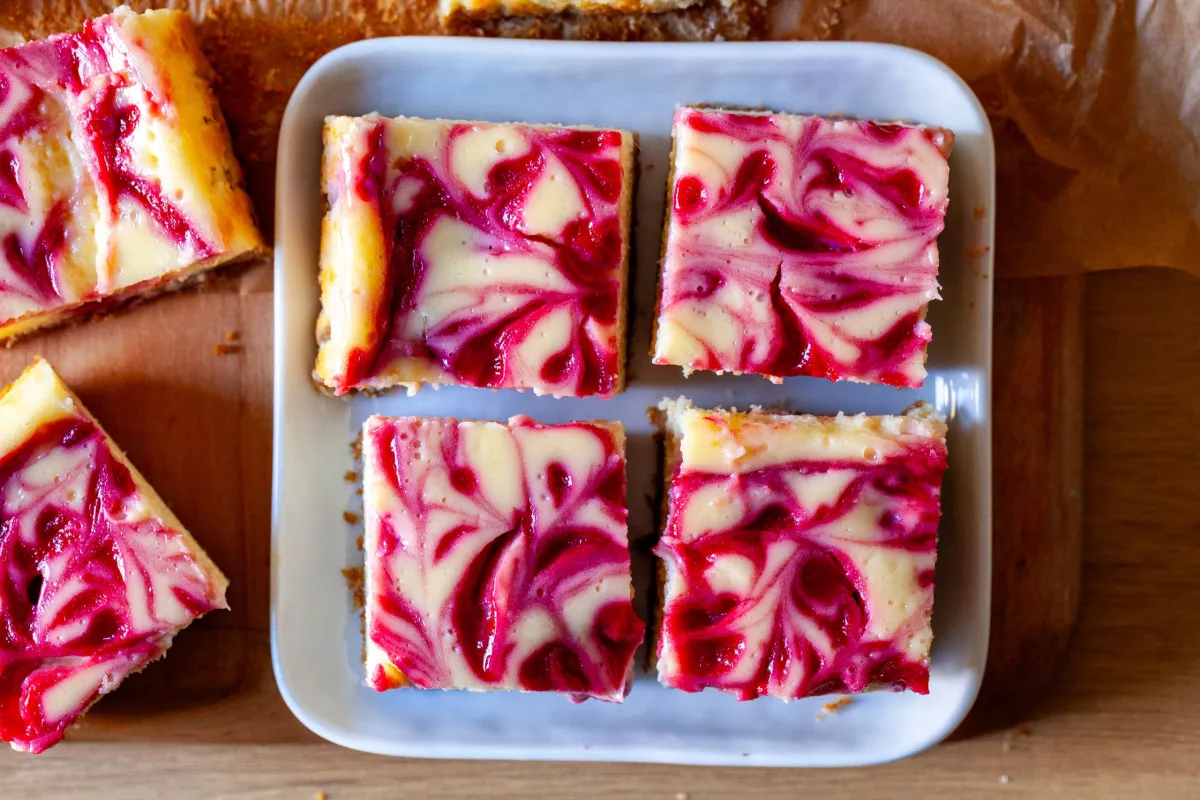
Raspberry cheesecake is the dessert I make when I want something that feels special, but still behaves like a reasonable weekend project. You get that classic, creamy tang from cream cheese, plus a punchy berry swirl that cuts through the richness. The goal here is a cheesecake that sets silky, slices cleanly, and tastes like you planned it (because you did).
Why this recipe works
- Raspberry sauce gets cooked down first so the swirl stays bold instead of watery.
- Room-temp ingredients blend smoother, which means fewer lumps and fewer air bubbles.
- Gentle baking (low and slow) helps avoid cracks and grainy texture.
- Chill time is non-negotiable. Cheesecake finishes setting in the fridge, not in the oven.
Ingredient notes
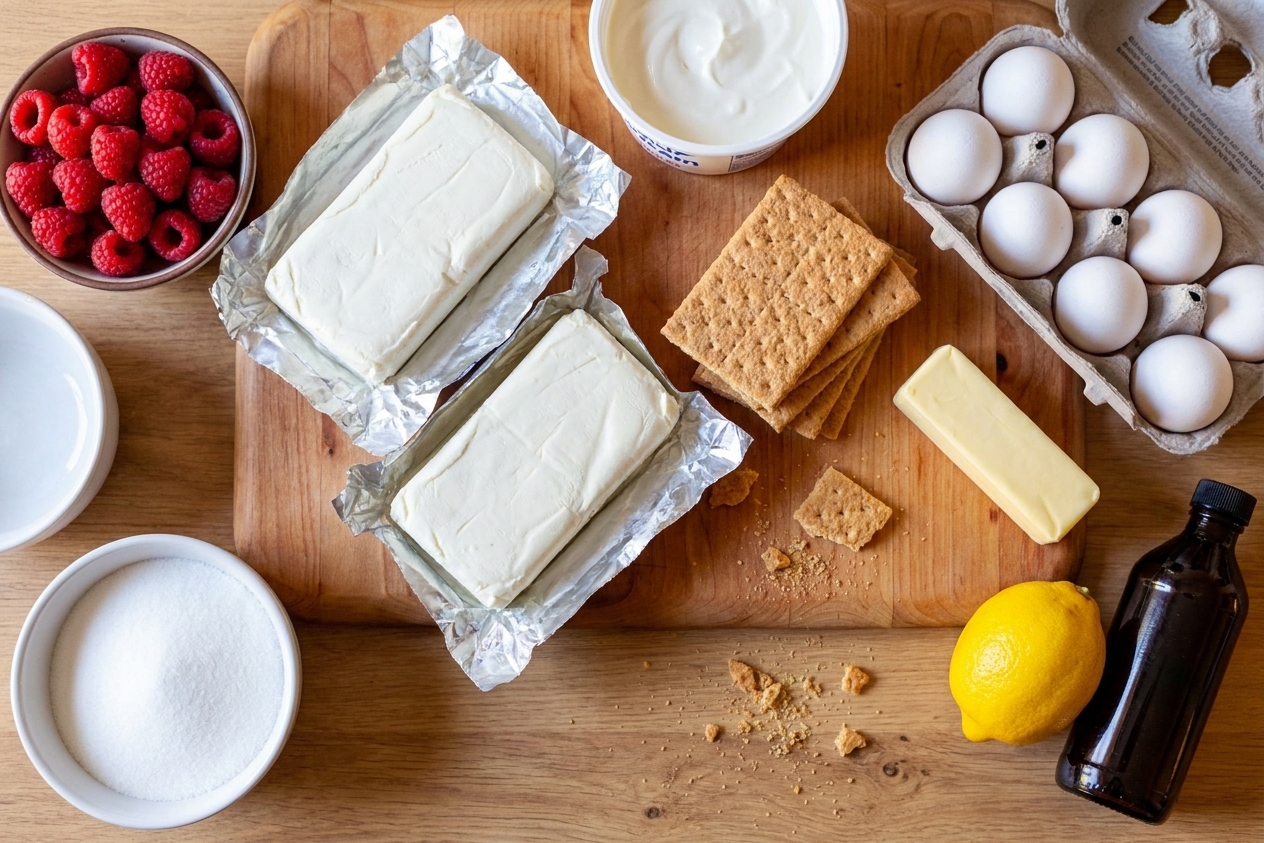
Raspberries: Fresh or frozen both work for the swirl. Cooking the sauce down first helps keep it from turning watery in the batter.
Cornstarch slurry: Mixing cornstarch with water before adding helps the sauce thicken quickly and turn glossy.
Cream cheese: Use full-fat and bring it fully to room temperature so it beats smooth (cold cream cheese is the main cause of lumps).
Sour cream: Use at room temperature so it blends evenly into the filling.
Eggs and yolk: Use at room temperature and mix gently after adding. The extra yolk adds richness and a silkier set without making the cheesecake feel “eggy.”
Optional lemon zest: Optional but lovely for extra brightness.
Equipment you will need
- 9-inch springform pan (line the bottom with parchment; lightly grease the sides for easier release and smoother edges)
- Heavy-duty foil (two layers) if using a classic water bath
- Large roasting pan (for water bath option)
- Metal baking pan (for steam-pan option)
- Small saucepan (for raspberry sauce)
- Fine-mesh sieve (optional, for straining seeds)
- Stand mixer with paddle or hand mixer with a large bowl
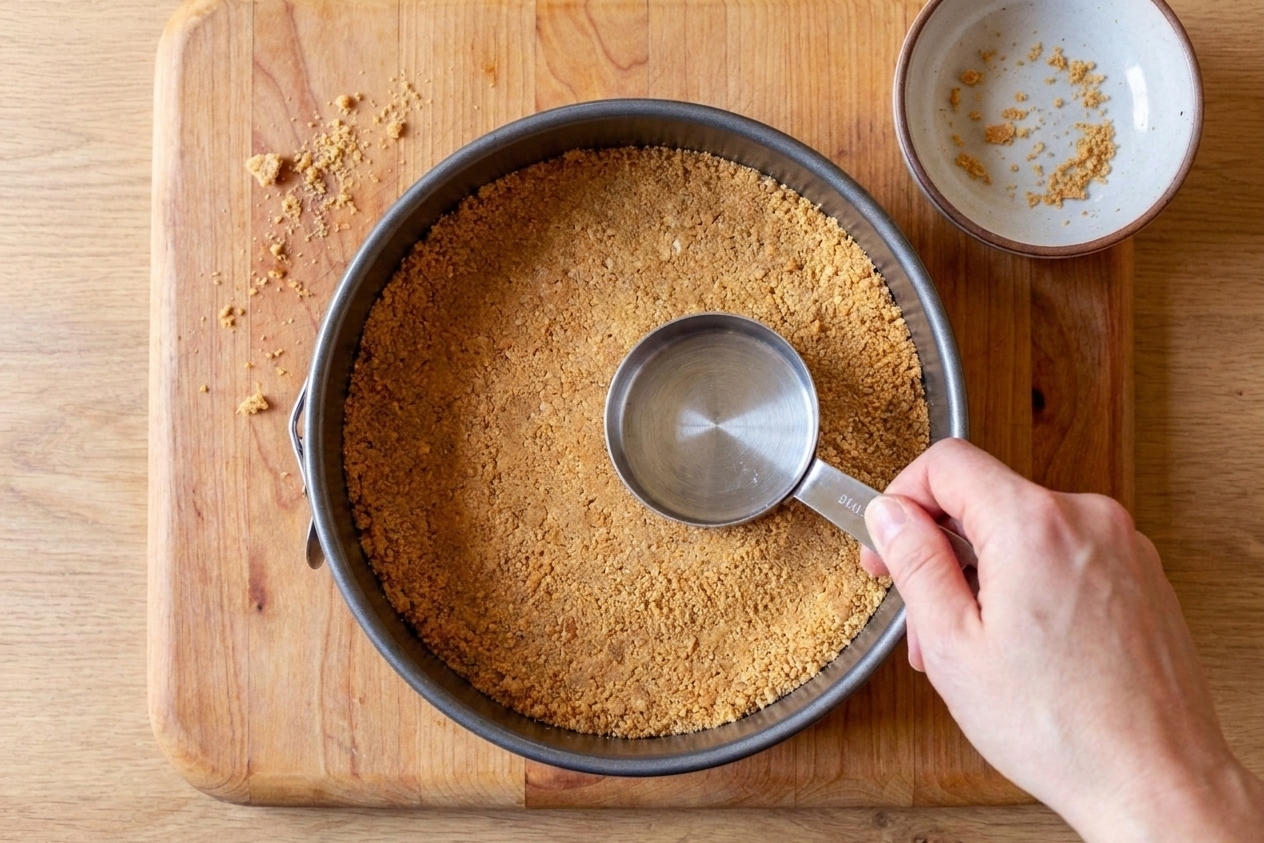
- Flat-bottomed measuring cup (to pack the crust)
- Thin knife or skewer (to swirl)
- Thin knife for slicing (plus hot water and a towel for clean slices)
Pro tips
- Room temperature matters: Cream cheese should feel pliable when you press it. Cold cream cheese equals lumps.
- Scrape your bowl: Especially after adding sugar and again after adding eggs. Hidden lumps love to cling to the sides.
- Do not overmix after eggs: Eggs trap air. Too much air makes the cheesecake puff, then sink, then crack.
- Loosen the edges: After the cheesecake cools for about 10 to 15 minutes on the counter, run a thin knife around the inside of the pan to help prevent side cracking as it contracts.
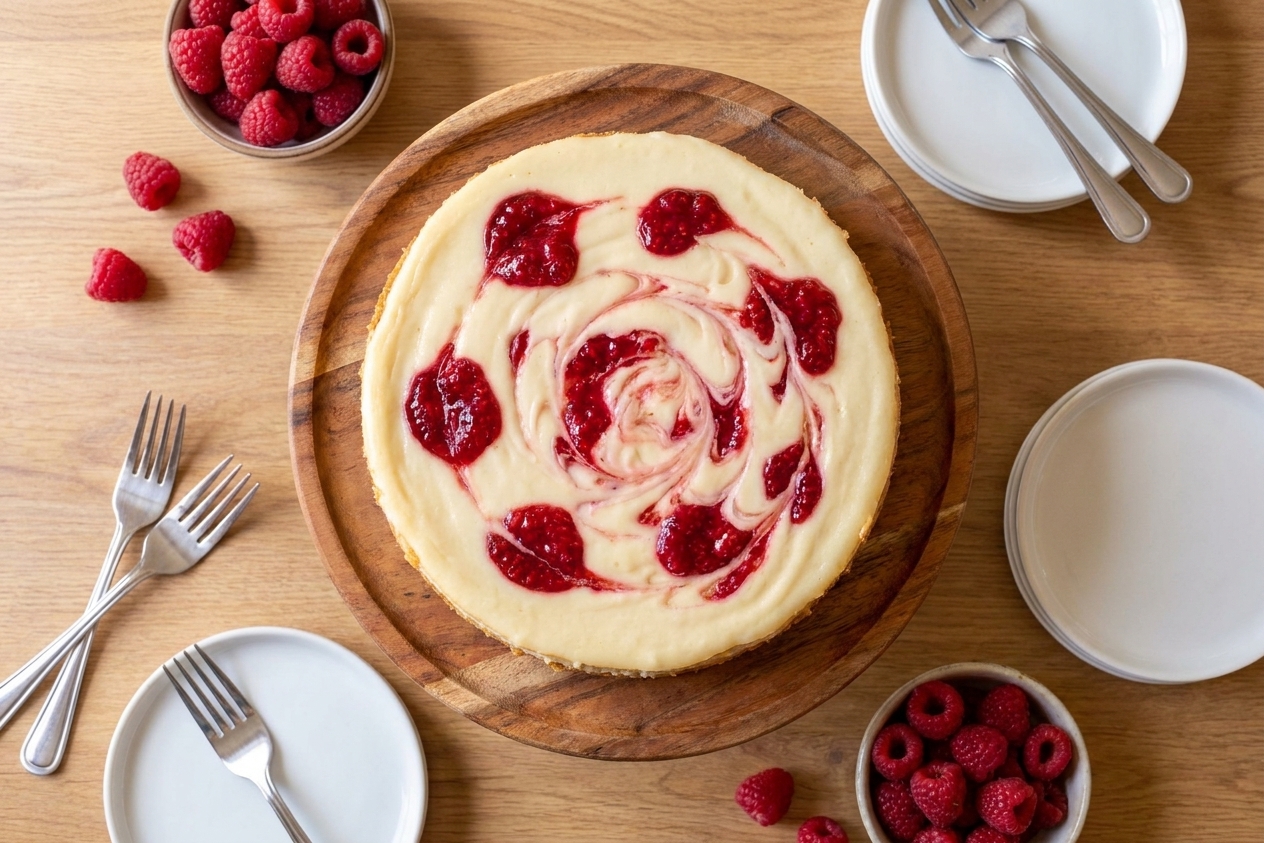
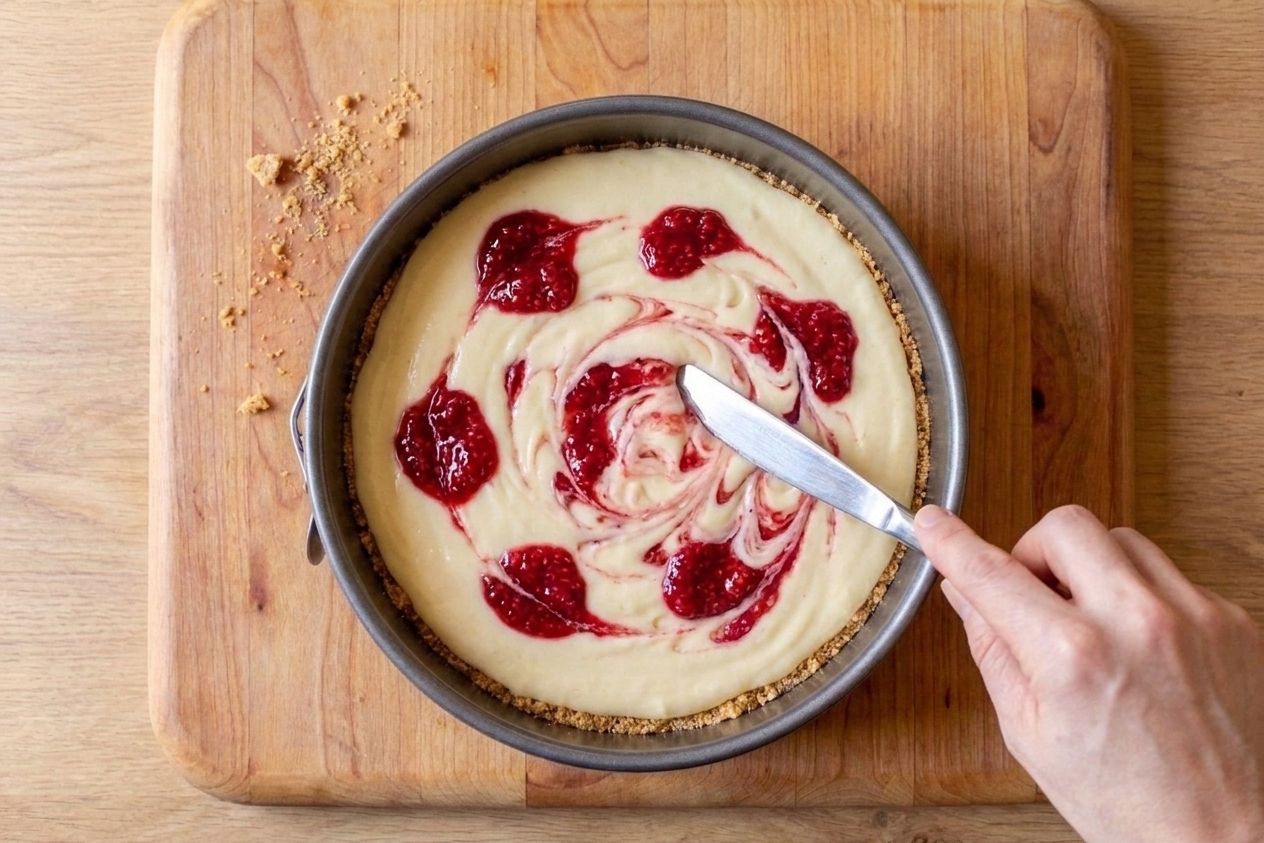
- Swirl gently: Think figure eights, not aggressive stirring, so the raspberry stays in defined ribbons.
- Doneness cue: Edges should look set and the center should wobble like Jell-O when nudged. If you want a temperature check, the center is typically ready around 150°F to 155°F (66°C to 68°C).
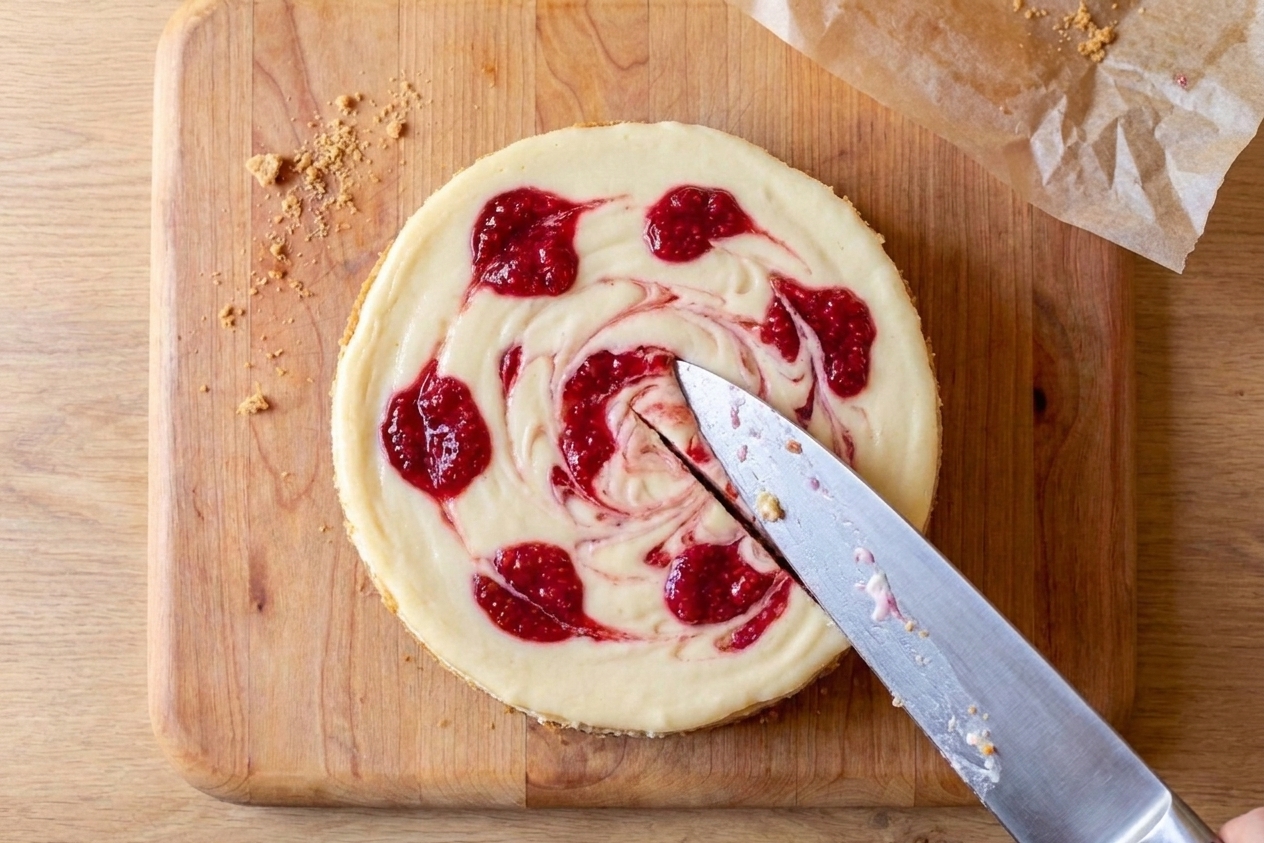
- Slice cleanly: Dip a thin knife in hot water, then wipe it completely dry. Repeat between slices for the cleanest edges.
Substitutes that work
- Raspberries: Swap in blackberries or a mix of berries. Frozen is totally fine.
- Graham crackers: Use digestive biscuits, vanilla wafers, or chocolate cookies for a deeper flavor.
- Sour cream: Full-fat Greek yogurt works, but expect a slightly tangier finish.
- Gluten-free: Use gluten-free graham-style crumbs and verify all labels.
Variations
- Seeded vs. seedless swirl: Strain the raspberry sauce for a bakery-smooth look, or skip straining if you like the seeds.
- More or less swirl: Use about half to two thirds of the sauce for the top swirl and reserve the rest for serving, adjusting within that range depending on how bold you want it.
Serving ideas
- Simple: Serve as-is with a few fresh raspberries and a tiny pinch of flaky salt on top.
- Extra saucy: Warm the reserved raspberry sauce and spoon over slices.
- Citrus lift: Add a little lemon zest over each slice right before serving.
- Texture contrast: Sprinkle toasted sliced almonds or pistachios on the plate.
Storage and reheating
Make-ahead
This cheesecake is happiest made 1 to 2 days ahead. The flavor rounds out and the texture firms up for cleaner slices.
Storage
- Refrigerate covered for up to 5 days.
- Keep it away from strongly scented foods. Cheesecake absorbs fridge smells like a sponge.
Freezing
- Freeze whole or in slices. Chill fully first.
- Wrap in plastic wrap, then foil. Freeze up to 2 months.
- Thaw overnight in the fridge, still wrapped to prevent condensation from making the top wet.
Common mistakes
My cheesecake cracked
- It is still delicious. Cover with extra raspberry sauce or fresh berries.
- Next time: mix less after eggs, avoid overbaking, and cool slowly in the oven.
It looks lumpy
- Usually cold cream cheese. Let it soften fully, then beat until smooth before adding sugar.
It browned on top
- Your oven may run hot or the cheesecake baked too high in the oven. Next time: use an oven thermometer and keep it on the middle rack.
It is too soft in the middle
- It likely needs more chill time. If it was properly baked, the fridge will finish the set.
- If it truly seems underbaked after chilling overnight, slice and serve parfait-style in bowls. No waste.
FAQ
Do I have to use a water bath?
No. A water bath is the most reliable way to prevent cracks, but the steam-pan method gets you very close with less hassle. Either way, the slow cool is key.
Can I make this without straining the raspberry sauce?
Absolutely. You will have seeds in the swirl, which some people love. If you want that bakery-smooth look, strain it.
Why add an extra egg yolk?
It adds richness and a silkier set without making the cheesecake feel “eggy.” It is one of my favorite restaurant-to-home little upgrades.
How do I keep the crust from getting soggy?
Pre-bake it, cool it, and pack it firmly. If you do a water bath, wrap the springform with heavy-duty foil and keep seams covered.
Raspberry Cheesecake
Yield: 12 slices
Total time: About 1 hour active, plus chilling overnight
Difficulty: Medium, but totally doable
- Prep
- 45 minutes
- Cook
- 85 minutes
- Total
- Overnight (about 1 hour active, plus chilling)
- Yield
- 12 slices
Ingredients
- 2 cups (about 250 g) raspberries, fresh or frozen
- 1/3 cup (65 g) granulated sugar
- 1 tsp lemon juice
- 1 tsp cornstarch mixed with 1 tbsp water
- Pinch of salt
- 2 cups (200 g) graham cracker crumbs (about 12 to 16 full sheets)
- 2 tbsp (25 g) granulated sugar
- 1/2 tsp fine salt
- 6 tbsp (84 g) unsalted butter, melted
- 32 oz (905 g) full-fat cream cheese, room temperature
- 1 cup (200 g) granulated sugar
- 1/4 tsp fine salt
- 1 cup (240 g) sour cream, room temperature
- 1 tbsp vanilla extract
- 1 tbsp lemon zest (optional but lovely)
- 3 large eggs, room temperature
- 1 large egg yolk, room temperature
Instructions
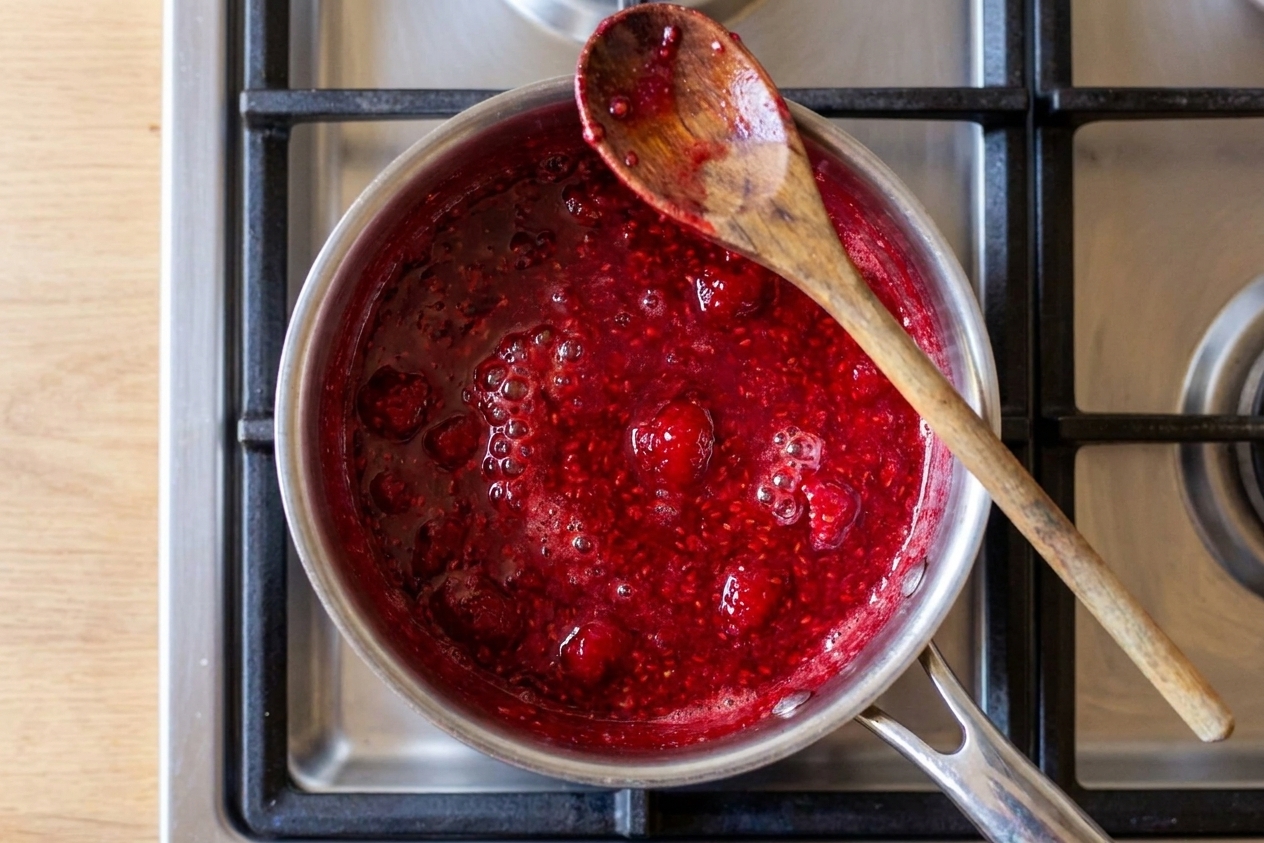
- Make the raspberry swirl sauce: In a small saucepan over medium heat, combine raspberries, sugar, lemon juice, and a pinch of salt. Cook 6 to 10 minutes, stirring and mashing, until juicy and reduced slightly. Stir in the cornstarch slurry and simmer 30 to 60 seconds until glossy and thickened. Strain through a fine-mesh sieve into a bowl (optional, but it removes seeds for the cleanest swirl). Cool to room temp.
- Prepare oven and pan, then bake the crust: Heat oven to 325°F (163°C). Position a rack in the middle. Wrap the outside of a 9-inch springform pan with two layers of heavy-duty foil if you plan to use a water bath. Mix graham crumbs, sugar, and salt. Stir in melted butter until it looks like wet sand. Press firmly into the bottom and slightly up the sides (use a flat-bottomed measuring cup to pack it tight). Bake 10 minutes, then cool while you make the filling.
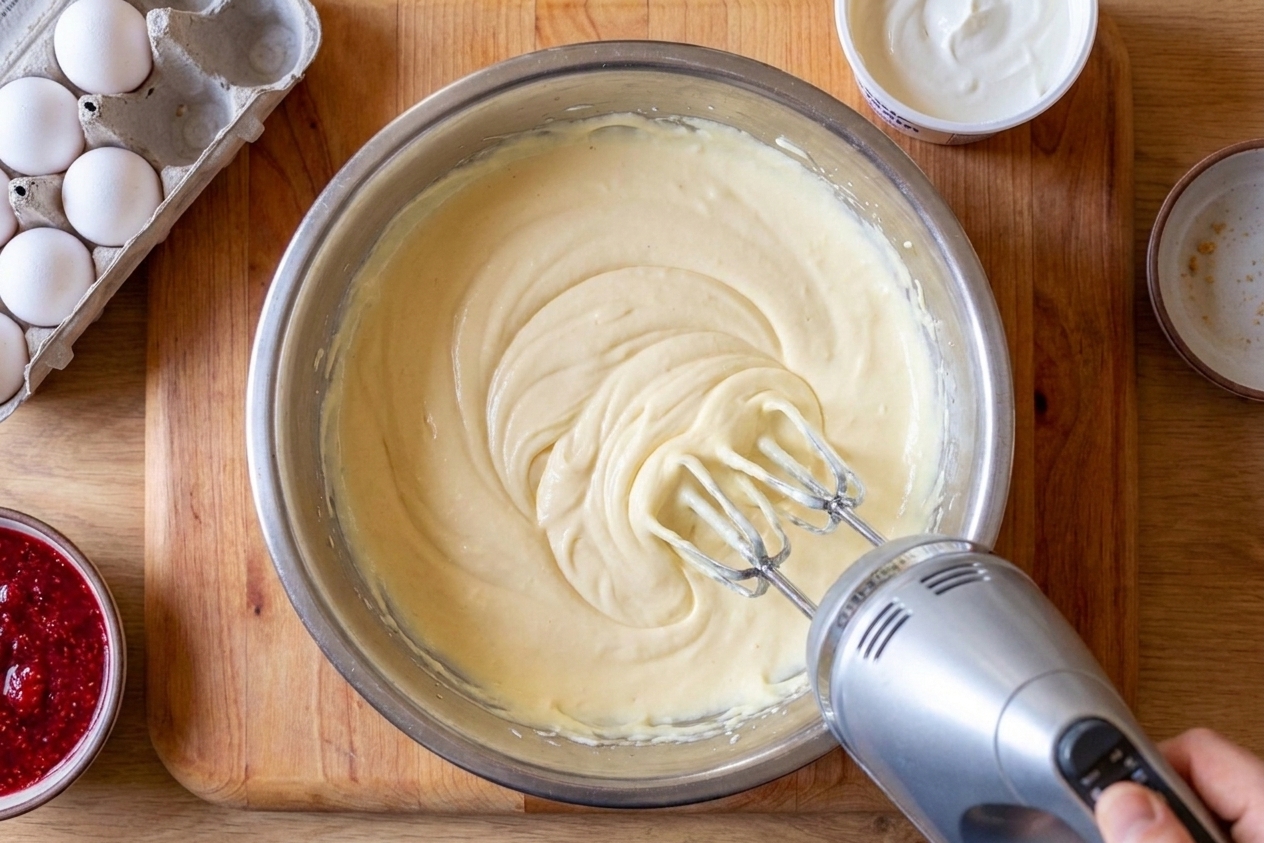
- Mix the filling: In a stand mixer with the paddle, or a large bowl with a hand mixer, beat cream cheese on medium-low until completely smooth, 1 to 2 minutes. Add sugar and salt; mix 30 to 60 seconds, then scrape the bowl. Mix in sour cream, vanilla, and lemon zest (if using) on low just until combined. Add eggs and yolk one at a time, mixing on low and stopping as soon as each disappears. Scrape the bowl once more, then give one final brief mix on low.
- Assemble and swirl: Pour filling over the cooled crust and smooth the top. Spoon about half to two thirds of the raspberry sauce over the surface in small dollops and reserve the rest for serving. Use a butter knife or skewer to swirl gently (think figure eights, not aggressive stirring).
- Bake (choose one method): Option A, classic water bath: Set the foil-wrapped springform pan inside a large roasting pan. Place the roasting pan on the oven rack first, then carefully pour in boiling water to come about halfway up the sides of the springform. Bake at 325°F (163°C) for 60 to 75 minutes. Option B, steam pan: Place a metal baking pan on the rack below your cheesecake. Pour in 2 to 3 cups boiling water, then bake cheesecake on the middle rack for 60 to 75 minutes. The edges should look set and the center should wobble like Jell-O when gently nudged; if the center looks liquidy, bake 5 more minutes and check again. Optional thermometer check: the center is typically ready around 150°F to 155°F (66°C to 68°C).
- Cool slowly, then chill: Turn off the oven, crack the door open, and let the cheesecake sit inside for 45 to 60 minutes. Remove and cool at room temperature until no longer warm, 1 to 2 hours. Cover and refrigerate at least 8 hours, preferably overnight.
- Slice cleanly: Dip a thin knife in hot water, then wipe it completely dry. Slice, then repeat between slices. For the cleanest edges, keep the knife warm and dry each time.
Notes
Pan note: Use a 9-inch springform pan. Line the bottom with parchment for easy transfer. Lightly grease the sides for easier release and smoother edges.
Sensory cue: The batter should look satiny and thick like softened ice cream, not fluffy.
Cooling note: Fast temperature changes are one of the most common crack-makers. Slow cooling in the turned-off oven helps.
Sauce note: Reserve the remaining raspberry sauce for serving, and warm it if you want an extra-saucy finish.
Nutrition
- Calories: 520
- Fat: 36 g
- Carbs: 42 g
- Protein: 9 g
- Fiber: 2 g
- Sugar: 30 g
- Sodium: 330 mg
Nutrition values are approximate and will vary by brand and exact ingredients used.