Rustic chicken and pasta is my idea of the perfect weeknight comfort meal: golden-seared chicken, a quick pan sauce that tastes like it cooked all day, and pasta that soaks up every last glossy drop. It is unfussy and flexible, which means it is also a great way to use up half a jar of marinara, a handful of greens that need love, or those lonely herbs in the crisper.
The goal here is deep flavor with minimal effort. We do that by browning the chicken well, building the sauce in the same pan, and finishing with pasta water for that restaurant-style cling.
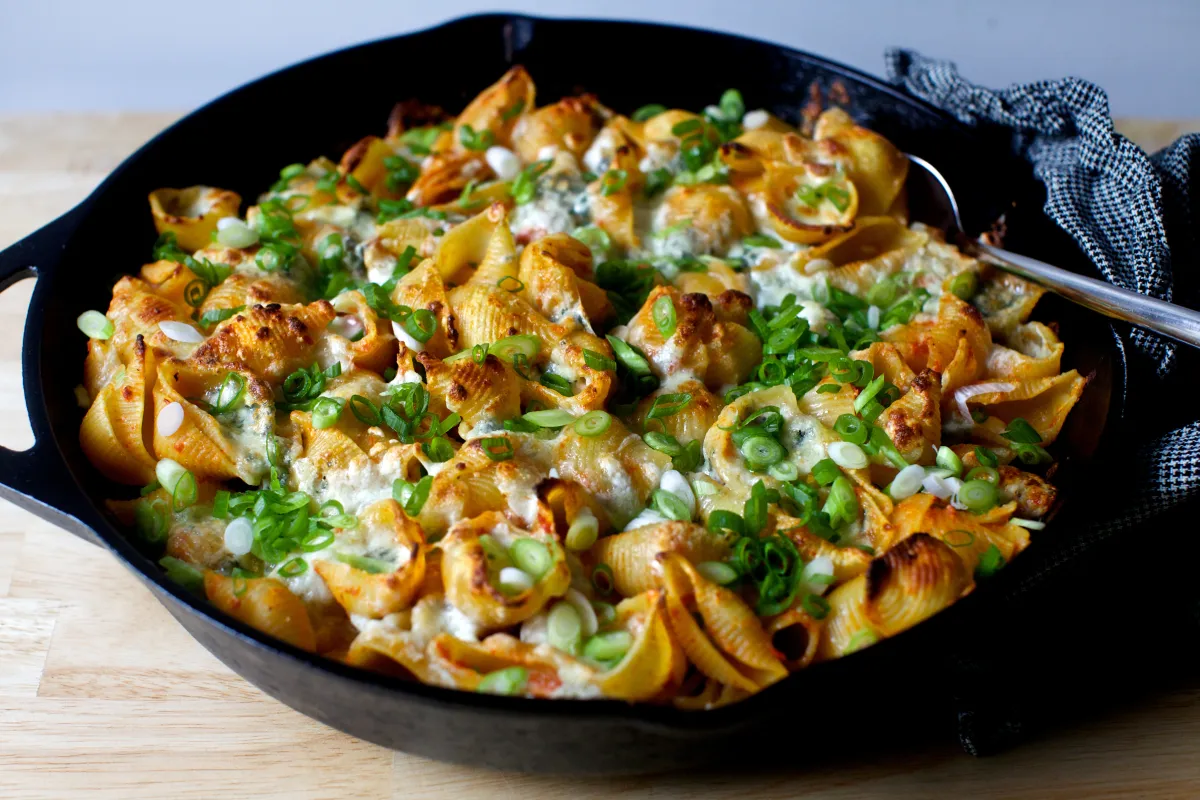
Rustic, to me, means hearty textures and a sauce that is intentionally a little chunky. Think burst tomatoes, bits of browned chicken, and a few torn herbs stirred in at the end. Nothing is precious. Everything is cozy.
Why this recipe works
- Pan-seared chicken creates browned edges and savory drippings that build instant depth.
- Tomato-forward sauce comes together in the same pan, often with a splash of wine or broth, so all the browned bits end up in the final dish.
- Pasta water finish helps the sauce cling to the noodles for a glossy, restaurant-style coating.
- A final hit of acid (lemon juice or vinegar) brightens and balances the rich, cozy flavors.
- Flexible add-ins (greens, olives, mushrooms, beans) make it easy to adapt without losing the rustic vibe.
Ingredient notes
- Pasta: 12 ounces short pasta (rigatoni, penne, fusilli) grabs chunky sauce and bits of chicken; spaghetti works too, just toss well and use pasta water generously.
- Chicken: Boneless, skinless thighs stay juicy and are harder to overcook; breasts work well sliced into cutlets or pounded to an even thickness (about 1/2 inch) for faster, more even cooking.
- Tomatoes: Use a 14 to 15 ounce can of crushed or diced tomatoes for a rustic, intentionally chunky sauce.
- Broth or wine: Chicken broth or dry white wine deglazes the pan and pulls the browned bits into the sauce.
- Greens: Baby spinach wilts quickly; chopped kale takes a little longer but holds up well.
- Parmesan: Stir in off heat so it melts smoothly; very high heat can make it turn grainy in a tomato sauce.
- Acid to balance: Finish with 1 to 2 teaspoons lemon juice or red wine vinegar to make the whole dish taste more alive.
- Optional rustic add-ins: Sliced olives, capers, sauteed mushrooms, or a can of drained white beans can make it heartier and more textured.
- Heat: Crushed red pepper flakes are optional; add a tiny pinch more at the end if the sauce still feels muted.
Equipment you will need
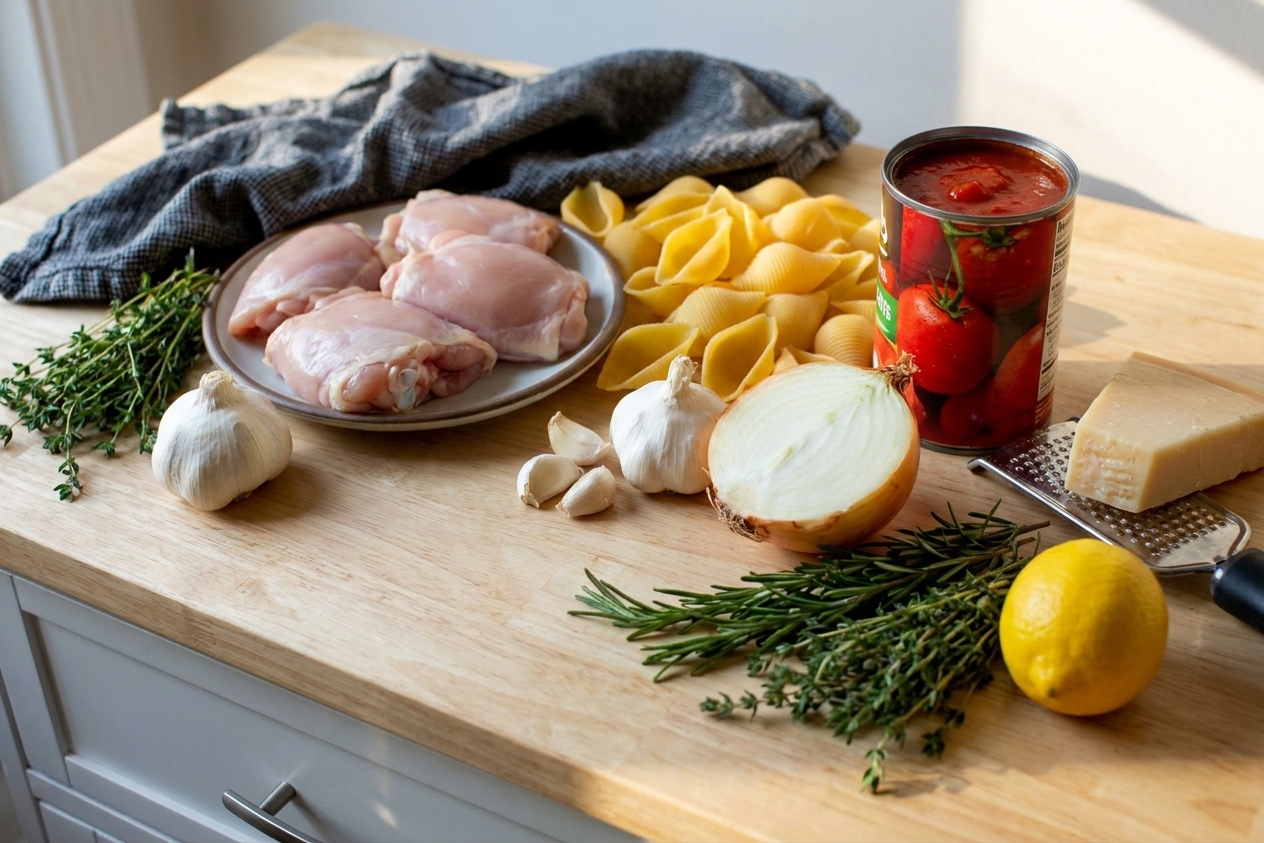
- 12-inch skillet (or larger): helps avoid crowding so the chicken browns properly and the pasta can be tossed in the sauce.
- Large pot: for boiling pasta in well-salted water.
- Tongs or a large spoon: for tossing pasta with the sauce until glossy.
- Instant-read thermometer (helpful): to check the thickest part of the chicken for 165°F minimum.
Pro tips
- Brown first, then simmer: a real sear gives you savory drippings that make a quick sauce taste slow-cooked.
- Salt the pasta water well: about 1 to 2 tablespoons kosher salt per 4 quarts of water.
- Undercook pasta slightly: cook it 1 to 2 minutes less than package directions so it finishes perfectly when tossed in sauce.
- Reserve pasta water: save 1 cup, then add a splash at a time for a glossy, clingy finish.
- Toast tomato paste: cook it 1 to 2 minutes until it darkens slightly and smells sweet for a bigger-tasting sauce.
- Finish parmesan off heat: if the skillet is screaming hot, let it cool for a minute so the cheese melts smoothly (high heat can make it grainy).
- Taste at the end: adjust salt and add a small hit of lemon juice or vinegar with intention. That final 30 seconds is where the dish comes alive.
Substitutes that work
This recipe is forgiving by design. Here is how to flex it without losing the rustic vibe.
Chicken
- Thighs: juicier and harder to overcook.
- Breasts: slice into cutlets for faster, more even cooking.
- Rotisserie chicken: skip the sear; warm shredded chicken in the simmering sauce at the end.
Sauce
- Jarred marinara: use 2 cups marinara plus a splash of broth; still toast tomato paste if you have it.
- No wine: broth is perfect; add 1 teaspoon vinegar at the end for brightness.
- Creamy version: stir in 2 to 3 tablespoons heavy cream or mascarpone off heat.
Veg add-ins
- Mushrooms: brown them after the chicken, before onions.
- Zucchini: add with onions; cook until just tender.
- Roasted red peppers: stir in sliced peppers with the tomatoes.
- White beans: add a drained can for extra protein and an even heartier bowl.
Variations
- Extra-rustic, heartier bowl: add a can of drained white beans, or stir in sliced olives and capers for a briny, pantry-forward version.
- More veg-forward: add browned mushrooms, zucchini cooked with the onions, or sliced roasted red peppers stirred in with the tomatoes.
- Creamy finish: stir in 2 to 3 tablespoons heavy cream or mascarpone off heat.
- Herb finish: tear in basil or parsley right at the end for a fresh pop.
Serving ideas
This is a full meal on its own, but if you want the cozy dinner table feeling:
- Salad: arugula with lemon and olive oil
- Veg: roasted broccoli or blistered green beans
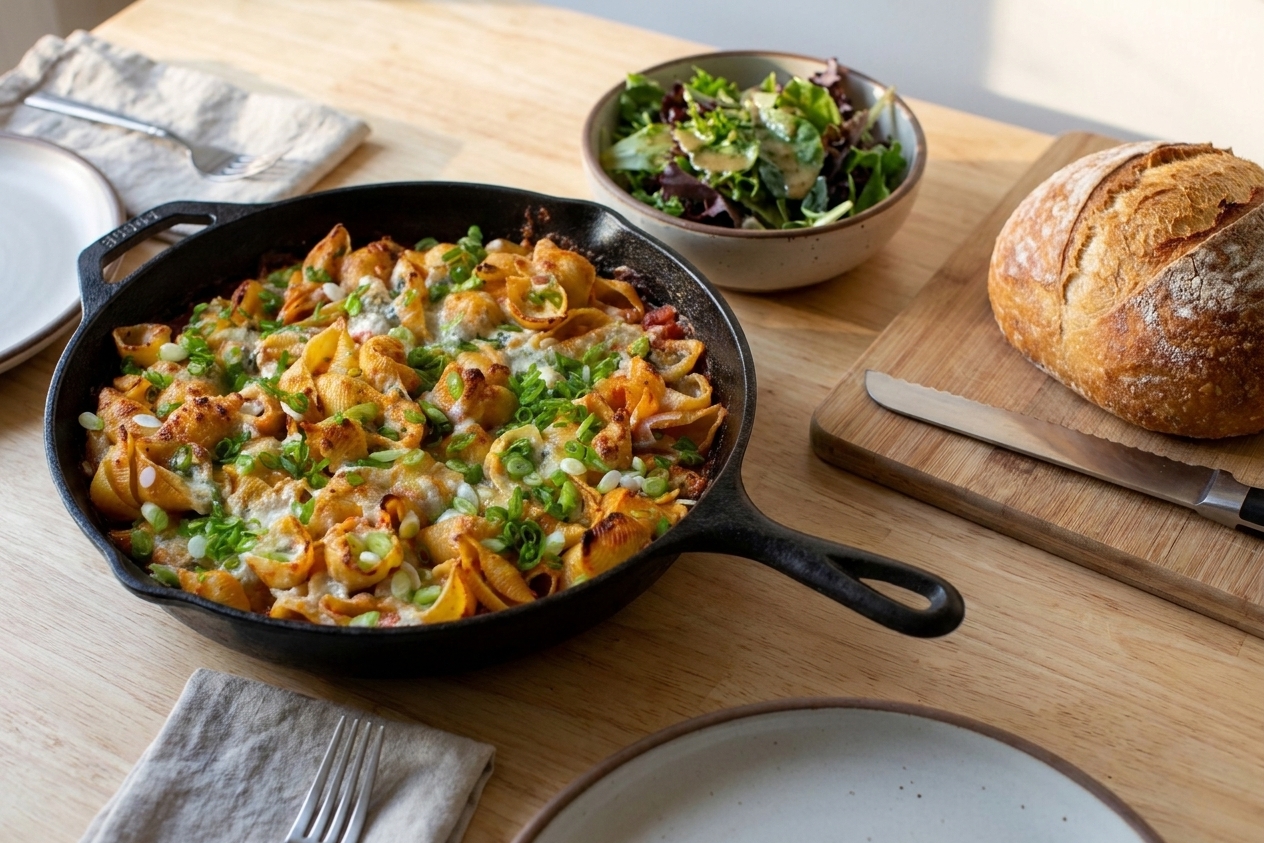
- Bread: garlic bread or a crusty loaf for sauce-scooping
Storage and reheating
Fridge
Store in an airtight container for up to 4 days.
Reheat
Warm in a skillet over medium-low with a splash of water or broth. Stir gently until glossy again. Microwave works too, but add a spoonful of water and cover to keep it from drying out.
Freezing
You can freeze it, but pasta softens a bit. If you plan to freeze, slightly undercook the pasta and thaw overnight in the fridge before reheating.
Common mistakes
- Crowding the pan: if the chicken is packed in too tightly it steams instead of browning; use a 12-inch skillet (or larger) and work in batches if needed.
- Overcooking pasta: cook pasta 1 to 2 minutes shy of al dente so it does not turn soft once tossed in hot sauce.
- Skipping the pasta water: without reserved pasta water the sauce can pool at the bottom instead of clinging to the noodles.
- Not toasting the tomato paste: cooking it 1 to 2 minutes until it darkens and smells sweet makes a noticeable difference in depth.
- Adding parmesan over very high heat: stirring cheese into a screaming-hot skillet can make it turn grainy in tomato sauce; turn off the heat and let the pan cool for a minute if needed.
- Forgetting the final acid adjustment: a teaspoon of lemon juice or vinegar at the end can fix a sauce that tastes flat.
FAQ
What pasta shape is best?
Short shapes like rigatoni, penne, and fusilli grab chunky sauce and bits of chicken. Spaghetti works too, just toss well and use pasta water generously.
Can I make this gluten-free?
Yes. Use your favorite gluten-free pasta and reserve extra pasta water since gluten-free noodles often need a bit more help to look glossy and cohesive.
Can I use leftover cooked chicken?
Absolutely. Make the sauce, simmer it a few minutes, then add cooked chicken at the end just to warm through so it stays tender.
Rustic Chicken and Pasta
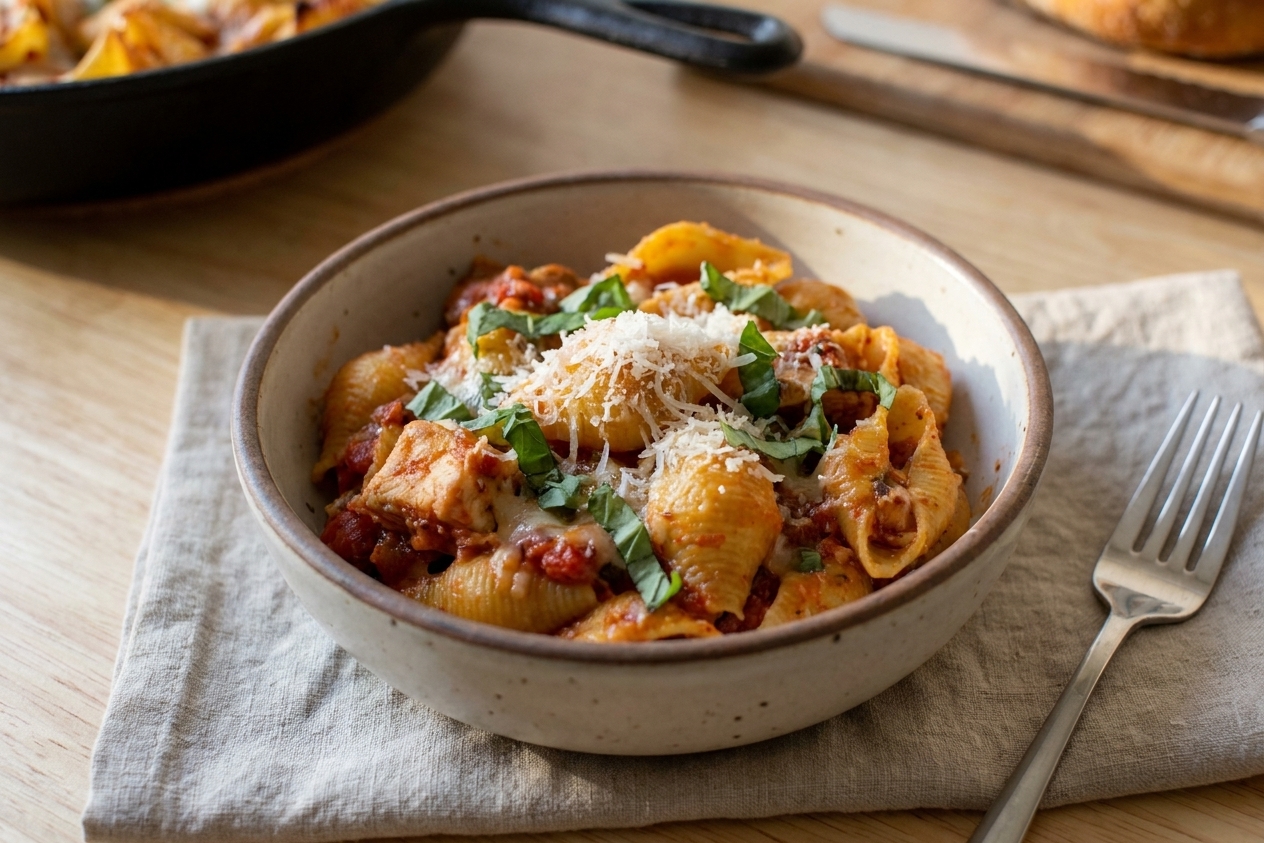
Golden-seared chicken tossed with pasta in a chunky, tomato-garlic pan sauce, finished with parmesan, herbs, and a bright hit of lemon juice or vinegar. Built for weeknights, flexible for add-ins, and designed to turn pantry staples into deep, rustic comfort.
- Prep
- 15 minutes
- Cook
- 25 to 30 minutes
- Total
- 35 to 45 minutes
- Yield
- Serves 4
Ingredients
- 12 ounces short pasta (rigatoni, penne, fusilli) or spaghetti
- 1 to 1 1/4 pounds boneless, skinless chicken thighs or breasts
- 1 teaspoon kosher salt, plus more for pasta water
- 1/2 teaspoon black pepper
- 1 teaspoon dried oregano (or Italian seasoning)
- 2 tablespoons olive oil
- 1 small yellow onion, thinly sliced
- 4 to 6 garlic cloves, minced
- 1/4 teaspoon crushed red pepper flakes (optional)
- 2 tablespoons tomato paste
- 1 (14 to 15 ounce) can crushed or diced tomatoes
- 1/2 cup chicken broth or dry white wine
- 2 packed cups baby spinach or chopped kale
- 1/2 cup grated parmesan, plus more to finish
- 1 to 2 teaspoons lemon juice or red wine vinegar
- Optional: 1/3 cup sliced olives
- Optional: 1 tablespoon capers
- Optional: sauteed mushrooms
- Optional: 1 can drained white beans
- Fresh basil or parsley, torn
Instructions
- Boil the pasta. Bring a large pot of water to a boil. Salt it well, about 1 to 2 tablespoons kosher salt per 4 quarts of water. Cook pasta 1 to 2 minutes less than package directions (just shy of al dente). Reserve 1 cup pasta water, then drain.
- Prep the chicken for even cooking. Pat chicken dry. If using breasts, slice horizontally into cutlets or pound to an even thickness (about 1/2 inch). Season with salt, pepper, and oregano.
- Sear for color. Heat olive oil in a large skillet over medium-high. Add chicken in a single layer (work in batches if needed). Cook until deeply browned and the thickest part reaches 165°F minimum, about 4 to 6 minutes per side depending on thickness. Transfer to a plate. Note: Thighs are safe at 165°F, but they get even more tender if they go a bit higher (around 175 to 190°F).
- Build the base. Lower heat to medium. Add onion to the same skillet with a pinch of salt. Cook 3 to 4 minutes until softened. Stir in garlic and red pepper flakes for 30 seconds.
- Toast the tomato paste. Add tomato paste and cook 1 to 2 minutes, stirring, until it darkens slightly and smells sweet.
- Deglaze, then simmer. Add broth or wine and scrape up the browned bits from the pan. Stir in the tomatoes and simmer 6 to 8 minutes, or until the sauce is reduced enough to lightly coat a spoon.
- Slice chicken and return. Slice or tear the chicken into bite-size pieces. Return to the sauce along with any juices.
- Add greens. Stir in spinach or kale until wilted and tender, 1 to 3 minutes.
- Toss with pasta. Add drained pasta and 1/4 cup reserved pasta water. Toss until glossy and coated. Add more pasta water a splash at a time if it looks tight.
- Finish like a pro. Turn off the heat, then stir in parmesan. If the skillet is screaming hot, let it cool for a minute first so the cheese melts smoothly. Taste and adjust with salt, pepper, and a small hit of lemon juice or vinegar to brighten. Top with fresh herbs and more parmesan.
Notes
- Pan size: Use a 12-inch skillet (or larger) to avoid crowding, which helps the chicken brown properly.
- Pasta water: Reserve 1 cup, then start with 1/4 cup when tossing; add more as needed for a glossy finish.
- Chicken doneness: Cook to 165°F minimum. Thighs are safe at 165°F but become more tender around 175 to 190°F.
- Parmesan timing: Stir in off heat; very high heat can make it grainy in a tomato sauce.
- Flavor adjustment: If the sauce tastes flat, add a pinch of salt first, then a teaspoon of lemon juice or vinegar. If it still feels muted, add more parmesan or a tiny pinch of red pepper flakes.
- Using odds and ends: A half-bag of spinach that looks tired perks up when stirred into hot sauce. A spoonful of pesto or sun-dried tomato paste can be swirled in at the end. Freeze leftover tomato paste in teaspoon portions for next time.
- Prep ahead: Slice onion and mince garlic up to 3 days ahead; grate parmesan and store in an airtight container.
Nutrition
- Calories: ~640
- Fat: ~22 g
- Carbs: ~66 g
- Protein: ~42 g
- Fiber: ~5 g
- Sugar: ~6 g
- Sodium: ~850 mg
Nutrition values are approximate and will vary by exact ingredients used (especially pasta shape, chicken cut, broth, and parmesan).