Homemade hummingbird food is one of those tiny kitchen tasks that pays you back immediately: more hummingbird visits, less waste, and no mystery ingredients. All you need is plain white sugar and water. The classic ratio is 4 parts water to 1 part sugar, a widely recommended mix that falls within the range of many natural flower nectars.
Important: If you heat the mixture to help it dissolve, let it cool completely before filling your feeder.
Why this recipe works
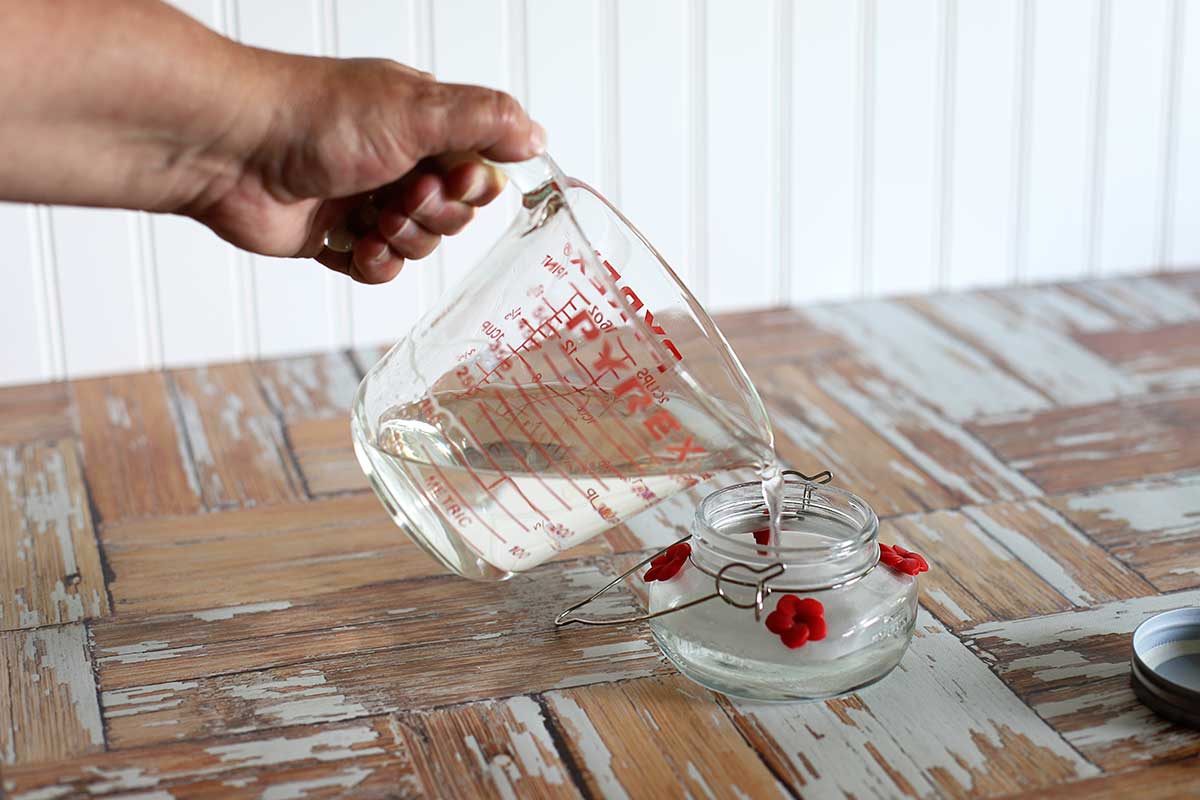
The goal is simple: dissolve the sugar completely, then use it fresh. The 4:1 water to sugar ratio is a classic, widely recommended mix that falls within the range of many natural flower nectars. It is also easy to scale up or down depending on how often you refill.
If you choose to warm the water, you do not need to boil it. A brief warm up helps the sugar dissolve, while avoiding prolonged boiling helps prevent evaporation that can concentrate the mixture.
Ingredient notes
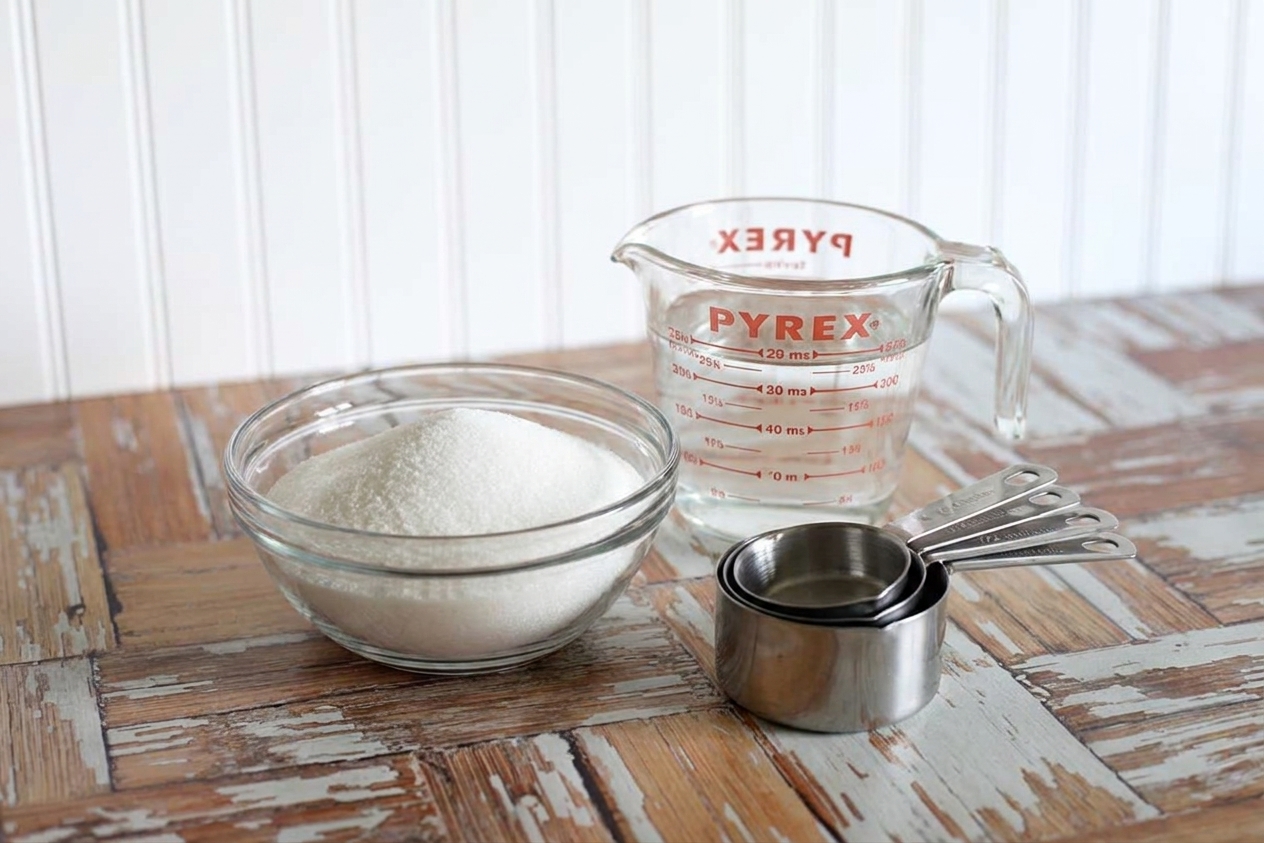
- Granulated white sugar: Use plain white sugar. Avoid honey, brown sugar, raw sugar, coconut sugar, artificial sweeteners, and anything dyed red.
- Water: Tap is usually fine; use filtered if your water has strong odors or heavy mineral taste.
- Skip powdered sugar: It often contains anti caking agents.
Equipment you will need
- Measuring cups
- Jar or pitcher with a lid (for shaking)
- Funnel (optional, but keeps refills tidy)
- Small saucepan and spoon (only if using the quick dissolve on the stove method)
Pro tips
- Use a visual cue: Hold the jar up to the light. If you see sparkly grains pooling at the bottom, keep shaking until the liquid looks perfectly clear.
- Heat is optional: You do not have to boil the mixture. If you warm it to dissolve sugar faster, cool completely before filling the feeder.
- Avoid concentration: Do not do prolonged boiling since evaporation can concentrate the mixture.
- Placement matters: Partial shade keeps nectar cooler and slows fermentation.
- Wipe drips: After filling, wipe any drips to help reduce ants and bees.
Substitutes that work
- Filtered water can be used instead of tap water if your water has strong odors or a heavy mineral taste.
- White granulated cane sugar (including organic) is fine as long as it is truly white granulated sugar. Avoid anything tan or brown.
Variations
The recipe is meant to stay simple and consistent. You can scale the same 4:1 ratio up or down:
- 1 cup water + 1/4 cup sugar (small batch, great for one feeder)
- 2 cups water + 1/2 cup sugar
- 4 cups water + 1 cup sugar (make ahead for refills)
Serving ideas
- Hang the feeder in partial shade to help keep nectar fresher.
- Place it near plants for perches and cover, while keeping enough space to discourage insects and make cleaning easier.
- Keep it away from windows, or use window decals to reduce collisions.
- Use multiple feeders spaced apart if you notice one bird guarding the feeder and causing squabbles.
Storage and reheating
Sugar water can ferment, especially in heat and sun. Freshness matters more than perfection here.
- In the feeder: change every 2 days in hot weather (80°F and up), every 3 to 4 days in mild weather, and about once a week in cool weather.
- In the fridge: store extra nectar in a clean, covered jar for about 5 to 7 days.
When to dump it immediately: cloudiness, stringy bits, bubbles, a sour smell, or any visible mold. If you are unsure, pour it out, rinse, and refill.
Common mistakes
- Making it stronger than 4:1: Stronger mixtures are not recommended, can spoil faster, and may be harder for birds to process.
- Using the wrong sweetener: Skip honey, brown sugar, raw sugar, coconut sugar, artificial sweeteners, and anything dyed red.
- Using powdered sugar: It often contains anti caking agents.
- Filling the feeder while warm: If you heat the mixture, let it cool completely before filling.
- Letting nectar sit too long: Old nectar ferments more quickly in heat and sun. Change it on schedule and dump it at the first sign of cloudiness, bubbles, stringy bits, sour smell, or mold.
- Neglecting cleaning: A dirty feeder can develop mold and harmful microbes, even if the nectar ratio is correct.
FAQ
Can I make it stronger than 4:1?
Stick with 4:1. Stronger mixtures are not recommended, can spoil faster, and may be harder for birds to process. If you want more visits, focus on freshness, feeder cleanliness, and a shady spot.
Do I need red dye?
No. Most feeders already have red parts that attract hummingbirds. Dyes are unnecessary.
Can I use organic sugar?
If it is white granulated cane sugar, it is fine. Avoid anything tan or brown, since the extra molasses and minerals are not ideal.
Why are ants or bees showing up?
Try an ant moat above the feeder, move the feeder to a less trafficked area, and wipe drips after filling. Also check that the feeder is not leaking.
What if my nectar looks cloudy after one day?
Cloudiness usually means fermentation is starting or the feeder needs a deeper clean. Dump it, scrub well, rinse, and refill with fresh nectar in a shadier spot.
Hummingbirds stopped coming. Now what?
Check for spoiled nectar, leaks, or clogged feeding ports. Give the feeder a deep clean, refill with fresh nectar, and consider moving it into partial shade for a day or two.
Simple Hummingbird Food (4:1 Sugar Water)
This simple hummingbird food uses the classic 4:1 water to sugar ratio. Shake to dissolve with no heat, or warm briefly to help it dissolve, then cool completely before filling a clean feeder.
- Prep
- 5 minutes
- Cook
- 5 minutes
- Total
- 10 minutes
- Yield
- Makes about 1 1/4 cups (about 1 feeder refill)
Ingredients
- 1 cup water
- 1/4 cup granulated white sugar
Instructions
- Combine: Measure 1 cup water and 1/4 cup granulated white sugar into a clean jar.
- Shake to dissolve (no heat method): Shake vigorously for 30 to 60 seconds. Rest for a minute, then shake again until the liquid looks perfectly clear with no sugar on the bottom.
- Optional stove method: Bring the water just to a simmer (not a rolling boil). Remove from heat, add sugar, and stir until fully dissolved.
- Cool: If warmed, cool completely before filling the feeder.
- Fill and store extra: Fill a clean feeder. Refrigerate any extra nectar in a clean, covered jar for about 5 to 7 days.
Notes
- Ratio: Use 4 parts water to 1 part sugar. You can scale it up (2 cups water + 1/2 cup sugar; 4 cups water + 1 cup sugar).
- Do you have to boil it? No. Boiling is not required. Avoid prolonged boiling since evaporation can concentrate the mixture.
- Change schedule (in feeder): Every 2 days in hot weather (80°F and up), every 3 to 4 days in mild weather, and about once a week in cool weather.
- Dump immediately if: Cloudy, stringy bits, bubbles, sour smell, or any visible mold.
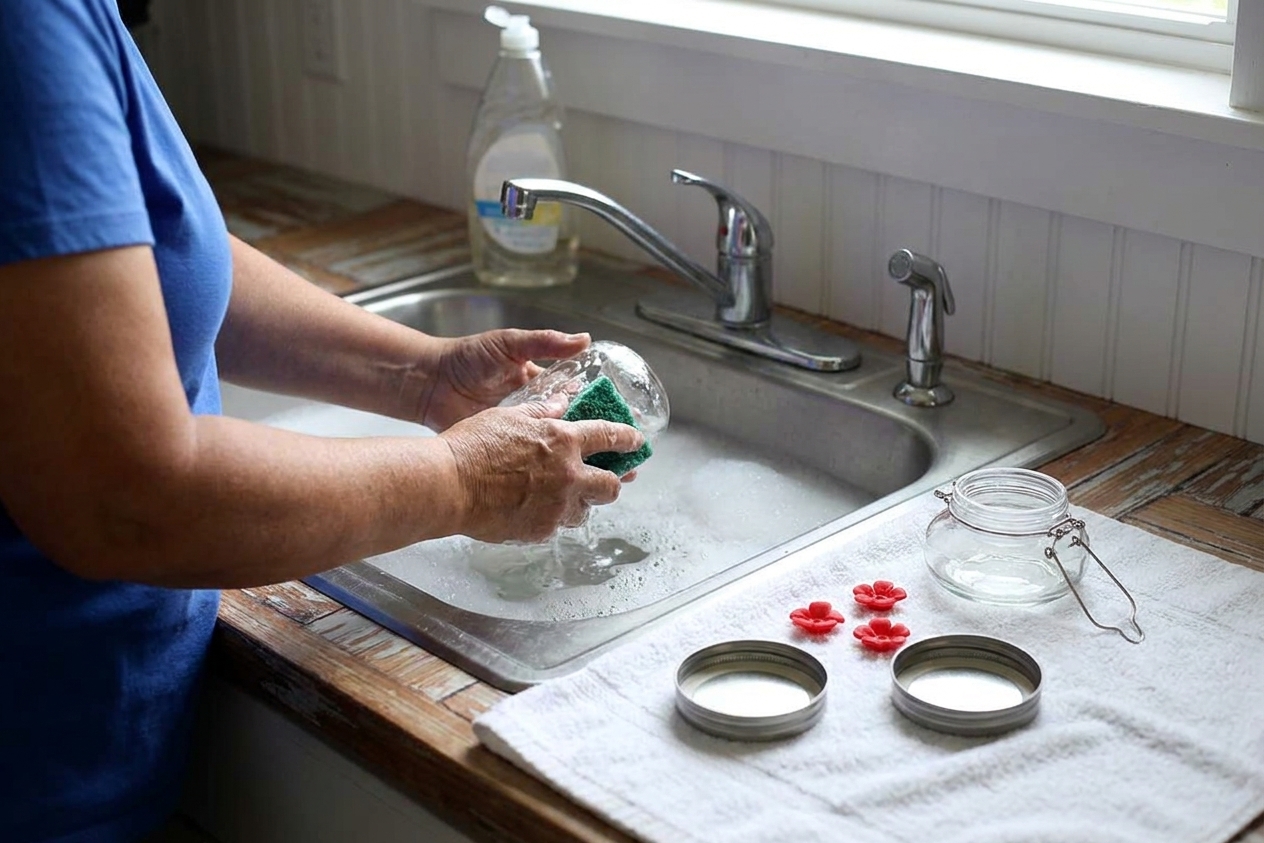
- Feeder cleaning: Every refill, rinse well with hot water. At least weekly, wash with warm water and a small amount of unscented dish soap (use a bottle brush for crevices). For stubborn buildup or any mold, soak in 1 part white vinegar to 2 parts warm water for 20 to 30 minutes, then scrub and rinse very thoroughly. Optional bleach method: if you choose it, follow product and feeder manufacturer directions and rinse repeatedly until there is no odor left.
Nutrition
- Calories: 193
- Fat: 0 g
- Carbs: 50 g
- Protein: 0 g
- Fiber: 0 g
- Sugar: 50 g
- Sodium: 5 mg
Nutrition values are approximate and will vary by exact measurements and serving size.