If you want cinnamon rolls that are soft all the way through with a gooey cinnamon center and icing that melts into every swirl, you are in the right place. This is my weeknight-friendly, home-kitchen version of the rolls I used to teach in class, minus the stress. We will use a forgiving enriched dough, a bold cinnamon filling, and a simple bakery-style icing that tastes rich and balanced, not like a sugar bomb.
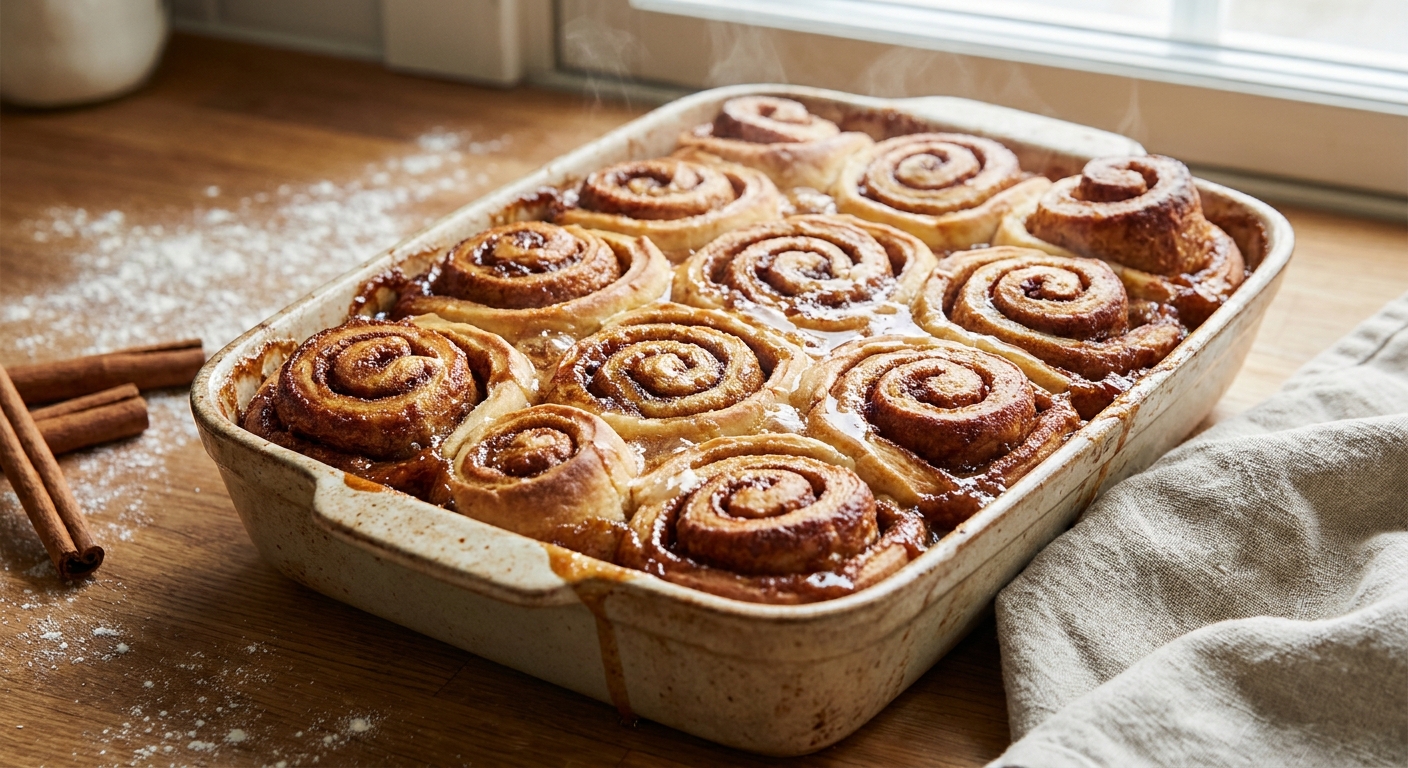
My north star for cinnamon rolls: keep the dough tender (milk, butter, egg), keep the filling punchy (cinnamon, brown sugar, salt), and bake just until the center is set but still plush. Overbaking is the fastest way to turn magic into dry bread.
Why this recipe works
- Enriched dough: milk, butter, and egg make the crumb tender and stretchy instead of chewy.
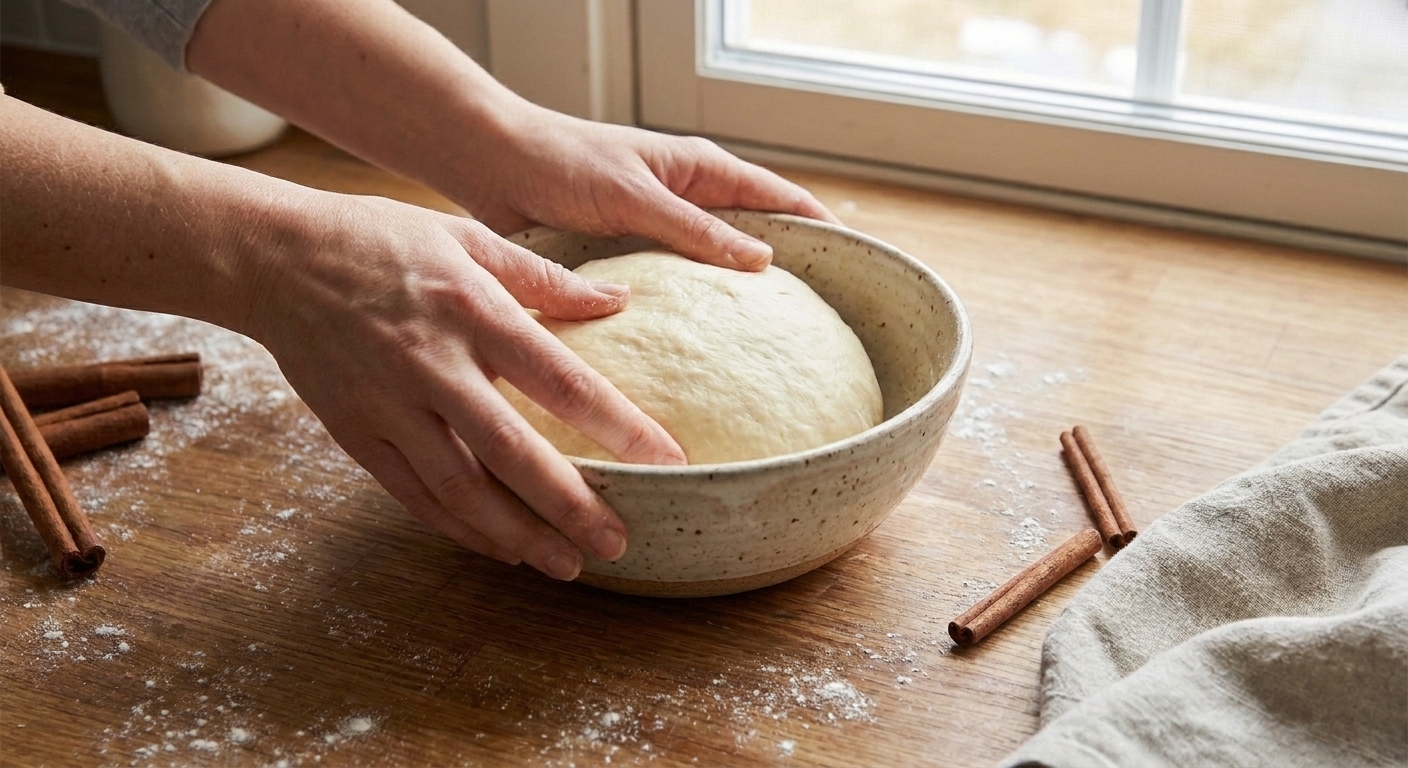
- Proper proofing: the dough should look domed and puffy, and feel a little jiggly when you nudge the bowl, not merely “bigger.” Underproofed rolls bake up dense.
- Filling with a pinch of salt: salt keeps the cinnamon sugar from tasting flat and makes the sweetness feel intentional.
- Snug pan: rolls that touch each other steam slightly as they bake, which keeps sides soft.
- Gentle baking: bake until just done. If you wait for deep brown all over, the centers usually dry out.
Ingredient notes
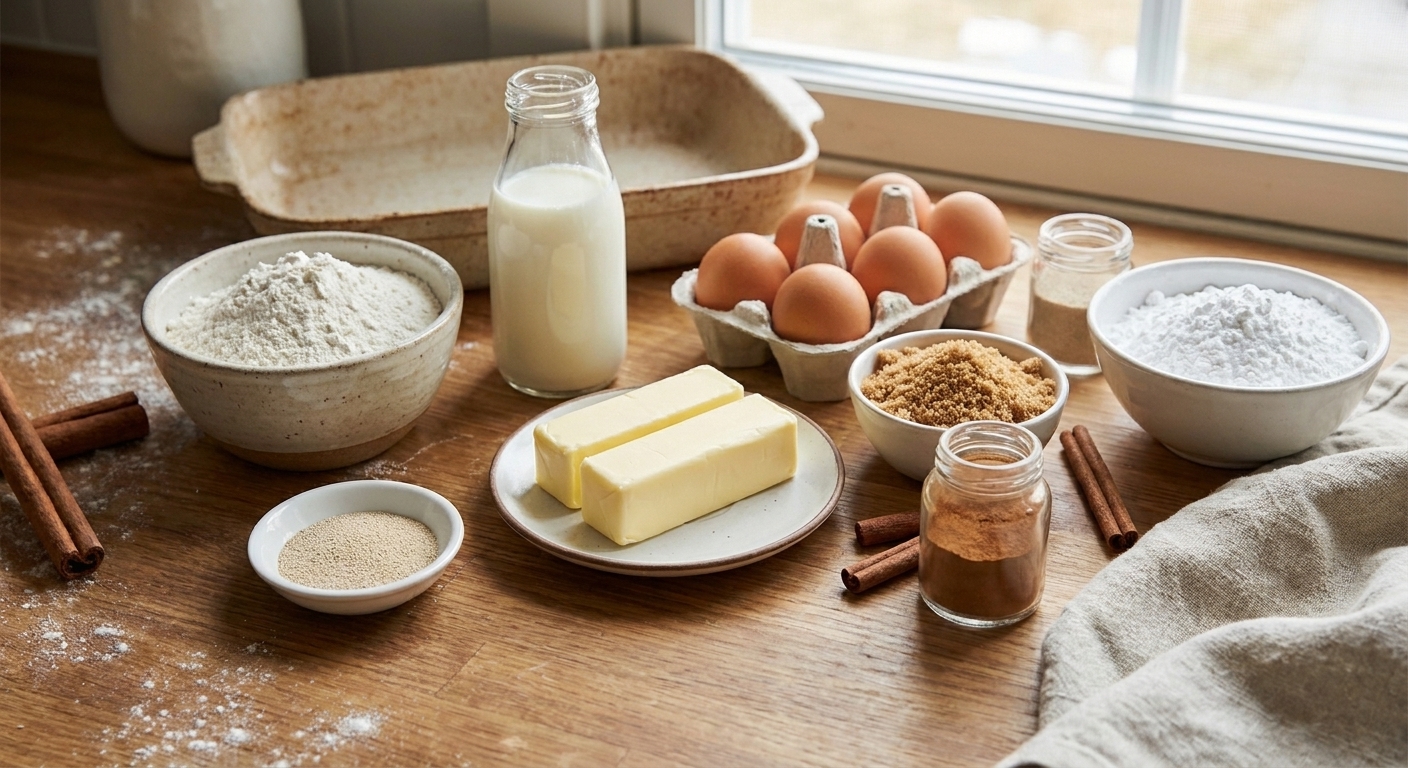
For the dough
- All-purpose flour: reliable and tender. Bread flour works too and gives a slightly chewier bite.
- Instant yeast: easiest.
- Whole milk: for softness. 2 percent works. Non-dairy milk works, but choose unsweetened.
- Butter: tenderizes and adds flavor.
- Egg: richness and structure.
- Sugar: a little in the dough helps browning and gives the yeast a boost.
- Salt: essential for flavor and dough strength.
For the filling
- Brown sugar: for gooey caramel notes. Light or dark both work.
- Cinnamon: use what you love. Fresher cinnamon tastes sweeter and warmer.
- Very soft butter: helps the filling cling and stay lush. If it is melted, it tends to leak out.
- Salt: yes, again. It makes the cinnamon taste bigger.
For the icing
- Cream cheese: tang balances sweet, and I will always pick it for cinnamon rolls.
- Powdered sugar: dissolves smoothly.
- Vanilla: cozy bakery vibes.
- Milk or cream: to loosen to your dream drizzle.
Food waste note: if you have leftover cream cheese from another recipe, this is the moment. Even 2 to 3 tablespoons folded into a simple powdered sugar glaze makes it taste more intentional.
Allergen note: these rolls contain dairy and egg. You can use unsweetened non-dairy milk and plant butter in a pinch, but the rolls will be a little less rich and the crumb a touch less tender.
Equipment you will need
- Large mixing bowl (or stand mixer bowl) and whisk
- Stand mixer with dough hook (optional)
- Rolling pin
- Small bowl for mixing the cinnamon sugar filling
- 9 x 13 inch pan (for 12 rolls) or a 9 inch square, 9 inch round cake pan, or 10 inch skillet (for 9 larger rolls)
- Dental floss or a very sharp knife (a serrated knife with a gentle sawing motion works well)
- Foil (to tent if browning too fast)
- Instant-read thermometer (optional, for checking doneness)
- Parchment-lined tray and freezer bag (optional, for freezing before baking)
Pro tips
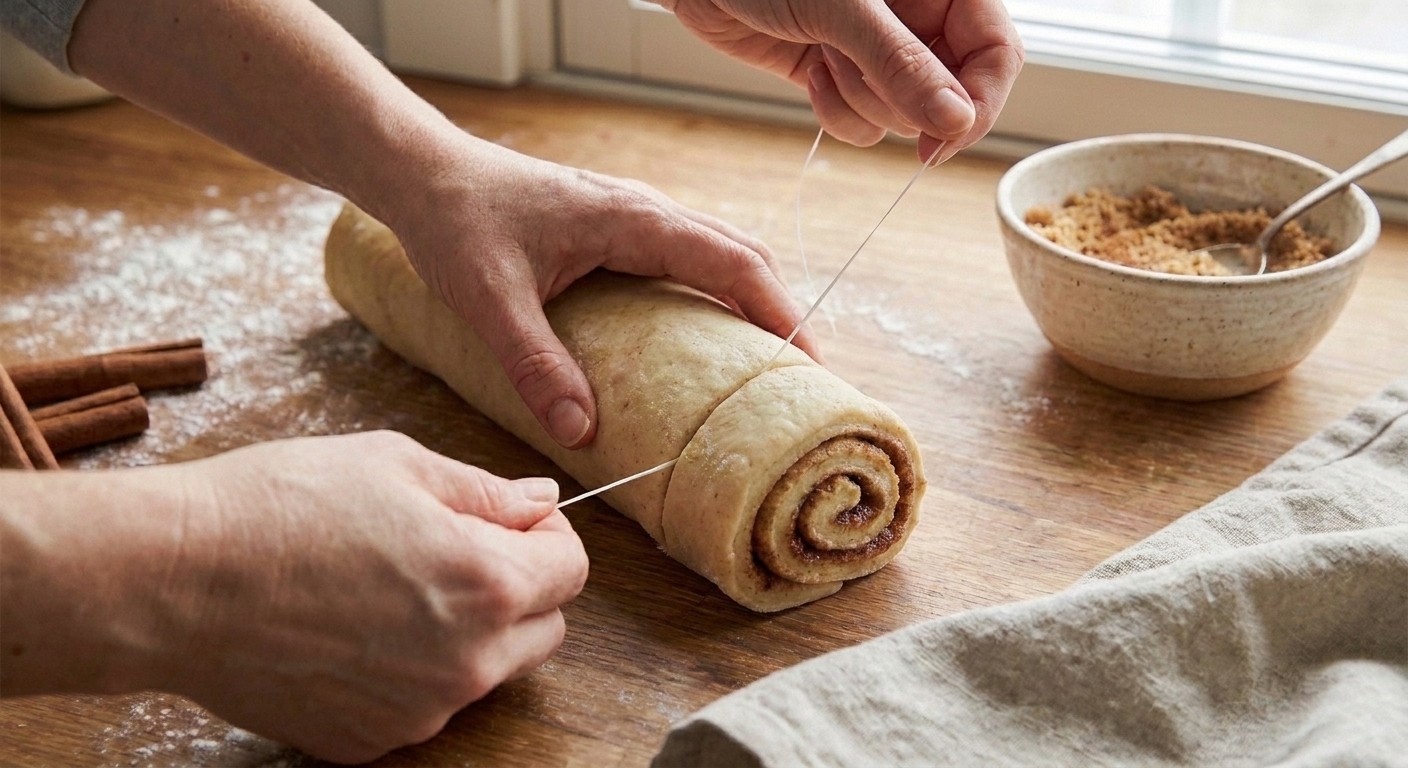
- Floss slicing: slide floss under the log, cross, and pull. It keeps swirls tight and prevents squishing.
- Even rolling: if your rectangle keeps shrinking, let the dough rest 5 minutes, then continue. Gluten relaxes with time.
- Salt in the icing: a tiny pinch makes it taste like cream cheese frosting, not powdered sugar paste.
- Add a touch of acid: if your icing tastes cloying, add 1/2 teaspoon lemon juice or a little more cream cheese.
Substitutes that work
- Yeast: If you have active dry yeast, you can use it. Proof it in warm milk with a pinch of sugar for 5 to 10 minutes until foamy.
- Flour: Bread flour works too and gives a slightly chewier bite.
- Milk: 2 percent works. Non-dairy milk works, but choose unsweetened.
- Dairy swaps (in a pinch): You can use unsweetened non-dairy milk and plant butter, but the rolls will be a little less rich and the crumb a touch less tender.
- Icing adjustment: If you have leftover cream cheese, even 2 to 3 tablespoons folded into a simple powdered sugar glaze makes it taste more intentional.
Variations
- Cut size: Cut into 9 large rolls or 12 slightly smaller, depending on how you like them.
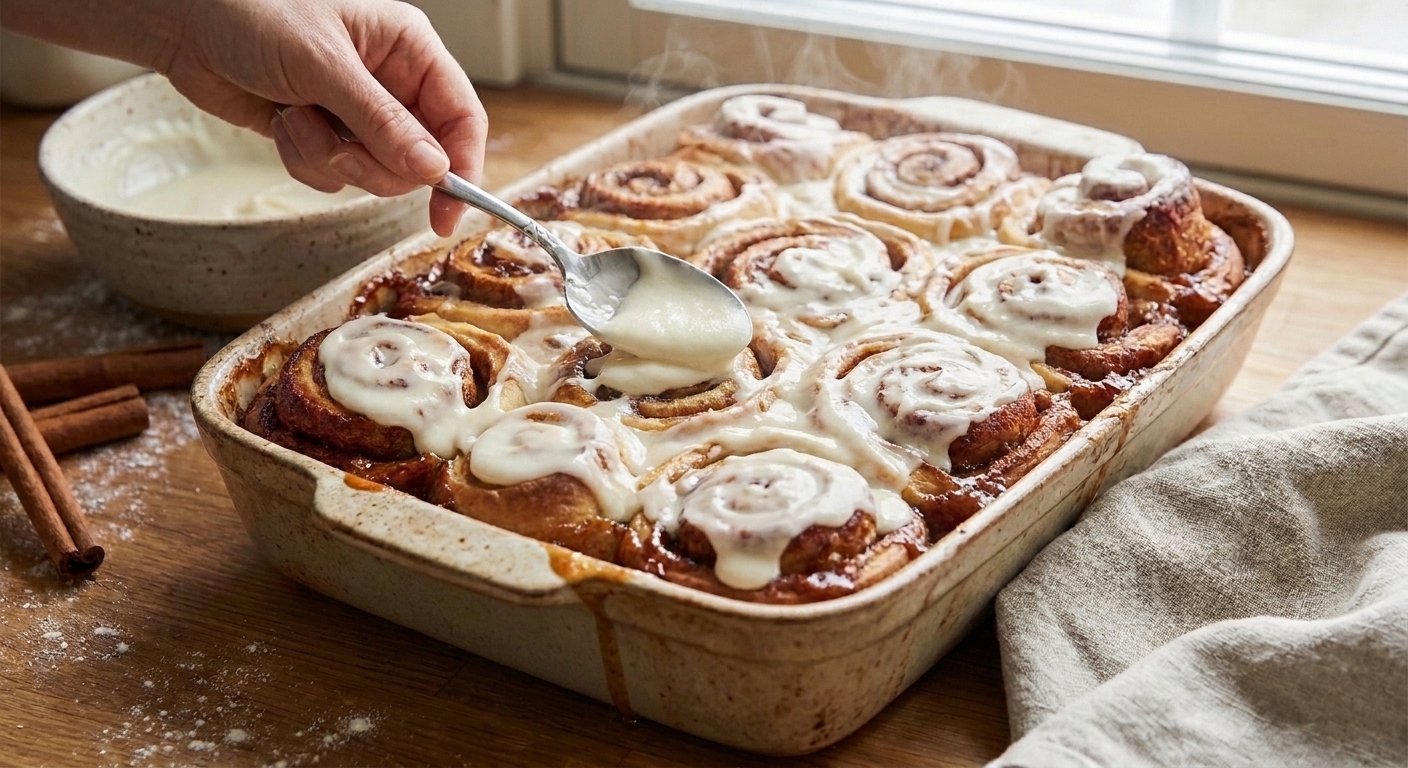
- Icing style: Ice while warm for a melt-into-the-swirls finish, or cool 10 to 15 minutes for a thicker, more frosting-like layer.
- Texture preference: Use all-purpose flour for maximum tenderness, or bread flour for slightly chewier, taller rolls.
Serving ideas
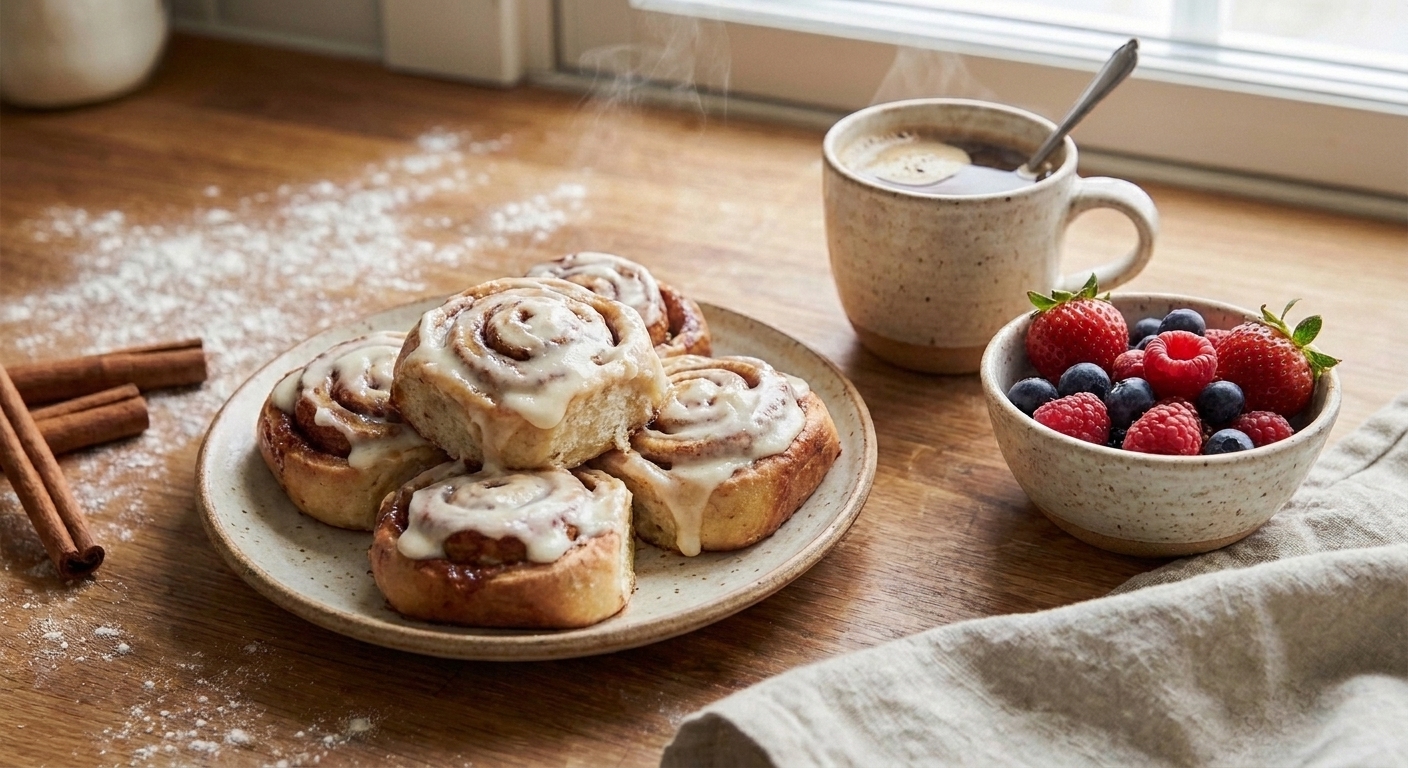
- Classic: serve warm with hot coffee or strong black tea.
- Brunch board: pair with fresh berries, yogurt, and scrambled eggs for balance.
- Dessert mode: warm roll plus a scoop of vanilla ice cream and a pinch of flaky salt.
Storage and reheating
Storage and reheating
- Room temp: store airtight for 1 to 2 days.
- Fridge: up to 4 days (they will firm up faster, so plan to rewarm).
- Reheat one roll: microwave 10 to 15 seconds until just warm.
- Reheat a whole pan: cover with foil and warm at 300°F for 10 to 15 minutes. If the rolls seem a little dry, add a splash of milk or cream to the bottom of the pan before reheating for extra softness.
Make-ahead and freezing
Overnight rolls
Shape the rolls and place in the pan. Cover tightly and refrigerate overnight (8 to 14 hours). In the morning, let sit at room temp until puffy, 45 to 90 minutes depending on your kitchen, then bake as directed.
Freeze before baking
Shape rolls, place on a parchment-lined tray, and freeze until solid. Transfer to a freezer bag. When ready, place frozen rolls in a greased pan, cover, and let thaw and rise overnight in the fridge or 3 to 5 hours at room temp. Bake as directed.
Freeze after baking
Bake and cool completely. Freeze (ideally un-iced). Rewarm at 300°F until heated through, then ice. If already iced, microwave gently in short bursts so the icing does not separate.
Common mistakes
- Using milk that is too hot: warm is best (not hot), or the yeast may not work.
- Underproofing: rolls need to look domed and puffy and feel a little jiggly. Underproofed rolls bake up dense.
- Adding too much flour: too much flour is the most common reason for dry rolls. Keep the dough soft and slightly tacky.
- Using melted butter for the filling: melted butter tends to leak out. Use very soft butter so the filling clings.
- Rolling too loosely: a loose log can leak filling and unroll. Roll snugly and pinch the seam closed.
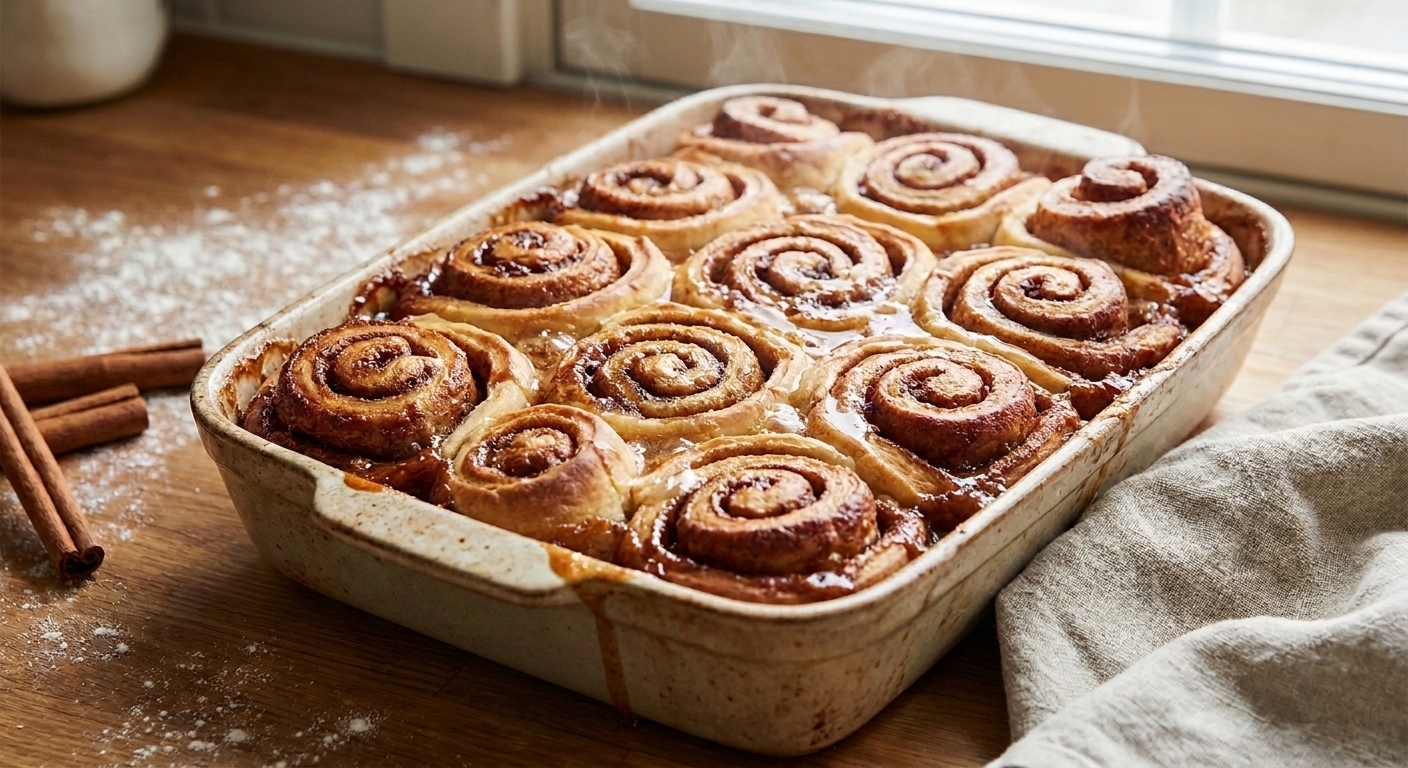
- Overbaking: if you wait for deep brown all over, the centers usually dry out. Pull when tops are light golden and the center roll is set.
- Cutting with a dull knife: a dull knife can squish the log and cause unrolling. Use floss or a sharp knife for clean cuts.
FAQ
Can I make these without a stand mixer?
Yes. A bowl and your hands work beautifully. Knead until the dough is smooth and elastic, about 8 to 10 minutes. If you are tired, knead 5 minutes, rest 5 minutes, then knead 2 to 3 more minutes. Resting helps gluten develop with less effort.
Why are my rolls not fluffy?
Usually underproofing or too much flour. Let the dough rise until truly doubled, and keep the dough soft. Fluffy rolls come from air and moisture.
Can I use bread flour?
Yes. Bread flour can make the rolls slightly chewier and taller. If you want maximum tenderness, stick with all-purpose.
How do I keep cinnamon rolls soft the next day?
Store airtight and rewarm before eating. A quick 10 to 15 seconds in the microwave makes them soft again and turns the icing glossy.
Can I reduce the sugar?
You can reduce the icing sweetness easily by adding more cream cheese and a pinch more salt. I do not recommend cutting the filling sugar too much, since it is what creates that gooey center and classic cinnamon roll texture.
Soft Cinnamon Rolls (Gooey & Sweet)
Soft Cinnamon Rolls (Gooey & Sweet) with an enriched dough, a bold cinnamon-brown sugar filling, and a simple cream cheese icing. Makes 9 to 12 rolls (depending on how you cut them) and takes about 2 hours start to finish (mostly rising time).
- Prep
- 1 hour 35 minutes
- Cook
- 20 to 26 minutes
- Total
- About 2 hours
- Yield
- Makes 9 to 12 rolls
Ingredients
- 3 1/4 cups (390 g) all-purpose flour, plus more as needed
- 2 1/4 tsp (7 g) instant yeast
- 1/4 cup (50 g) granulated sugar
- 1 tsp fine salt
- 3/4 cup (180 g) whole milk, warm (about 105°F to 110°F, or warm to the touch, not hot)
- 1 large egg, room temperature
- 1/4 cup (57 g) unsalted butter, melted and cooled slightly
- 1/2 cup (113 g) unsalted butter, very soft
- 1 cup (200 g) packed brown sugar
- 2 tbsp ground cinnamon
- 1/2 tsp fine salt
- 4 oz (113 g) cream cheese, softened
- 2 tbsp (28 g) unsalted butter, softened
- 1 1/4 cups (150 g) powdered sugar, sifted if lumpy
- 1 tsp vanilla extract
- 1 to 3 tbsp milk or cream
- Pinch of salt
Instructions
- Mix and knead the dough: In a large bowl (or stand mixer bowl), whisk together the flour, yeast, sugar, and salt. Add warm milk, egg, and melted butter. Mix until a shaggy dough forms, then knead 8 to 10 minutes by hand (or 5 to 7 minutes with a dough hook) until smooth and elastic. If the dough is sticking heavily to your hands or bowl, add flour 1 tablespoon at a time; the dough should feel soft and slightly tacky, not sticky like batter.
- First rise: Lightly grease the bowl. Cover and let rise in a warm spot until doubled, about 60 to 90 minutes. (If your kitchen is chilly, place the bowl in an unheated oven with the light on.)
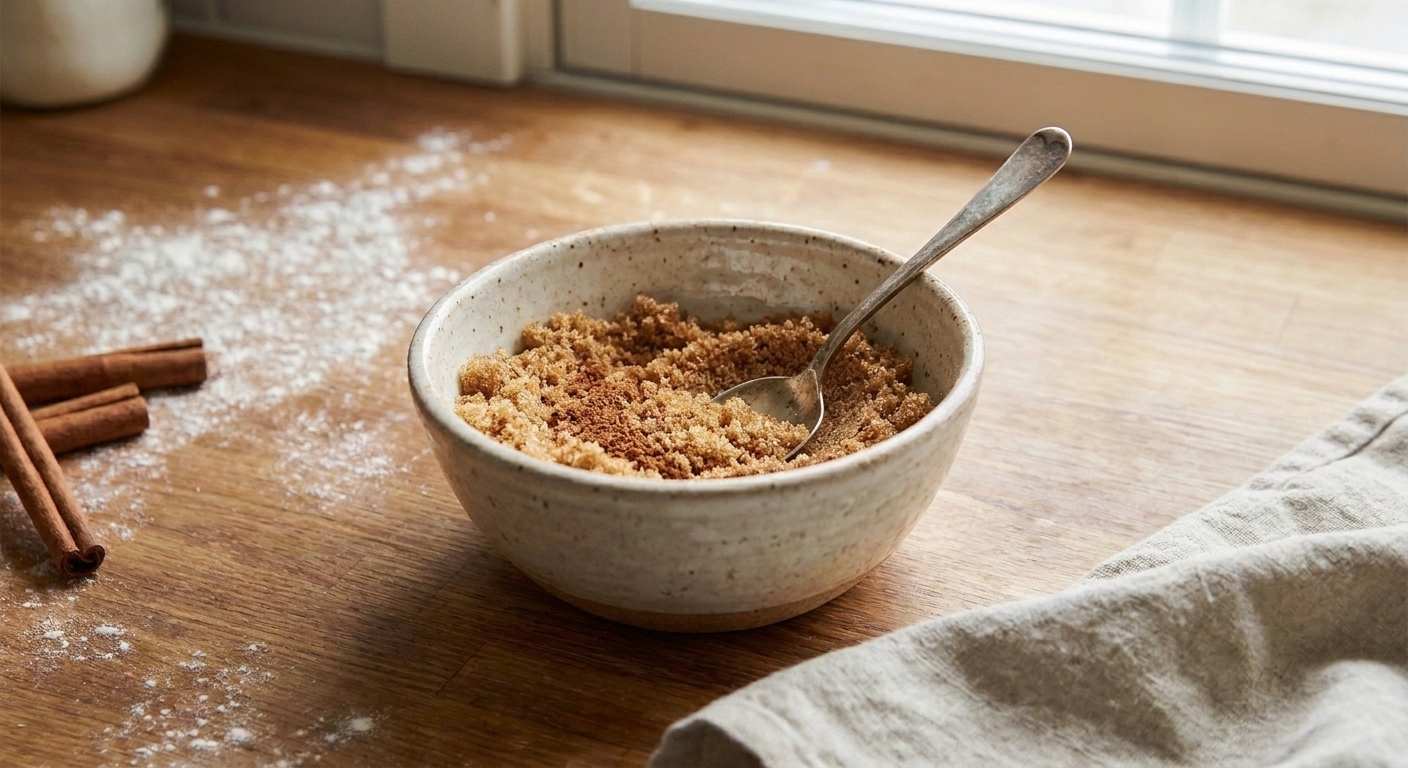
- Make the filling: In a small bowl, mix brown sugar, cinnamon, and salt. Set aside. The butter should be very soft, like spreadable.
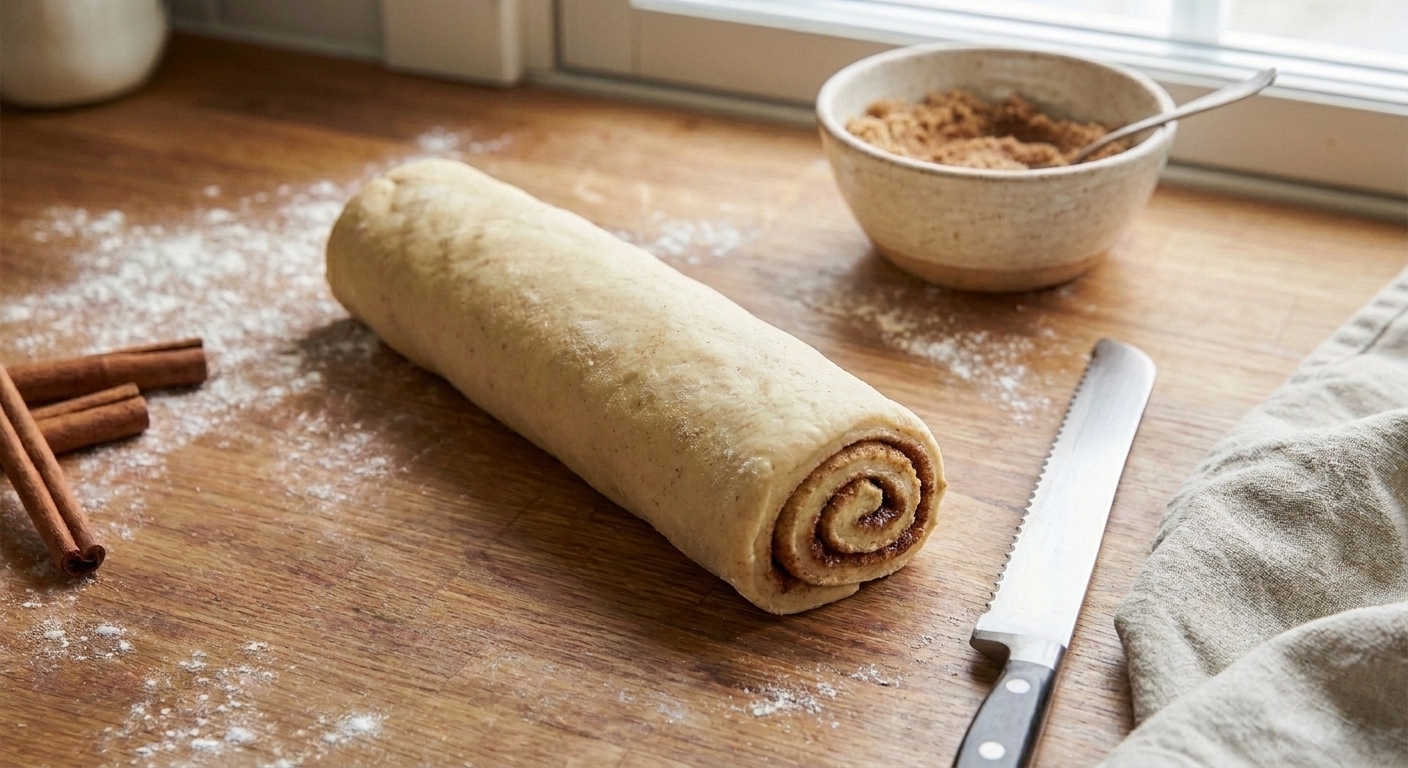
- Roll, fill, and shape: Turn dough onto a lightly floured surface. Roll into a 12 x 16 inch rectangle (roughly). Spread the very soft butter evenly across the dough, leaving a 1/2 inch border at the top edge. Sprinkle the cinnamon sugar evenly and press it in gently with your palm so it adheres. Starting from the long side, roll into a tight log and pinch the seam closed. Cut into 9 large rolls (or 12 for slightly smaller) using dental floss or a very sharp knife. Arrange in a greased pan, leaving a little space between each. For 12 rolls, use a 9 x 13 inch pan. For 9 larger rolls, use a 9 inch square pan, 9 inch round cake pan, or a 10 inch skillet.
- Second rise: Cover and let rise 30 to 45 minutes, until puffy and the rolls are touching or nearly touching. When you gently press a roll with a fingertip, the indentation should slowly spring back but not disappear instantly.
- Bake: Heat oven to 350°F. Bake 20 to 26 minutes, until tops are light golden and the center roll is set. If you use a thermometer, aim for about 185°F to 195°F in the center roll, depending on how gooey you like them. If the tops brown too fast, tent loosely with foil for the last 5 to 10 minutes.
- Ice and serve: Beat cream cheese and butter until smooth. Beat in powdered sugar, vanilla, and salt. Add milk 1 tablespoon at a time until you like the texture. Spread over warm rolls for a melt-into-the-swirls finish, or let the rolls cool 10 to 15 minutes for a thicker, more frosting-like layer.
Notes
- Weight note: If you bake by weight, follow the grams. Cup-to-gram conversions can vary slightly by kitchen and measuring style.
- Yeast swap: If using active dry yeast, proof it in warm milk with a pinch of sugar for 5 to 10 minutes until foamy.
- Pan size note: For 12 rolls, use a 9 x 13 inch pan. For 9 larger rolls, use a 9 inch square pan, 9 inch round cake pan, or a 10 inch skillet. A snug fit is intentional and keeps the sides extra soft.
- Doneness range: For an internal temperature guide, aim for about 185°F to 195°F in the center roll depending on how gooey you like them.
- When to ice: Ice while warm for melt-in swirls, or cool 10 to 15 minutes for a thicker layer.
Nutrition
- Calories: 430
- Fat: 18 g
- Carbs: 61 g
- Protein: 7 g
- Fiber: 2 g
- Sugar: 30 g
- Sodium: 390 mg
Nutrition values are approximate and will vary by ingredient brands, exact yield (9 vs. 12 rolls), and how much icing is used per serving.