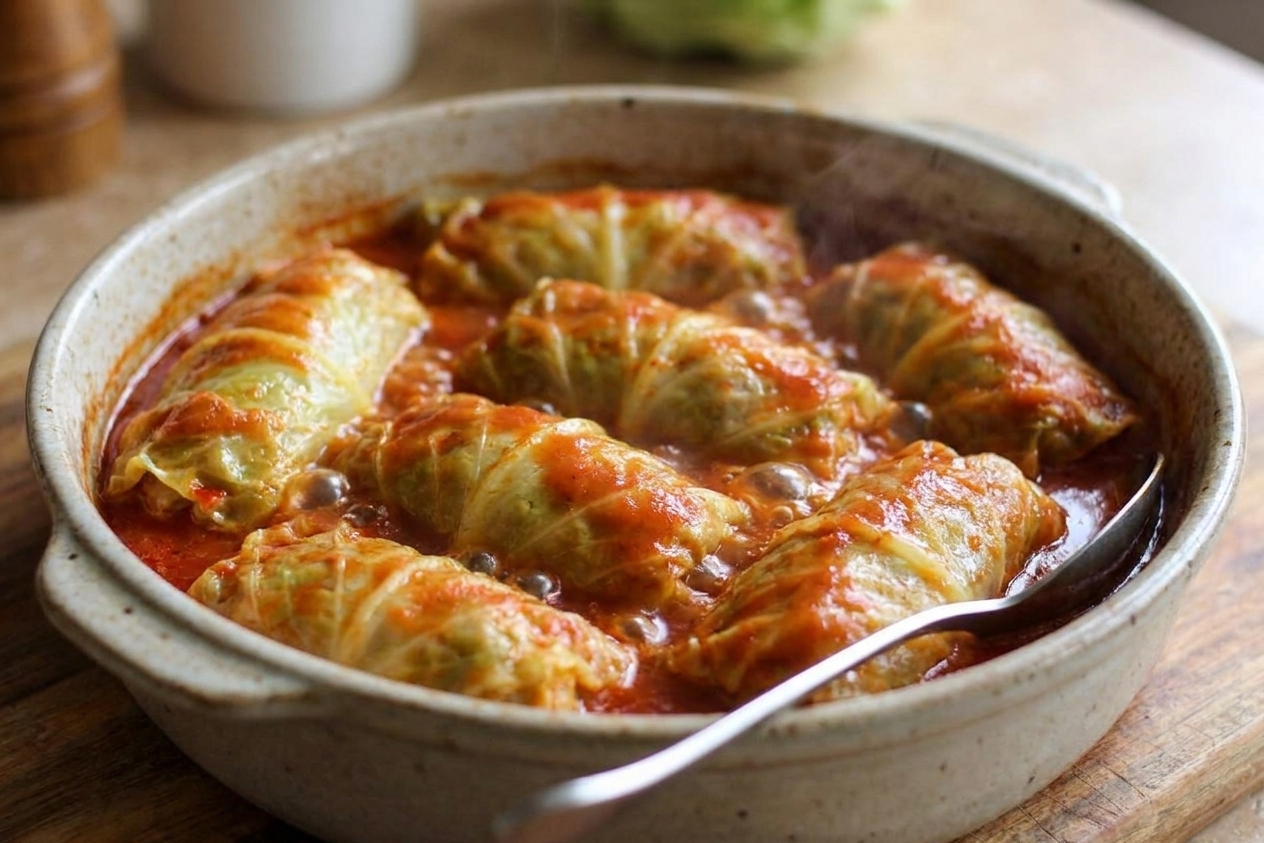

Stuffed cabbage rolls are one of those old-school comfort foods that somehow feel both cozy and impressive. The magic is simple: you soften cabbage leaves until they are flexible, tuck in a savory beef-and-rice filling, then bake everything in tomato sauce until the rolls are tender and the flavors have melted together.

If you have ever avoided making cabbage rolls because the leaves tear, the rolls unravel, or the filling does not cook evenly, this method is designed to make those problems much less likely. You will learn how to get the leaves supple without shredding them, roll them snugly so they hold their shape, and know when they are truly done. The most reliable cue of all is simple: the rice in the center of a middle roll tastes tender, not chalky.
This is also a great make-ahead dinner, and leftovers reheat beautifully. I love it for food waste reduction too: cabbage is cheap, the filling welcomes small amounts of leftover aromatics, and the sauce is a perfect place to use up that half jar of tomato passata hanging out in the fridge.
Note on rice: rice can be surprisingly variable. Different varieties cook at different speeds, and raw versus cooked rice changes the whole equation. This recipe uses uncooked long-grain white rice, which can finish cooking inside the rolls as they bake covered in plenty of sauce. If you swap in a different rice, you may need to adjust timing and liquid.
What to expect
- Flavor: Savory beef, gentle sweetness from cabbage, and a tangy tomato sauce with enough salt and acidity to keep everything lively.
- Texture: Tender leaves that cut easily with a fork, with a filling that is moist and cooked through.
- Skill level: Approachable, but a little hands-on during rolling. Once they are in the oven, it is mostly hands-off.
Why this recipe works
- Blanching plus rib-trimming gives you flexible leaves that roll cleanly without splitting.
- Uncooked rice in the filling cooks directly in the sauce, soaking up flavor while staying tender.
- A covered bake creates a steamy environment so the rice finishes and the cabbage turns silky, not chewy.
- Tight pan packing helps the rolls hold their shape and prevents unraveling.
Ingredient notes
Green cabbage: Classic, sturdy, and easy to separate into large leaves. Look for a heavy head with unblemished outer leaves.
Ground beef: 80 to 85 percent lean is ideal. Too lean can taste dry after baking.
Rice: Long-grain white rice cooks predictably here. Brown rice takes longer than the cabbage can comfortably handle, so save it for a different preparation.
Tomato sauce: Plain tomato sauce keeps the method weeknight-friendly. If you only have crushed tomatoes, blend them briefly or accept a chunkier sauce.
Acid and sweetness: A little brown sugar balances tomatoes, and a small splash of vinegar at the end can brighten everything if your tomatoes taste flat.
Equipment you will need
- Large pot for blanching cabbage
- Tongs
- Chef’s knife and cutting board
- Large mixing bowl
- 9x13-inch baking dish or similar casserole dish
- Aluminum foil or a tight-fitting lid
Pro tips
- Do not skip salting the blanching water: It lightly seasons the leaves, which helps the whole roll taste more balanced.
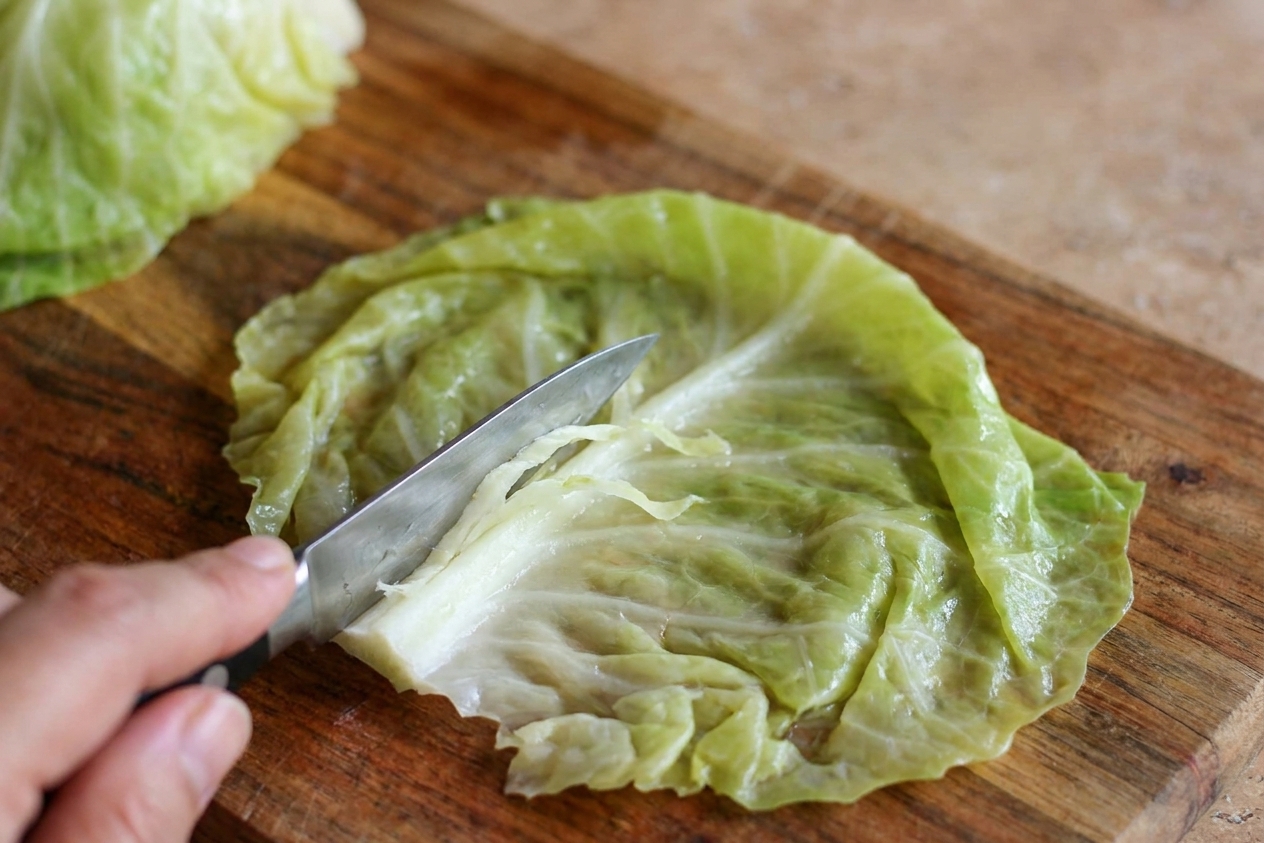
- Shave, do not chop out, the rib: Trimming the thick rib often makes the difference between a leaf that rolls neatly and one that cracks, especially with larger outer leaves.
- Use a cookie scoop for portioning: It keeps roll sizes consistent so they cook evenly.
- Pack rolls snugly: A tight fit helps them hold their shape and prevents unraveling.
- Check one roll for rice doneness: Pull a roll near the center, cut it in half, and taste the rice. If it is still firm, re-cover and bake 10 to 15 minutes more.
Substitutes that work
- Ground meat: Swap half (or all) of the beef for ground pork or turkey. If using turkey, add 1 tablespoon olive oil to the filling for moisture.
- Rice: Use basmati or jasmine. Avoid quick-cooking parboiled rice unless you shorten bake time and monitor closely.
- Tomato sauce: Use passata or a mix of crushed tomatoes and a splash of water.
- Onion and garlic: In a pinch, use 1 to 2 teaspoons onion powder and 1 teaspoon garlic powder.
Variations
- Sweet and sour style: Add 2 tablespoons lemon juice and 2 tablespoons raisins to the sauce for a gentle sweet-tart vibe.
- Smoky: Stir 1 teaspoon smoked paprika into the filling and add a pinch to the sauce.
- Extra herby: Add chopped fresh dill or parsley to the filling just before rolling.
- Spicy: Add red pepper flakes to the sauce, or a spoonful of harissa if you like a deeper heat.
Serving ideas
- Serve with mashed potatoes or buttered egg noodles to catch extra sauce.
- A crisp cucumber salad or simple dressed greens balances the richness.
- Finish with sour cream or plain Greek yogurt and a shower of fresh herbs.
Storage and reheating
- Refrigerate: Store tightly covered for up to 4 days.
- Freeze: Freeze baked rolls in sauce in an airtight container for up to 3 months. Thaw overnight in the fridge for best texture.
- Reheat: Warm covered in a 350°F oven until hot throughout, or microwave gently with extra sauce to prevent drying.
Common mistakes
- Leaves tearing while rolling: They were not blanched long enough, or the rib was not trimmed. Give leaves another minute in hot water and shave the rib.
- Rolls unraveling: Not rolled snugly, or placed seam-side up. Always set seam-side down and pack them closely.
- Crunchy rice: Not enough sauce, pan not covered, or bake time too short. Add a splash of water to the sauce, cover tightly, and bake longer.
- Watery sauce: Uncovered too early. Keep covered for most of the bake, then uncover near the end to reduce.
FAQ
Can I make stuffed cabbage rolls ahead?
Yes. Assemble the rolls, cover, and refrigerate up to 24 hours. Add 5 to 10 minutes to the covered bake since everything starts cold.
Do I have to cook the rice first?
Not for this method. The rice cooks in the sauce while the rolls bake. Measure accurately and keep the dish well-covered so steam stays trapped.
What is the easiest way to separate cabbage leaves?
Core the cabbage, simmer it, and peel leaves off as they loosen. Do not try to pry off raw leaves, they will rip along the ribs.
How do I know when they are done?
The cabbage should be tender when pierced with a knife, and the rice inside the filling should be soft, not chalky. If in doubt, cut one roll in half and taste the rice.
Stuffed Cabbage Rolls
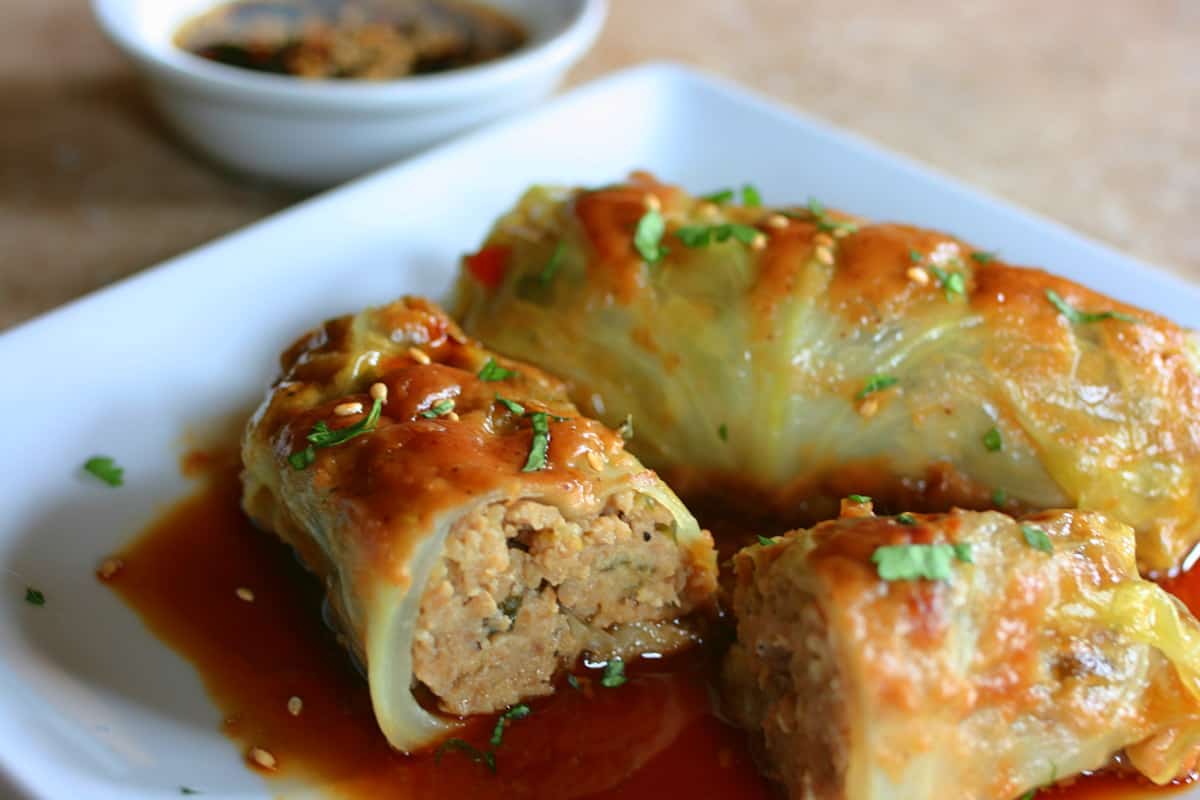
Blanched cabbage leaves wrapped around a beef-and-rice filling, baked in tomato sauce until tender and comforting. A covered bake finishes the rice while keeping the rolls juicy.
- Prep
- 35 minutes
- Cook
- 1 hour 20 minutes
- Total
- 1 hour 55 minutes
- Yield
- 6 servings
Ingredients
- 1 large green cabbage (about 3 to 3 1/2 pounds)
- Kosher salt
- 1 tablespoon olive oil
- 1 medium yellow onion, finely diced
- 3 cloves garlic, minced
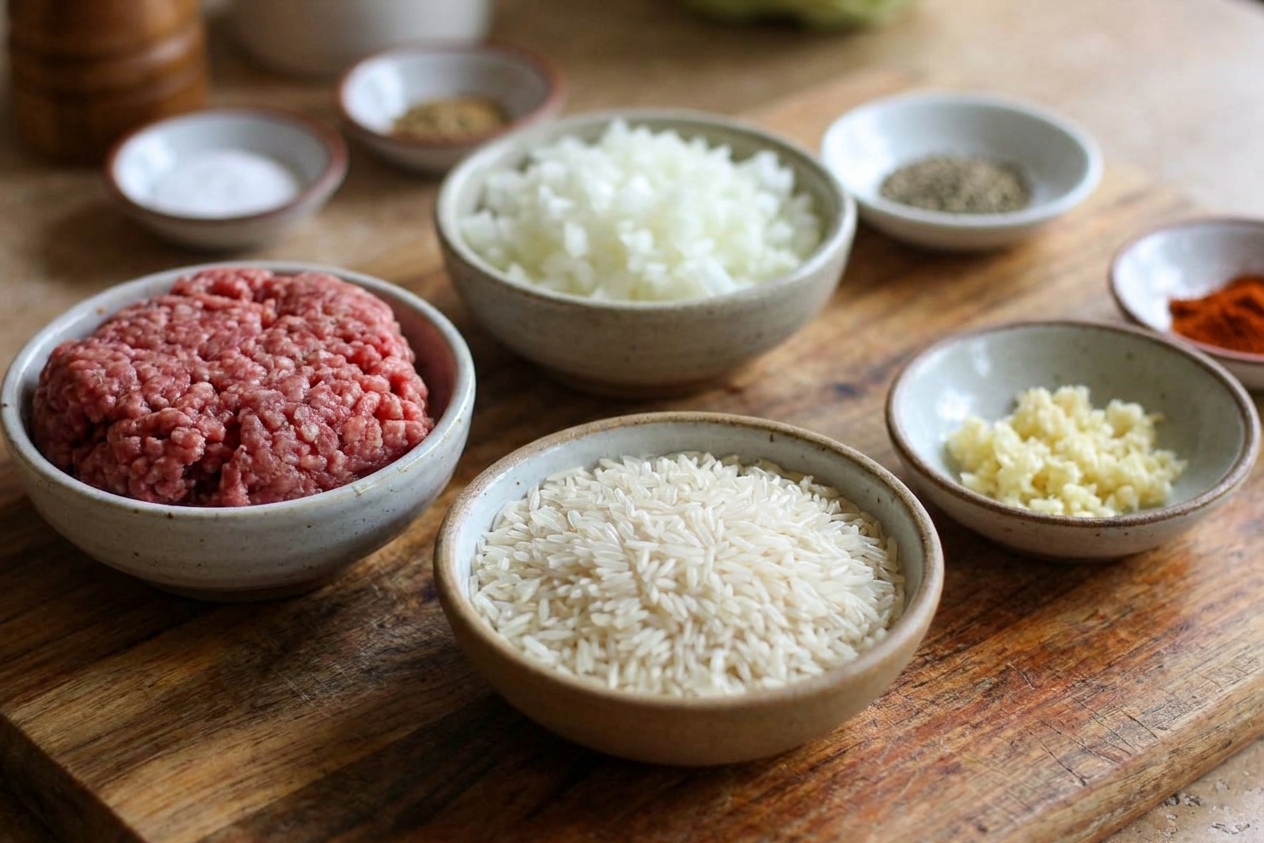
- 1 1/2 pounds ground beef (80 to 85 percent lean)
- 1/2 cup uncooked long-grain white rice, rinsed and well-drained
- 1 large egg
- 2 tablespoons chopped fresh parsley (optional)
- 1 1/2 teaspoons kosher salt, plus more to taste
- 1/2 teaspoon black pepper
- 1 teaspoon sweet paprika
- 1 (28-ounce) can tomato sauce
- 1 (14.5-ounce) can diced tomatoes
- 1 cup low-sodium beef broth (or water)
- 2 tablespoons brown sugar
- 1 tablespoon apple cider vinegar (optional, to finish)
Instructions
- Prep the cabbage. Bring a large pot of water to a gentle simmer and salt it generously. Use a paring knife to cut out the cabbage core in a deep cone shape. Lower the whole cabbage into the simmering water. After 2 to 3 minutes, use tongs to peel off any leaves that loosen easily. Continue simmering and removing leaves as they soften, 8 to 12 minutes total, until you have 12 to 14 large leaves. Set the leaves aside to cool.
- Trim the leaves. Lay each leaf flat. Use a knife to shave down the thick center rib so it is closer to the thickness of the rest of the leaf. Do not cut the rib out completely or the leaf may split.
- Make the filling. Heat the olive oil in a skillet over medium heat. Cook the onion with a pinch of salt until softened, 5 to 7 minutes. Add the garlic and cook 30 seconds. Scrape into a large bowl and cool 5 minutes. Add the ground beef, uncooked rice, egg, parsley (if using), 1 1/2 teaspoons kosher salt, pepper, and paprika. Mix gently until combined.
- Mix the sauce. In a bowl, stir together the tomato sauce, diced tomatoes, beef broth, and brown sugar.
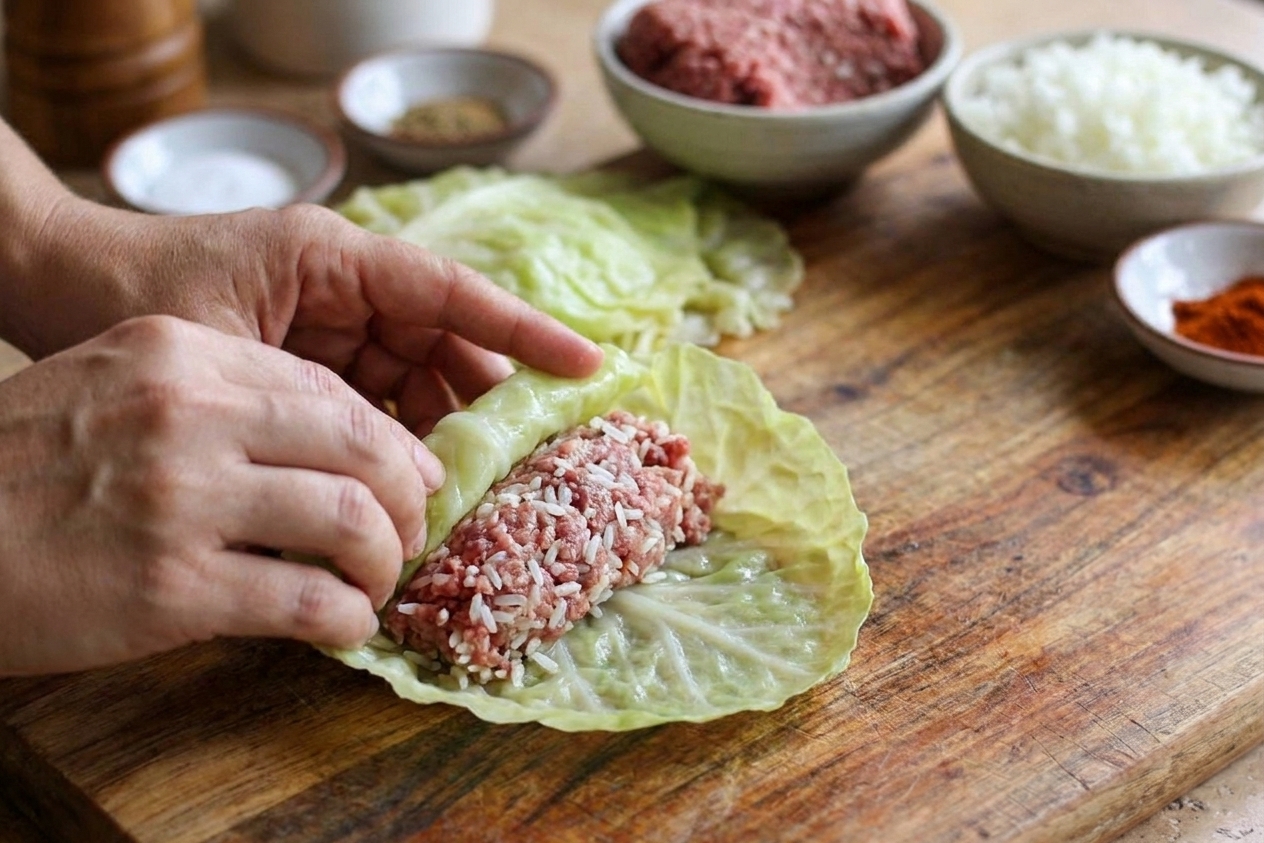
- Assemble the rolls. Heat the oven to 350°F. Spread 1 cup of sauce in the bottom of a 9x13-inch baking dish. Working with one leaf at a time, place about 1/3 cup filling near the base of the leaf. Fold the bottom up over the filling, fold in the sides, then roll up snugly. Place seam-side down in the dish. Repeat with remaining leaves, packing the rolls tightly.
- Add sauce and bake covered. Pour the remaining sauce over and around the rolls. Cover the dish tightly with foil (or a lid). Bake for 60 minutes.
- Finish uncovered. Uncover and bake 15 to 25 minutes more, until the sauce is bubbling, the cabbage is tender when pierced with a knife, and the rice in the center of a roll is fully cooked. If the sauce looks tight, splash in a little water or broth and re-cover briefly.
- Rest and brighten. Let rest 10 minutes. Taste the sauce and add more salt if needed. Stir in the apple cider vinegar a little at a time (optional) to brighten, then serve.
Notes
Leaf count: If your cabbage leaves are smaller, you may get 16 to 18 rolls. Keep the rolls similar in size so they cook evenly.
Extra leaves: Chop any small or torn leaves and scatter them in the bottom of the baking dish under the rolls. It helps prevent sticking and reduces waste.
Doneness check: The most reliable test is tasting the rice in a center roll. If it is still firm, cover and bake 10 to 15 minutes more.
Nutrition