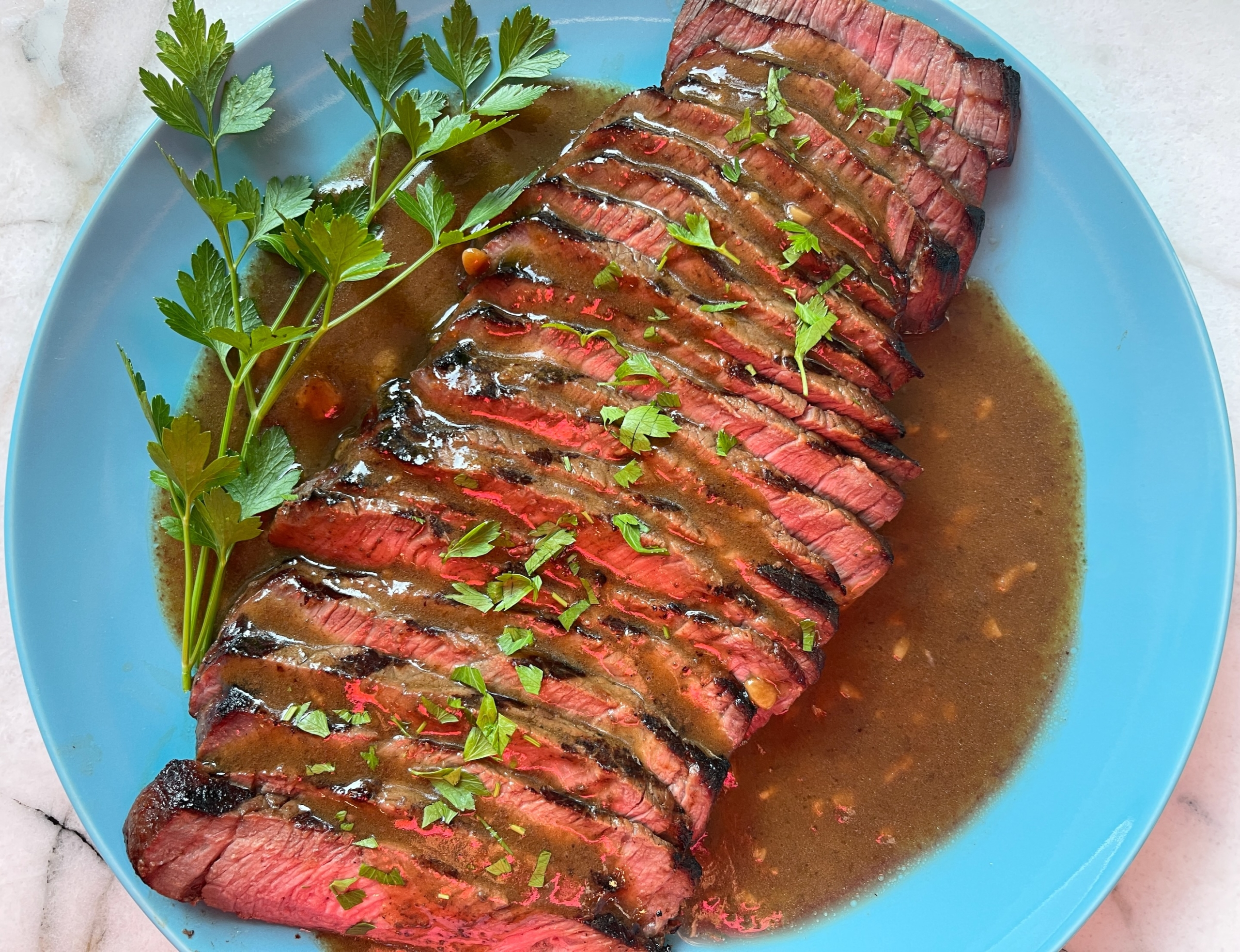
Why London broil gets a bad rap
London broil can be confusing because it is used two ways. Often it refers to a method: marinate a lean, tougher steak, cook it hot and fast, then slice very thin against the grain. But stores also use “London broil” as a label, usually for top round and sometimes for flank.
When any one of those steps gets skipped, you end up with chewy slices that feel like a jaw workout.
The good news is that this is exactly the kind of “restaurant trick” you can absolutely nail at home with a few reliable cues. My goal is weeknight tender, not complicated.
Best cut for London broil
Most grocery stores label one of these as “London broil”:
- Top round: Very lean, classic London broil choice. Needs marinade and careful doneness.
- Flank steak: More beefy flavor, visible grain that is easy to slice against. Great option.
- Top sirloin: A bit more forgiving and often naturally more tender.
If you get to choose, I like flank for flavor and slicing ease, or top sirloin when I want the most forgiving result.
Thickness tip: 1 to 1 1/4 inches is the sweet spot for hot-and-fast cooking. If yours is thicker, plan on slightly longer cook time and start checking temperature early.
The marinade that actually helps
For tougher, lean steaks, I want a marinade that does four jobs: seasons deeply, balances sweet and acid, adds fat to carry flavor, and includes an aromatic punch. You do not need a blender. A jar with a lid is perfect.
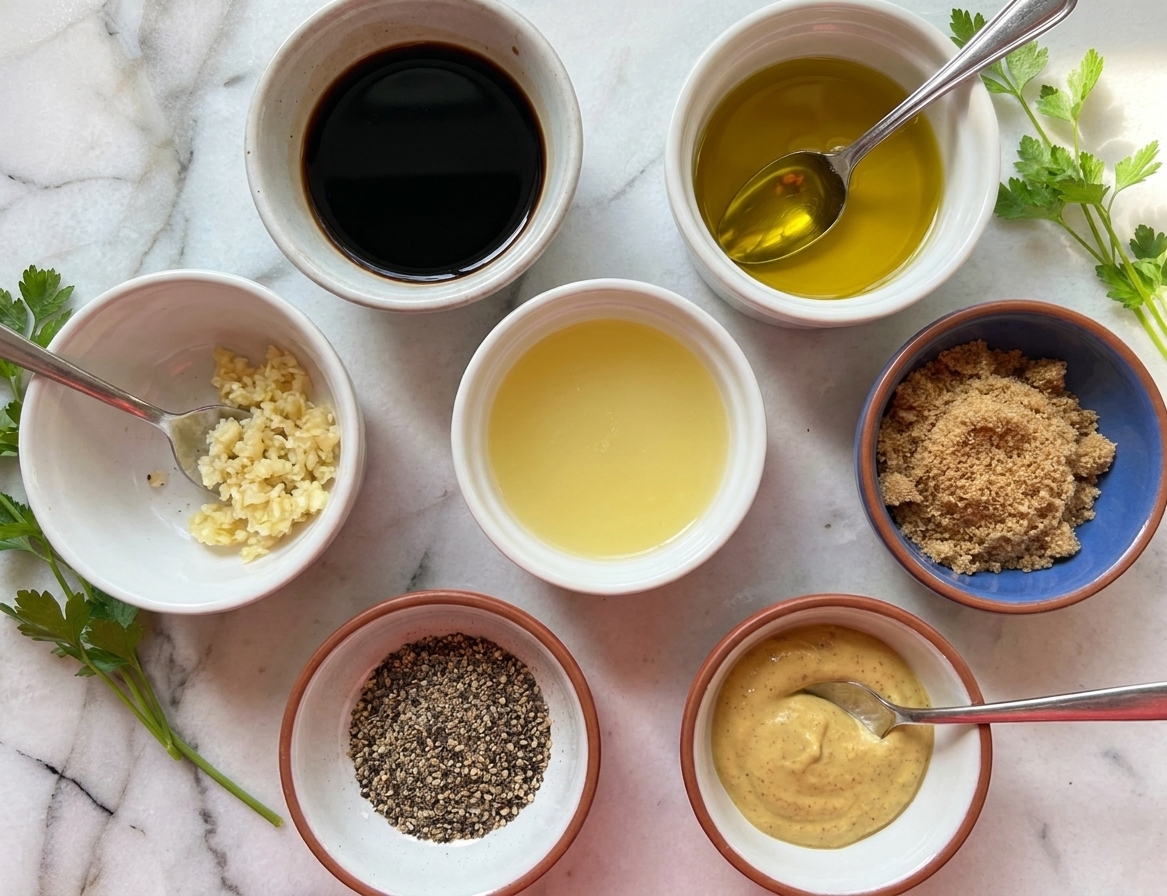
Ingredients
- 1/3 cup low-sodium soy sauce
- 3 tablespoons olive oil
- 2 tablespoons lemon juice or red wine vinegar
- 1 tablespoon Worcestershire sauce
- 1 tablespoon brown sugar or honey
- 1 tablespoon Dijon mustard
- 3 garlic cloves, finely grated or minced
- 1 teaspoon black pepper
- 1/2 teaspoon smoked paprika (optional, but great)
- 1 London broil steak, 1 1/2 to 2 pounds
How long to marinate
Minimum: 2 hours (you will still get great flavor).
Best: 8 to 12 hours (my sweet spot for both flavor and texture).
Max: 24 hours (past that, the texture can turn oddly soft on the surface).
Food-waste note: If your steak is packaged with an absorbent pad, remove it before marinating. It sounds obvious, but it is an easy one to miss when you are moving fast.
Step-by-step: tender London broil
- Mix the marinade. In a jar or bowl, whisk soy sauce, olive oil, lemon juice, Worcestershire, brown sugar, Dijon, garlic, pepper, and paprika if using.
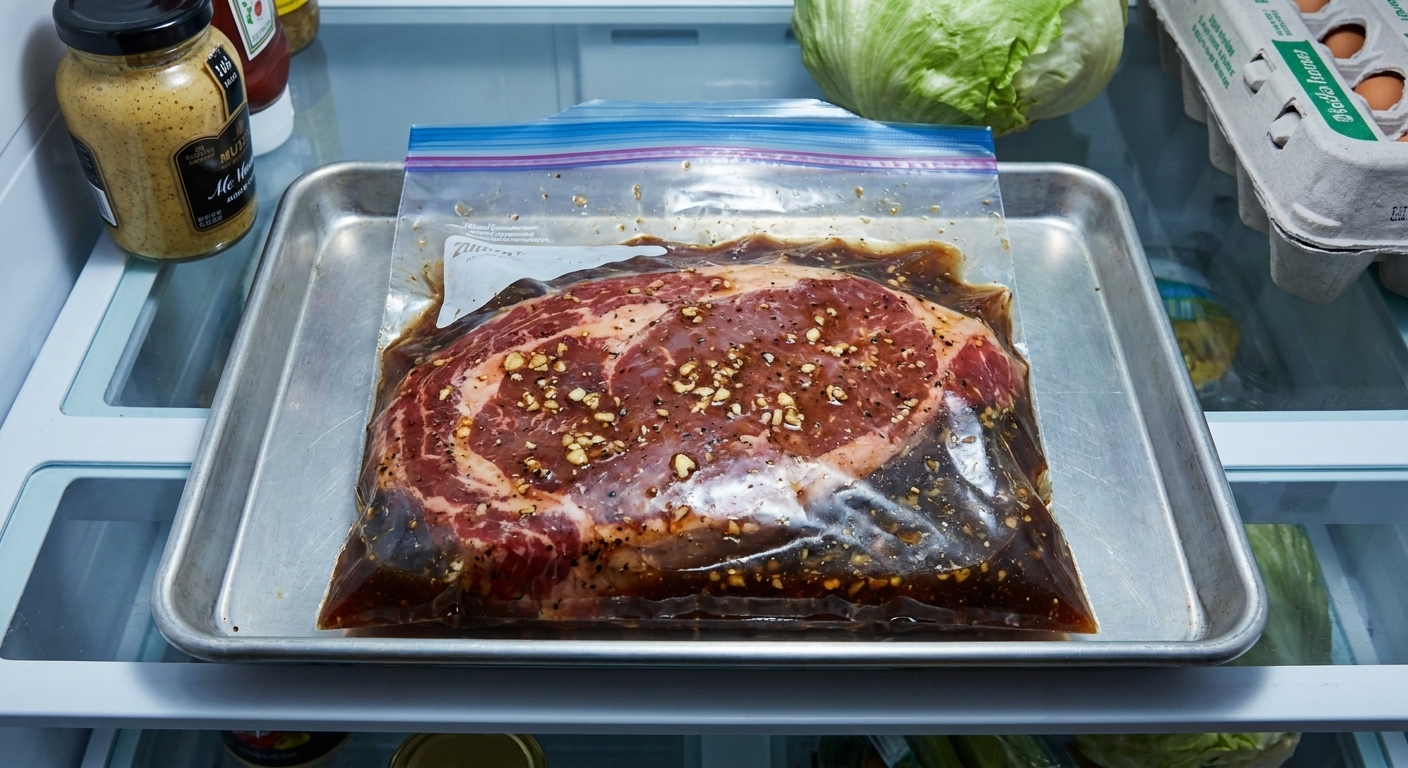
- Marinate the steak. Place steak in a zip-top bag or shallow dish and pour in the marinade. Press out air if using a bag. Refrigerate at least 2 hours and up to 24 hours, flipping once halfway through if you can.
- Take the chill off. Take the steak out of the fridge 30 to 45 minutes before cooking for more even results. For food safety, do not leave it out longer than 45 minutes. Pat the surface lightly with paper towels so you get better browning.
- Choose your method: broil or grill. Both work. Broiling is great when it is raining in Portland, which is often.
Option A: Broil
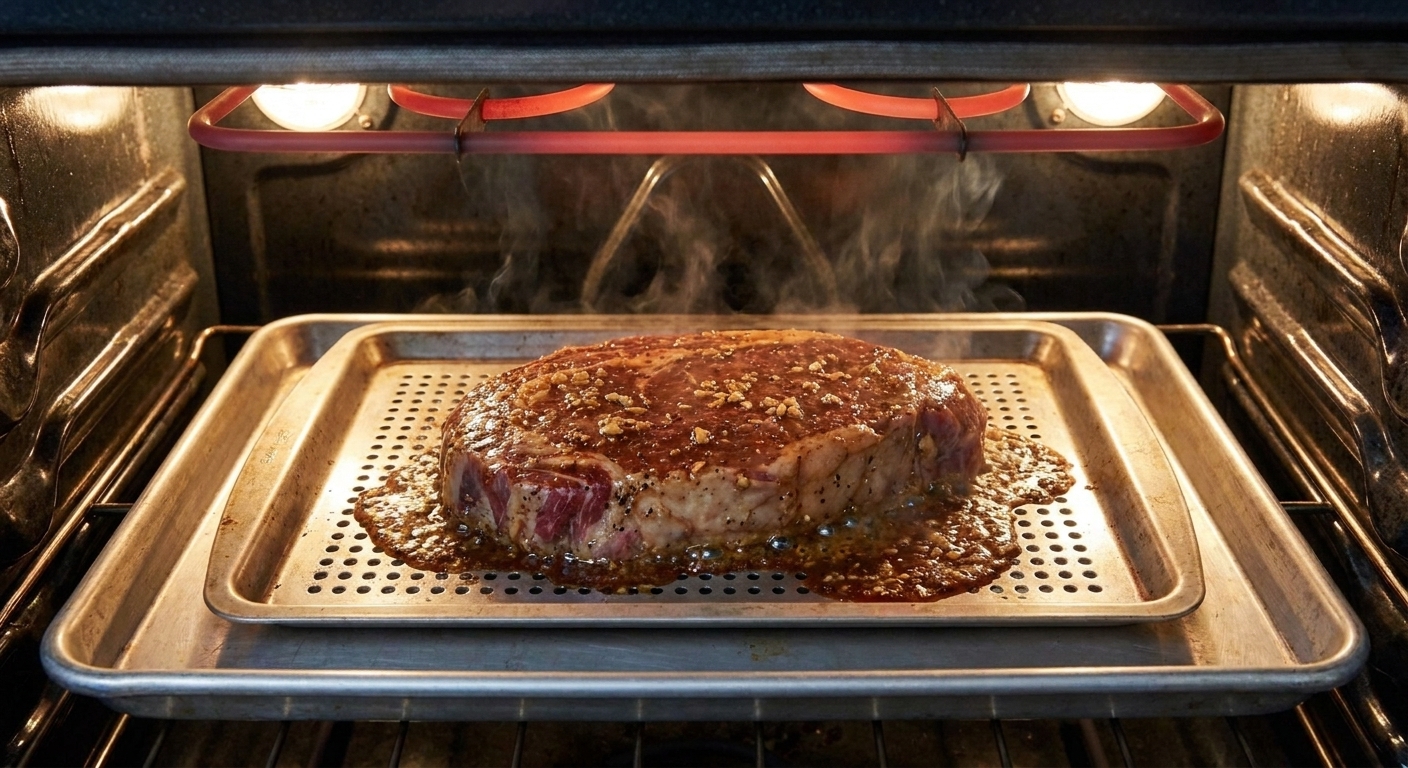
1) Set an oven rack about 4 to 6 inches below the broiler. Preheat broiler on high for 5 minutes.
2) Place steak on a broiler pan or a wire rack set over a foil-lined sheet pan.
3) Broil 5 to 7 minutes on the first side, then flip and broil 4 to 6 minutes more, depending on thickness.
4) Pull the steak when it is about 5°F below your target temperature because carryover heat will finish the job. Carryover varies with thickness, so start checking a little early.
Option B: Grill
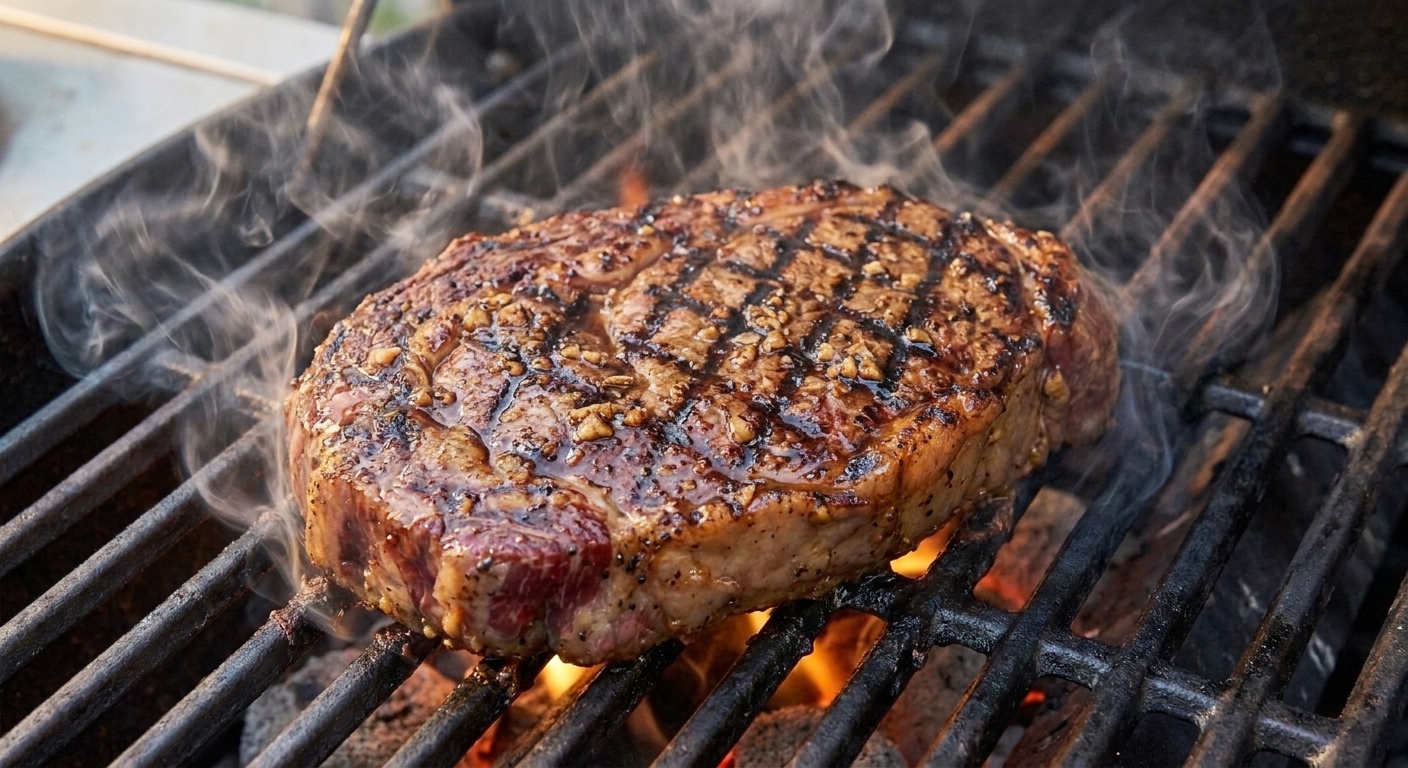
1) Preheat a gas grill to high (around 450°F to 500°F). For charcoal, aim for a very hot two-zone fire.
2) Grill 4 to 6 minutes per side for medium-rare, adjusting for thickness.
3) Move to the cooler side if flare-ups get aggressive, but keep the cook time fairly quick.
Target temperatures
A thermometer is your best tenderness insurance policy with lean cuts. The temperatures below are final temperatures. Pull a bit early to account for carryover.
- Rare: 120°F to 125°F (pull at 115°F to 120°F)
- Medium-rare: 130°F to 135°F (pull at 125°F to 130°F)
- Medium: 140°F to 145°F (pull at 135°F to 140°F)
For top round, I strongly recommend medium-rare to medium. Past that, it dries out fast.
Rest, then slice on purpose
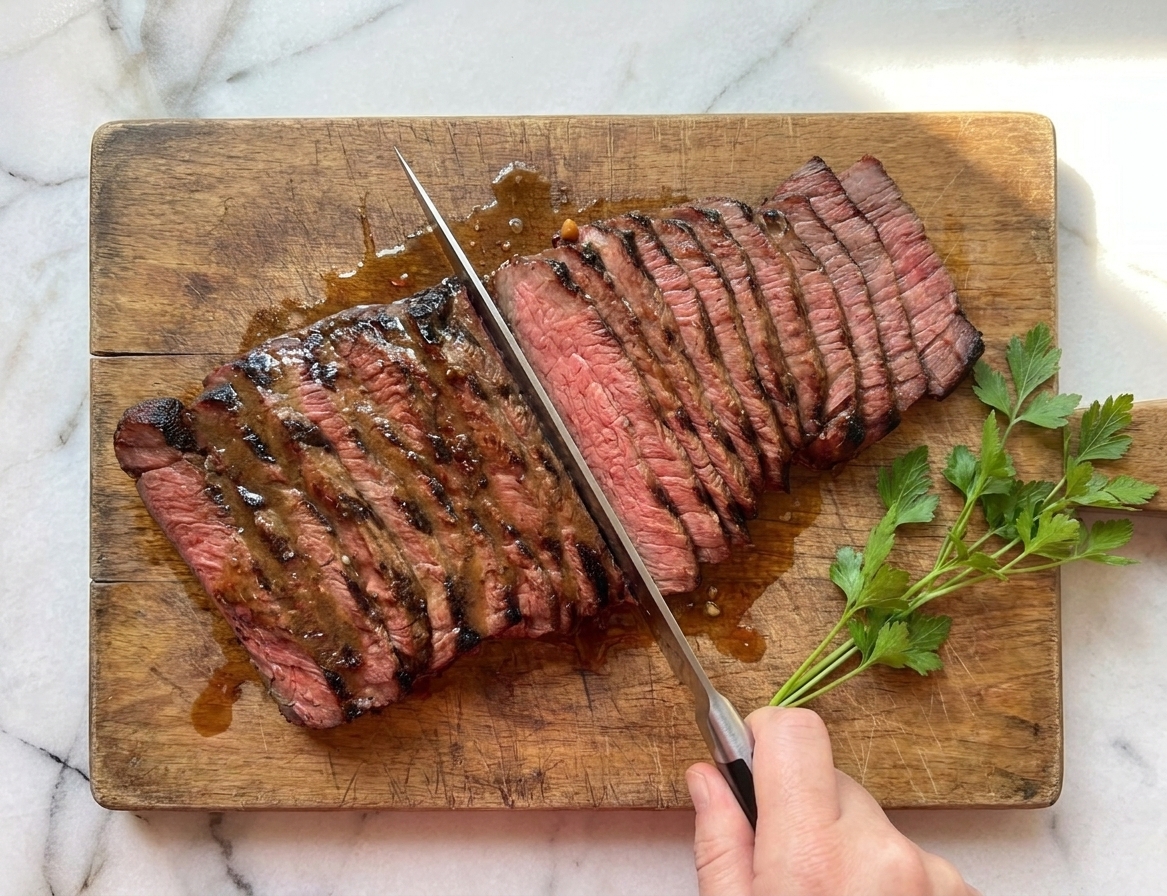
Rest the steak on a cutting board for 10 minutes. Then find the direction of the muscle fibers (the grain) and slice across it at a slight diagonal. Aim for 1/8-inch slices.
Slicing tip: On flank steak, the grain is obvious. On top round, the grain can shift, so pay attention as you go and rotate the steak as needed to keep cutting across the lines.
Thin slices are not just pretty. They are what makes each bite feel tender.
Quick pan sauce (optional)
If you want a glossy, steakhouse-style finish, do this while the steak rests:
- Pour the used marinade into a small saucepan.
- Bring it to a rolling boil for 1 to 3 minutes, then simmer 2 to 3 minutes.
- Whisk in 1 tablespoon butter at the end for a silky sauce, then serve right away.
Safety note: Only do this if you boil the marinade since it touched raw meat. Otherwise, discard it.
What to serve with it
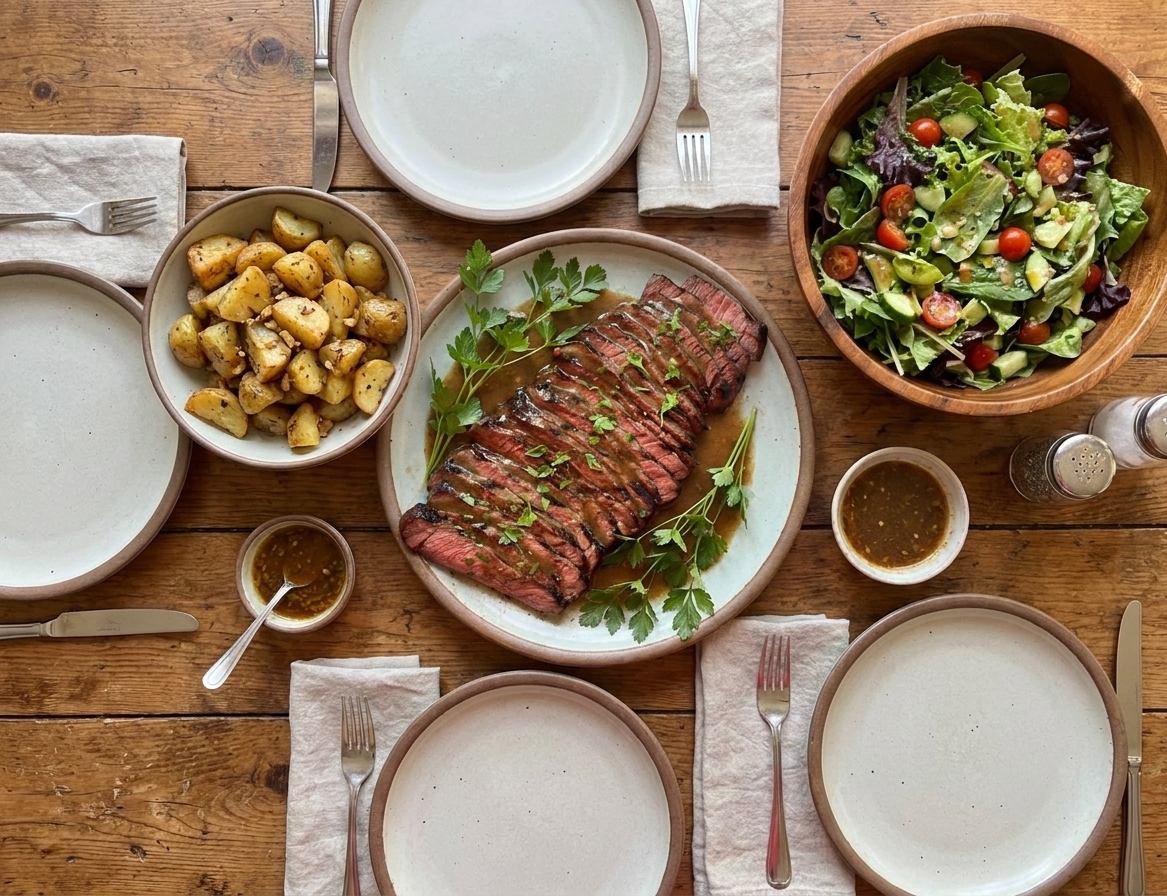
I like sides that are either crisp and acidic (to cut through the richness) or starchy (to soak up juices). A few favorites:
- Roasted potatoes or crispy smashed potatoes
- Garlicky green beans or a simple arugula salad with lemon
- Rice pilaf or buttered egg noodles
- Charred broccoli with a squeeze of lemon
Storage and leftovers
London broil leftovers can be fantastic if you treat them gently.
- Refrigerate: Store sliced steak in an airtight container up to 4 days.
- Freeze: Freeze tightly wrapped slices up to 2 months. Thaw overnight in the fridge.
- Reheat: Warm slices in a covered skillet with a splash of broth or water over low heat, just until heated through. High heat will toughen it.
Leftover plan I actually use: Turn it into steak salad. Cold sliced London broil + crunchy greens + pickled onions + a sharp vinaigrette is the “I cannot believe this is leftovers” dinner.
Troubleshooting
- You sliced with the grain. This is the number one culprit. Rotate the board and cut across the lines.
- It cooked too long. Lean cuts go from tender to dry quickly. Use a thermometer and pull early.
- It did not rest. Resting keeps juices inside the meat instead of on your cutting board.
- Marinade was too short. Two hours helps. Overnight is better for flavor.
- Steak was too thick for the method. A very thick top round is harder to broil evenly. Grill it, or use a two-zone setup and finish on the cooler side.
FAQ
Can I cook London broil in a skillet?
Yes, if it fits. Use a very hot cast iron pan with a little neutral oil. Sear 4 to 6 minutes per side, then finish in a 400°F oven if needed to hit your target internal temperature.
Should I poke holes in the steak to help the marinade soak in?
I do not. It can make you lose juices during cooking. Thin slicing against the grain does far more for tenderness than stabbing the meat.
Is London broil supposed to be rare?
It is best medium-rare to medium. Rare can taste a little chewy on top round, and well-done tends to be dry.
Can I reuse leftover marinade?
Only if you boil it as described above. Otherwise, discard it.
Quick timeline
Night before (5 minutes): Mix marinade, add steak, refrigerate.
Cook day (15 minutes active): Take steak out 30 to 45 minutes, broil or grill about 10 to 12 minutes total, rest 10 minutes, slice thin.
That is it. Big flavor, minimal fuss, and a cut of beef that suddenly feels like a smart buy instead of a gamble.