Zesty shrimp is my weeknight emergency plan: a hot pan, a quick sauce with real punch, and dinner that tastes like you actually had a plan. The key is balance. You want bold citrus (acid), enough salt to make the shrimp taste like itself, and a little heat that lingers but does not bully the whole dish.
This version leans lemon-lime, garlic, and a touch of chili, with a glossy finish of butter or olive oil. It is fast, forgiving, and built for leftovers, which means fewer sad half-used citrus fruits rolling around your crisper.
Why this recipe works
“Zesty” is really just code for bright + salty + aromatic. This recipe works because it balances:
- Citrus zest + juice: Zest brings floral, perfumey citrus oils; juice brings the sharp tang.
- Garlic (or shallot): Cooked briefly so it smells sweet, not burnt.
- Heat: Red pepper flakes, Calabrian chili, or a pinch of cayenne.
- Salt: Enough to wake up the shrimp. Under-salted shrimp tastes flat no matter how much lemon you squeeze.
- A finish: Butter for gloss, or olive oil for a lighter vibe.
Timing matters: citrus juice goes in at the end so the shrimp stays firm and juicy, not soft and mealy from sitting in acid.
Ingredient notes
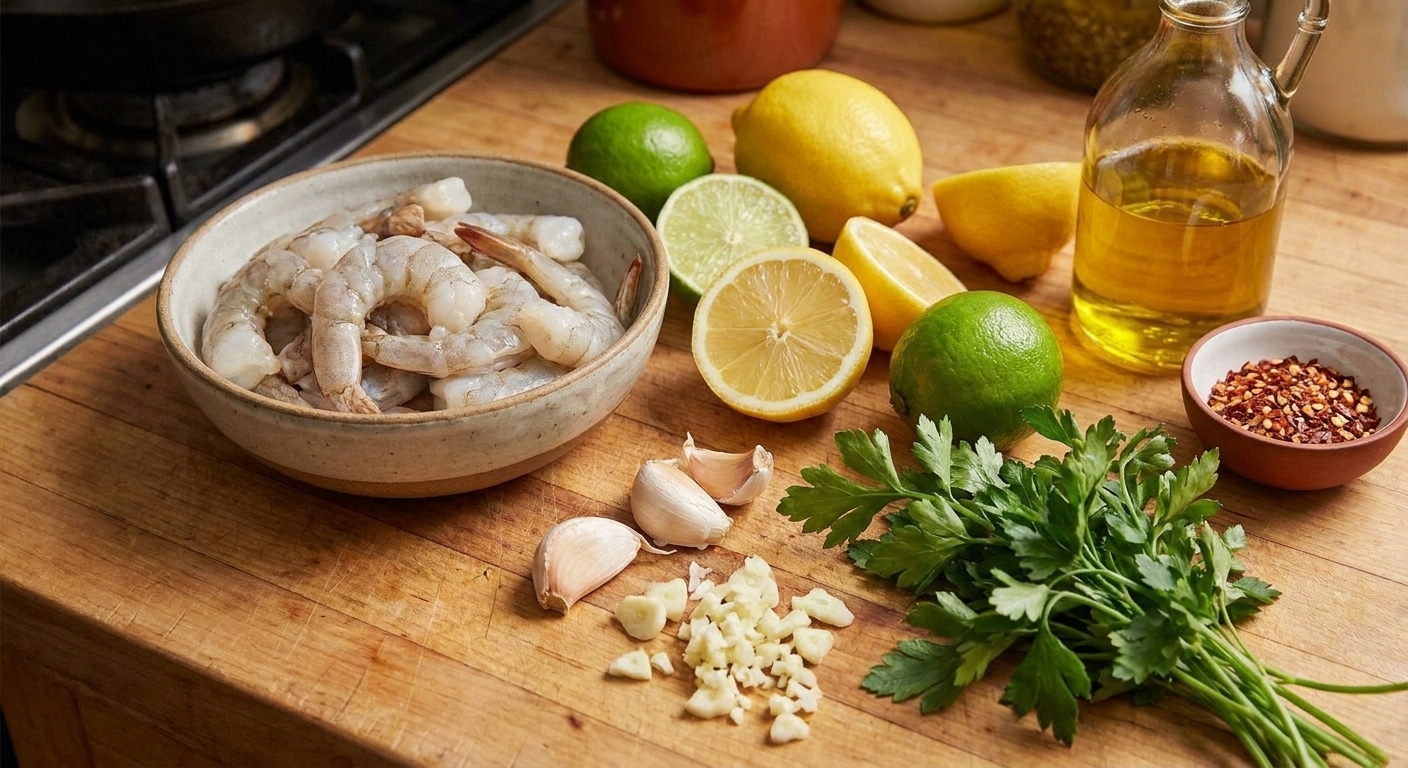
- Shrimp: Use raw shrimp, peeled and deveined (tail on or off). For the easiest weeknight sear, large shrimp (16/20 or 21/25 count) gives you a better sear window.
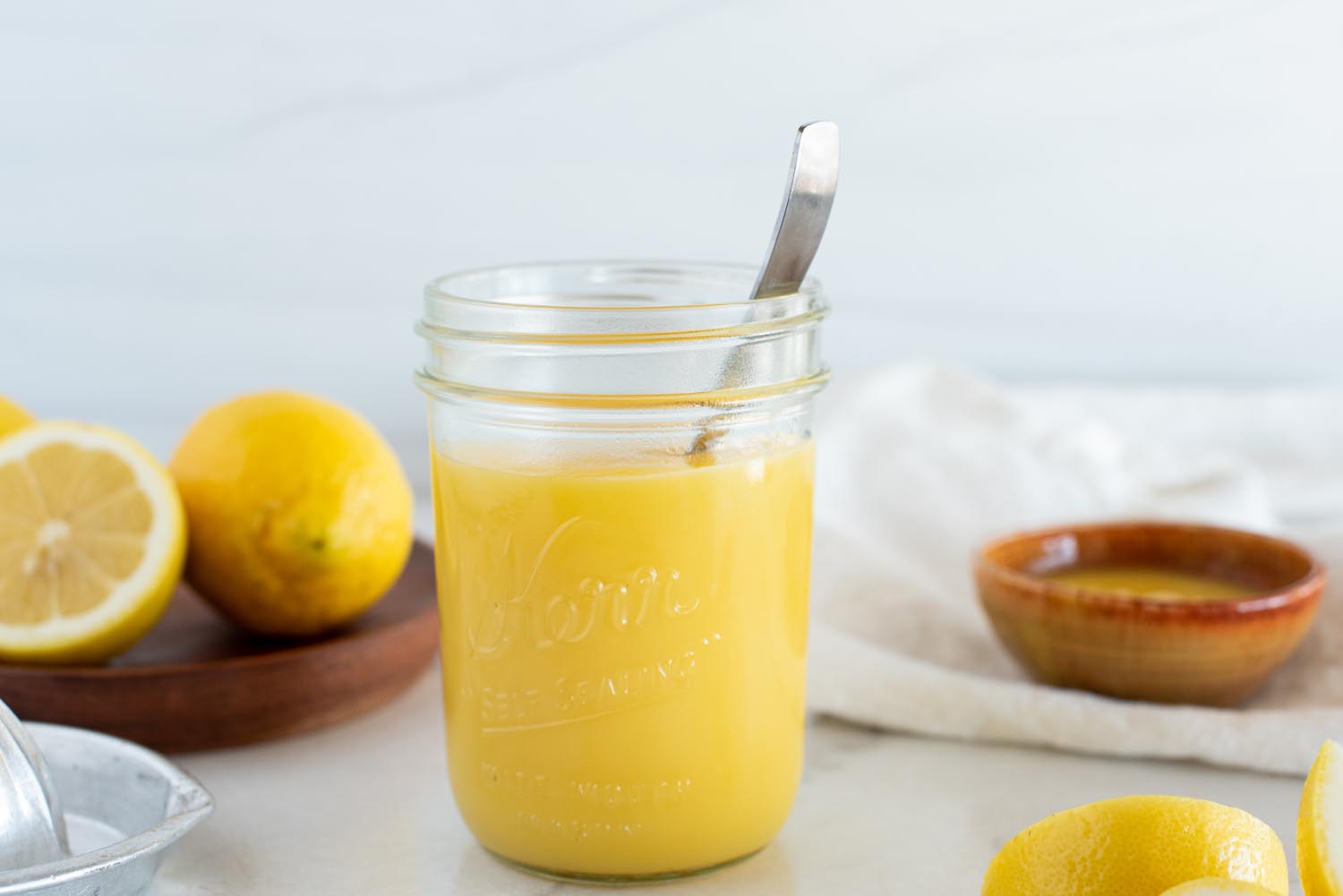
- Citrus: Lemon-lime is the base. Zest lightly, only the colored part of the peel (avoid the bitter pith). If you only have one citrus, use it. If you only have bottled lemon juice, use it; add a little extra zest if you can because that is the “fresh” part.
- Garlic: Minced garlic should be bloomed briefly, not browned hard.
- Butter or olive oil: Butter gives gloss and richness; olive oil is a lighter vibe. Most of the richness in this dish comes from the butter or olive oil.
- Chili: Red pepper flakes are the default; adjust to taste.
- Salt: The recipe is tested with kosher salt. If using fine salt, use a little less.
- Herbs: Parsley or cilantro both work, added at the end for freshness.
Optional add-ins
- For balance (sweetness): Honey or brown sugar if your citrus is super tart.
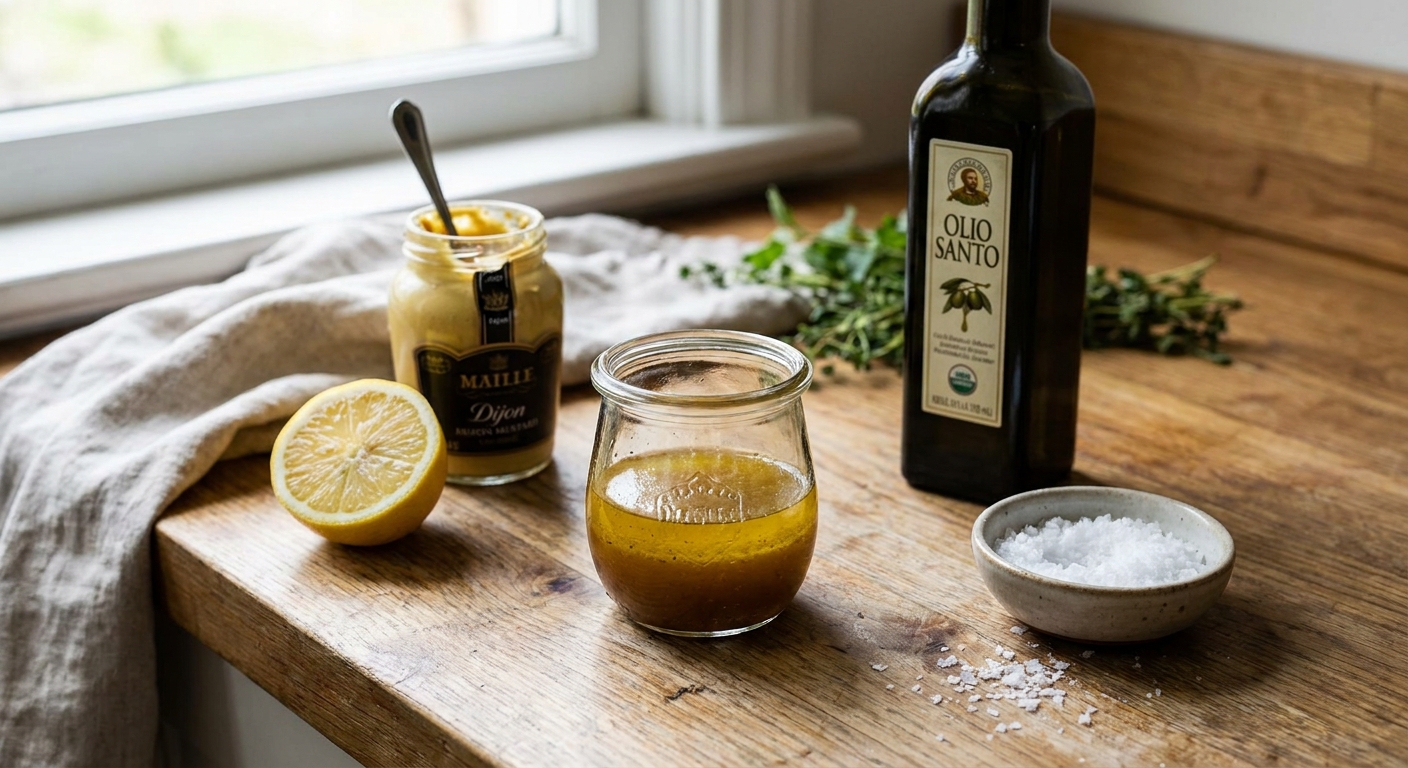
- For extra tang (helps the sauce cling): Dijon mustard for a subtle, restaurant-y edge.
- For briny pop: Capers.
- For a looser sauce: A splash of white wine or broth.
Frozen shrimp tips
Thaw fast by putting shrimp in a bowl of cold water for 10 to 20 minutes (sometimes 25 if they are large or frozen in a block), stirring once or twice, until pliable. Drain and pat very dry. Dry shrimp sears; wet shrimp steams.
Equipment you will need
- Large skillet: A large pan helps you avoid crowding so the shrimp sears instead of steaming.
- Small bowl: For mixing the quick citrus-chili sauce.
- Paper towels: For patting shrimp very dry.
- Zester or microplane: For citrus zest (zest lightly, only the colored peel).
- Optional instant-read thermometer: Useful if you like a temperature target (pull shrimp around 120 to 130°F / 49 to 54°C in the thickest part).
- Optional paring knife: For quick deveining if needed.
Pro tips
- Do not start with wet shrimp. Patting dry is the difference between sear and steam.
- Use a large pan. Crowding cools the skillet and overcooks shrimp before it browns.
- Cook in two batches if needed. It is worth the extra 2 minutes.
- Add garlic after searing. Garlic burns fast at high heat. Bloom it briefly in fat to keep it sweet.
- Finish with zest, not just juice. Juice adds acidity; zest adds “zesty.”
- Watch the shape. Shrimp is done when it curls into a loose C; if it is a tight O, it is overcooked.
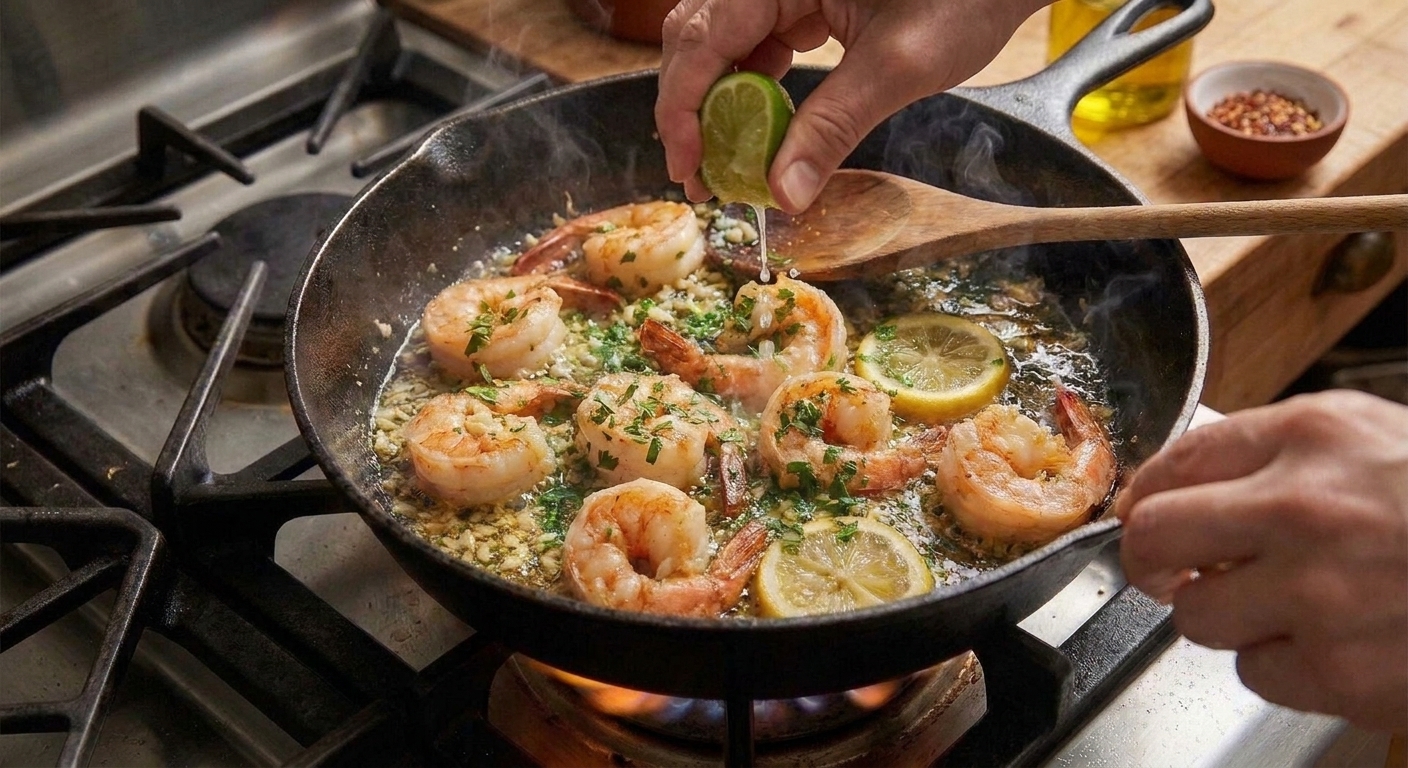
- Be careful adding citrus to a hot pan. Citrus can sputter when it hits the skillet, so pour and stand back for a second.
Substitutes that work
- One citrus instead of two: If you only have one citrus, use it (for example, use 2 lemons instead of lemon + lime).
- Bottled lemon juice: Use it if needed; add a little extra zest if you can.
- Butter vs. olive oil: Butter for gloss and richness, olive oil for a lighter finish.
- Herbs: Parsley or cilantro both work.
- Heat options: Red pepper flakes, Calabrian chili, or a pinch of cayenne.
- Loosen the sauce: Add a splash of white wine or broth.
- Briny boost: Add capers for a pop.
Variations
Once you have the base method, you can pivot with what is already in your fridge.
Zesty shrimp tacos
Serve in warm tortillas with shredded cabbage, avocado, and a dollop of yogurt or sour cream. Add extra lime at the end.
Zesty shrimp pasta
Toss shrimp and sauce with hot pasta and a splash of pasta water. Finish with parsley and a little Parmesan if you like, even though it is not traditional. It is delicious.
Zesty shrimp salad
Cool the shrimp slightly, then pile onto greens with cucumber and tomatoes. Use the pan sauce as your dressing. Add extra olive oil if you want more volume.
Spicy garlic-lime shrimp
Double the red pepper flakes and add a pinch of smoked paprika. Finish with cilantro.
Creamy zesty shrimp
After adding citrus, stir in 2 to 3 tablespoons cream or coconut milk and warm gently. Do not boil hard or the sauce can split. Coconut milk can look a little separated with acid too, but it still tastes great.
Serving ideas
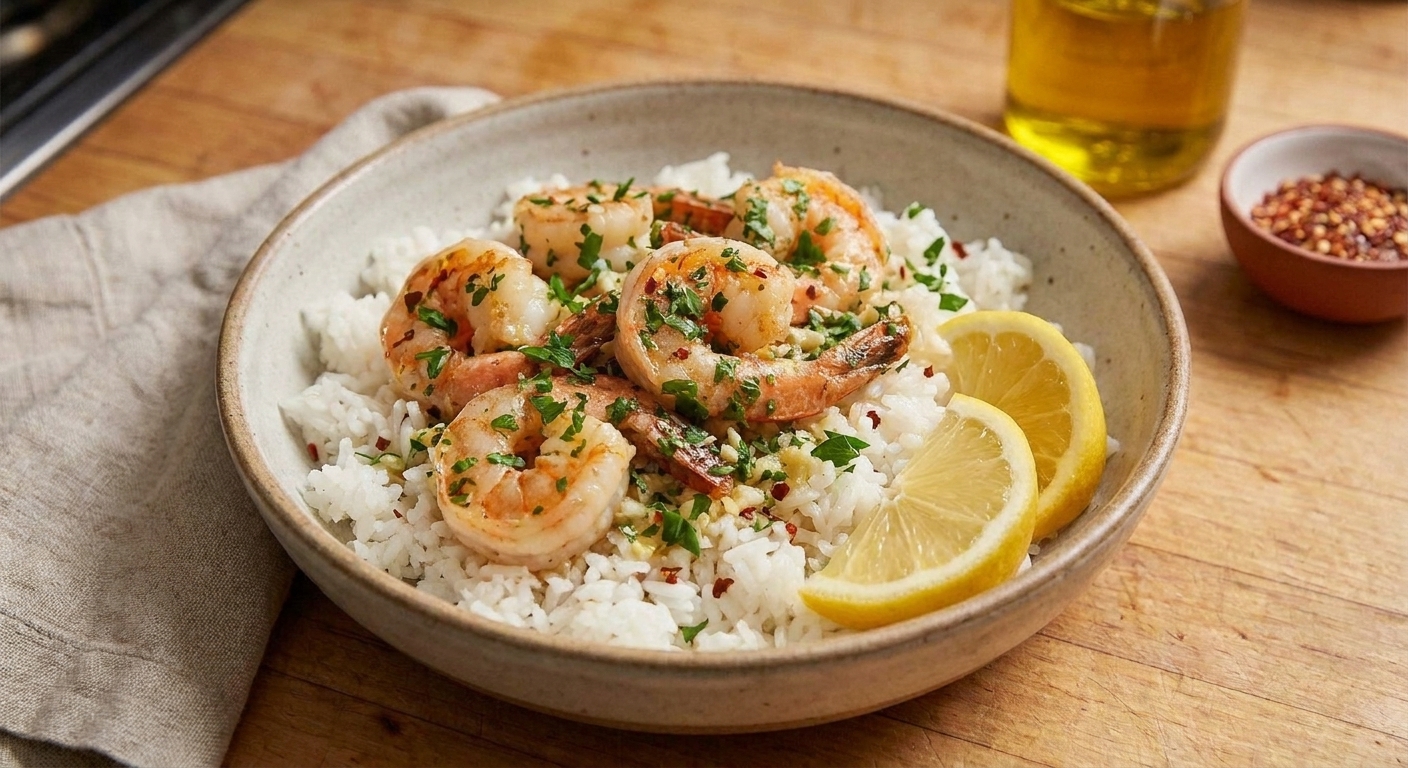
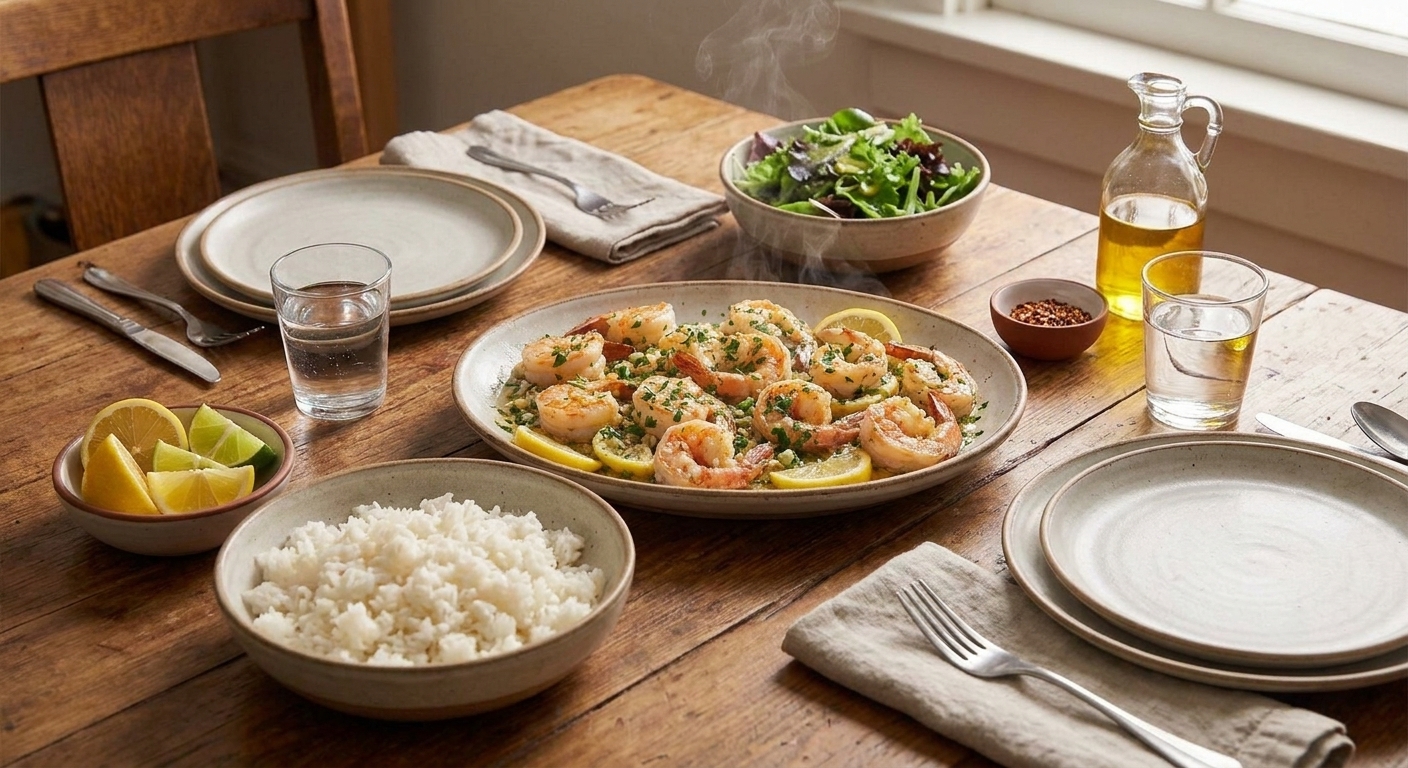
Spoon the shrimp and all that sauce over rice, noodles, roasted potatoes, or a crisp salad. Do not waste the pan sauce. That is the whole point.
Quick pairings
If you want an effortless full plate, pick one carb and one vegetable:
- Carbs: jasmine rice, couscous, quinoa, crusty bread, or tortillas
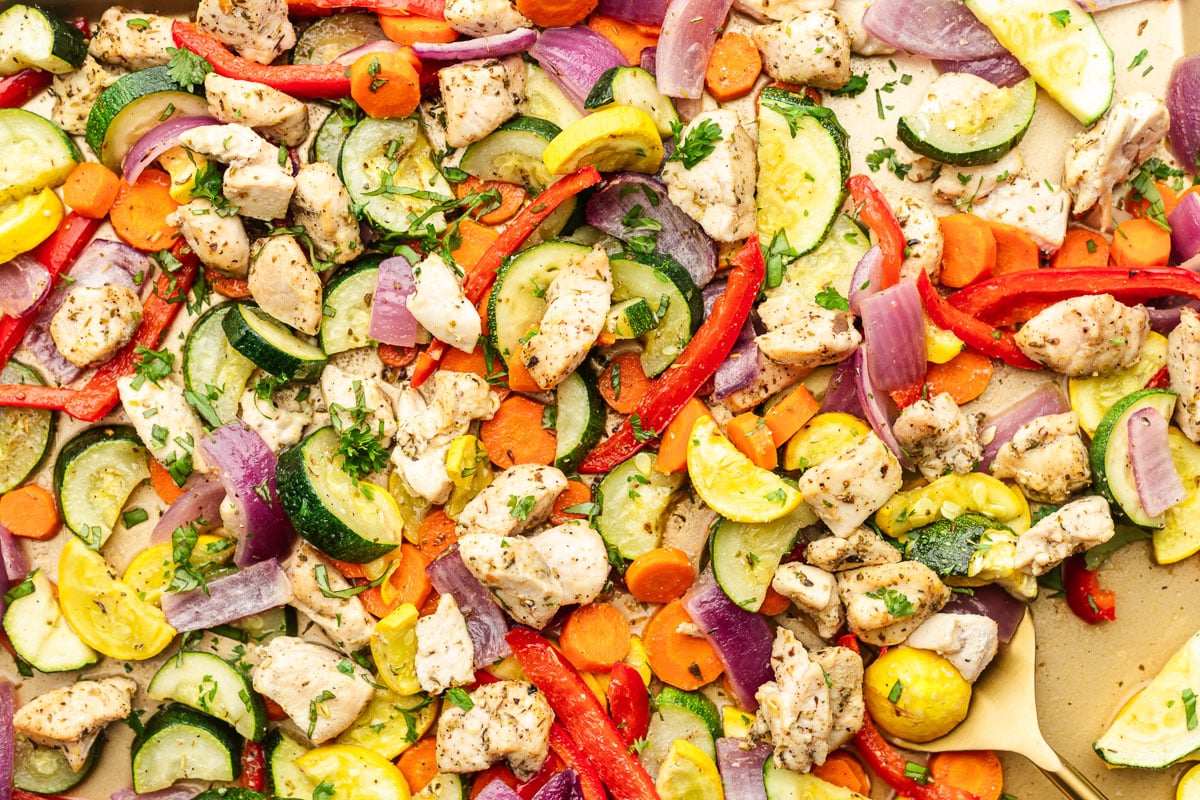
- Veg: blistered green beans, a simple cucumber salad, sautéed spinach, or roasted broccoli
Storage and reheating
Shrimp is best right after cooking, but leftovers can still be great if you treat them gently.
Storage
- Fridge: Best within 2 days for texture. For food safety, it is commonly considered okay up to 3 to 4 days if cooled quickly and stored cold.
- Freezer: You can freeze cooked shrimp in citrus sauce, but texture softens. Freeze up to 1 month.
Reheating without overcooking
- Stovetop: Add a splash of water or broth, warm on low just until heated.
- Microwave: 50 percent power in short bursts, stirring between.
Leftover ideas
- Chop and fold into scrambled eggs with herbs.
- Stuff into a toasted pita with cucumber and yogurt.
- Turn into a rice bowl with leftover veggies and a fried egg.
Common mistakes
- Starting with wet shrimp: Wet shrimp steams instead of searing. Pat very dry.
- Crowding the pan: Crowding cools the skillet and leads to overcooked shrimp before browning. Use a large pan or cook in two batches.
- Marinating shrimp in citrus juice ahead of time: Acid starts “cooking” seafood, and shrimp can turn soft and mealy fast. Add the juice at the end on purpose.
- Burning the garlic: Garlic burns fast at high heat; add it after searing and keep it brief (just until fragrant).
- Overcooking shrimp: Look for a loose C shape; a tight O means it is overdone. If using a thermometer, pull around 120 to 130°F / 49 to 54°C.
- Making it bitter: Most often bitterness comes from burnt garlic or too much citrus pith. Zest lightly, only the colored part.
FAQ
Can I use pre-cooked shrimp?
You can, but do not sear it like raw shrimp. Warm pre-cooked shrimp gently in the sauce just until heated through, 1 to 2 minutes max, or it will get tough.
How do I devein shrimp quickly?
If your shrimp is not already deveined, run a small paring knife along the back and lift out the dark vein. Rinse briefly and pat very dry.
What is the best shrimp size for this?
Medium-large (26/30 count) works, but large (16/20 or 21/25 count) is easiest for weeknights and gives you a better sear window. Tiny shrimp cook so fast they can overdo before your garlic even smells good.
Why did my sauce taste bitter?
Most often it is burnt garlic or too much citrus pith. Keep garlic on medium heat and zest lightly, only the colored part of the peel.
Is this gluten-free?
Yes, as written. Just watch what you serve it with (tortillas, pasta, bread) if you are keeping the whole meal gluten-free.
Zesty Shrimp
Fast, bright lemon-lime shrimp with garlic, a touch of chili, and a glossy butter-or-olive-oil finish. Ready in about 15 minutes and built for easy weeknights and leftovers.
- Prep
- 10 minutes
- Cook
- 5 minutes
- Total
- 15 minutes
- Yield
- Serves 4
Ingredients
- 1 to 1 1/2 pounds raw shrimp, peeled and deveined (tail on or off)
- 1 lemon and 1 lime, zested and juiced (or use 2 lemons)
- 3 to 5 cloves garlic, minced
- 2 tablespoons butter (or 2 to 3 tablespoons olive oil), divided
- 1/2 teaspoon red pepper flakes (more or less to taste)
- 3/4 teaspoon kosher salt
- Black pepper, a few grinds
- Fresh parsley or cilantro, chopped
- Optional: 1 teaspoon honey or brown sugar
- Optional: 1 teaspoon Dijon mustard
- Optional: 1 tablespoon capers
- Optional: splash of white wine or broth
Instructions
- Prep the shrimp. Pat shrimp dry with paper towels. Season with 3/4 teaspoon kosher salt and a few grinds of black pepper. Toss with half the citrus zest (save the rest for the end). Do not marinate in citrus juice ahead of time.
- Mix the quick zesty sauce. In a small bowl, stir together all the lemon and lime juice, red pepper flakes, and optional honey and Dijon (if using). Set it next to the stove.
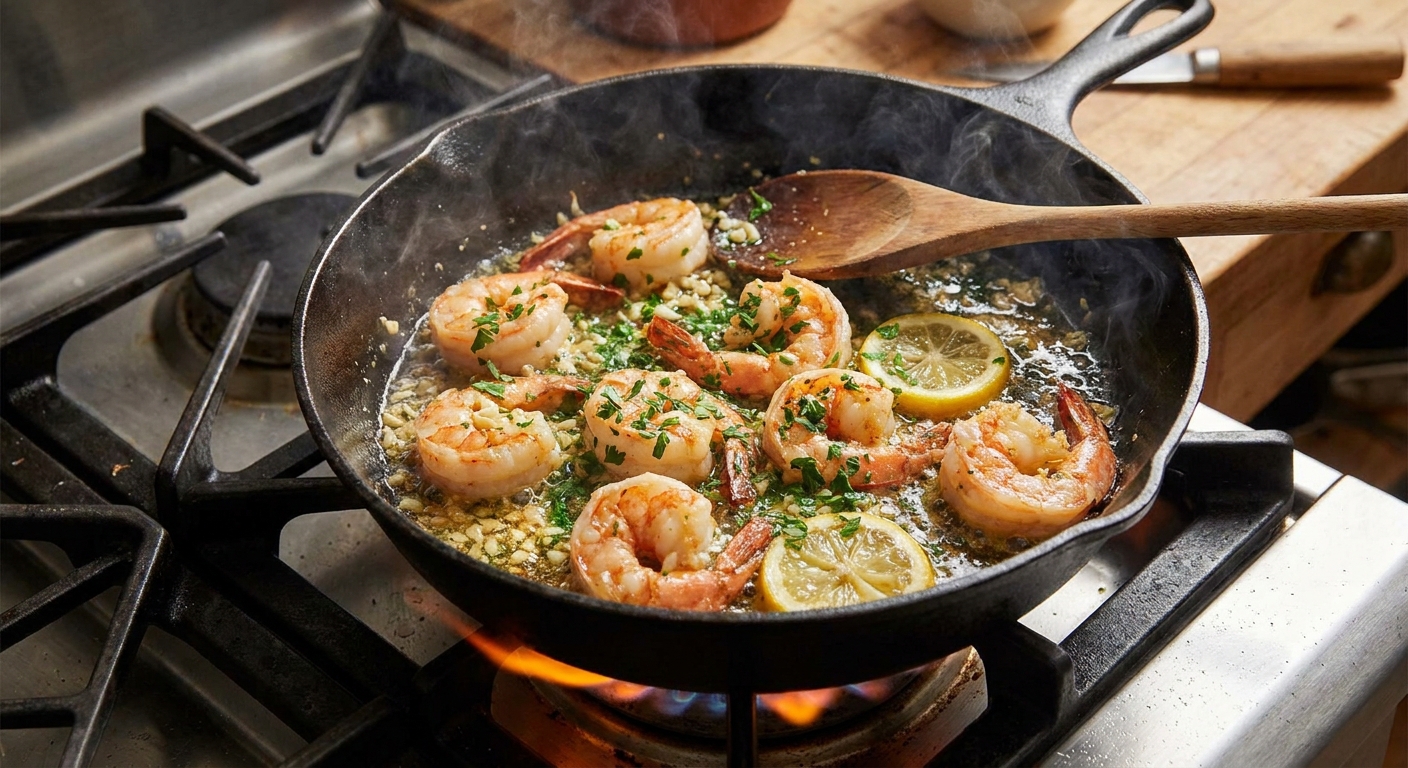
- Sear the shrimp. Heat a large skillet over medium-high. Add 1 tablespoon butter or olive oil. When it shimmers, add shrimp in a single layer. Cook about 60 to 90 seconds per side, depending on size, until opaque and just firm. (Shrimp is done when it curls into a loose C; a tight O means overcooked. If using a thermometer, pull at about 120 to 130°F / 49 to 54°C in the thickest part.)
- Build the sauce. Reduce heat to medium. Push shrimp to the edges. Add the remaining tablespoon butter (or another drizzle of olive oil), then add garlic to the center. Stir 20 to 30 seconds until fragrant. Pour in the citrus mixture and simmer 30 to 60 seconds, scraping up browned bits. Toss shrimp to coat.
- Finish bright. Turn off the heat. Stir in remaining citrus zest and chopped herbs. Taste and adjust: add a squeeze of citrus for more zing, a pinch of salt for more pop, or 1 teaspoon honey or a small knob of butter if it is too sharp.
Notes
- Frozen shrimp: Thaw in cold water for 10 to 20 minutes (sometimes 25 if large or frozen in a block), stirring once or twice, until pliable. Drain and pat very dry.
- Pan size: If your shrimp will not fit in a single layer, cook in two batches.
- Garlic timing: Add garlic after searing to prevent burning.
- Optional add-ins: Capers add briny pop; a splash of white wine or broth loosens the sauce.
- Serving: Spoon shrimp and pan sauce over rice, noodles, roasted potatoes, or salad.
Nutrition
- Calories: ~260
- Fat: ~9 g
- Carbs: ~6 g
- Protein: ~36 g
- Fiber: ~1 g
- Sugar: ~2 g
- Sodium: ~900 mg
Nutrition values are approximate and will vary with shrimp size, exact amount of oil or butter used, and any optional add-ins.