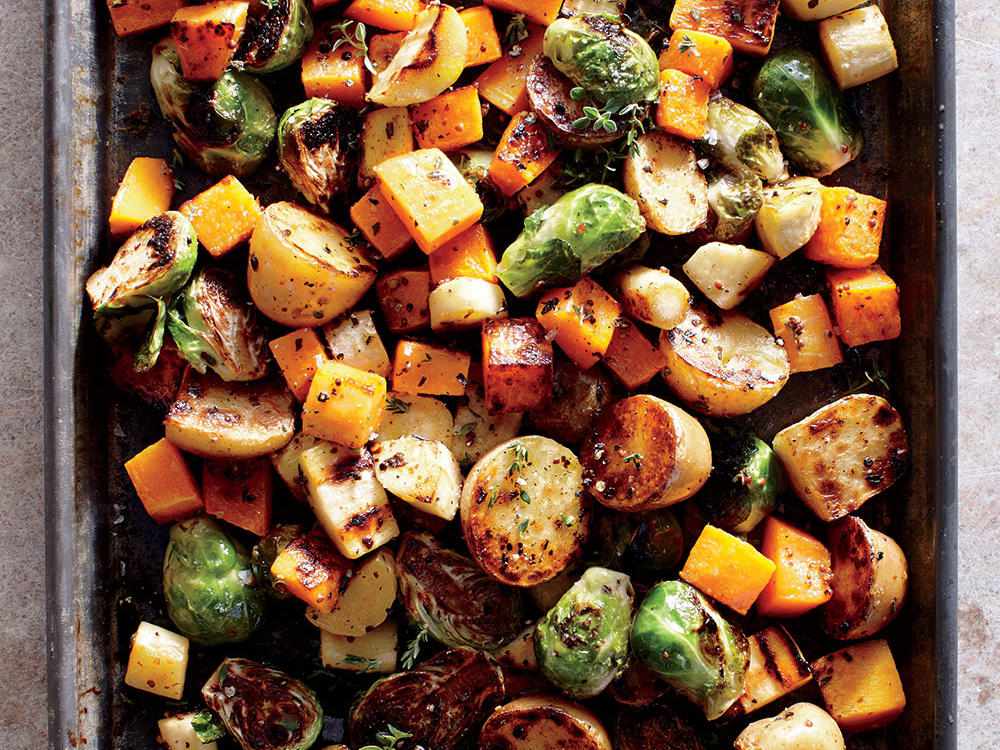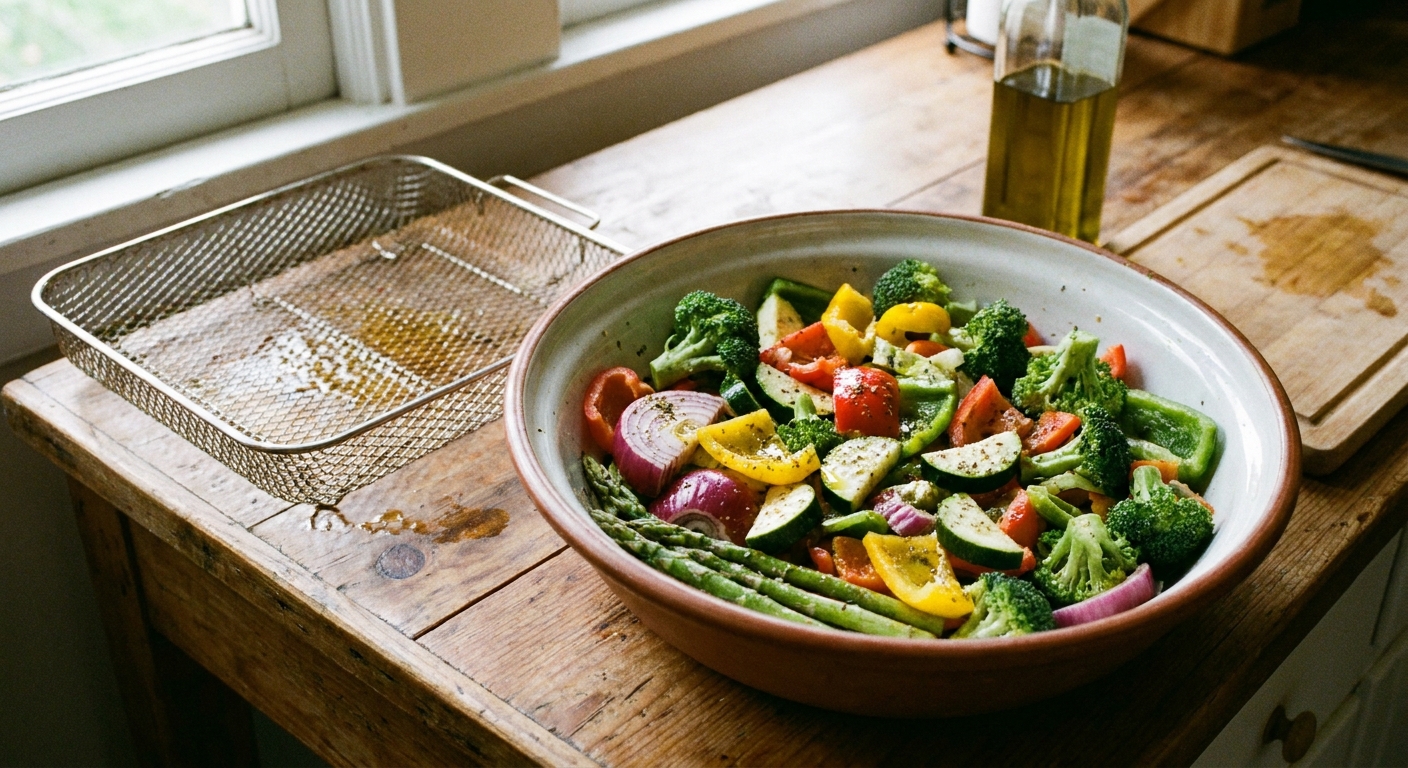

I love oven roasted vegetables, but on a weeknight I reach for my air fryer because it gets me that toasty, browned edge in less time and with less heat blasting my kitchen. The catch is that air fryer roasting is a different game than sheet-pan roasting. You are cooking in a basket, with strong airflow, in a smaller space. That means crowding matters, oil matters, and shaking is not optional if you want even color.

This page is the basket method I teach friends who text me things like, "Why are my Brussels sprouts burnt on one side and pale on the other?" Once you nail a few basics, you can roast almost any fresh vegetable with confidence, and you can mix vegetables in a way that still turns out crisp instead of steamed.
The basket method in 4 moves
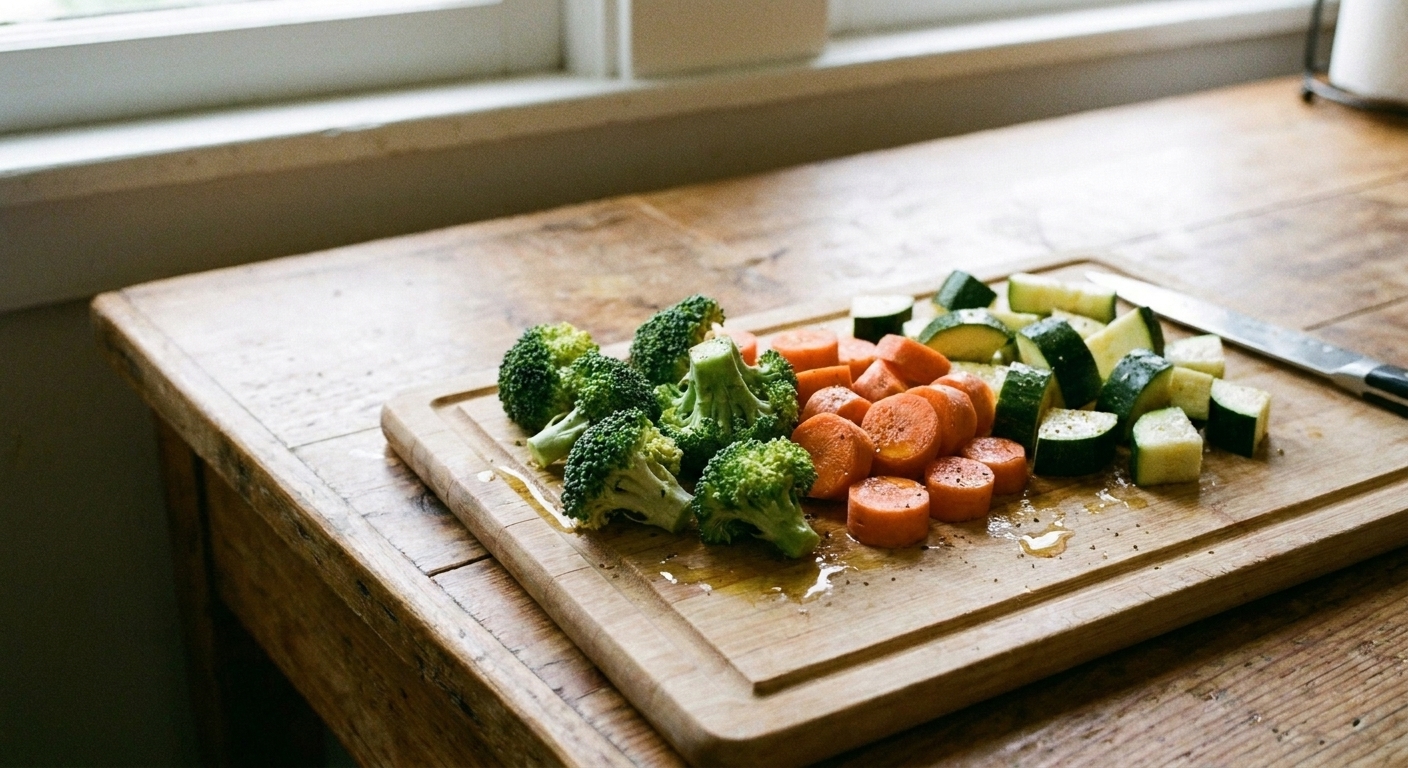
1) Cut for even cooking
Air fryers brown fast on the outside. Your goal is to cut pieces so the inside finishes right when the outside turns deeply golden. As a rule:
- Hard vegetables (carrots, broccoli stems, sweet potatoes): cut smaller.
- Soft vegetables (zucchini, mushrooms, peppers): cut bigger.
- Round pieces (carrots, Brussels sprouts halves): include at least one flat side for better browning.
2) Oil lightly, then season smart
You need enough oil to conduct heat and help browning, but not so much that you get greasy vegetables that soften as they sit.
- Oil guideline: 1 to 2 teaspoons oil per 4 cups cut vegetables.
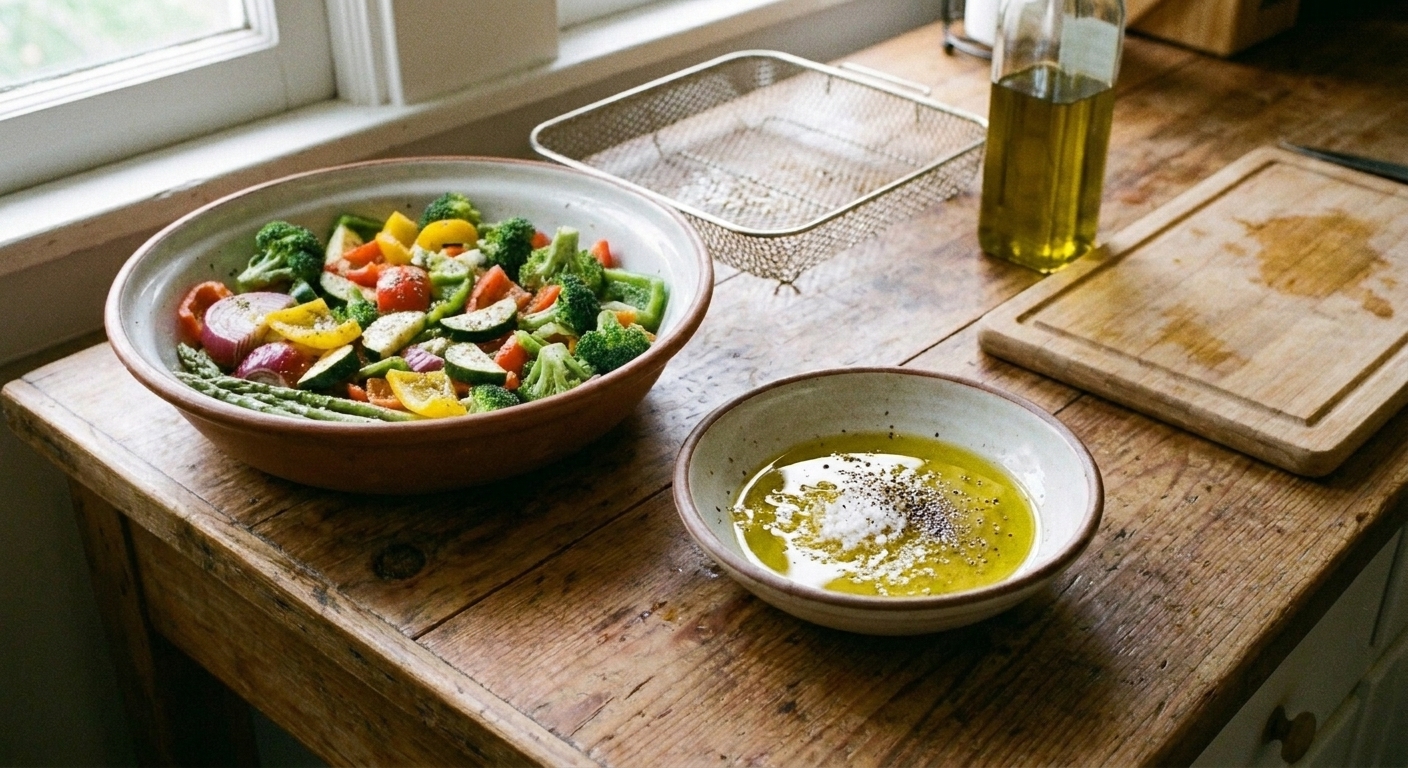
- How to apply: Toss in a bowl, not in the basket. You get a thinner, more even coat and less mess.
- Seasoning guideline: Start with salt and pepper. Add dry spices now, add delicate herbs and acids after cooking.
3) Do not crowd the basket
If you remember one thing, make it this: crowding equals steaming. For crisp edges, aim for one loose layer with a little breathing room so hot air can hit the surfaces.
- Best batch size: about 3 to 5 cups cut vegetables in a standard 5 to 6 quart basket, depending on how bulky the veg is.
- If you have more: cook in batches. The first batch can hang out on a sheet pan while the second cooks.
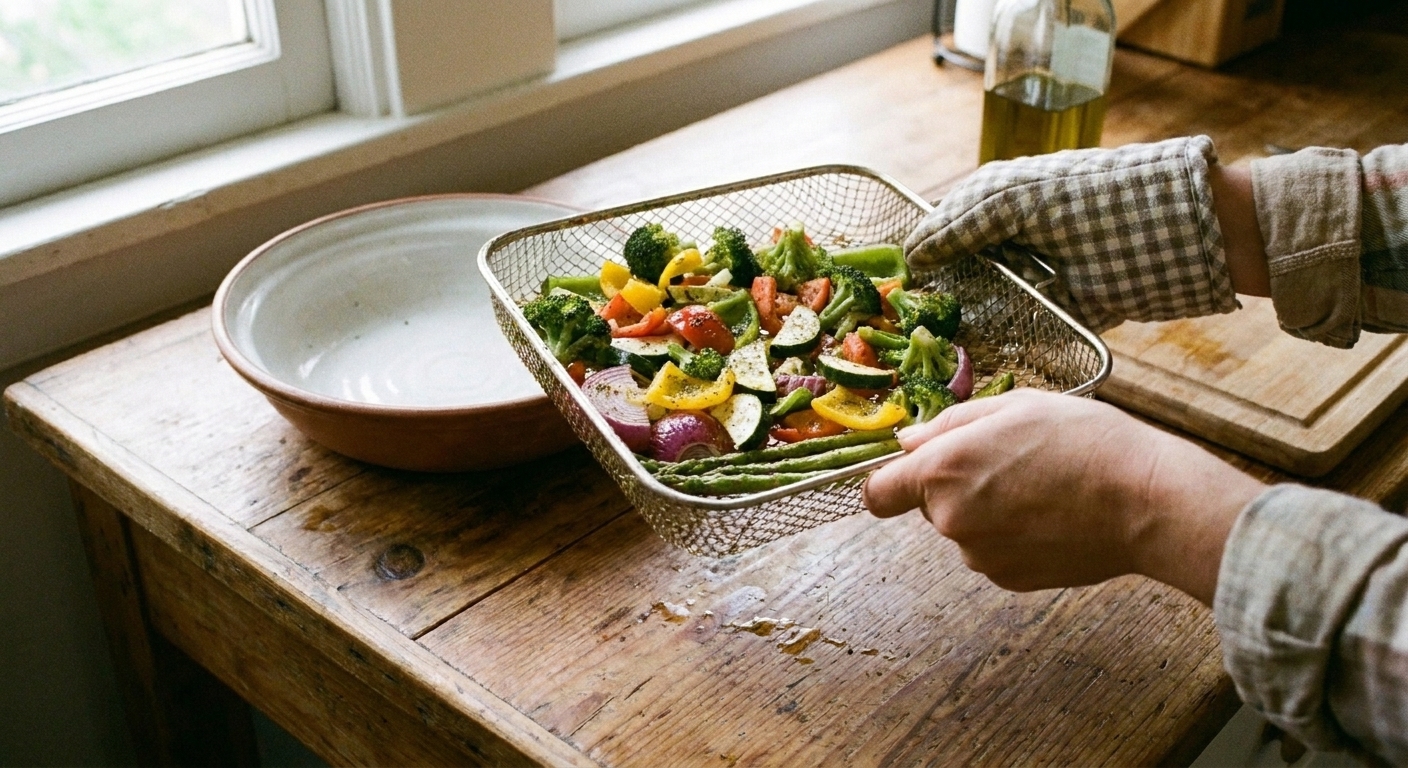
4) Shake at the right times
Shaking is how you trade "browned on top, pale underneath" for even roasting.
- When to shake: once at the halfway point for most vegetables.
- For quick-cooking vegetables (asparagus, green beans, zucchini): shake at the 3 to 4 minute mark, then again near the end if needed.
- How to shake: pull out the basket and give it a confident toss. If pieces are stuck, use tongs.
Temperature and timing chart
These are reliable starting points for fresh vegetables roasted in a basket-style air fryer. Because air fryers vary, use the time ranges and the doneness cues, not just the clock.
Air fryer roasted vegetable times (fresh)
| Vegetable | Cut size | Temp | Time | Shake | Done when |
|---|---|---|---|---|---|
| Broccoli | 1 to 1 1/2 inch florets | 400°F | 8 to 12 min | Halfway | Deeply browned tips, stems tender-crisp |
| Cauliflower | 1 to 1 1/2 inch florets | 400°F | 10 to 14 min | Halfway | Caramelized edges, fork-tender stems |
| Carrots | 1/4 inch coins or sticks | 400°F | 12 to 18 min | At 8 min, then as needed | Browned spots, easily pierced with a fork |
| Brussels sprouts | Halved (or quarter large) | 400°F | 12 to 16 min | Halfway | Outer leaves crisp, centers tender |
| Green beans | Whole, trimmed | 400°F | 7 to 10 min | At 4 min | Blistered spots, still snappy |
| Asparagus | Whole, medium thickness | 400°F | 6 to 9 min | At 3 to 4 min | Bright, lightly blistered, tender at base |
| Zucchini | 1 inch chunks or half-moons | 400°F | 8 to 11 min | At 4 min | Golden edges, not watery |
| Bell peppers | 1 inch squares or strips | 390°F | 8 to 12 min | Halfway | Softened with charred edges |
| Onions | 1 inch chunks | 390°F | 10 to 14 min | Halfway | Translucent with browned edges |
| Mushrooms | Halved or quartered | 400°F | 10 to 14 min | Halfway | Reduced in size, browned, no puddling |
| Sweet potato | 3/4 inch cubes | 400°F | 14 to 20 min | At 8 to 10 min | Crisp edges, creamy centers |
| Potatoes (white or Yukon) | 3/4 inch cubes | 400°F | 16 to 22 min | At 10 min | Golden and easily pierced |
Tip for mixed vegetables: pick veggies with similar cook times, or add quick-cooking veggies later. For example, start carrots for 6 minutes, then add broccoli for the remaining 10 minutes.
Why this recipe works
- High heat plus airflow mimics convection roasting, so you get browning fast without heating up the whole oven.
- A measured amount of oil encourages crisp edges while avoiding greasy, limp vegetables.
- One loose layer and a well-timed shake prevents steaming and ensures even caramelization.
- Doneness cues keep you from chasing a perfect minute count across different air fryer models.
Ingredient notes
This method is designed for fresh vegetables (not frozen) and a simple, flexible seasoning base.
- Vegetables: Use whatever you have, but prioritize similar density if you are mixing. Hard plus hard works. Soft plus soft works. Hard plus soft works only if you stagger the cook.
- Oil: Olive oil is my everyday choice. Avocado oil is great if you like a more neutral flavor. Either way, use a light hand.
- Salt: Fine sea salt or kosher salt both work. If you are using a seasoning blend that includes salt, reduce the added salt up front and adjust at the end.
- Acid (finish, not start): Lemon juice, lime juice, or a splash of vinegar goes on after cooking. Acid before roasting can slow browning and pull out moisture.
Equipment you will need
- Basket-style air fryer: This method assumes a pull-out basket. If you have an air fryer oven with trays, you will get different airflow and may need different times.
- Large mixing bowl: For even oil and seasoning coverage without over-oiling.
- Tongs: Helpful for turning larger pieces and checking tenderness.
- Instant-read thermometer (optional): Not necessary for vegetables, but useful if you are roasting vegetables alongside protein in separate batches.
Pro tips
- Preheat when crispness matters: A 3 to 5 minute preheat helps with browning, especially for denser vegetables like Brussels sprouts and sweet potatoes.
- Dry vegetables roast better: If you rinsed your produce, dry it well. Water on the surface turns into steam.
- Use a tiny pinch of sugar for reluctant browners: For vegetables like carrots or broccoli that you want extra caramelized, a small pinch can help. Keep it subtle.
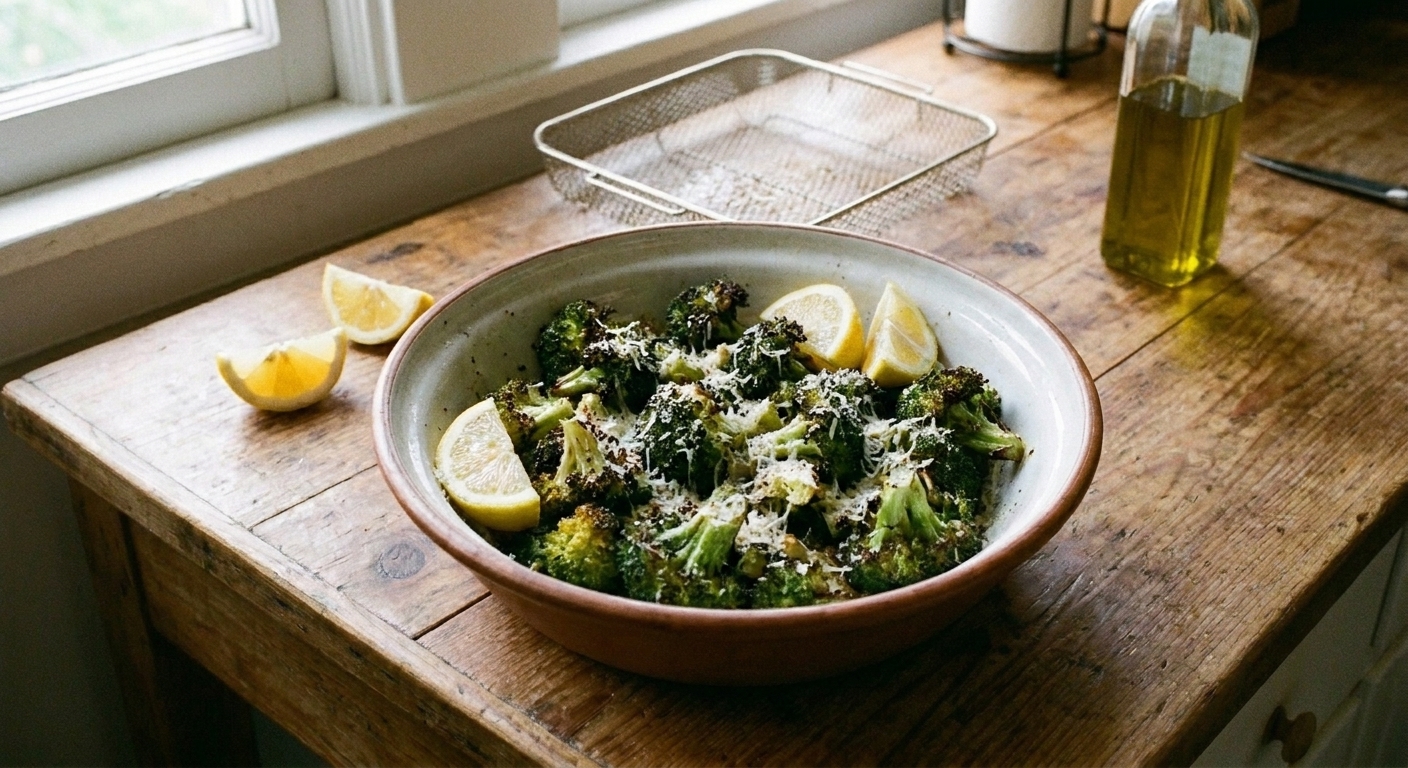
- Finish with flavor, not more cooking: Try lemon zest, grated Parmesan, toasted sesame oil, or a drizzle of tahini after the vegetables come out.
- Batch-cooking trick: Keep the first batch warm on a sheet pan in a 200°F oven while you cook the second batch.
Substitutes that work
- Oil-free option: You can roast without oil, but you will sacrifice browning. Use a spritz of oil if possible, or accept a more "dry roasted" texture and finish with a flavorful sauce.
- Seasoning swaps: Use garlic powder instead of fresh garlic (fresh garlic can burn fast in the air fryer). Swap black pepper for smoked paprika, cumin, or curry powder.
- Finishing acid swaps: Lemon juice, lime juice, red wine vinegar, rice vinegar, or a few drops of hot sauce all work.
Variations
Simple flavor routes
- Italian: Olive oil + salt + oregano, then finish with Parmesan and a squeeze of lemon.
- Taco night: Oil + salt + chili powder + cumin, then finish with lime and chopped cilantro.
- Sesame-ginger: Oil + salt, then finish with toasted sesame oil and sesame seeds. Add a little soy sauce after cooking, not before.
- Steakhouse: Oil + salt + pepper, then finish with a pat of butter and a splash of vinegar.
Serving ideas
- Grain bowls: Pile roasted vegetables over rice, farro, or quinoa with a punchy dressing.
- Pasta shortcut: Toss hot vegetables with cooked pasta, olive oil, lemon, and a handful of greens.
- Breakfast: Serve with eggs and a dollop of yogurt or sour cream plus hot sauce.
- Dip dinner: Pair with hummus, romesco, or tahini sauce and warm pita.
- Meal prep: Roast a batch, then use it for wraps, salads, and quick sides all week.
Storage and reheating
- Refrigerate: Cool completely, then store in an airtight container for up to 4 days.
- Reheat (best): Air fry at 375°F for 3 to 6 minutes, shaking once, until hot and re-crisped.
- Reheat (fast): Microwave works, but the vegetables will soften.
- Food waste tip: Slightly soft leftover roasted vegetables are perfect chopped into omelets, stirred into fried rice, or blended into soup.
Common mistakes
- Overcrowding the basket: The number one reason vegetables turn out pale and soft. Cook in batches.
- Too much oil: Excess oil can make vegetables feel heavy and less crisp as they cool.
- Skipping the shake: Uneven color and patchy browning are almost always a "forgot to shake" issue.
- Adding wet sauces before roasting: Sauces create steam and inhibit browning. Roast first, sauce after.
- Cutting pieces randomly: Mixed sizes cook unevenly. If you want a mix, match the cuts to the cook times.
FAQ
What temperature is best for air fryer roasted vegetables?
I default to 400°F for most vegetables because it encourages browning quickly. If your vegetables are browning too fast before the centers soften, drop to 380 to 390°F and add a few minutes.
Do I need to preheat my air fryer?
Not always, but it helps for crispness. If I am roasting dense vegetables like sweet potato or Brussels sprouts, I preheat for 3 to 5 minutes. For quick vegetables like asparagus, I often skip it.
Can I roast mixed vegetables together?
Yes, with one rule: either choose vegetables with similar cook times, or add the quick-cooking vegetables later. Carrots plus broccoli works if carrots get a head start. Zucchini plus mushrooms works because both cook quickly and release moisture.
Why are my vegetables soggy in the air fryer?
Usually one of three things: the basket is overcrowded, the vegetables were not dried well, or there is too much oil. Also make sure you are shaking at least once.
When should I add garlic?
Use garlic powder before roasting. If you want fresh garlic flavor, toss the hot vegetables with a little grated garlic or garlic butter after cooking so it does not burn.
Air Fryer Roasted Vegetables
A flexible, weeknight-friendly method for crisp, caramelized air fryer roasted vegetables using the basket method, plus a simple timing guide you can adapt to whatever is in your crisper drawer.
- Prep
- 10 minutes
- Cook
- 10 minutes
- Total
- 20 minutes
- Yield
- 4 servings
Ingredients
- 4 cups fresh vegetables, cut into even bite-size pieces (see Notes for timing ideas)
- 1 to 2 tsp olive oil (or avocado oil)
- 1/2 tsp kosher salt, plus more to taste
- 1/4 tsp black pepper
- 1/2 tsp garlic powder (optional)
- 1/2 tsp smoked paprika or cumin (optional)
- 1 to 2 tsp lemon juice or vinegar, for finishing (optional)
Instructions
- Preheat (optional, recommended for crispness): Preheat the air fryer to 400°F for 3 to 5 minutes.
- Toss: Add the cut vegetables to a large bowl. Drizzle with oil and toss until lightly and evenly coated. Sprinkle with salt, pepper, and any dry spices (like garlic powder or paprika), then toss again.
- Load the basket: Add vegetables to the air fryer basket in one loose layer. If your basket is crowded, cook in batches for better browning.
- Air fry: Cook at 400°F until browned and tender-crisp, using the time range that matches your vegetable: 8 to 12 minutes for quicker vegetables (broccoli, green beans), 10 to 16 minutes for medium vegetables (Brussels sprouts, cauliflower, peppers), and 14 to 22 minutes for dense vegetables (sweet potato, potatoes, carrots). Start checking early if your pieces are small.
- Shake: Shake the basket at the halfway point. For quick-cooking vegetables, shake at 3 to 4 minutes, then again near the end if needed.
- Check doneness: Vegetables are done when you see deep golden-brown spots and a fork slides in with light resistance. If they need more time, continue cooking in 2 minute bursts.
- Finish and serve: Transfer to a bowl and taste. Add another pinch of salt if needed, and finish with lemon juice or vinegar if using. Serve hot.
Notes
Best batch size: In a standard 5 to 6 quart basket, 3 to 5 cups of cut vegetables usually fits in one loose layer. Crowding leads to steaming.
Mixed vegetables: Pair similar cook times, or stagger. Example: Start carrots for 6 minutes at 400°F, then add broccoli and cook 8 to 10 minutes more, shaking once halfway through the second round.
Finish with acid: I almost always add a squeeze of lemon at the end. It makes roasted vegetables taste more vivid without extra salt.