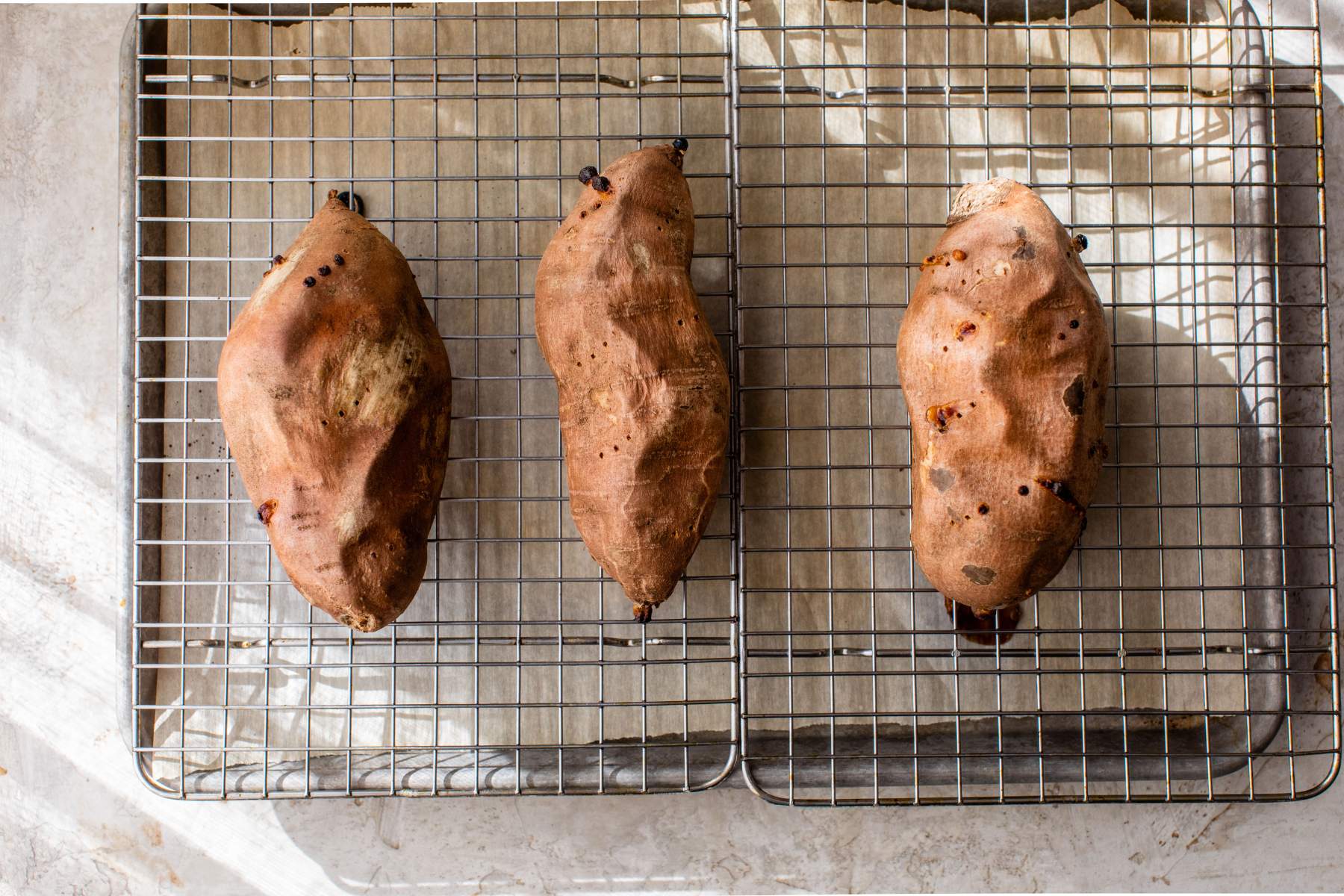

If you have ever pulled a sweet potato from the oven that looked done on the outside but was still firm in the center, you are not alone. Whole baked sweet potatoes are simple, but they are not instant. The trick is giving them enough time for the dense center to fully soften, while choosing whether you want a drier, caramelized skin or a softer, steamed one.

This is the method I teach when I want weeknight reliability with minimal fuss: bake whole sweet potatoes until the centers are yielding and the skins look set and slightly wrinkled. I will walk you through timing by size, how a little oil and salt changes the skin, the real difference between foil and open rack baking, and the sensory cues I use in my own kitchen in Portland when I am trying to get dinner on the table without overthinking it.
Timing by size
Sweet potatoes vary wildly. The most dependable way to time them is by thickness, not length. When in doubt, choose potatoes that are similar in diameter so they finish together.
- Small (about 1.5 to 2 inches thick): 35 to 45 minutes
- Medium (about 2 to 2.5 inches thick): 45 to 60 minutes
- Large (about 2.5 to 3 inches thick): 60 to 80 minutes
- Extra large (over 3 inches thick): 80 to 95 minutes
These ranges assume a 400°F oven. If you bake at 425°F, start checking 10 minutes earlier. If you bake at 375°F, add 10 to 20 minutes.
Foil versus open rack
I think of foil as a texture decision, not a rule.
Open rack or sheet pan (my default)
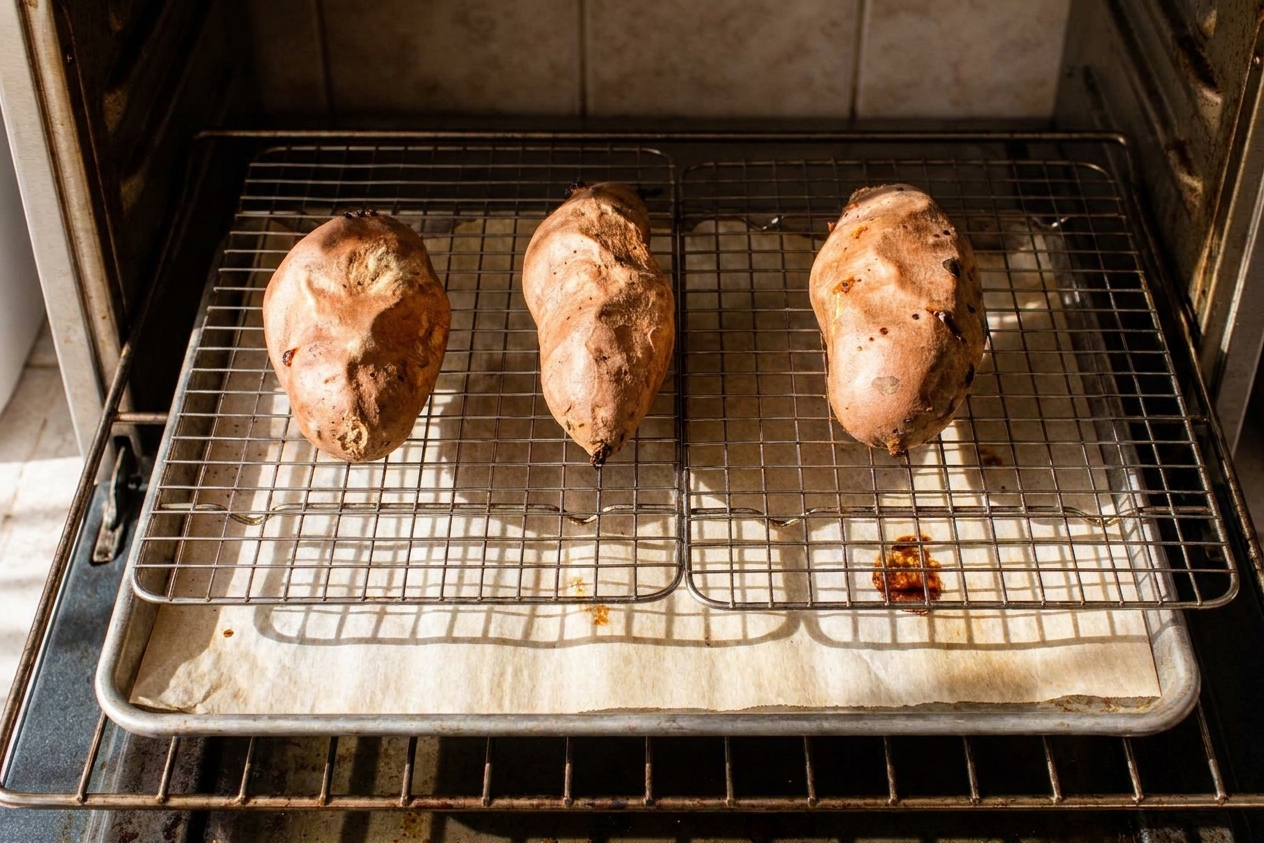
Baking unwrapped gives you a sweet potato with a drier exterior and a slightly more concentrated flavor. The skin firms up and you can get a little caramelization where sugars meet heat. Place the potatoes directly on the oven rack with a sheet pan on the rack below to catch any drips, or set them on a parchment-lined sheet pan.
Foil-wrapped
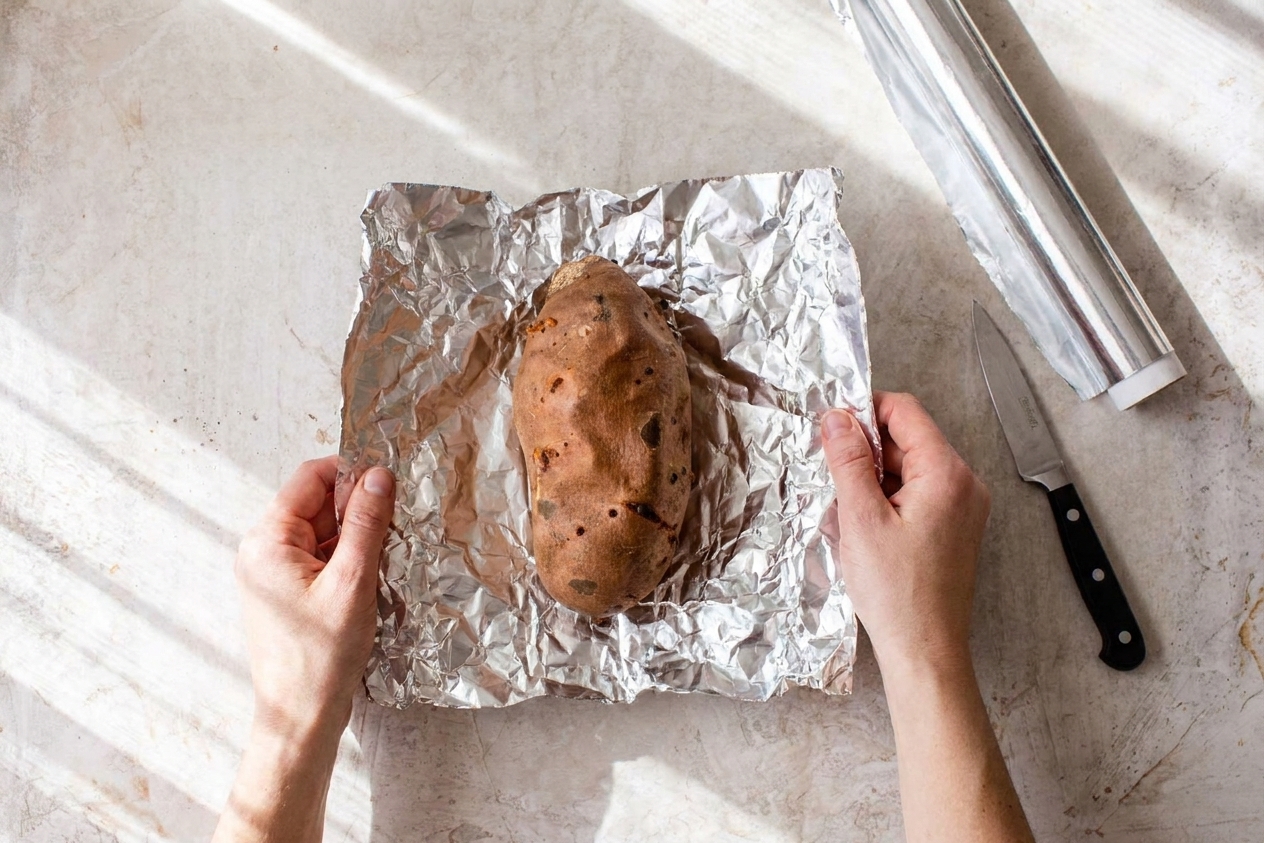
Foil traps moisture, so the sweet potato steams more as it bakes. The flesh still gets soft, but the skin stays softer and the flavor is a touch less roasty. I reach for foil when I want the potato to stay very moist, or when my oven runs hot and I do not want the skins to dry out.
Oil and salt, and when to use them
A light coat of oil and a pinch of salt do two helpful things: they encourage the skin to dry and set nicely, and they make the skin taste good if you like eating it. Use oil and salt when baking unwrapped.
If you are wrapping in foil, oil and salt on the skin are optional. Foil will keep the skin soft, so the crisping benefit is mostly lost. In that case, I usually skip the oil and season after splitting.
Doneness cues that actually work
Forget the clock for a second and use these cues. A sweet potato is done when all of them line up.
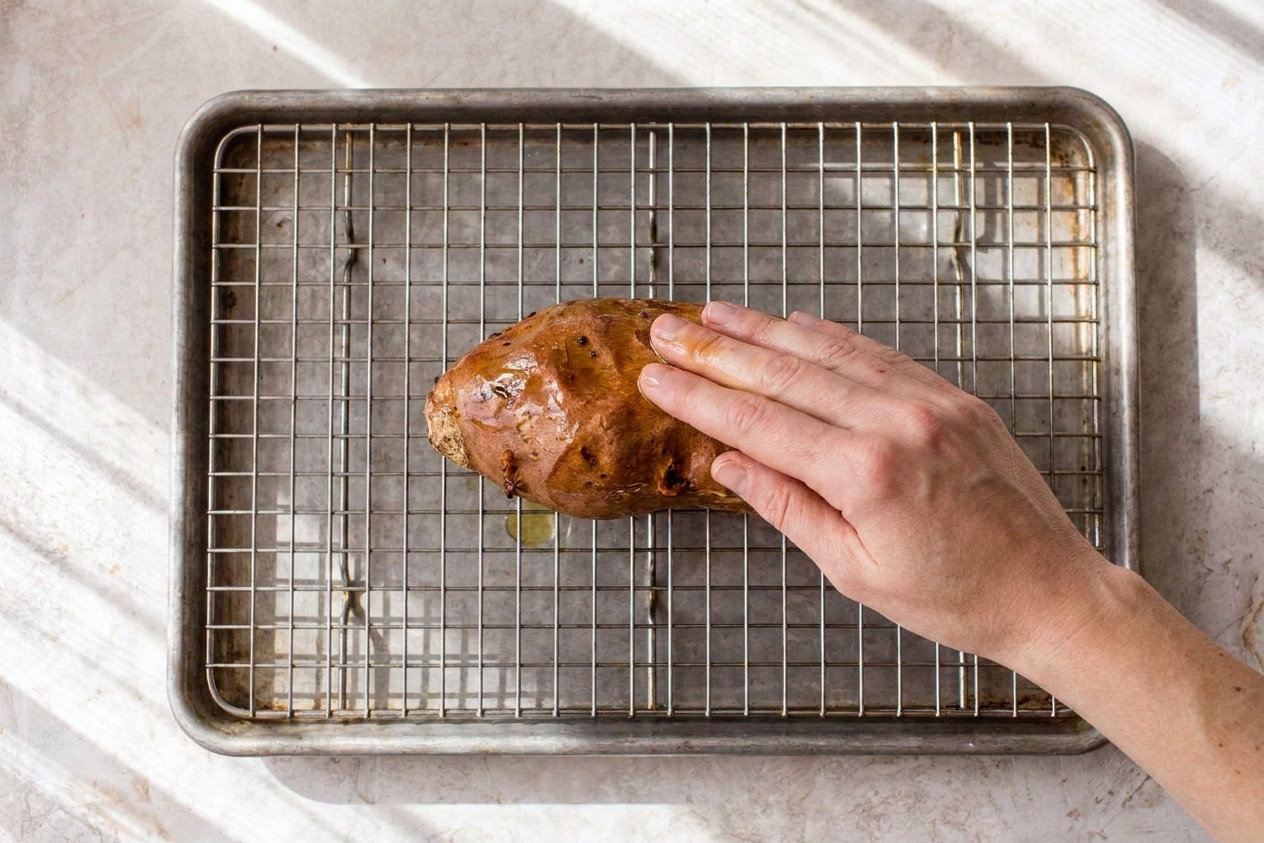
- It gives when squeezed: Using an oven mitt, gently press the sides. It should feel soft and yielding, not firm.
- A knife slides in easily: A paring knife or skewer should meet very little resistance in the thickest part. If you feel a dense core, keep baking.
- The skin looks set: You will often see light wrinkling and slight pulling away at the ends.
- Sticky beads (optional but common): Sometimes you will see caramelized syrupy spots where sugars seep out. That is a good sign, not a problem.
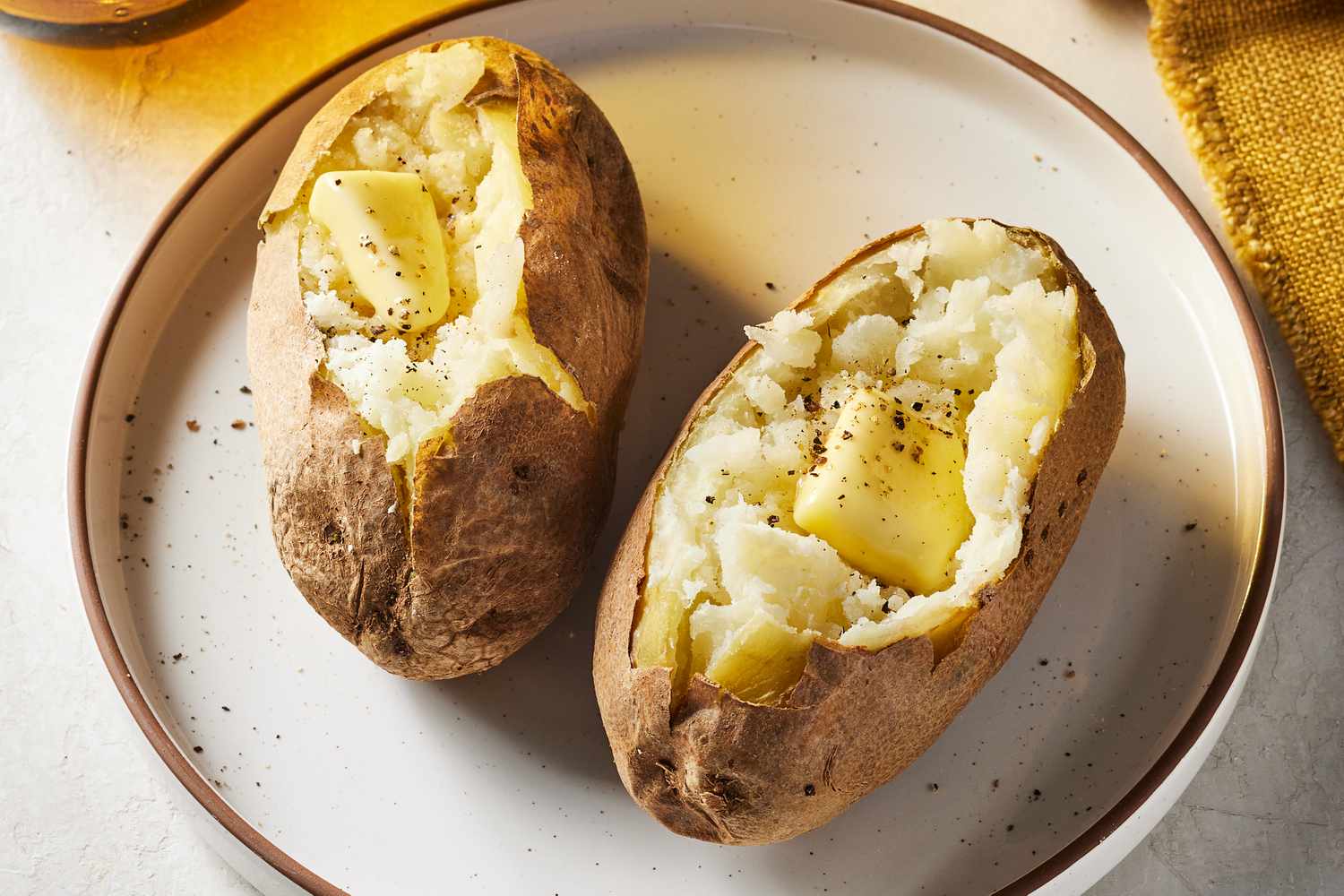
One more cue from my instructor days: when you split it open, the center should look fluffy or creamy with no chalky, pale firm streaks.
Food waste note
If you baked too many, do not toss them. Whole baked sweet potatoes reheat well, and leftover flesh can be stirred into oatmeal, blended into smoothies, or mashed into pancake batter for natural sweetness.
Why this recipe works
- Size-based timing prevents underbaked centers. Thickness is the limiting factor, so checking by diameter keeps you from guessing.
- 400°F is the sweet spot for texture. Hot enough to set the skin and drive off excess moisture, but gentle enough to let the center fully soften.
- Foil is treated as a texture tool. Unwrapped baking gives a drier, roastier exterior. Foil gives a softer, steamed skin. You get to choose.
- Clear doneness cues beat rigid minutes. Yielding sides and a no-resistance knife test are more reliable than any single cook time.
Ingredient notes
Sweet potatoes: Look for firm, smooth potatoes with no soft spots. Try to buy similar sizes so they finish at the same time. Any orange-fleshed sweet potato works well here.
Oil: Olive oil or avocado oil are my go-tos. You only need a thin sheen to help the skin set and brown.
Kosher salt: A small pinch on the skin makes a big difference if you like eating the skin. Fine salt works too, just use a lighter hand.
Equipment you will need
- Oven
- Sheet pan (for baking or to catch drips if using the rack)
- Parchment paper (optional, for easier cleanup)
- Fork (for poking)
- Aluminum foil (optional)
- Paring knife or skewer (for doneness testing)
Pro tips
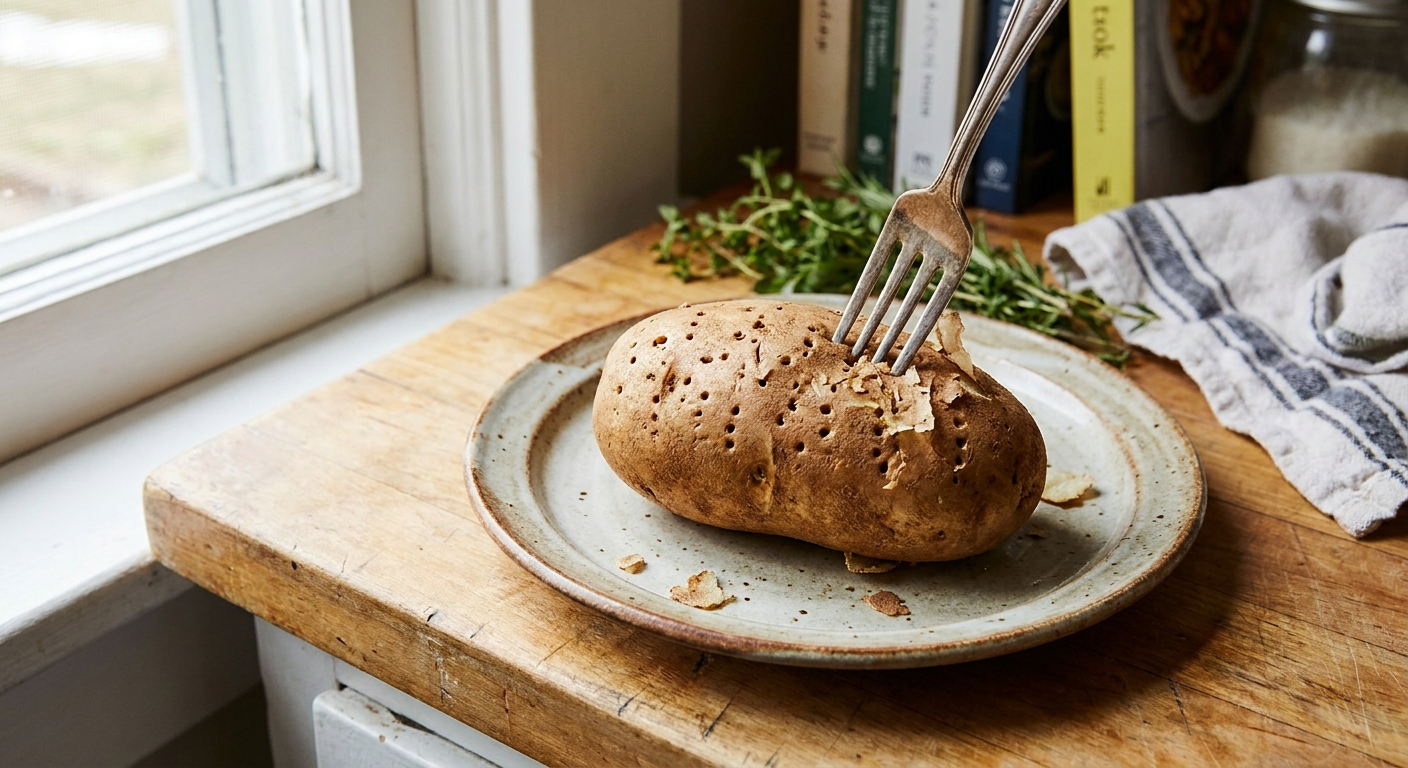
- Poke the skins. A few fork pokes let steam escape and help prevent splitting.
- Put a sheet pan underneath if baking on the rack. Sweet potatoes can ooze sugary drips as they bake.
- Start checking early, then give it time. If the center is still firm, it needs more baking, not a higher temperature.
- Rest 5 minutes before splitting. The interior finishes steaming and becomes fluffier, and you avoid molten sugar burns.
- Season after splitting for better balance. A pinch of salt on the flesh right after opening wakes up the sweetness.
Substitutes that work
- Oil: Melted butter, ghee, or neutral oil all work for rubbing the skins.
- Kosher salt: Fine sea salt works, use about half the amount by volume.
- Foil alternative: A covered baking dish can mimic a more steamed environment, although it is not as tight as foil.
Variations
- Extra-roasty skins: Bake unwrapped on the rack at 425°F and start checking around the 40 minute mark for medium potatoes.
- Soft-skin version: Wrap in foil and bake at 400°F until fully yielding.
- Batch baking: Bake a full tray, cool, then refrigerate for quick reheat lunches and dinners through the week.
Serving ideas
- Split and top with butter or olive oil and a pinch of salt.
- Stuff with black beans, salsa, and a squeeze of lime for an easy weeknight dinner.
- Top with Greek yogurt, chopped herbs, and a drizzle of hot sauce for a savory option.
- Serve alongside roasted chicken or salmon as a low-effort, hands-off starch.
Storage and reheating
Refrigerate
Cool baked sweet potatoes completely, then store in an airtight container for up to 4 days.
Freeze
You can freeze whole baked sweet potatoes. Cool completely, wrap tightly, and freeze for up to 3 months. Thaw overnight in the fridge for best texture.
Reheat
- Oven: 350°F until heated through, about 15 to 25 minutes depending on size.
- Microwave: Split first for faster, more even heating. Microwave in 30 to 60 second bursts until hot.
Common mistakes
- Choosing wildly different sizes. One will be perfect while the other stays underbaked. Match by thickness whenever possible.
- Not baking long enough. Sweet potatoes can feel soft near the ends but still be firm in the center. Always test the thickest part.
- Cranking the heat to “hurry it up.” High heat can dry the outside before the inside is tender. If you are behind, microwave for a few minutes first, then finish in the oven for better texture.
- Skipping the drip pan. Those sugary leaks can burn on the oven floor and make your kitchen smell like smoke.
- Wrapping everything in foil by default. Foil is great for soft skins, but it trades away some of the roasty flavor and texture.
FAQ
Do I need to poke holes in sweet potatoes before baking?
Yes, I recommend it. A few fork pokes help steam escape and reduce the chance of the skin splitting.
Should I bake sweet potatoes in foil?
Only if you want a softer skin and a more steamed result. For a drier, roastier sweet potato, bake unwrapped.
What oven temperature is best?
400°F is the most reliable middle ground for tender centers and nicely set skins. Use 425°F for a bit more browning, or 375°F if you want it gentler and do not mind a longer bake.
How do I know when a baked sweet potato is done?
It should feel very soft when squeezed with an oven mitt, and a knife or skewer should slide into the thickest part with very little resistance.
Why is my sweet potato still hard in the middle?
It simply needs more time. Sweet potatoes are dense, especially larger ones. Keep baking and check every 10 minutes until the center is fully tender.
Baked Sweet Potatoes
Whole sweet potatoes baked until the centers are fluffy and tender and the skins are set. Includes timing by size and guidance for foil-wrapped versus unwrapped baking.
- Prep
- 5 minutes
- Cook
- 45 to 80 minutes
- Total
- 50 to 85 minutes
- Yield
- 4 sweet potatoes
Ingredients
- 4 whole sweet potatoes (similar size if possible)
- 1 to 2 teaspoons olive oil or avocado oil (optional, for unwrapped baking)
- 1/2 teaspoon kosher salt (optional, for unwrapped baking)
- Aluminum foil (optional, for foil-wrapped method)
Instructions
- Heat the oven. Arrange a rack in the middle of the oven and preheat to 400°F. If you plan to bake directly on the rack, place a sheet pan on the rack below to catch any drips.
- Wash and dry. Scrub the sweet potatoes under cool water, then dry very well. (Dry skins brown and set better.)
- Poke to vent. Use a fork to poke each sweet potato 6 to 8 times around the surface.
- Choose your method.
Unwrapped (roastier skin): Rub each potato lightly with oil and sprinkle with a pinch of kosher salt. Place on a parchment-lined sheet pan, or directly on the oven rack with a sheet pan underneath.
Foil-wrapped (softer skin): Wrap each potato tightly in foil. Place on a sheet pan. - Bake, checking by size. Bake until the centers are very tender.
Small (1.5 to 2 inches thick): 35 to 45 minutes
Medium (2 to 2.5 inches thick): 45 to 60 minutes
Large (2.5 to 3 inches thick): 60 to 80 minutes
Extra large (over 3 inches thick): 80 to 95 minutes - Test for doneness. Using an oven mitt, gently squeeze the sides. They should give easily. Then pierce the thickest part with a paring knife or skewer. It should slide in with very little resistance. If the center still feels firm, return to the oven and check again in 10 minutes.
- Rest, then split. Let the sweet potatoes rest for 5 minutes. Split lengthwise and fluff the insides with a fork. Season the flesh with a pinch of salt if you did not salt the skins.
Notes
About foil: Foil makes a softer, more steamed skin. Baking unwrapped gives a drier skin with more roasty flavor.
Cleanup tip: Sweet potatoes can leak sugary syrup as they bake. A sheet pan underneath (or baking on a sheet pan) prevents burnt drips on the oven floor.
Make-ahead: Bake a batch, cool completely, then refrigerate up to 4 days for quick reheats.