A truly great oven baked potato is a small miracle of contrasts: shatteringly crisp skin and a center so fluffy it practically collapses into steam. The good news is you do not need restaurant tricks, just a couple of intentional choices about heat, salt, and moisture.
I have baked thousands of potatoes for classes and weeknight dinners, and this is the method I come back to because it is forgiving, scalable, and gives you that steakhouse vibe at home.
Why this recipe works
- High heat (425°F) promotes a crisp, blistered skin while still letting the interior cook through and turn fluffy.
- No foil prevents trapped steam, which is what makes skins soft or slightly wet.
- Dry skin + oil + salt is the crispness trio: drying avoids steaming, oil improves browning, and salt helps draw a little surface moisture out for better crunch.
- Proper doneness check (skewer test, or about 205°F to 210°F internal) ensures a fully tender, fluffy center.
Ingredient notes
Best potatoes for baking
If you only remember one thing: choose a starchy potato for fluffy, a waxier potato for creamy.
- Russet: classic baked potato. Thick skin that crisps up beautifully and a dry, fluffy interior.
- Yukon Gold: slightly denser and creamier, with a thinner skin. Great when you want a buttery texture even before adding butter.
- Sweet potatoes: a different vibe, but the same oven principles apply. They can take less time when they are smaller or narrower. Use the skewer test, not the clock, especially since varieties vary.
Try to pick potatoes that are similar in size so they finish together. If you have a mix, pull smaller ones first and keep the larger ones going.
Oil
Use 1 to 2 tbsp neutral oil (avocado, canola, grapeseed) or olive oil. Oil on the skin crisps more cleanly at high heat; save butter for the hot interior where it can melt and soak in.
Salt
Salt note: Kosher salt brands vary a lot by volume. If you use Morton kosher, start closer to 1 tsp. If you use Diamond Crystal, you can usually go closer to 1 1/2 tsp.
Salt the skin for crunch and browning, then add a pinch to the fluffy interior after splitting. Skin seasoning and interior seasoning are two different jobs.
Equipment you will need
- Oven (set to 425°F)
- Sheet pan
- Wire rack (optional, for best airflow; a sheet pan alone still works)
- Fork (to pierce 6 to 8 times)
- Knife or skewer (to check tenderness)
- Instant-read thermometer (optional, for an internal temp of about 205°F to 210°F)
- Towel (to dry the potatoes completely)
Pro tips
- Dry the potatoes completely after scrubbing: wet skin steams instead of crisping.
- Use airflow when you can: a wire rack over a sheet pan is ideal; if baking directly on the oven rack, place a sheet pan on the rack below to catch drips.
- Rotate halfway through if your oven has hot spots for more even browning.
- Check doneness by feel: a knife or skewer should slide into the center with almost no resistance. If you can feel a tight core, it needs more time.
- Use temperature for extra certainty: aim for an internal temp of about 205°F to 210°F, or simply 205°F+ for a fluffy russet.
- Season the inside after splitting with a pinch of salt and something tangy or acidic if you like (a small spoon of sour cream or Greek yogurt, or a squeeze of lemon with herbs).
Convection note: If you use a fan or convection setting, start checking early. You can either reduce the temperature to 400°F or keep 425°F and expect the potatoes to finish a bit sooner.
Substitutes that work
- Potato type: Use Yukon Gold for a denser, creamier texture or sweet potatoes (often quicker when smaller or narrower; use the skewer test since varieties vary).
- Oil: Swap among neutral oils (avocado, canola, grapeseed) or use olive oil.
- Black pepper: Optional; you can leave it out.
- Foil: Not recommended for crisp skin, but you can wrap in foil for softer skin or if you need to hold potatoes warm for a while.
Variations
- Extra-crispy skin finish: Once tender, bake 5 to 10 more minutes directly on the oven rack (set a sheet pan underneath to catch drips).
- Foil-baked to crisp: If you baked in foil and want crisper skin, unwrap and put them back in the oven for 10 minutes at 425°F.
- Oven temperature variation: If cooking alongside other foods at 400°F, it still works, just plan on a little longer. At 350°F, bake time will be longer and skin will be less crisp; finish with a 10-minute blast at 425°F for crisping.
Serving ideas
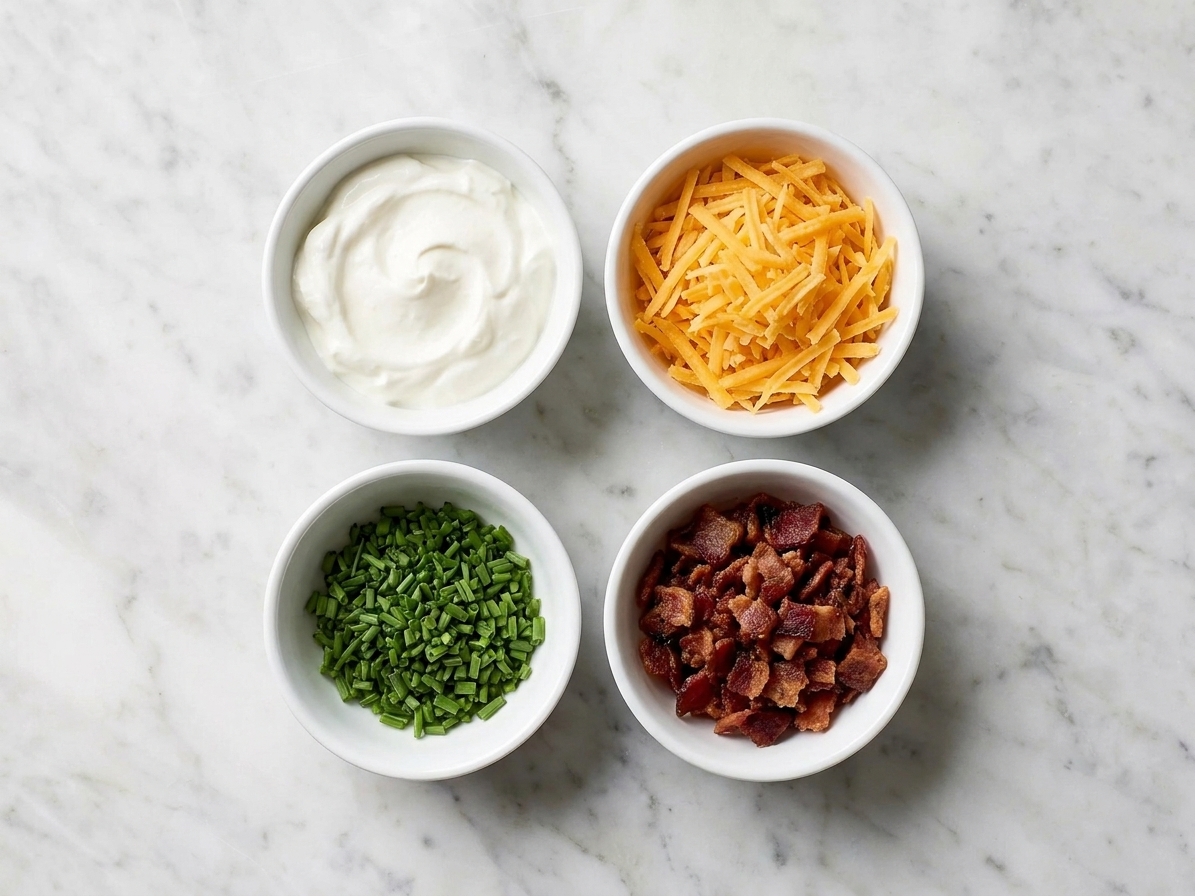
A baked potato is basically a blank canvas for salt, fat, tang, and crunch. Here are combos that hit all four:
- Classic: butter + sour cream + chives + lots of black pepper
- Waste-less broccoli cheddar: chopped leftover roasted broccoli + shredded cheddar + a splash of hot sauce
- Chili night: leftover chili + diced onion + cilantro or scallions
- Mediterranean: Greek yogurt + lemon zest + olive oil + chopped cucumber and tomato
- Protein boost: cottage cheese + everything bagel seasoning + sliced scallions
Storage and reheating
Can you bake potatoes ahead?
Yes. Bake until fully tender, cool, then refrigerate. The skin will soften in the fridge, but you can bring it back to life.
How to store
- Cool completely, then store in an airtight container in the fridge for up to 4 days.
- Do not leave baked potatoes sitting at room temp for long stretches. Get them chilled within about 2 hours.
How to reheat
- Oven: 375°F for 20 to 30 minutes (crispier skin). Split for faster reheating.
- Air fryer: 350°F for 8 to 12 minutes, turning once (crispiest skin with minimal effort).
- Microwave: 2 to 4 minutes, then finish in a hot oven or skillet if you want crisp skin.
Food waste tip: Leftover baked potatoes are gold for next-day breakfast. Dice and pan-fry in a little oil until crisp, then top with an egg and something tangy like salsa or pickled onions.
Common mistakes
- Skipping the drying step: Wet skin steams instead of crisping. Scrub, then dry completely with a towel.
- Wrapping in foil when you want crisp skin: Foil traps steam and softens the skin.
- Not piercing the potatoes: Piercing 6 to 8 times helps steam escape and prevents the occasional potato pop.
- Relying only on the clock: Bake time depends on size; use the skewer test (or internal temp) to confirm doneness.
- Underbaking (hard center): It needs more time. Put it back in for 10 to 15 minutes and check again (very cold potatoes may need extra time from the start).
- Overbaking or holding uncovered too long: Can lead to tough skin. Oil evenly, pull when tender, and serve soon after splitting.
FAQ
Should I poke holes in potatoes before baking?
Yes. Potatoes contain water that turns to steam. Piercing gives the steam an easy exit and helps prevent blowouts.
What temperature is best for baked potatoes?
I like 425°F for the best balance of crisp skin and a fluffy interior without taking forever. If you are cooking other foods at 400°F, it still works, just plan on a little longer.
Can I bake potatoes at 350°F?
You can, but the skin will be less crisp and the bake time will be longer. If 350°F is what your oven is doing for another dish, bake the potatoes alongside it and finish with a 10-minute blast at 425°F for crisping.
Why add something tangy?
Potatoes love salt and fat, but a small hit of tang makes the whole thing taste brighter and more savory. Think sour cream, Greek yogurt, hot sauce, pickled onions, or a squeeze of lemon with herbs.
Oven Baked Potatoes
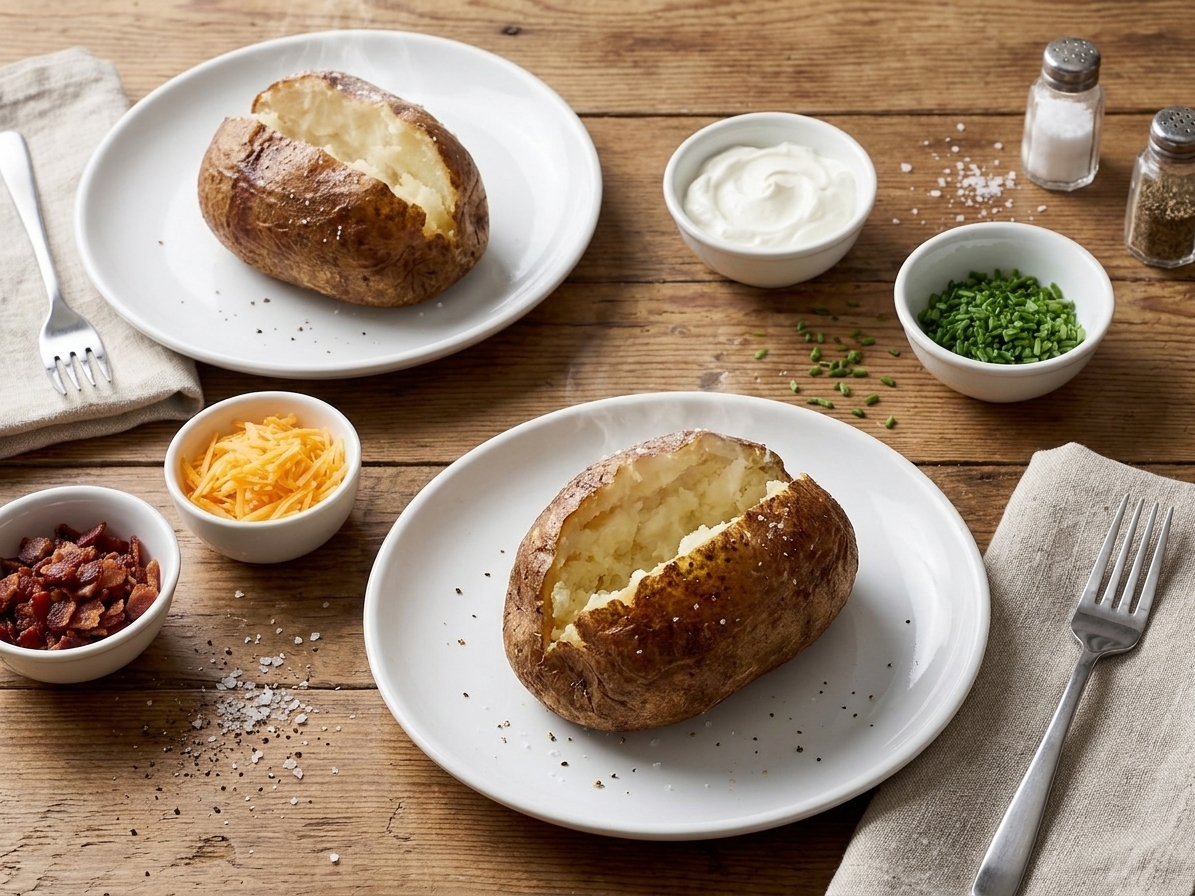
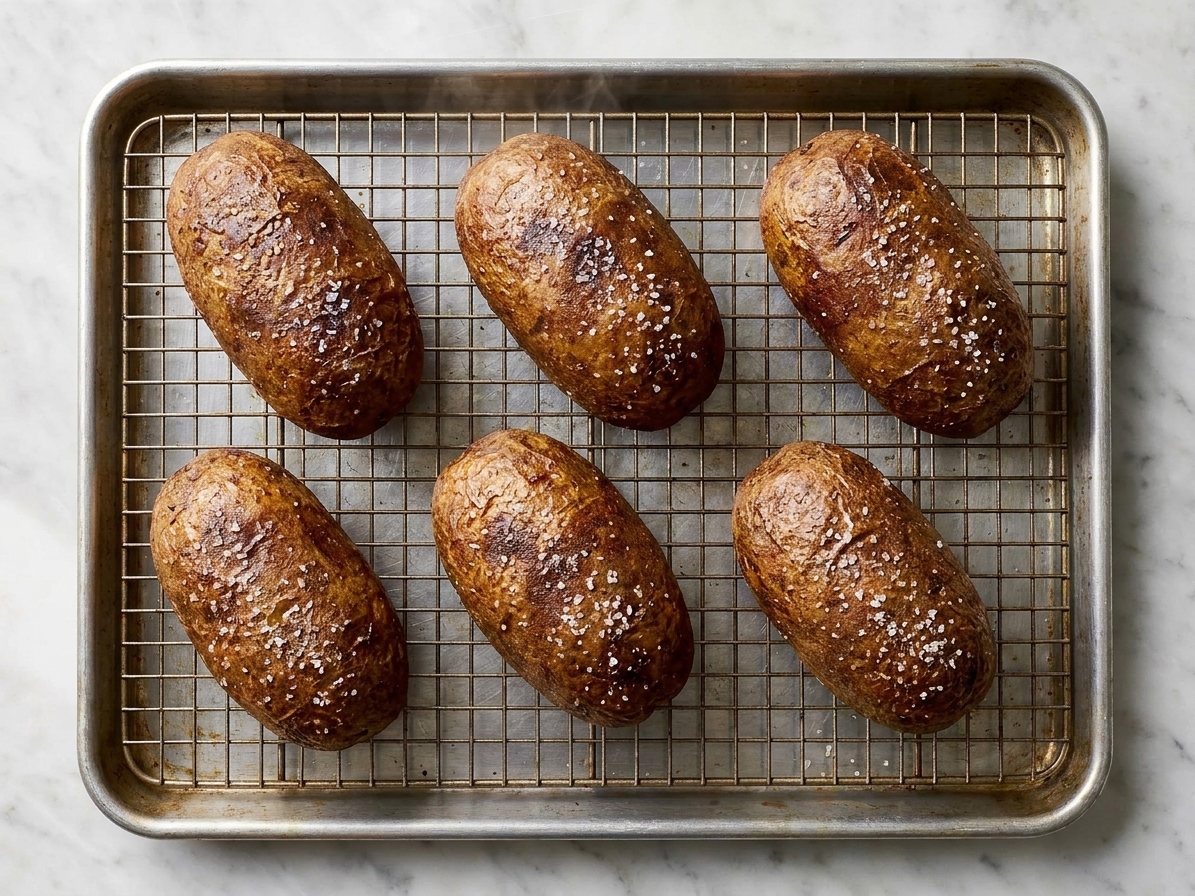
No-foil, high-heat oven baked potatoes with a salty oil rub for crisp skin and a fluffy interior. Bake at 425°F until a skewer slides in easily (or until the center reaches about 205°F to 210°F), then split and fluff.
- Prep
- 10 minutes
- Cook
- 50 to 65 minutes
- Total
- 60 to 75 minutes
- Yield
- Serves 4
Ingredients
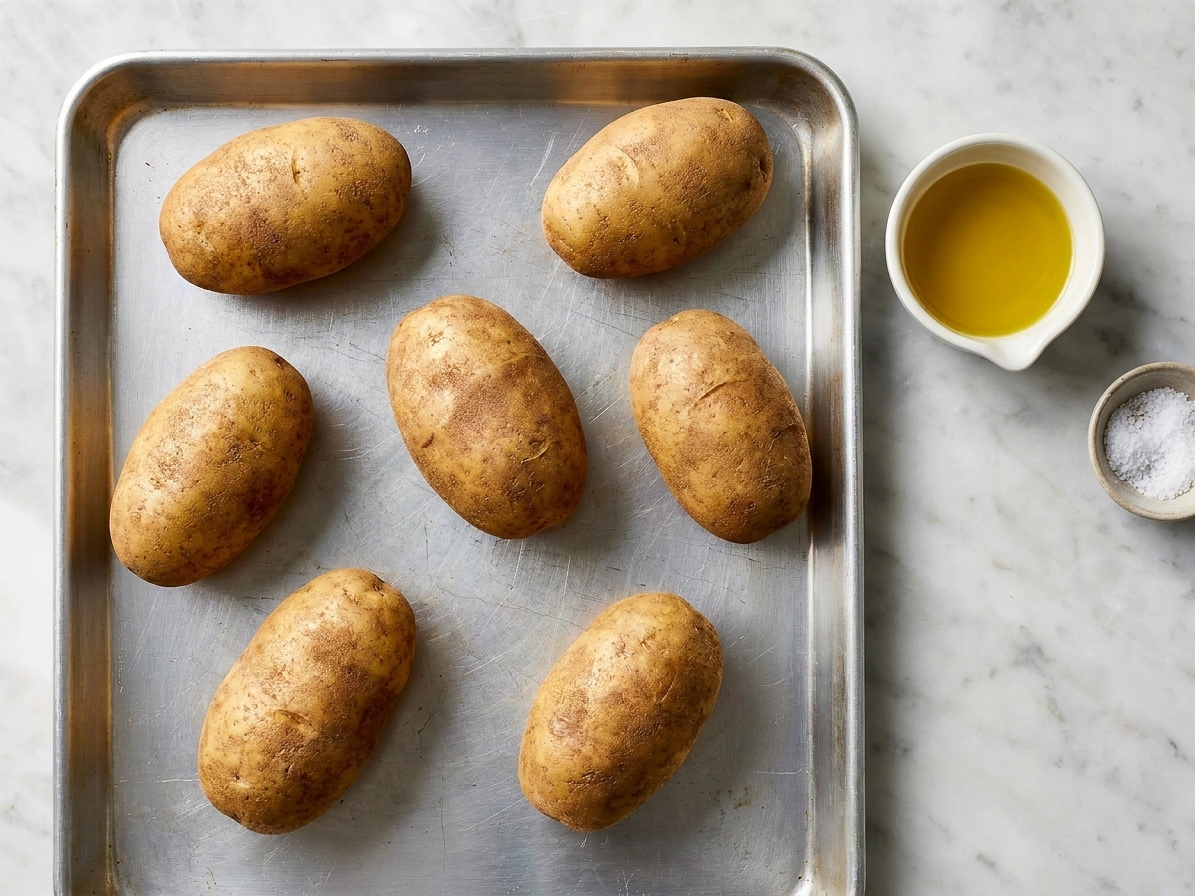
- 4 russet potatoes (8 to 12 oz each is a sweet spot)
- 1 to 2 tbsp neutral oil (avocado, canola, grapeseed) or olive oil
- 1 to 1 1/2 tsp kosher salt, plus a pinch for the insides
- Optional: freshly cracked black pepper
Instructions
- Heat the oven to 425°F. Position a rack in the middle. If you have a wire rack, set it over a sheet pan for best airflow, but a sheet pan alone still works. If you plan to bake directly on the oven rack, set a sheet pan on the rack below to catch any drips.
- Scrub and dry well. Rinse the potatoes, scrub the skins, then dry completely with a towel. Wet skin steams instead of crisping.
- Pierce the potatoes 6 to 8 times. Use a fork. This helps steam escape and prevents the occasional potato pop.
- Oil and salt the skins. Rub each potato with a thin, even coat of oil, then sprinkle the measured salt evenly over all sides, rolling the potato so it sticks.
- Bake 45 to 70 minutes. Timing depends on size. Start checking around 45 minutes for smaller potatoes.
- Rotate if needed. If your oven has hot spots, rotate the pan front to back about halfway through for more even browning.
- Check doneness the right way. A knife or skewer should slide into the center with almost no resistance. If you can feel a tight core, it needs more time. For extra certainty, aim for an internal temp of about 205°F to 210°F, or simply 205°F+ for a fluffy russet.
- Split and fluff. Slice lengthwise and squeeze the ends toward each other to open it up. Use a fork to gently fluff, then season the inside with a pinch of salt and something tangy or acidic if you like. A small spoon of sour cream or Greek yogurt, or a squeeze of lemon with herbs, is magic.
Notes
Salt note: Kosher salt brands vary a lot by volume. If you use Morton kosher, start closer to 1 tsp. If you use Diamond Crystal, you can usually go closer to 1 1/2 tsp.
Convection note: If you use a fan or convection setting, start checking early. You can either reduce the temperature to 400°F or keep 425°F and expect the potatoes to finish a bit sooner.
Bake time by size (425°F, russets, unwrapped):
- Small (5 to 7 oz): 40 to 50 minutes
- Medium (8 to 12 oz): 50 to 65 minutes
- Large (13 to 16 oz): 65 to 80 minutes
Foil note: No foil gives crisp skin. Foil traps steam for softer skin. If you baked in foil and want crisper skin, unwrap and return to the oven for 10 minutes at 425°F.
Extra-crispy option: After the potatoes are tender, bake 5 to 10 more minutes directly on the oven rack (set a sheet pan underneath to catch any drips) for maximum airflow.
Nutrition
- Calories: ~250
- Fat: ~4 g
- Carbs: ~52 g
- Protein: ~6 g
- Fiber: ~4 g
- Sugar: ~2 g
- Sodium: ~600 mg
Nutrition values are approximate and will vary by potato size and how much oil and salt adhere to the skins.