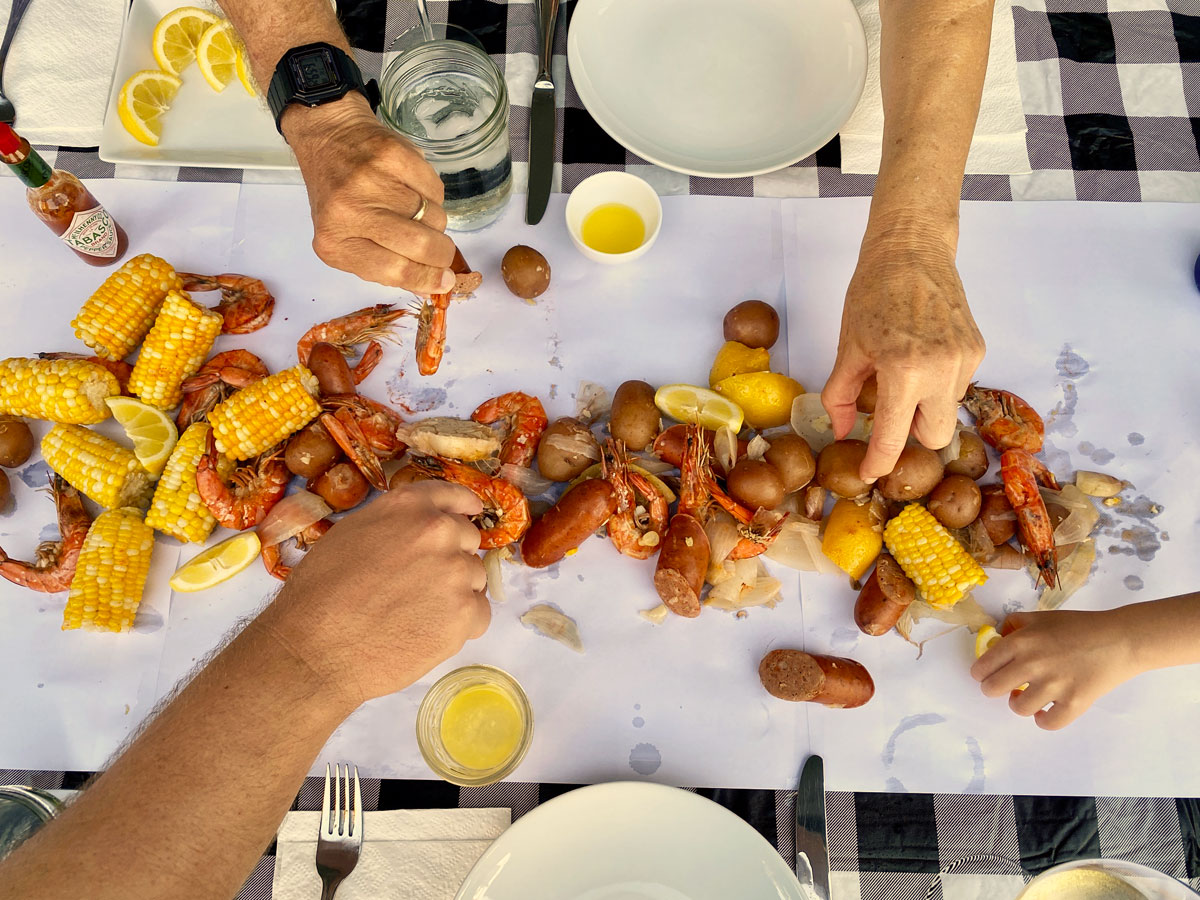
There are roasted potatoes, and then there are crispy roasted potatoes: the ones with jagged, crunchy edges that crackle when you scoop them up, and a center that stays fluffy and steamy. This is the method I teach when someone says, “Mine always come out kind of… leathery.” We are fixing that tonight.
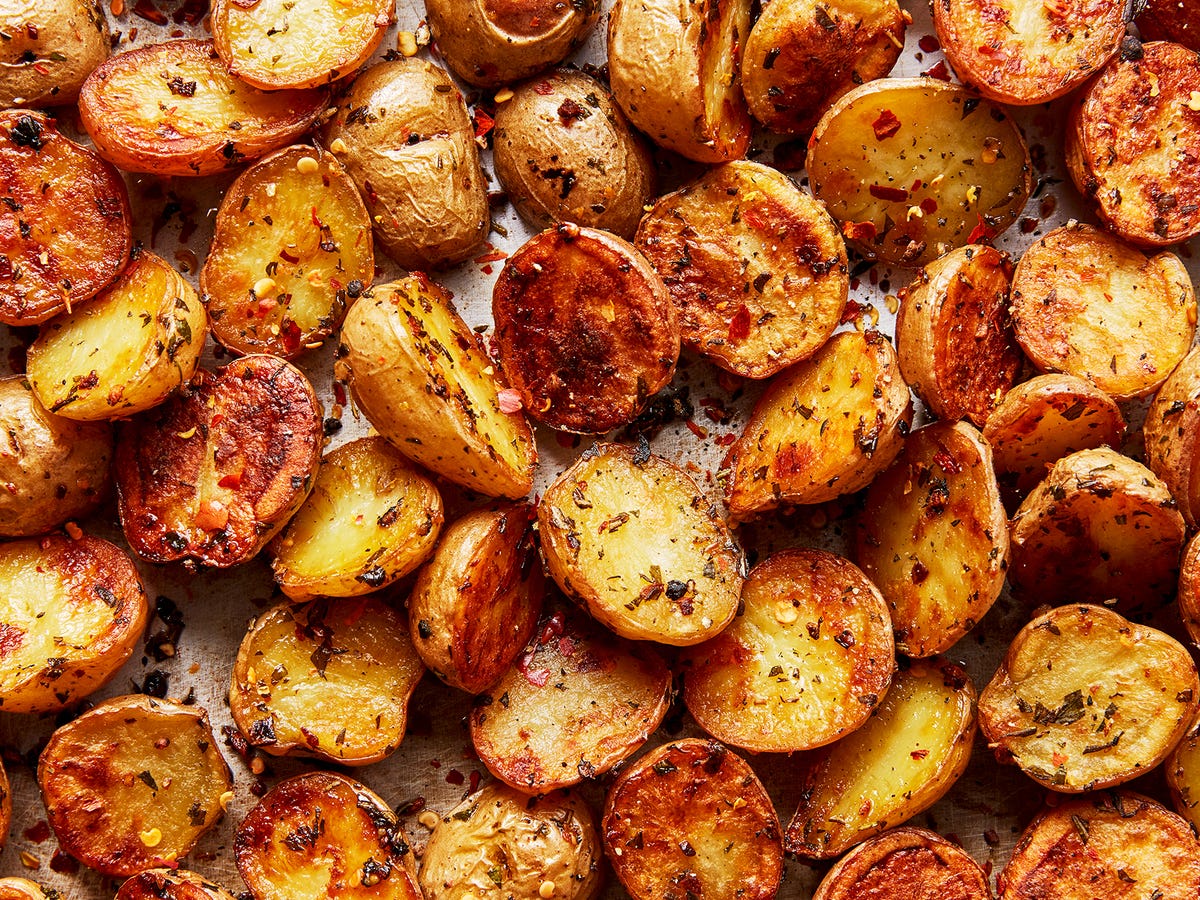
The biggest secret is not a secret at all. It is steam plus fat plus space. We are going to parboil to build a fluffy surface, rough them up to create craggy edges, and roast hot on a preheated pan so the bottoms start crisping immediately.
Why this recipe works
- Steam: Parboiling starts the cooking process and builds a fluffy surface that can crisp aggressively in the oven.
- Roughing up the surface: Shaking the drained potatoes creates starchy, craggy edges that become the crispiest bits.
- Fat: A thorough (not excessive) coating of oil promotes browning and crunch without “fry-steaming” the surface.
- Space: Spreading potatoes in a single layer with breathing room prevents steaming and helps them roast, not soften.
- Hot start: Roasting on a preheated sheet pan makes the potatoes sizzle on contact, giving you crisp bottoms fast.
Ingredient notes
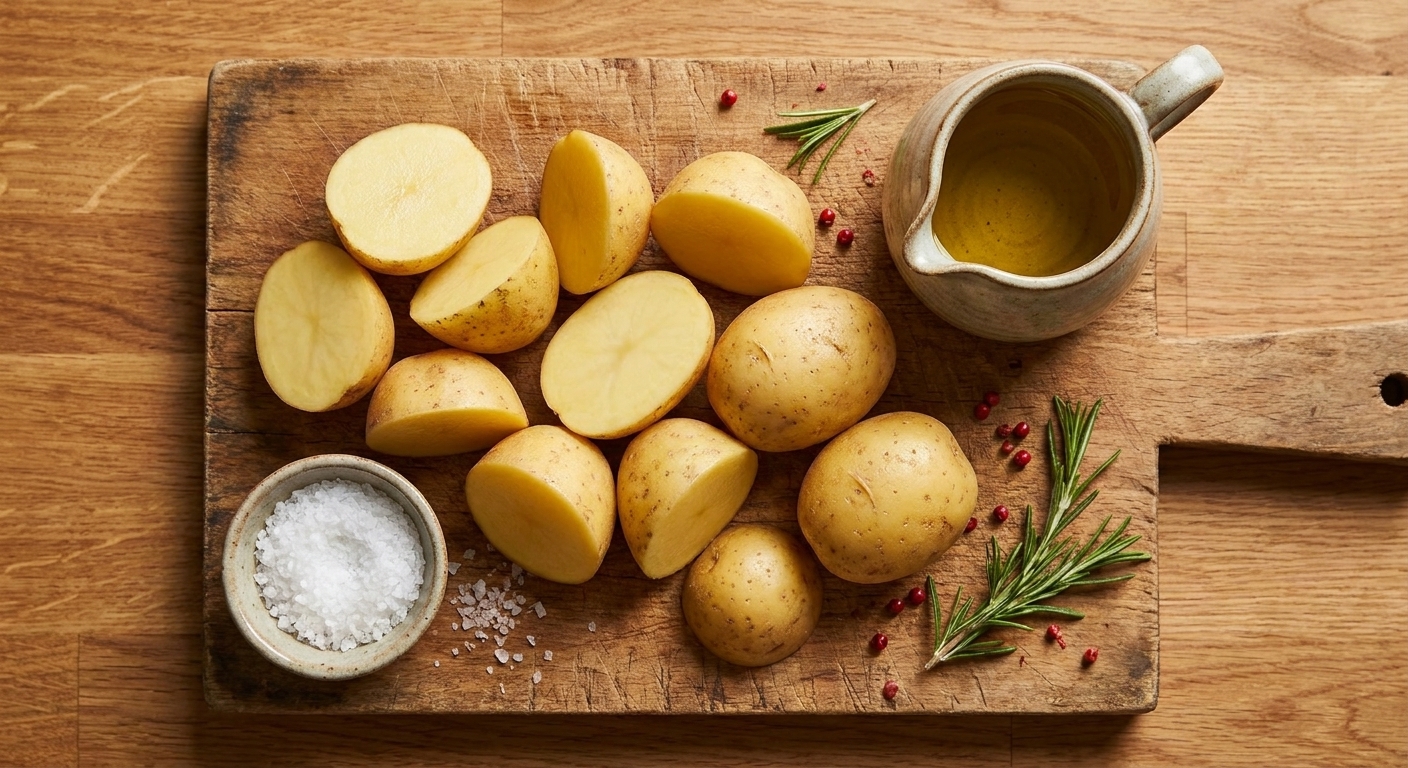
- Potatoes (2 to 2 1/2 pounds): Yukon Gold (creamy) or Russet (extra fluffy and crisp). Waxy red potatoes work, but they do not get quite as shatter-crisp.
- Oil (3 to 5 tablespoons): Avocado oil, ghee, or light olive oil. Use enough to coat well, not drown. Use the higher end if you like them richer, if your chunks are extra craggy, or if you are using two pans.
- Kosher salt: Salt the water and salt after roasting for the best flavor and crunch.
- Optional flavor: Black pepper, garlic powder, rosemary or thyme, smoked paprika, lemon zest, grated Parmesan, chopped scallions.
- Optional for the boil: 1/2 teaspoon baking soda. It slightly raises the pH of the water and helps the potato surfaces break down just enough to create craggy, crispable edges.
About oil at 450°F: Choose an oil you trust at high heat. Avocado oil and ghee are very comfortable here. If using olive oil, light olive oil is preferred over extra virgin, which can taste a bit sharp if it gets too hot.
Peel or not: Up to you. Skins-on Yukon Golds add extra texture. Russets are often peeled for the fluffiest insides.
Equipment you will need
- Rimmed sheet pan: Preheat it in the oven so the potatoes start crisping immediately when they land.
- Large pot with lid: For parboiling, draining, and shaking to rough up the surfaces.
- Colander: For draining thoroughly.
- Large bowl: For tossing potatoes with oil and seasoning.
- Thin spatula: For flipping once a crust forms.
- Oven mitts: The preheated pan is ripping hot.
Pro tips
- Preheat the pan: Slide the rimmed sheet pan into the oven while it heats to 450°F / 232°C for crisp bottoms.
- Cut evenly: Aim for 1 1/2-inch pieces so they brown and cook through at the same time.
- Salt the water generously: It should taste pleasantly salty for well-seasoned potatoes.
- Dry them out: After draining, return potatoes to the hot pot off the heat and let them sit 1 to 2 minutes to evaporate steam.
- Rough them up: Lid on, shake a few times until the surfaces look starchy and shaggy.
- Season smart: Salt lightly before roasting, then finish with flaky salt right after they come out to keep the exterior crisp.
- Flip once: Roast 20 minutes, flip, then roast 15 to 25 minutes more for deep golden crunch.
- Use two pans if needed: Space is not optional if you want crunch.
- Finish with acid: Lemon, vinegar, or chimichurri wakes up crispy potatoes.
Substitutes that work
- Potatoes: Yukon Gold or Russet are best. Waxy red potatoes work, but they do not get quite as shatter-crisp.
- Oil: Use avocado oil, ghee, or light olive oil for high-heat roasting at 450°F / 232°C.
- Baking soda: Optional in the boil. Skip it if you do not have it; the method still works.
- Convection setting: If your oven runs hot, use 425°F / 218°C convection instead of 450°F / 232°C.
Variations
Choose a direction based on what else is on your plate. These are designed to use pantry staples and reduce waste by using bits you already have.
- Classic herb: Rosemary + black pepper. Add fresh rosemary sprigs in the last 10 to 15 minutes to prevent scorching and keep the flavor lively.
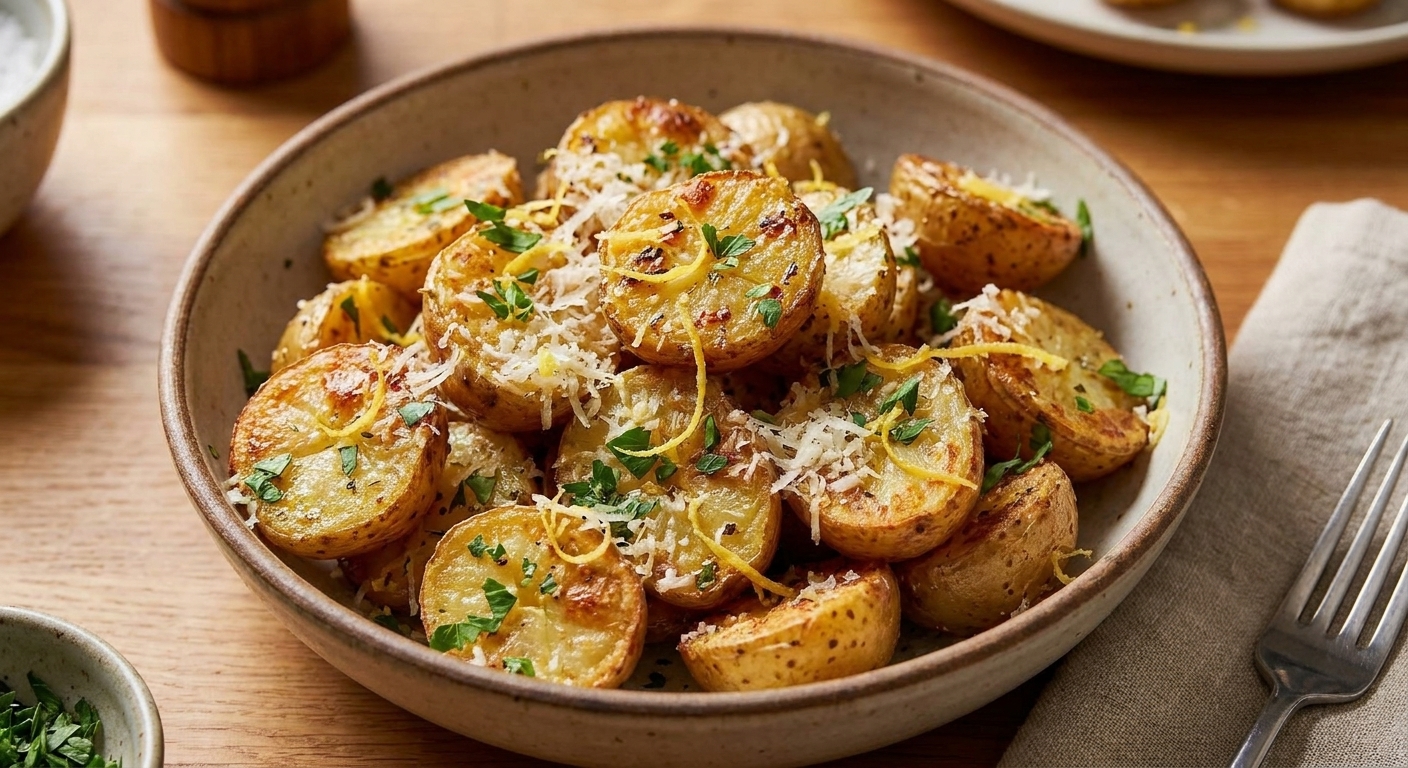
- Garlic Parmesan: Toss hot potatoes with 1 to 2 cloves microplaned garlic and 1/3 cup finely grated Parmesan. The residual heat mellows the garlic and the cheese clings to the crags.
- Smoky: Smoked paprika + a pinch of cumin + squeeze of lime.
- Vinegar salt and pepper: A quick splash of malt vinegar or sherry vinegar right out of the oven, then salt and lots of pepper.
- Chili crisp: Drizzle chili crisp and top with scallions for a fast, punchy finish.
Serving ideas
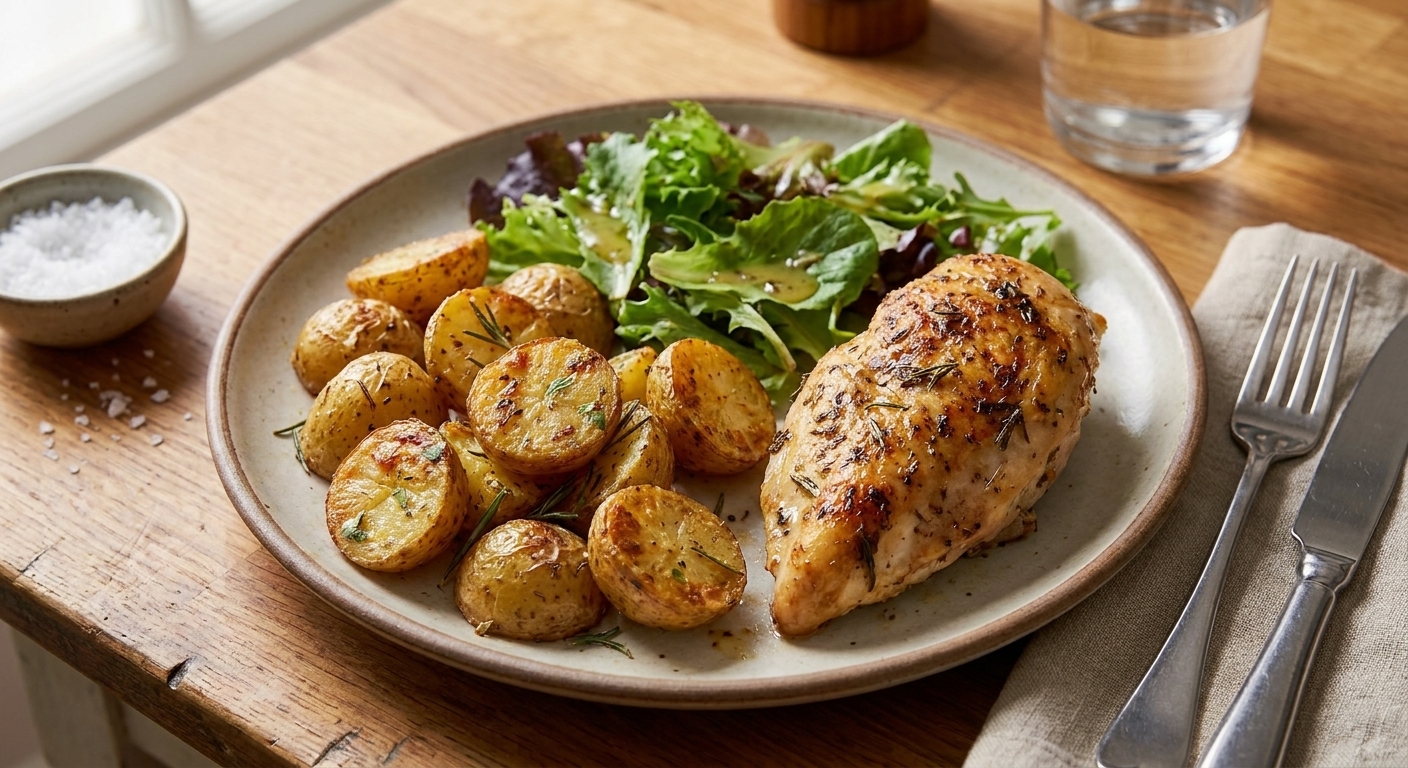
These potatoes are happy next to almost anything, but my favorite pairings are simple proteins and something bright:
- Roast chicken or skillet chicken thighs with a lemony salad
- Pan-seared salmon with dill yogurt or a squeeze of lemon
- Veggie bowls with tahini sauce, pickled onions, and greens
- Eggs any style for a breakfast-for-dinner plate
Storage and reheating
- Make ahead: Parboil, drain, rough up, and cool. Refrigerate up to 24 hours. When ready, toss with oil and roast as usual.
- Reheat: Re-crisp in a 425°F / 218°C oven or toaster oven for 10 to 15 minutes on a sheet pan. An air fryer also works beautifully.
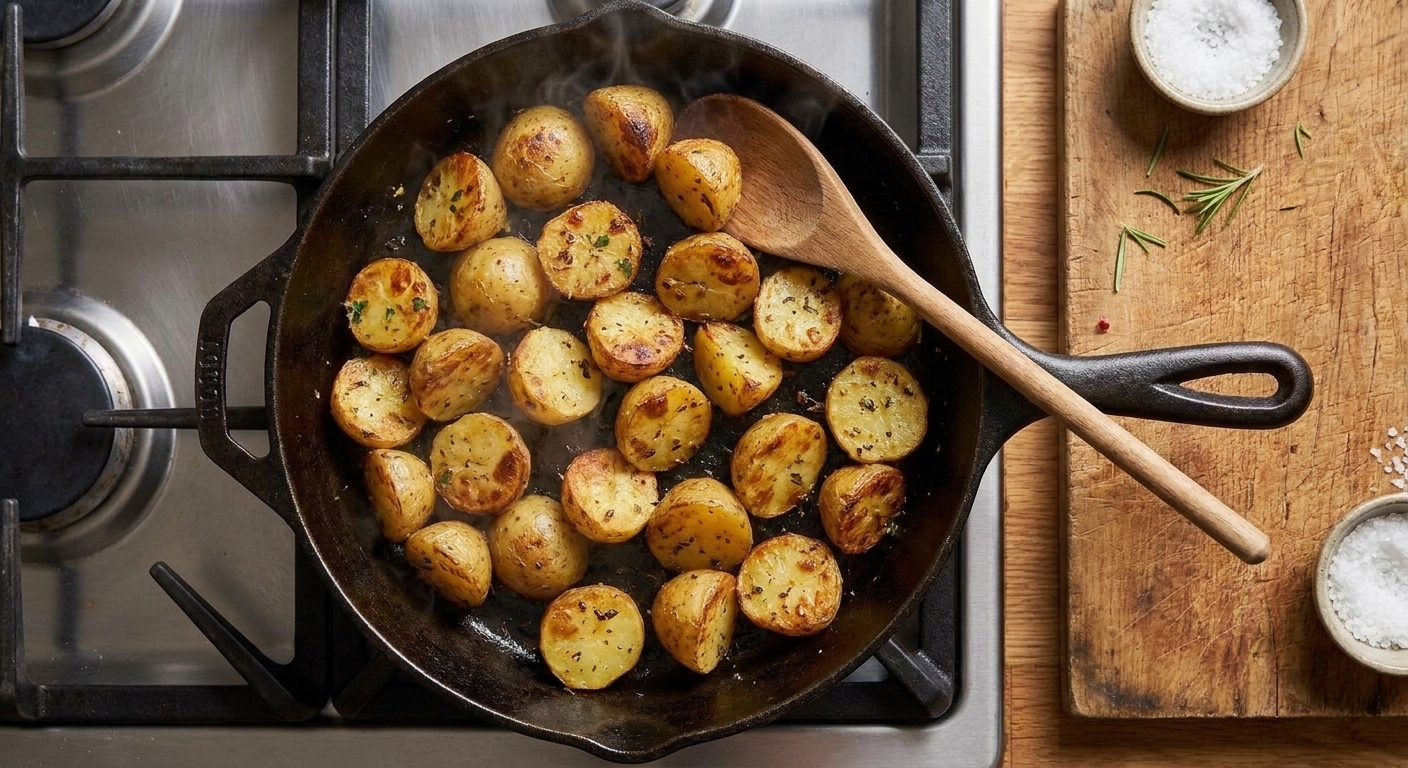
- Leftovers tip: Leftover roasted potatoes are great sliced and crisped in a skillet, then topped with a fried egg, salsa, or another sauce.
Common mistakes
- Not crispy: The pan was crowded or not hot. Use two pans if needed and preheat the pan.
- Brown but not crunchy: Too much oil can “fry-steam” the surface. Use enough to coat, not puddle.
- Sticking to the pan: Give them time. If you try to flip before a crust forms, they cling. Wait 5 more minutes, then try again.
- Burning edges: Potatoes cut too small or the oven runs hot. Drop to 425°F / 218°C and increase roast time slightly.
- Centers not tender: Parboil longer. The potato should be almost tender before it hits the oven.
FAQ
Do I have to boil them first?
No, you can roast from raw and still get crisp edges, especially with smaller pieces, convection, or an air fryer. But for the most reliable shatter-crisp texture with fluffy centers, parboiling and roughing up the surface is the method.
Which potato is best for crispy roasted potatoes?
Russets give the crispiest, fluffiest result. Yukon Golds are slightly creamier inside with excellent browning. If choosing one for a crowd, Yukon Gold is forgiving and still very crisp.
Can I use parchment paper?
Yes, but expect slightly less browning on the bottoms. For maximum crisp, roast directly on a preheated metal sheet pan. If sticking worries you, a thin film of oil on the pan is plenty.
When should I add garlic?
Powdered garlic can go in with the oil. Fresh minced garlic burns easily at 450°F / 232°C, so add it near the end or finish with microplaned garlic while the potatoes are hot.
Crispy Roasted Potatoes
Ultra-crispy roasted potatoes with jagged, crunchy edges and fluffy centers, made reliable by parboiling, roughing up the surface, and roasting hot on a preheated sheet pan.
- Prep
- 15 minutes
- Cook
- 55 minutes
- Total
- 1 hour 10 minutes
- Yield
- Serves 4
Ingredients
- 2 to 2 1/2 pounds potatoes (Yukon Gold or Russet)
- Kosher salt (for salting the water and for finishing)
- 1/2 teaspoon baking soda (optional, for the boil)
- 3 to 5 tablespoons oil (avocado oil, ghee, or light olive oil)
- Optional seasonings: black pepper, garlic powder, rosemary or thyme, smoked paprika, lemon zest, grated Parmesan, chopped scallions
- Optional finishing: flaky salt; a squeeze of lemon, a splash of vinegar, or a spoonful of chimichurri
Instructions
- Preheat oven and pan: Heat the oven to 450°F / 232°C (or 425°F / 218°C convection if your oven runs hot). Place a rimmed sheet pan in the oven while it heats.
- Cut potatoes: Cut potatoes into 1 1/2-inch pieces.
- Parboil: Put potatoes in a pot and cover with cold water by about 1 inch. Salt generously so the water tastes pleasantly salty. Bring to a boil, then reduce to a steady simmer. Start timing once simmering and cook until edges look slightly fuzzy and a knife slides in with a little resistance, 8 to 10 minutes (sometimes 12 for large chunks). If using, stir in 1/2 teaspoon baking soda once the water is boiling.
- Drain, dry, and rough up: Drain well, then return potatoes to the hot pot off the heat. Let sit 1 to 2 minutes so steam evaporates. Cover with the lid and shake a few times until the surfaces look roughed up and starchy.
- Toss with oil and season lightly: Transfer to a bowl. Toss with 3 to 5 tablespoons oil until every piece looks glossy. Season with a little salt now. Add optional pepper, garlic powder, or herbs if you want (keep fresh garlic for the last 10 minutes so it does not burn).
- Roast, flip, and finish roasting: Carefully remove the hot sheet pan. Add potatoes and spread into a single layer with space between pieces (use two pans if needed). Roast 20 minutes, then flip with a thin spatula. Roast another 15 to 25 minutes, rotating the pan when you flip if your oven browns unevenly, until deeply golden and crisp.
- Finish: Immediately season with flaky salt. Add a bright finish if desired (lemon, vinegar, or chimichurri) and any other toppings like Parmesan or scallions.
Notes
- Pan size and spacing: For 2 to 2 1/2 pounds, a standard half-sheet pan usually works. If you cannot spread the potatoes with breathing room, use two pans.
- Oil amount: Use enough to coat, not puddle. The higher end (5 tablespoons) is helpful for richer potatoes, extra craggy edges, or two pans.
- Fresh garlic timing: Add near the end of roasting or finish with microplaned garlic while the potatoes are hot to avoid burning.
- Parchment: It is fine to use, but expect slightly less browning on the bottoms compared to roasting directly on a preheated metal pan.
Nutrition
- Calories: 320
- Fat: 14 g
- Carbs: 45 g
- Protein: 5 g
- Fiber: 5 g
- Sugar: 2 g
- Sodium: 420 mg
Nutrition values are approximate and will vary based on potato size, exact oil amount used (3 to 5 tablespoons), and how much salt is absorbed.