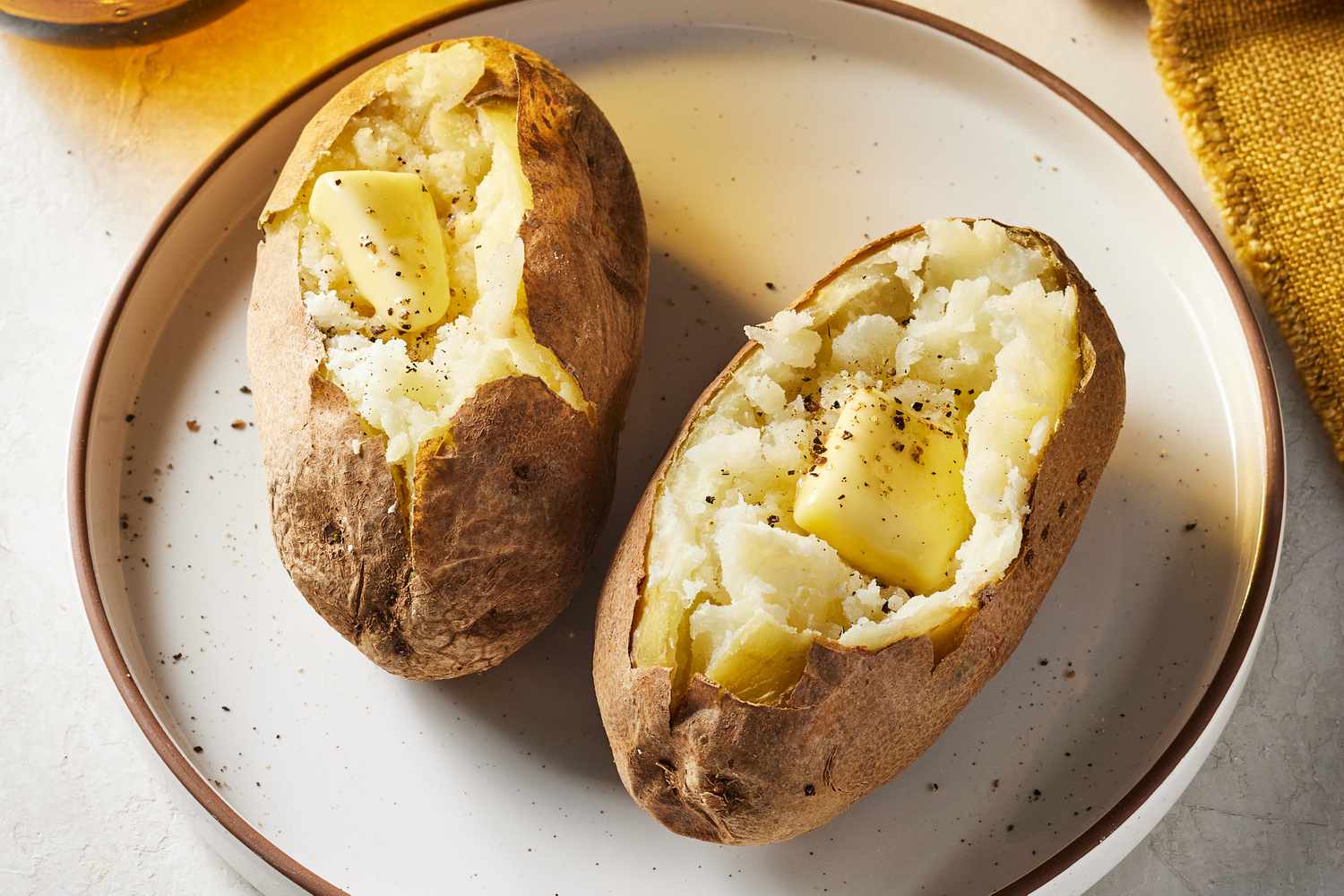
There is a reason a truly great baked potato feels like a little dinner miracle. The skin is crisp and deeply savory, the inside is light and fluffy like a cloud, and all it takes is one humble spud and a hot oven.
I have taught a lot of people to cook, and baked potatoes are one of my favorite confidence builders. You do not need foil. You do not need fancy gear. You just need the right potato, the right heat, and a couple of small moves that make a big difference.
What makes a baked potato perfect
- Dry heat + hot oven to dehydrate the skin so it turns crisp.
- Enough salt on the outside so the skin tastes like a snack, not a wrapper.
- Fully cooked interior so the center is fluffy, not gummy.
- A final split and fluff so steam escapes and the texture stays light.
Best potatoes to bake
Russets are the gold standard. They are high-starch and bake up fluffy inside with a skin that crisps well. If the bin says Idaho or russet, you are in the right place.
My go-to size: Aim for 8 to 10 oz russets if you want predictable timing.
Yukon Golds bake up creamier and slightly denser. Delicious, just a different vibe.
Sweet potatoes are their own category. You can use the same method, but expect a moister interior and a little more caramelization at the edges.
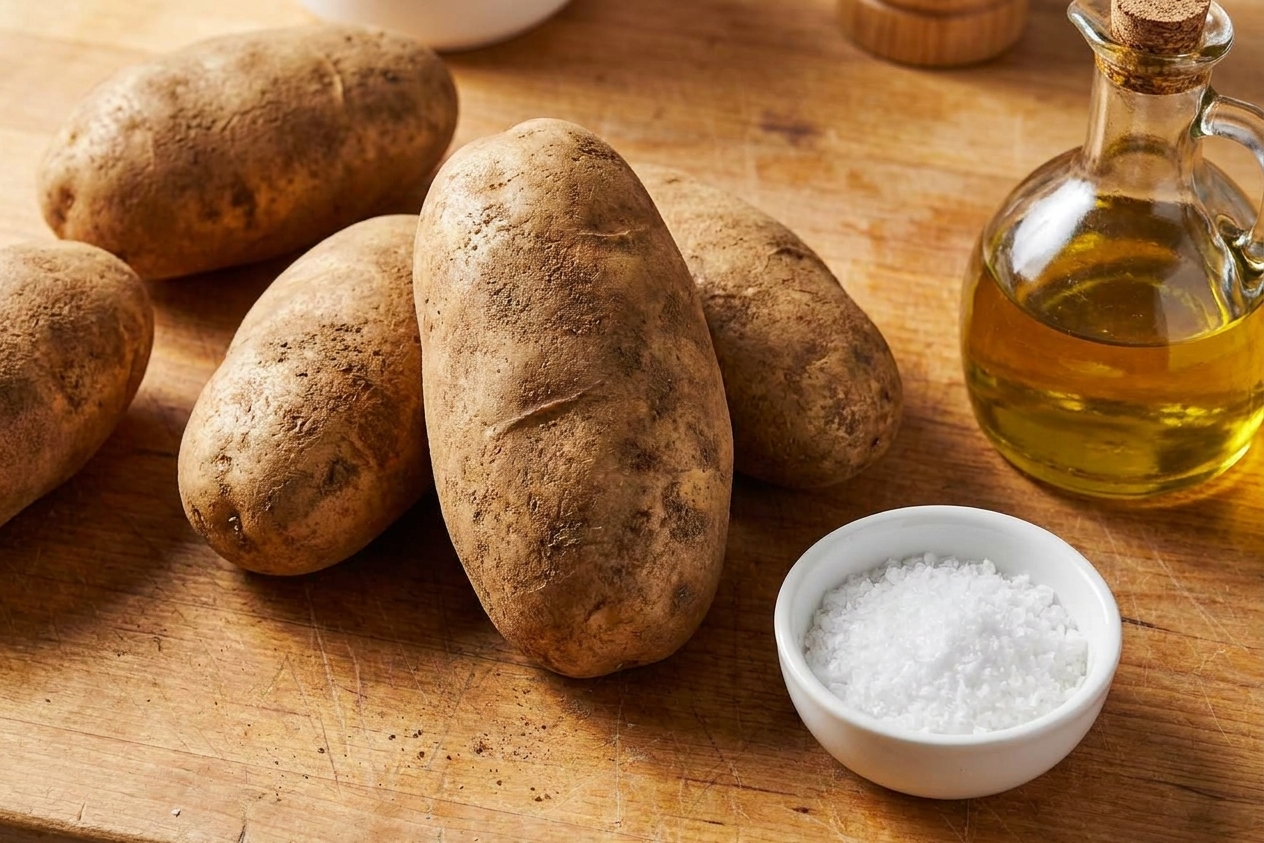
Ingredients
You only need three things for the classic baked potato. The rest is topping territory.
- Russet potatoes (1 per person, or 2 if you love leftovers)
- Oil (olive oil, avocado oil, or any neutral oil)
- Kosher salt (best for crunchy, even coverage)
Salt note: If you use fine salt, start lighter. It sticks fast and can over-salt more easily than kosher.
Step-by-step: Perfect baked potato (no foil)
Oven temp: 425°F
Best rack position: Middle rack
Tools: Sheet pan, fork or skewer, instant-read thermometer optional
- Heat the oven. Set it to 425°F. Give it a solid preheat so the skin starts crisping immediately.
- Scrub and dry well. Wash the potatoes, then dry them thoroughly with a towel. Wet skins steam. Dry skins crisp.
- Prick to vent. Use a fork to poke each potato 6 to 10 times. You are giving steam a place to escape so the potato bakes evenly.
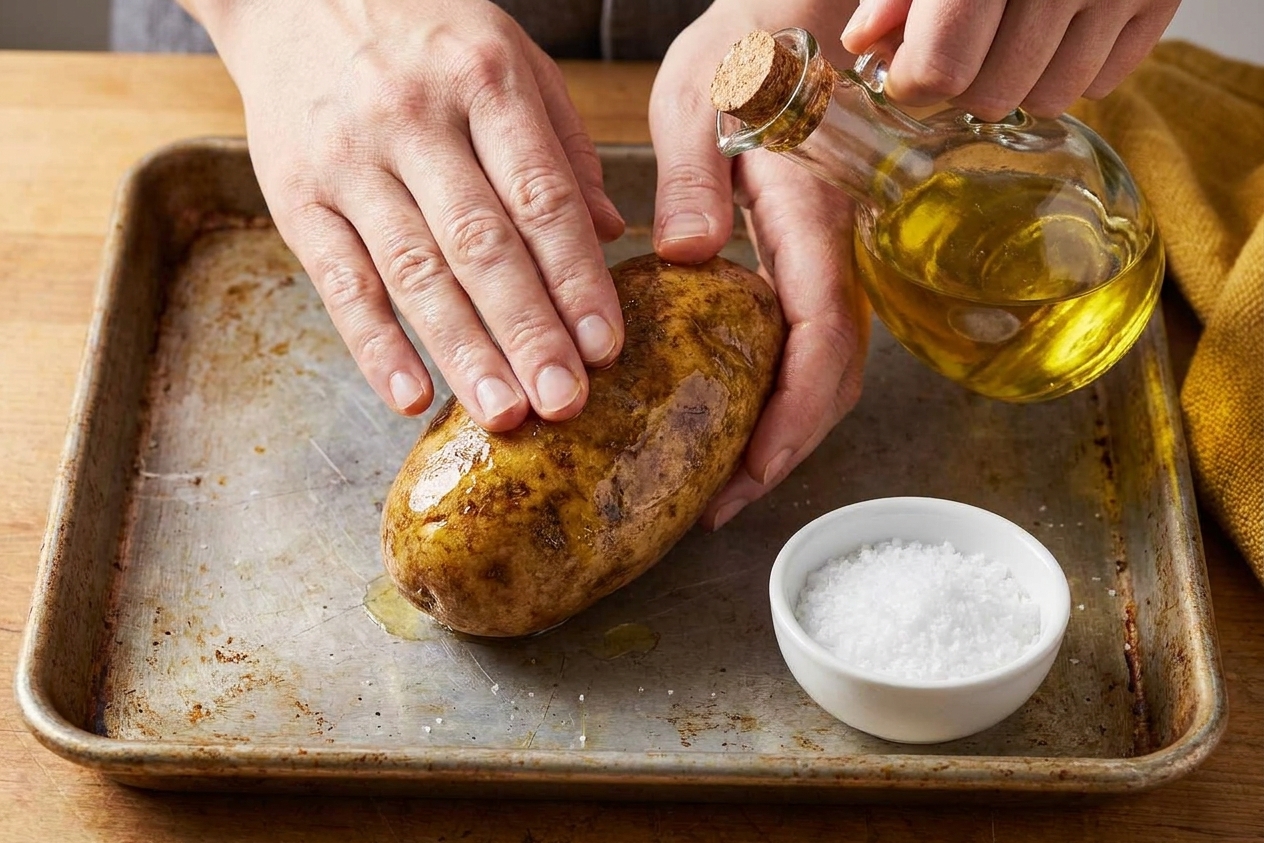
- Oil and salt. Rub each potato all over with a thin coat of oil, then sprinkle generously with kosher salt. The skin should look lightly glossy and feel gritty with salt.
- Bake directly on the rack, or on a pan. For the crispiest skin, place potatoes directly on the oven rack with a sheet pan on the rack below to catch drips. This method can shed a little oil and salt, so the pan is not optional. If you prefer simple cleanup, bake on a sheet pan. Both work. If your oven has hot spots, rotate the potatoes once halfway through.
- Cook until truly tender. Start checking at 50 minutes for medium potatoes. A skewer should slide in with almost no resistance. If you use an instant-read thermometer, aim for 205 to 210°F in the center. Treat temperature as backup and texture as the main test.
- Dry-out finish (my secret for crackly skin). Turn the oven off, crack the door open, and let the potatoes sit inside for 5 to 10 minutes. This helps evaporate surface moisture. For small potatoes, keep it closer to 5 minutes so they do not overdo it.
- Split and fluff right away. Cut a slit lengthwise, squeeze the ends toward each other to open, then use a fork to fluff the interior. This quick step matters because it lets steam escape instead of compacting the inside. Add butter while the potato is piping hot so it melts into every nook.
How long to bake potatoes
Bake time depends on potato size and how hot your oven runs. Use these as guidelines, then confirm with the skewer test.
- Small (5 to 6 oz): 40 to 50 minutes at 425°F
- Medium (8 to 10 oz): 50 to 65 minutes at 425°F
- Large (12 to 14 oz): 65 to 80 minutes at 425°F
My best cue: If you have to force the fork, keep baking. A perfect baked potato gives up easily.
Foil or no foil?
No foil for crispy skin. Foil traps steam, which softens the skin and gives you a slightly more steamed interior. If you love a soft, steamy jacket potato style, foil will get you there. For the classic steakhouse crisp skin, skip it.
Common problems
The skin is tough, not crisp
- Cause: Not enough oil or salt, or the potato was still damp.
- Fix: Next time dry better, oil lightly, salt generously. Add the 5 to 10 minute dry-out finish in the turned-off oven.
The inside is gluey or dense
- Cause: Underbaked, or a waxy potato variety.
- Fix: Bake longer and use russets. Use the skewer test, and if you temp it, aim for 205 to 210°F.
The potato feels dry
- Cause: Very small potatoes, very long bake, or holding too long in a hot oven.
- Fix: Serve right away, or hold correctly (see below). Always fluff and add butter or a tangy topping to bring it back to life.
The potato split open
- Cause: Steam pressure plus a weak spot in the skin.
- Fix: Prick all over. Even if it splits, it is still delicious.
Best toppings
This is where my salt-and-acid obsession shows up. A baked potato loves richness, but it also needs something bright to keep it from tasting flat.
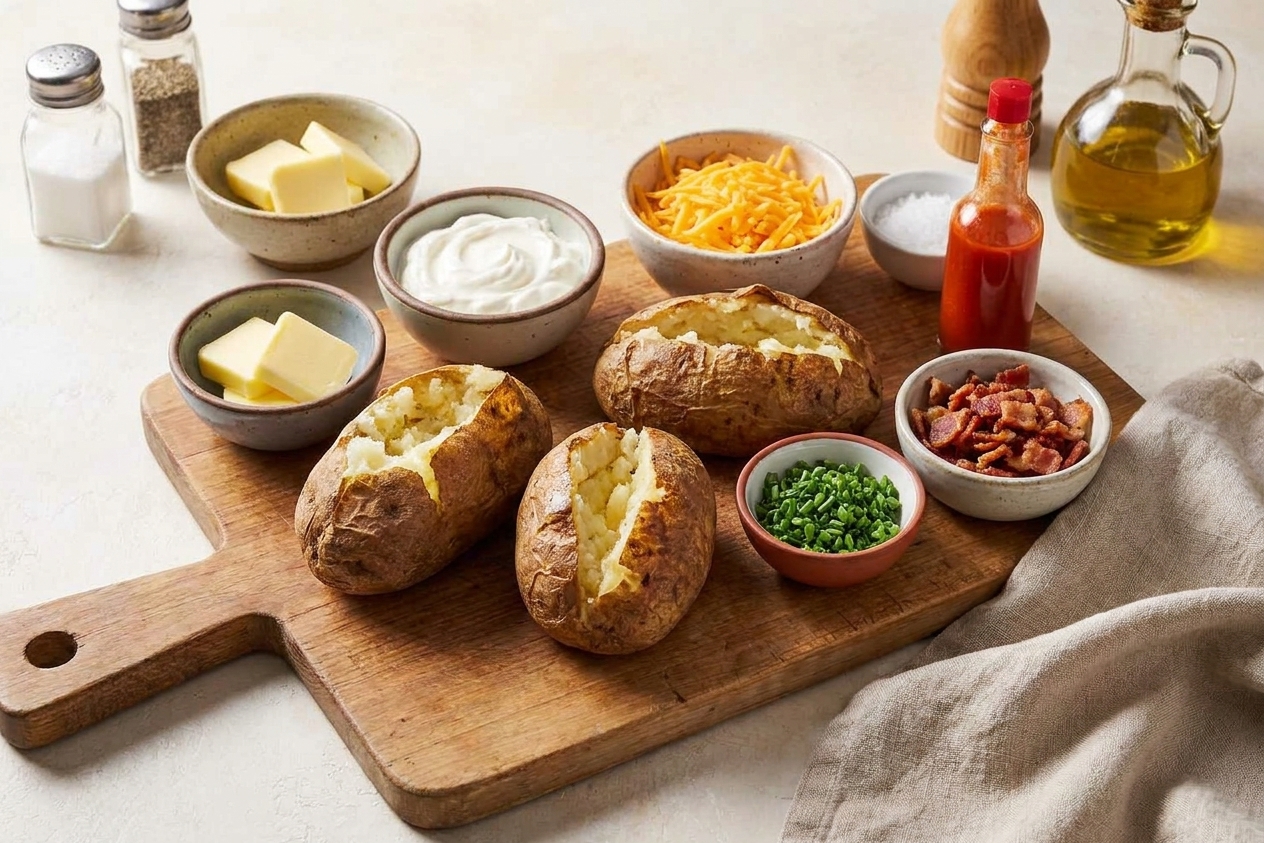
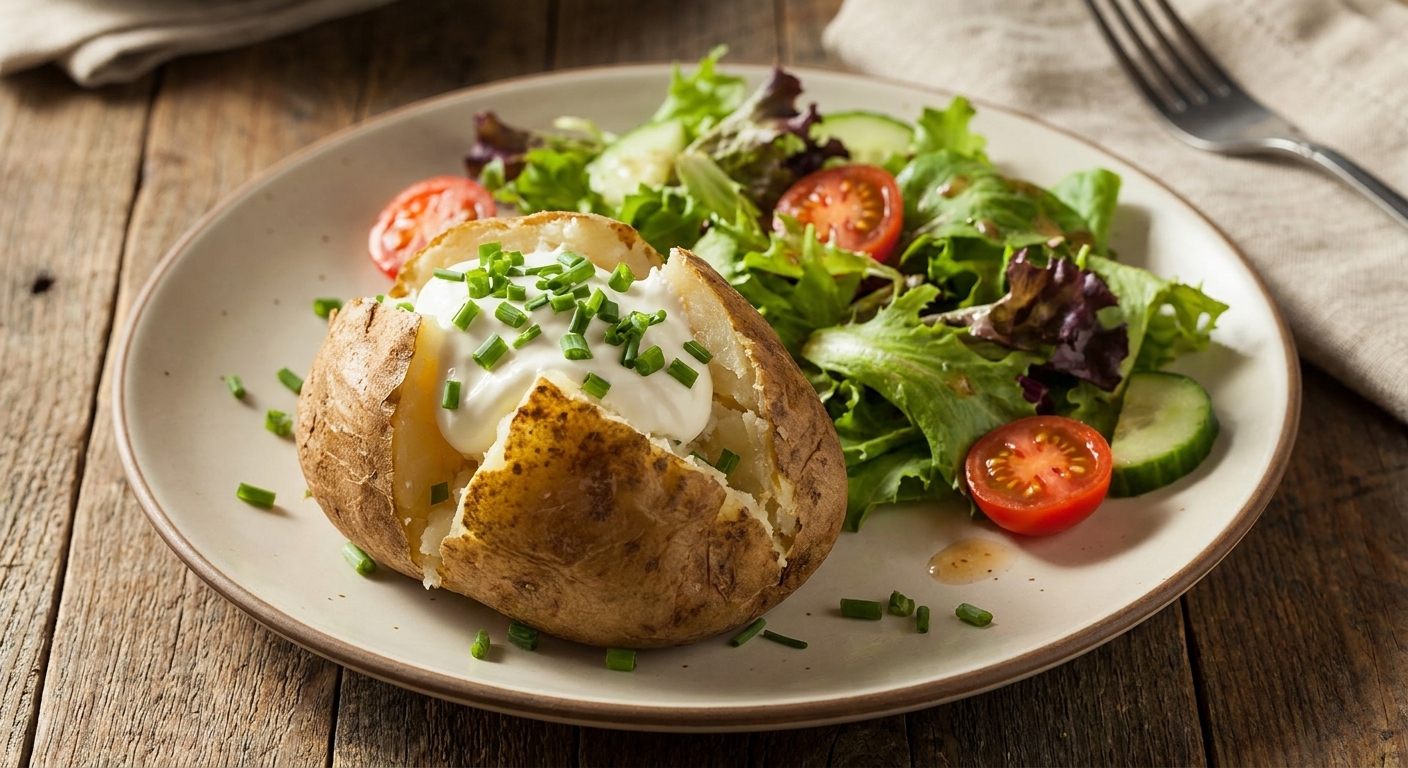
- Classic: Butter + sour cream + chives, with a pinch of salt on the cut surface.
- Bright and herby: Greek yogurt + lemon zest + scallions + black pepper.
- Loaded: Cheddar + bacon + sour cream, finished with pickled jalapeños or hot sauce for acidity.
- Weeknight chili potato: Leftover chili + shredded cheese + a squeeze of lime.
- Veggie-forward: Sautéed mushrooms + spinach + a little grated Parmesan.
- Pantry win: Cottage cheese + everything bagel seasoning + chopped tomatoes.
Make-ahead, storage, and reheating
Can you bake potatoes ahead?
Yes. If you are meal prepping, bake them until fully tender, cool quickly, then refrigerate.
How to store
- Refrigerate: 3 to 4 days in an airtight container. For best quality and safety, refrigerate within 2 hours of baking.
- Food waste tip: Bake a few extra on purpose. Tomorrow’s breakfast potato with eggs is an easy win.
Best ways to reheat
- Oven (best texture): 375°F for 15 to 25 minutes, until hot in the center.
- Air fryer (crispy skin fast): 370°F for 8 to 12 minutes.
- Microwave (fastest): 2 to 4 minutes, turning once. Then crisp the skin in a hot skillet with a tiny splash of oil for 2 to 3 minutes per side if you have time.
Skip the foil when reheating if you want the skin to stay crisp.
Serving ideas
- With a simple green salad and a tangy vinaigrette
- Next to roast chicken or salmon
- As a DIY baked potato dinner with a topping bar
- Split and topped with leftover taco meat, salsa, and avocado
FAQ
Do I need to soak potatoes before baking?
No. Soaking helps with fries. For baked potatoes, the key is scrubbing and drying well.
Should I oil before or after baking?
Before. Oil helps the skin crisp and helps the salt adhere evenly.
Can I bake potatoes at 350°F?
You can, but it takes longer and the skin tends to be less crisp. If 350°F is already in use for another dish, plan on 75 to 95 minutes for medium russets and rely on the skewer test.
Is it safe to hold baked potatoes warm for a party?
Yes, with a couple of guardrails. Hot-hold baked potatoes at 140°F or warmer. A 200°F oven works well for up to 1 hour. Do not wrap baked potatoes in foil and leave them at room temperature for long stretches.
Why do restaurants have such fluffy baked potatoes?
Two reasons: they bake them until fully done, and they split and fluff right away so steam escapes instead of compacting the interior. You can absolutely do that at home.