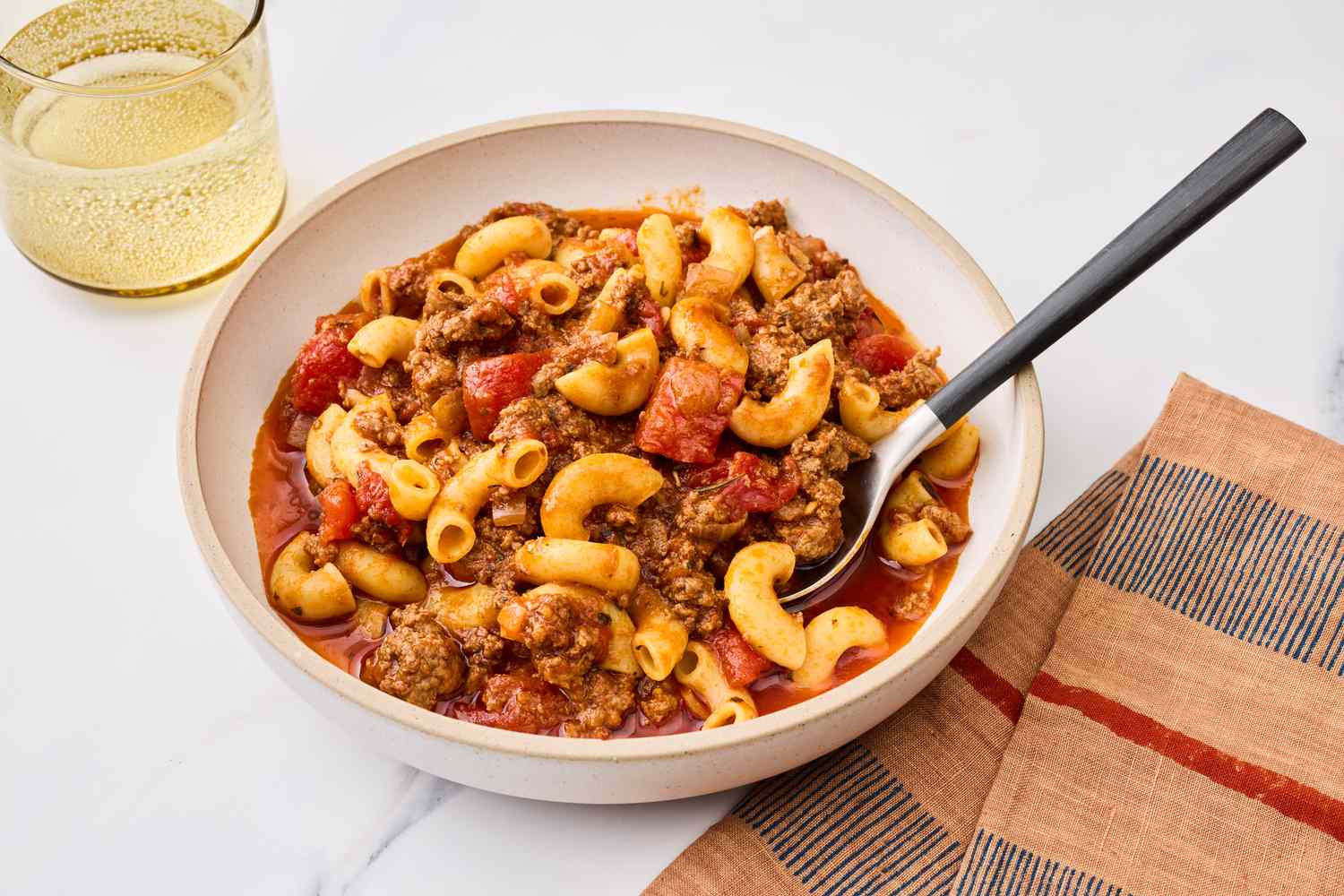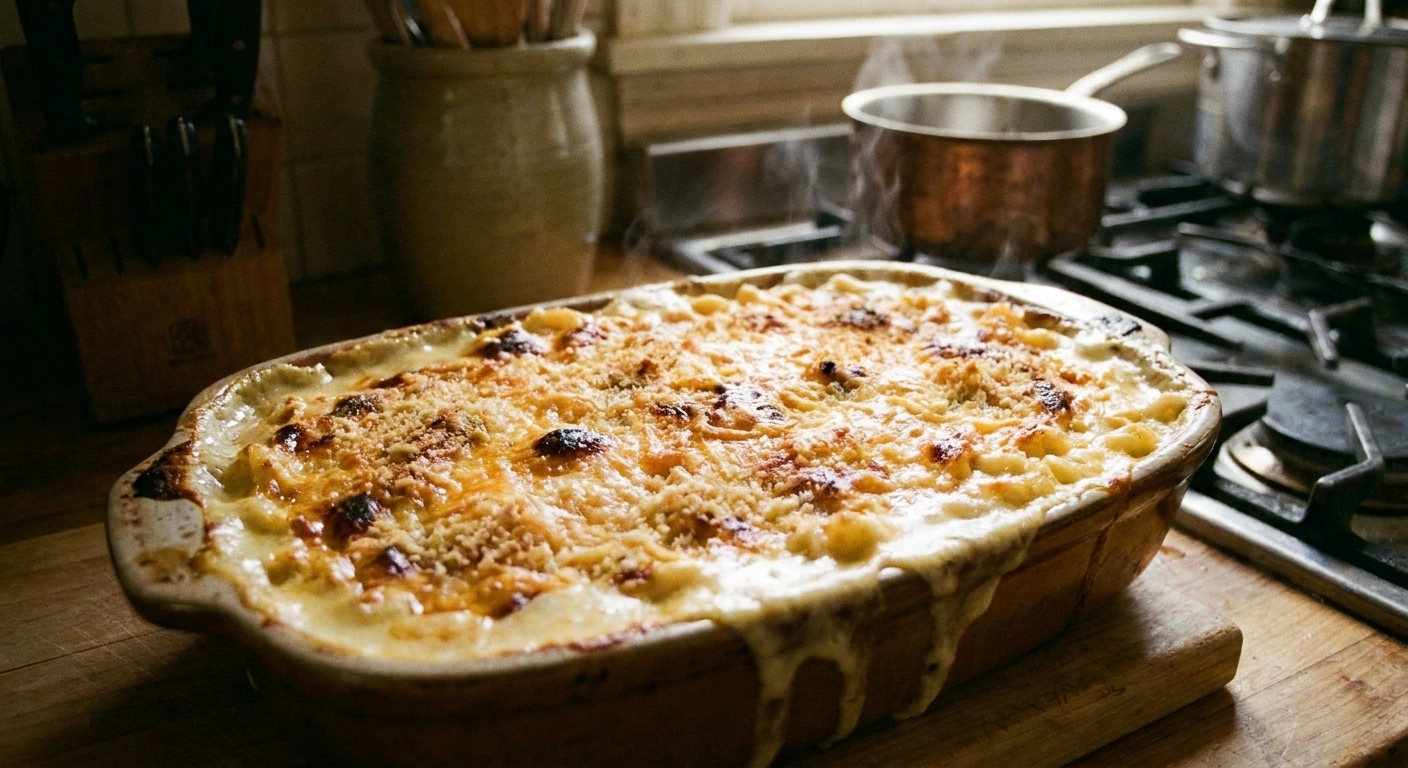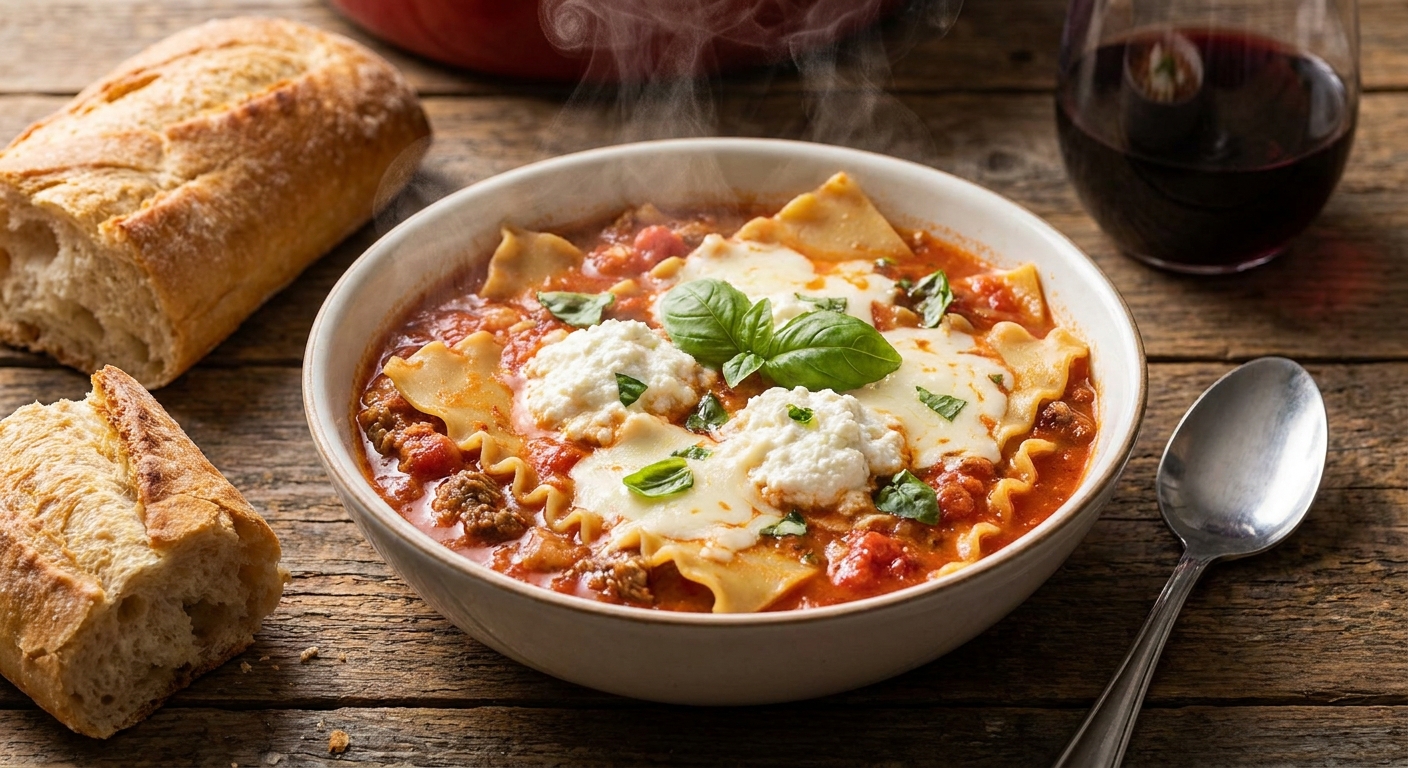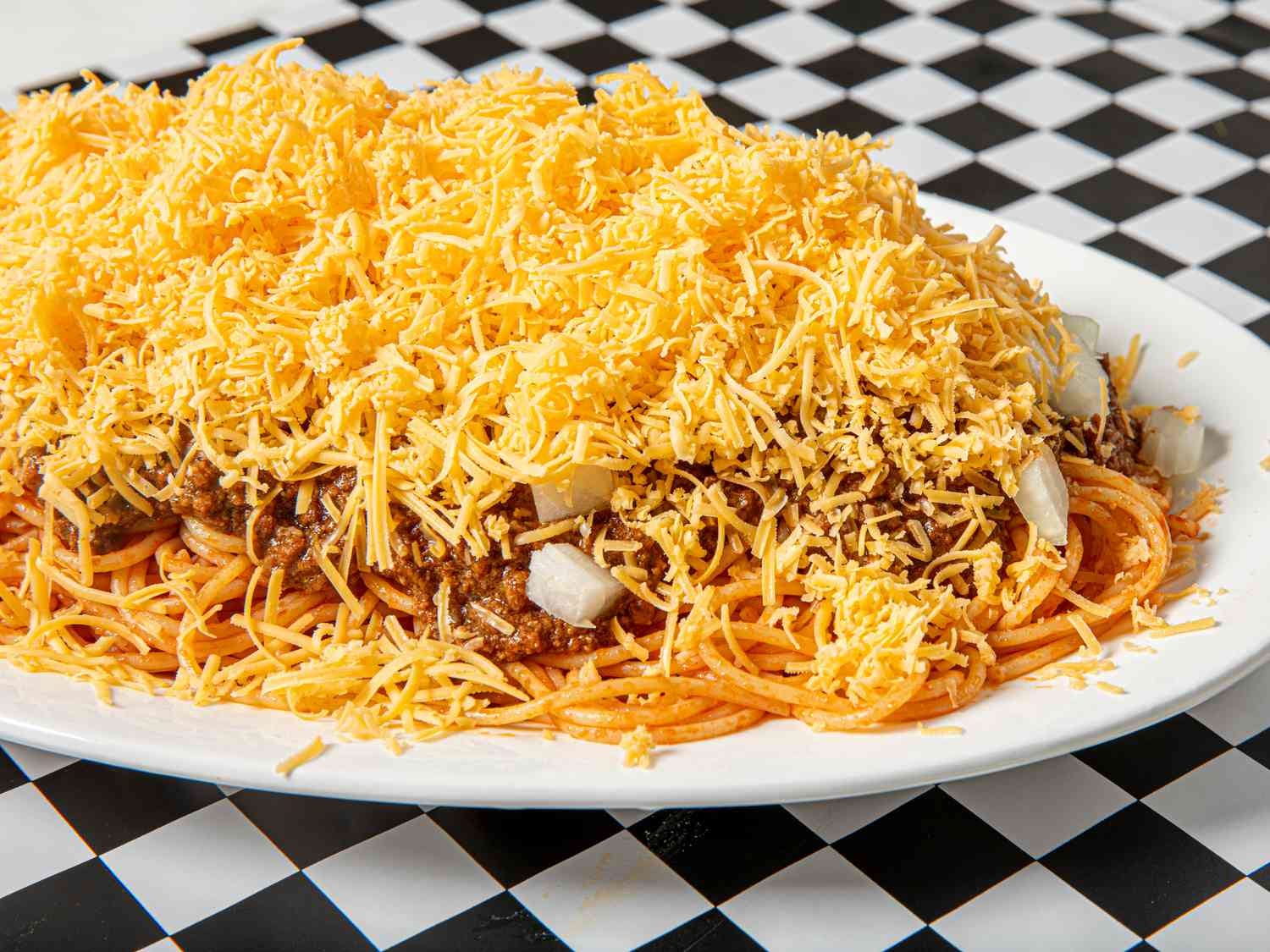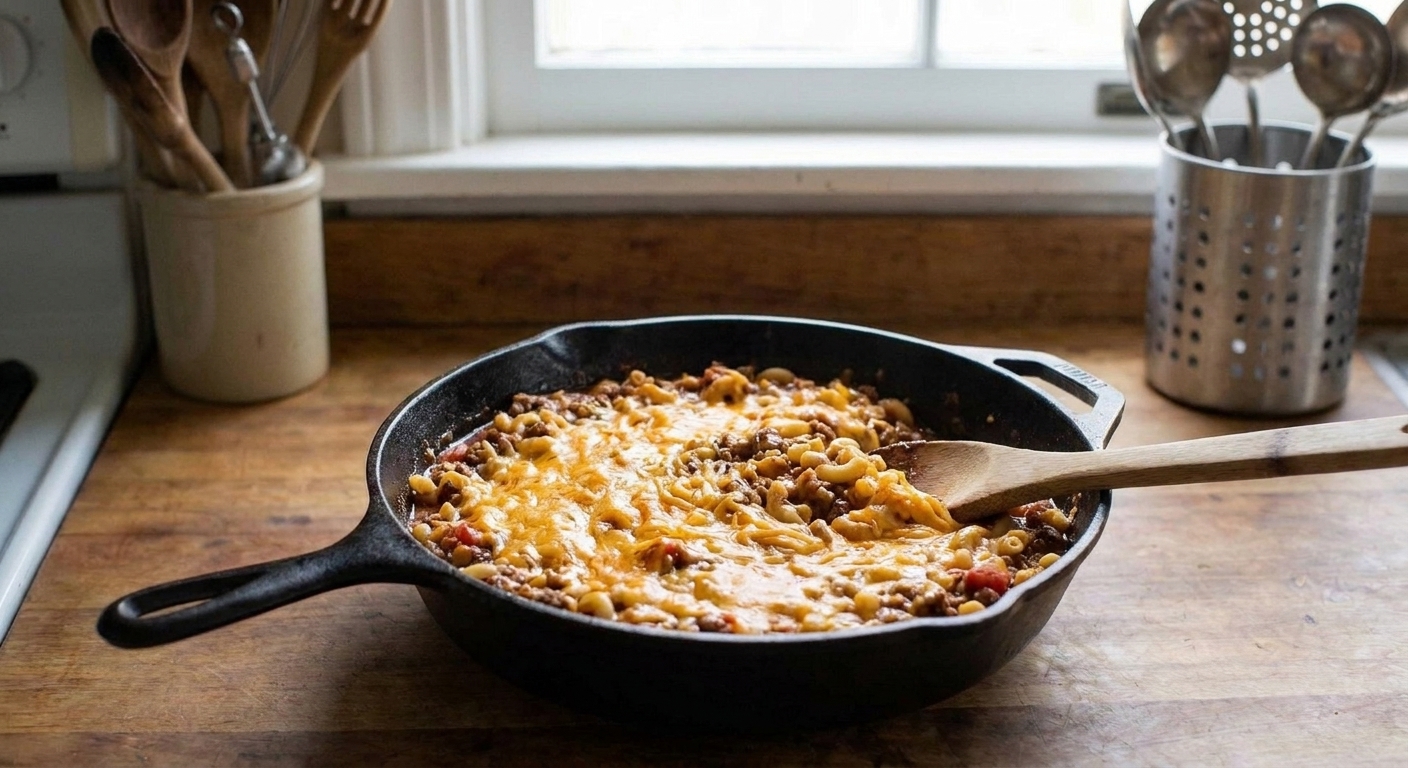

Chili mac is what I make when I want the coziness of chili and the comfort of mac and cheese. I also do not want extra pots to wash. Everything happens in one skillet: ground beef gets browned with onion and garlic, a quick chili-spiced tomato base simmers into a thick, spoon-coating sauce, then the macaroni cooks right in that sauce until it is tender and glossy. Finish with cheese, cover just until it melts, and dinner is basically done.

The make-or-break detail is the sauce thickness before the pasta goes in. Too thin and the macaroni drinks it up, leaving you with a diluted, underseasoned situation. Too thick and the pasta cannot hydrate evenly, and you can end up with firm, even crunchy centers. In this recipe, you will simmer the chili base until it looks like thick chili, then add just enough broth to create a looser simmering sauce for the pasta to cook in.
I also lean on a small splash of acid at the end, usually a squeeze of lime or a dash of apple cider vinegar, to make all that tomato and cheese taste brighter. It is the same “balance the pot” trick I taught culinary students for years, and it makes a big, beefy skillet taste like you meant it to.
Why this recipe works
- Sauce first, pasta second. Building and thickening the chili base before adding macaroni prevents watery, mushy results and keeps the flavor concentrated.
- Measured liquid addition. A controlled amount of broth gives the pasta enough moisture to cook while still finishing with a thick, clingy sauce.
- Covered simmer = even cooking. Keeping the skillet covered traps steam so the macaroni cooks through without constant stirring.
- Cheese added off the heat. Stirring cheese in once the pasta is tender helps it melt smoothly instead of turning grainy.
- Optional acid at the end. A quick squeeze of lime or a dash of vinegar wakes up the tomato and chili spices without making it taste sour.
Ingredient notes
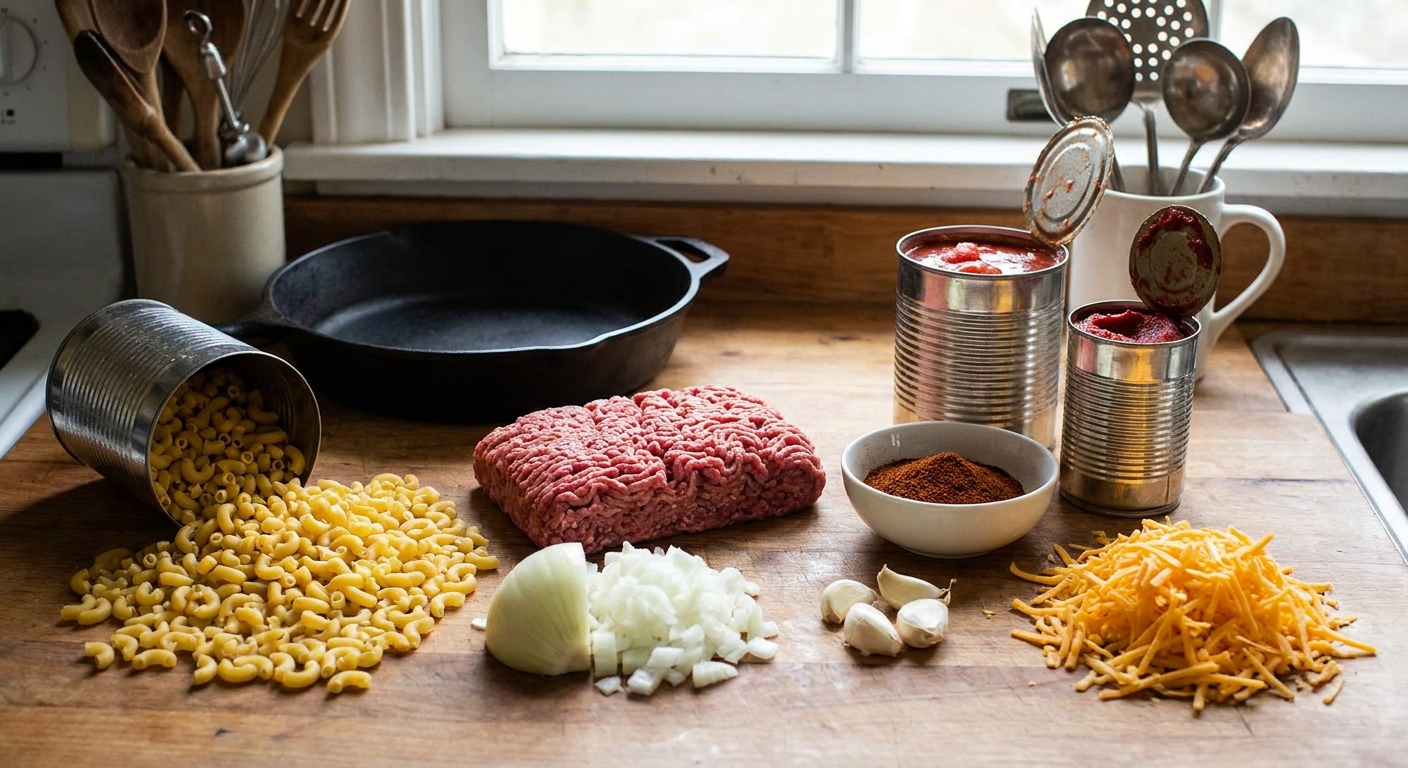
- Ground beef: I like 85 to 90 percent lean for flavor without a greasy finish. If you use very lean beef, add a little oil to help the onion soften.
- Chili powder: Use the standard American chili powder blend (not pure chile powder). If yours is mild, you can add a pinch of cayenne later.
- Tomato paste: This is your secret weapon for thickness. Cooking it for a minute or two deepens flavor and helps the final sauce cling to the pasta.
- Canned tomatoes: Crushed tomatoes make the smoothest sauce. Diced tomatoes work too, just expect a chunkier texture.
- Broth or water: Broth adds flavor, water works in a pinch. Warm liquid helps the skillet return to a simmer faster after the pasta goes in.
- Cheese: Sharp cheddar is classic. Grate it yourself if you can since pre-shredded cheese often contains anti-caking agents that melt less smoothly.
- Beans (optional): Not required for chili mac, but a can of drained beans stretches the skillet and is a great way to use up pantry odds and ends.
Equipment you will need
- Large deep skillet (12-inch) with a lid, or a wide Dutch oven
- Wooden spoon or sturdy spatula for browning and scraping
- Microplane or garlic press (optional, but handy)
- Box grater for shredding cheese
- Measuring cups for the pasta and liquid
Pro tips
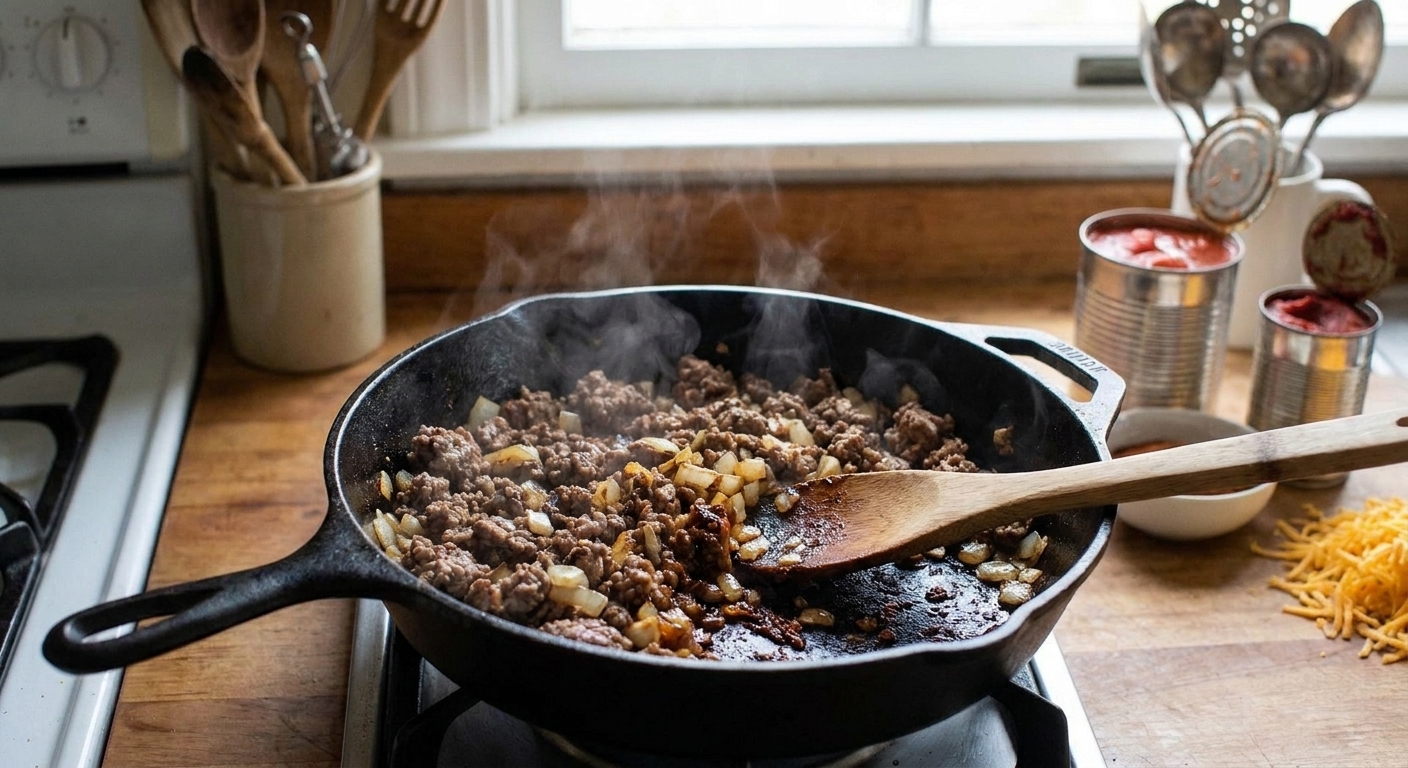
- What “thick enough” looks like before adding pasta: After the tomato base simmers, drag your spoon through the sauce. It should leave a trail that slowly fills in, not immediately flood back together like soup.
- When to add the pasta: Add macaroni only after the sauce has thickened and you have added the measured broth. The liquid should be actively simmering when the pasta hits the pan.
- Stir, but not constantly: Stir well right after adding pasta to prevent clumps, then cover and stir every 2 to 3 minutes so nothing sticks.
- Stop cooking when it is just tender: Pull it off heat when the macaroni is al dente to tender. It will continue to soften as it sits, especially under melted cheese.
- Dial in salt at the end: Tomatoes and cheese vary a lot. Taste once the pasta is cooked, then adjust salt and acid.
- Food waste win: This is a perfect home for lonely half-bags of shredded cheese, a wrinkly bell pepper, or a handful of spinach stirred in at the very end.
Substitutes that work
- Ground turkey or chicken: Swap 1:1. Add 1 tablespoon oil if the pan looks dry while browning.
- Plant-based crumbles: Cook according to the package, then build the sauce the same way. You may need slightly less simmer time since there is less fat to reduce.
- Elbow macaroni alternatives: Small shells, ditalini, or cavatappi work well. Avoid very tiny pasta (it overcooks fast) and very large shapes (they cook unevenly in a skillet).
- Tomato sauce instead of crushed tomatoes: Use an equal amount, then reduce broth slightly since sauce is usually thinner.
- Cheese swaps: Monterey Jack melts beautifully. Pepper Jack adds heat. A little smoked cheddar tastes like chili cookout energy.
- Gluten-free pasta: Works, but watch closely and stir more often. Many gluten-free pastas go from firm to mushy quickly.
Variations
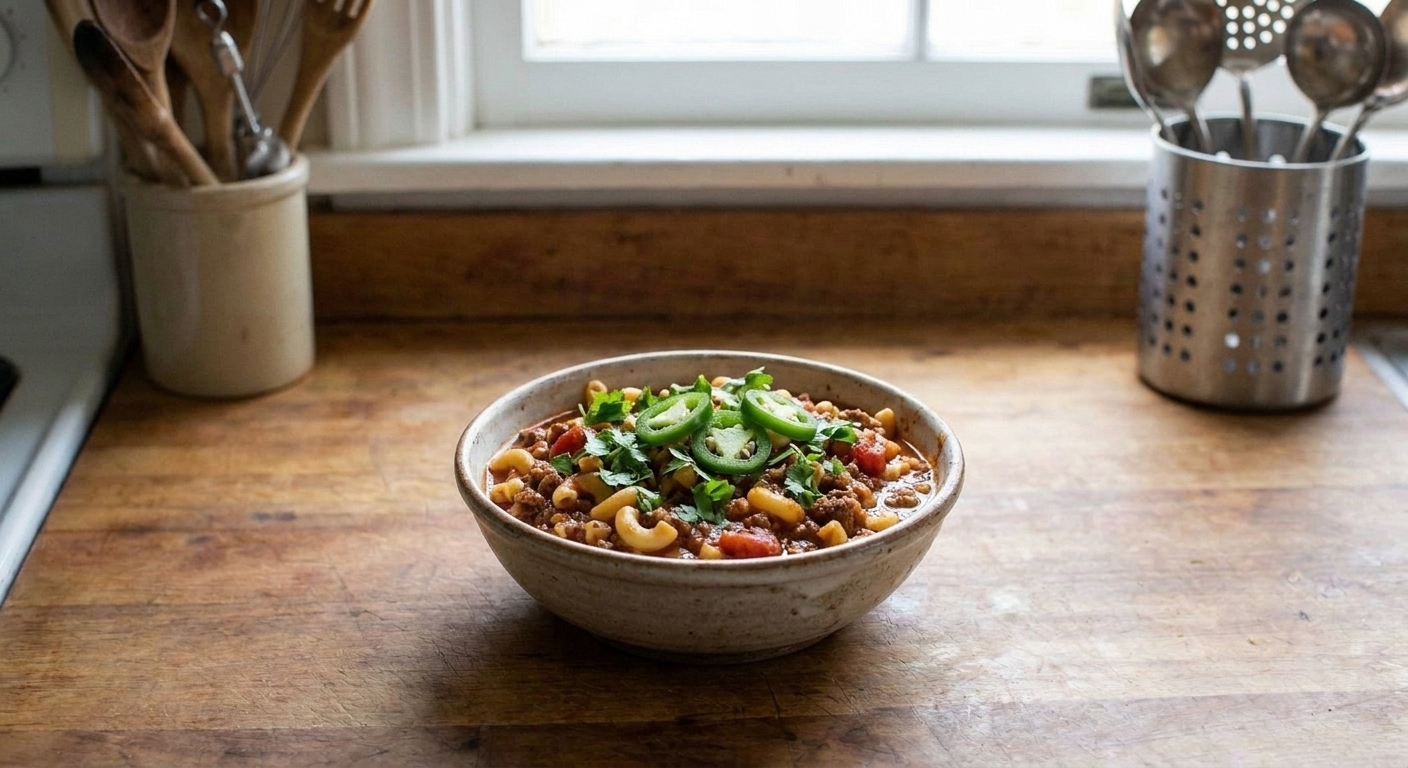
- Bean-boosted chili mac: Stir in 1 (15-ounce) can drained kidney beans or black beans with the broth and pasta.
- Veggie-forward: Dice bell pepper or zucchini and sauté with the onion. Add a handful of corn near the end.
- Extra smoky: Add 1 to 2 teaspoons smoked paprika, or use fire-roasted crushed tomatoes.
- Spicier: Add diced jalapeño with the onion, or finish with hot sauce.
- “Mac and chili” bake finish: If your skillet is oven-safe, top with cheese and broil just until bubbly and lightly browned.
Serving ideas
- Toppings bar: Sour cream or Greek yogurt, sliced scallions, chopped cilantro, pickled jalapeños, or crushed tortilla chips.
- Side salad: Something crisp and acidic like romaine with a lime vinaigrette helps balance the richness.
- Cornbread or toast: Ideal for scooping up the last bits of sauce.
- For kids: Keep the spice mild and let everyone add hot sauce at the table.
Storage and reheating
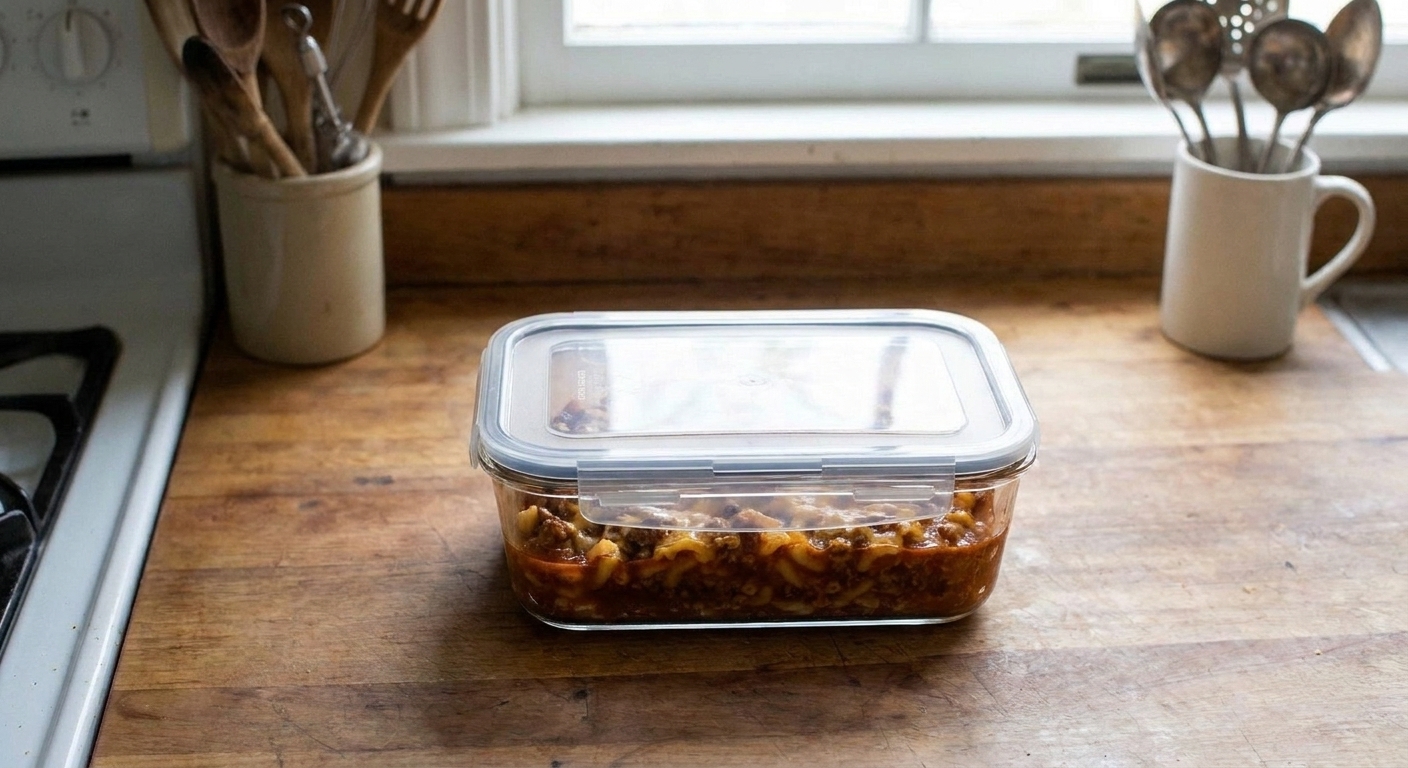
- Refrigerate: Cool, then store airtight for up to 4 days.
- Reheat: Warm in a saucepan or skillet over medium-low with a splash of water or broth, stirring often. This brings the sauce back to a silky consistency.
- Microwave: Add a splash of water, cover loosely, and heat in 45 to 60 second bursts, stirring between.
- Freezing: You can freeze it, but pasta softens after thawing. If you plan to freeze, slightly undercook the pasta and thaw overnight in the fridge before reheating gently.
Common mistakes
- Adding pasta to a thin sauce: The macaroni absorbs liquid fast and you end up with bloated pasta and bland flavor. Simmer the sauce until thick before adding broth and pasta.
- Cooking the pasta too long: Skillet pasta keeps cooking as it sits. Stop when it is just tender and still holds its shape.
- Not scraping the pot: Those browned bits after beef browning are flavor. Deglaze with your tomatoes or broth and scrape well.
- Boiling hard instead of simmering: A gentle simmer cooks pasta evenly and reduces splattering.
- Overheating the cheese: If you boil after adding cheese, it can turn grainy. Melt it off heat or on very low.
FAQ
How thick should the sauce be before adding the macaroni?
Think thick chili, not soup. When you drag a spoon through the sauce, you should see the bottom of the pan for a second before the sauce slowly levels out. If it floods back instantly, simmer a few more minutes. If it is so thick it looks paste-like, loosen with a splash of broth.
Why did my chili mac turn mushy?
The two usual culprits are (1) adding pasta too early, before the sauce had a chance to reduce and concentrate, and (2) cooking past tender. Next time, reduce the sauce first and start checking the pasta a few minutes before the box time.
Can I cook the pasta separately?
Yes, but the skillet method is what makes this taste cohesive. If you cook pasta separately, keep the chili sauce slightly looser and toss the drained pasta in at the end with a splash of broth so it can marry with the sauce.
How do I fix chili mac that is too thick?
Add broth or water a tablespoon or two at a time over low heat, stirring until glossy. Pasta keeps absorbing liquid as it sits, so loosening is normal when reheating.
How do I fix chili mac that is too soupy?
Simmer uncovered for a few minutes, stirring often, until it thickens. If it still will not tighten up, add a spoonful of tomato paste and simmer briefly.
Chili Mac
A one-skillet chili mac with chili-spiced ground beef, a thick tomato sauce, tender elbow macaroni cooked right in the pan, and a melted cheese finish.
- Prep
- 10 minutes
- Cook
- 25 minutes
- Total
- 35 minutes
- Yield
- 6 servings
Ingredients
- 1 tablespoon olive oil (optional, as needed)
- 1 medium yellow onion, diced
- 3 cloves garlic, minced
- 1 pound ground beef (85 to 90 percent lean)
- 2 tablespoons tomato paste
- 2 to 3 tablespoons chili powder (to taste)
- 1 teaspoon ground cumin
- 1 teaspoon kosher salt, plus more to taste
- 1/2 teaspoon black pepper
- 1 (28-ounce) can crushed tomatoes
- 2 cups low-sodium beef broth or water, plus more as needed
- 2 cups (about 8 ounces) elbow macaroni
- 2 cups shredded sharp cheddar cheese
- 1 tablespoon lime juice or 1 teaspoon apple cider vinegar (optional, for finishing)
- Optional toppings: sour cream, sliced scallions, cilantro, jalapeños, hot sauce
Instructions
- Sauté the aromatics. Set a large deep skillet or wide Dutch oven over medium heat. Add olive oil if your pan is dry. Add the onion and cook, stirring, until softened, 4 to 5 minutes. Add the garlic and cook 30 seconds, just until fragrant.
- Brown the beef. Add the ground beef. Cook, breaking it up with a spoon, until browned and cooked through, 6 to 8 minutes. If there is a lot of excess fat, carefully spoon off most of it, leaving about 1 tablespoon for flavor.
- Toast the tomato paste and spices. Add tomato paste, chili powder, cumin, salt, and pepper. Cook, stirring constantly, for 1 to 2 minutes until the paste darkens slightly and everything smells toasty.
- Build and thicken the sauce. Stir in crushed tomatoes. Bring to a simmer, then reduce heat to maintain a gentle simmer and cook uncovered 5 to 7 minutes, stirring occasionally, until the sauce thickens to a chili-like consistency. You should be able to drag a spoon through and see a trail that slowly fills back in.
- Add broth, then pasta. Stir in the broth and bring back to a lively simmer. Add the elbow macaroni and stir well so it is evenly submerged.
- Simmer covered until tender. Cover and simmer, stirring every 2 to 3 minutes to prevent sticking, until the macaroni is tender and the sauce is thick and glossy, 9 to 12 minutes. If the pan looks dry before the pasta is tender, add a splash more broth or water and keep simmering.
- Melt in the cheese. Reduce heat to low. Stir in half the cheddar until melted. Sprinkle the remaining cheddar over the top, cover, and cook 1 to 2 minutes until the cheese melts.
- Finish and serve. Turn off the heat. Taste and adjust salt. Stir in lime juice or vinegar if using. Let stand 2 minutes to thicken slightly, then serve with your favorite toppings.
Notes
Sauce thickness cue: Before adding broth and pasta, the tomato base should be thick enough that a spoon leaves a track. If it is still loose, simmer a few minutes longer.
Pasta timing cue: Start checking the macaroni a couple minutes before you think it will be done. Pull the skillet off heat when the pasta is just tender since carryover cooking is real.
Make it stretch: Add 1 can of drained beans with the broth for an easy pantry boost.