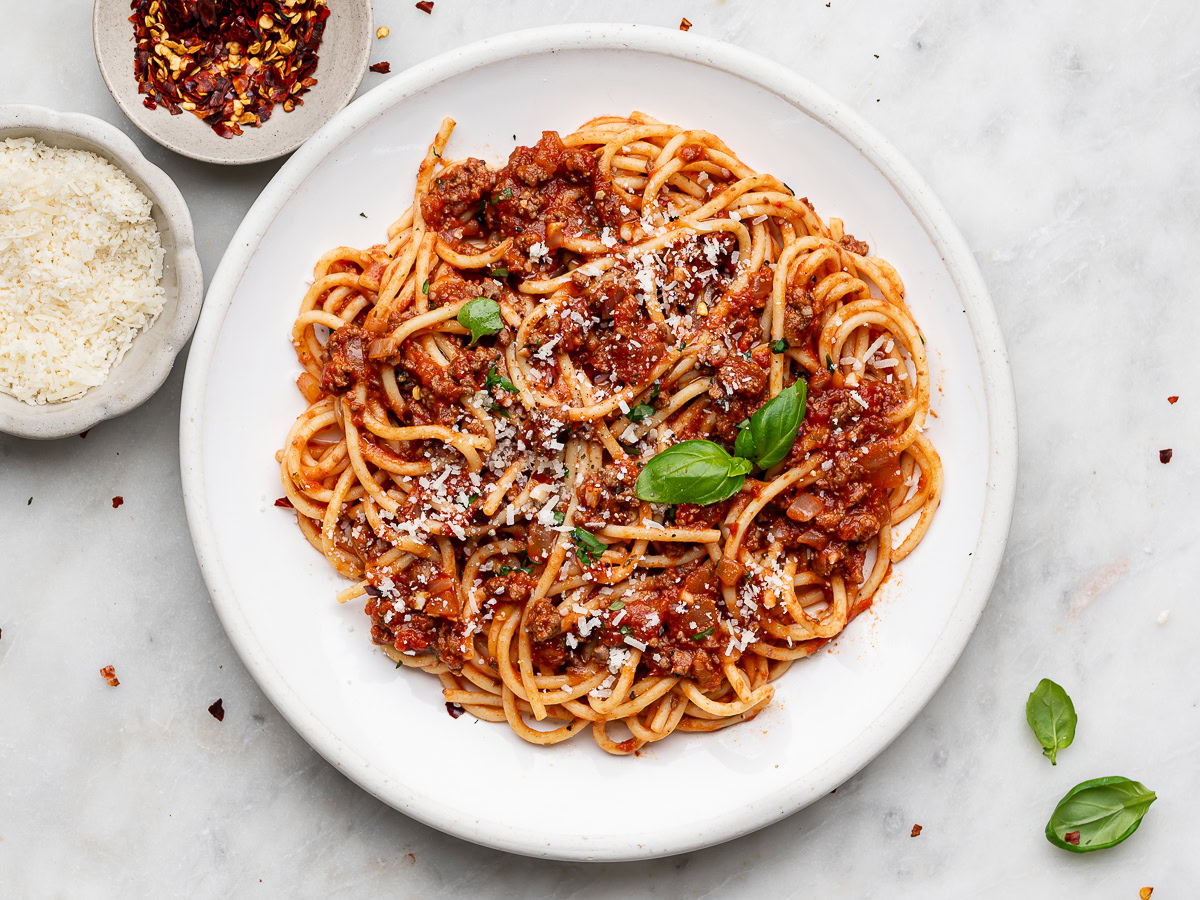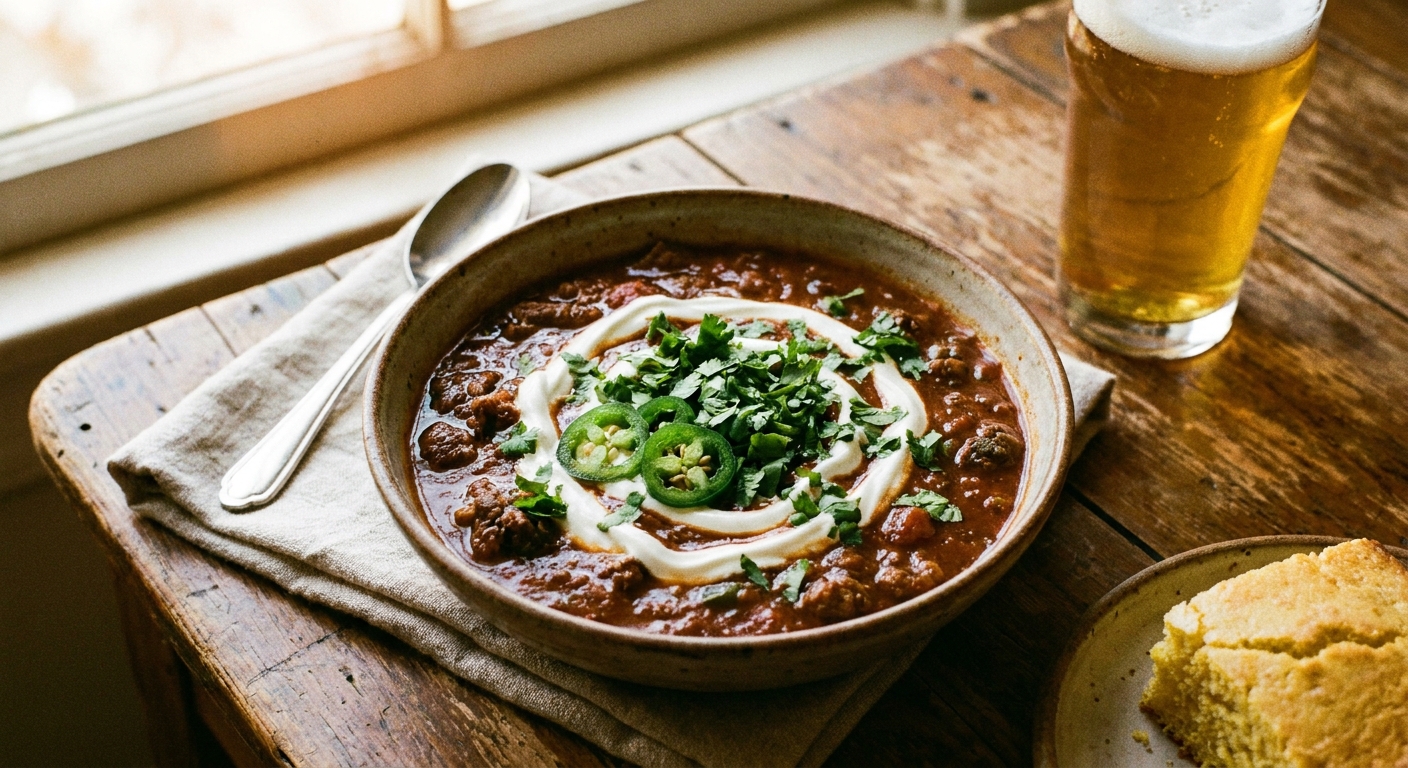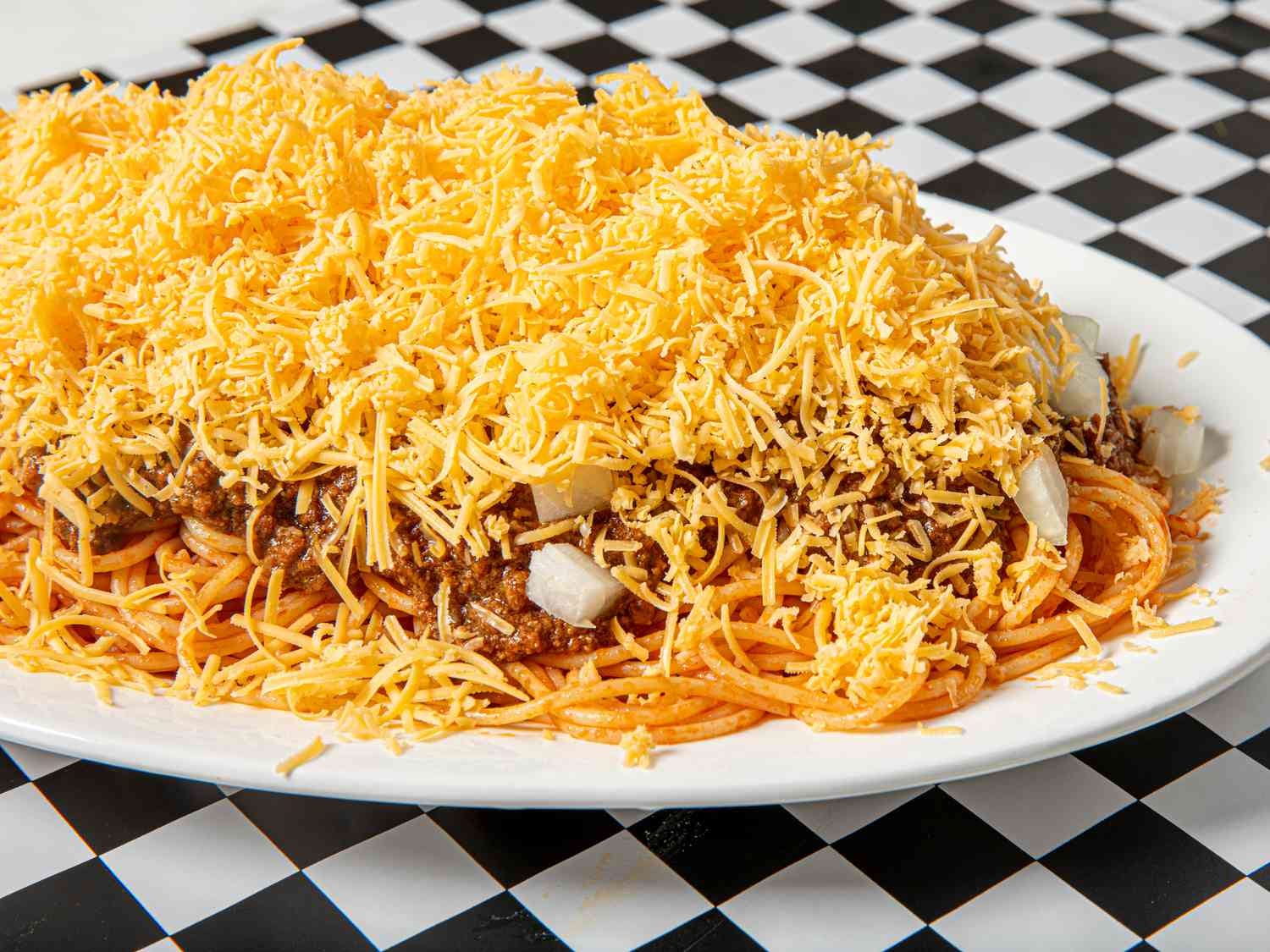

Cincinnati chili is not a chili bowl and it is definitely not a one-pot macaroni situation. Think of it as a finely seasoned, silky meat sauce with a warm spice blend, designed to be ladled over spaghetti and finished with a mountain of cheese. When it is right, it is loose enough to flow between the noodles, beefy but not chunky, and balanced between savory, gently sweet, and aromatic.

I like this on a weeknight because it is mostly hands-off once it hits a simmer. The biggest restaurant-ish technique I lean on is simple: keep the beef very finely textured, and keep the sauce loose. For me, that means I avoid aggressive browning, I do not thicken it, and I do not reduce it into a paste. I am building something pourable that sinks into spaghetti instead of sitting on top of it.
Cincinnati-style
The signature is the spice profile and the texture. You will often see cinnamon, allspice, and clove in the mix, plus a little cocoa powder in many versions for depth. Tomato is there, but it is not a chunky tomato stew. The sauce is thinner than most meat sauces, which is the point because it is meant to soak into spaghetti.
And then there is the ordering language. A 3-way is spaghetti + chili + cheese. A 4-way adds either onions or beans. A 5-way adds both onions and beans. (There is a little menu-to-menu variance, but that is the classic idea.) Once you try it with cold, finely shredded cheddar melting into the hot sauce, you will get why it has such a loyal following.
Keep it loose
Loose sauce comes down to three things: enough liquid, gentle simmering, and resisting the urge to fix the texture with pasta, extra tomato paste, or a hard boil.
- Use water or stock in addition to tomato sauce. Cincinnati chili is not just tomatoes and meat. It is meat suspended in seasoned liquid.
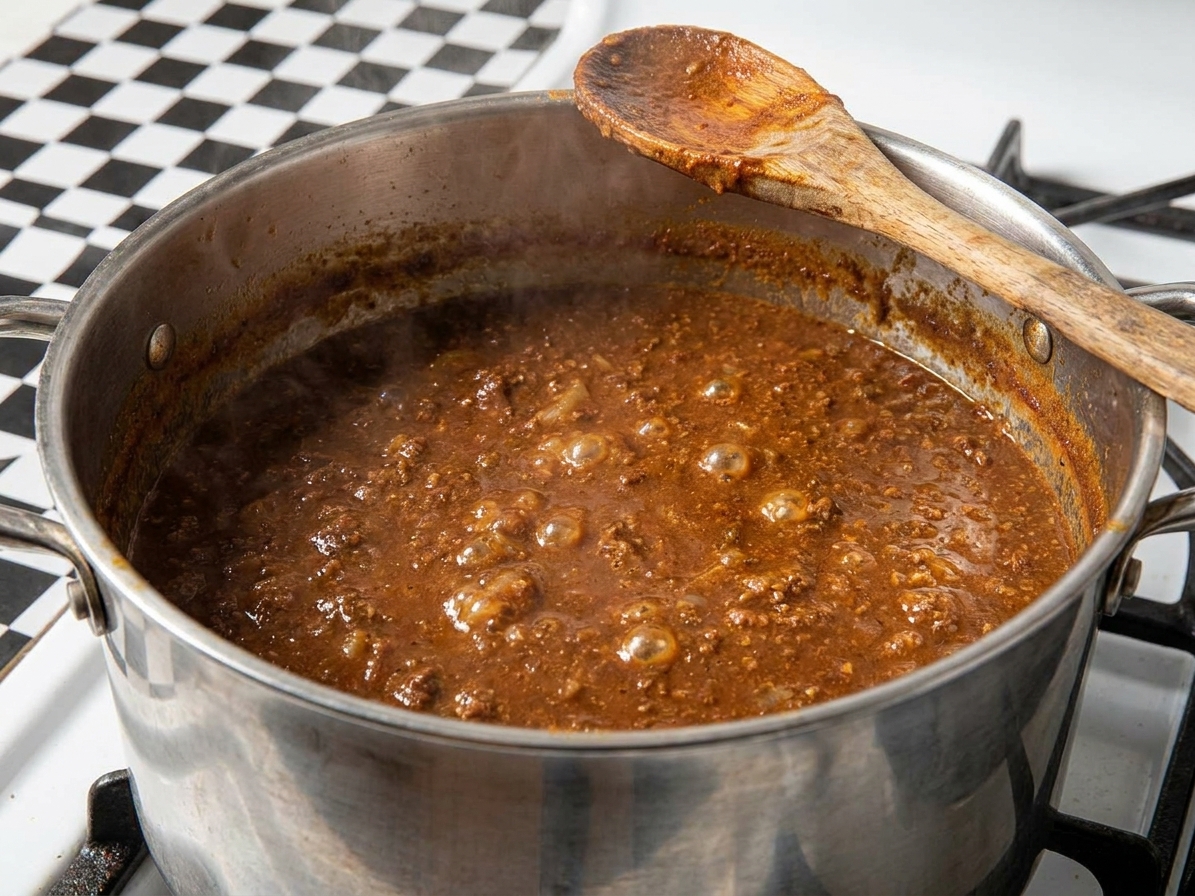
- Simmer uncovered but gently so it reduces slightly without tightening up too much. Think small bubbles, not a rolling boil.
- Skim fat if needed, instead of trying to thicken with starch. If your beef is fatty, the sauce can feel heavy even when it is thin.
- Serve over spaghetti, not cooked in the pot with pasta. The noodles and sauce meet in the bowl.
Fine beef texture
For Cincinnati chili, “finely textured” means more like tiny granules than browned crumbles, almost a meaty, spoonable sand that disappears into the sauce instead of standing out as chunks. That texture is what makes the whole thing feel silky and ladleable, not like spaghetti with taco meat on top.
Spice balance
Warm spices can go from cozy to candle aisle fast. The trick is to build in layers: savory first, then warm spices, then a bright finish.
- Savory base: chili powder, cumin, garlic, and onion give you the chili backbone.
- Warm spice whisper: cinnamon, allspice, and clove should read as depth, not dessert.
- Bitterness and roundness: a small amount of unsweetened cocoa makes everything taste more brown and beefy.
- Sweet and acid: a touch of brown sugar helps if you want it, but the real closer is vinegar. Add it near the end so it stays noticeable and lifts the whole bowl.
If you taste and think, “This is good but kind of flat,” you probably need salt or vinegar. If you taste and think, “The spices are yelling,” add a little more tomato and water, then simmer gently for a few more minutes and taste again.
These are the same cues I use at the stove: keep the sauce ladleable, keep the beef fine, and stop simmering while it still pours easily. You can always add another splash of water right before serving to bring it back to that classic, loose finish. And if you want the full Cincinnati experience, put hot sauce and crackers on the table and let everyone make their bowl their own.
Why this recipe works
- Finely textured beef: Starting the beef in liquid and breaking it up early creates the signature smooth, spoonable sauce.
- Controlled reduction: A gentle simmer concentrates flavor without turning the sauce thick and stodgy.
- Warm spices in balance: Cinnamon, allspice, clove, and cocoa are kept in supporting roles so the dish stays savory.
- Vinegar at the end: Adding vinegar late keeps the flavor bright and prevents the sauce from tasting muddy.
- Built for toppings: The seasoning is calibrated to stand up to cheddar, onions, and beans without tasting oversalted.
Ingredient notes
Ground beef
Use 80 to 85 percent lean for the best flavor. If you go very lean, the sauce can taste a bit thin. If you go very fatty, plan to skim.
Tomato sauce and a little paste
Tomato sauce keeps the texture smooth. Tomato paste is optional but helpful in small amounts for body, not thickness.
Chili powder
Use an American style chili powder blend, not straight ground chiles. It provides the familiar chili base that keeps the warm spices from taking over.
Warm spices
Cinnamon, allspice, and clove should be measured carefully. Clove is potent. Treat it like a pinch, not a scoop.
Unsweetened cocoa powder
This does not make the sauce taste like chocolate. It adds gentle bitterness and depth.
Apple cider vinegar
Classic for the bright finish. Distilled white vinegar works too. Add near the end, then taste and adjust.
Spaghetti and toppings
Go with spaghetti, finely shredded sharp cheddar, diced white onion, and either kidney beans or pinto beans. The finer the cheese shred, the faster it melts.
Equipment you will need
- Large heavy bottomed pot or Dutch oven
- Wooden spoon or potato masher for breaking up the beef
- Fine mesh skimmer or spoon for removing excess fat
- Large pot for boiling spaghetti
- Colander
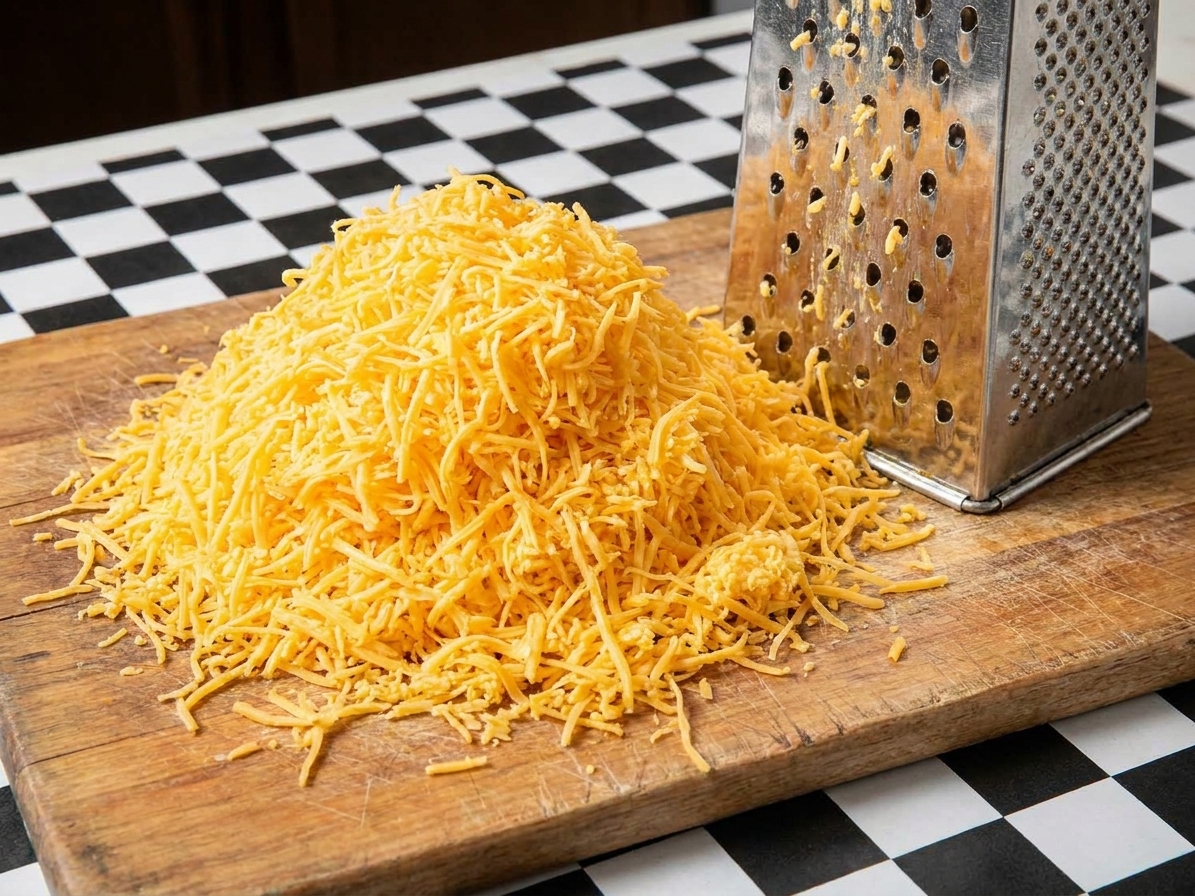
- Box grater or food processor for shredding cheddar finely
Pro tips
- Break up the beef early and often. The fine texture happens in the first 10 minutes. Once it firms up into chunks, it is harder to undo.
- Keep an eye on thickness. If it starts looking like a thick meat sauce, splash in water 1/4 cup at a time and return to a gentle simmer.
- Season in two passes. Add most salt early so the beef tastes seasoned, then adjust again at the end after it reduces.
- Finish with vinegar, not heat. If you want it to pop, reach for vinegar before you reach for more cayenne.
- Shred your own cheese. Pre shredded cheese is coated to prevent clumping and it melts less smoothly.
Substitutes that work
- Ground turkey or chicken: Works, but add 1 to 2 teaspoons Worcestershire and consider using stock instead of water for more depth.
- Beef stock instead of water: Great for richer flavor. Use low sodium so you can control salt.
- No cocoa powder: Skip it, or use a small amount of very finely grated dark chocolate as long as it is not sweetened heavily.
- Apple cider vinegar alternatives: White vinegar is the cleanest swap. Red wine vinegar adds fruitiness and can be slightly more assertive.
- Beans: Kidney and pinto are classic. Black beans are fine in a pinch.
Variations
3-way
Spaghetti + chili + cheese.
4-way onion
Add a layer of diced white onion under the cheese.
4-way bean
Add warmed beans over the chili, then finish with cheese.
5-way
Both onions and beans. This is my favorite when I want it extra hearty without thickening the sauce.
Extra loose
Add an additional 1/2 cup water while simmering and keep the heat very gentle. The sauce should ladle like a thin gravy.
Serving ideas
- Classic bowl: Twirl spaghetti, ladle chili over, then pile on cheddar. Add onions and beans if doing 4-way or 5-way.
- Hot sauce at the table: Let everyone adjust heat individually so the base stays balanced and warm-spiced.
- Crackers on the side: A salty, crunchy side is very Cincinnati.
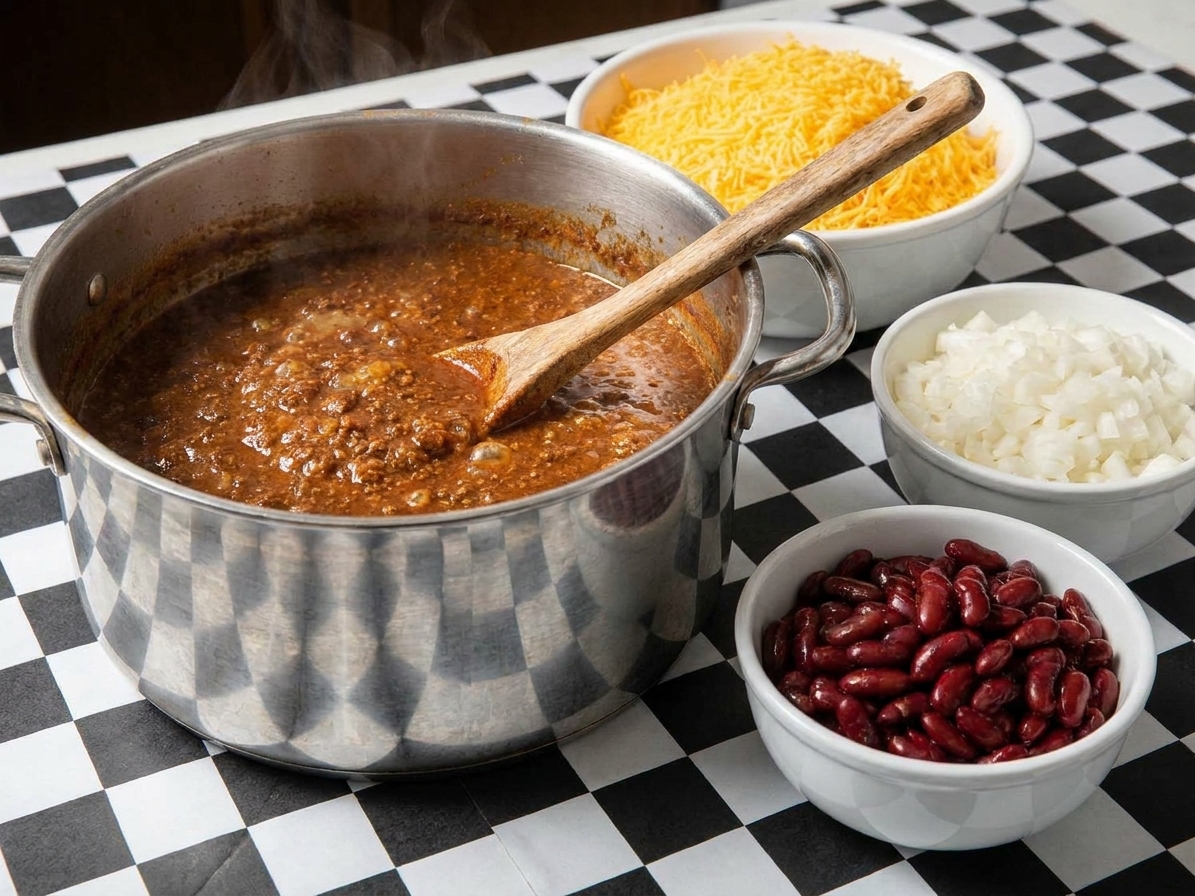
- Make it a spread: Set out bowls of cheese, onions, beans, and hot sauce so everyone builds their own way.
Storage and reheating
Refrigerate: Store chili sauce in an airtight container for up to 4 days. Keep spaghetti separate so it does not soak up the sauce and go soft.
Freeze: Freeze the sauce for up to 3 months. Cool completely first, then portion into freezer containers.
Reheat: Warm gently on the stove over medium-low heat, adding a splash of water to bring it back to a loose, ladleable consistency. Taste and add a small pinch of salt and a tiny splash of vinegar if it tastes muted.
Common mistakes
- Cooking it like Texas chili: If you brown big chunks of beef and reduce it thick, you will end up with a chili bowl style stew, not Cincinnati chili.
- Letting the sauce get too tight: A thick sauce sits on top of spaghetti. A proper Cincinnati style sauce sinks in. Add water as needed.
- Overdoing clove: Too much clove will dominate. Measure carefully and err on the low side.
- Skipping the vinegar finish: Without that bright edge, the sauce can taste heavy and one-note.
- Using coarse shredded cheese: Big shreds do not melt into that signature fluffy blanket.
FAQ
Is Cincinnati chili actually chili?
It is chili in name and tradition, but in practice it eats like a spiced meat sauce served over spaghetti. The goal is a thin, finely textured sauce with warm spices, not a chunky bowl of stew.
Why is it served over spaghetti?
That is the style. The sauce is seasoned and thinned specifically to soak into long noodles, then topped heavily with cheddar and other add-ons.
How do I make it less sweet?
Reduce or skip the brown sugar, then rely on salt and vinegar for balance. Also make sure your tomato product is not heavily sweetened.
How do I make it thicker?
Traditionally you do not want it thick. If you prefer slightly thicker, simmer 10 to 15 minutes longer, but stop while it is still very ladleable. Do not add flour or cornstarch.
Can I make it ahead?
Yes, and it is even better the next day. Reheat gently with a splash of water to restore the loose texture, then refresh with a tiny bit of vinegar.
Cincinnati Chili
A classic Cincinnati chili: a thin, finely textured beef sauce with warm spices, served over spaghetti as a 3-way, 4-way, or 5-way with cheese, onions, and beans.
- Prep
- 15 minutes
- Cook
- 45 minutes
- Total
- 1 hour
- Yield
- 6 servings
Ingredients
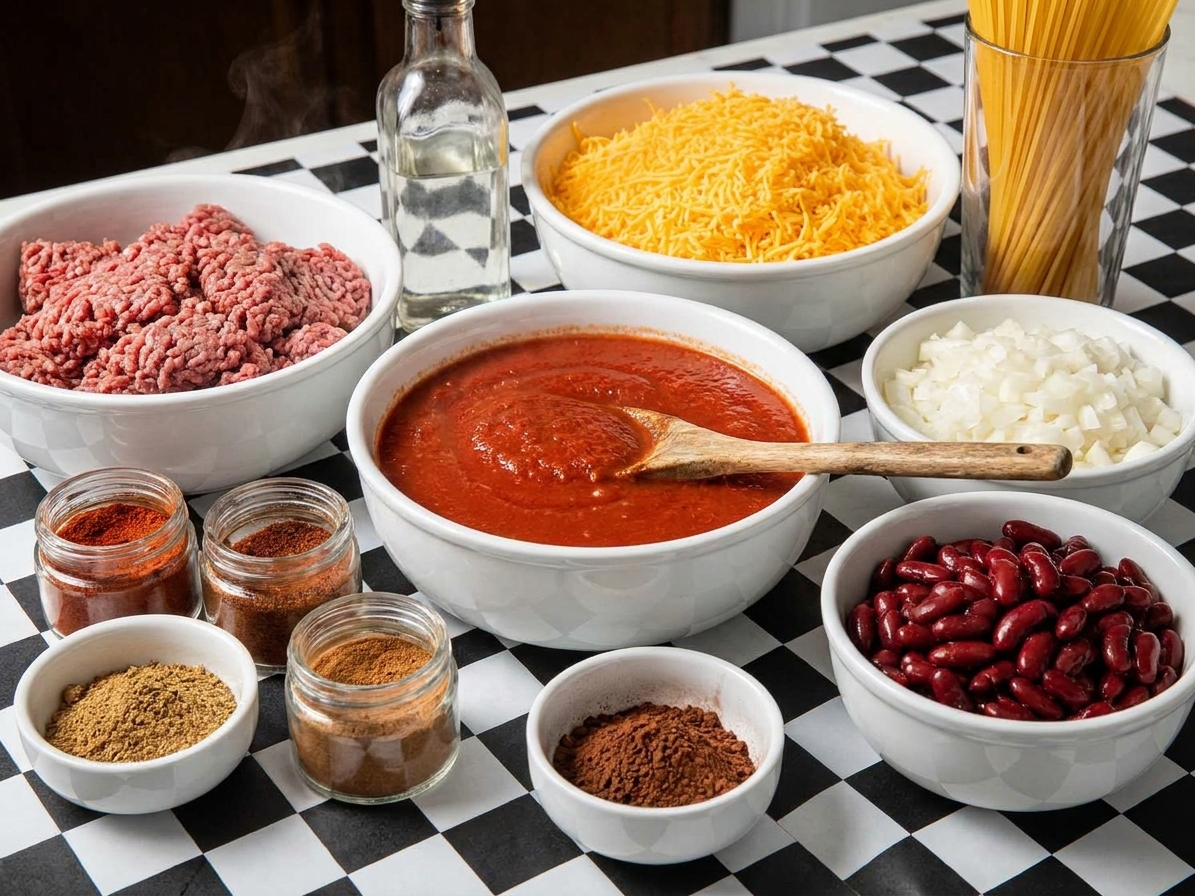
- 2 pounds ground beef (80 to 85% lean)
- 4 cups water or low-sodium beef stock, plus more as needed to keep sauce loose
- 1 (15-ounce) can tomato sauce
- 2 tablespoons tomato paste
- 1 medium yellow onion, finely grated (or very finely minced)
- 4 cloves garlic, minced
- 2 tablespoons chili powder (American-style blend)
- 1 tablespoon ground cumin
- 1 teaspoon smoked paprika
- 1 teaspoon ground cinnamon
- 1/2 teaspoon ground allspice
- 1/8 teaspoon ground cloves
- 1 tablespoon unsweetened cocoa powder
- 1 tablespoon Worcestershire sauce
- 1 to 1 1/2 tablespoons kosher salt, to taste
- 1/2 teaspoon freshly ground black pepper
- 1/4 teaspoon cayenne pepper, optional
- 2 tablespoons apple cider vinegar
- 1 pound spaghetti
- 6 to 8 ounces sharp cheddar cheese, finely shredded (more to taste)
- 1 small white onion, finely diced (for topping)
- 1 (15-ounce) can kidney beans or pinto beans, drained and rinsed (for topping)
Instructions
- Start the beef in liquid. Add the ground beef and 4 cups water or stock to a large heavy-bottomed pot or Dutch oven. Set over medium heat and use a wooden spoon to break the meat into very small pieces. Keep stirring and breaking it up as the liquid heats, about 8 to 10 minutes. You are aiming for a fine, almost sandy texture rather than browned crumbles.
- Add tomato and aromatics. Stir in the tomato sauce, tomato paste, grated onion, and garlic until well combined.
- Season the sauce. Add chili powder, cumin, smoked paprika, cinnamon, allspice, cloves, cocoa powder, Worcestershire, 1 tablespoon kosher salt, black pepper, and cayenne if using. Stir thoroughly so the spices dissolve into the sauce.
- Simmer gently and keep it loose. Bring to a gentle simmer, then reduce heat to low or medium-low to maintain small bubbles. Simmer uncovered for 35 to 45 minutes, stirring every 5 to 10 minutes. If the sauce thickens too much at any point, add water 1/4 cup at a time to keep it ladleable.
- Skim fat if needed. If a thick layer of fat collects on top, skim off a bit with a spoon for a cleaner, lighter sauce.
- Finish with vinegar and final seasoning. Stir in the apple cider vinegar. Taste and adjust with the remaining salt as needed. The sauce should taste balanced and a little bright, and it should still be thin enough to pour from a ladle.
- Cook the spaghetti. Bring a large pot of salted water to a boil. Cook spaghetti until just al dente. Drain well.
- Assemble Cincinnati style. Divide spaghetti into bowls. Ladle chili over the top. For a 3-way, add a generous mound of finely shredded cheddar. For a 4-way, add diced onion or beans. For a 5-way, add both onions and beans, then finish with cheddar. Serve hot.
Notes
Texture note: The most important step is breaking up the beef while it warms in liquid. Once it clumps, it is harder to get that signature fine texture.
Spice control: If you are clove-shy, start with a pinch and add more after simmering. Clove strength increases as it sits.
Make-ahead: The sauce improves overnight. Reheat gently with a splash of water to restore the loose consistency, then refresh with a small splash of vinegar to wake up the flavor.