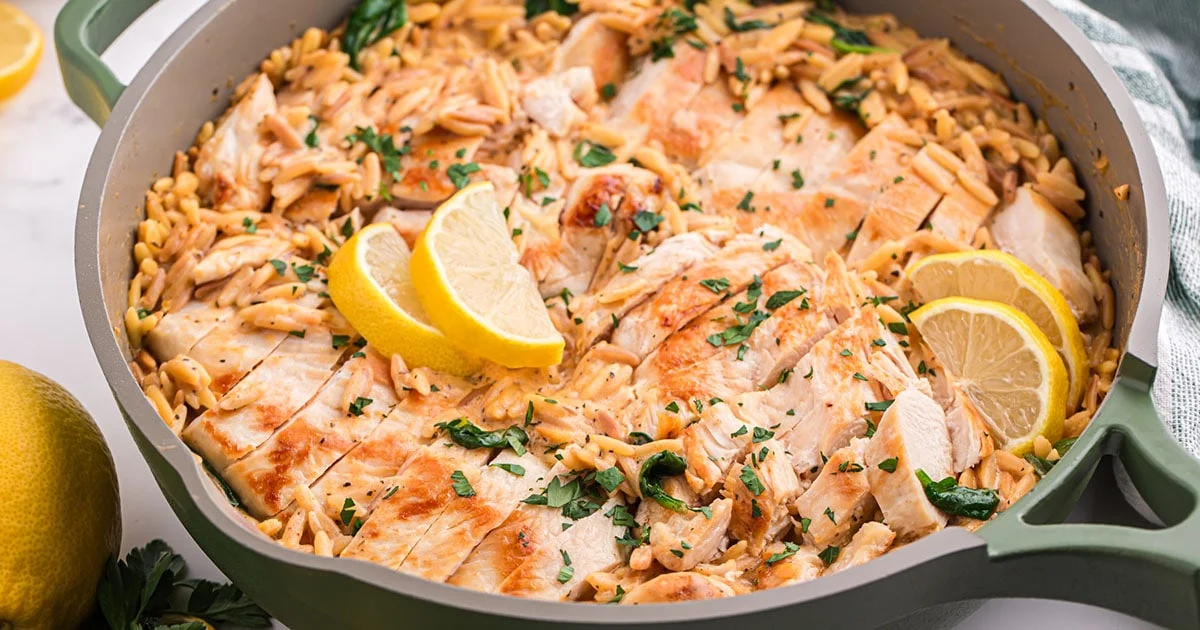
If you have ever wished for a dinner that tastes restaurant-level but cooks like a weeknight, this is it. We sear chicken until golden, then build a creamy orzo right in the same pan with lemon zest, a splash of citrus juice, and just enough Parmesan to make it silky. The vibe is cozy. The flavor is bright. And the whole thing is designed to keep you moving in a tidy, organized way.
Why this recipe works
- Citrus in layers: Zest for perfume, juice for brightness, and a final squeeze to wake everything up right before serving.
- Orzo gets creamy without constant stirring: Keep the liquid at a lively simmer and stir often enough to prevent sticking. The starch does the rest.
- One pan, big payoff: The browned bits from searing the chicken become the flavor base for the orzo.
- Flexible: Works with thighs or breasts, spinach or kale, Parmesan or pecorino, and even leftover roasted veggies.
Ingredient notes
This recipe is written for 4 servings.
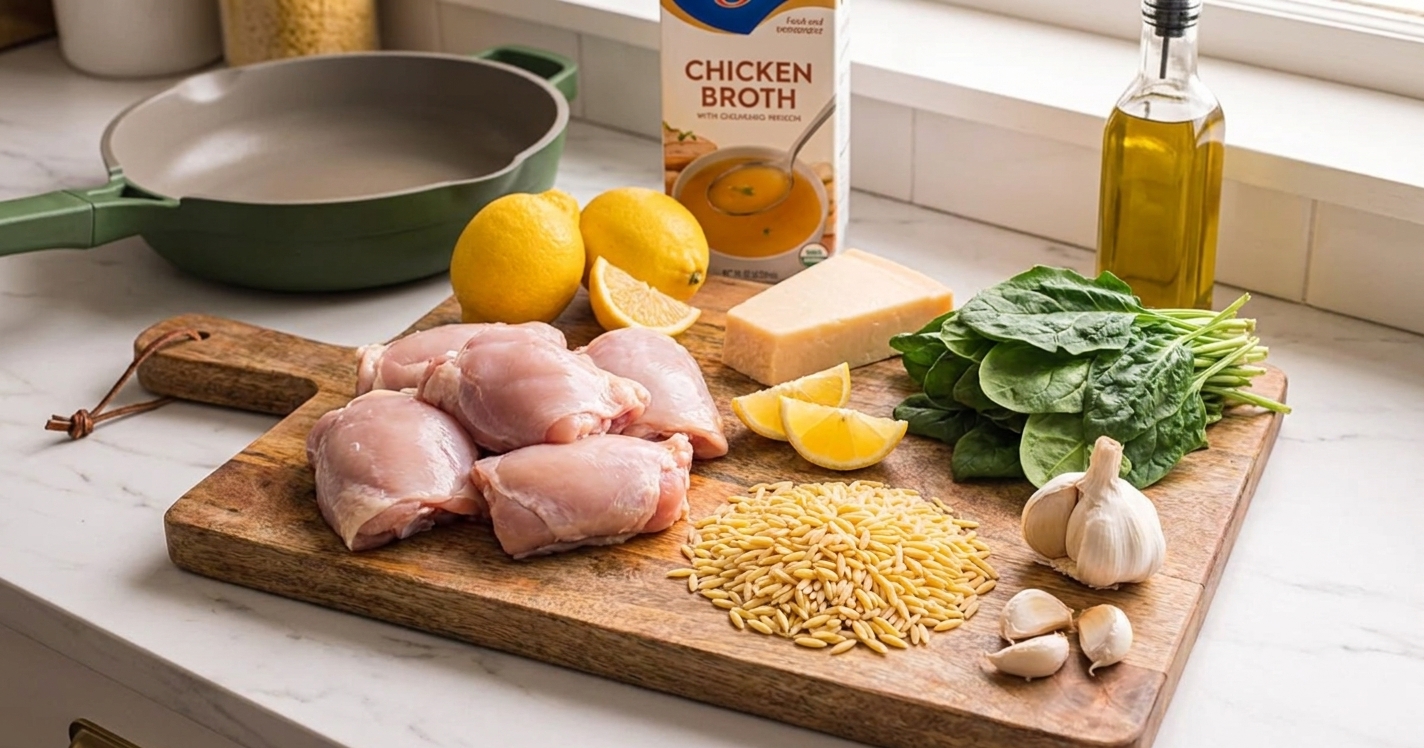
- Chicken thighs or breasts: Both work. Thighs stay especially juicy and often feel best around 170 to 175°F (165°F is the safe minimum).
- Broth: Low-sodium preferred so you can control saltiness at the end.
- Lemon: Use both zest and juice; add juice to taste and consider a final squeeze right before serving.
- Parmesan: Finely grated melts in smoothly; add more to finish if you like.
- Spinach: Two big handfuls (about 3 ounces) wilt quickly; stir in at the end.
- Optional add-ins: Dijon mustard for extra tang, crushed red pepper for heat, capers for a salty-briny pop, or 2 tablespoons dry white wine for deglazing.
Equipment you will need
- Large skillet: A 12-inch skillet is ideal.
- Tongs or a spatula: For turning and transferring the chicken.
- Microplane or fine grater: For lemon zest and finely grating Parmesan.
- Measuring cups and spoons
- Lid for the skillet: To finish cooking the chicken.
- Instant-read thermometer: To confirm the chicken reaches 165°F in the thickest part (thighs often feel best around 170 to 175°F).
Pro tips
- Zest first, then juice. It is much easier to zest a whole lemon than a squeezed one.
- Pick your broth wisely. Regular broth plus Parmesan can run salty; low-sodium broth gives you more control at the end.
- Control the creaminess with broth. Orzo keeps drinking liquid as it sits; loosen with hot broth or water in small splashes.
- Do not rush the sear. Color on the chicken is your flavor foundation for the whole dish.
- Salt in stages. Season lightly early, then adjust at the end when everything is together.
- Sensory cue for flipping: The chicken should release easily when it is ready to flip; if it sticks, give it another minute.
Substitutes that work
Chicken options
- Chicken breasts: Pound to even thickness, sear 3 to 5 minutes per side, then finish gently so they stay juicy. Use a thermometer and pull at 165°F.
- Bone-in thighs: Sear, then finish covered a bit longer. You may need extra broth since they take longer to cook through.
Dairy options
- No cream: Use half-and-half, whole milk, or a couple tablespoons of Greek yogurt stirred in off heat (yogurt can split if boiled hard).
- Dairy-free: Skip Parmesan and cream. Stir in a little olive oil at the end, plus extra lemon and maybe a spoonful of tahini for body.
Greens and vegetables
- Kale: Chop finely and add earlier (right after broth) so it softens.
- Frozen peas: Stir in during the last 2 minutes of cooking.
- Roasted veggies: Fold in at the end to avoid turning them mushy.
Variations
- Extra tang: Stir in 1 to 2 teaspoons Dijon mustard.
- Heat: Add crushed red pepper.
- Briny pop: Add a spoonful of capers.
- Deglaze boost: Use 2 tablespoons dry white wine before adding the broth.
- Herb finish: Use chopped parsley or dill (optional but lovely).
Serving ideas
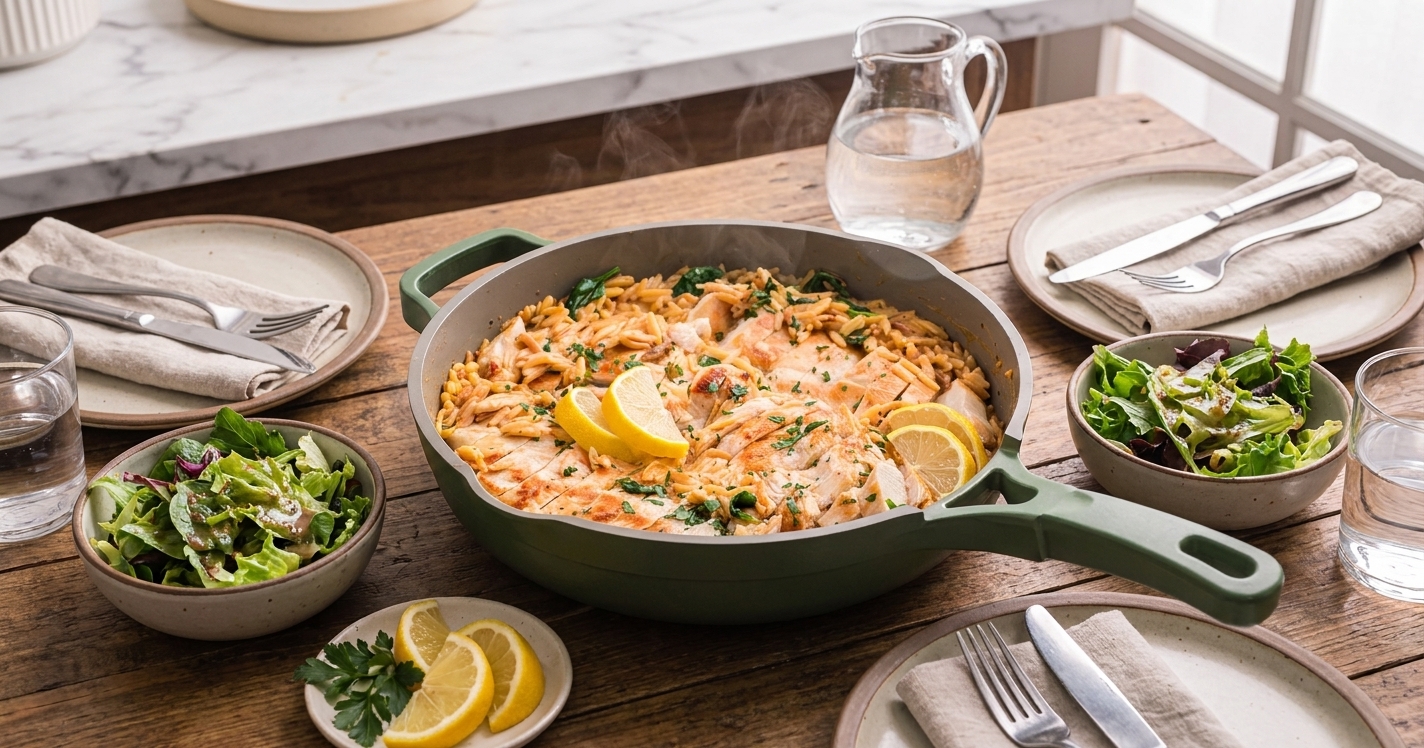
- A simple arugula salad with olive oil, lemon, and flaky salt
- Roasted broccoli or asparagus (both love the citrus-Parmesan situation)
- Warm, crusty bread to swipe the pan
Storage and reheating
- Store: Refrigerate up to 4 days in a sealed container.
- Reheat: Warm in a skillet over medium-low with a splash of broth or water, stirring until creamy again.
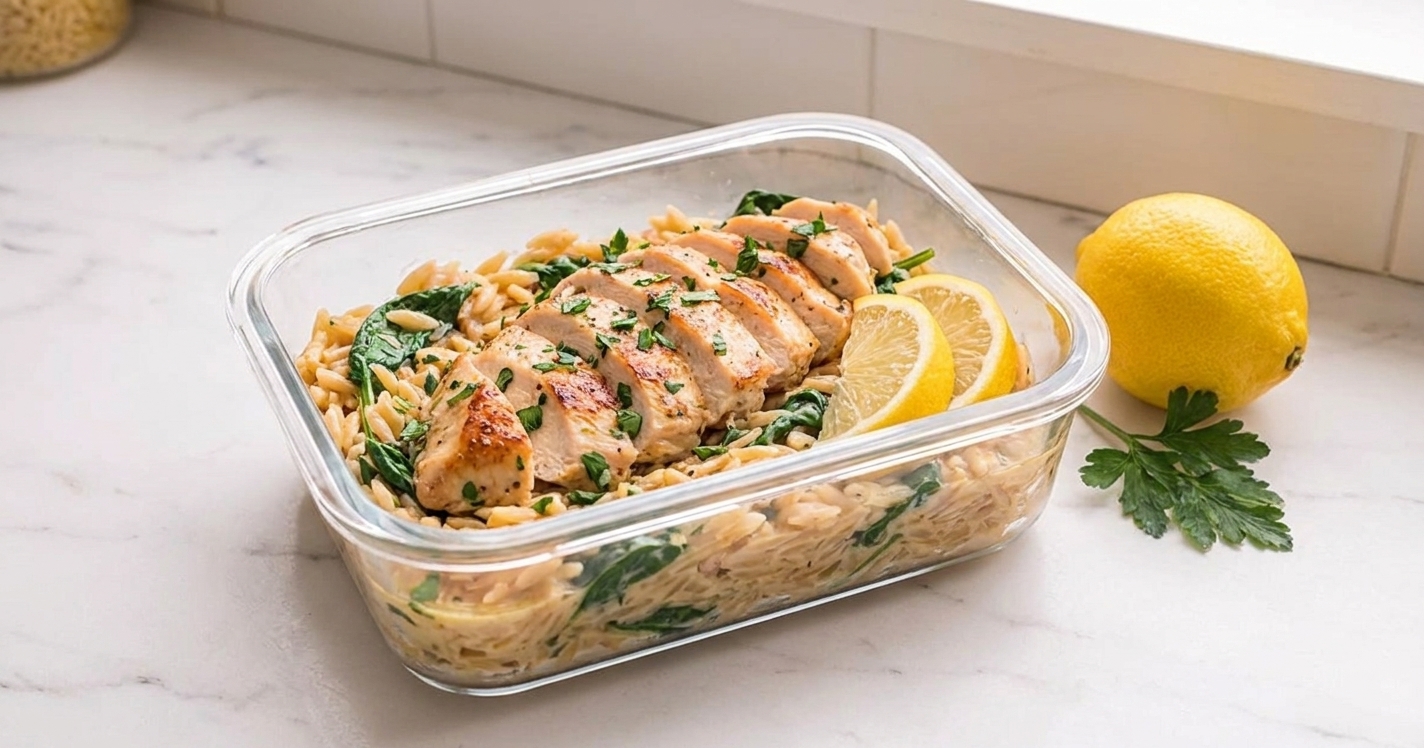
- Meal prep move: Cook the chicken and the orzo separately, then combine when reheating. This keeps the orzo from absorbing quite as much liquid in the fridge.
- Note: Orzo keeps drinking liquid as it sits, so plan to loosen with broth or water when reheating.
Common mistakes
- Crowding the pan while searing: If your skillet is smaller, sear in batches so the chicken browns instead of steaming.
- Flipping too soon: If the chicken sticks, give it another minute; it should release easily when ready.
- Cooking on too high heat: If the chicken browned too fast, the pan was a little hot. Next time, sear over medium-high (not high) and give the pan a minute to calm down between batches.
- Letting the orzo get stiff: If it gets too thick before the pasta is tender, add a splash of broth or water.
- Over-reducing lemon flavor: Acid fades as it cooks; finish with a squeeze of lemon right before serving if needed.
FAQ
My orzo is too thick. What do I do?
Totally normal. Add hot broth or water a splash at a time, stirring, until it loosens back up.
My orzo is not creamy. What went wrong?
It usually just needs a little more simmer time and a bit more stirring. The starch is what makes it creamy. Parmesan at the end helps too.
The lemon tastes flat. How can I fix it?
Add a pinch of salt first. If it still feels dull, add a small squeeze of lemon juice right before serving. Acid fades as it cooks.
The chicken browned too fast. Why?
Your pan was a little hot. Next time, sear over medium-high (not high) and give the pan a minute to calm down between batches.
Citrus-Kissed Chicken with Creamy Orzo
Citrus-Kissed Chicken with Creamy Orzo
- Time: 35 to 50 minutes
- Yield: 4 servings
- Prep
- 10 minutes
- Cook
- 30 to 40 minutes
- Total
- 35 to 50 minutes
- Yield
- 4 servings
Ingredients
- 1 1/2 pounds boneless skinless chicken thighs (or breasts, see notes)
- 1 1/4 teaspoons kosher salt, divided
- 1/2 teaspoon black pepper
- 1 teaspoon dried oregano (or Italian seasoning)
- 1 to 2 tablespoons olive oil (start with 1 tablespoon, add more if needed)
- 1 small yellow onion, finely chopped
- 3 garlic cloves, minced
- 1 1/2 cups orzo
- 3 cups chicken broth (low-sodium preferred), plus a splash more as needed
- 1 lemon (zest and juice)
- 1/3 cup heavy cream (or half-and-half)
- 1/2 cup finely grated Parmesan, plus more to finish
- 2 big handfuls baby spinach (about 3 ounces)
- 2 tablespoons chopped parsley or dill (optional but lovely)
- 1 to 2 teaspoons Dijon mustard (optional, for extra tang)
- Crushed red pepper (optional, for heat)
- A spoonful of capers (optional, for a salty-briny pop)
- 2 tablespoons dry white wine (optional, for deglazing)
Instructions
- Pat the chicken dry. Season with 1 teaspoon of the salt, the black pepper, and the oregano.
- Heat a large skillet (12-inch is ideal) over medium-high heat. Add 1 tablespoon olive oil. When the oil shimmers, add chicken in a single layer (sear in batches if needed). Sear until deeply golden, 4 to 6 minutes per side for thighs (a little less for thinner pieces). Transfer to a plate; the chicken may not be fully cooked yet.
- Reduce heat to medium. If the pan looks dry, add a small drizzle of oil. Add onion and cook until softened, 3 to 4 minutes, scraping up the browned bits. If desired, deglaze with a splash of broth or 2 tablespoons white wine and scrape well. Add garlic and cook 30 seconds, just until fragrant.
- Add orzo and stir for 1 to 2 minutes to toast.
- Pour in the chicken broth and bring to a lively simmer. Cook, stirring often (every 30 to 60 seconds at first, then as needed), until orzo is tender and the pan looks creamy, about 8 to 12 minutes or according to your package timing. If it gets too thick before the pasta is tender, add a splash of broth or water.
- Stir in lemon zest, lemon juice (start with half, then taste), the cream, and the Parmesan. The orzo should look glossy and spoonable, not stiff.
- Stir in spinach until just wilted, about 1 minute. Nestle the chicken (and any juices on the plate) into the orzo. Cover and cook on low until the chicken reaches 165°F in the thickest part, 5 to 10 minutes depending on thickness (thighs often feel best around 170 to 175°F).
- Taste and adjust with the remaining 1/4 teaspoon salt if needed (especially if you used low-sodium broth). Finish with herbs, extra Parmesan, and a final squeeze of lemon.
Notes
- Chicken breasts: Pound to even thickness, sear 3 to 5 minutes per side, then finish gently so they stay juicy. Use a thermometer and pull at 165°F.
- Thigh doneness note: 165°F is the safe minimum, but thighs stay juicy and often feel best around 170 to 175°F.
- Deglazing option: To lean into the fond, add a splash of broth or 2 tablespoons white wine and scrape well.
- Adjusting consistency: If the orzo thickens (during cooking or reheating), loosen with hot broth or water a splash at a time.
- Make-ahead approach: For meal prep, cook the chicken and the orzo separately, then combine when reheating.
Nutrition
- Calories: ~720 per serving
- Fat: ~27 g
- Carbs: ~65 g
- Protein: ~48 g
- Fiber: ~3 g
- Sugar: ~5 g
- Sodium: ~780 mg
Nutrition values are approximate and will vary with specific ingredients (especially broth, cheese, and chicken cut).