My goal with meatballs is always the same: tender enough to cut with a fork, flavorful enough to eat straight off the sheet pan, and sturdy enough to simmer in sauce without turning into rubber. The trick is not a secret ingredient. It is a few small technique choices that stack up in your favor.
If you take only one idea from this recipe, let it be the panade. Breadcrumbs and milk look almost too simple to matter, but they are the reason these meatballs stay tender on day one and still taste good reheated on day three.
Why this recipe works
- Panade (breadcrumbs + milk): This simple paste keeps meatballs tender by holding onto moisture and gently loosening the protein network, so they stay plush even if you cook them a minute too long.
- Gentle mixing: Overmixing turns ground meat springy and tight. Mix just until it holds together.
- Right size, right heat: Medium meatballs cook through evenly without drying out.
- Salt and acid balance: Parmesan, garlic, and parsley bring the comfort. A little Worcestershire and optional lemon zest keep the flavor bright.
Ingredient notes
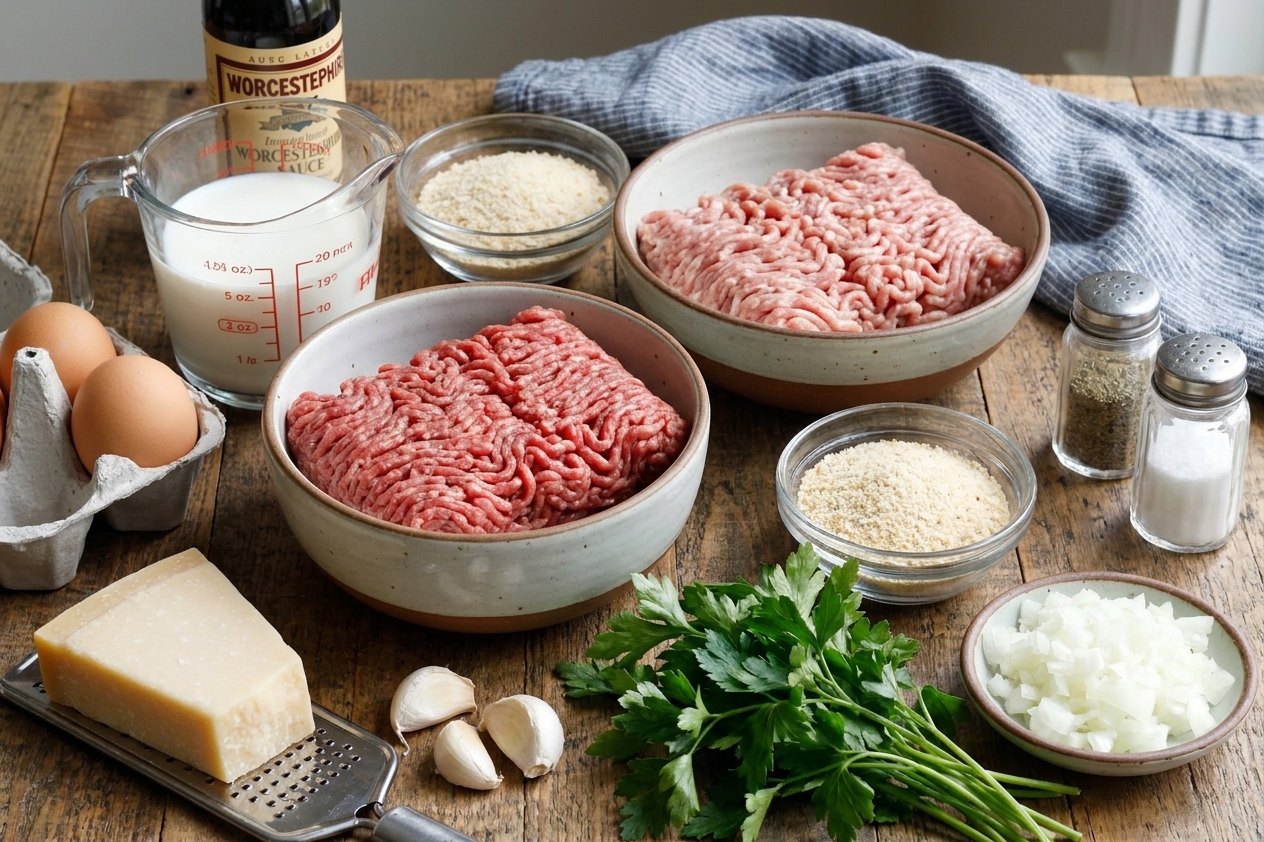
- Ground beef: 80 to 85 percent lean is ideal. Meat that is too lean (90 percent or higher) plus a hot oven can dry them out.
- Ground pork: Adds tenderness and flavor (see swaps below).
- Breadcrumbs + milk: The panade should become a thick, porridge-like paste with no dry pockets.
- Yellow onion: Very finely grated or minced. Do not leave chunks; large pieces can contribute to meatballs falling apart.
- Worcestershire sauce: Often contains fish (anchovy). For a fish-free swap, use the same amount of soy sauce or tamari plus a tiny splash of vinegar. For vegetarian, use a vegetarian Worcestershire or soy sauce.
- Optional add-ins: Lemon zest for brightness or red pepper flakes for heat.
Weeknight marinara shortcut: Warm a jar of marinara with 1 grated garlic clove and a big pinch of basil or Italian seasoning. Finish with a small knob of butter or a drizzle of olive oil.
Equipment you will need
- Large mixing bowl (for panade and mixing)
- Fork (for combining the panade and seasonings)
- Sheet pan and parchment paper (for baking and make-ahead shaping)
- 1 1/2-tablespoon scoop (for consistent sizing)
- Instant-read thermometer (to pull at 160°F for beef and pork, 165°F for turkey or chicken)
- Large skillet with lid (if pan-searing)
Pro tips
- Grate the onion: Grated onion disappears into the mixture and acts like built-in moisture.
- Do not pack the meatballs: Roll with a light touch. If you compress them, they bake up dense.
- Use a thermometer if you can: Pull beef and pork meatballs at 160°F, rest 3 minutes, and they finish perfectly without drying.
- Brown matters: Browning is flavor. If baking, high heat helps. If your oven runs cool, broil for 30 to 60 seconds at the end, watching closely.
- Season like you mean it: Ground meat needs enough salt. If you reduce the salt, the meatballs taste flat even with sauce.
- Texture cue: If you press a meatball gently, it should hold together but still feel soft, like a plush stress ball.
- If the mixture sticks: Dampen your hands with water while rolling.
Substitutes that work
No pork?
Use all beef, or swap the pork for ground turkey thigh, chicken, or Italian sausage (if using sausage, reduce salt to 1 teaspoon and taste your sauce before adding more salt later). If using poultry, cook to 165°F in the center.
Gluten-free
Use gluten-free breadcrumbs or crushed gluten-free crackers. You can also use quick oats pulsed briefly in a blender.
No breadcrumbs?
In a pinch, use torn sandwich bread. Soak 2 packed cups of soft bread pieces in the milk, then mash into a paste before adding the rest.
Fish-free or vegetarian Worcestershire swap
Worcestershire commonly contains fish (anchovy). For a fish-free swap, use the same amount of soy sauce or tamari plus a tiny splash of vinegar. For vegetarian, use a vegetarian Worcestershire or soy sauce.
Variations
- Add a little heat: Red pepper flakes are great here. A pinch of smoked paprika is also great if you are serving them without marinara.
- Make them mini: Roll into 1-inch meatballs and start checking at 12 minutes (baked at 425°F). Mini meatballs freeze especially well.
Serving ideas
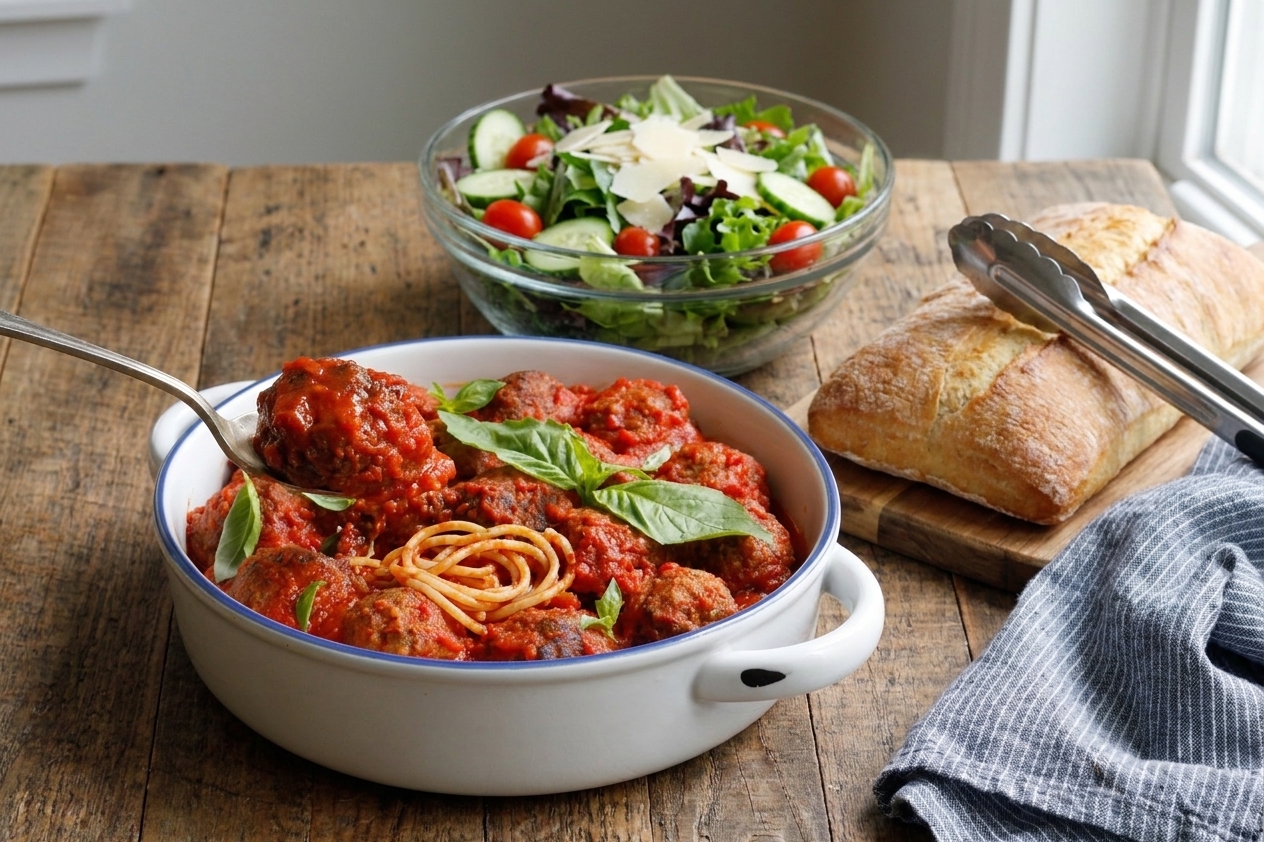
- Classic: spaghetti, marinara, Parmesan, and a crisp salad
- Weeknight cozy: meatballs over mashed potatoes with a quick pan gravy
- Low effort: meatball subs with provolone and toasted hoagie rolls
- Meal prep bowls: rice or farro, roasted broccoli, meatballs, and a lemony yogurt sauce
- Party mode: simmer in BBQ sauce or sweet chili sauce and serve with toothpicks
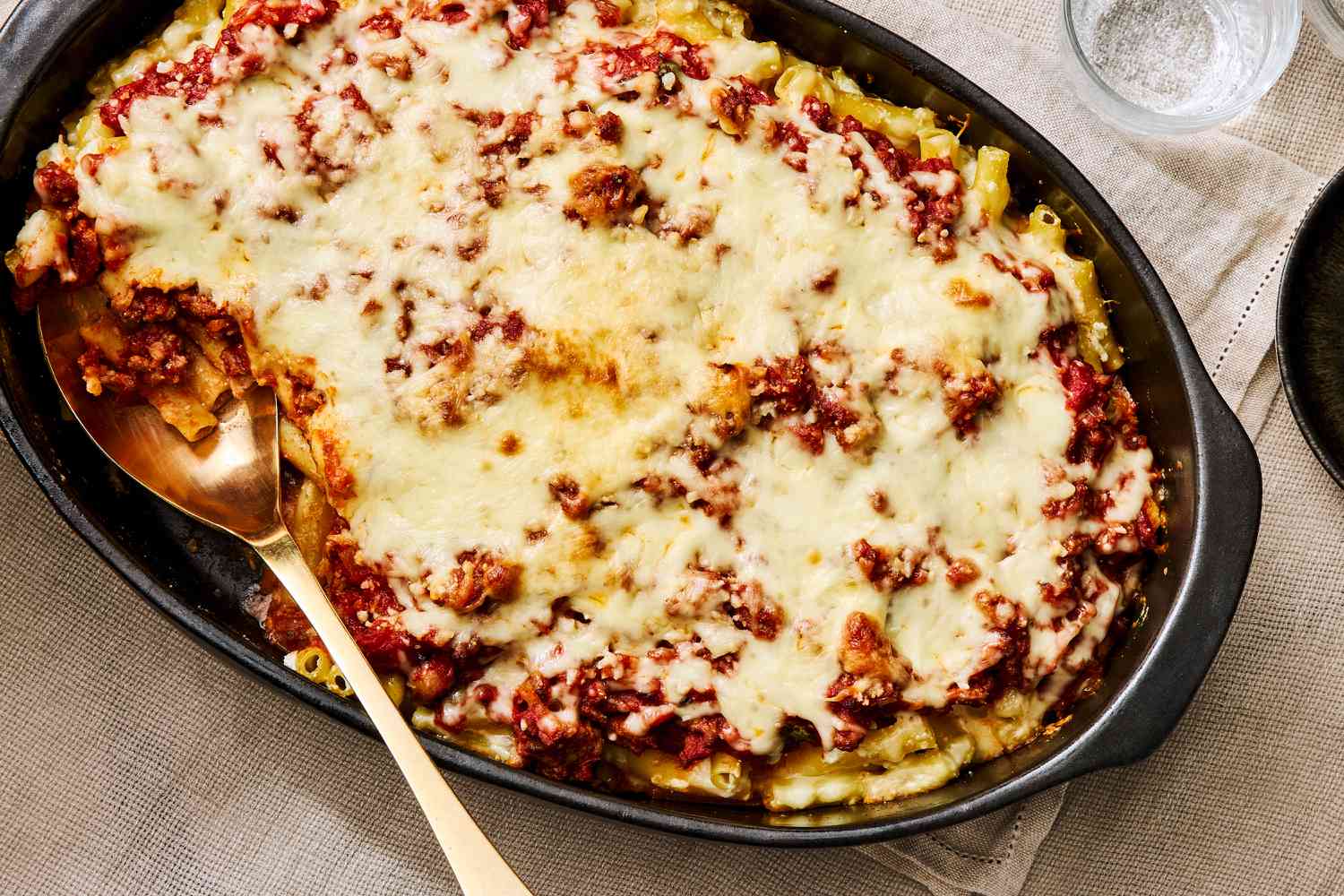
For serving (choose your path): Warm marinara, buttered noodles, mashed potatoes, or a simple salad and crusty bread.
Storage and reheating
Refrigerate
Cool meatballs completely, then store in an airtight container for up to 4 days.
Reheat
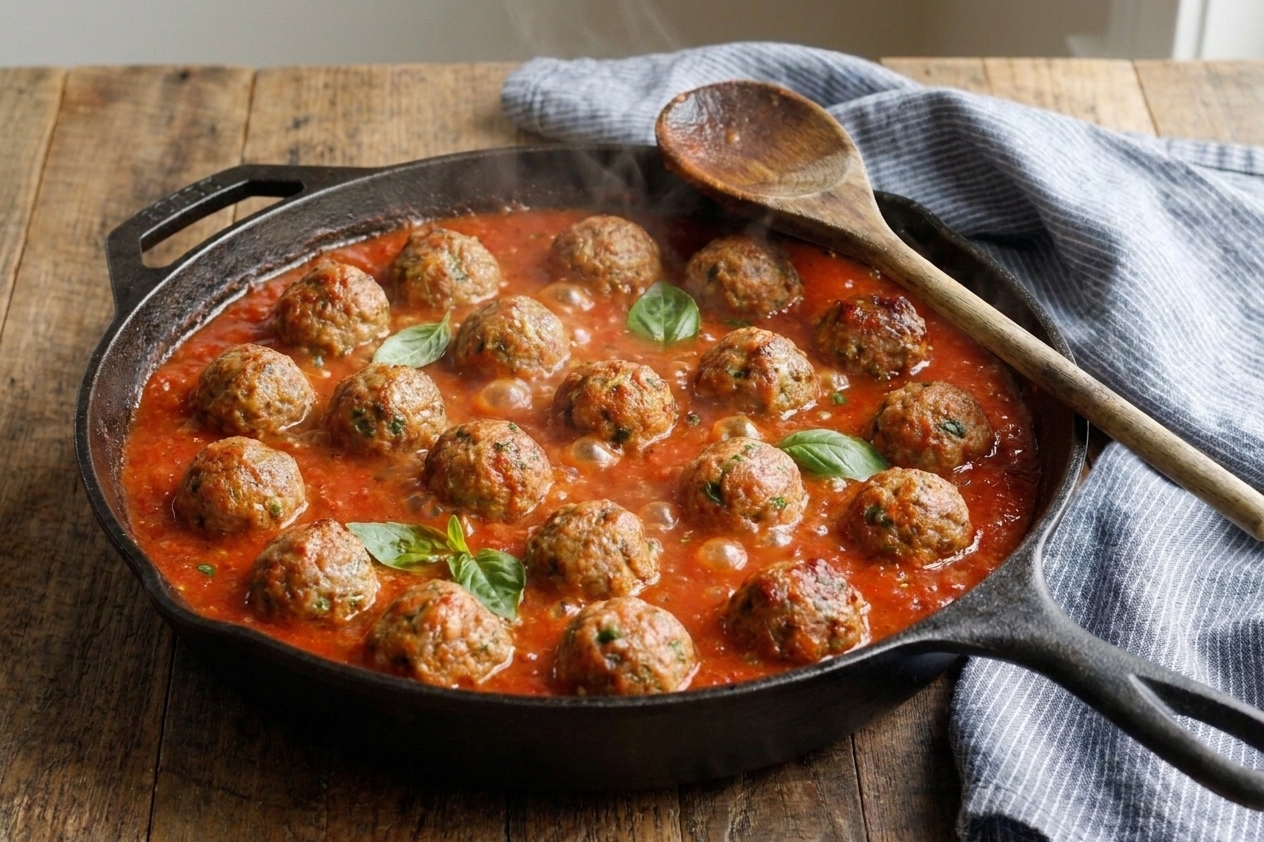
Warm them in marinara over low heat until hot throughout. If reheating plain, microwave in 30-second bursts with a splash of water or sauce to prevent drying.
Freeze (cooked)
Freeze on a sheet pan until solid, then transfer to a freezer bag. Store up to 3 months. Reheat from frozen in simmering sauce, covered, 15 to 20 minutes.
Freeze (uncooked)
Roll, freeze on a sheet pan, then bag. Bake from frozen at 425°F for 22 to 26 minutes (check the center for 160°F for beef and pork; 165°F for turkey or chicken).
Make ahead
You can refrigerate the meatball mixture (or rolled meatballs) covered for up to 24 hours. If you rolled them, set them on a parchment-lined sheet pan so they keep their shape. Cook as directed.
Common mistakes
- Overmixing: Usually the cause of tough meatballs. Mix just until combined.
- Overcooking: Pull as soon as they reach temperature (160°F for beef and pork; 165°F for turkey or chicken) and rest 3 minutes.
- Onion pieces too large: Grate or mince very finely. Chunks can make meatballs fall apart.
- Skipping proper panade texture: If the breadcrumbs and milk do not become a paste, the mixture can behave inconsistently.
- Hard-boiling in sauce: Avoid a hard boil; it can tighten up the outside. Keep marinara at a low simmer.
- Using meat that is too lean: 90 percent or higher can dry out. Use 80 to 85 percent beef and do not skip the resting time.
FAQ
Why are my meatballs tough?
Usually overmixing or overcooking. Mix just until combined, and pull them as soon as they reach temperature.
Why are my meatballs falling apart?
Most often the mixture is too wet, the onion pieces are too large, or the meatballs were not rolled firmly enough to hold shape. Make sure the panade becomes a paste, grate the onion, and chill the mixture 10 minutes if it feels very loose.
Why are they dry?
Ground meat that is too lean (90 percent or higher) plus a hot oven can dry them out. Use 80 to 85 percent beef, include the panade, and do not skip the resting time.
Can I cook them directly in sauce?
You can, but browning first adds flavor and texture. If cooking directly in sauce, keep the sauce at a very gentle simmer and cook 20 to 25 minutes, stirring carefully so they do not break.
What internal temperature should meatballs be?
Cook beef and pork meatballs to 160°F in the center. Cook turkey or chicken meatballs to 165°F in the center.
Classic Easy Meatballs (Juicy and Tender)
Classic Easy Meatballs are tender, juicy, and sturdy enough to simmer in sauce without turning rubbery. Made with a breadcrumbs-and-milk panade, Parmesan, garlic, onion, and parsley, they can be baked for ease or pan-seared for deeper browning.
- Prep
- 15 minutes
- Cook
- 18 to 22 minutes
- Total
- 35 to 40 minutes
- Yield
- 18 to 22 meatballs
Ingredients
- 1 lb ground beef (80 to 85 percent lean)
- 1/2 lb ground pork
- 3/4 cup plain breadcrumbs
- 1/2 cup milk
- 2 large eggs
- 1/2 cup grated Parmesan, plus more to serve
- 1/3 cup very finely grated or minced yellow onion (do not leave chunks)
- 3 garlic cloves, finely grated or minced
- 1/4 cup finely chopped flat-leaf parsley
- 1 1/2 tsp kosher salt
- 1/2 tsp black pepper
- 1 tsp Worcestershire sauce
- Optional: 1 tsp lemon zest or 1/4 tsp red pepper flakes
- For cooking (bake method): cooking spray (optional, helps browning)
- For cooking (pan-sear method): 2 tbsp olive oil
Instructions
- Heat oven to 425°F. Line a sheet pan with parchment.
- In a large bowl, mix breadcrumbs and milk. Rest 2 minutes, until it becomes a thick, porridge-like paste with no dry pockets.
- Add eggs, Parmesan, onion, garlic, parsley, salt, pepper, Worcestershire, and optional add-ins. Mix with a fork until evenly combined.
- Add ground beef and pork. Using clean hands, mix gently by squeezing and folding just until combined (stop as soon as it looks uniform).
- Scoop into 1 1/2-tablespoon portions and roll lightly into balls. Arrange on the sheet pan.
- Spray lightly with cooking spray (optional). Bake 18 to 22 minutes, until browned and 160°F in the center (165°F if using turkey or chicken). Rest 3 minutes.
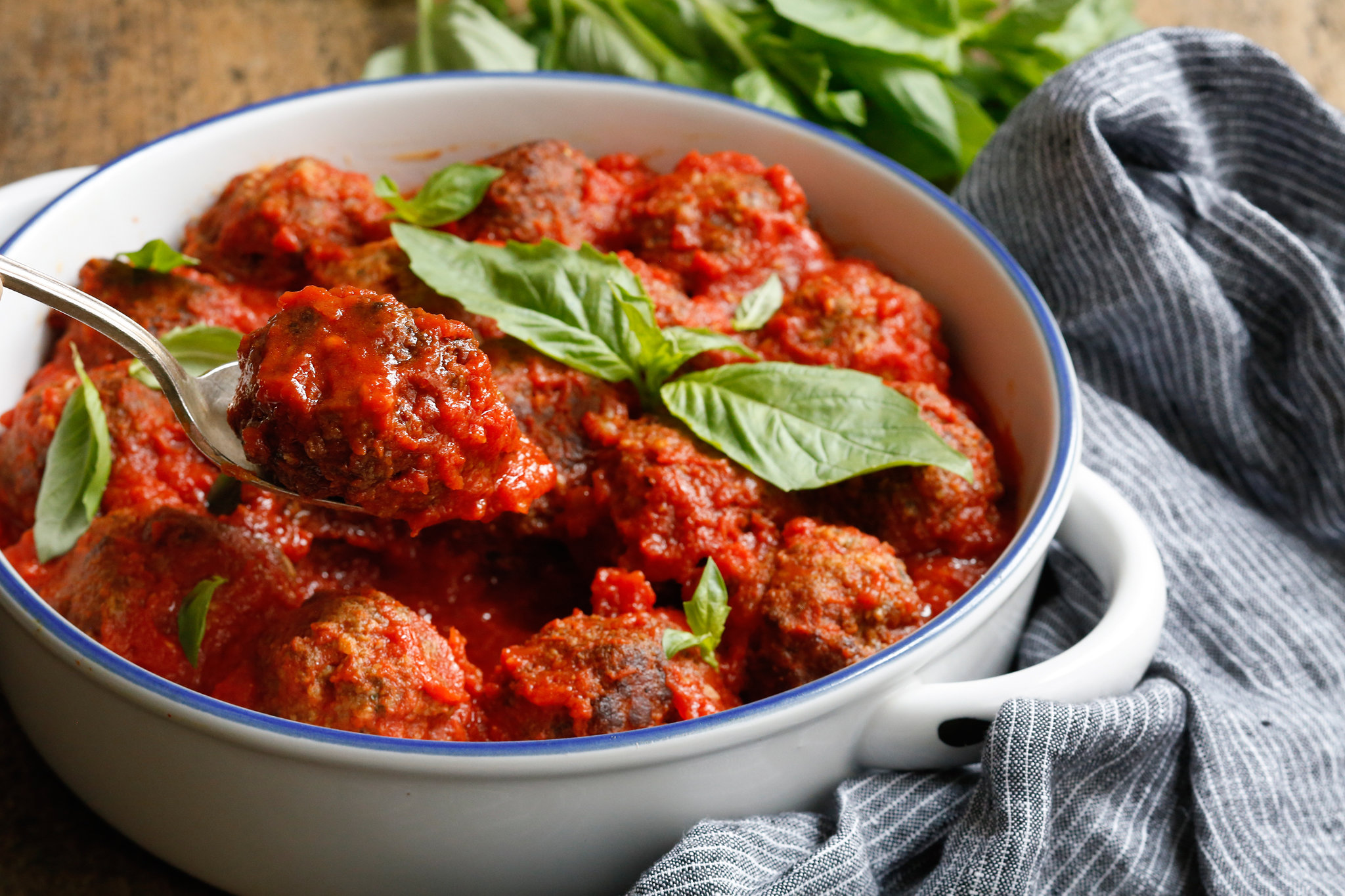
- Serve immediately, or simmer gently in warm marinara for 10 minutes (keep it at a low simmer, not a hard boil).
Notes
- Yield: about 18 to 22 meatballs (about 1.5 inches).
- All-beef version: replace pork with an additional 1/2 lb beef.
- Turkey or chicken: cook to 165°F in the center.
- Pan-sear option: Heat 2 tablespoons olive oil in a large skillet over medium-high heat. Sear meatballs in batches, turning every 1 to 2 minutes, until browned on most sides, 6 to 8 minutes total. Reduce heat to medium, cover, and cook 4 to 6 minutes more until cooked through (160°F in the center for beef and pork; 165°F for turkey or chicken). You can also finish them in a 375°F oven until they hit temperature, usually 8 to 10 minutes.
- Make ahead: Refrigerate the mixture (or rolled meatballs) covered for up to 24 hours. If rolled, keep them on a parchment-lined sheet pan so they hold shape.
- Freezing: Freeze cooked meatballs on a sheet pan until solid, then bag for up to 3 months.
- Freeze from uncooked: Bake from frozen at 425°F for 22 to 26 minutes (check the center for 160°F for beef and pork; 165°F for turkey or chicken).
- Allergy note: Worcestershire commonly contains fish (anchovy). For a fish-free swap, use the same amount of soy sauce or tamari plus a tiny splash of vinegar. For vegetarian, use a vegetarian Worcestershire or soy sauce.
Nutrition
- Calories: ~175
- Fat: ~11 g
- Carbohydrates: ~6 g
- Protein: ~12 g
- Fiber: ~0.5 g
- Sugar: ~1 g
- Sodium: ~290 mg
Nutrition values are approximate and will vary by exact ingredients and portion size.