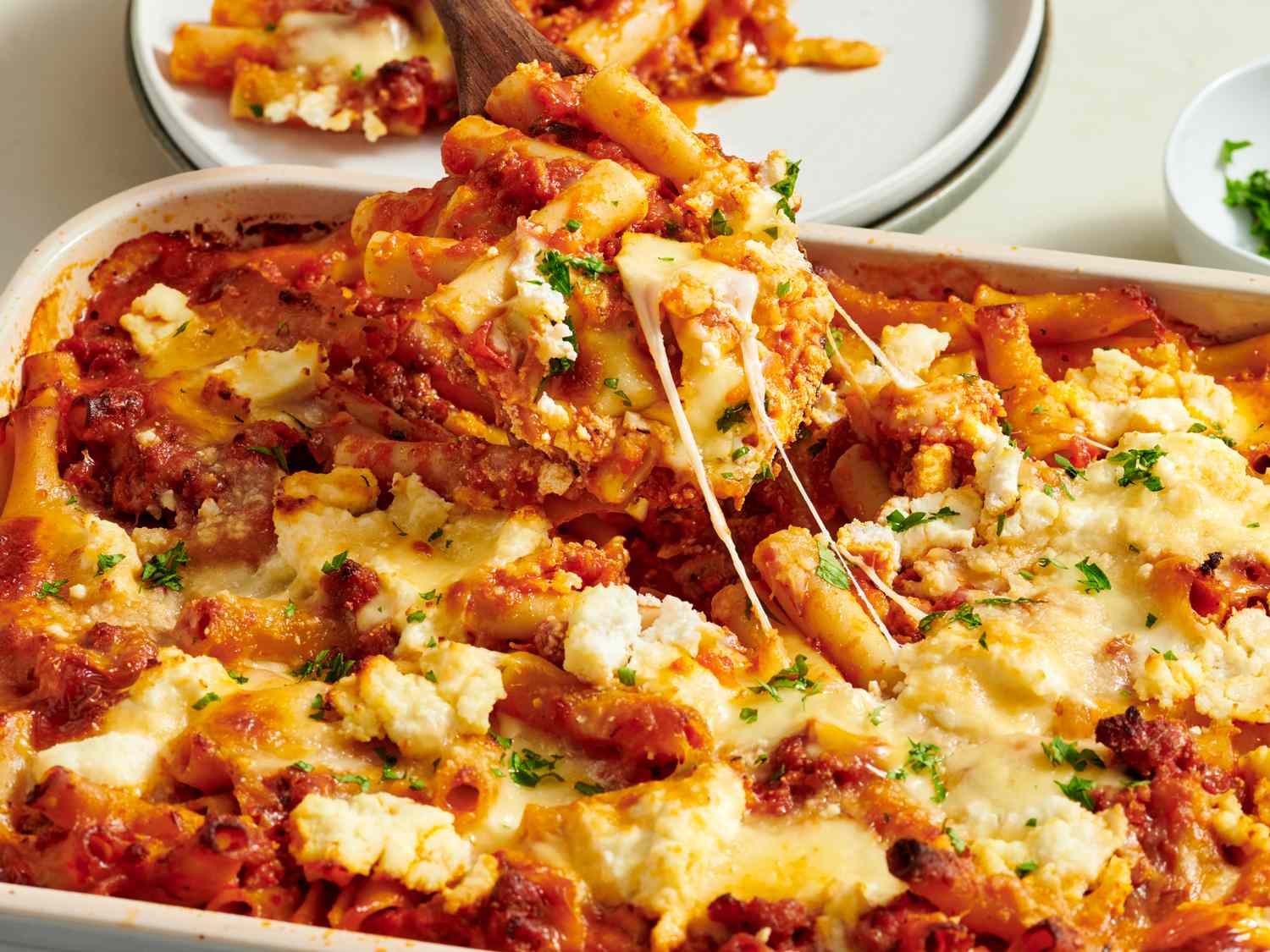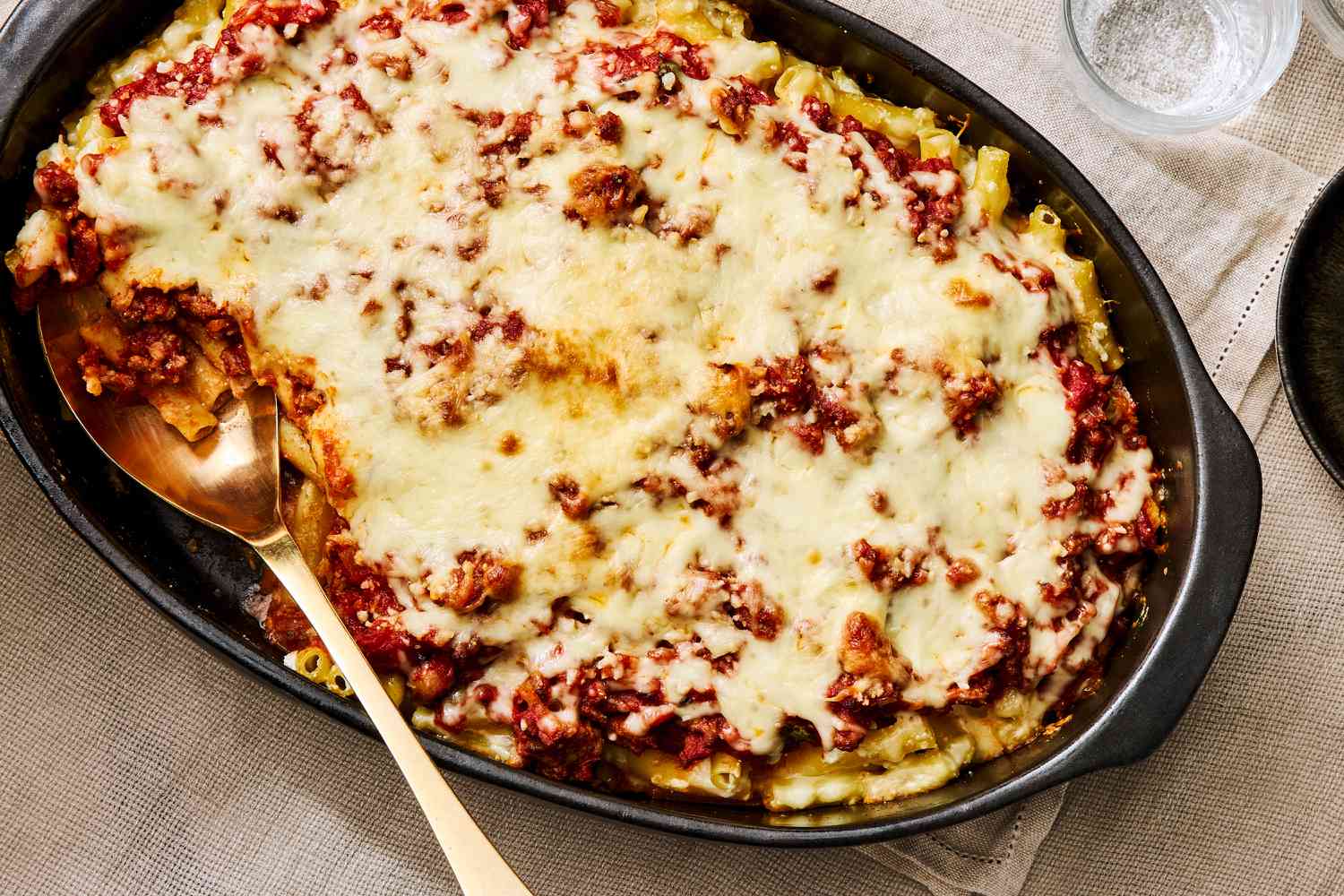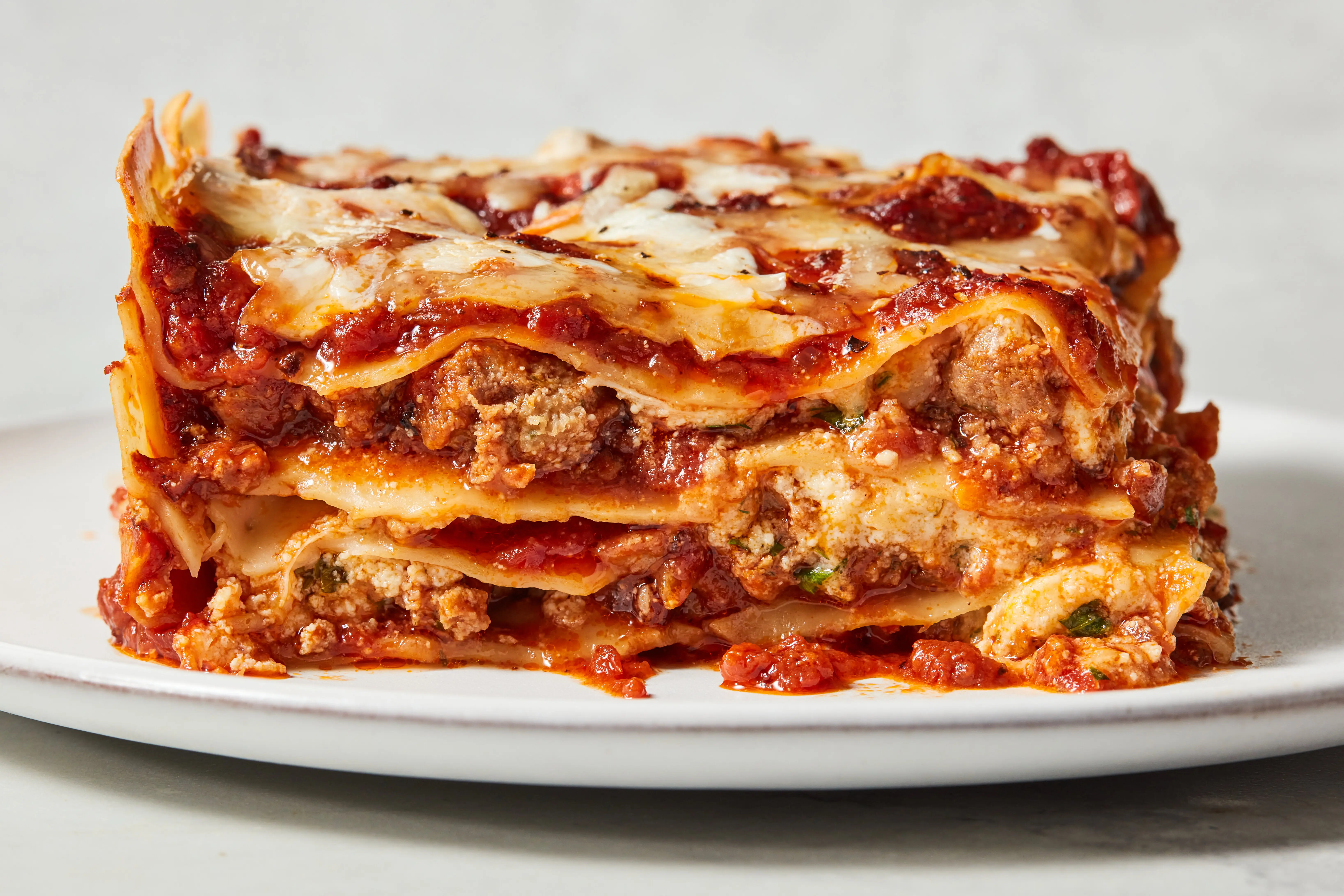

Lasagna is one of those dishes that feels like a project until you realize it is mostly a calm, repeatable pattern: simmer a sturdy meat sauce, stir together a quick ricotta filling, then stack noodles, sauce, cheese, repeat. The reward is big: deeply savory layers, stretchy mozzarella pulls, and slices that actually hold together on the plate.

I developed this version to be weeknight-friendly in the ways that matter. The sauce is from scratch but not fussy, with a 20 to 30 minute simmer that still tastes like you worked harder than you did. The ricotta layer is creamy and well-seasoned so it tastes like something, not just filler. And the bake is covered first for tender, even heat, then uncovered to get those browned, bubbly edges everyone fights over.
You have two solid noodle paths here: traditional boiled noodles, or no-boil noodles if that is what you have. No-boil noodles are especially convenient, but they are less forgiving, so sauce coverage matters more. When the noodles are fully surrounded by sauce, they bake up tender and the layers slice cleanly instead of turning chewy around the edges.
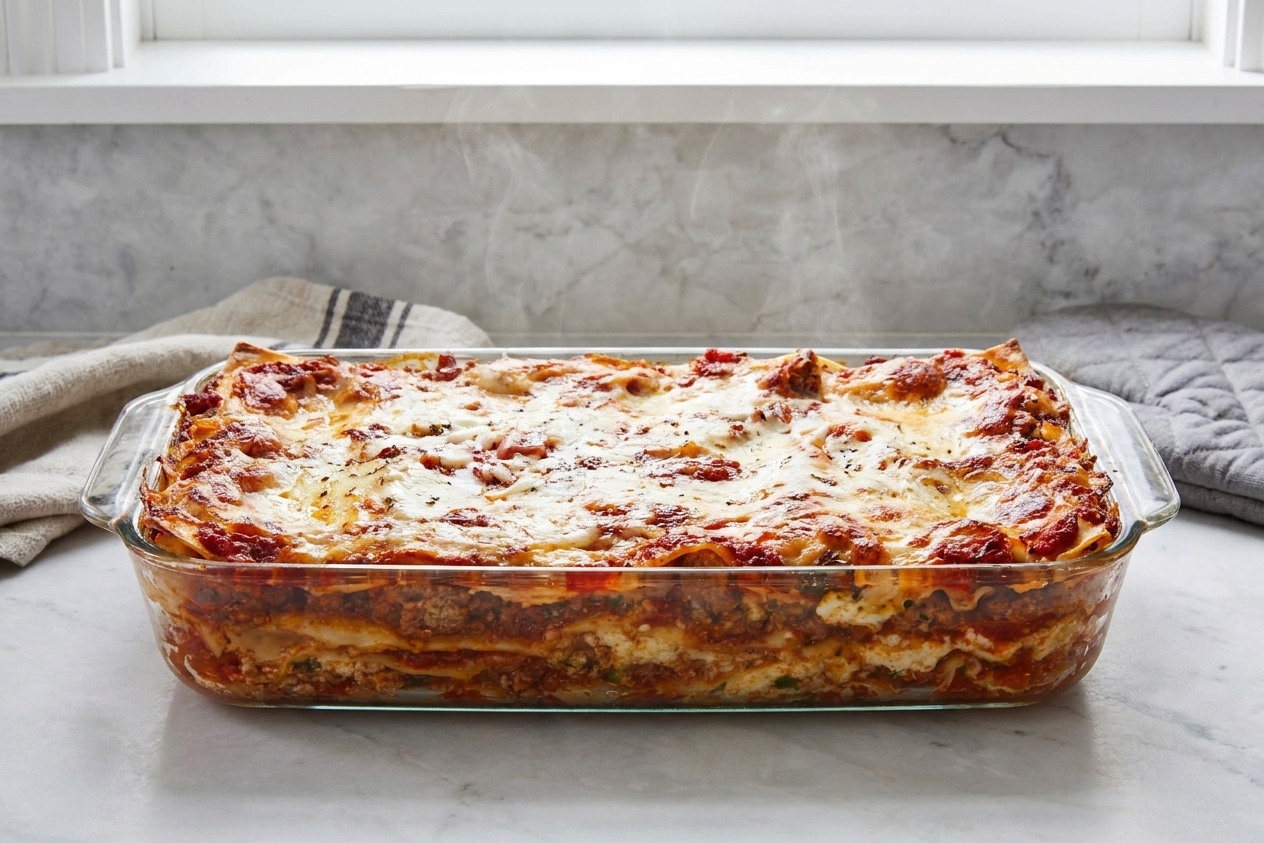
One last thing that makes or breaks lasagna: resting. Fresh-from-the-oven lasagna is molten and soft and will slide apart. Give it time to settle and you will get neat layers and a much better eating experience.
Make-ahead note
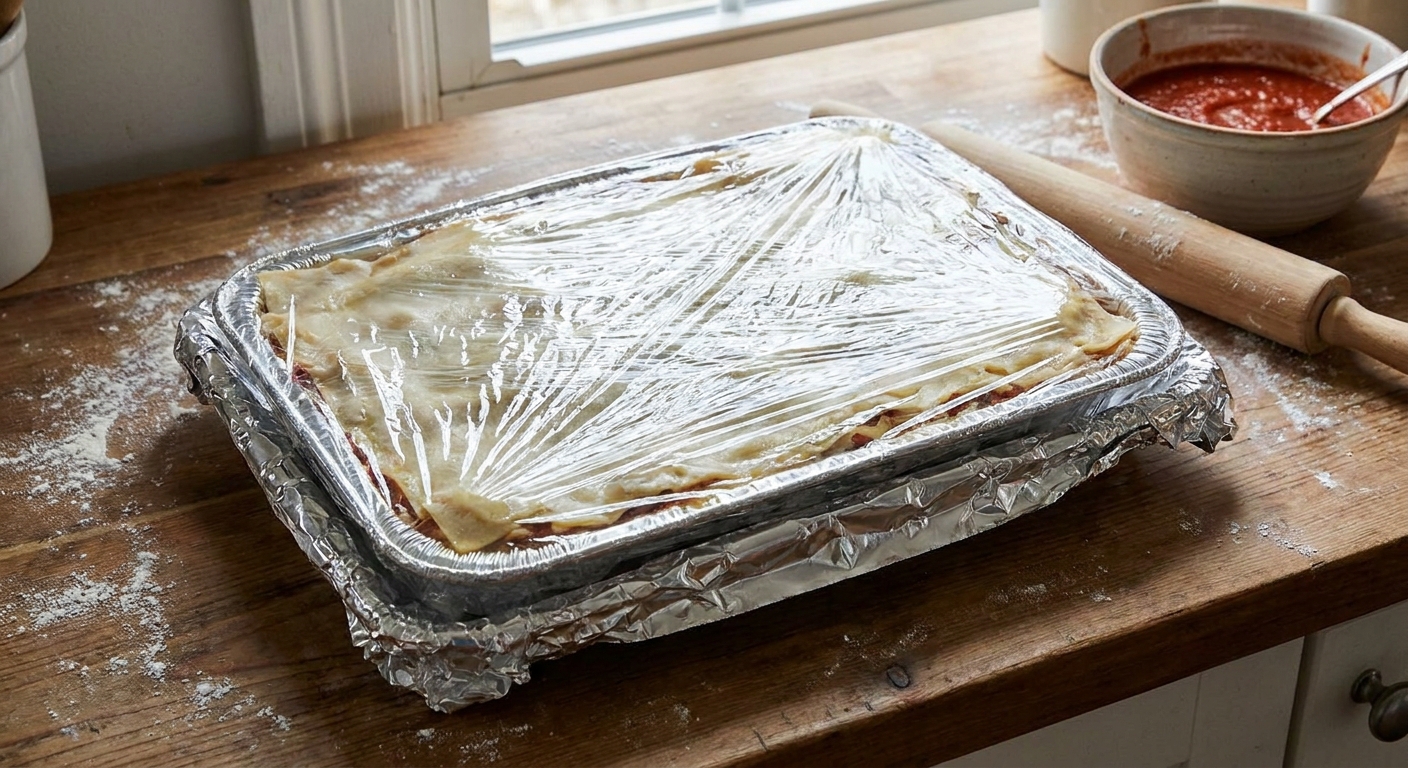
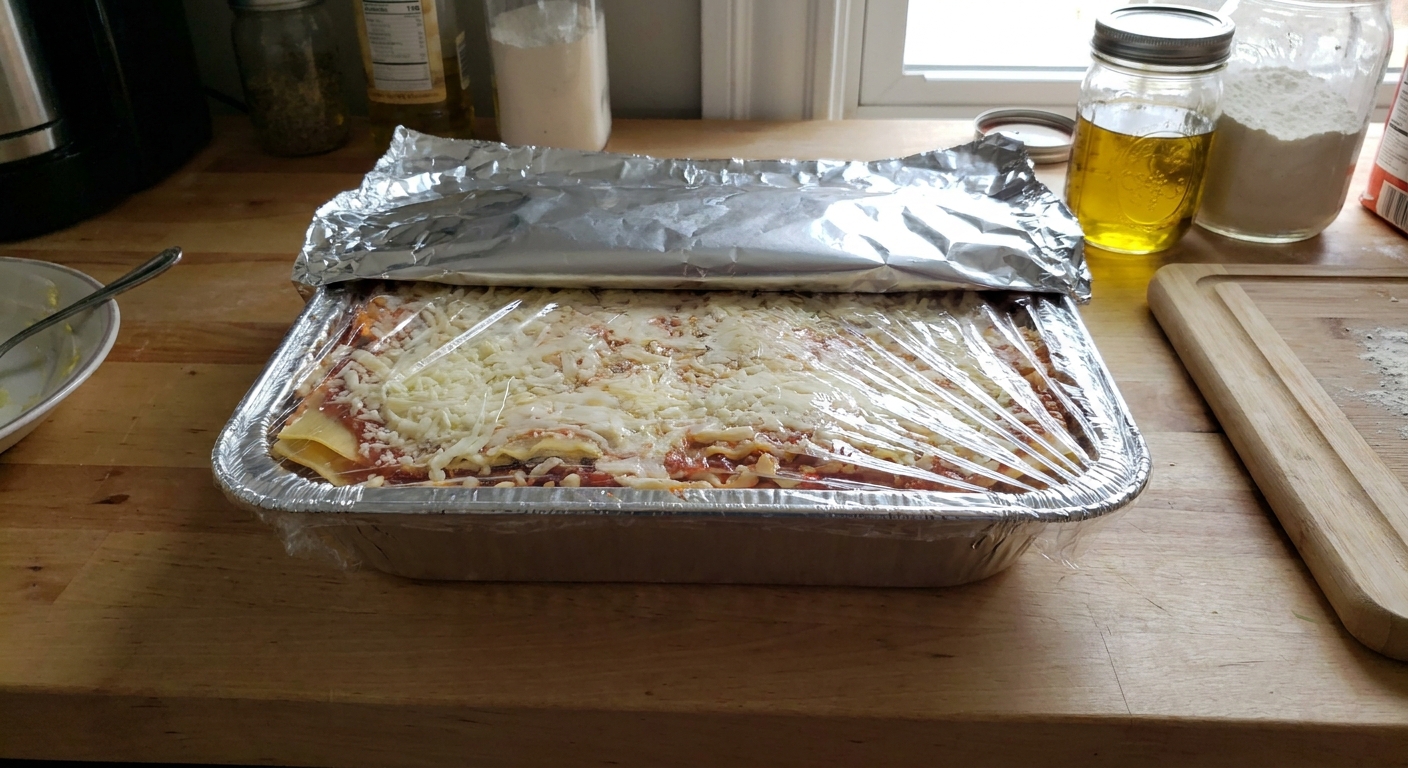
Lasagna is a gift to your future self. You can make the meat sauce up to 3 days ahead and refrigerate it, or assemble the whole lasagna, cover tightly, and refrigerate overnight. If you bake it straight from the fridge, plan on an extra 10 to 15 minutes during the covered portion so the center heats through, then uncover at the end to brown the top. Rest before slicing so the layers set.
Why this recipe works
- Simmered meat sauce builds depth fast. Browning the meat well, then letting the sauce bubble gently gives you that slow-cooked taste without an all-day commitment.
- Ricotta filling is seasoned like you mean it. Salt, Parmesan, and a little herb brightness keep the middle layer from tasting flat.
- Covered then uncovered baking nails texture. Covered time steams the noodles tender and melts the layers together, then uncovered time browns the top.
- A real rest equals clean slices. The cheese and sauce thicken as they cool slightly, so the lasagna cuts into defined layers instead of slumping.
Ingredient notes
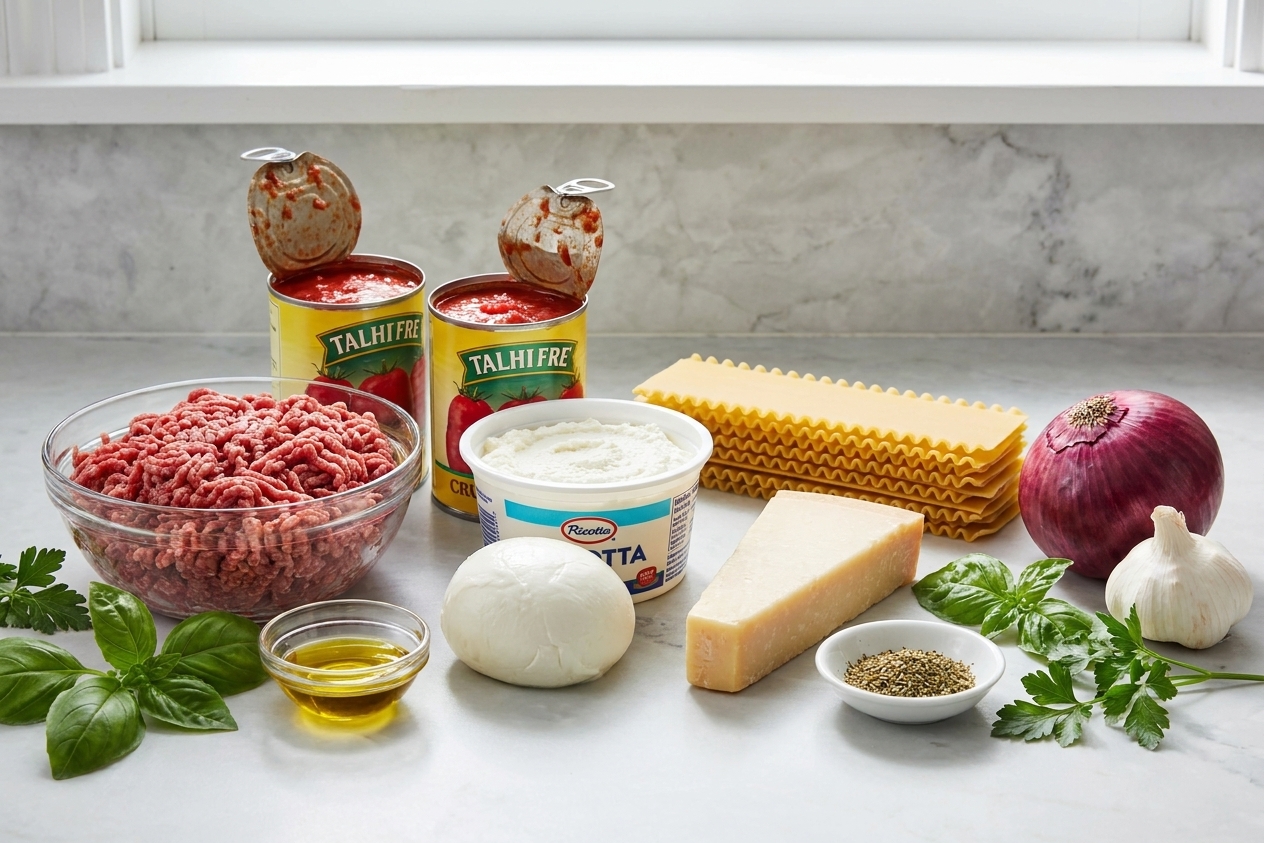
- Meat: I like a mix of ground beef and Italian sausage for flavor and richness. All beef works too, or all sausage if you like it bold.
- Tomatoes: Crushed tomatoes make a sauce that clings to noodles. If you use whole peeled tomatoes, crush them by hand or with a potato masher in the pot.
- Tomato paste: Optional but recommended. It adds sweetness and intensity without extra simmer time.
- Ricotta: Whole-milk ricotta gives the creamiest result. If yours seems watery, let it drain in a fine-mesh strainer for 10 minutes.
- Mozzarella: Low-moisture mozzarella shreds cleanly and melts into stretchy layers without puddling. Fresh mozzarella tends to weep.
- Noodles: Standard dried lasagna noodles work great. If using no-boil noodles, you need a slightly looser sauce and a little extra moisture in the pan.
- Egg: Helps set the ricotta layer so slices hold together.
Equipment you will need
- 9x13-inch baking dish (ceramic, metal, or glass)
- Large Dutch oven or heavy pot for sauce
- Large skillet (optional if you prefer browning meat separately)
- Large pot for boiling noodles (if using traditional noodles)
- Mixing bowl for ricotta filling
- Foil
- Microplane or grater for Parmesan
- Instant-read thermometer (optional, helpful for doneness)
Pro tips
- Brown the meat until you see real color. Pale meat equals pale flavor. Let it sit against the pot for a minute before stirring.
- Season in layers. Salt the sauce, then taste again after simmering. Also season the ricotta filling. This is where bland lasagna usually happens.
- Undercook boiled noodles by 1 to 2 minutes. They finish cooking in the oven and stay intact instead of getting mushy.
- Keep noodles from sticking. Lay boiled noodles flat on a lightly oiled sheet pan or a piece of parchment. Do not stack them in a pile.
- Press each layer gently. Not smashed, just a light press so there are fewer air gaps.
- Rest 20 to 30 minutes before slicing. If you want ultra-clean slices, rest closer to 45 minutes.
Substitutes that work
- Ground turkey or chicken: Swap for beef. Add an extra tablespoon of olive oil to the sauce for richness.
- Cottage cheese: A classic ricotta swap. Use small-curd and drain well, or blend briefly for a smoother texture.
- Spinach: Stir 8 to 10 ounces thawed frozen spinach, squeezed very dry, into the ricotta mixture.
- Gluten-free noodles: Use a brand you trust and follow package guidance. Keep the sauce a touch looser since some GF noodles absorb more.
- Dairy-light option: Use part-skim ricotta and mozzarella. The lasagna will be a little less luscious but still solid.
Variations
- Extra cheesy: Add provolone slices in the mozzarella layers, or sprinkle a little more Parmesan on top before uncovering.
- Spicy: Use hot Italian sausage and add a pinch of crushed red pepper to the sauce.
- Veg-forward: Sauté diced mushrooms and zucchini until well browned and fold into the sauce to stretch the meat further.
- Herby: Add fresh basil leaves between layers for a brighter finish.
Serving ideas
- Simple arugula salad with lemony vinaigrette
- Garlic bread or a crusty loaf for sauce-swiping
- Roasted broccoli or broccolini with red pepper flakes
- Quick marinated cucumbers for a cool, acidic contrast
Storage and reheating
Refrigerator: Cool leftovers completely, then cover and refrigerate for up to 4 days. Reheat slices in a 350 F oven until hot in the center, or microwave in short bursts with a splash of water or sauce to keep it from drying out.
Freezer: Wrap well and freeze for longer storage. Thaw overnight in the fridge for best texture, then reheat covered until hot and finish uncovered to re-crisp the top.
Common mistakes
- Skipping the rest. If you slice right away, the layers slide. Resting is not optional if you want clean pieces.
- Using watery cheese. Fresh mozzarella and wet ricotta can make the center soupy. Use low-moisture mozzarella and drain ricotta if needed.
- Sauce that is too thick for no-boil noodles. No-boil noodles need moisture. Keep the sauce a little looser and make sure the top layer has plenty of sauce before baking.
- Not enough seasoning. Taste the sauce and the ricotta mixture. Adjust salt before assembling.
- Overcooking noodles before baking. Boiled noodles should be flexible but not fully tender so they do not turn mushy in the oven.
FAQ
Do I have to boil lasagna noodles?
Not always. Traditional dried noodles benefit from boiling, but no-boil noodles work well too. If you go no-boil, keep the sauce slightly looser and be generous with sauce around the edges so the noodles hydrate evenly.
What is the best layer order for lasagna?
Start with sauce on the bottom to prevent sticking, then noodles, ricotta mixture, mozzarella, sauce, and repeat. Finish with noodles, sauce, then a generous mozzarella and Parmesan top for browning.
How do I know when lasagna is done?
The edges should be bubbling steadily and the center should be hot. If you use an instant-read thermometer, aim for about 165 F in the middle.
Why is my lasagna watery?
Common culprits are watery ricotta, fresh mozzarella, or slicing too soon. Drain ricotta if needed, use low-moisture mozzarella, and rest before cutting.
Classic Lasagna
From-scratch classic lasagna with a rich meat sauce, creamy ricotta filling, and plenty of mozzarella, baked covered then uncovered for tender layers and a browned, bubbly top.
- Prep
- 35 minutes
- Cook
- 1 hour 15 minutes
- Total
- 2 hours 20 minutes
- Yield
- 10 servings
Ingredients
- 1 tbsp olive oil
- 1 large yellow onion, finely chopped
- 4 garlic cloves, minced
- 1 lb ground beef (80 to 90% lean)
- 1 lb Italian sausage (sweet or hot), casings removed
- 2 tbsp tomato paste
- 1 tsp kosher salt, plus more to taste
- 1/2 tsp freshly ground black pepper
- 1 tsp dried oregano
- 1 tsp dried basil
- 1/4 tsp crushed red pepper flakes (optional)
- 2 (28 oz) cans crushed tomatoes
- 1/2 cup water or low-sodium beef broth
- 1 tsp sugar (optional, to balance acidity)
- 2 tbsp chopped fresh parsley, plus more for serving (optional)
- 1 lb dried lasagna noodles (traditional), or no-boil noodles (see notes)
- 15 oz whole-milk ricotta cheese
- 1 large egg
- 1 cup grated Parmesan cheese, divided
- 4 cups shredded low-moisture mozzarella cheese, divided
- 2 tbsp chopped fresh basil (optional)
Instructions
- Heat the oven and prep the pan: Arrange a rack in the center of the oven and preheat to 375 F. Lightly oil a 9x13-inch baking dish.
- Start the meat sauce: In a large Dutch oven over medium heat, warm the olive oil. Add the onion and cook, stirring occasionally, until softened, about 5 to 7 minutes. Add the garlic and cook until fragrant, about 30 seconds.
- Brown the meat: Add the ground beef and sausage. Cook, breaking it up with a spoon, until browned and no longer pink, about 8 to 10 minutes. If there is a lot of fat, spoon off excess, leaving a couple tablespoons for flavor.
- Build the tomato base: Stir in the tomato paste, salt, pepper, oregano, basil, and red pepper flakes (if using). Cook, stirring, for 1 to 2 minutes to deepen the flavor.
- Simmer: Add the crushed tomatoes and water or broth. Bring to a gentle simmer, then reduce heat to low and cook uncovered, stirring occasionally, for 20 to 30 minutes. Taste and adjust salt. Stir in sugar if needed and add parsley if using. Keep warm.
- Cook the noodles (traditional noodles only): Bring a large pot of well-salted water to a boil. Cook lasagna noodles until very al dente, 1 to 2 minutes less than the package directs. Drain and rinse briefly with cool water, then lay noodles flat on a lightly oiled sheet pan so they do not stick. If using no-boil noodles, skip this step.
- Mix the ricotta filling: In a medium bowl, mix ricotta, egg, 3/4 cup of the Parmesan, 1 tablespoon parsley (if using), and basil (if using). Season with a pinch of salt and pepper.
- Assemble, layer 1: Spread about 1 cup meat sauce in the bottom of the baking dish. Add a layer of noodles, overlapping slightly. Dollop and spread half the ricotta mixture over the noodles. Sprinkle with 1 cup mozzarella. Spoon about 1 1/2 cups sauce over the cheese.
- Assemble, layer 2: Add another layer of noodles. Spread the remaining ricotta mixture. Sprinkle with 1 cup mozzarella. Spoon about 1 1/2 cups sauce over the cheese.
- Finish the top: Add a final layer of noodles. Spoon enough sauce over the top to fully cover the noodles, especially at the edges. Sprinkle with the remaining 2 cups mozzarella and the remaining 1/4 cup Parmesan.
- Bake covered: Cover tightly with foil, trying not to press the foil into the cheese. Bake for 30 minutes.
- Bake uncovered: Remove foil and continue baking until the top is browned and the edges are bubbling, 20 to 25 minutes more.
- Rest, then slice: Let lasagna rest for 20 to 30 minutes before slicing. For extra clean slices, rest up to 45 minutes. Serve warm with more parsley if you like.
Notes
No-boil noodle option: You can use no-boil lasagna noodles. Keep the sauce a bit looser by using the full 1/2 cup water or broth, or add an extra splash if your sauce feels very thick. After assembling, let the lasagna sit at room temperature for 10 minutes before baking so the noodles begin absorbing moisture. Check doneness by inserting a knife into the center. If you feel resistance from the noodles after baking, cover and bake 10 minutes more.
Make-ahead: Assemble up to 24 hours ahead, cover tightly, and refrigerate. Bake from cold with an extra 10 to 15 minutes during the covered portion, then uncover and finish as written.
Food waste tip: If you have leftover sauce, freeze it in a flat zip-top bag for easy stacking. It is gold for a fast pasta night later.