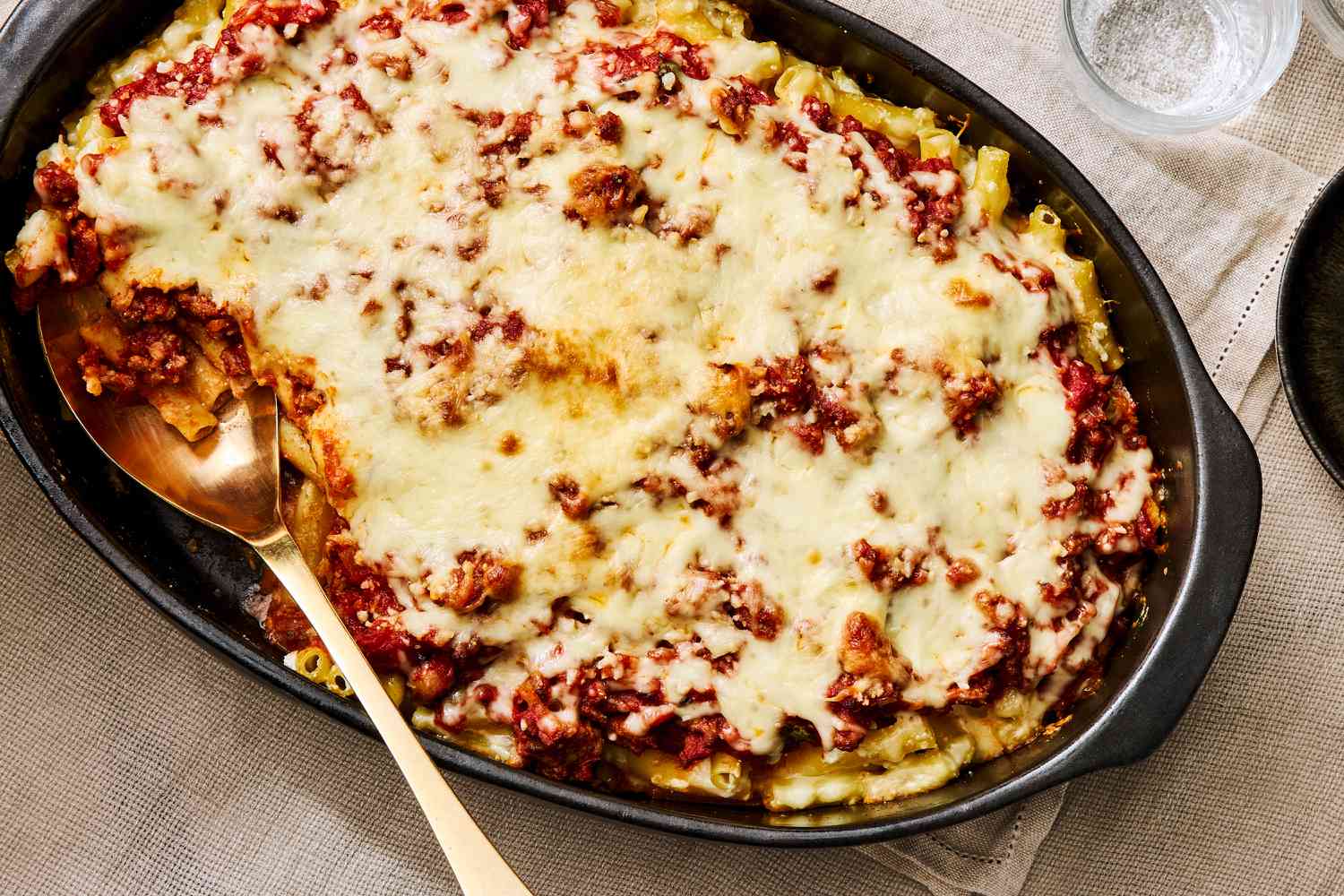
Lasagna is basically the patron saint of make-ahead dinners. But freezing and reheating can turn it from perfectly layered comfort food into watery soup or a dry brick if you miss a couple small details. The goal is simple: protect the texture (no mushy noodles), keep the sauce from separating (no watery puddles), and reheat gently enough that the center gets hot before the edges overbake.
Quick rules that prevent most lasagna problems
- Cool completely before freezing. Wrapping or freezing while it is still warm traps condensation, which can lead to icy buildup and watery layers later.
- Wrap airtight. Air exposure causes freezer burn and dry, leathery edges.
- Freeze in the shape you plan to reheat. Whole pan for a crowd, individual squares for weeknights.
- Reheat covered first, uncovered last. Covered warms the center; uncovered gives you bubbly browned edges.
- Rest after reheating. 10 to 20 minutes lets the layers set so it slices cleanly.
Before you freeze: baked vs unbaked
Freezing unbaked lasagna
Best for: The closest thing to “fresh baked” texture, especially if you hate reheated noodles.
Watch-outs: It takes longer to bake from frozen, and you must use a freezer-to-oven-safe pan or a disposable foil pan.
Freezing baked lasagna
Best for: Fast future meals and portioning. You can freeze slices and reheat them like a dream.
Watch-outs: If it’s overbaked the first time, it will be overbaked again. Bake just until set and bubbly, not until it is dried out.
Noodle notes that matter
- Boil noodles: Cook them very al dente (usually 1 to 2 minutes less than the box says). They finish softening as the lasagna bakes and again when you reheat.
- No-boil noodles: Use a sauce that is not overly thick, and make sure each noodle layer is lightly coated so the sheets can fully hydrate.
- Fresh pasta sheets: They freeze well, but they can go soft if your sauce is thin. Keep the sauce simmered down and go easy on watery vegetables.
How to freeze lasagna (step-by-step)
Step 1: Cool it the right way
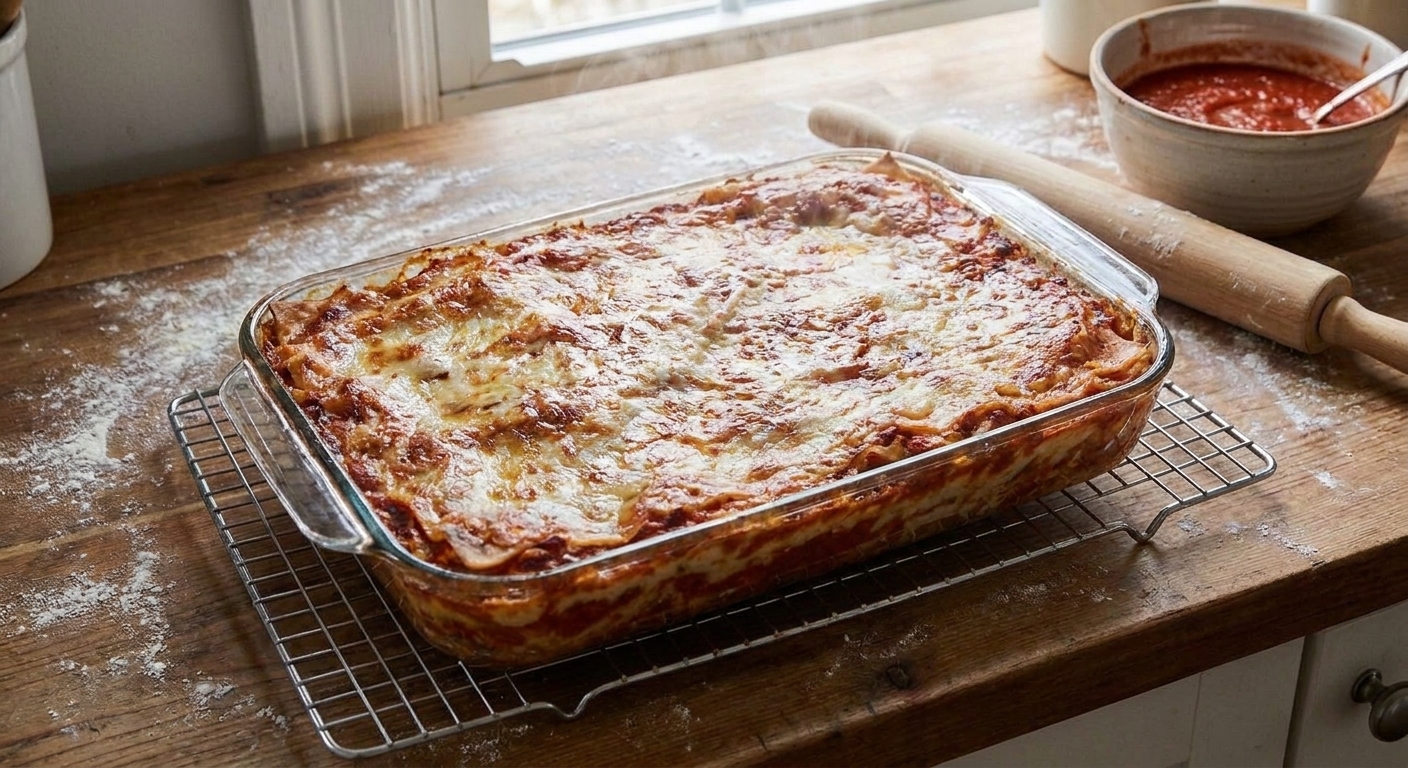
Let lasagna cool at room temperature for about 45 to 90 minutes until it is no longer steaming and the pan feels only slightly warm. (Time depends on pan depth and room temperature.)
- If you are in a hurry, set the pan on a wire rack and aim a fan nearby.
- For a very deep or oversized pan, cooling goes faster if you loosely tent with foil (not airtight) for 10 to 15 minutes, then refrigerate uncovered until the steam is gone before wrapping.
- For food safety, get it into the fridge within 2 hours of coming out of the oven.
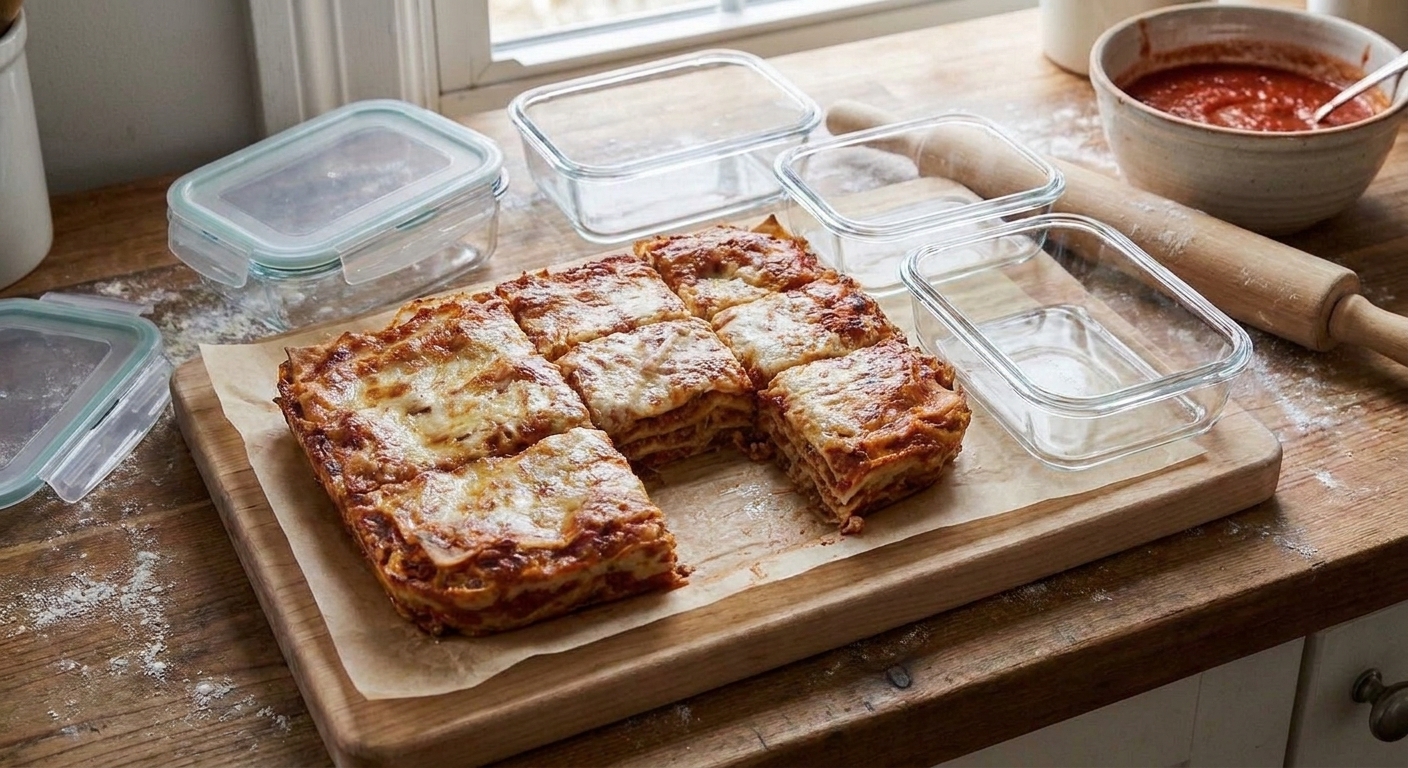
Step 2: Portion smart (optional but life-changing)
If you want easy weeknight portions, refrigerate the lasagna overnight first so it firms up, then cut into squares.
- Individual portions: Wrap each square and freeze in a single layer before bagging.
- Half-pan blocks: Great for small households. Cut the pan in half and wrap each half separately.
Step 3: Wrap to prevent freezer burn
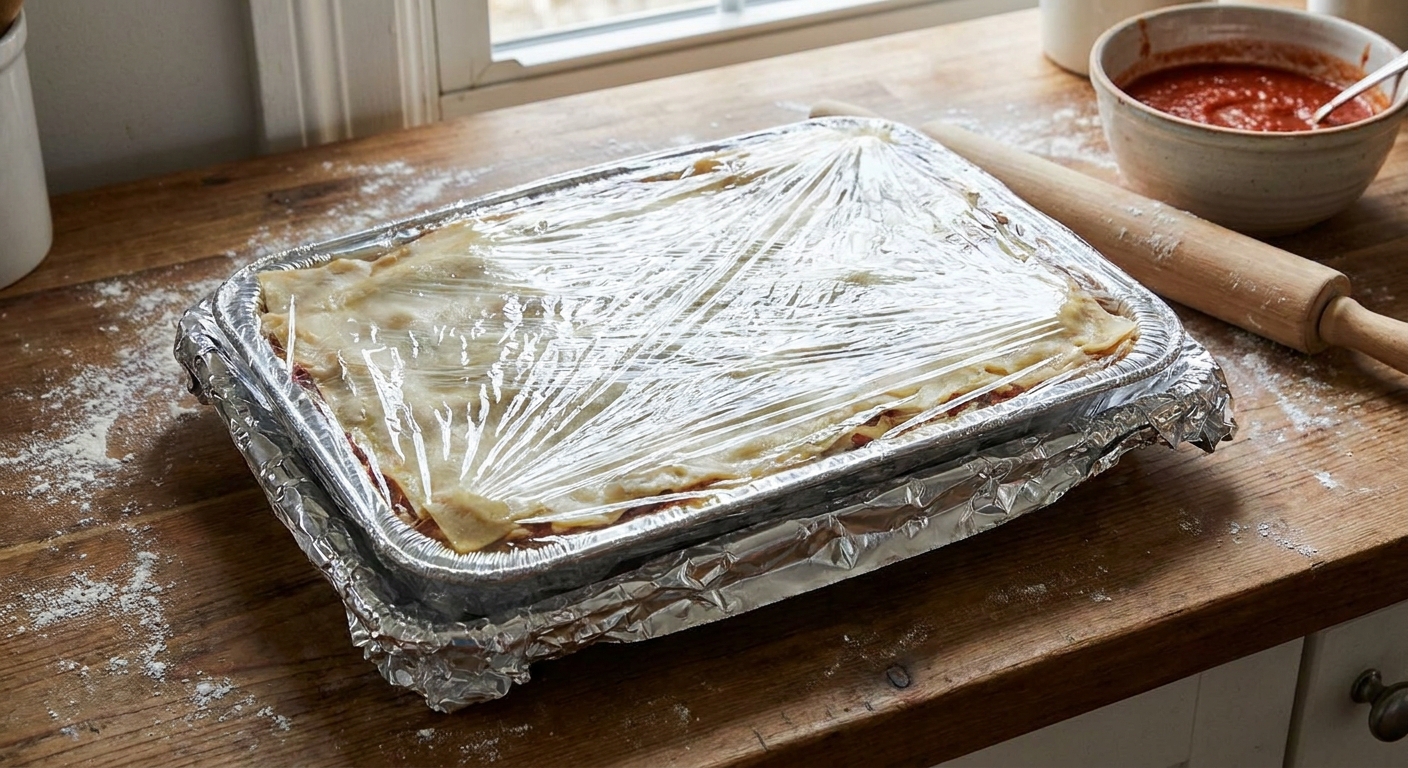
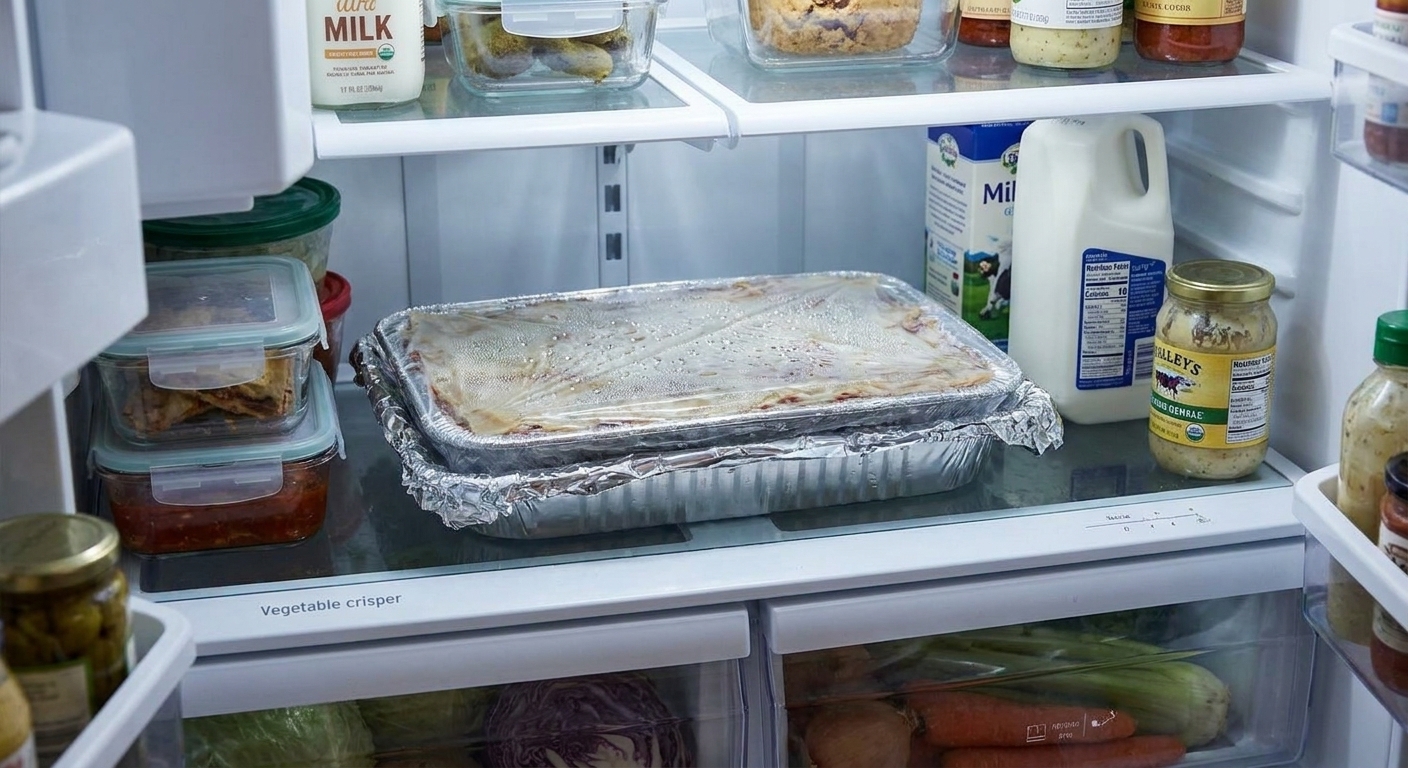
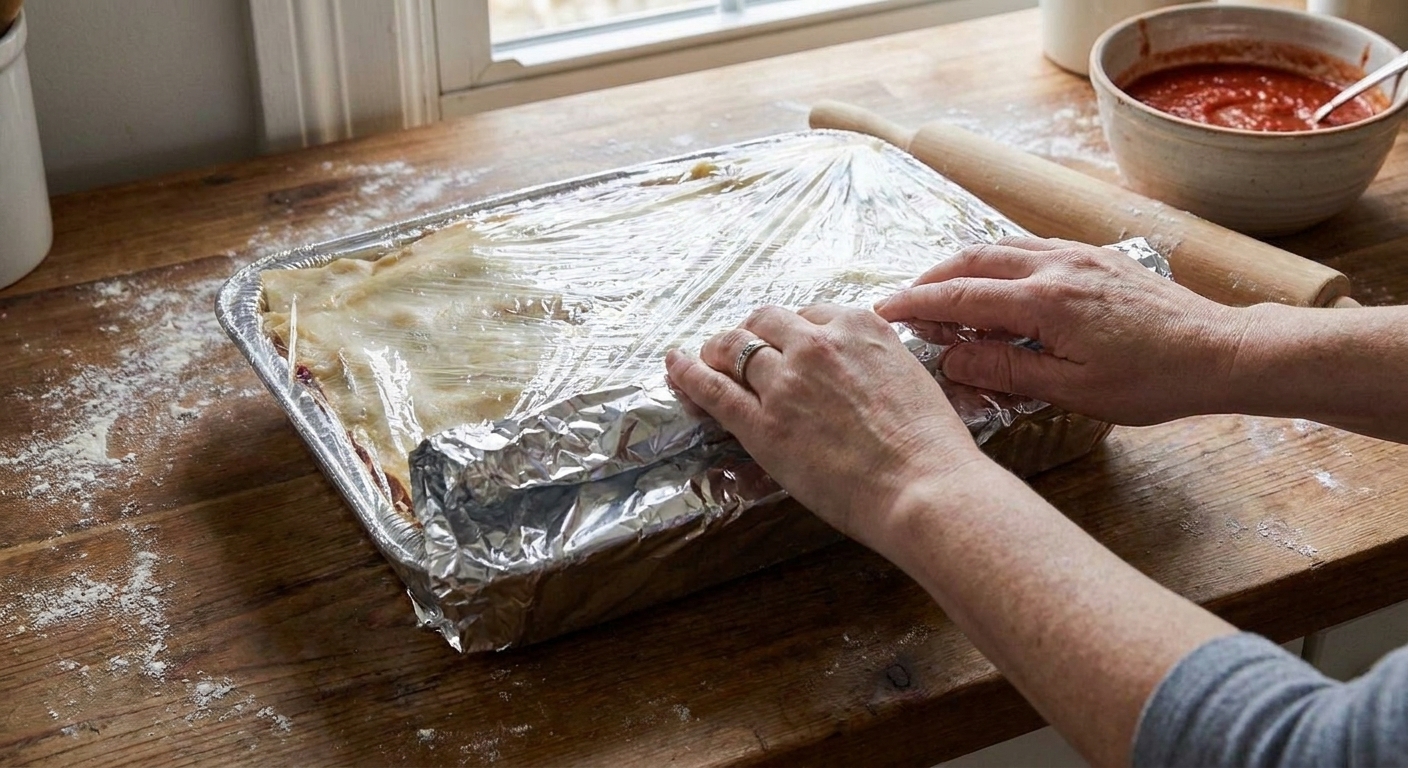
For a whole pan, my go-to is this three-layer method:
- Layer 1: Press plastic wrap directly onto the lasagna surface.
- Layer 2: Wrap the entire pan tightly with another layer of plastic wrap.
- Layer 3: Wrap with heavy-duty foil, crimping the edges snug.
If you have a lid, still add a layer of plastic wrap under it to block air.
Best wrapping for slices
- Everyday option: Plastic wrap tight to the surface, then foil, then into a freezer bag with the air pressed out.
- Best quality: Vacuum seal if you have a sealer (especially helpful for avoiding dry edges).
- Label tip: Write the date and whether it is baked or unbaked. Future-you deserves that clarity.
Step 4: Label and freeze flat
Freeze the pan on a level surface so the layers stay even. If freezing slices, freeze them flat on a sheet pan first, then transfer to a freezer bag.
How long does lasagna last in the freezer?
- Best quality: 2 to 3 months
- After that: It can stay safe longer if kept frozen consistently, but flavor and texture gradually decline.
Thawing lasagna safely
Best method: thaw overnight in the fridge
Move frozen lasagna to the refrigerator for 24 to 48 hours depending on thickness. This helps it reheat more evenly, so the edges do not overcook while the center is still cold.
Faster method: cold-water thaw for slices
Only for individually wrapped portions. Put the sealed portion in a leak-proof bag and submerge in cold water, changing water every 30 minutes until thawed (usually 1 to 2 hours).
Can you thaw lasagna on the counter?
I do not recommend it. Dense casseroles sit too long in the temperature danger zone while the center is still frozen.
Reheating lasagna so it stays moist
Reheating a whole pan in the oven (best quality)
Pan size note: Times below assume a standard 9x13-inch lasagna, about 2 to 3 inches deep, in a metal or glass baking dish. Deeper pans and cold glass take longer.
If thawed:
- Heat oven to 350°F.
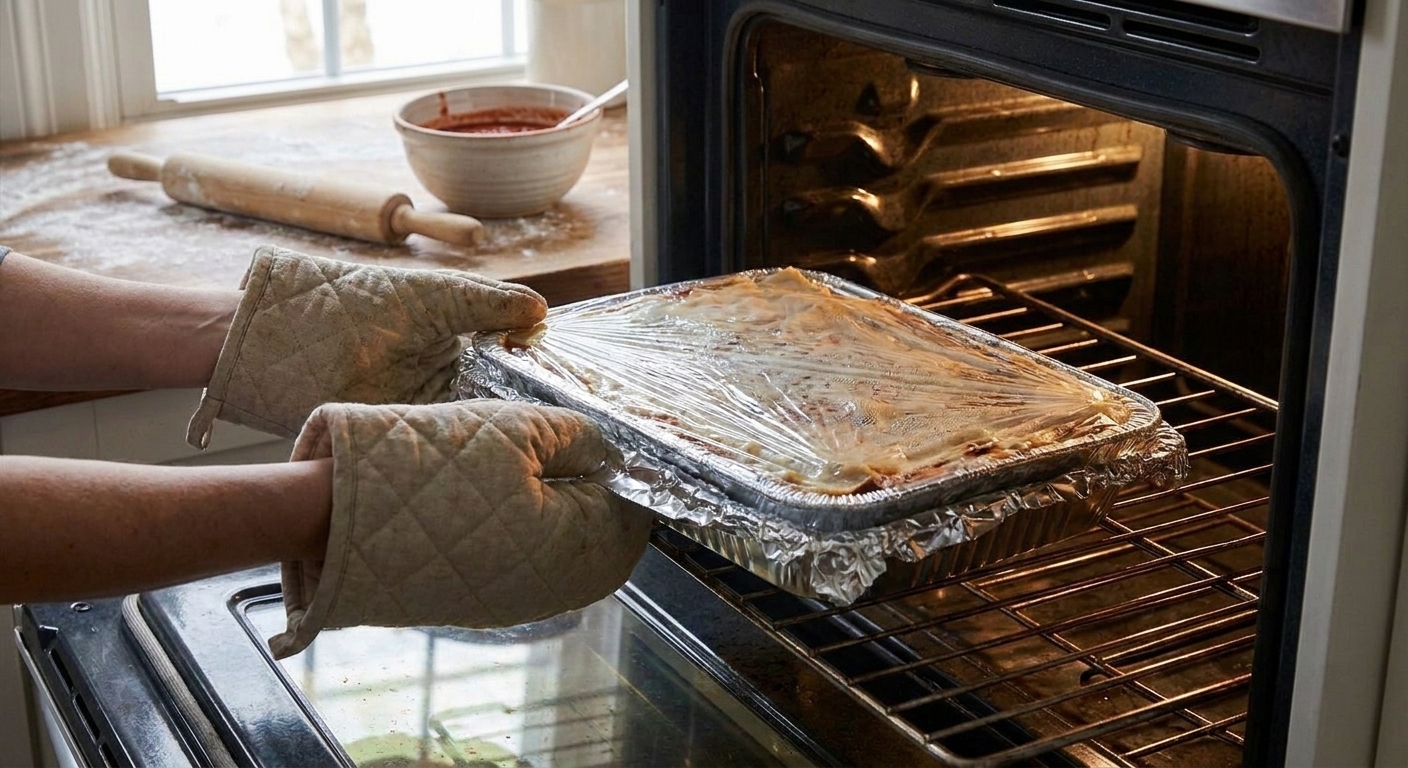
- Remove all plastic wrap before heating. Keep foil on (or cover with fresh foil).
- Bake 30 to 45 minutes until the center is hot.
- Uncover and bake 10 to 15 minutes to brown.
- Rest 15 minutes before slicing.
If frozen solid:
- Heat oven to 350°F.
- Remove all plastic wrap before heating. Cover tightly with foil.
- Bake 70 to 90 minutes. Start checking around 70 minutes.
- Uncover and bake 10 to 20 minutes to brown.
- Rest 20 minutes.
Temperature cue: The center should reach 165°F on an instant-read thermometer.
Reheating slices in the oven (best for weeknights)
- Heat oven to 350°F.
- Unwrap completely and discard any plastic wrap or foil.
- Place slices in a small baking dish.
- Add 1 to 2 tablespoons water or sauce around (not on top) to create gentle steam.
- Cover with foil and bake 20 to 30 minutes (less if thawed, more if frozen).
- Uncover for the last 5 minutes if you want browning.
Microwave method (fastest, not saddest)
The trick is lower power and a little steam.
- Unwrap completely. No plastic wrap in the microwave unless it is labeled microwave-safe, and even then keep it off the food.
- Put a slice on a microwave-safe plate.
- Spoon 1 tablespoon water or sauce next to it.
- Cover loosely with a microwave-safe lid or damp paper towel.
- Heat at 50 to 70% power in 1-minute bursts until hot (typically 3 to 6 minutes depending on thickness).
- Rest 2 minutes before eating.
Air fryer method (best for crispy edges)
Works best for smaller squares.
- Unwrap completely and remove all plastic wrap and foil.
- Preheat to 320°F to 340°F.
- Place lasagna in the basket on parchment (optional for easier cleanup).
- Heat 8 to 12 minutes, checking at 8.
- If the top browns too fast, tent with a small piece of foil.
Storing leftovers
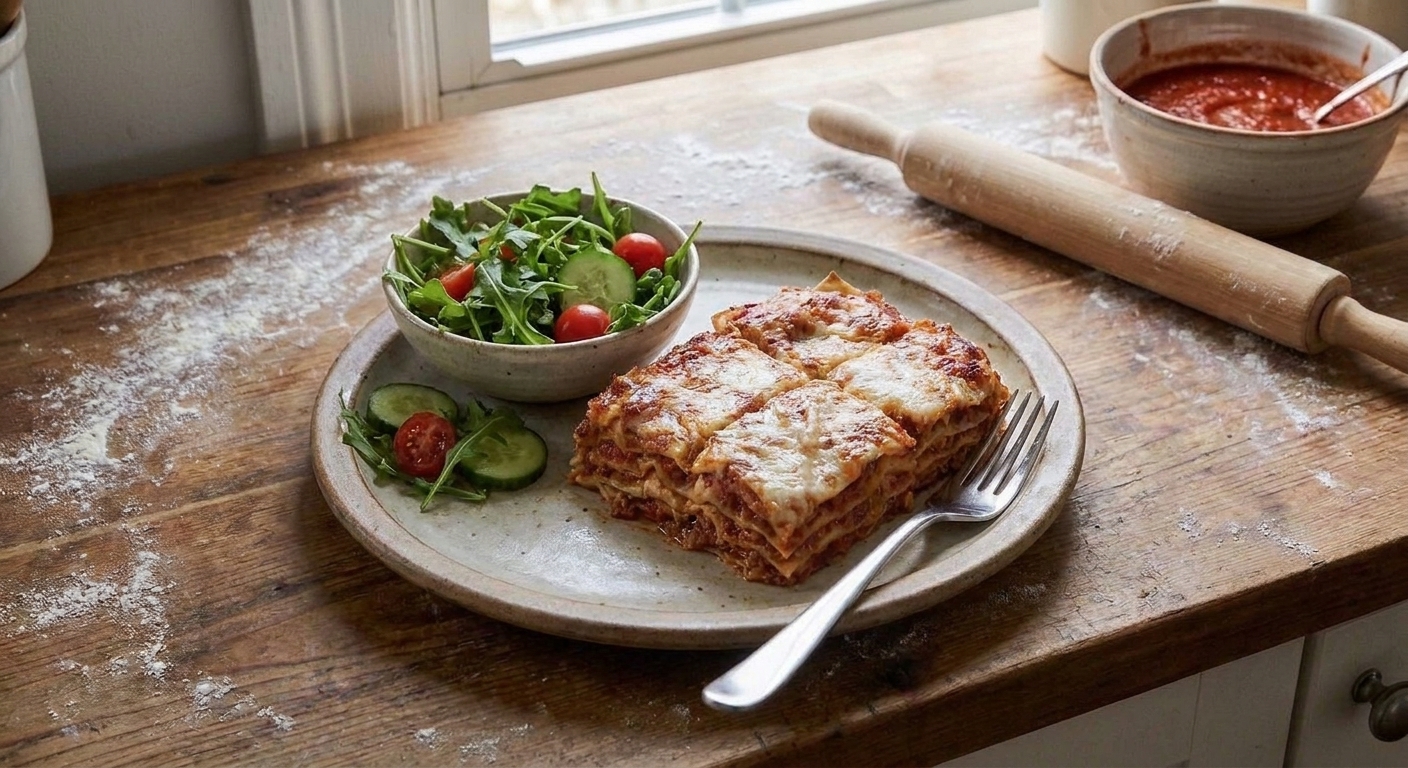
- Refrigerator: 3 to 4 days in an airtight container or tightly covered pan.
- Best way to keep it from drying: Press parchment or plastic wrap against the cut surface before covering.
- Reheat from fridge: Oven at 350°F covered until hot, then uncover to brown.
Troubleshooting
Problem: watery lasagna after thawing
Common causes: Wrapped or frozen while warm (condensation), watery vegetables, or a ricotta mixture that released liquid.
Fix now:
- Reheat covered until hot, then uncover and bake 10 to 20 minutes to evaporate excess moisture.
- Let it rest at least 15 minutes before slicing. Most “watery” lasagna just needs time to set.
Prevent next time:
- Cool completely before wrapping.
- Cook down vegetables (mushrooms, zucchini, spinach) until their liquid evaporates.
- If using ricotta, mix in 1 egg and a handful of grated Parmesan to help it set.
Problem: dry edges, dry noodles
Common causes: Not wrapped tightly, reheated uncovered too long, or too little sauce between layers.
Fix now:
- Add a few tablespoons warm marinara (or even water) around the edges, cover tightly with foil, and reheat gently.
- For single slices, microwave at lower power with a damp cover.
Prevent next time:
- Use the plastic-wrap-then-foil method to block air.
- Reheat covered first, uncover only to brown.
- Sauce should lightly coat every noodle layer. Dry spots now become dry spots later.
Problem: overbaked top but cold center
Common causes: Oven too hot, pan too shallow, or not enough covered time when reheating from frozen.
Fix now:
- Cover with foil and drop oven to 325°F until the center reaches 165°F.
- If the top is already dark, keep it covered the rest of the way.
Prevent next time: Choose 350°F for most reheats and give frozen lasagna plenty of covered time.
Problem: grainy cheese or separated sauce
Common causes: High heat and long reheats can make dairy tighten up.
Fix now: Lower the heat, cover, and reheat more slowly. For slices, microwave at reduced power.
Make-ahead tips I swear by
- Line your pan with parchment (with overhang) if you want to lift, portion, and wrap super neatly once chilled.
- Freeze with a “sacrificial” top layer of sauce. A thin layer of sauce under the cheese helps protect the surface from drying out.
- Do not bake lasagna to death on day one. If you know it will be reheated, stop at “set and bubbly.”
- Keep a jar of marinara in the pantry. Two spoonfuls can rescue a dry reheat instantly.
FAQ
Is it better to freeze lasagna cooked or uncooked?
Uncooked gives you the closest-to-fresh texture after baking. Cooked is best for quick meals and portioning. Both work well if cooled fully and wrapped airtight.
Can I freeze lasagna in a glass dish?
Yes, but be cautious. Glass can crack with sudden temperature changes. Freeze only if the dish is freezer-safe, cool the lasagna completely first, and avoid thermal shock. Do not move a frozen glass dish into a fully preheated oven without checking the manufacturer guidance, and never put it under the broiler or on a hot burner.
Do I need to thaw before reheating?
No, but thawing helps it heat more evenly and can reduce the chance that the edges overcook while the center catches up. From frozen, plan for a longer covered bake.
How do I know when reheated lasagna is done?
The most reliable answer is 165°F in the center. Visually, you want bubbling around the edges and a hot center when you insert a knife and hold it there for a few seconds.