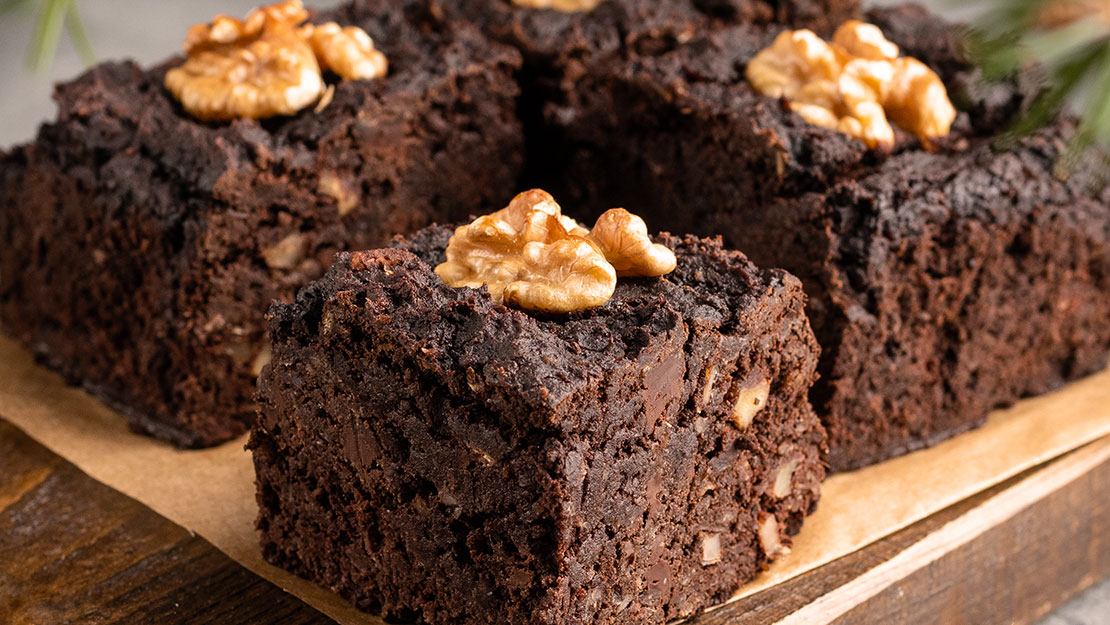
If you have ever baked brownies in a glass dish and wondered why the edges got a little too firm before the center felt right, you are not imagining it. Brownies are basically a heat management project: we want enough energy at the edges to brown and set, while keeping the center moist and fudgy. The material of your pan changes how that heat moves, which changes your texture.
Below is the practical, weeknight-friendly answer: what to pick, what to expect, and how to adjust when the “wrong” pan is the only one clean.
Quick answer
- Use a light-colored metal pan when you want fudgy centers with chewy, well-browned edges and the most consistent results.
- Use a glass pan when you are okay with softer browning but want a thick, very set edge, and you are willing to lower the oven temp and bake a little longer.
Why the pan matters
Brownies bake from the outside in. The batter at the perimeter touches the hot pan first, so the pan’s behavior has an outsized impact on your edges and corners.
Metal: fast response, better browning
Metal heats up quickly and reacts quickly when your oven cycles. That gives brownies a stronger, more even push to set and brown along the sides and bottom, which usually means chewier edges and a more predictable bake.
Glass: slower to heat, then holds heat
Glass takes longer to warm up, but once it is hot it hangs onto that heat. In practice, that can mean the brownies spend a longer time in the oven waiting for the center to set, while the edges keep cooking. The result is often thicker, more set edges and a center that can go from fudgy to slightly dry if you overshoot by a few minutes.
Edges, center, and the top
Chewy edges and a fudgy center
Most home bakers mean chewy, deeply chocolate corners that are set but not hard, with a center that stays gooey-fudgy. A light-colored metal pan is your best bet because it browns efficiently without as much risk of overcooking.
Thicker, more cake-leaning edges
Glass can be great if you like a more assertive edge, almost like the brownie equivalent of a crust. The tradeoff is less browning and a narrower window between “done” and “oops, a bit dry.”
About the shiny, crinkly top
That classic papery top is mostly about properly dissolving sugar and emulsifying fat and eggs in the batter. Pan choice is secondary, but it can still nudge the outcome because it affects timing. Metal can make it easier to pull brownies at the ideal moment, while glass sometimes pushes you toward a longer bake, which can dull the shine if you go past your sweet spot.
Best pan choice
Best overall: light-colored aluminum or aluminized steel
- Why: Even heat, strong browning, predictable timing.
- Look for: A sturdy 8x8 or 9x9 with straight sides for neat slices. Heavier gauge usually bakes more evenly than very thin pans.
Okay with tweaks: glass (Pyrex-style)
- Why: Holds heat, edges set firmly.
- Expect: Often a longer bake, thicker perimeter, slightly less browning.
Proceed carefully: dark nonstick metal
- Why it is tricky: Dark surfaces absorb more heat and can over-brown the bottom and edges before the center sets.
- If it is all you have: Reduce oven temp and start checking early (details below).

How to adjust
These tweaks are designed for typical brownie recipes baked in an 8x8 or 9x9 pan. Recipes and ovens vary, so treat these as starting points and start checking early.
If the recipe was written for metal and you are using glass
- Try lowering the oven temperature by 25°F (about 15°C). This often helps with over-firm edges.
- Plan to bake a little longer. Start checking at the original time, then add 5 to 15 minutes as needed.
- Use the right doneness cues: The edges should look set and slightly pulled from the sides, the center should not look wet or sloshy, and a toothpick should come out with moist crumbs, not raw batter.
If the recipe was written for glass and you are using metal
- Keep the temperature the same, but start checking earlier. Metal often finishes sooner.
- Watch the edges: When you see set edges and a slightly puffed center that still looks soft, you are close.
If you are using a dark metal pan
- Try lowering the oven temperature by 25°F (about 15°C). Consider it a baseline adjustment, then fine-tune for your oven.
- Consider a light-colored baking sheet under the pan to buffer direct bottom heat.
- Check early and pull when the center is just set with moist crumbs.
If you are using convection
- Expect faster browning. If your oven runs hot with convection, consider reducing the temperature by 25°F (15°C) and begin checking a little earlier.

How I test doneness
Forget chasing a perfectly clean toothpick for brownies. Clean usually equals overbaked.
- Visual: Edges are set and may show tiny cracks; the center looks set but still soft, not wet.
- Toothpick: Insert in the center. You want fudgy crumbs and maybe a thin smear, not liquid batter.
- Temp (optional but reliable): If you have an instant-read thermometer, treat this as a rough guideline: about 185°F to 205°F in the center, depending on the recipe and your goal. Lower in that range trends fudgier, higher trends more set.
Most important: Brownies keep baking from residual heat. Glass holds more heat, so carryover cooking is stronger. If you are using glass, it is smart to pull a hair earlier than you think.

Cutting and serving
Metal pans
Brownies usually release more cleanly, especially with parchment. The bottom sets nicely, which helps you lift and slice without the center smearing.
Glass pans
Because glass holds heat, the brownies can stay warm longer. That is lovely for serving, but it can make slicing messy if you rush it.
My parchment move: Use a parchment sling for easiest lift. Two strips that cross (one lengthwise, one crosswise) give you handles on all sides.
My slicing rule: Cool at least 1 hour for neat squares. If you want razor-clean edges, chill 30 minutes, then slice with a warm knife wiped clean between cuts.
Common problems
Problem: Edges are hard and the center is underdone
- Likely cause: Glass pan at a metal-pan temperature, or a dark metal pan running too hot.
- Fix: Next time, try lowering temp by 25°F (15°C) and begin checking earlier. Consider switching to a lighter metal pan.
Problem: Bottom is too dark
- Likely cause: Dark pan, thin pan, or oven rack too low.
- Fix: Move rack to the middle and place the pan on a light-colored sheet pan.
Problem: Brownies are dry even though you followed the time
- Likely cause: Overbaked by a few minutes, more common with glass because of carryover heat.
- Fix: Pull when toothpick shows moist crumbs, then cool fully to let the structure set without extra oven time.
FAQ
Is glass nonreactive? Does it matter for brownies?
Glass is nonreactive, but brownies are not very acidic, so reactivity is not really the issue here. Heat behavior is.
Can I bake brownies in a disposable aluminum pan?
Yes, but they are thin and can heat unevenly. Set it on a sturdy sheet pan for support and more even baking.
Should I grease the pan or use parchment?
Parchment is my pick for brownies in any pan. It prevents sticking, reduces waste from failed releases, and lets you lift the slab out for clean cuts. Grease the pan lightly first so the parchment stays put.
Does pan size matter more than pan material?
Yes. Using a larger pan than the recipe calls for makes thinner brownies that bake faster and can dry out. Pan material then becomes the second variable that nudges edges and bake time.
My recommendation
If you bake brownies even a few times a year, buy one light-colored metal 8x8 or 9x9 pan and line it with parchment. It is the simplest path to chewy edges, a fudgy center, and reliable timing.
And if tonight is a glass-pan night, do not stress. Try dropping the temp by 25°F (15°C), start checking early, and trust the moist-crumb toothpick.