Scaling a recipe sounds like simple math until you are staring at a too-full cake pan, a watery sauce, or chicken that is browned on the outside and cold in the middle. The good news: you can absolutely double, triple, or halve most recipes without drama if you know what does scale perfectly and what needs a little human judgment.
I am going to walk you through the part that is math, the part that is physics, and the part that is tasting as you go. Once you get the hang of it, scaling becomes one of those quiet kitchen superpowers that saves time, money, and food waste.
Start with the factor
Before you touch an ingredient, decide your scaling factor. Everything else flows from that number.
- Half batch: multiply every ingredient by 0.5
- Double batch: multiply by 2
- Triple batch: multiply by 3
- One and a half batch: multiply by 1.5
- Two thirds batch: multiply by 0.667 (or 2/3). For baking, use 0.667 rather than rounding to 0.67 unless the recipe is very forgiving.
My weeknight rule: If a recipe uses weights (grams or ounces), scaling is fast and accurate. If it uses cups and spoons, you can still scale, but be extra mindful with baking.
What scales cleanly
Usually scales cleanly
- Flour and dry grains (especially by weight)
- Meat, vegetables, beans
- Stocks, water, most liquids
- Rice, pasta (but see timing notes below)
Needs a little judgment
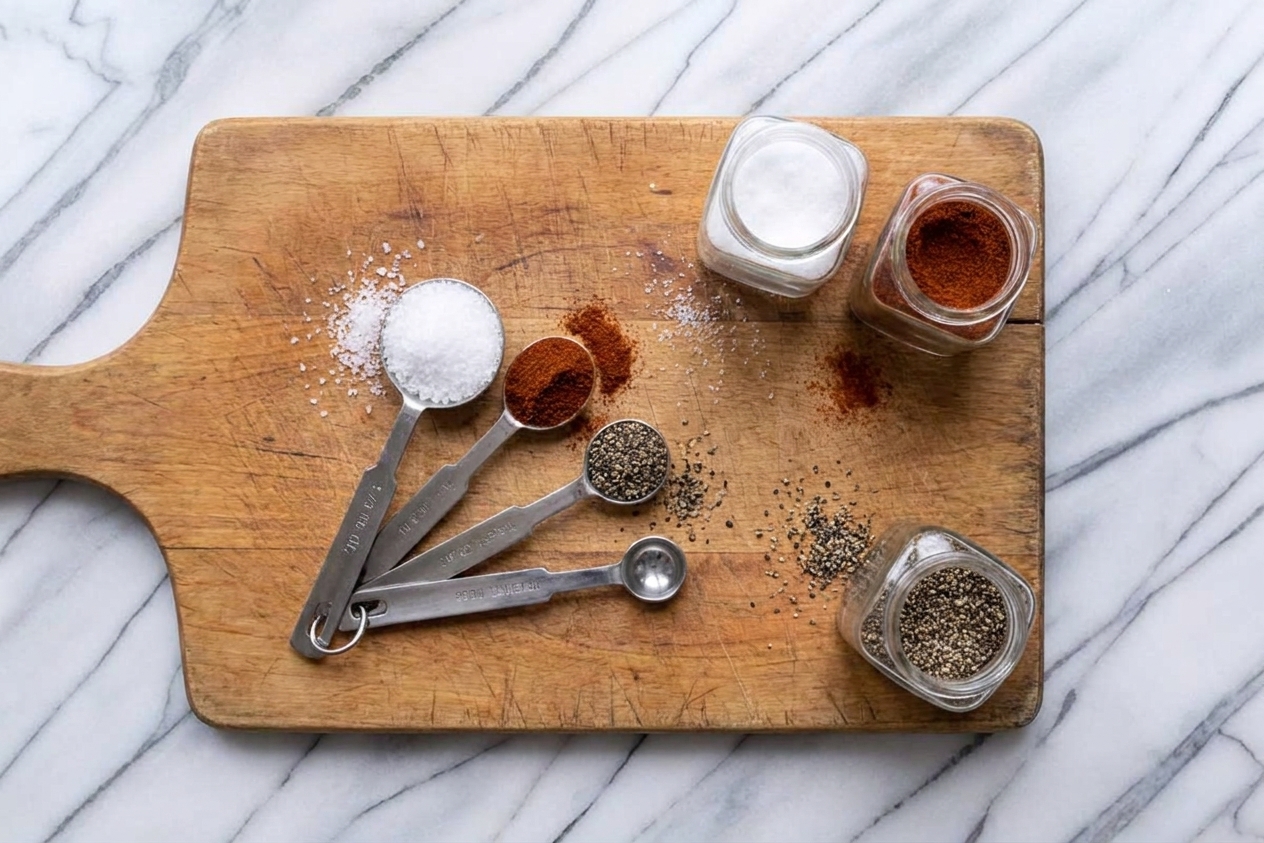
- Salt: scale it, then taste and adjust near the end
- Acid (lemon, vinegar, wine): scale it, then add the last 25 percent slowly
- Spices and herbs: scale dried spices more conservatively in very large batches, then adjust
- Chiles and heat: scale cautiously because pepper varieties vary wildly
- Thickeners (cornstarch, flour slurry): scale, but add gradually until the texture is right
- Leaveners in baking (baking powder, baking soda, yeast): do not assume perfect linear scaling, especially for very small or very large batches
That last point is the one that surprises people. Baking is chemistry. Cooking is mostly vibes plus a thermometer.
Use weight when you can
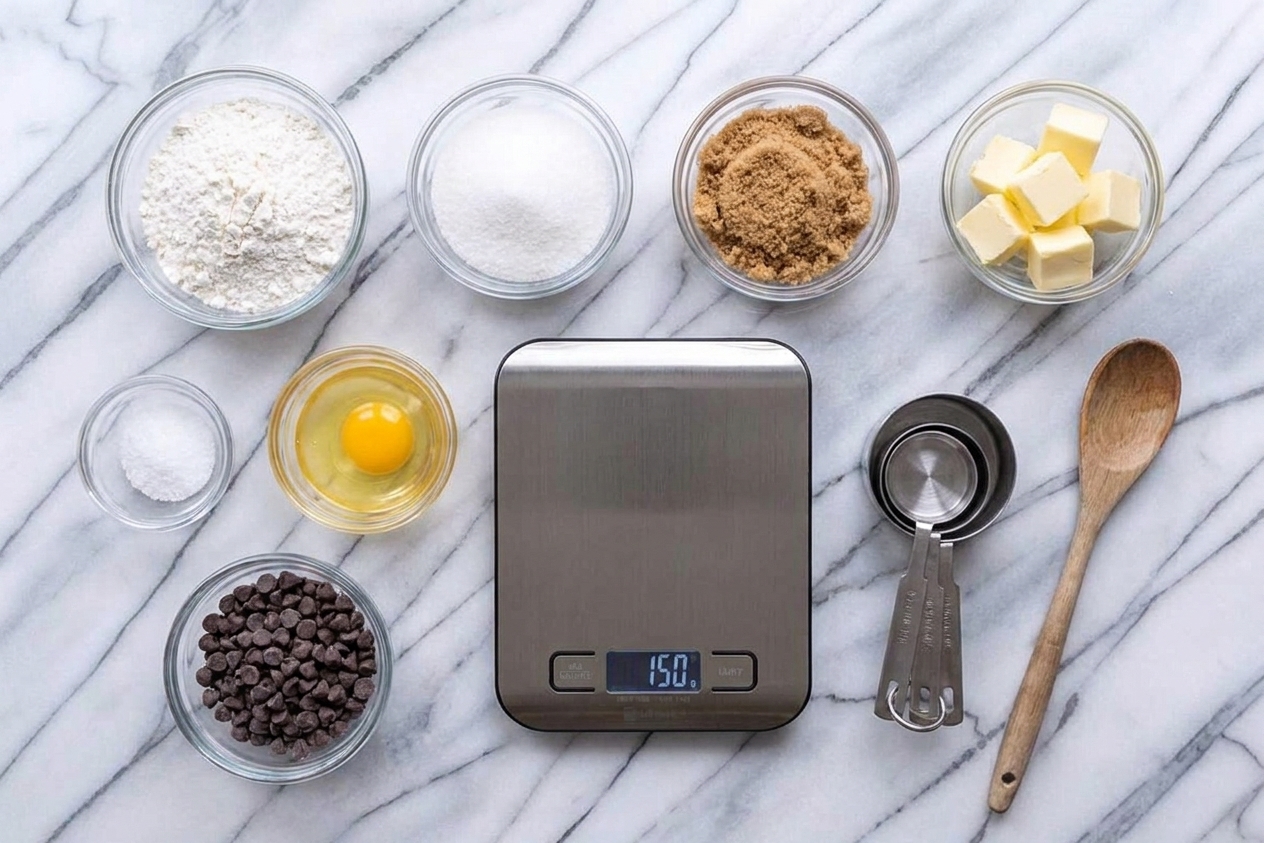
If you bake even occasionally, a kitchen scale is the best tool you can buy for consistent results and stress-free scaling. Cups are inherently variable because flour can pack down, humidity changes, and scooping methods differ.
Quick conversions that help when scaling:
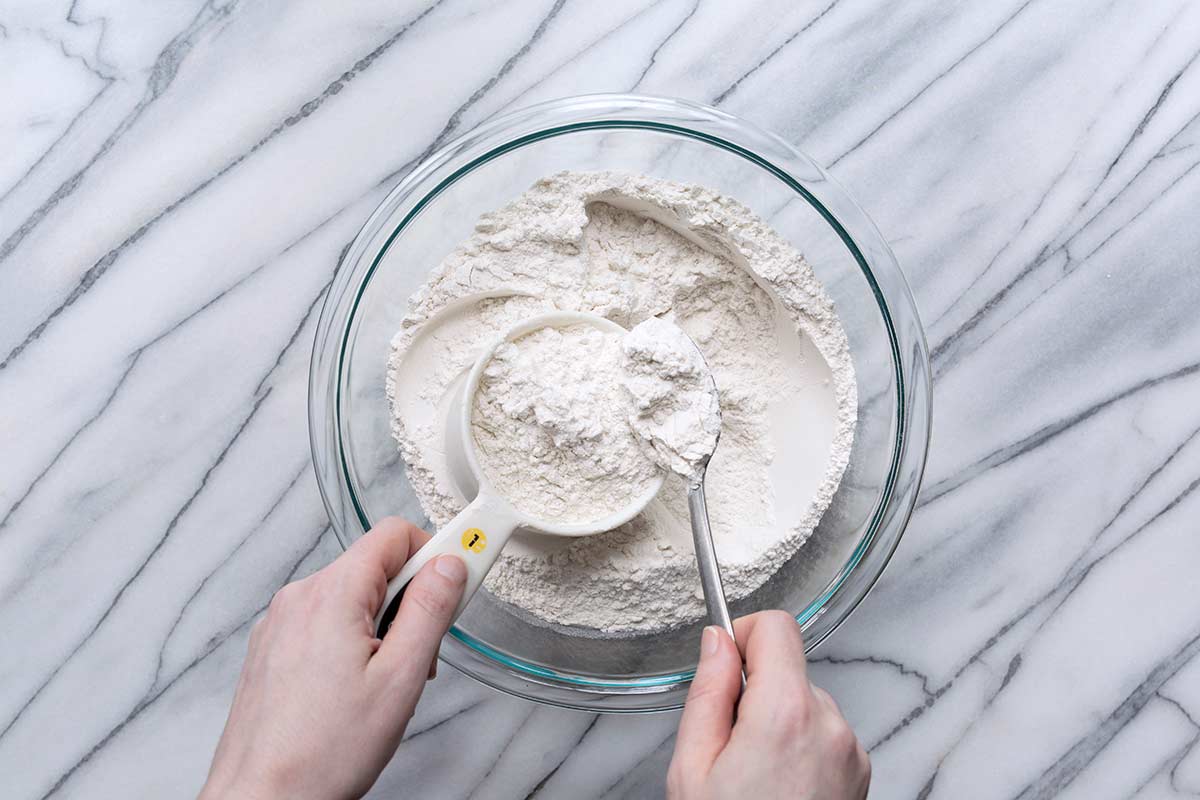
- All-purpose flour: 1 cup is about 120 to 130 g, depending on how you fill the cup
- Granulated sugar: 1 cup is about 200 g
- Brown sugar (packed): 1 cup is about 200 to 220 g
- Butter: 1 stick is 113 g (4 oz)
If your recipe provides weights, trust those. If it only provides cups, consider weighing your own usual cup measure once and keeping a note in your kitchen journal. That tiny bit of effort pays off forever.
Pan size that works
When you scale a recipe, your pan is often the real bottleneck. The goal is to keep batter or food at a similar depth so it cooks the same way.
For baking pans, use area
For cakes, brownies, bars, and sheet cakes, you can get very close by matching pan area.
- 9 x 13-inch pan: 117 sq in
- 8 x 8-inch pan: 64 sq in
- 9 x 9-inch pan: 81 sq in
- Round 9-inch pan: about 64 sq in
- Quarter sheet pan: often around 9 x 13 inches (117 sq in), but home pans vary by brand
- Half sheet pan: about 234 sq in (roughly double a 9 x 13)
Practical shortcuts:
- To halve a 9 x 13 recipe, an 8 x 8 is close (64 vs. 58.5 target). Expect a slightly thicker layer and a slightly longer bake.
- To double an 8 x 8 recipe, a 9 x 13 is a common move, but it is not a perfect match (117 vs. 128 target). Your layer will be a bit thicker than ideal, so plan on checking for doneness a little later, not earlier. If you want the same thickness, use a larger pan or split between two pans.
For deep dishes, use volume
For casseroles, lasagna, bread pudding, and anything thick and wet, volume matters more than area. If you double, you typically need either:
- two identical pans, or
- one pan with about double the capacity
My no-overflow rule: Fill baking dishes no more than 2/3 to 3/4 full unless the recipe says otherwise.
Time does not double
Cooking time does not scale in a straight line because heat moves through food based on thickness, not total quantity. The best way to scale time is to understand what is changing.
Same thickness, similar time
- Doubling cookie dough but baking the same size cookies: bake time stays basically the same.
- Doubling a casserole but splitting into two pans: bake time stays close, maybe a touch longer.
- Doubling soup in a bigger pot: simmer time is similar once it returns to a simmer.
Thicker food, longer time
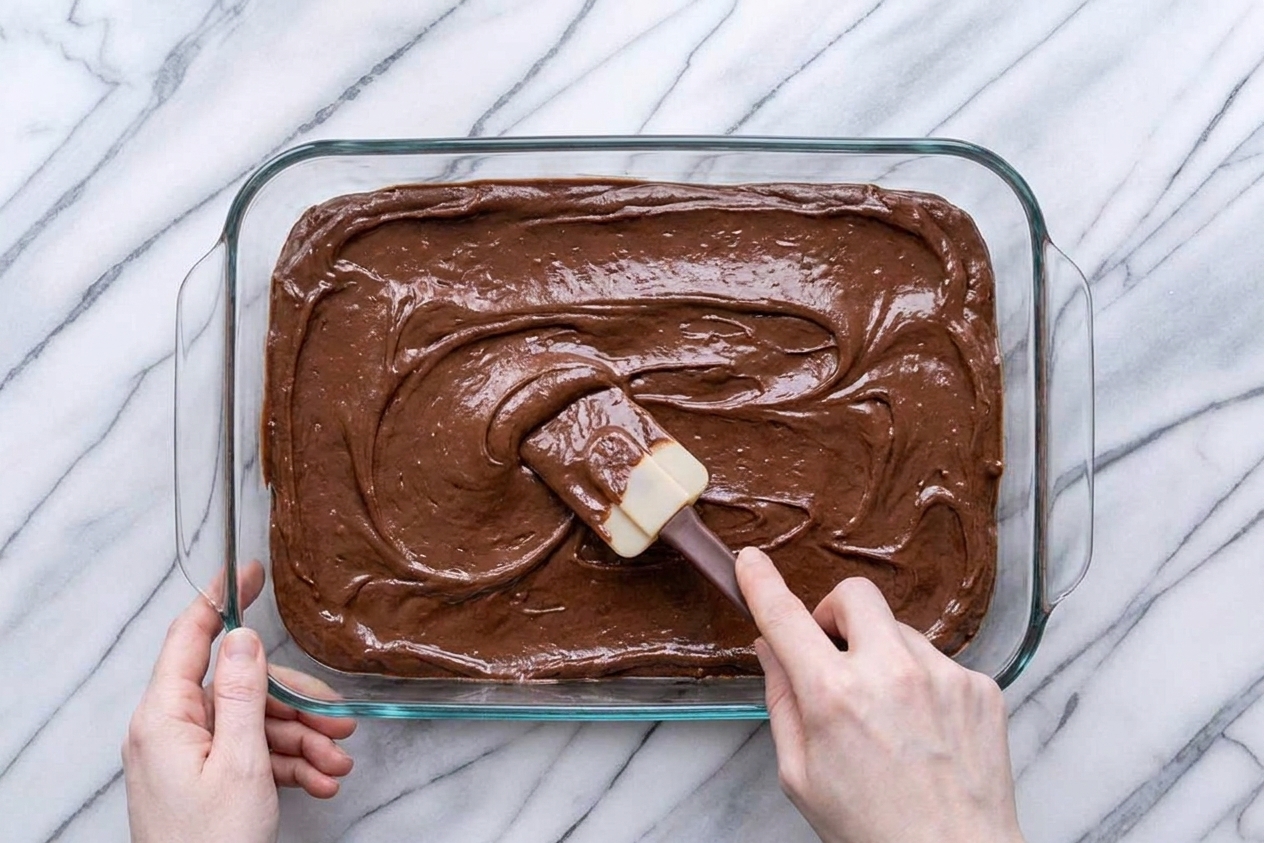
- Halving brownies in a smaller pan but the layer ends up thicker: longer bake.
- Doubling a gratin in one deeper dish: longer bake, and the top may brown before the center is hot.
Use cues, not the clock
Here are the cues I actually trust:
- Roasts and proteins: internal temperature with a thermometer
- Cakes: springy center, edges just pulling away, toothpick with a few moist crumbs
- Quick breads: deeply browned top, crack set, skewer comes out mostly clean
- Sauces: coats the back of a spoon, bubbles change from rapid to slow and glossy
- Soups and stews: flavors taste integrated, not sharp or separate
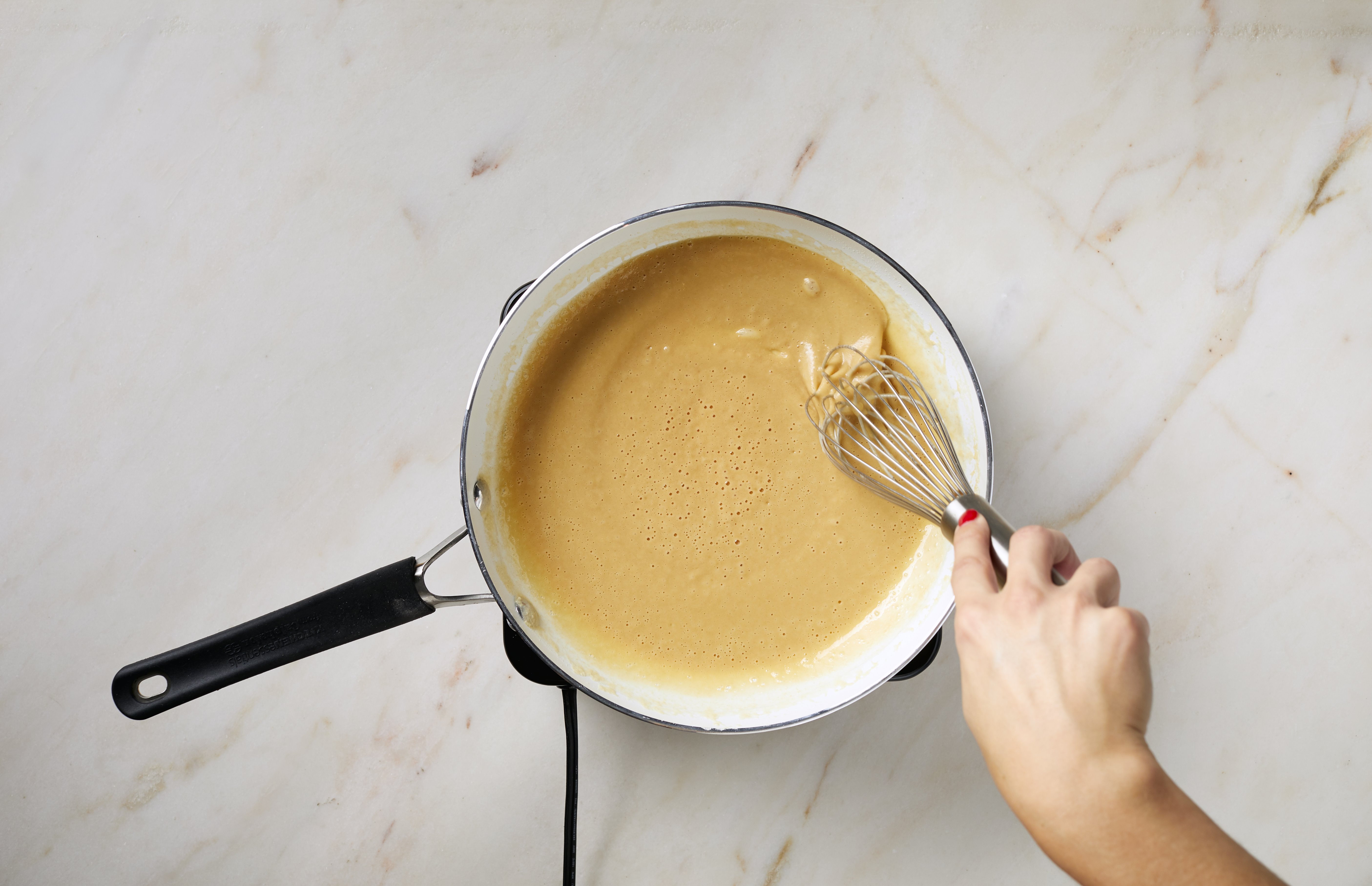
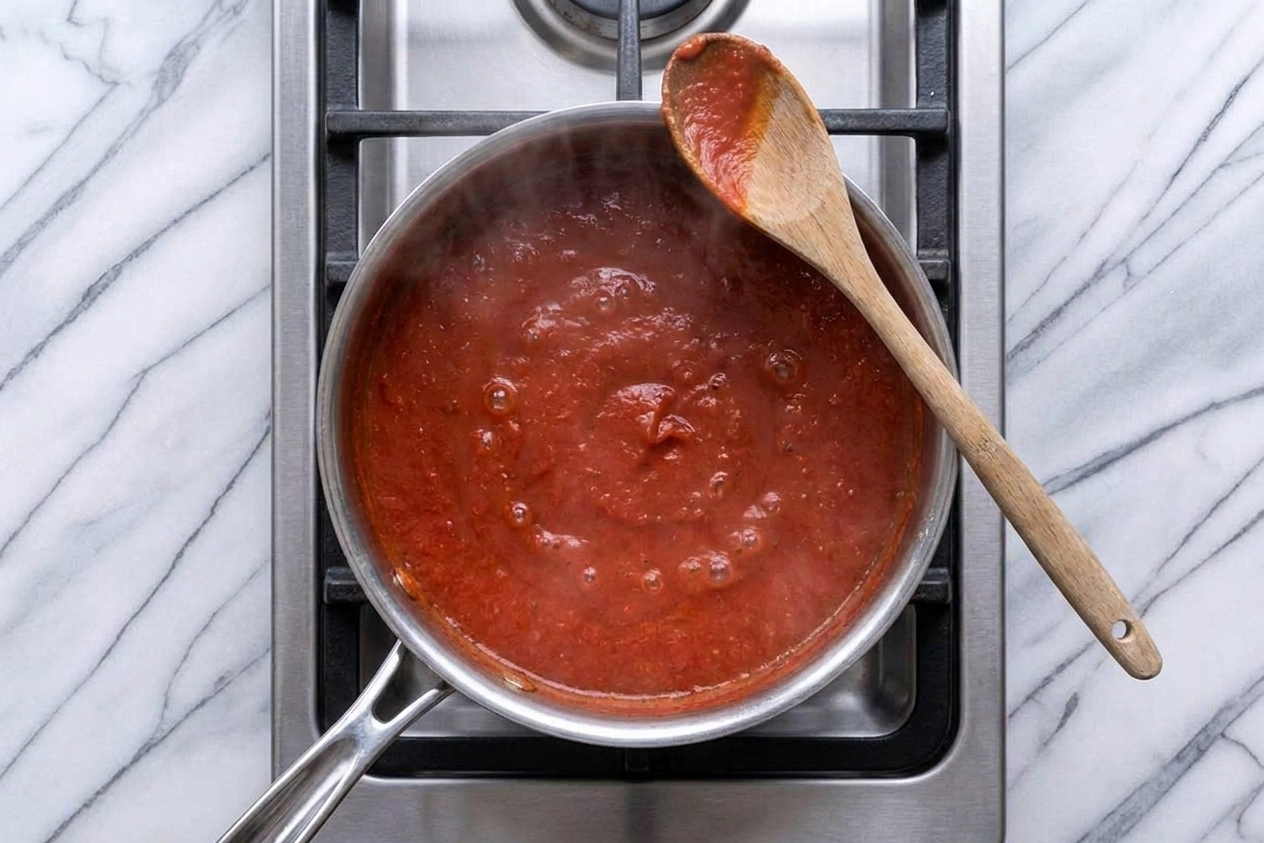
Small batch note: When you halve a sauce, it can reduce too fast and scorch. Use a smaller pan and lower heat, and stir more often.
Seasoning when scaling
The biggest reason scaled recipes taste off is seasoning. Salt, acid, and heat do not always feel perfectly linear as volume changes, so your best tool is tasting as you go.
Salt
For most savory cooking, you can scale salt directly, but I recommend this safer approach:
- Add 75 percent of the scaled salt early.
- Taste near the end and adjust in small pinches.
- If the dish reduces a lot (like a braise or sauce), go even lighter early because reduction concentrates salt.
If it tastes flat: you might need salt. If it tastes dull: you might need acid. Those are different problems.
Acid
Acid wakes everything up, but too much can make food taste sharp or thin. Scale the acid, then add the last bit gradually while tasting.
Spices and aromatics
When scaling up a lot, strong spices can dominate. I usually scale to 75 to 90 percent for very large batches, then adjust at the end. Fresh herbs are forgiving. Dried clove, nutmeg, star anise, and smoked paprika are not.
Baking scaling mistakes
Mistake 1: Halving eggs
Eggs are the classic half-batch headache. If a recipe calls for 1 egg, you cannot reliably half it without changing structure.
Options that work:
- Choose recipes that use 2 eggs if you know you will often halve.
- Beat an egg, weigh it, and use half by weight. A large egg without shell is usually around 50 g, so half is about 25 g.
- If it is a forgiving bake (like some pancakes), you can sometimes use 1 small egg instead of half a large one.
Mistake 2: Doubling leavening blindly
For cakes and quick breads, doubling baking powder or baking soda can push the batter to rise too fast, then collapse or taste soapy.
Safer approach for doubling: scale leavening, but if the original recipe already feels high rise, consider holding back a small amount and watch your batter consistency. Also check freshness of leaveners because old baking powder performs inconsistently, which gets more obvious in larger batches.
Mistake 3: New pan, same time
If the batter layer is thicker, the outside can overbake while the middle stays raw. If the layer is thinner, it dries out fast. Adjust the time and start checking early.
Mistake 4: Overmixing a bigger batch
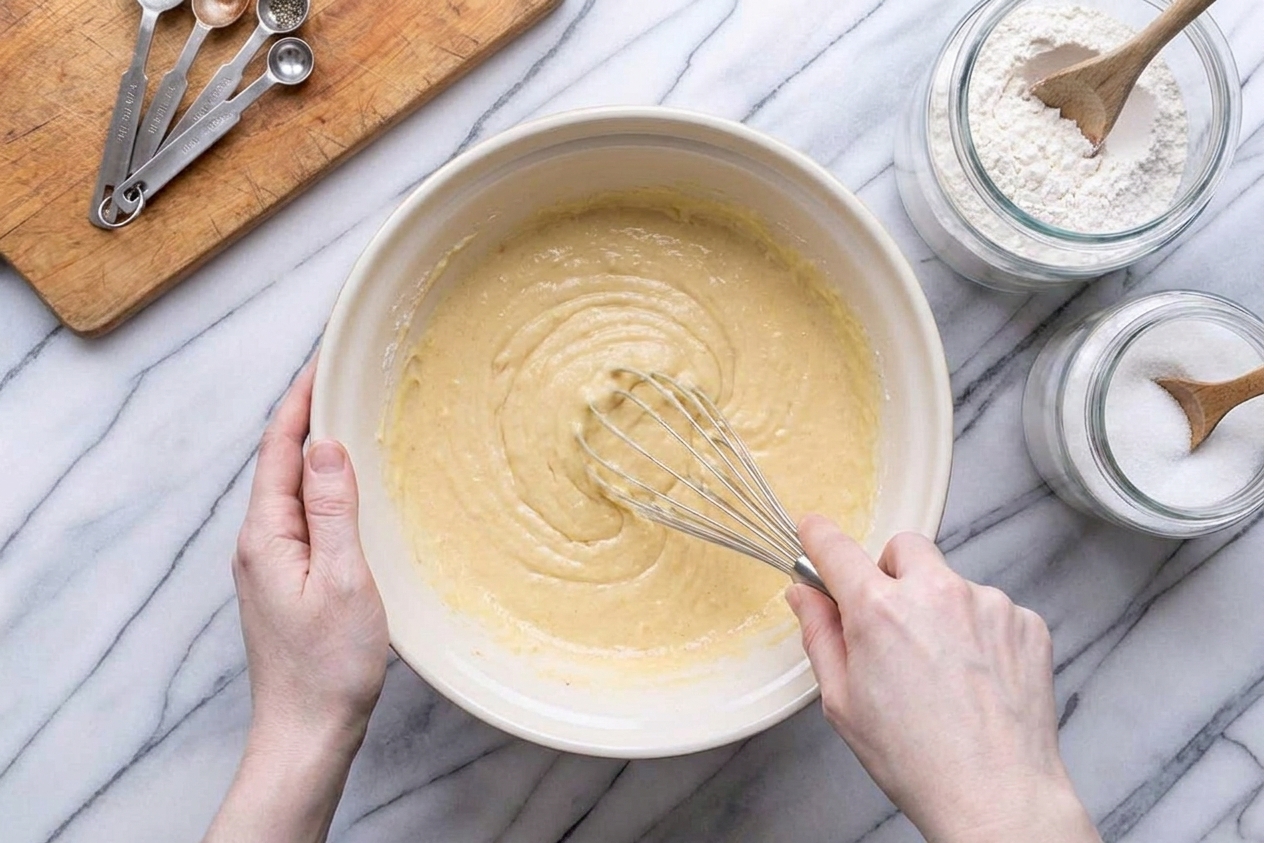
When you scale up, it takes longer to combine ingredients, which makes it easy to overmix and develop too much gluten. Mix only until you stop seeing dry flour, then stop.
Sauces and emulsions
Sauces are sensitive to surface area, heat, and evaporation. A doubled sauce in a wider pot may reduce faster than you expect. A halved sauce in a big pan may reduce too fast and break.
Reduction sauces
- Use a pot or pan that matches the new volume. Too wide means faster evaporation and thicker, saltier sauce.
- When scaling up, expect it to take longer to come to a simmer, but once simmering it may reduce at a similar rate if the surface area is similar.
- Season at the end, especially with salt and salty ingredients like soy sauce, fish sauce, Parmesan, and miso.
Emulsions
- Scale ingredients, but be mindful of technique. A tiny batch is harder to blend. A huge batch can overheat in a blender.
- If using a blender or food processor, make sure you have enough volume for the blades to catch, or switch to a bowl and whisk for small batches.
- Add oil slowly until the emulsion forms, then you can pour a bit faster.
Slurries and thickeners
Scale the slurry, but add it gradually. Thickeners keep tightening as they simmer, and an over-thick sauce is harder to fix than a thin one.
Equipment limits
Sometimes the recipe math is the easy part and your equipment is the problem.
- Mixing bowls and stand mixers: dough and thick batters can overload a mixer fast. If your bowl looks more than 2/3 full, consider mixing in two batches.
- Sheet pans: crowding equals steaming. If doubling means vegetables are piled up instead of spread out, use two pans and rotate them halfway through.
- Blenders and food processors: small batches can be too low for the blades to catch; huge batches can leak or heat up. Scale in a container that matches the job.
Food safety for big batches
Scaling up also changes how fast food cools. A huge pot of soup or chili can hold heat for a long time, which is not what you want for safe storage.
- Cool big batches in shallow containers so heat escapes faster.
- Stir occasionally to release steam, and refrigerate promptly once it is no longer piping hot.
- If you made a truly large batch, splitting it into smaller containers is the simplest upgrade you can make.
Scaling checklist
- Pick your factor (0.5, 2, 3, 1.5).
- Scale by weight when possible.
- Match pan area for bars and cakes, match volume for casseroles.
- Do not assume time doubles. Check early, rely on cues.
- Hold back a little salt and acid, then finish to taste.
- Watch reduction in sauces and season at the end.
- Be careful with eggs and leaveners in baking.
- Check equipment capacity before you commit to a mega-batch.
Quick FAQ
Can I just double a baking recipe?
Often yes, especially cookies, muffins, and many cakes. The biggest risks are pan size (overflow or underbaking), overmixing, and leavener imbalance. If you can, bake in two pans rather than one extra-deep pan.
Why did my doubled soup taste bland?
It is usually salt or acid. Add salt gradually, then add a brightener like lemon juice or vinegar in small amounts. Also check whether you used the same amount of aromatics, like garlic and onions, and whether the soup needs more simmer time for flavors to meld.
Why did my half-batch sauce break or scorch?
A small volume in a large pan reduces too fast and heats unevenly. Use a smaller pan, lower the heat, and stir more often. For creamy sauces, keep the simmer gentle.
What is the easiest recipe type to scale?
Soups, stews, chili, and braises. They are forgiving, easy to taste-adjust, and they reheat well, which is my favorite anti-food-waste combination.