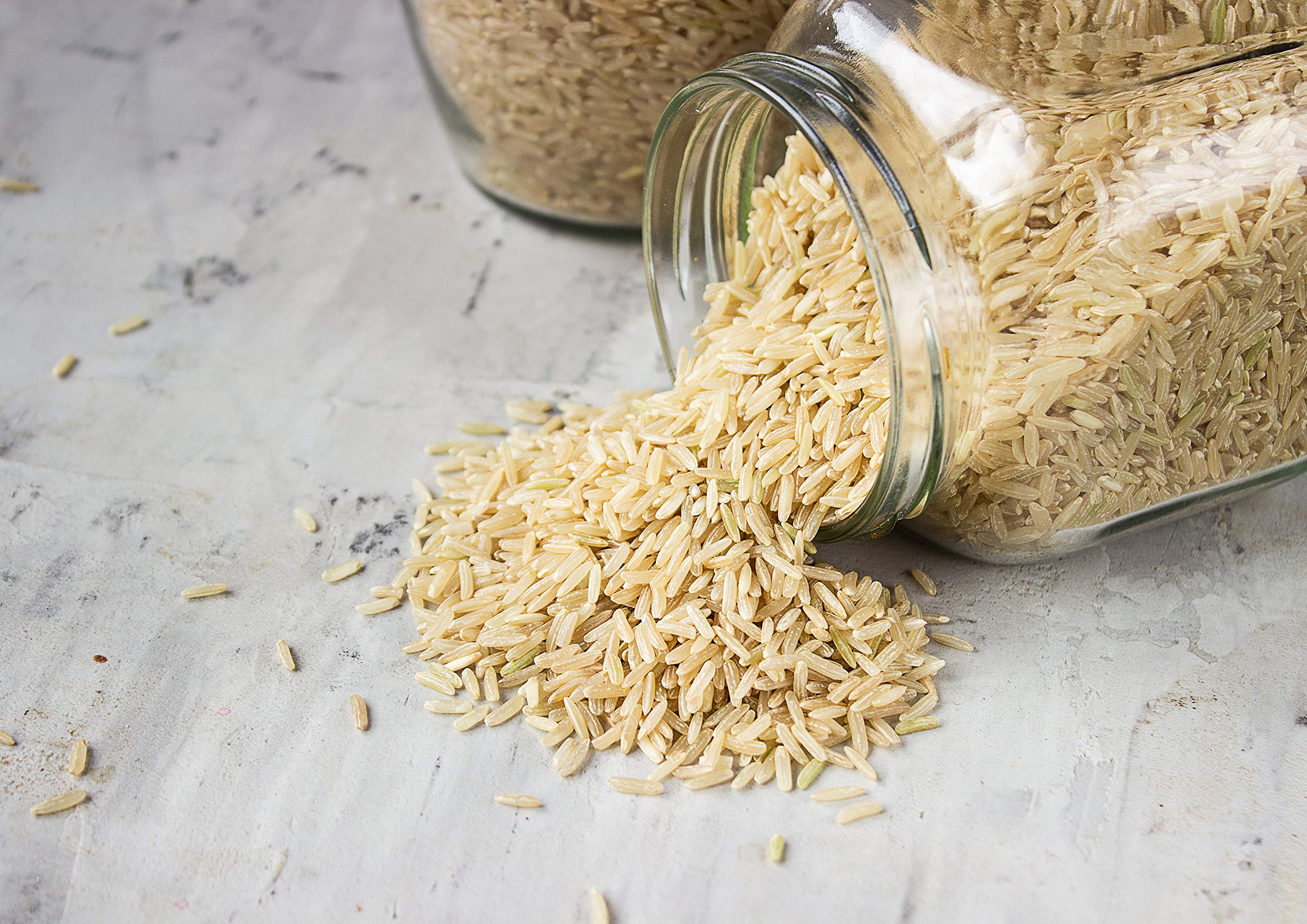
Frozen rice is one of my favorite weeknight shortcuts, but only when it comes back hot and fluffy, not soggy and sad. The good news: mushy rice is most often caused by one of three things: freezing rice while it is still warm, storing it in a thick clump, or reheating it without adding controlled steam.
Below is the exact method I use at home to freeze cooked rice so it stays distinct and tender. I’ll walk you through cooling, portioning, freezing, thawing, and reheating, with specific notes for white rice, brown rice, and seasoned rice.
The goal
Rice texture is all about starch and moisture. When cooked rice sits warm, the surface starch stays sticky and the grains keep steaming themselves. If you freeze it in a big mound, ice crystals form unevenly and you end up with wet spots once reheated. If you reheat it dry, the outside overcooks while the center stays cold.
- Cool it quickly so it stops cooking.
- Freeze it in thin, measured portions so it chills and reheats evenly.
- Reheat with a splash of water (or broth) so it steams back to life.
Step 1: Cool rice fast
Food safety matters here. Cooked rice can grow bacteria if it hangs out too long at room temperature, and texture suffers too.
Best cooling method (10 to 20 minutes)
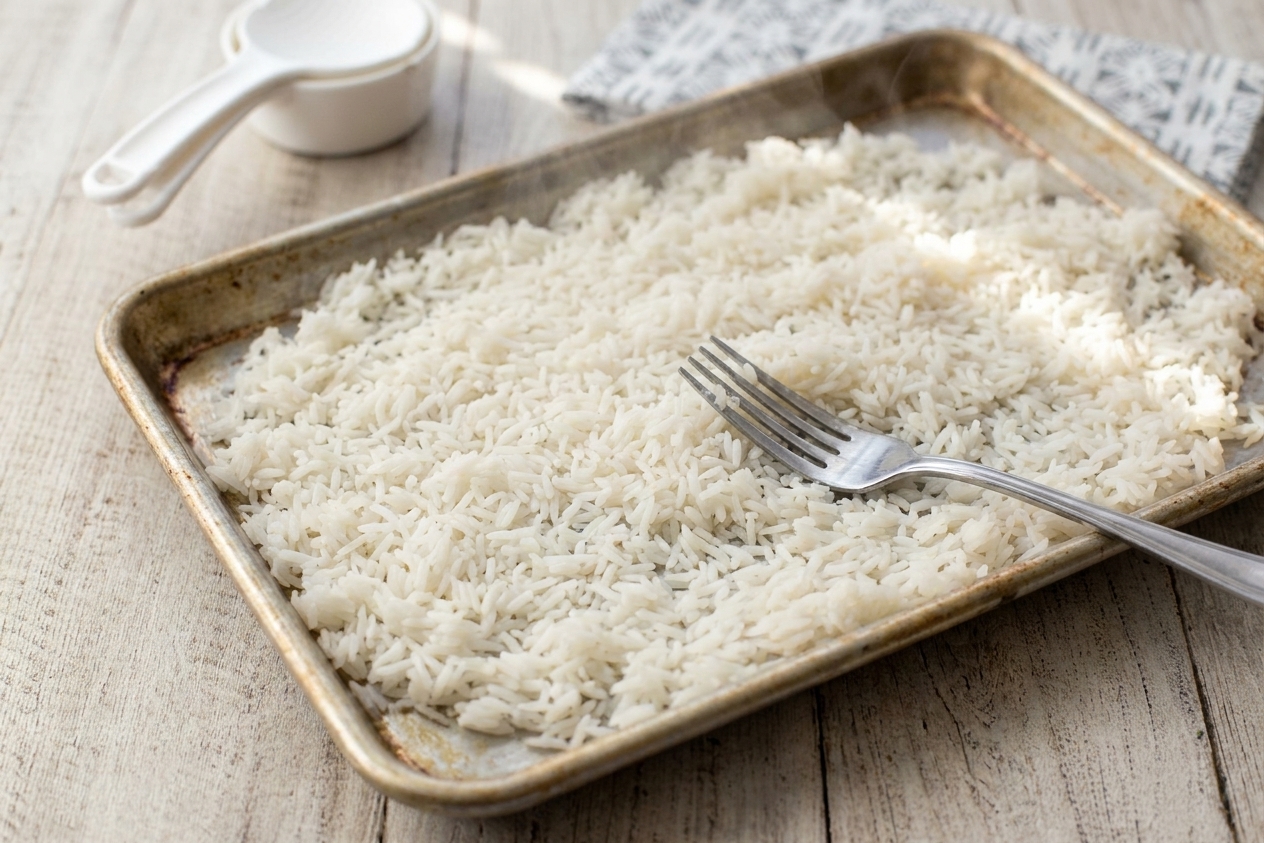
- Spread hot rice in a thin layer on a rimmed sheet pan or a wide plate. Aim for about 1/2-inch thick so steam can escape.
- Fluff with a fork once or twice as it cools to release heat and prevent clumping.
- Cool until barely warm or room temp, about 10 to 20 minutes depending on the amount.
- Refrigerate or freeze promptly. As a general rule, do not leave cooked rice at room temperature for more than 2 hours total (or more than 1 hour in a hot kitchen). Faster is better.
Shortcut: If you are in a hurry, set the sheet pan of rice on a wire rack (more airflow). Avoid putting piping-hot rice straight into the freezer in a thick container. It freezes poorly and can warm up nearby foods.
Takeout note: Freezing leftover takeout rice works the same way. The key is getting it cooled, portioned, and into the freezer promptly, not letting the container sit out on the counter.
Step 2: Portion it
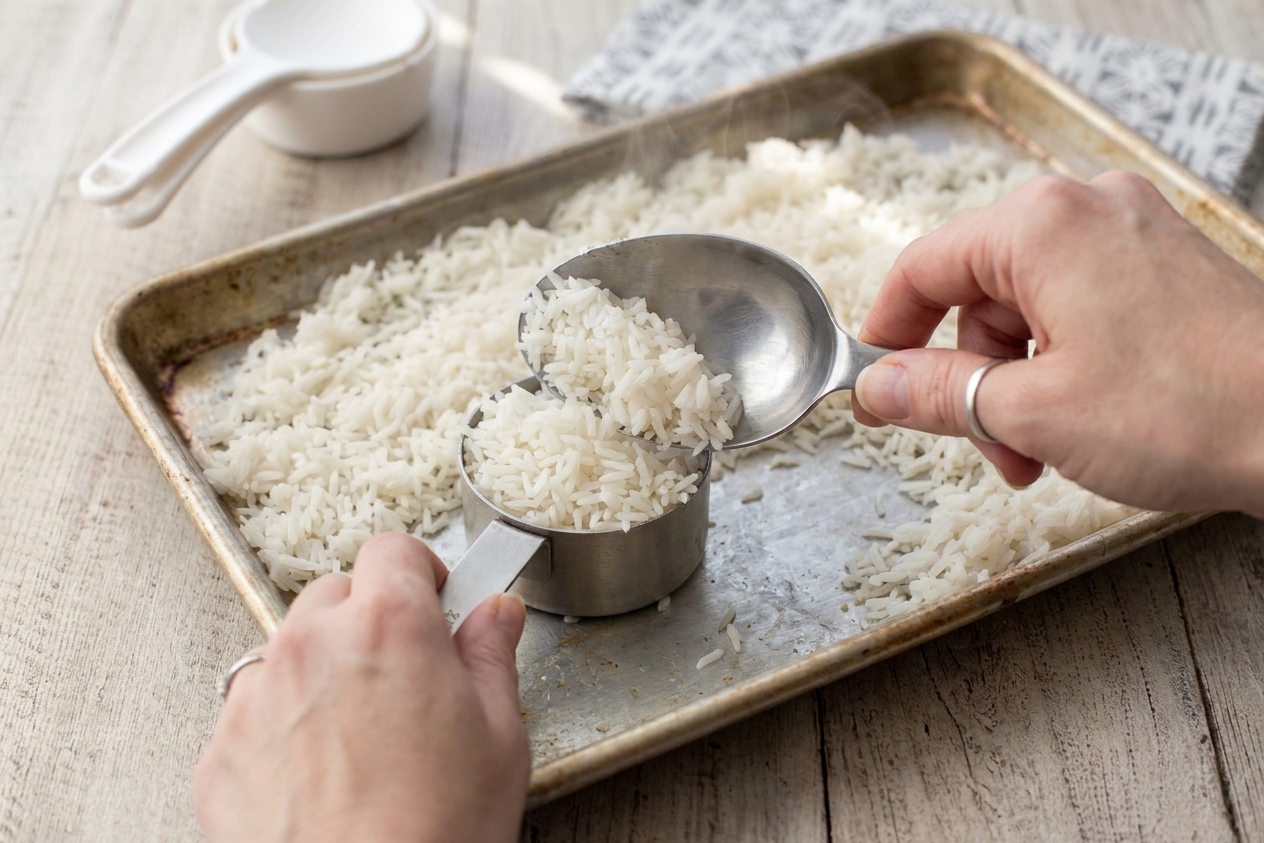
Portioning is the difference between “easy dinner” and “giant frozen brick.” Choose portions that match your real life.
My favorite portions
- 1 cup cooked rice: good for 1 hearty bowl meal or 2 side servings
- 2 cups cooked rice: good for a family side or quick fried rice base
- 1/2 cup cooked rice: great for lunchboxes or toddler portions
Texture tip: Pack rice loosely. Compressing it too tightly encourages clumping and uneven reheating.
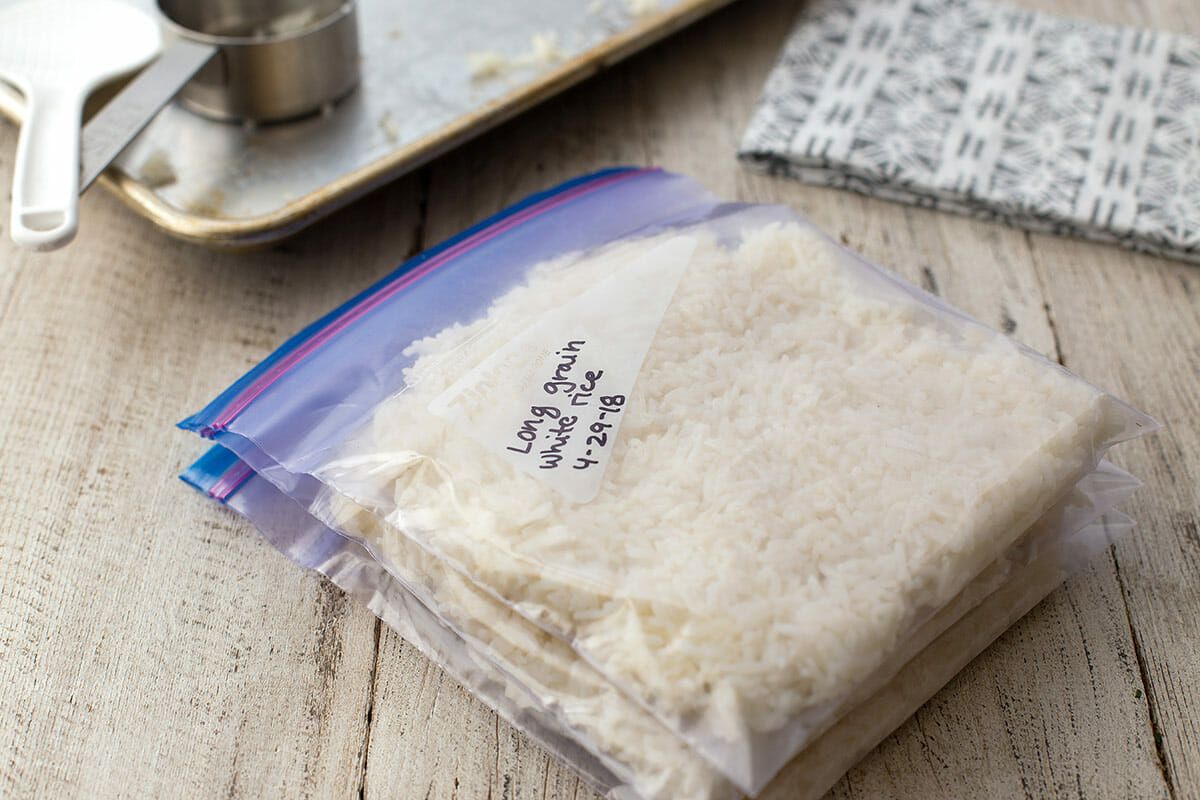
Labeling tip: I write the rice type, date, and portion size (like “1 cup”) on the bag. That makes the reheating instructions below feel automatic on a busy night.
Step 3: Freeze it flat
You can freeze rice in several ways. The best choice depends on your freezer space and whether you hate washing containers.
Option A: Freezer bags (best for fast freezing)
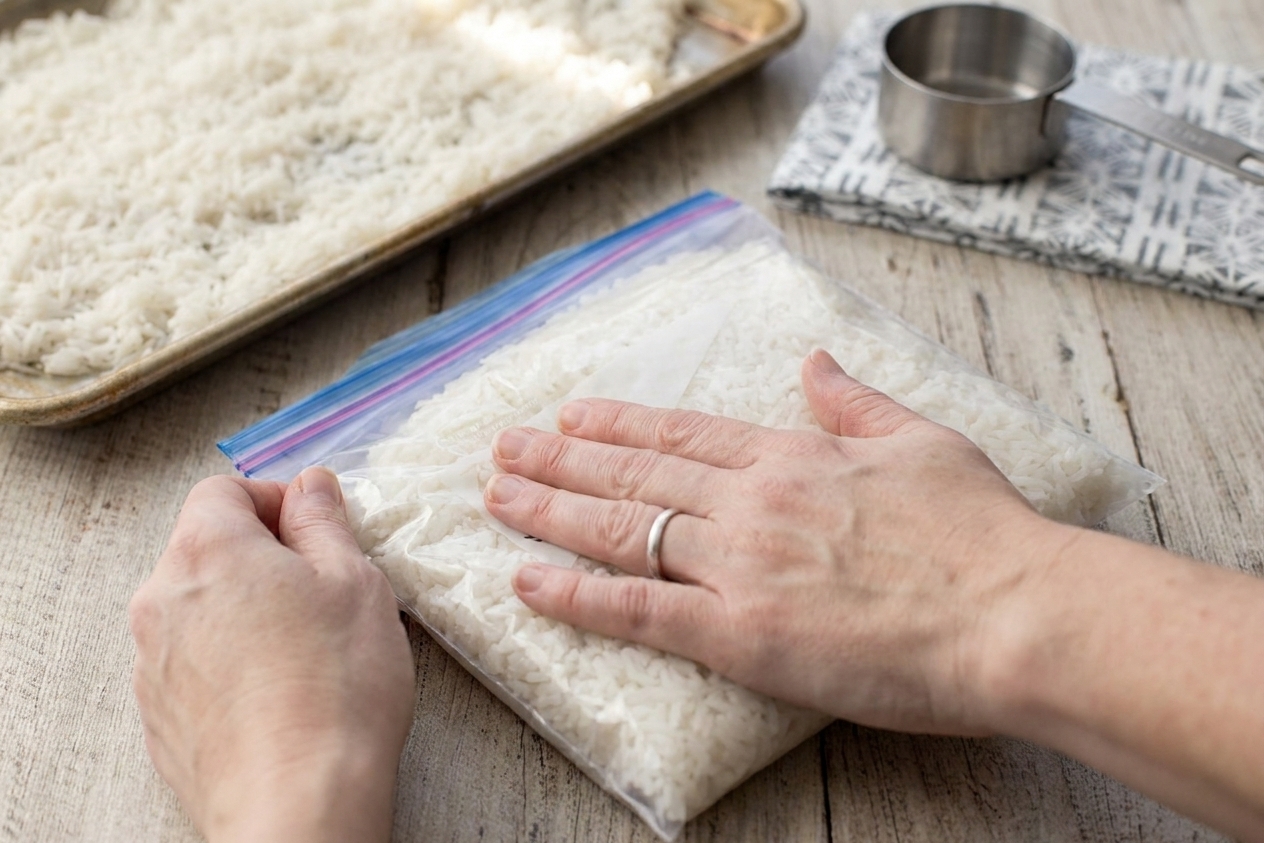
- Spoon a portion into a sturdy zip-top freezer bag.
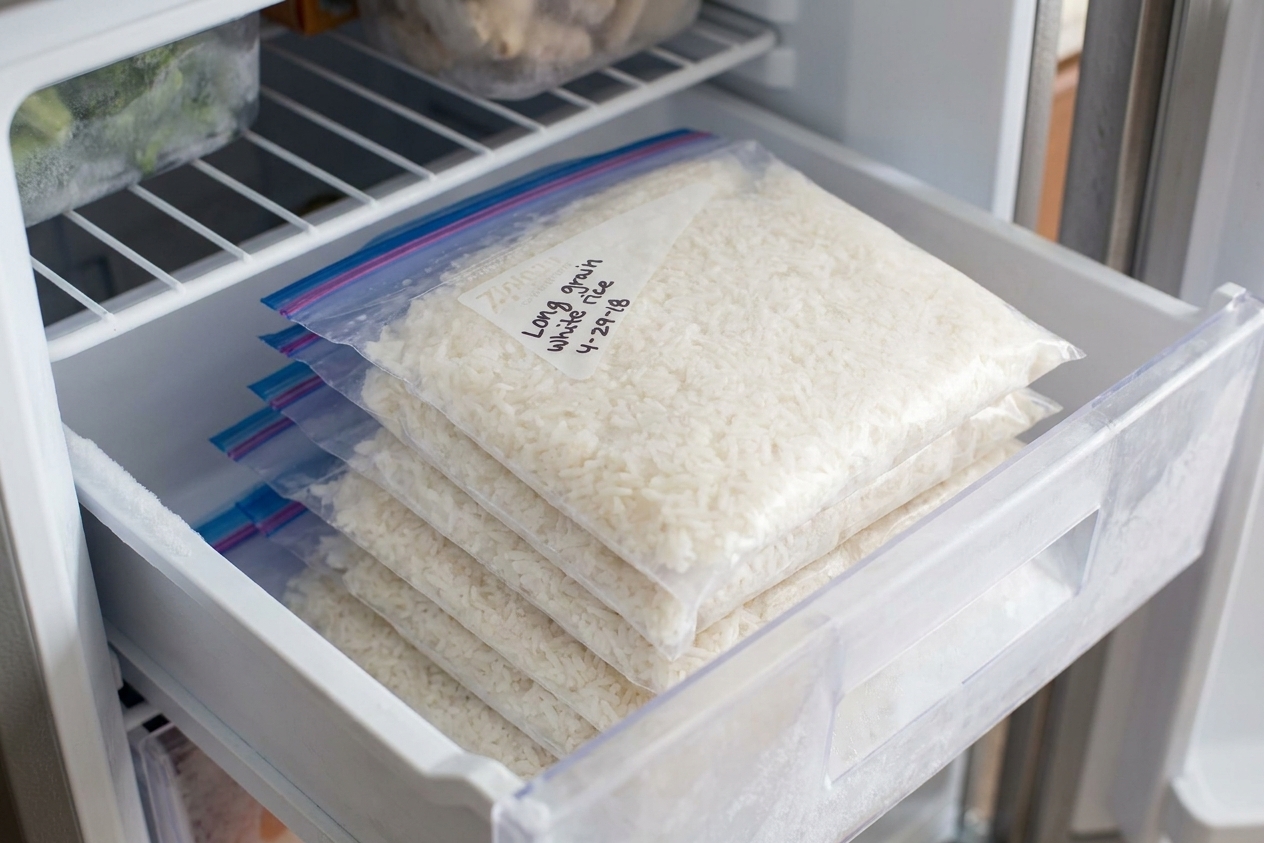
- Press into a flat, even layer about 1/2 to 3/4 inch thick.
- Push out as much air as you can, seal, and lay flat in the freezer.
Flat bags freeze quickly (better texture) and stack neatly like little rice files.
Option B: Shallow airtight containers
Use a shallow container rather than a deep one. Deep containers freeze too slowly in the center and tend to create a soggier reheat.
Option C: Muffin tin portions
Press cooled rice into a muffin tin, freeze until firm, then pop out and store in a freezer bag. Great for portion control, but it is one extra step.
Label it: Write the rice type and date. Seasoned rice and plain white rice look identical once frozen.
How long to freeze rice
Frozen rice can stay safe for a long time if it stays continuously frozen, but quality is best within a reasonable window.
- Best quality: 1 to 2 months
- Still fine (quality may decline): up to 3 months if well sealed
If your rice starts tasting “freezer-y,” it usually means it picked up odors. A tighter seal and less air in the package helps a lot.
Thawing
Most nights, I skip thawing and reheat rice straight from frozen. It is faster and often gives better texture because you are not letting it sit wet in the fridge.
Best option: reheat from frozen
Go straight from freezer to microwave, skillet, or steamer using the methods below.
When to thaw in the fridge
If you need rice to stir into something gently (like a casserole filling where you do not want extra moisture), thaw it overnight in the fridge. Keep it sealed so it does not dry out.
Skip counter thawing
I do not recommend thawing rice on the counter. It moves through the temperature danger zone quickly, and the texture gets gummy when it sits. If you forgot to thaw, just reheat from frozen.
Reheating rice
The secret is controlled steam: a small splash of water plus a covered environment. That moisture rehydrates the grains without turning them into paste.
Safety note: Reheat rice until it is steaming hot throughout. If you use a thermometer, aim for 165°F (74°C).
Microwave (fastest)
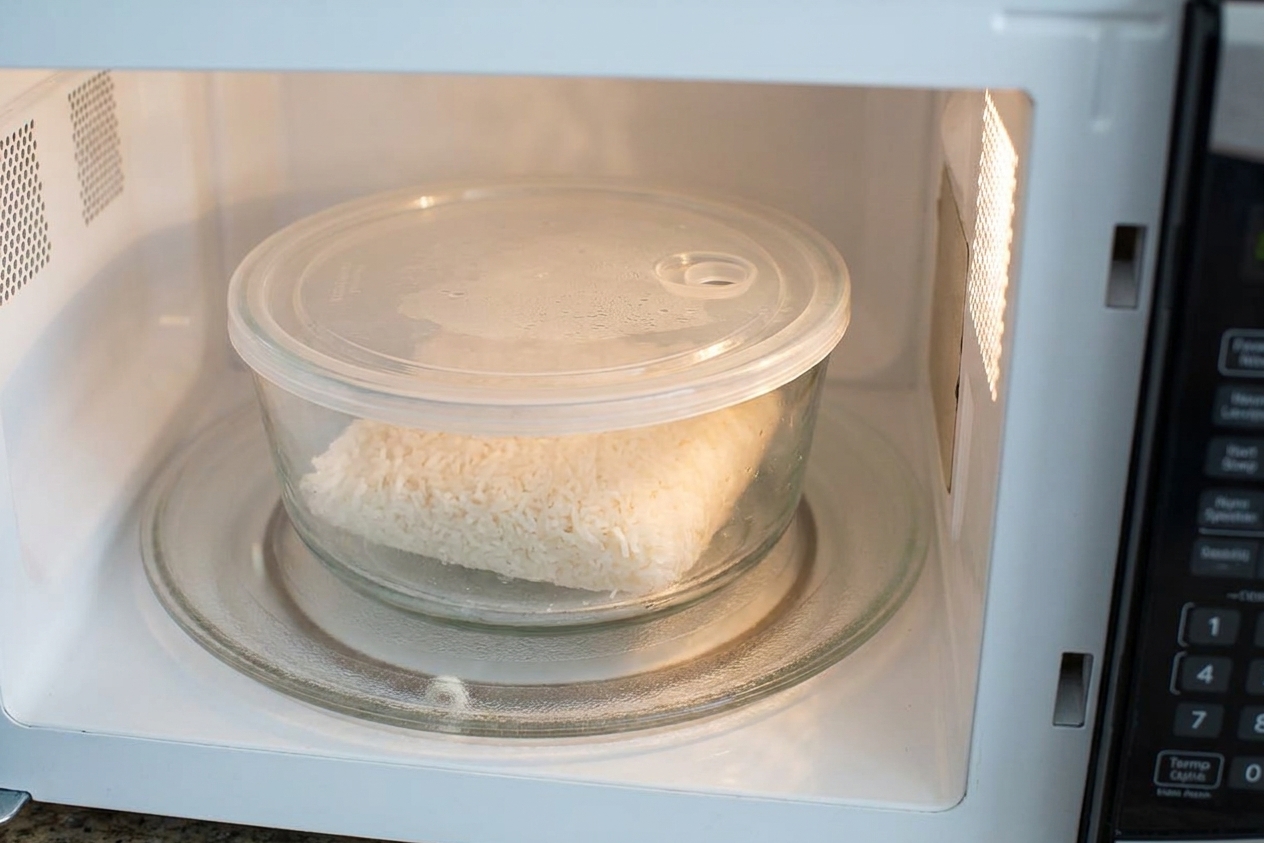
- Put frozen rice in a microwave-safe bowl.
- Add 1 to 2 teaspoons water per 1 cup rice. For brown rice, start with 1 tablespoon.
- Cover tightly (a microwave-safe lid is ideal). If using plastic wrap, vent a tiny corner.
- Microwave on High for 2 to 3 minutes per 1 cup, stirring halfway through.
- Let it sit covered for 1 minute, then fluff.
Adjust as needed: Microwave wattage and portion thickness vary a lot. If the center is still cool, add a teaspoon of water and heat in 30-second bursts until steaming hot.
Sensory cue: If the rice looks dry around the edges, add another teaspoon of water and heat 30 seconds more. If it looks wet and glossy, uncover for 30 seconds to let excess steam escape, then fluff.
Stovetop skillet (best for fried rice)
- Heat a skillet over medium heat.
- Add 1 to 2 teaspoons oil (optional but helpful for separation).
- Add frozen rice and splash in 1 tablespoon water per 1 cup.
- Cover for 2 minutes to steam, then uncover and stir, breaking up clumps.
- Cook uncovered another 2 to 4 minutes until hot and separated.
This method gives you drier, more separate grains, which is perfect for fried rice.
Steamer (best texture)
Put frozen rice in a heatproof bowl or on parchment in a steamer basket. Steam 5 to 8 minutes, then fluff. This is my favorite for jasmine and basmati when I want “fresh-cooked” vibes.
Tips by rice type
White rice (jasmine, basmati, long grain)
- Freeze in thin layers to prevent clumps.
- Reheat with minimal water: 1 to 2 teaspoons per cup is usually enough.
- If you plan to freeze it, cook it just to tender, not extra-soft. Slightly firmer rice usually freezes better.
Short grain rice (sushi rice, sticky rice)
- Expect it to be a little more cohesive after reheating. That is normal.
- Reheat gently with steam and fluff with a rice paddle or fork.
- For sticky rice, steaming usually beats microwaving.
Brown rice
- Brown rice often freezes very well and stays pleasantly chewy.
- It usually needs a touch more water when reheating: about 1 tablespoon per cup.
- Give it a longer rest covered after microwaving so the center finishes steaming.
Seasoned rice (pilaf, coconut rice, turmeric rice, rice with butter)
- Fat helps: rice with oil or butter often reheats less dry.
- Sugar and acidic ingredients can soften grains: coconut rice and some tomato-seasoned rices can reheat a bit softer. Freeze in smaller portions and reheat gently.
- Herbs are best added after reheating: if your rice has tender herbs (cilantro, dill), expect them to dull in the freezer. Stir in fresh herbs at the end for a brighter finish.
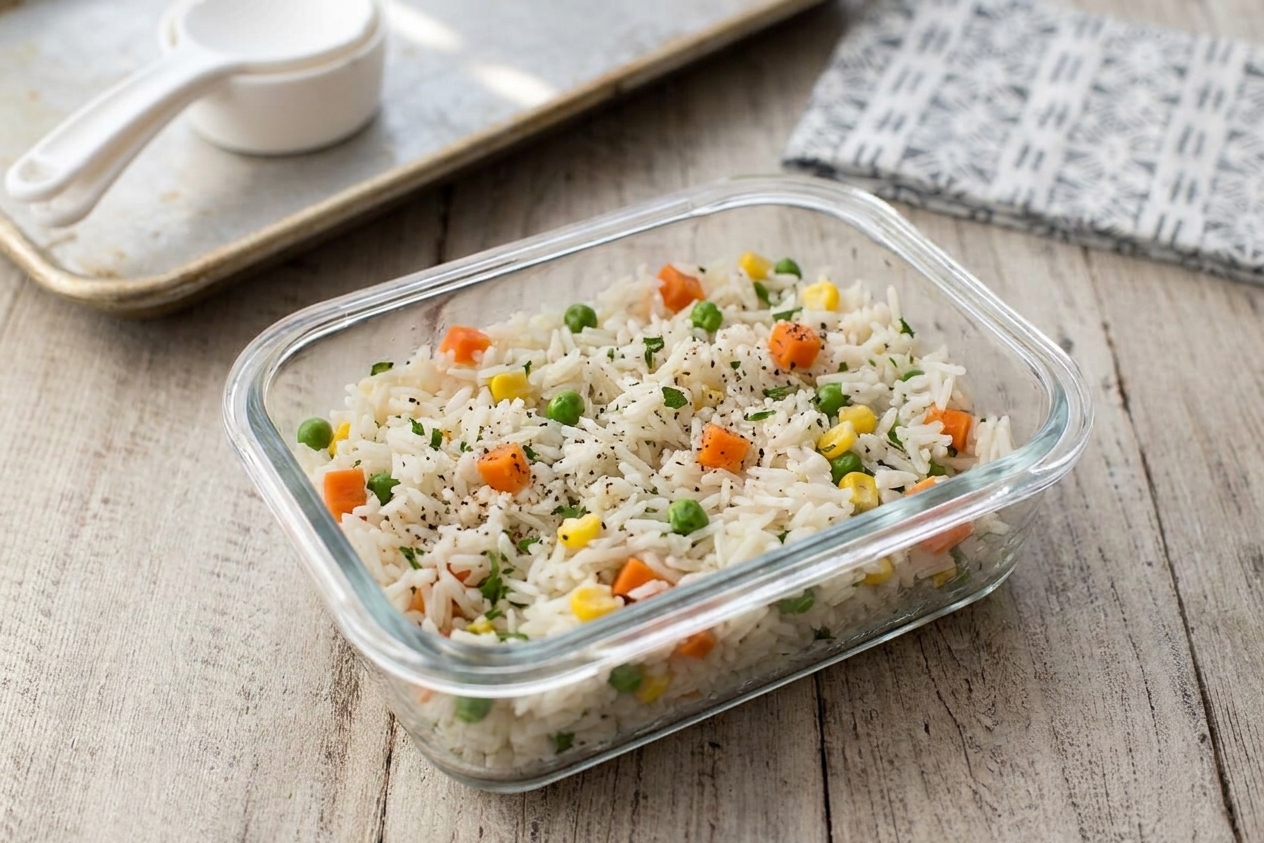
- Rice with mix-ins (peas, corn, diced carrots) freezes well. Just make sure the rice is fully cooled before packaging so veggies do not weep extra moisture.
Fix mushy rice
Your rice reheats mushy
- Likely cause: It was frozen warm or stored in a thick clump.
- Fix next time: Cool on a sheet pan, then freeze flat.
- Fix right now: Reheat uncovered in a skillet for a few minutes to evaporate excess moisture.
Your rice reheats dry and hard
- Likely cause: Not enough steam while reheating, or packaging let it dehydrate.
- Fix next time: Remove more air from bags, use freezer-grade bags, and seal well.
- Fix right now: Add a teaspoon of water, cover, and microwave in 30-second bursts until steaming hot.
Your rice tastes like the freezer- Likely cause: Air exposure or odor absorption.
- Fix next time: Double-bag, press out air, and keep rice away from strong-smelling foods.
My freezer workflow
If you want a repeatable system, here it is:
- Cook a pot of rice for dinner.
- After serving, spread leftovers on a sheet pan for 10 to 15 minutes.
- Portion into 1-cup freezer bags, press flat, seal.
- Freeze flat until solid, then store upright like folders.
- Reheat from frozen with a splash of water, covered, until steaming hot.
Once you do this a couple times, you will always have rice ready for quick bowls, soups, fried rice, and last-minute “what’s for dinner” emergencies.
FAQ
Can you freeze rice right after cooking?
Cool it first. Spread it out so it stops steaming, then package and freeze promptly. Freezing rice while it is still hot is the fastest route to clumping and mushiness later.
Is it better to freeze rice plain or seasoned?
Both work. Plain rice is more flexible, but seasoned rice freezes well too. Just freeze it in portions you will use in one go since reheating multiple times hurts texture.
Do I need to rinse rice before cooking if I plan to freeze it?
For many white rices, rinsing helps reduce surface starch, which can mean less clumping after freezing. It is not mandatory, but if your frozen rice tends to feel sticky, rinsing is worth trying.
Can I refreeze reheated rice?
I do not recommend it. Each cycle of cooling and reheating breaks down texture and increases food safety risk. Freeze in smaller portions so you only reheat what you need.