Pork tenderloin is one of my favorite weeknight “restaurant-y” dinners because it feels special, cooks fast, and is incredibly lean. The catch is that lean meat has a short window between juicy and dry. The good news: with the right heat and the right target temperature, you can nail it consistently, even on a Tuesday.
This is the method I teach and use at home in Portland when I want a clean kitchen, a tender slice, and a sauce that tastes like you tried harder than you did.
Why this recipe works
- Don’t overcook it. Pork tenderloin is best when you cook it to 145°F with a rest. Pull it a few degrees early and let carryover heat finish the job.
- Sear for flavor, roast for tenderness. A quick stovetop sear builds a browned crust fast, and a short oven finish cooks the center gently.
- Rest like you mean it. Resting 8 to 10 minutes helps the juices redistribute so they stay in the meat, not on the cutting board.
- Temperature over color. A faint blush is normal and safe at 145°F with a rest; temperature is the reliable indicator.
Ingredient notes
Pork tenderloin vs pork loin
Pork tenderloin is small and narrow, usually 1 to 1 1/4 pounds. Pork loin is larger and wider and needs much longer cooking. If you bought something that looks like a small log that could feed a crowd, that is pork loin.
Salt
Use 1 1/4 teaspoons kosher salt, or 1 teaspoon if using fine salt. Salt level can vary by brand; if you used a very light coarse kosher salt, you may need a touch more next time.
Garlic
Use 1 teaspoon garlic powder in the rub, or use 2 cloves fresh garlic, minced for the sauce.
Smoked paprika (optional)
Optional, but adds great flavor, especially if you skip searing.
Stock
Chicken stock is ideal for the pan sauce, but water works in a pinch.
Acid and sweetness
Finish the sauce with 1 to 2 teaspoons apple cider vinegar or lemon juice (start with 1). Add 1 to 2 teaspoons honey or maple syrup (optional) if it needs rounding out.
Equipment you will need
- Large oven-safe skillet (for searing, roasting, and the pan sauce)
- Instant-read thermometer (the easiest way to prevent dry pork)
- Paper towels (to pat the surface dry for better browning)
- Cutting board and knife (for trimming and slicing)
- Aluminum foil (to tent while resting)
- Kitchen twine (optional, for tucking and securing a thin “tail” end)
Pro tips
- Pat the meat very dry before seasoning and searing for better browning.
- Optional dry-brine: If you have 15 extra minutes, season and let it sit uncovered on a plate in the fridge. Dryer surface equals better sear.
- Use a thermometer and pull early: Pull at 142 to 145°F, then rest so it finishes at 145°F (often landing 145 to 150°F).
- Rest properly: Tent loosely and rest 8 to 10 minutes before slicing.
- Deglaze for flavor: After roasting, scrape up the browned bits when you add stock to build a quick pan sauce.
- Slice smart: Cut into 1/2-inch medallions. Thin slices cool quickly and can feel drier.
Substitutes that work
- Garlic powder: Use 2 cloves fresh garlic, minced in the sauce instead.
- Shallot: Use 1/4 onion, or skip it entirely and deglaze with stock, whisk in Dijon, and finish with vinegar.
- Chicken stock: Use water in a pinch.
- Neutral oil: Avocado, grapeseed, or canola.
- Apple cider vinegar: Use lemon juice instead (same amount).
- Honey: Use maple syrup (optional, for balance).
Variations
Garlic herb
Add 1 teaspoon dried Italian seasoning to the rub. Finish the sauce with chopped parsley and a little extra lemon.
Maple mustard
Increase honey or maple to 1 tablespoon and add a pinch of chili flakes. Great with roasted sweet potatoes.
Chili lime
Season with cumin and chili powder, then finish the sauce with lime juice and a little chopped cilantro.
No shallot option
Skip the shallot, deglaze with stock, whisk in Dijon, and finish with vinegar. Still delicious.
Serving ideas
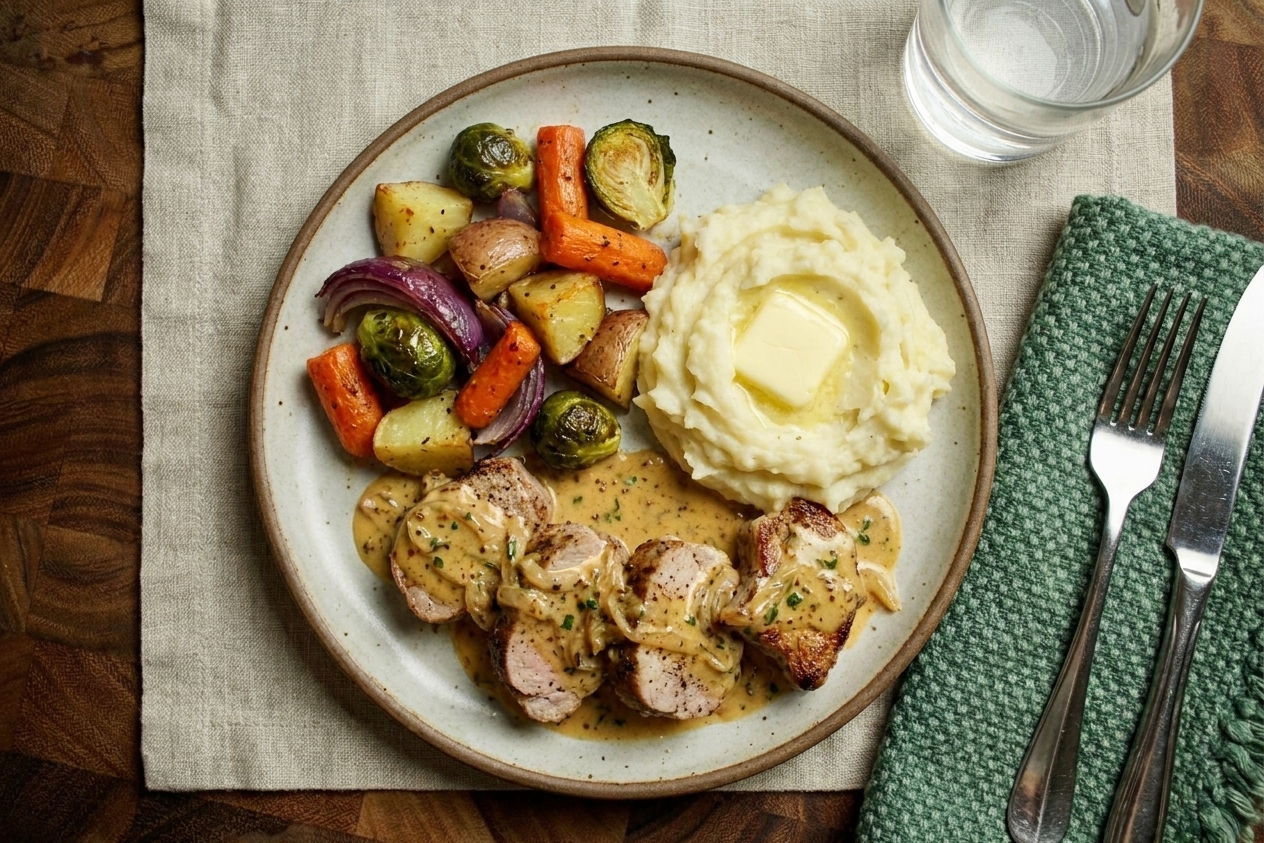
I like sides that either soak up sauce or bring a bright, crunchy contrast.
- Roasted vegetables: broccoli, green beans, Brussels sprouts, carrots
- Starches: mashed potatoes, buttery rice, polenta, roasted sweet potatoes
- Fresh: a simple arugula salad with lemon and Parmesan
- Fast helpers: applesauce, grainy mustard, or a spoonful of cranberry sauce
Storage and reheating
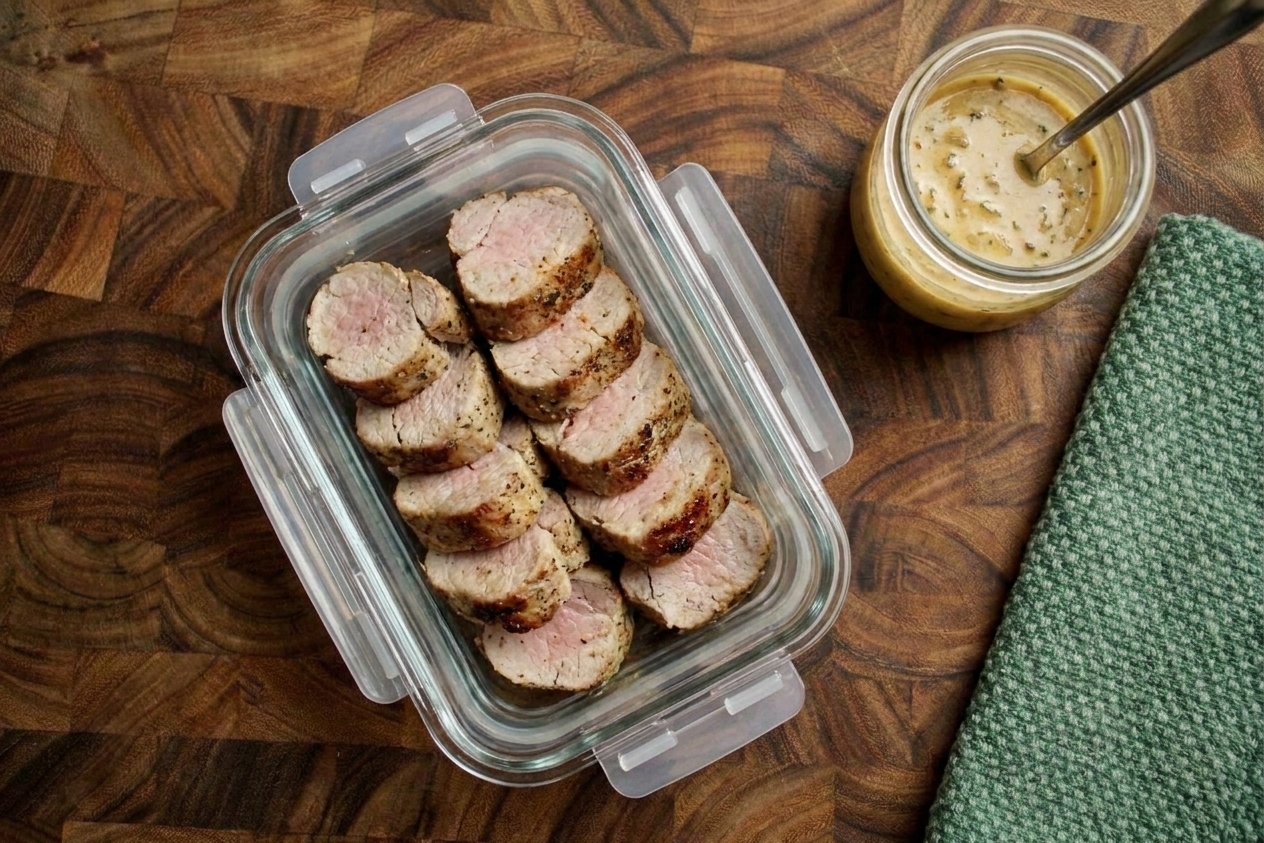
Store leftover slices in an airtight container for 3 to 4 days.
Reheat gently
- Stovetop: Add a splash of stock or water to a skillet, warm slices gently over low heat, and cover with a lid.
- Microwave: Use 50% power, add a damp paper towel over the pork, and stop as soon as it is warm.
Easy leftover ideas
- Pork fried rice: Dice it and add at the end so it just warms through.
- Tenderloin sandwiches: Toast bread, add mustard, pickles, and crunchy lettuce.
- Quick noodle bowl: Broth, noodles, leftover pork, and any greens from the crisper.
Common mistakes
Overcooking (dry tenderloin)
- Most likely it was cooked past 150 to 155°F. Next time, pull earlier and rest.
- Slice thicker. Thin slices cool quickly and feel drier.
- Serve with sauce or a drizzle of olive oil and a squeeze of lemon to bring back moisture on the plate.
Pale exterior
- Pat it drier before seasoning and searing.
- Make sure the pan is hot before the tenderloin goes in.
- Salt matters. If you used a coarse kosher salt brand that is very light, you may need a touch more next time.
Browned outside, underdone center
- Your tenderloin is likely thicker than average. Lower the oven to 400°F and roast a few extra minutes.
- Let the tenderloin sit at room temp for 15 minutes before cooking to take the chill off.
Chewy silver skin
Silver skin does not melt during cooking; it tightens and can make slices chewy. Trim it next time. If it is already cooked, slice very thinly across the grain and serve with plenty of sauce.
FAQ
Should I marinate it?
You can, but you do not need to for juicy results. A simple dry seasoning plus the right internal temperature matters more. If you want a marinade, keep it to 30 minutes to 4 hours and include salt for real impact.
Can I cook it without searing?
Yes. Roast at 425°F until it reaches 145°F after resting, but you will miss some browned flavor. If you skip the sear, consider a punchier sauce or a spice rub with smoked paprika.
Can I use two tenderloins?
Absolutely. Use a large pan so they are not crowded. Sear in batches if needed, then roast together. Temperature is still your guide.
Why is it a little pink?
A faint blush is normal and safe at 145°F with rest. Color is not a reliable doneness indicator. Temperature is.
Juicy Pork Tenderloin
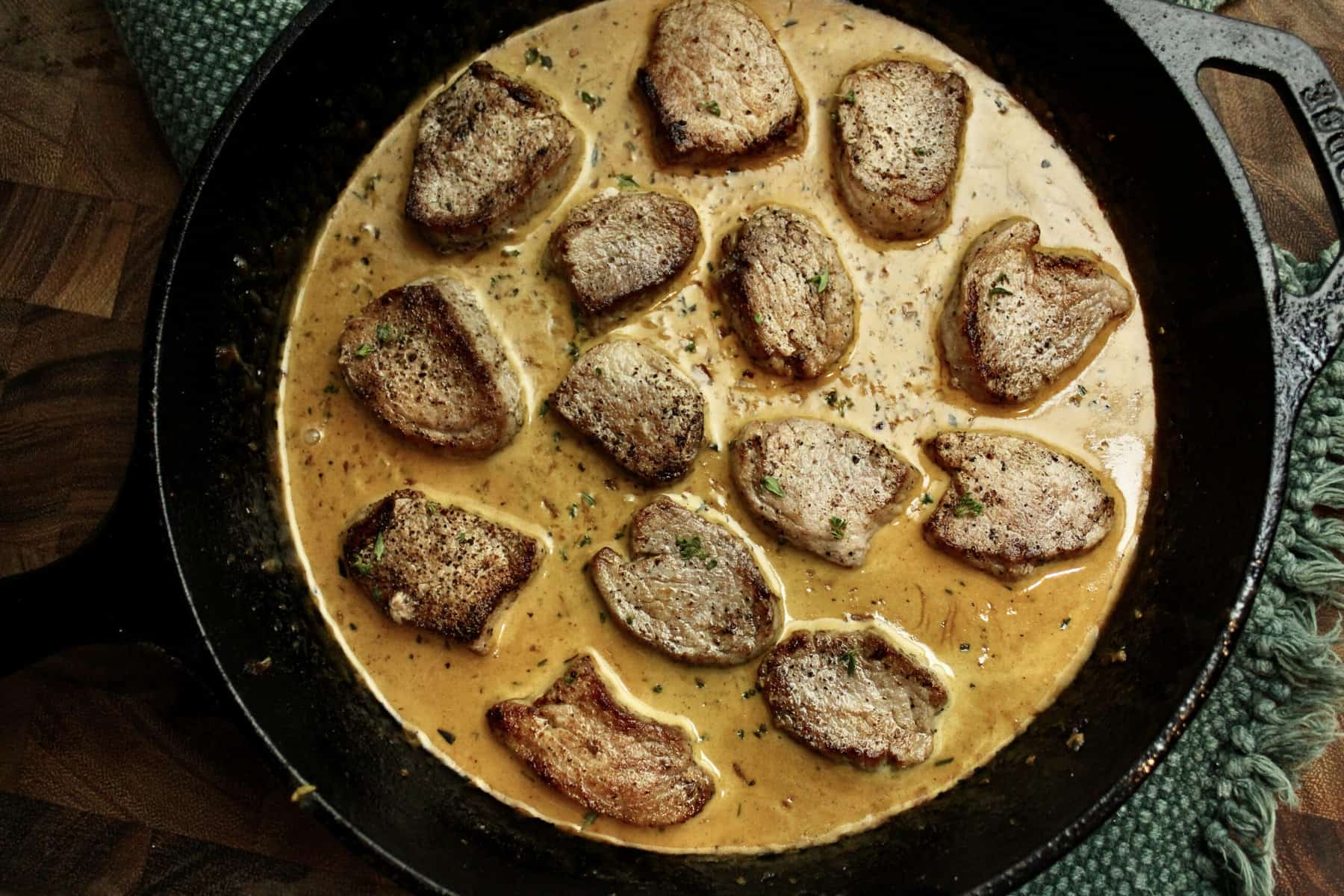
This juicy pork tenderloin uses a quick stovetop sear plus a short oven roast to hit the sweet spot at 145°F after resting. Finish it with an easy Dijon pan sauce made right in the skillet.
- Prep
- 15 minutes
- Cook
- 20 minutes
- Total
- 35 minutes
- Yield
- Serves 4
Ingredients
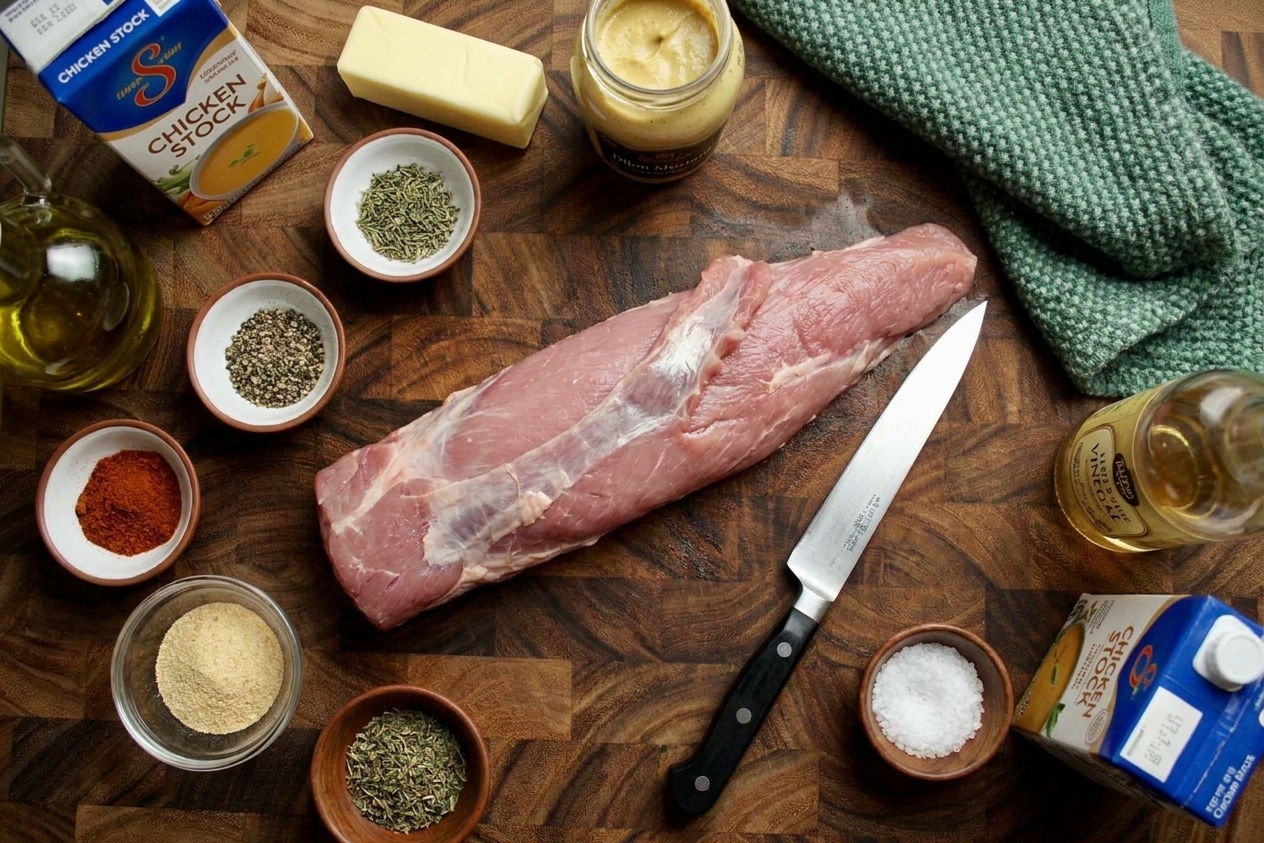
- 1 pork tenderloin (about 1 to 1 1/4 pounds), trimmed
- 1 1/4 teaspoons kosher salt (use 1 teaspoon if using fine salt)
- 1/2 teaspoon black pepper
- 1 teaspoon garlic powder (or 2 cloves fresh garlic, minced for the sauce)
- 1 teaspoon smoked paprika (optional but lovely)
- 1 tablespoon neutral oil (avocado, grapeseed, canola)
- 1 tablespoon butter
- 1 small shallot, finely chopped (or 1/4 onion)
- 1/2 cup chicken stock (or water in a pinch)
- 1 tablespoon Dijon mustard
- 1 to 2 teaspoons apple cider vinegar or lemon juice (start with 1)
- 1 to 2 teaspoons honey or maple syrup (optional, for balance)
- Fresh herbs (parsley or thyme), optional
Instructions
- Heat the oven. Set to 425°F. (No need to preheat your skillet in the oven for this method. Sear on the stovetop first.)
- Dry and season. Remove the tenderloin from the package, pat it very dry with paper towels, and season all sides with salt, pepper, and garlic powder. If you have 15 extra minutes, season and let it sit uncovered on a plate in the fridge.
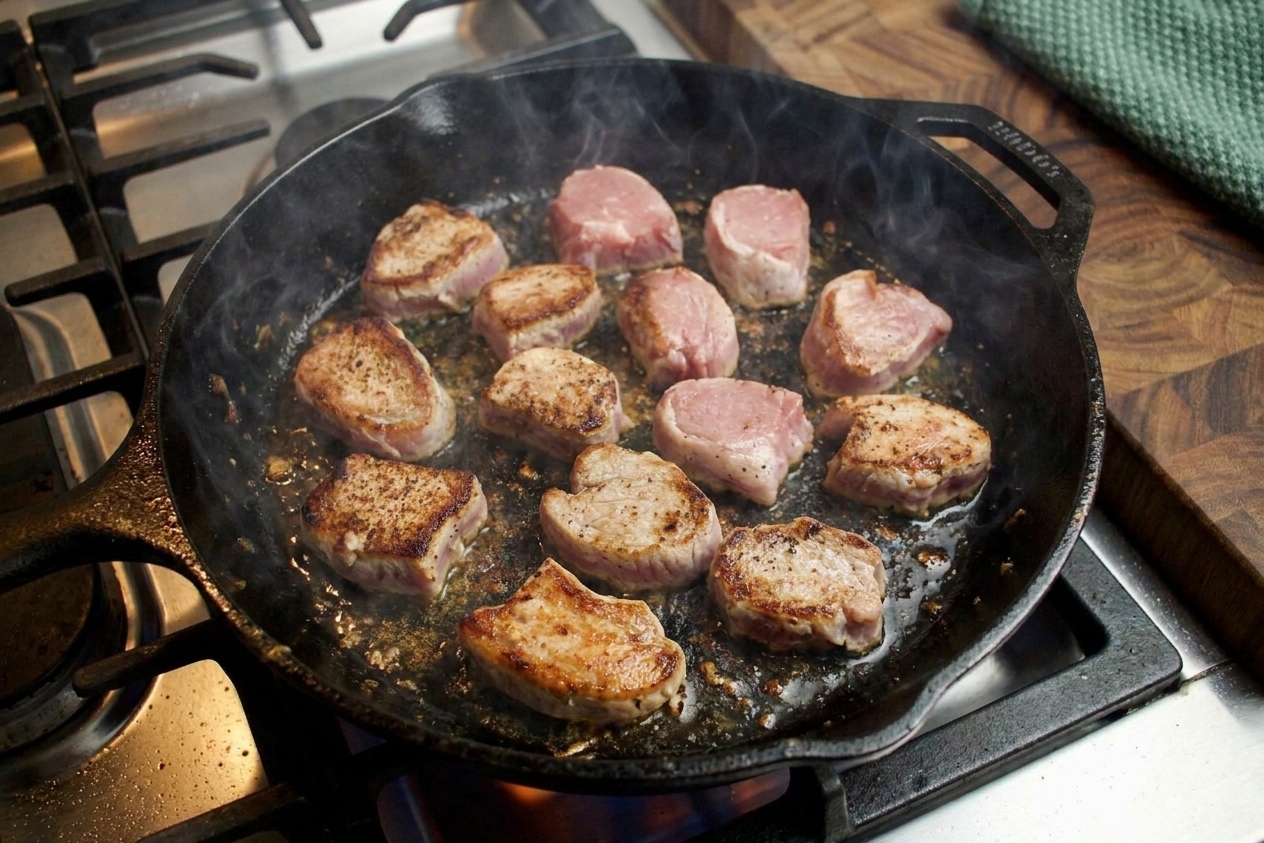
- Sear. Heat a large oven-safe skillet over medium-high until properly hot. Add oil, then the tenderloin. Sear 1 to 2 minutes per side, turning until you have browning on most surfaces.
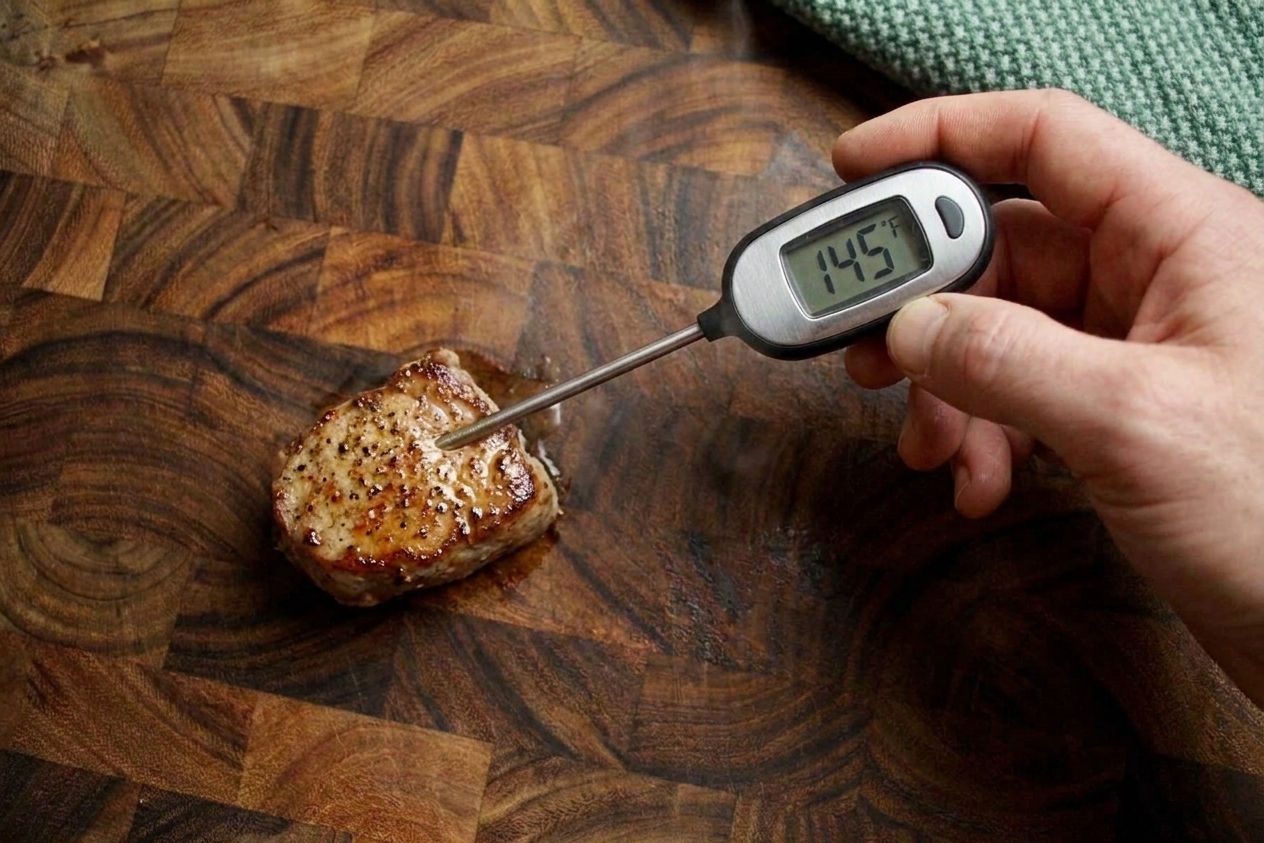
- Roast. Add butter to the skillet and let it foam. Slide the skillet into the oven. Roast 10 to 18 minutes, depending on thickness and starting temperature, until the thickest part reaches 142 to 145°F.
- Rest. Move the tenderloin to a cutting board. Tent loosely with foil and rest 8 to 10 minutes. It should reach 145°F as it rests.
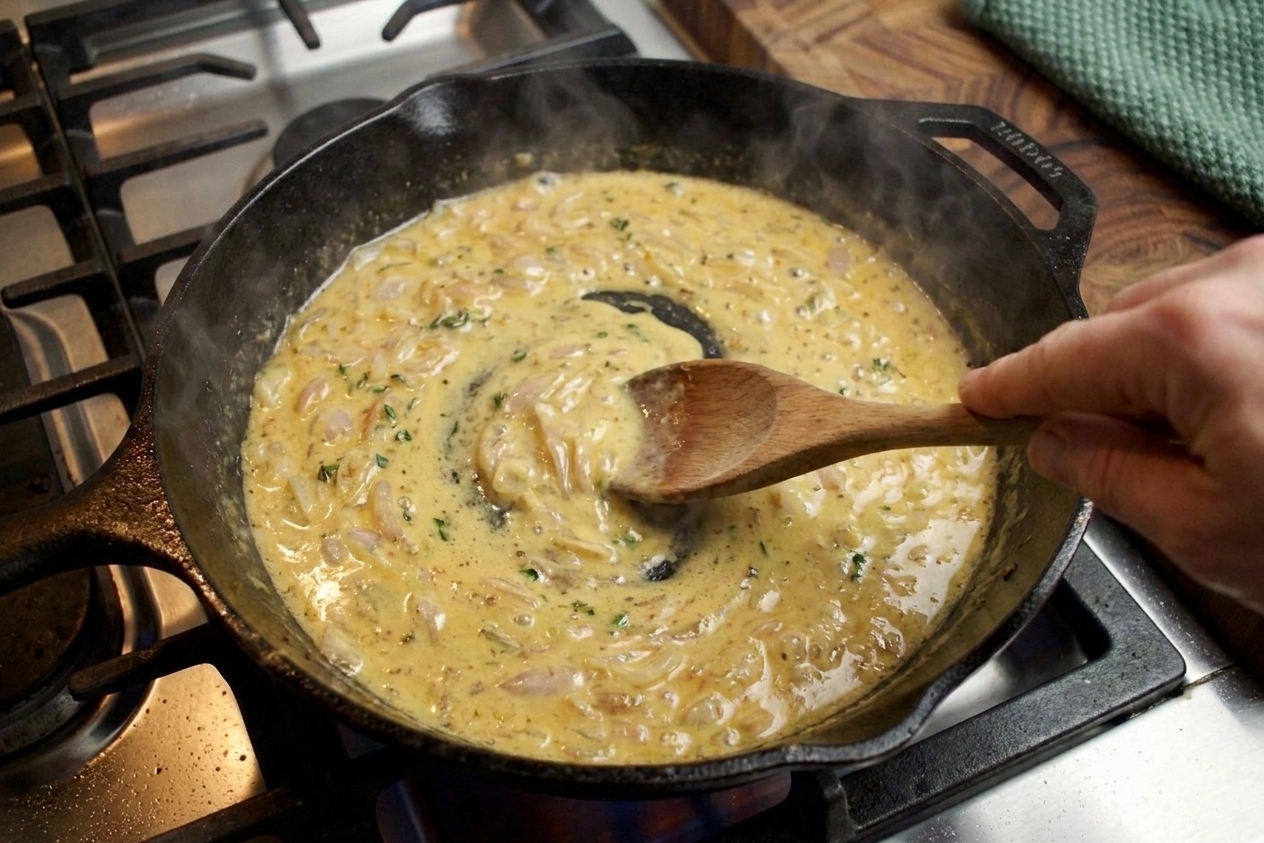
- Make a fast pan sauce. Put the skillet back on medium heat. If the pan looks very greasy, carefully pour off all but 1 to 2 teaspoons of fat. Add shallot and cook 1 minute. Add stock and scrape up the browned bits. Stir in Dijon. Simmer 2 to 3 minutes until slightly reduced. Finish with vinegar or lemon juice, then taste. Add honey if it needs rounding out. Salt and pepper to finish.
- Slice and serve. Slice into 1/2-inch medallions and spoon sauce over the top.
Notes
- Target temperature: USDA guideline for whole cuts of pork is 145°F with a 3-minute rest. For tenderloin, pull at 142 to 145°F and rest 8 to 10 minutes, expecting it to finish around 145 to 150°F, juicy and just faintly pink.
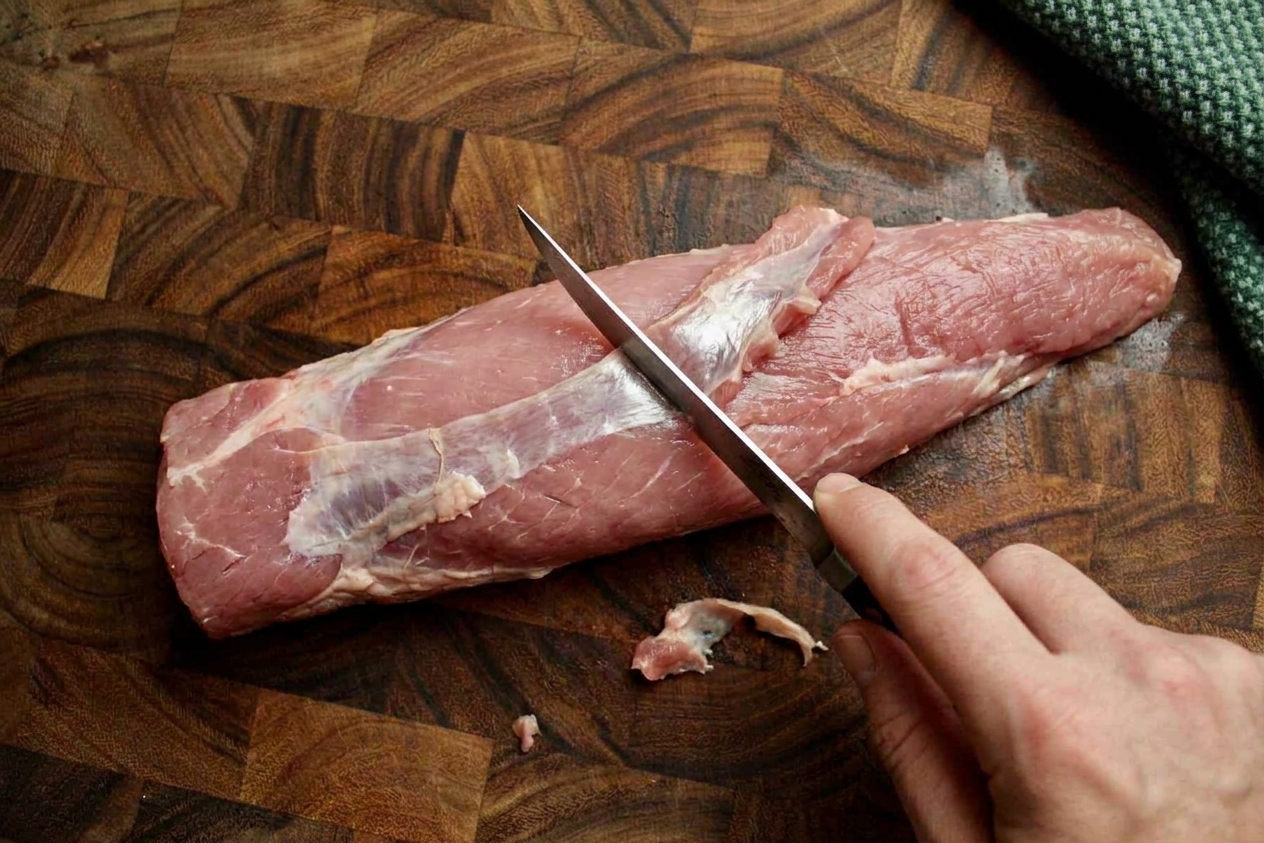
- Trim silver skin: Slide a small knife under one end, angle the blade slightly up, and cut it away in a long strip (it does not melt during cooking).
- Even thickness helps: If your tenderloin has a skinny “tail,” tuck the thin end under itself; a quick tie with kitchen twine is optional.
- If cooking without searing: Roast at 425°F until it reaches 145°F after resting, but expect less browned flavor.
- If using two tenderloins: Use a large pan so they are not crowded. Sear in batches if needed, then roast together; temperature is still your guide.
Nutrition
- Calories: ~260
- Fat: ~12 g
- Carbs: ~4 g
- Protein: ~31 g
- Fiber: ~0.3 g
- Sugar: ~2 g
- Sodium: ~650 mg
Nutrition values are approximate and will vary by exact tenderloin size, salt brand, and how much sauce is consumed.