For a long time, pork chops got a bad reputation for being dry and a little sad. The modern version is the opposite: quick, juicy, boldly seasoned, and done in under 30 minutes. The big shift is this: many supermarket chops are quite lean now, so we cook them to temperature, not to “well done,” and we build flavor with smart salt, a little acid, and a fast sauce.
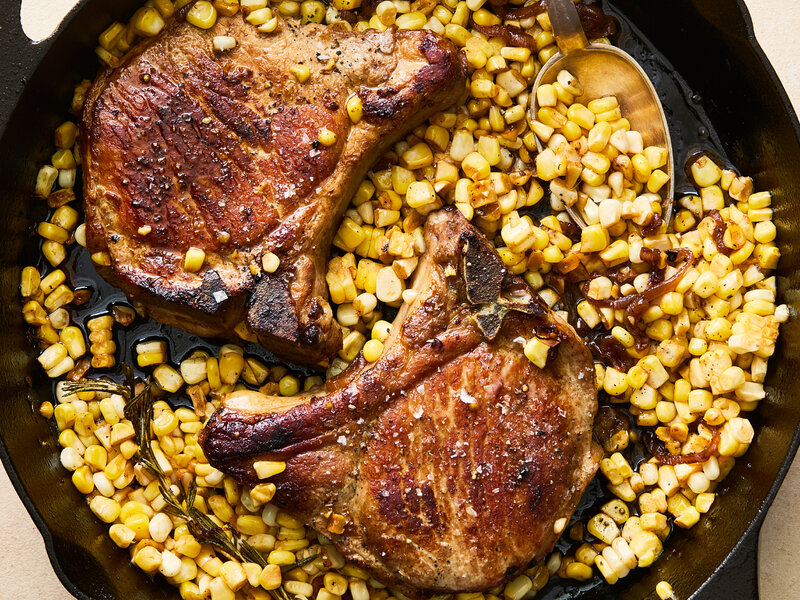
What makes them modern
When I say “modern pork chops,” I mean the kind you actually want to cook on a Tuesday.
- Cooked to 145°F and rested, so they stay tender.
- Thicker cuts when possible, which forgive timing and stay juicy.
- Flavor built in layers: a quick salt step, a hard sear, then a punchy pan sauce with lemon, vinegar, mustard, herbs, or a spoon of something briny.
- Flexible ingredients that help you use what you already have and waste less.
Choose the right chop
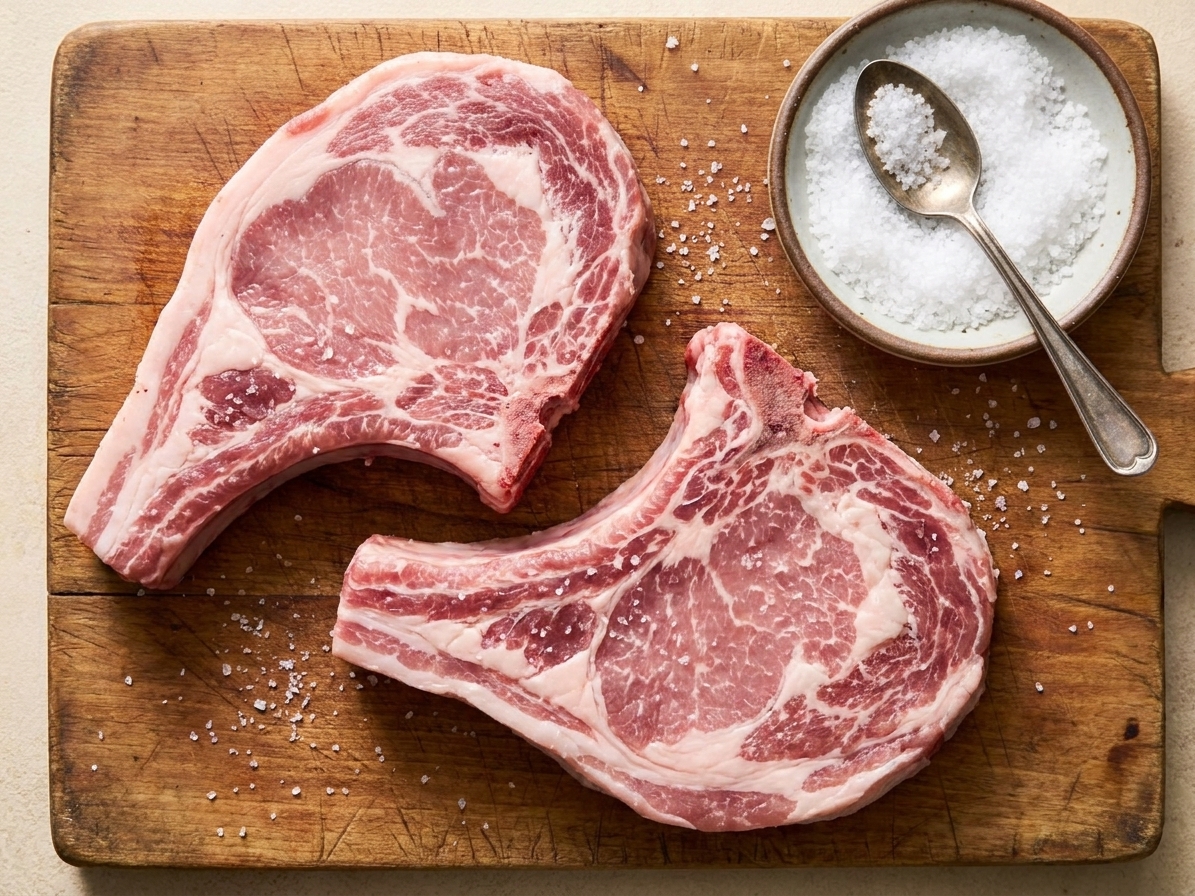
If you’ve ever sworn off pork chops, you probably cooked a very thin, very lean chop a little too long. Here’s how I shop:
Best weeknight options
- Bone-in rib chops: the most forgiving and flavorful.
- Center-cut loin chops: leaner, still great if you do not overcook.
- Sirloin chops: a bit more “porky,” sometimes slightly tougher, best with a quick brine or a sauce.
Thickness
Aim for 1 to 1.5 inches. Thin chops can be delicious, but the window between juicy and dry is tiny.
The rule: temperature
Pork is safest and tastiest when you stop thinking in minutes and start thinking in degrees. The USDA considers whole cuts of pork safe at 145°F with a 3-minute rest. I still like a 5-minute rest for better juiciness and an easier-to-slice chop.
For chops, I pull them from heat at:
- 140°F for slightly blushed and very juicy, if you typically see 3 to 5°F of carryover cooking in your kitchen
- 145°F if you want to keep it simple, your chops are thinner, or you do not see much carryover
Rest at least 3 minutes, ideally 5. That rest is not optional. It keeps your cutting board from turning into soup.
My go-to method
This is the most reliable way to get a deep crust without overcooking the center.
What you need
- 1 to 1.5 inch pork chops (bone-in or boneless)
- Kosher salt and black pepper
- High-heat oil (avocado, canola, grapeseed)
- Butter (optional but excellent)
- Aromatics: garlic, thyme, rosemary, or sage (whatever you have)
- Instant-read thermometer
Step-by-step
- Temper (optional, helpful). If you have 10 to 15 minutes, let the chops sit on the counter while you prep. It helps them cook more evenly.
- Dry and salt. Pat chops dry. Salt both sides (roughly 1/2 teaspoon kosher salt per chop, more or less depending on size). If you have 20 to 40 minutes, let them sit uncovered in the fridge on a plate. Even 10 minutes helps.
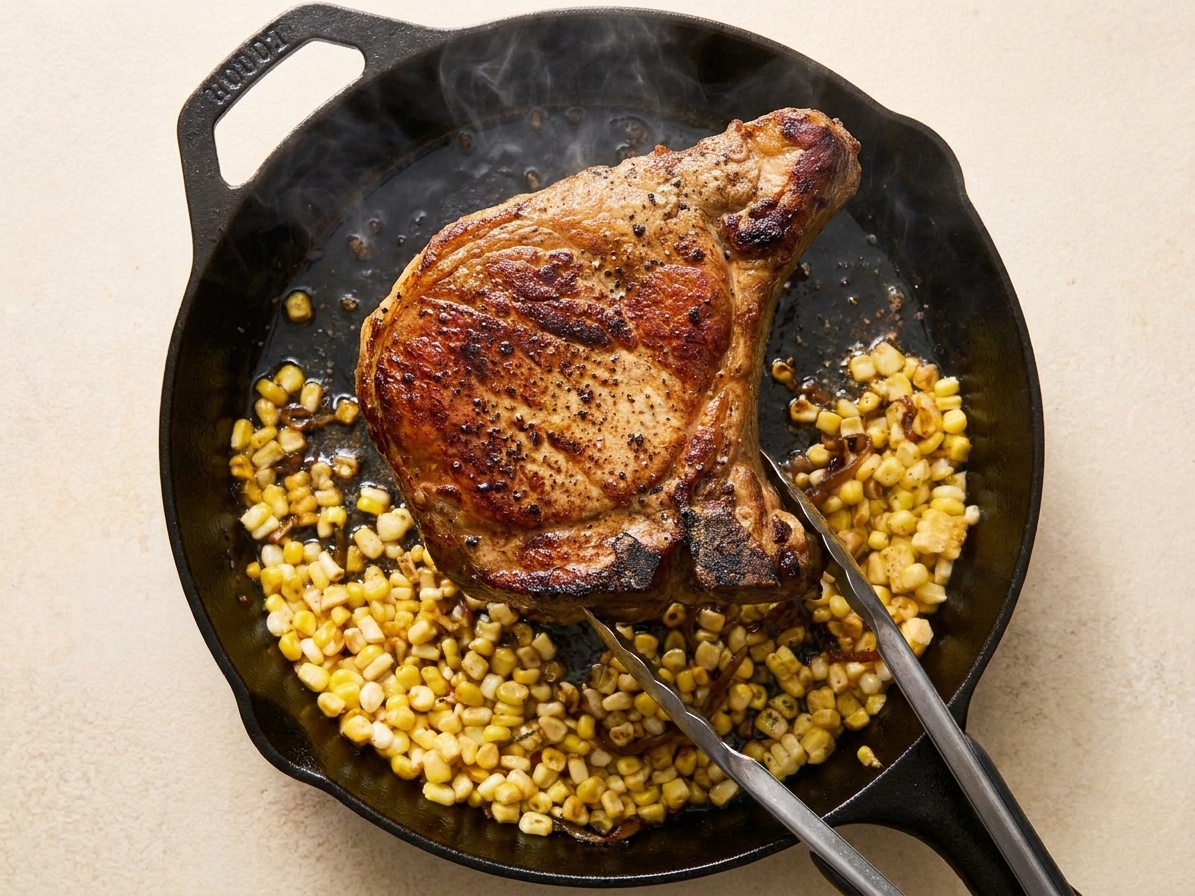
- Heat the pan. Use a cast iron or stainless skillet. Heat over medium-high until very hot, then add oil.
- Sear. Add chops and do not move them for 2 to 3 minutes, until deeply browned. Flip and sear the second side 2 minutes.
- Oven finish. Slide the skillet into a 400°F oven and cook until the thickest part hits 140 to 145°F, usually 4 to 8 minutes depending on thickness. Make sure your skillet is oven-safe (avoid nonstick with plastic handles).
- Rest. Move chops to a plate and rest at least 3 minutes, ideally 5, while you make a pan sauce.
Thermometer tip: Insert into the thickest part, aiming for the center, and avoid touching bone.
Sensory cue: the chops should feel firm but still springy when you press the center. If they feel hard, they are past their prime.
Dry salt vs quick brine
I am organized, but I am also realistic. Here are the two low-effort options that make a big difference.
Dry salt (my default)
Salt both sides and rest 10 to 40 minutes. This improves seasoning and helps the surface dry so you get a better crust.
Quick brine (best for lean chops)
If your chops look very lean or you tend to overcook, use a quick brine:
- Stir 2 cups (480g) water with 30g kosher salt (about 2 tablespoons Diamond Crystal or 1 tablespoon Morton). Add 1 tablespoon sugar if you want.
- Submerge chops 20 to 30 minutes (closer to 20 for thinner chops).
- Rinse briefly, then pat very dry.
Waste-less tip: add a smashed garlic clove, a bay leaf, or a lemon peel strip to the brine if you have it. Do not buy special ingredients just for brine.
Modern flavors
Instead of heavy gravy or overly sweet glazes, I love sauces that bring contrast. Pork is rich. It loves acid, bitterness, herbs, and salty little punches.
1) Lemon, capers, and parsley
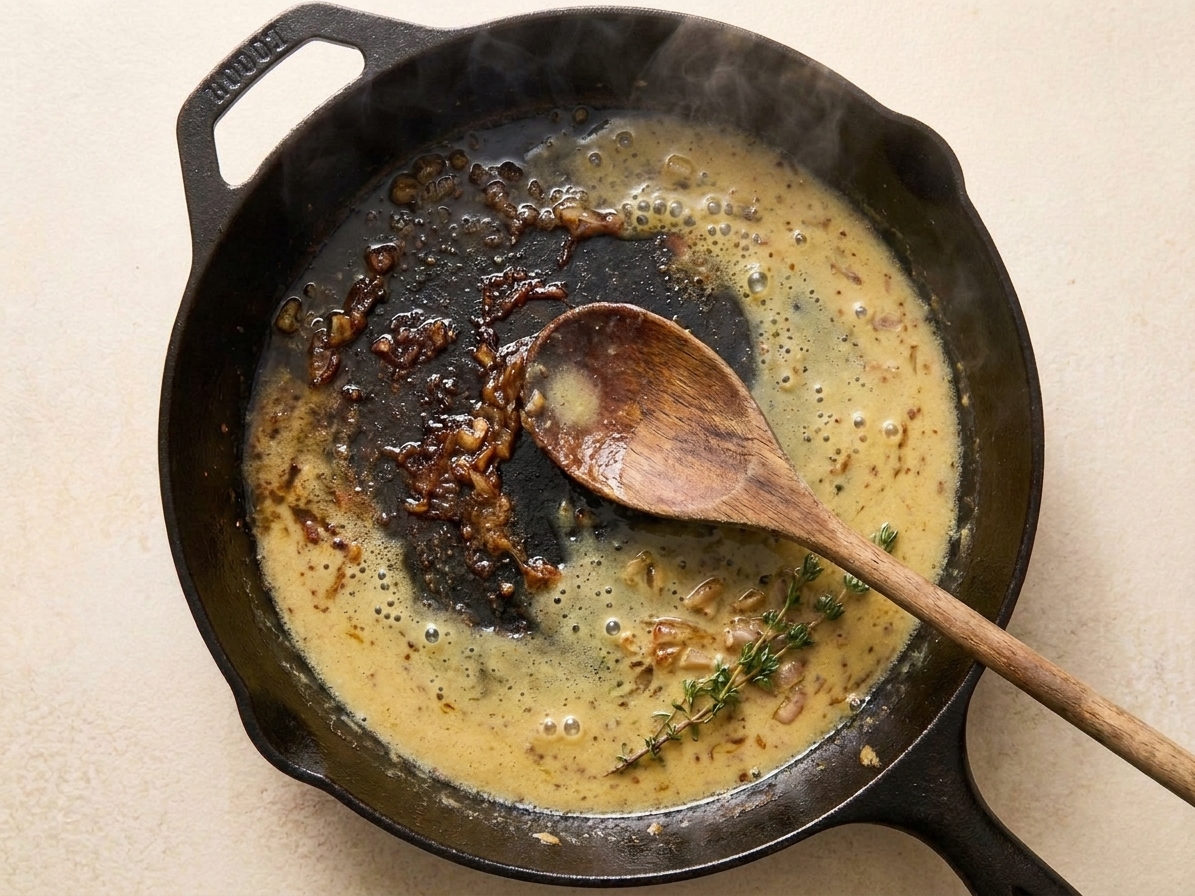
After searing, pour off excess fat. Add 1 tablespoon butter, 1 minced garlic clove, 1 tablespoon capers, and a splash of lemon juice. Add a few tablespoons of water or stock, scrape up browned bits, and finish with chopped parsley.
2) Dijon and cider vinegar
Whisk 1 tablespoon Dijon with 2 teaspoons cider vinegar and 1/3 cup stock. Simmer in the pan 2 minutes. Swirl in a small knob of butter to gloss it up.
3) Miso and maple
Stir 1 tablespoon white miso with 1 to 2 teaspoons maple syrup and 1/4 cup warm water. Add to the hot pan and reduce briefly. This is fantastic with sautéed greens.
Timing guide
These are rough averages for 1 to 1.5 inch chops using the sear plus oven method. Always confirm with a thermometer.
- Boneless: sear 2 to 3 minutes per side, then 3 to 6 minutes in the oven
- Bone-in: sear 2 to 3 minutes per side, then 5 to 8 minutes in the oven
If your chops are thinner than 1 inch: skip the oven. Sear on medium-high and reduce heat to medium after flipping, then start checking temp early.
Common problems
My pork chops are dry
- Pull at 145°F, or pull at 140°F only if you reliably get carryover cooking. Rest at least 3 minutes, ideally 5.
- Use thicker chops.
- Try a quick brine once, especially for very lean loin chops.
I cannot get a good crust
- Pat dry like you mean it.
- Preheat the pan longer than you think.
- Do not overcrowd. Cook in batches if needed.
The chops curl in the pan
- Make a few small snips through the fatty edge so it relaxes.
- Press gently with tongs for the first 30 seconds of searing.
The sauce tastes flat
Add one of these, a tiny bit at a time: lemon juice, vinegar, Dijon, capers, or a pinch of salt. Modern sauces are about balance, not volume.
What to serve
I like sides that either soak up sauce or bring crunch and acid.
- Fast greens: sautéed spinach, garlicky kale, or broccolini with lemon
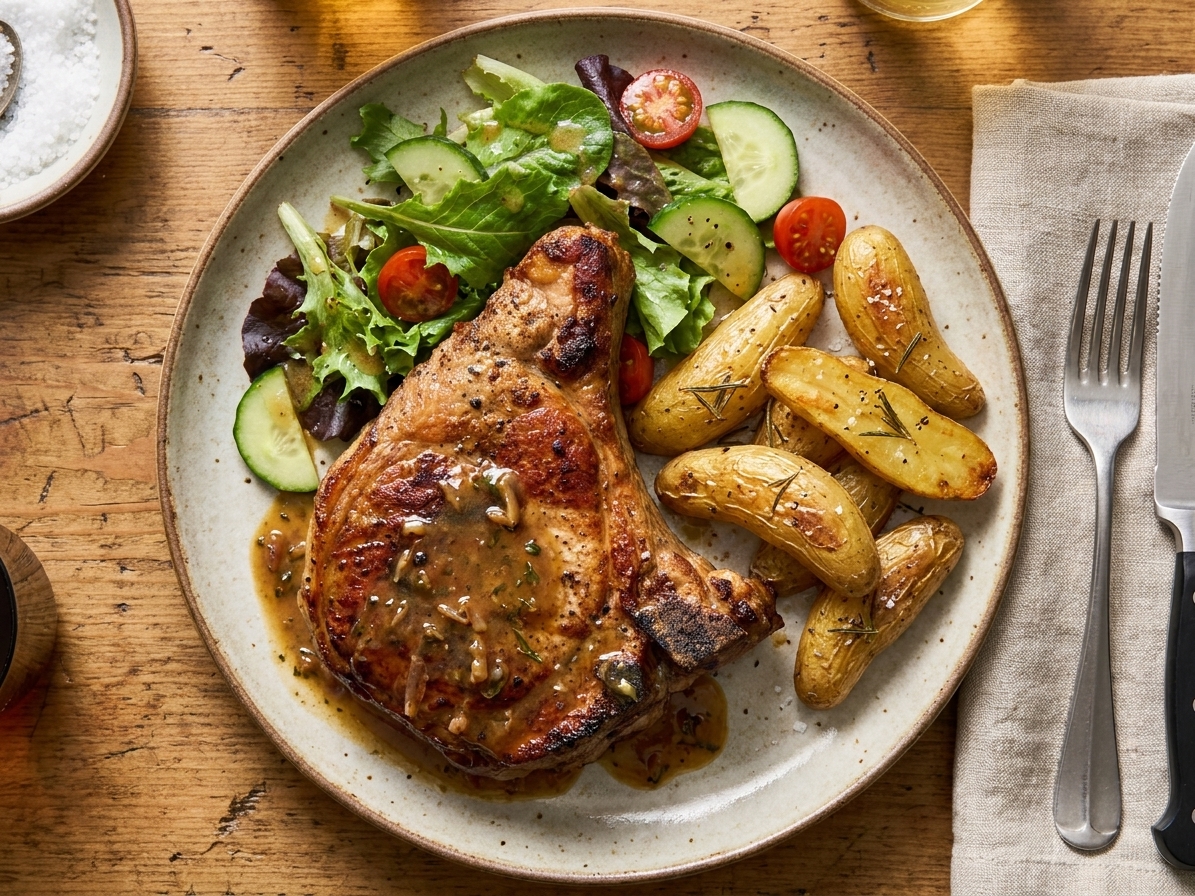
- Crispy potatoes: smashed potatoes, oven fries, or a skillet hash
- Something crunchy: cabbage slaw with vinegar, cucumber salad, or shaved fennel
- Low-waste grain: leftover rice turned into scallion fried rice, or farro with herbs
Leftovers and safety
Cooked pork chops keep well, but they are easy to overheat.
- Store: airtight container, up to 3 to 4 days.
- Reheat gently: covered in a skillet with a splash of water or stock, low heat until warmed through.
- Best leftover move: slice thin and add to a salad, grain bowl, or ramen-style noodles so you do not need to re-cook it aggressively.
FAQ
Is it okay if my pork chop is a little pink?
Yes. If it reached 145°F and rested at least 3 minutes, a light pink center is normal and safe. Color is not a reliable doneness test. Temperature is.
Should I use boneless or bone-in?
Bone-in is slightly more forgiving and usually more flavorful. Boneless cooks faster and is easier to slice. Both can be juicy if you watch the thermometer.
Can I cook pork chops in an air fryer?
You can, especially for thinner chops. Preheat, lightly oil the chops, and cook at a high temp, flipping once, then pull at 145°F (or 140°F only if you reliably get carryover cooking) and rest at least 3 minutes. You will still get the best flavor from a quick salt step first.
What is the best seasoning for pork chops?
Salt and pepper plus one “direction” works great: rosemary and garlic, smoked paprika and cumin, or lemon zest and thyme. Then finish with something acidic like vinegar or lemon.