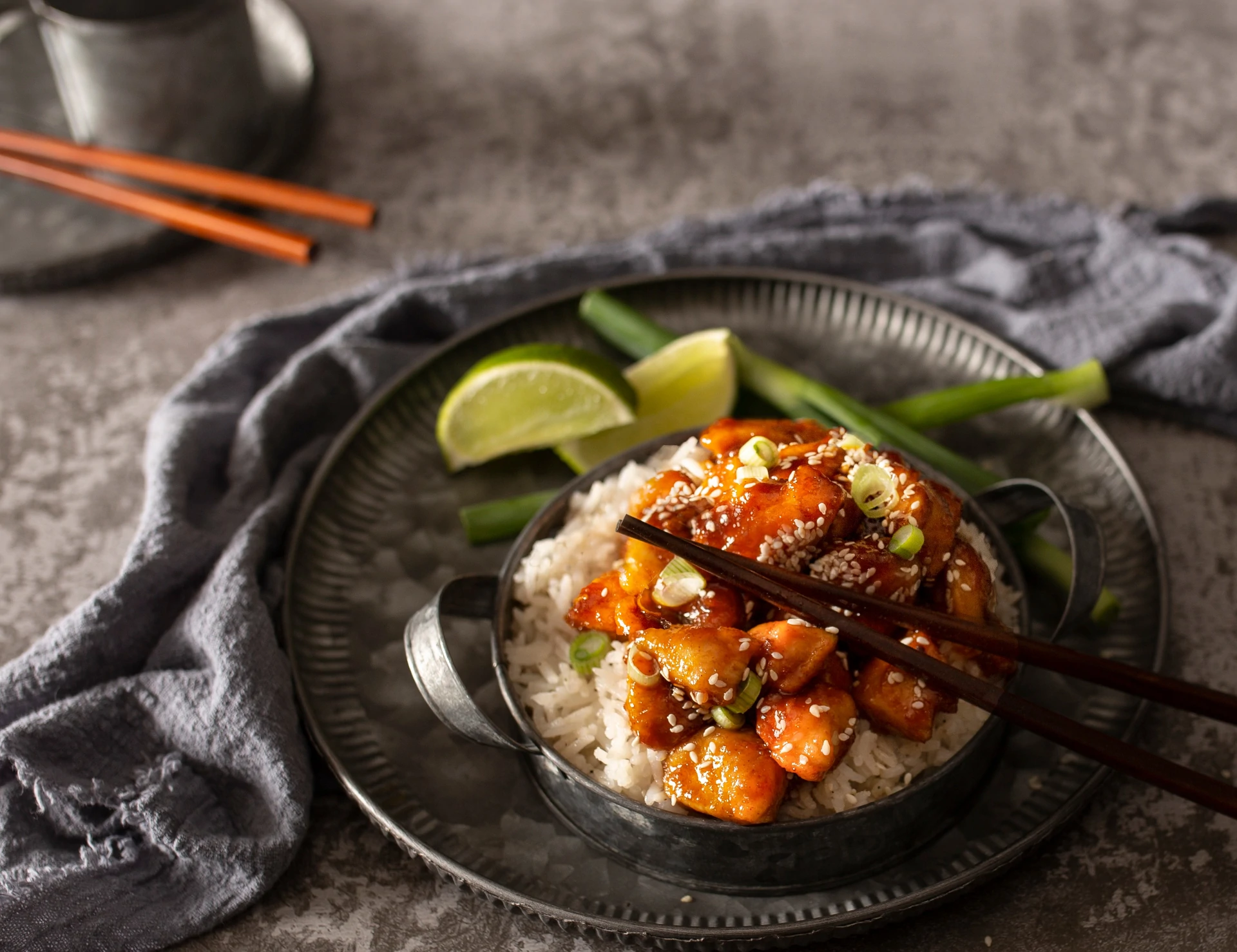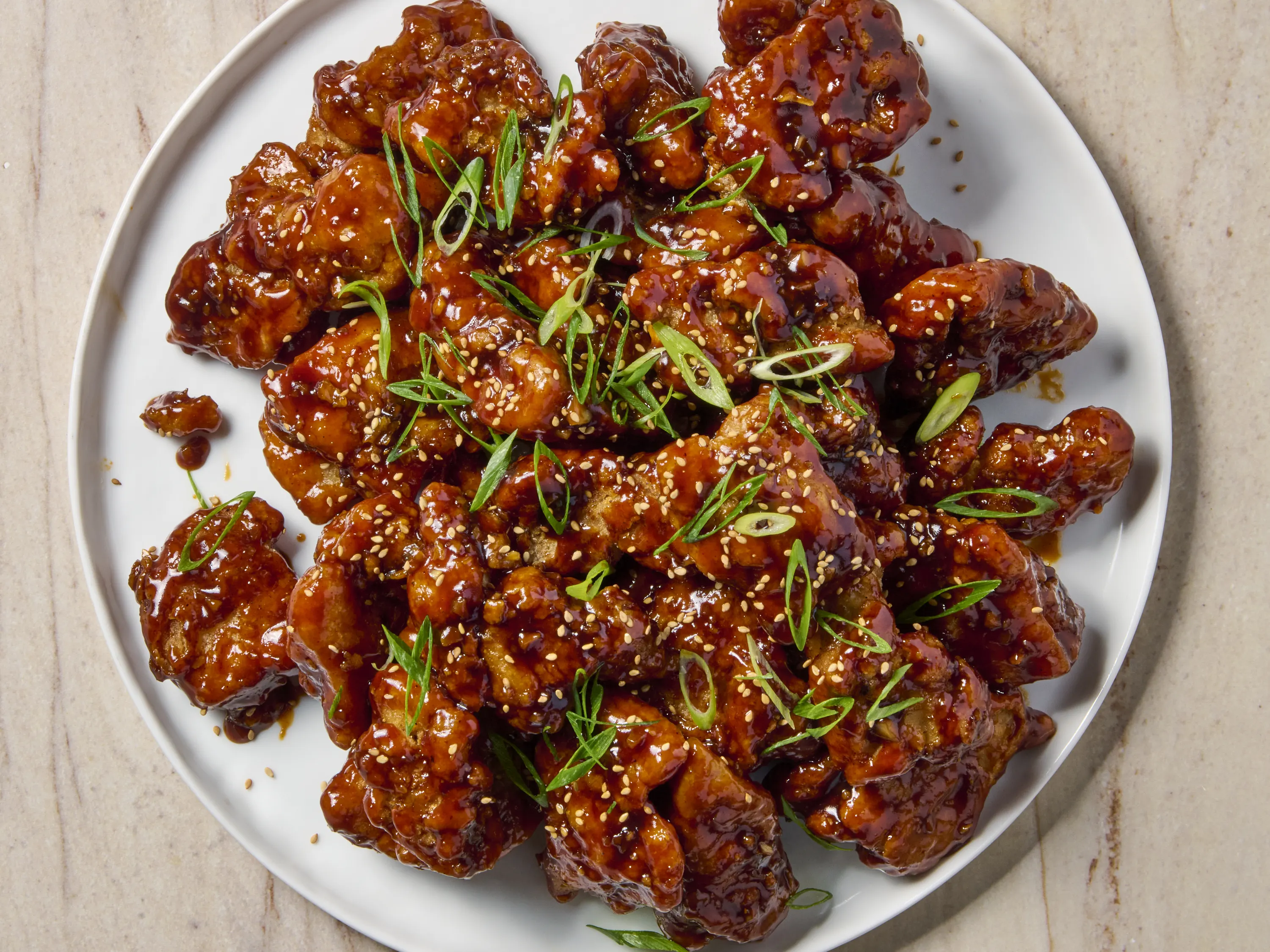
Korean BBQ chicken is one of those magical meals where a handful of pantry ingredients turns into something sticky, sizzling, and deeply satisfying. The flavor balance is the whole point: a little sweetness, a little heat, plenty of garlic, and enough salt and acid to keep it from tasting flat. We are going for bold, not cloying.
This version is built for real life. You can grill it, sear it in a skillet, or roast it on a sheet pan. The marinade doubles as a finishing glaze so you get that classic lacquered look without complicated steps.
Think sweet-salty soy, toasted sesame, and a gentle fermented chile warmth from gochujang, with crisped bits where the sauce caramelizes. The best bites have a little char and a juicy interior.
Why this recipe works
- Balanced flavor, not cloying: Sweet (brown sugar or honey), salty (soy sauce), acid (rice vinegar), and heat plus funk (gochujang) keep the sauce bold and lively.
- Marinade pulls double duty: You reserve some before it touches raw chicken, then boil and reduce it into a safe, glossy finishing glaze.
- Flexible cooking methods: Works on the grill, in a skillet, or on a sheet pan, with doneness guided by temperature.
- Built-in caramelization: Sugar plus gochujang helps create crisped, lacquered edges when cooked hot and finished with glaze.
Ingredient notes
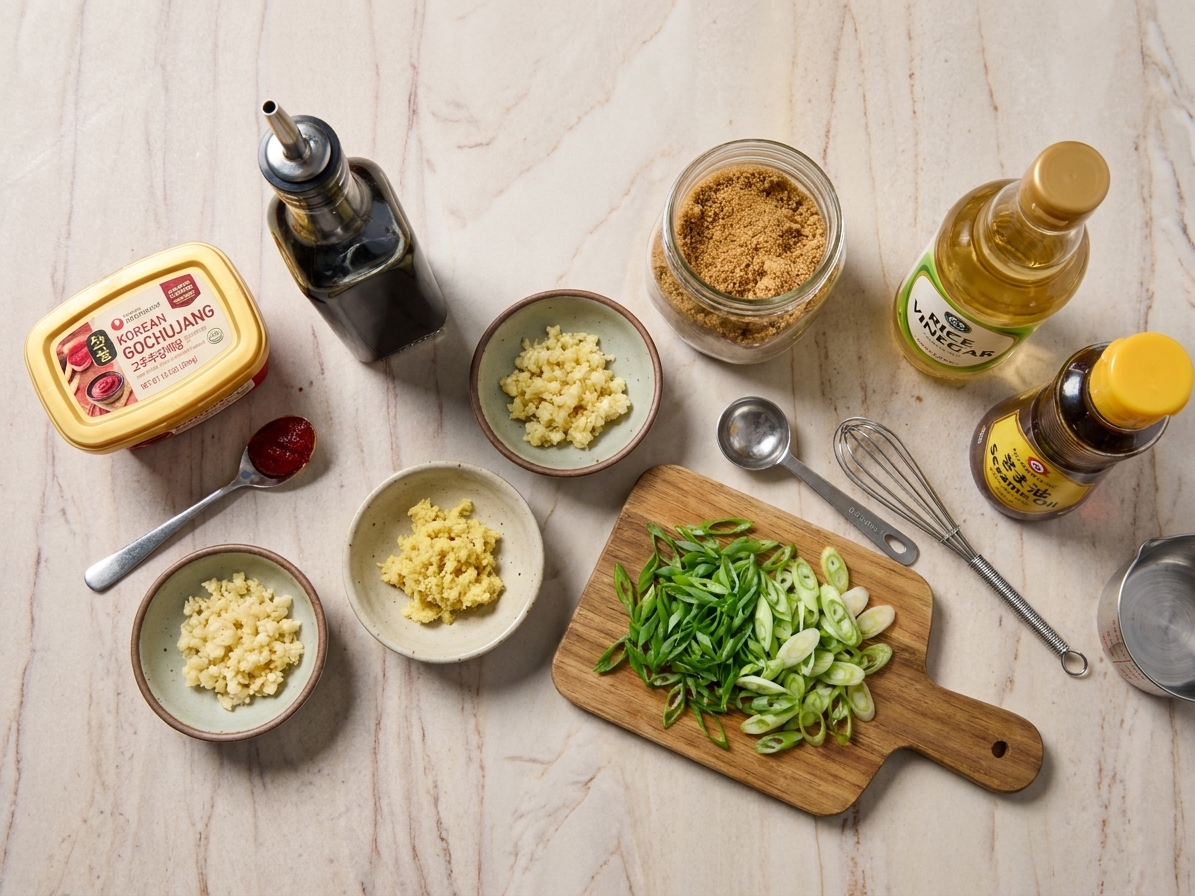
- Chicken thighs or drumsticks: Boneless skinless thighs are preferred for weeknights; drumsticks also work.
- Gochujang: Korean fermented chile paste that brings heat and funk; brands vary in heat, salt, and sweetness.
- Soy sauce: Regular or low-sodium both work.
- Brown sugar or honey: Helps caramelize and rounds out the sauce.
- Garlic: Use plenty (the recipe uses 4 cloves), finely grated or minced.
- Ginger: Fresh grated is best; ground works in a pinch (swap 1 tsp fresh for 1/4 tsp ground).
- Rice vinegar: Adds brightness and cuts richness; apple cider vinegar is an option.
- Toasted sesame oil: A little goes a long way; adds nutty aroma.
- Scallions and toasted sesame seeds: Simple finishing garnish for freshness and crunch.
My highly organized note: If your fridge is full of “almost done” produce, this is a perfect clean-out meal. Slice up wilting scallions, shred a sad carrot into a quick slaw, or roast that half head of broccoli alongside the chicken.
Equipment you will need
- Mixing bowl for whisking the marinade
- Whisk
- Small saucepan for boiling and reducing the reserved glaze
- Instant-read thermometer to confirm 165°F (or 170 to 175°F for thighs/drumsticks for extra tenderness)
- Large skillet (for skillet method)
- Grill and oil for grates (for grill method)
- Sheet pan and foil (for oven method)
- Broiler (optional, for 1 to 2 minutes of extra caramelization)
Pro tips
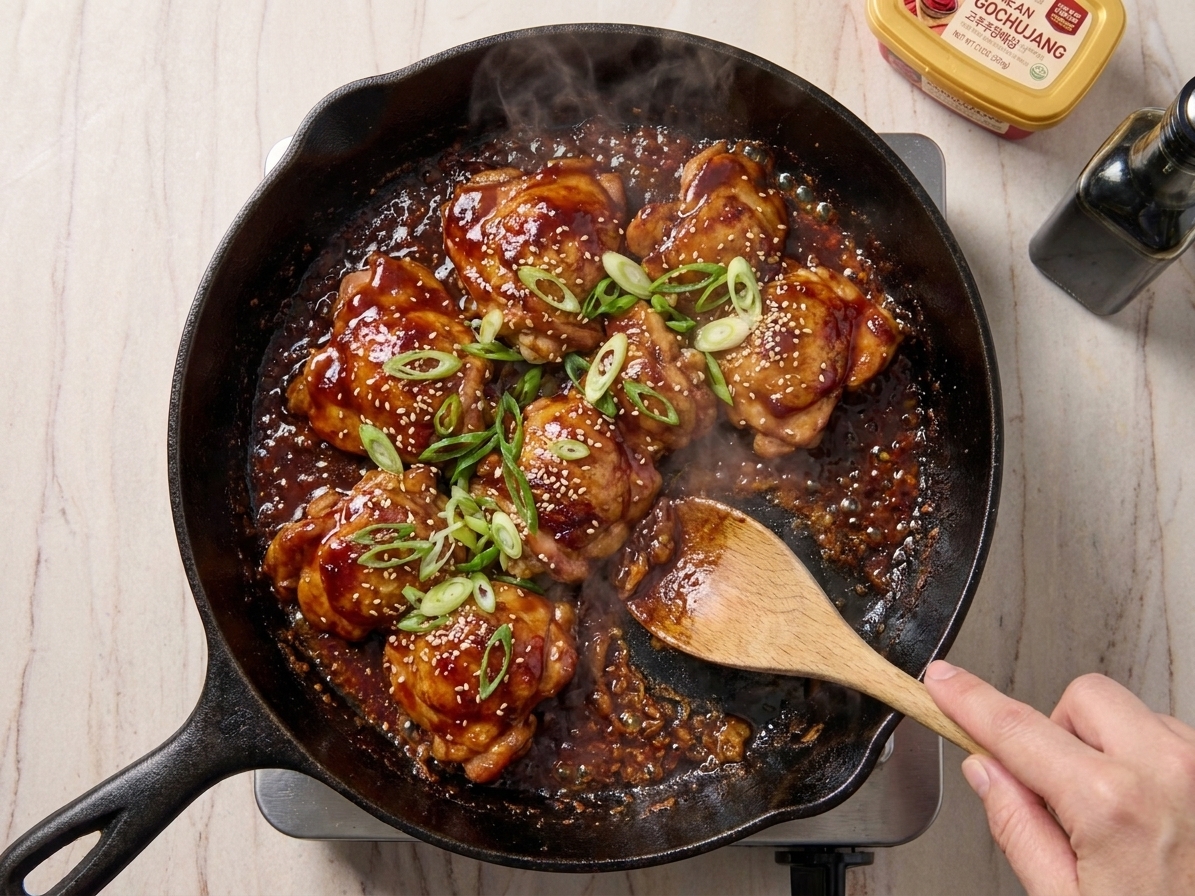
- Reserve glaze before marinating: Scoop out 1/4 to 1/3 cup right away so it never touches raw chicken.
- Cook to temperature: Cook until the thickest part reaches 165°F. For thighs and drumsticks, 170 to 175°F can be extra tender.
- Prevent burning: Start at medium-high for sear, then adjust down once the surface has color.
- Let excess marinade drip off: Thick paste burns faster than it cooks; lightly wipe if it is really caked on.
- Use the glaze at the end: Brush on the boiled, reduced sauce late for shine without bitter, scorched notes.
- Deglaze if needed: If the pan looks dark fast, add 2 tbsp water to loosen fond and prevent scorching.
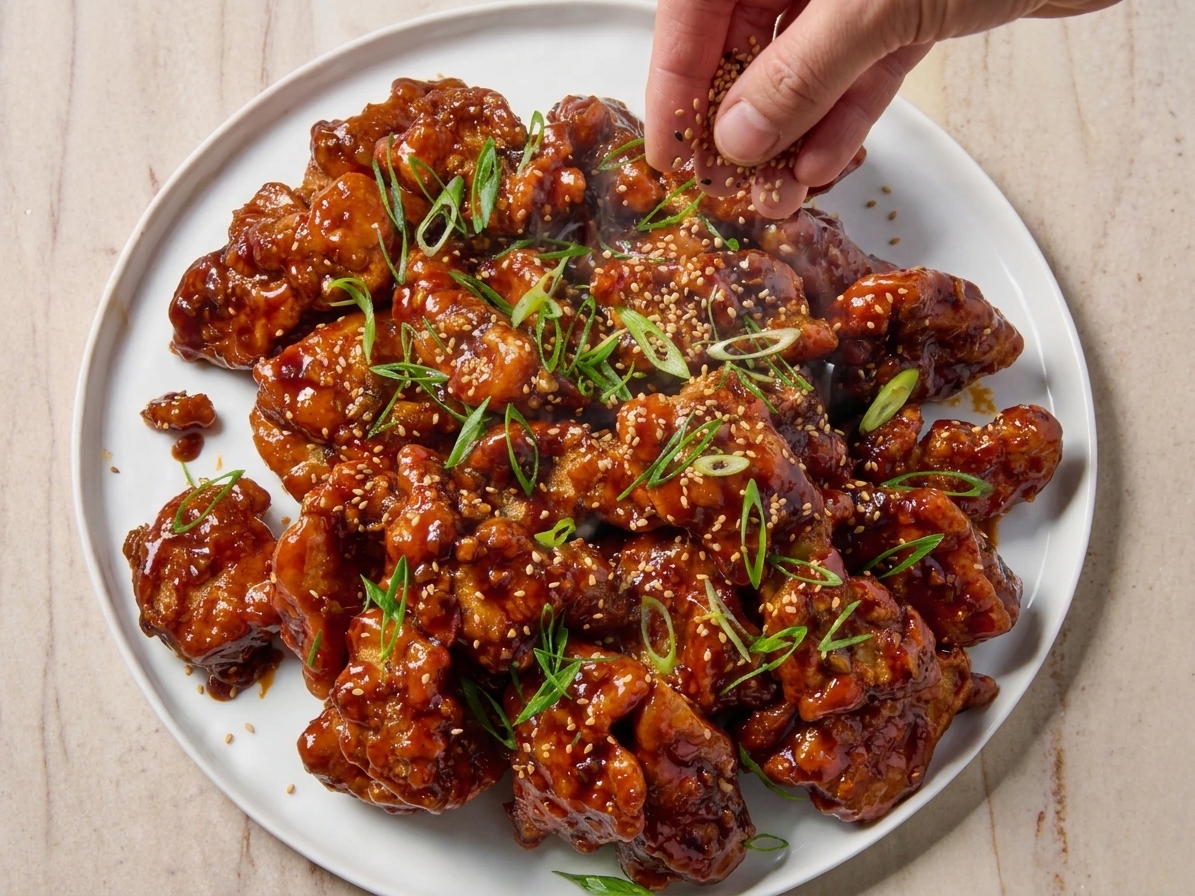
Right before serving, taste your glaze. If it tastes a little too sweet, add a few drops of rice vinegar. If it tastes a little too sharp, add a pinch of sugar. Tiny adjustments at the end are how you make it taste like you meant to do it that way.
Substitutes that work
I love a flexible recipe. Here is what you can swap without losing the soul of the dish.
No gochujang?
- Use 2 tbsp sriracha plus 1 tbsp miso (white miso is mild) if you have it.
- Or use chili garlic sauce plus a teaspoon of sugar and a teaspoon of soy sauce extra. It will taste different but still delicious.
Chicken breast instead of thighs?
- Yes, but pound to an even thickness and cook gently. Pull at 160 to 165°F and rest.
- Breast dries out faster, so keep some glaze for serving at the table.
Gluten-free
- Use tamari instead of soy sauce.
- Important: Traditional and most commercial gochujang contains wheat (or barley malt). Look specifically for a gluten-free gochujang (often made with rice) and check labels.
Less sugar
- Cut brown sugar to 1 tbsp. You will lose a bit of caramelization, but the flavor is still balanced.
- Do not eliminate sweetener entirely or the sauce can taste harsh and overly salty.
Variations
- Choose your cook method: Make it in a skillet, on the grill, or on a sheet pan at 425°F, then finish with glaze.
- Heat level tweak: If you are heat sensitive, start with 2 tbsp gochujang and add more next time.
- Use the marinade beyond chicken: A double batch can be used later in the week on tofu, mushrooms, or salmon (store up to 5 days in the fridge).
Serving ideas
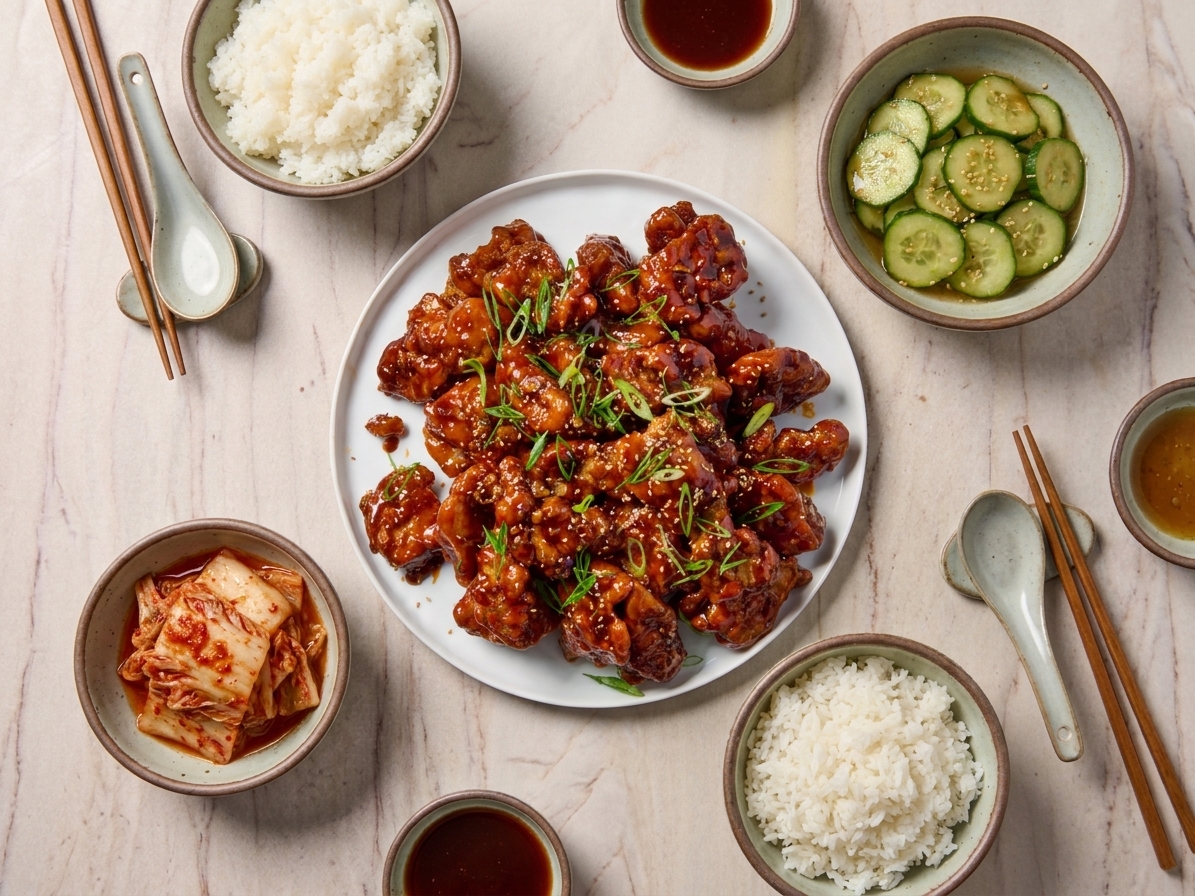
- Steamed rice (short grain if you have it, jasmine if you do not)
- Quick cucumber salad: sliced cucumbers + rice vinegar + pinch of salt + sesame seeds
- Simple slaw: shredded cabbage + a squeeze of lime + a little mayo or sesame oil
- Roasted broccoli or green beans, especially if you are using the sheet pan method
- Lettuce wraps: butter lettuce with rice, chicken, and a little extra glaze
- Finish: thinly sliced scallions and toasted sesame seeds
Storage and reheating
- Marinade (made ahead): If you make a double batch, keep half in a clean jar for later in the week. Store up to 5 days in the fridge.
- Freezer prep: Add chicken and marinade to a freezer bag, press out air, freeze up to 3 months. Thaw in the fridge overnight.
Common mistakes
Burning the sauce
Because the marinade contains sugar and gochujang, it can darken quickly. Aim for caramelization, not a scorched pan. Start medium-high, then adjust; let excess marinade drip off; and use the glaze at the end.
Not reserving glaze safely
Reserve 1/4 to 1/3 cup of marinade before it touches raw chicken. If you forgot and want to use marinade that touched raw chicken, boil it at a full rolling boil for at least 1 minute before serving.
Relying on the clock instead of temperature
Use a thermometer and cook to 165°F (or 170 to 175°F for thighs and drumsticks for extra tenderness), especially when thickness varies.
FAQ
How long should I marinate it?
Thirty minutes gives you noticeable flavor. Two to four hours is my sweet spot. Overnight is great for thighs and drumsticks. If using breast, keep it closer to 2 to 6 hours so the texture stays tender.
Can I bake it instead of grilling?
Absolutely. Roast at 425°F until the chicken hits 165°F, then broil briefly for caramelized edges. Bake is the most hands-off and still tastes like Korean BBQ.
Is gochujang very spicy?
It ranges. Brands vary in heat, salt, and sweetness. Most are more warm and savory than mouth-on-fire. If you are heat sensitive, start with 2 tablespoons and add more next time.
Can I use leftover marinade as sauce?
Best move: reserve some marinade before it touches raw chicken (like this recipe does). If you forgot and want to use a marinade that touched raw chicken, you must bring it to a full rolling boil for at least 1 minute before serving.
Korean BBQ Chicken
Sticky, glossy Korean BBQ chicken with gochujang, soy sauce, garlic, ginger, and sesame. Choose skillet, grill, or sheet pan, then finish with a boiled, reduced glaze and top with scallions and toasted sesame seeds.
- Prep
- 15 minutes (plus marinating)
- Cook
- 15 to 25 minutes
- Total
- 30 to 40 minutes (plus marinating)
- Yield
- 4 servings
Ingredients
- 1 1/2 to 2 lb boneless skinless chicken thighs (or 2 lb drumsticks)
- 2 tbsp neutral oil (for cooking, if using skillet or sheet pan)
- 3 tbsp gochujang
- 3 tbsp soy sauce
- 2 tbsp brown sugar (or 1 1/2 tbsp honey)
- 1 tbsp rice vinegar
- 1 tbsp toasted sesame oil
- 4 cloves garlic, finely grated or minced
- 1 tsp fresh grated ginger (or 1/4 tsp ground ginger)
- 1/4 tsp black pepper
- Thinly sliced scallions and toasted sesame seeds, for serving
Instructions
- Make the marinade.
In a bowl, whisk together gochujang, soy sauce, brown sugar, rice vinegar, sesame oil, garlic, ginger, and black pepper until smooth.
- Reserve sauce for glazing.
Immediately scoop out 1/4 to 1/3 cup of the marinade into a small saucepan. This is your finishing glaze and it stays safe because it never touches raw chicken.
- Marinate the chicken.
Add chicken to the remaining marinade and toss to coat. Marinate 30 minutes (good) to 12 hours (great). If you only have 15 minutes, do it anyway. You will still get a lot of flavor.
- Cook the chicken (choose a method below).
Cook until the thickest part reaches 165°F. For thighs and drumsticks, I often like them at 170 to 175°F for extra tenderness.
Skillet (my weeknight default): Heat a large skillet over medium-high. Add 1 to 2 tbsp neutral oil. Let excess marinade drip off so you do not have a thick coating, then add chicken. Cook 4 to 6 minutes per side, adjusting heat if sugars start to burn. Reduce heat to medium and continue cooking until done. If your pan looks dark fast, add 2 tbsp water to loosen the fond and prevent scorching. (Drumsticks may need extra time and benefit from a quick covered finish.)
Grill: Preheat grill to medium-high and oil the grates. Grill thighs 4 to 6 minutes per side. For drumsticks, plan on longer and use a cooler zone as needed to cook through without burning. Brush with glaze during the last 1 to 2 minutes so it caramelizes without burning.
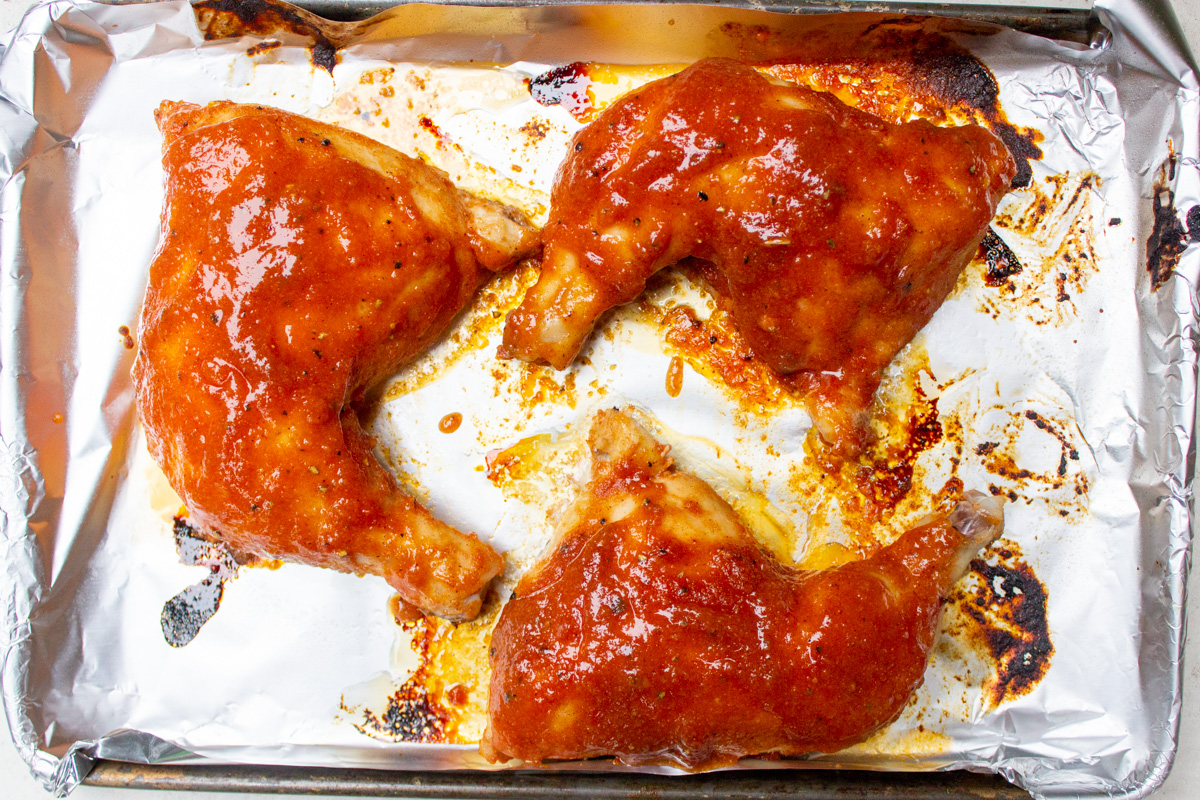
Sheet pan (hands-off): Heat oven to 425°F. Line a sheet pan with foil for easier cleanup. Arrange chicken in a single layer. Roast thighs 18 to 25 minutes depending on thickness. Drumsticks often take about 25 to 35 minutes. Use temperature, not the clock, as your final answer. For extra caramelization, broil 1 to 2 minutes at the end. Stay close. The sugar moves from perfect to burnt fast.
- Glaze and rest.
Bring the reserved sauce to a full rolling boil for at least 1 minute, then simmer 1 to 2 minutes until glossy and slightly thick. Brush over hot chicken. Rest 3 to 5 minutes, then top with scallions and sesame seeds.
Notes
- Avoid burning: Start medium-high, then adjust down once the surface has color. Let excess marinade drip off (lightly wipe if caked on). Deglaze with a splash of water if needed.
- Doneness: Cook to 165°F in the thickest part; thighs and drumsticks can be especially tender at 170 to 175°F.
- Fixes: If sauce tastes too salty, add 1 to 2 tsp rice vinegar or a squeeze of lime; if still intense, whisk in 1 tbsp water and brush lightly. If chicken is burning before it is cooked through, lower heat and cover briefly (or move to indirect heat on grill; tent with foil in oven). If it tastes flat, finish with a tiny pinch of salt and a splash of vinegar.
- Make-ahead: Double the marinade and keep half in a clean jar for up to 5 days in the fridge. You can also freeze chicken in marinade up to 3 months and thaw overnight in the fridge.
- Final adjustment: Taste glaze right before serving. If too sweet, add a few drops of rice vinegar; if too sharp, add a pinch of sugar.
Nutrition
- Calories: ~430
- Fat: ~22 g
- Carbs: ~17 g
- Protein: ~38 g
- Fiber: ~1 g
- Sugar: ~12 g
- Sodium: ~1,150 mg
Nutrition values are approximate and will vary by chicken cut, brand of gochujang/soy sauce, and how much marinade clings to the chicken.