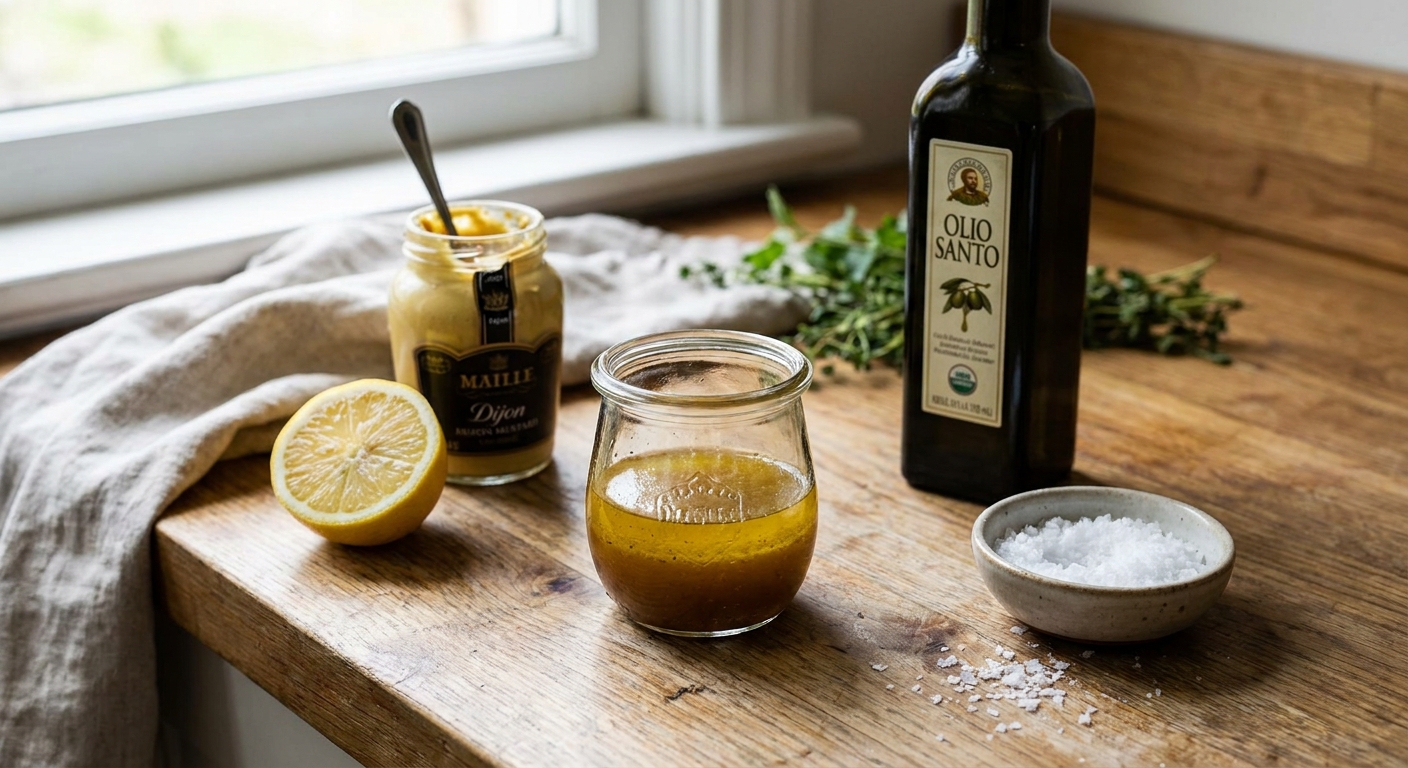
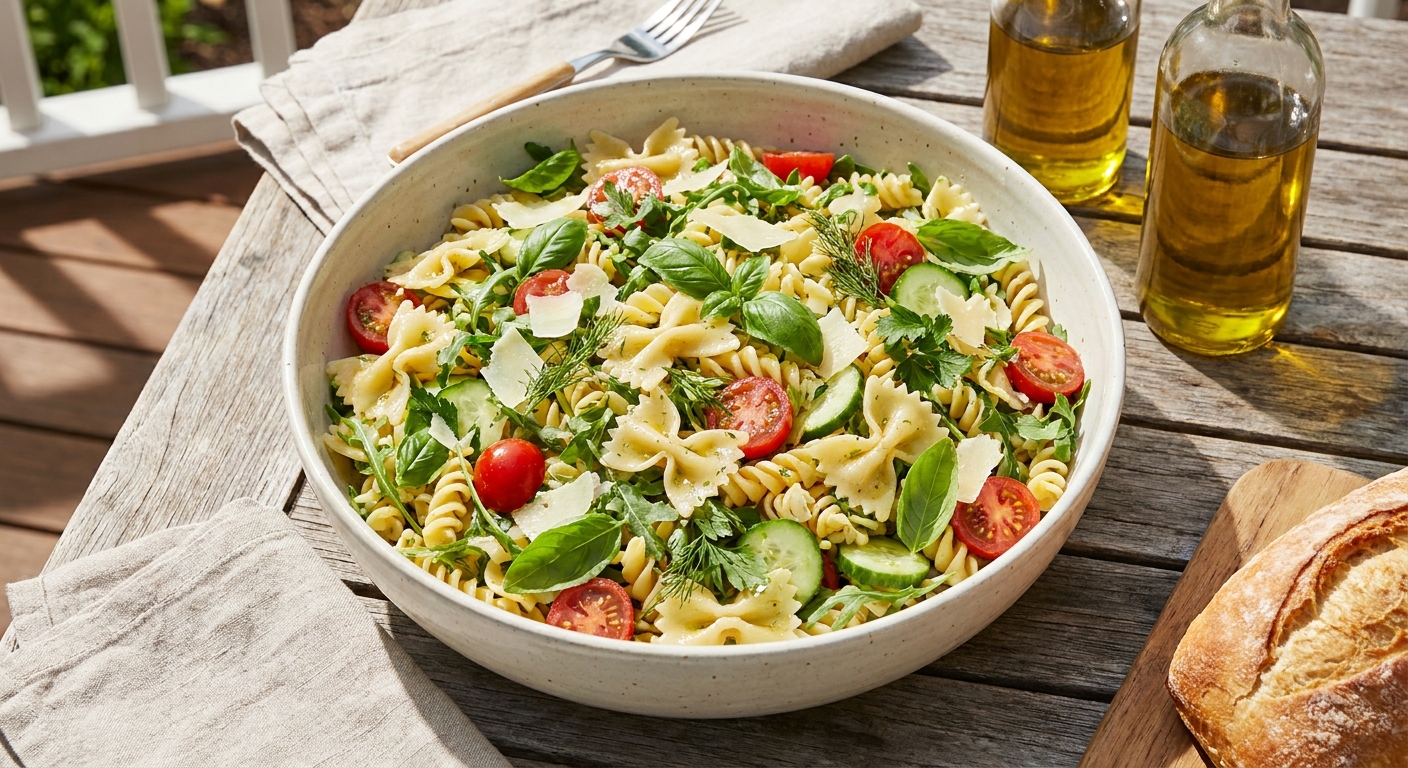
If you have ever ordered a salad and thought, why does this dressing taste so glossy and expensive, the answer is usually balance and emulsification. This luxurious balsamic vinaigrette is the one I keep in my Portland fridge door because it makes everyday greens feel like a real meal, and it rescues all the “odds and ends” veggies that need to get used up.
It is bold, silky, and properly seasoned. Not just sweet vinegar and oil. You will learn the ratio, what to look for as you whisk, and the small restaurant tricks that make it cling to leaves instead of sliding to the bottom of the bowl.
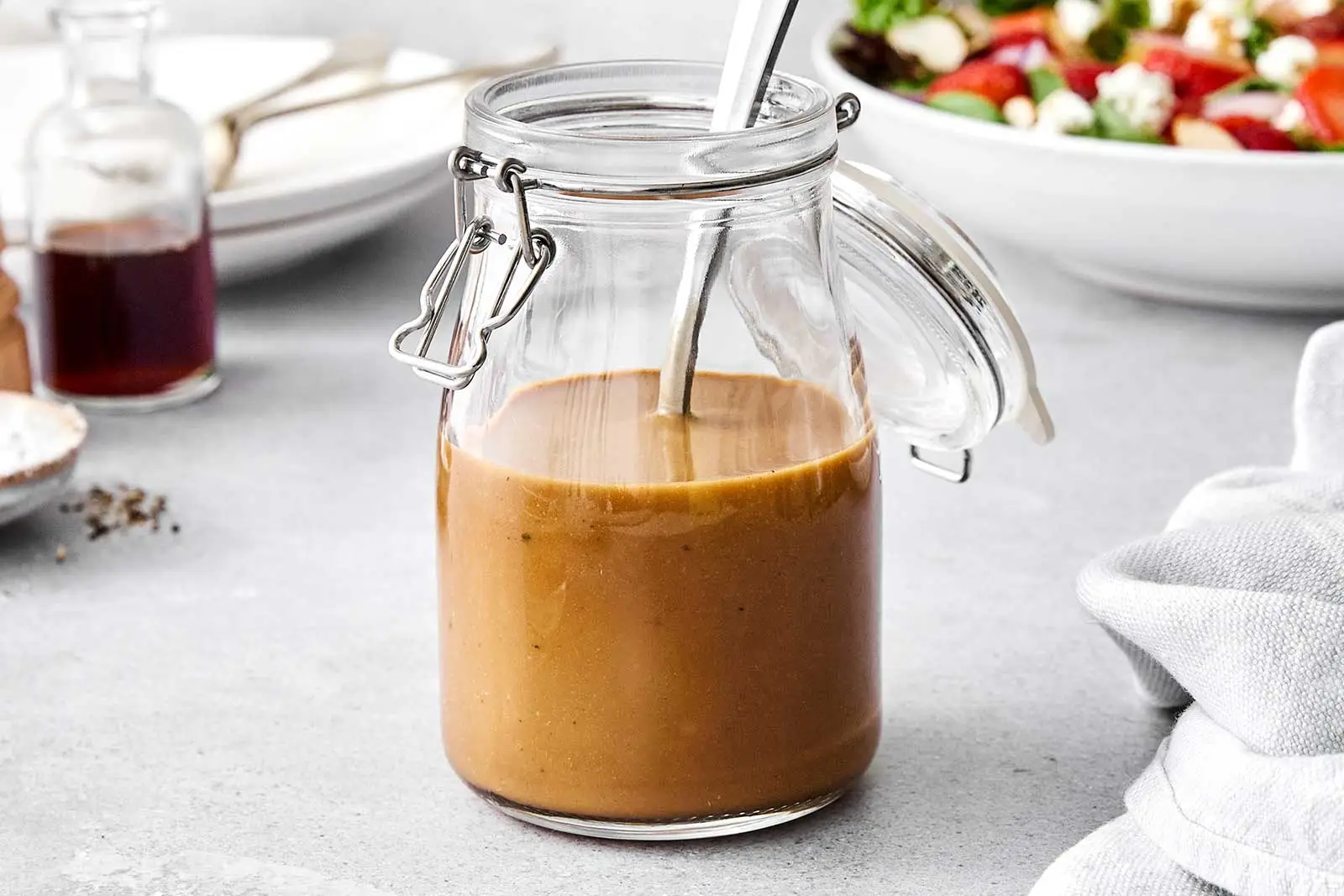
Why this recipe works
- Better emulsification: You build a well-emulsified dressing that looks a little creamy and coats greens evenly. It will still separate over time because it is homemade, and that is normal.
- Layered flavor: Balsamic for sweetness and tang, Dijon for gentle heat, garlic for depth, and optional honey for roundness.
- Correct salt level: A vinaigrette should taste slightly “too seasoned” on a spoon, because it gets diluted once it hits cold greens.
- Good oil: Use an olive oil you like the taste of. Peppery oil makes a punchier vinaigrette, mild oil makes it softer and more mellow.
Ingredient notes
The ratio to remember: 1 part vinegar to 3 parts oil plus something to emulsify (usually Dijon) and enough salt to wake it up.
- Classic: 1 tablespoon balsamic + 3 tablespoons olive oil
- Sharper dressing: 1:2.5 (great for hearty kale)
- Milder dressing: 1:4 (great for delicate butter lettuce)
Balsamic: Traditional balsamic is magical, but you do not need a $100 bottle for dressing. “Aceto balsamico di Modena IGP” is a good, reliable starting point. A slightly syrupy vinegar tends to make a more clingy vinaigrette. If it tastes harsh, use a little honey or a tiny pinch of salt more than you think since harsh vinegar usually just needs rounding out.
Sweetener: Because balsamic is naturally sweeter than many vinegars, you often need less added sweetener than you think. Taste before you add honey.
Optional umami: Adding Parmesan or miso adds savory depth; note this makes it less classic and may shorten shelf life.
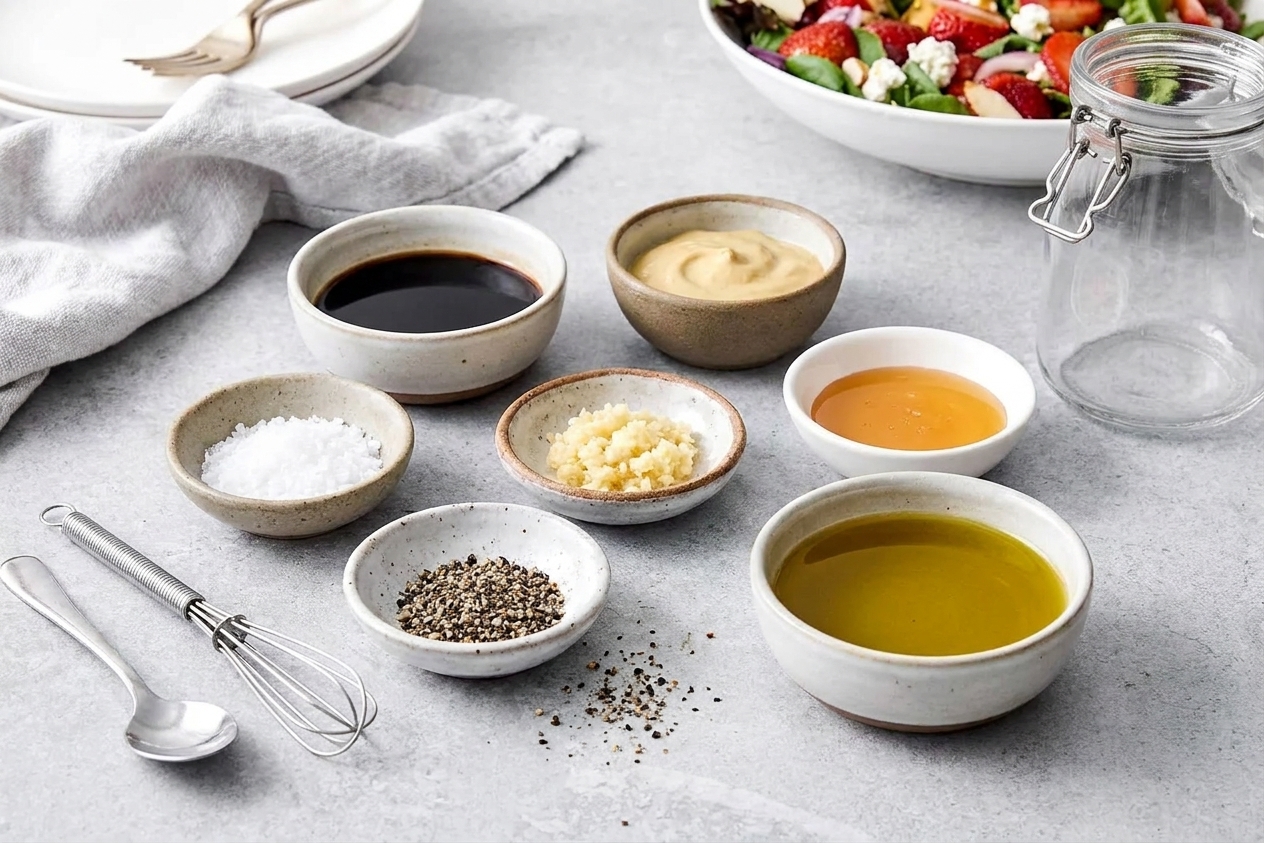
Equipment you will need
- Medium bowl + whisk for classic whisking and a thin-stream oil drizzle.
- Jar with a tight lid for the shake method and easy storage.
- Fine grater or knife for finely grating or mincing the garlic clove.
- Small blender (optional) if you want a very cohesive emulsion; quick pulses work well with extra-virgin olive oil.
- Salad spinner (helpful) to dry greens well so the dressing clings and does not get diluted.
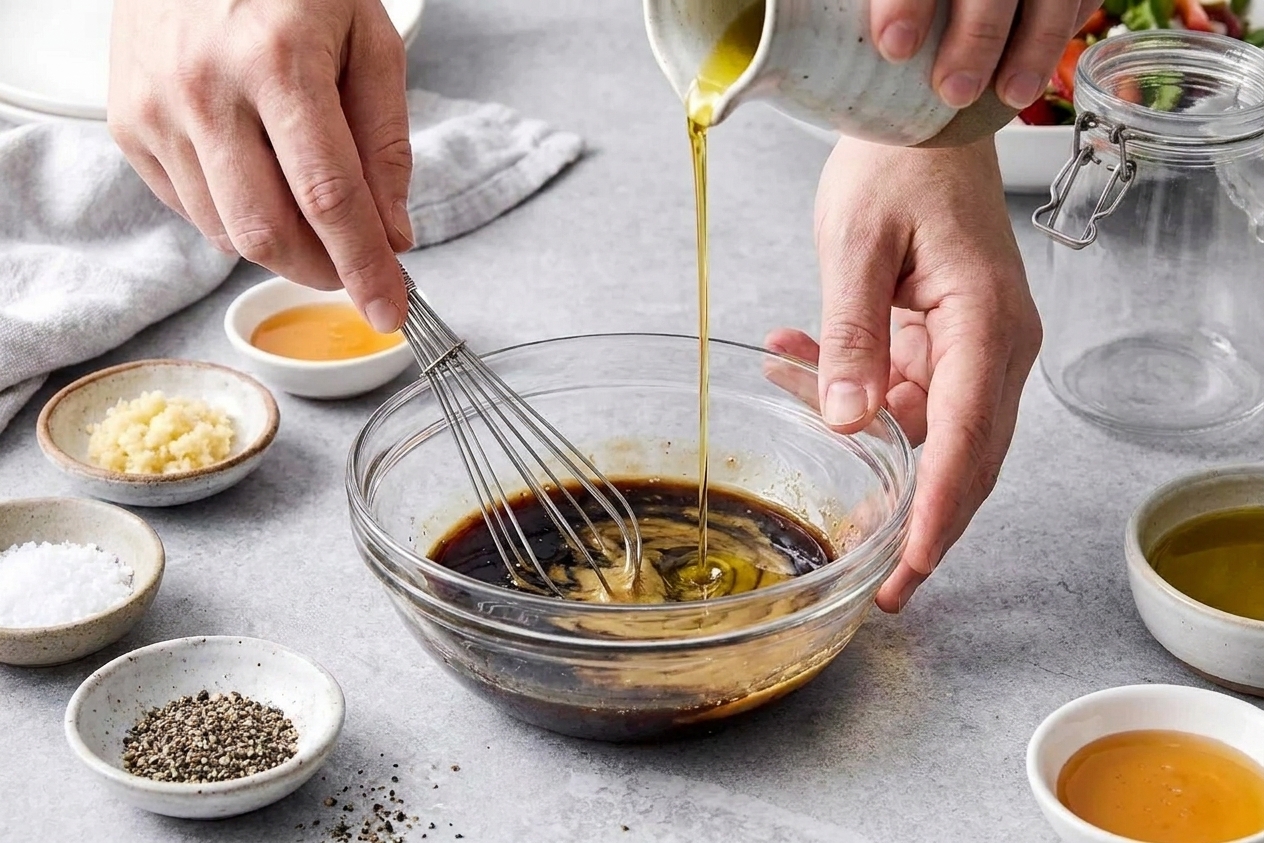
Pro tips
- Emulsify like a restaurant: Whisk constantly and drizzle the olive oil in a thin stream until the dressing looks slightly thickened and uniform.
- Jar method: Add everything except the oil to a jar and shake to combine. Add the oil in 2 to 3 additions, shaking hard between each one until it looks cohesive.
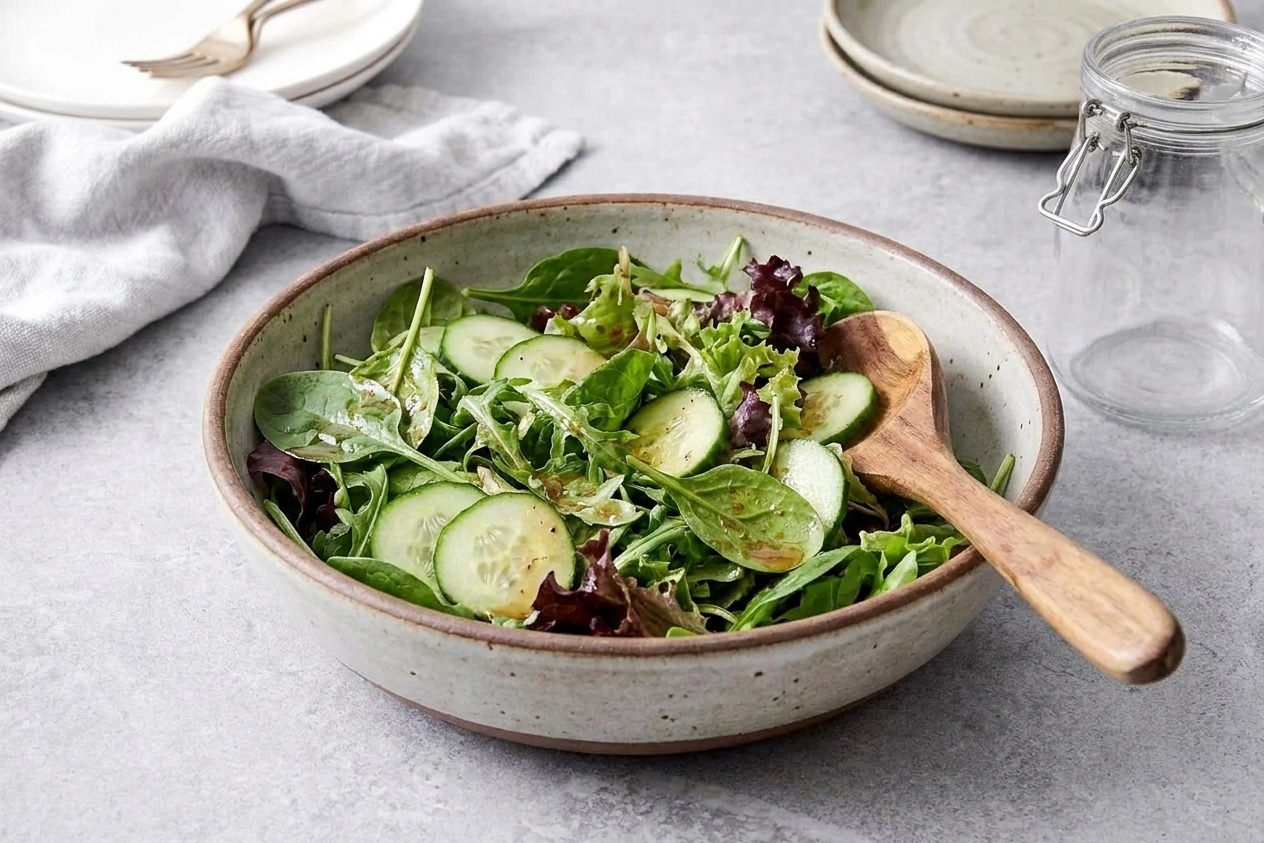
- Taste like a chef: Taste on a leaf of lettuce or a cucumber slice (not just on a spoon), then adjust salt, acid, and sweetness.
- Lighten the mouthfeel: A splash of warm water (1 to 2 teaspoons) can make the dressing feel less heavy and help it cling.
- Weeknight workflow: Dry your greens well, then dress your greens, wait 2 minutes, then taste and salt. Wet leaves dilute dressing fast, and greens pull seasoning out of the vinaigrette even faster.
- Extra depth: Whisk in 1 teaspoon finely grated Parmesan (or a tiny spoon of miso) for more savory complexity.
Substitutes that work
- Honey: Use maple syrup (same optional amount) for sweetness and roundness.
- Dijon (emulsifier): Use 1 teaspoon mayo or 1/2 teaspoon miso as your emulsifier (both add savory depth).
- Garlic (for longer holding): Swap in granulated garlic or roasted garlic instead of raw if you prefer to be extra cautious for longer storage.
Variations
These easy variations keep things interesting without buying special bottles that live in the back of the fridge.
Shallot balsamic
Swap garlic for 1 tablespoon finely minced shallot. Let it sit 10 minutes before adding oil so the shallot mellows.
Creamy balsamic
Add 1 tablespoon Greek yogurt or mayo. The dressing turns softly creamy and clings well.
Herby vinaigrette
Stir in 1 to 2 tablespoons chopped basil, parsley, or chives. Best used within 2 days.
Roasted garlic balsamic
Use 1 teaspoon roasted garlic paste instead of raw garlic for a sweeter, rounder flavor.
No Dijon
Use 1 teaspoon mayo or 1/2 teaspoon miso as your emulsifier.
Serving ideas
- Roasted vegetables: Drizzle on warm Brussels sprouts, carrots, or cauliflower right after they come out of the oven.
- Grain bowls: Quinoa, farro, or rice plus leftover chicken and whatever greens are wilting.
- Tomato and mozzarella: Use as the dressing, no separate glaze needed.
- Marinade shortcut: Whisk 2 tablespoons into a little extra oil, toss with chicken thighs or portobellos, and roast.
- Strawberries: A tiny drizzle with black pepper is surprisingly good.
Storage and reheating
Fridge: Store in a sealed jar and keep refrigerated. For best quality, use within 5 days. If you use raw garlic, a more cautious window is 3 to 5 days, and discard if anything smells or tastes off. If you add fresh herbs or dairy, aim for 2 to 3 days.
Olive oil solidified? Normal. Let the jar sit at room temperature for 10 to 15 minutes, then shake.
Common mistakes
- It separated: Totally normal, especially after chilling. Shake hard in a jar or whisk again. If it keeps breaking, whisk in 1/2 teaspoon Dijon or 1 teaspoon mayo, then drizzle in a teaspoon of oil to pull it back together.
- It tastes too sharp: Add 1/2 teaspoon honey or maple syrup; add 1 to 2 teaspoons water to soften the edges without making it oily; and make sure it is salty enough since under-salted vinaigrette reads as more acidic than it is.
- It tastes too sweet: Add a small squeeze of lemon or an extra teaspoon balsamic; add more black pepper or a pinch of chili flakes to rebalance.
- It tastes greasy or heavy: Add more vinegar (1 teaspoon at a time) or whisk in a teaspoon of warm water to lighten the mouthfeel and help it cling.
- It tastes different on the salad: Cold greens mute flavor, and watery vegetables dilute seasoning. Taste on a leaf, then adjust.
FAQ
Can I make it without sweetener?
Absolutely. Many balsamic vinegars are sweet enough on their own. Make it first, then decide. If your vinegar is very sharp, a tiny amount of honey can make it taste more balanced, not sugary.
Is balsamic vinaigrette gluten-free?
Usually, yes, but check the bottle if you are sensitive. Some vinegars and mustards can have additives or cross-contact. If you have celiac disease, look for a certified gluten-free label.
Can I blend it instead of whisking?
Yes. A small blender makes a very cohesive emulsion. With extra-virgin olive oil, quick pulses are perfect since over-blending can taste more bitter or pungent to some people.
Why does it taste different on the salad?
Cold greens mute flavor, and watery vegetables dilute seasoning. Taste your vinaigrette on a leaf, not on a spoon, then adjust salt and acid from there.
Luxurious Balsamic Vinaigrette
A bold, silky balsamic vinaigrette built on a dependable 1:3 vinegar-to-oil ratio, with Dijon for emulsification, garlic for depth, and optional honey for roundness. Makes about 3/4 cup, enough for 4 to 6 salads.
- Prep
- 5 minutes
- Cook
- 0 minutes
- Total
- 5 minutes
- Yield
- Makes about 3/4 cup (12 tablespoons), enough for 4 to 6 salads
Ingredients
- 3 tablespoons balsamic vinegar
- 1 tablespoon Dijon mustard
- 1 small garlic clove, finely grated or minced (about 1/2 to 1 teaspoon, to taste)
- 1 to 2 teaspoons honey or maple syrup (optional, to taste)
- 1/2 teaspoon fine sea salt, plus more to taste
- 1/4 teaspoon freshly ground black pepper
- 9 tablespoons extra-virgin olive oil (1/2 cup plus 1 tablespoon)
- Optional for extra luxury: 1 tablespoon finely grated Parmesan or 1 teaspoon miso (adds savory depth; note this makes it less classic and may shorten shelf life)
Instructions
- Start with the base. In a medium bowl (or a jar), combine balsamic, Dijon, garlic, honey (if using), salt, and pepper. Whisk until smooth.
- Slowly emulsify. While whisking constantly, drizzle in the olive oil in a thin stream. Keep whisking until the dressing looks slightly thickened and uniform.
- Jar method (my lazy favorite). Add everything except the oil to a jar and shake to combine. Then add the oil in 2 to 3 additions, shaking hard between each one until it looks cohesive.
- Taste like a chef. Dip in a leaf of lettuce or a cucumber slice. Adjust:
- More salt if it tastes flat.
- A touch more balsamic if it needs brightness.
- A little more honey if it tastes too sharp.
- A splash of warm water (1 to 2 teaspoons) if it feels heavy.
- Use now or store. Use immediately or refrigerate. Shake or whisk before serving.
Notes
- Normal separation: Homemade vinaigrettes separate over time, especially after chilling. Shake hard or whisk again before serving.
- If it keeps breaking: Whisk in 1/2 teaspoon Dijon or 1 teaspoon mayo, then drizzle in a teaspoon of oil to pull it back together.
- Storage: Keep refrigerated in a sealed jar. Best within 5 days; with raw garlic, use within 3 to 5 days. If you add herbs or dairy, use within 2 to 3 days.
- Olive oil solidified: Let sit at room temperature for 10 to 15 minutes, then shake.
Nutrition
- Calories: ~155
- Fat: ~17 g
- Carbs: ~2 g
- Protein: ~0 g
- Fiber: ~0 g
- Sugar: ~2 g
- Sodium: ~125 mg
Approximate values per 1 tablespoon, assuming the base recipe with 1 teaspoon honey and without optional Parmesan or miso; actual nutrition varies by brands and how much sweetener you use.