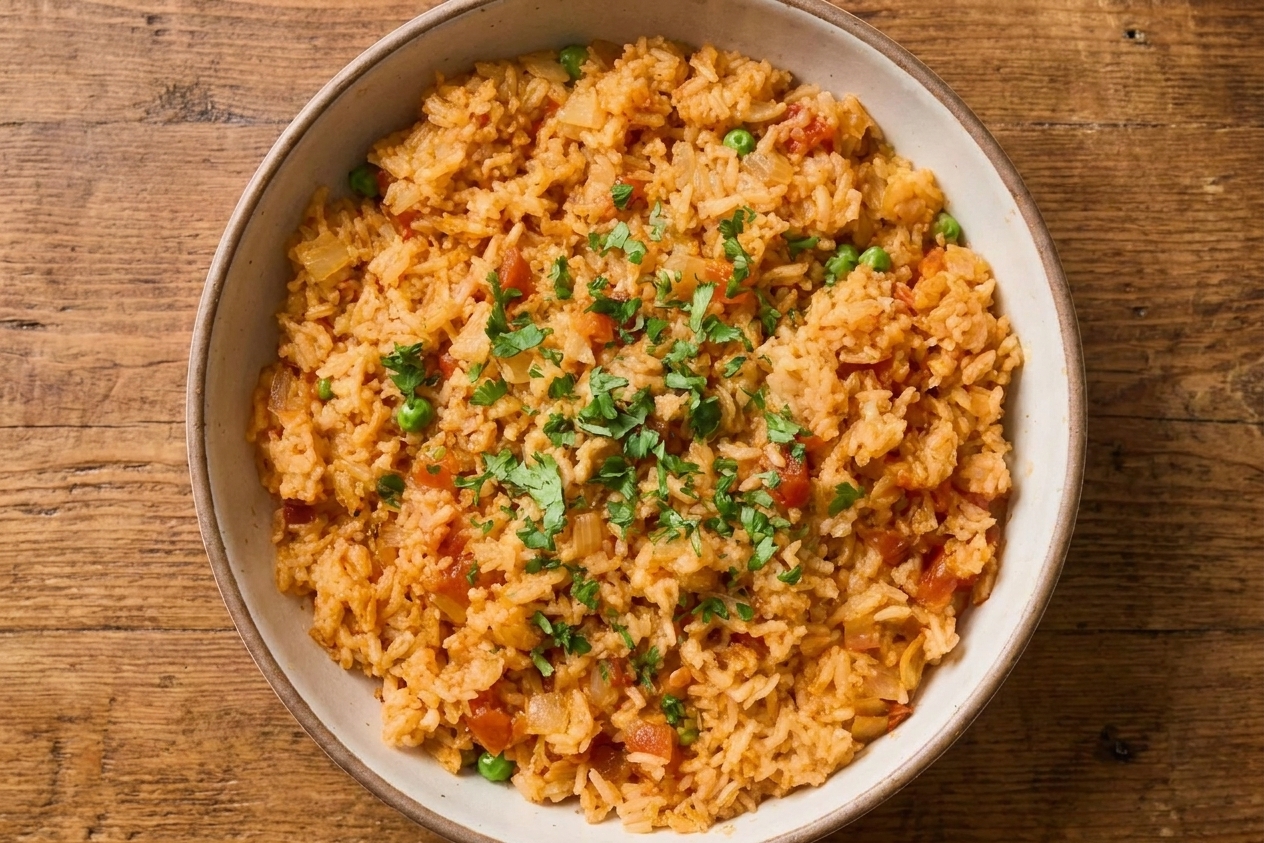


If you have ever made rice that turned out a little sticky or bland next to tacos, this is the fix. Classic Mexican rice is often called arroz rojo or arroz a la mexicana, and the best versions start the same way: toasting long-grain rice in oil until it smells nutty and looks lightly golden. That quick toast does two things I care about a lot as a former culinary instructor: it builds flavor fast and helps the grains stay distinct.
Instead of cooking in plain water, we simmer the rice in a tomato-and-onion broth seasoned with cumin. The tomato is what brings that warm, brick-red color, while the onion and garlic round everything out so it tastes like it came from a restaurant kitchen, not a box.
My biggest promise: if you toast until lightly golden and nutty-smelling, keep the simmer gentle, and let the pot rest off heat before you fluff, you will get tender rice with separate grains that is weeknight reliable. It is also a sneaky food-waste hero. This is a great place to use that half can of tomatoes, the last half onion, or leftover broth hanging out in your fridge.
What to expect
- Flavor: savory, tomato-forward, gently earthy from cumin, and brightened with a squeeze of lime if you want it.
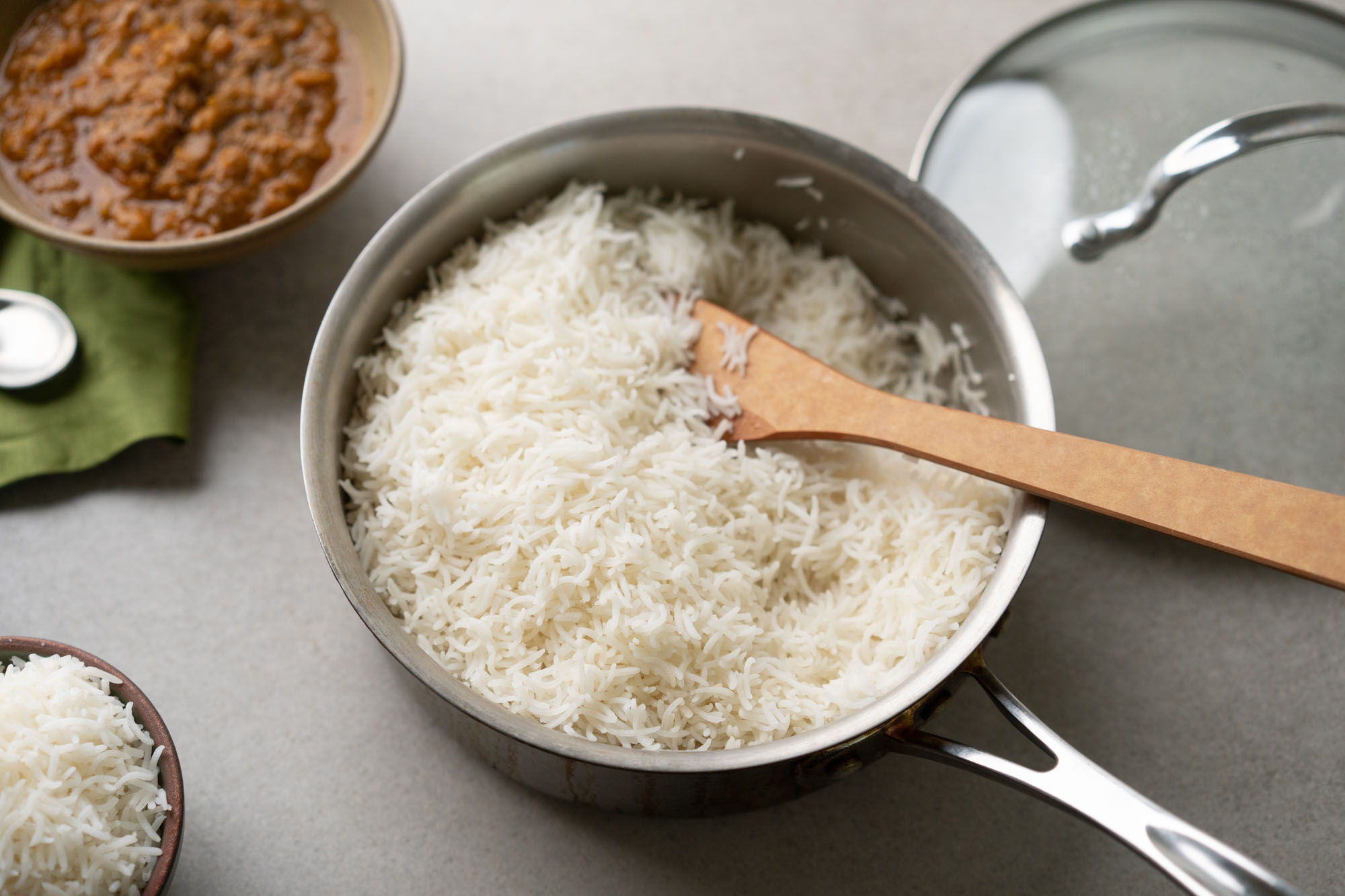
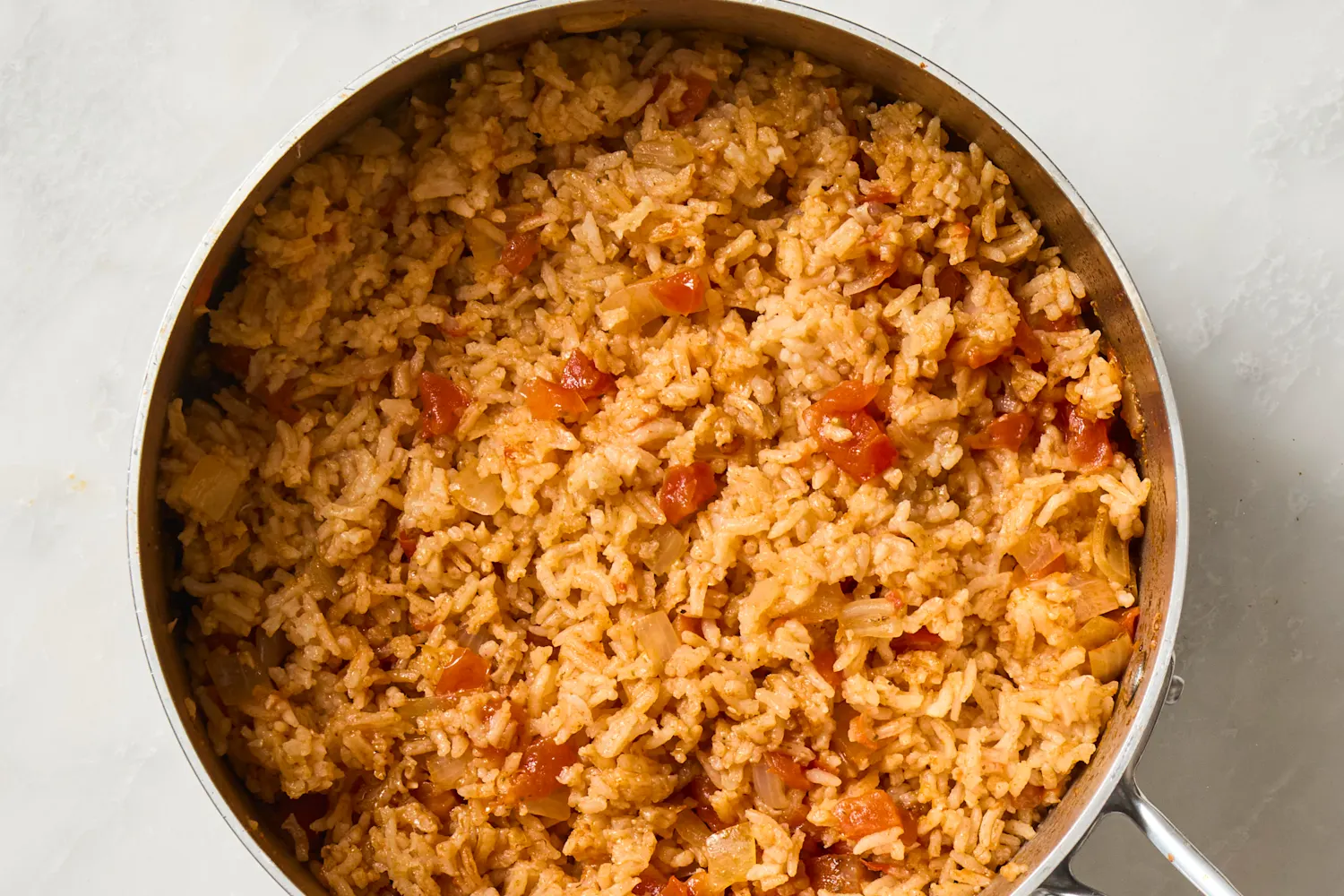
- Texture: fluffy, not wet, with grains that stay separate.
- Timeline: a quick toast, a covered simmer, then an off-heat rest that makes all the difference.
Why this recipe works
- Toasting the rice in oil first dries the surface starch slightly and coats the grains, which encourages separation and adds a nutty base note.
- A blended or well-mixed tomato-onion broth distributes tomato evenly so you do not get patches of pale rice.
- The right liquid ratio keeps the rice tender without turning it mushy, even with tomato in the mix.
- A covered rest off heat lets steam finish the center of each grain and reabsorbs surface moisture, so you fluff instead of smash.
Ingredient notes
- Long-grain white rice: This is the classic choice for fluffy Mexican rice. Jasmine can work in a pinch but the aroma reads less traditional.
- Oil: Neutral oil (avocado, canola, grapeseed) is easiest. If you have a little leftover bacon fat or chicken schmaltz, swapping in 1 tablespoon is incredible.
- Tomato component: Tomato sauce is the most consistent. Crushed tomatoes work too, but blend or whisk very well so the liquid is smooth.
- Onion and garlic: You can blend them into the broth for a smoother texture, or finely mince and sauté after the rice toasts.
- Cumin: Just enough to taste warm and toasty, not like taco seasoning. If your cumin is older and smells like cardboard, use a little extra or replace it.
- Broth: Chicken broth is classic, vegetable broth is great. If using bouillon, keep an eye on salt.
Equipment you will need
- Wide, heavy-bottomed pot or deep skillet with a tight-fitting lid (a wider pan toasts more evenly).
- Blender for the smoothest tomato-onion broth (optional but helpful).
- Fine mesh strainer for rinsing rice if you choose to rinse.
- Fork for fluffing at the end.
Pro tips
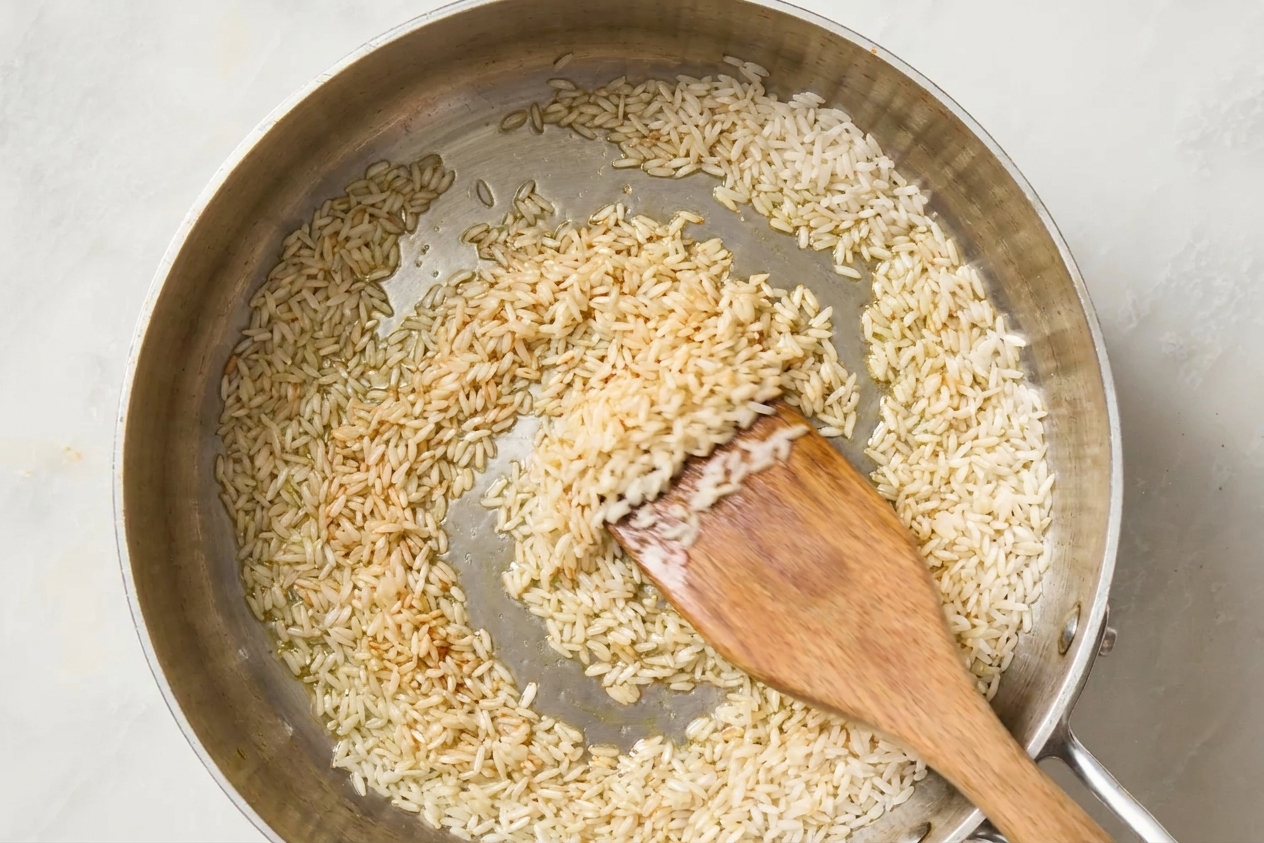
- Toast cue to look for: the rice should go from bright white to a pale golden color and smell nutty, like warm popcorn. Stir often and watch closely near the end.
- Do not rush the simmer: once covered, keep it at the barest simmer. Hard boiling is a fast track to broken grains and a scorched bottom.
- Leave the lid on during the rest: the 10 minute rest is not optional if you want separate grains.
- Season in layers: salt the broth, then taste the finished rice and adjust with a pinch of salt and a squeeze of lime.
- For extra restaurant vibes: stir in 2 tablespoons chopped cilantro right before serving.
Substitutes that work
- No tomato sauce: use canned crushed tomatoes or diced tomatoes, blended smooth with the onion and garlic.
- No broth: water plus 1 to 2 teaspoons bouillon base or powder works. Adjust salt at the end.
- No fresh onion: 1 to 2 teaspoons onion powder in the broth is fine for a weeknight shortcut.
- Garlic substitute: 1/2 teaspoon garlic powder in the broth.
- Oil-free cooking: You can dry-toast in a nonstick pan, but the flavor will be lighter and the grains can be slightly less separate.
Variations
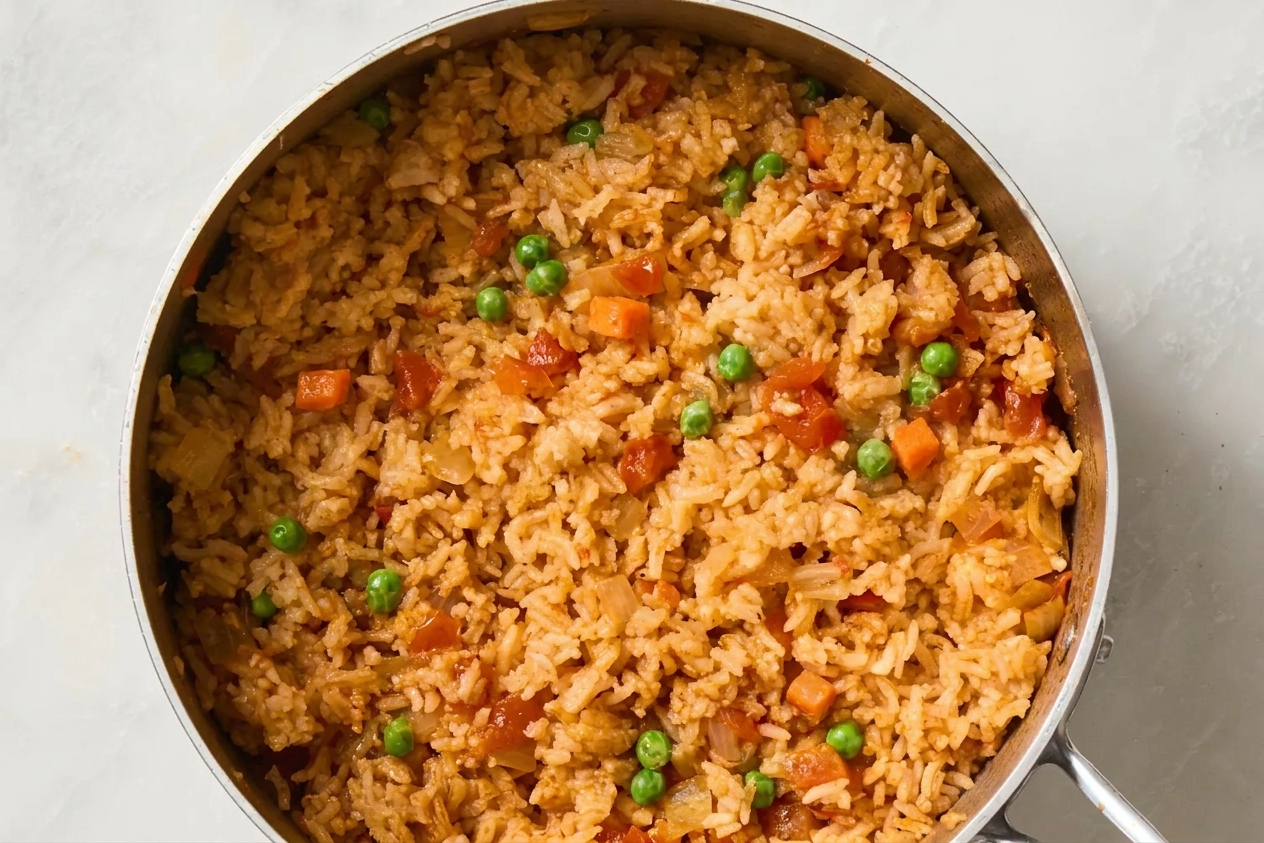
- Veggie Mexican rice: add 1/2 cup frozen peas and 1/2 cup small-dice carrots during the last 5 minutes of simmering.
- Spicy: blend a chipotle in adobo into the broth, or add 1/4 to 1/2 teaspoon cayenne.
- Tomatillo green rice: swap tomato sauce for blended tomatillos and cilantro, and use ground coriander instead of cumin.
- Extra savory: toast 2 tablespoons vermicelli or broken spaghetti in the oil first, then add rice and proceed.
Serving ideas
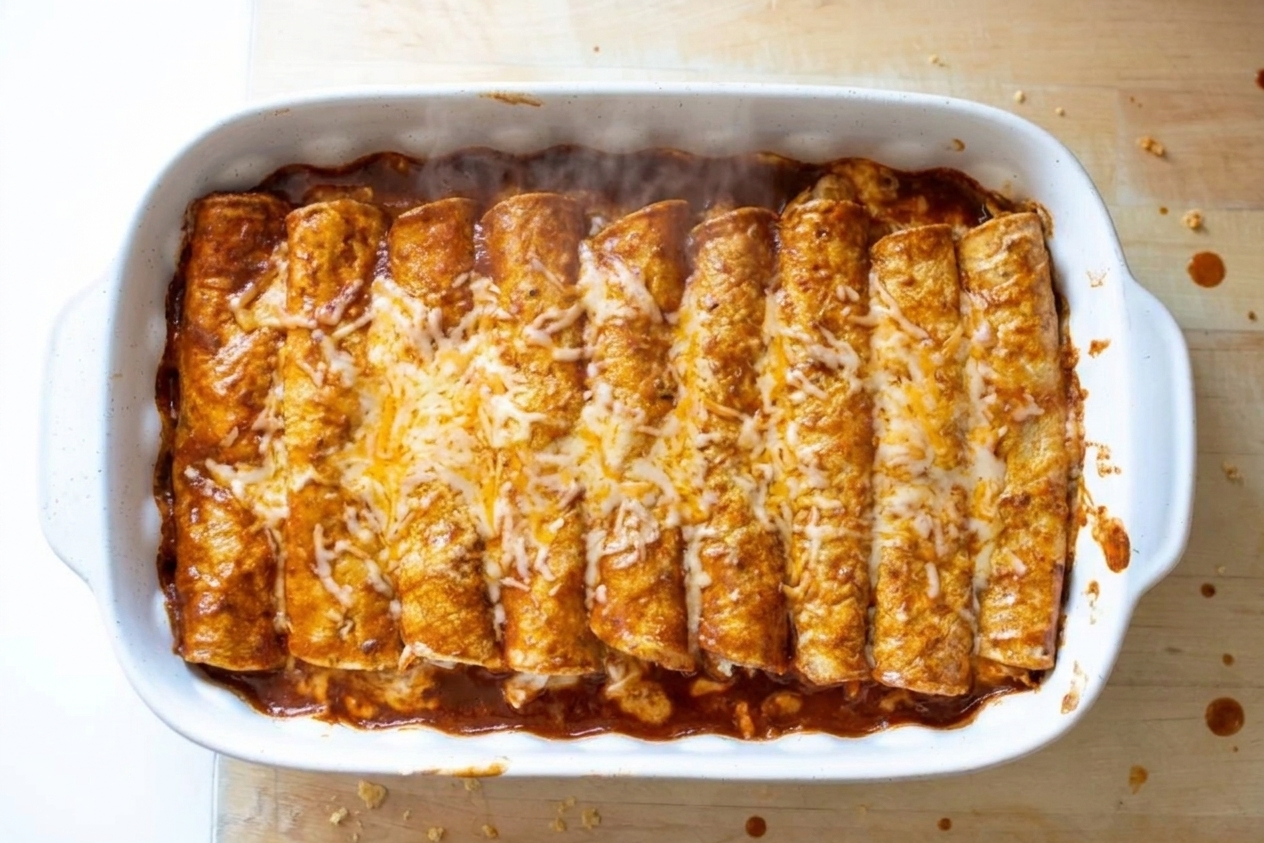
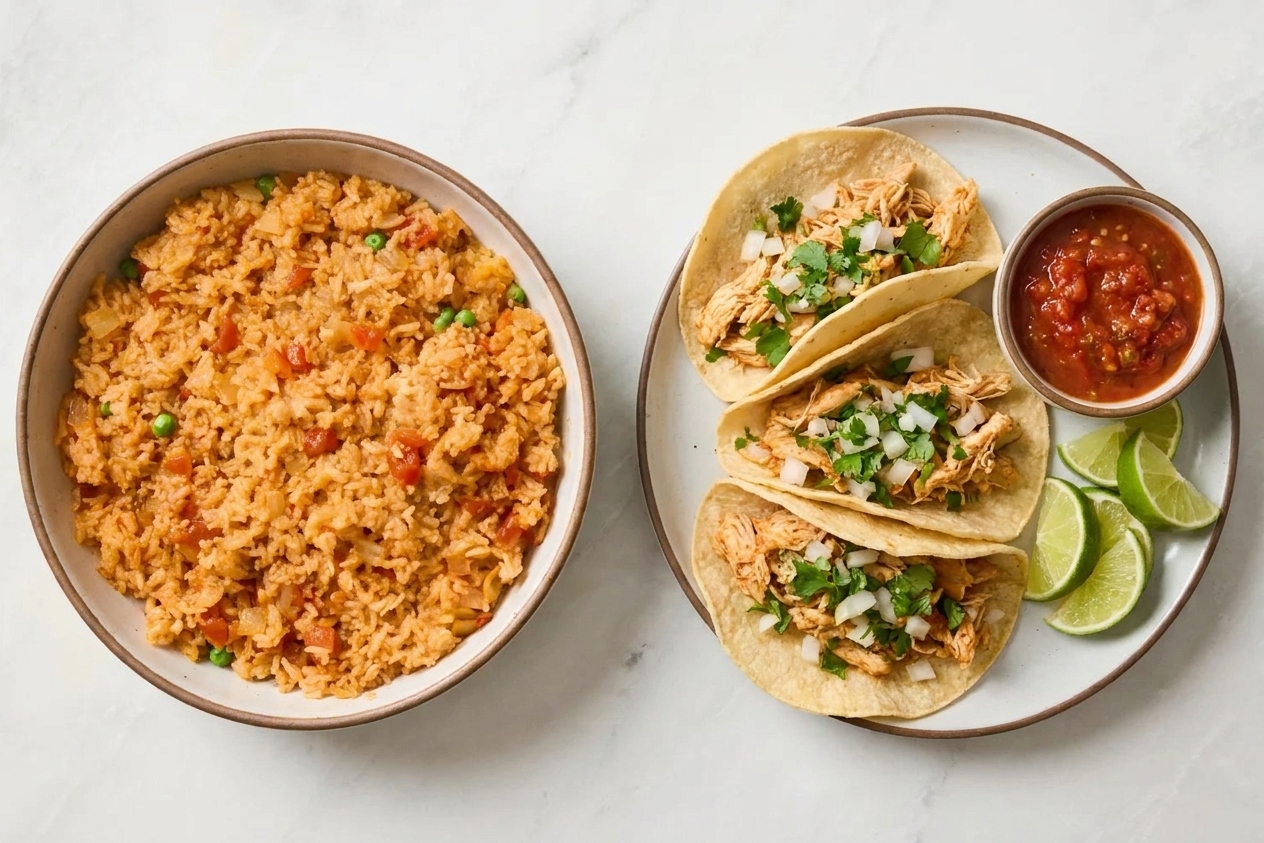
- Serve with tacos, fajitas, enchiladas, or any grilled chicken or shrimp.
- Turn it into a bowl with black beans, sautéed peppers, avocado, and salsa.
- Use as a base for leftover roasted vegetables and a fried egg.
- Stuff into burritos or peppers with cheese and beans.
Storage and reheating
- Refrigerate: cool quickly, then store airtight for up to 4 days.
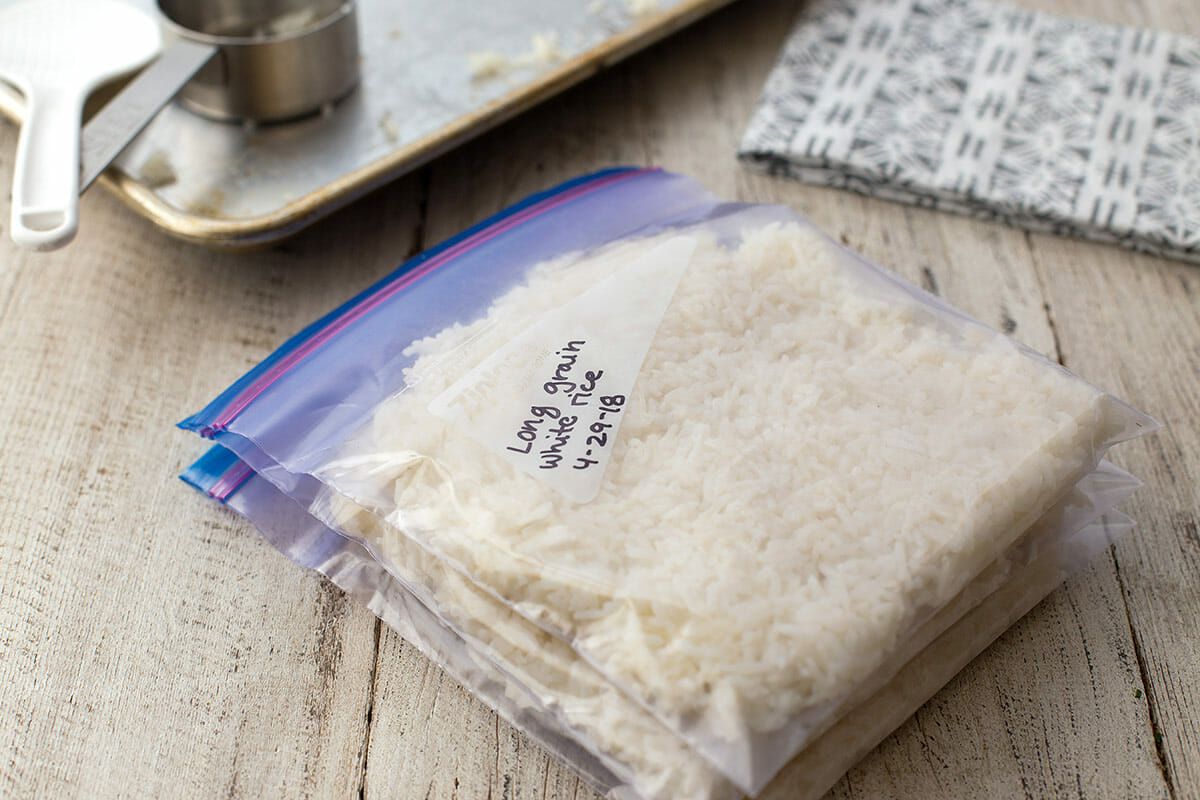
- Freeze: portion into freezer bags, press flat, and freeze up to 2 months.
- Reheat: sprinkle with 1 to 2 tablespoons water per cup of rice, cover, and warm on the stovetop over low heat or in the microwave until steaming hot. Fluff with a fork.
Common mistakes
- Under-toasting the rice: if it never turns pale golden or smells nutty, the flavor can taste flat and the rice can be a bit stickier.
- Turning the heat too high while covered: a hard boil can scorch the bottom before the top is cooked.
- Lifting the lid repeatedly: every peek releases steam and can lead to uneven cooking.
- Skipping the rest: fluffing immediately tends to smear the grains and make the texture clumpier.
- Not adjusting salt at the end: broth brands vary wildly. Taste and finish with salt and acid.
FAQ
Do I need to rinse the rice?
It depends on your goals. Rinsing removes some surface starch and can make the rice fluffier, but it also slightly reduces how well the tomato flavor clings. If you rinse, drain very well so the liquid ratio stays accurate.
Why is my Mexican rice mushy?
Most often it is too much liquid, simmering too hard, or skipping the rest. Measure carefully, keep the heat low once covered, and let it sit off heat before fluffing.
Why is my rice still crunchy after the liquid is gone?
The simmer may have been too high (liquid evaporated before absorption) or the lid was not tight. Add 2 to 3 tablespoons hot broth or water, cover, and steam on very low for 5 minutes, then rest again.
Can I make it in advance?
Yes. Mexican rice reheats well with a splash of water and a covered warm-up. Finish with fresh lime and cilantro right before serving.
Mexican Rice
Toasted long-grain rice simmered in a tomato-and-onion broth with cumin until fluffy, savory, and perfectly separate. Includes the toast cue, liquid ratio, and a rest before fluffing.
- Prep
- 10 minutes
- Cook
- 25 minutes
- Total
- 35 minutes
- Yield
- Serves 4 (about 4 cups)
Ingredients
- 1 1/2 cups long-grain white rice
- 3 tablespoons neutral oil (avocado, canola, or grapeseed)
- 1/2 cup tomato sauce
- 1/4 cup finely chopped white onion (or 1/2 small onion)
- 2 cloves garlic, peeled
- 2 1/2 cups low-sodium chicken broth or vegetable broth
- 1 teaspoon ground cumin
- 1 teaspoon kosher salt, plus more to taste
- 1/4 teaspoon black pepper
- 1 bay leaf (optional)
- 1 tablespoon lime juice, plus lime wedges for serving (optional)
- 2 tablespoons chopped cilantro for serving (optional)
Instructions
- Make the tomato-onion broth. In a blender, combine tomato sauce, onion, garlic, broth, cumin, salt, and pepper. Blend until smooth, 15 to 30 seconds. If not blending, mince the onion and garlic very finely and whisk everything together thoroughly. Set aside.
- Toast the rice. In a wide, heavy-bottomed pot or deep skillet, heat the oil over medium heat until shimmering. Add the rice and stir to coat. Cook, stirring frequently, until the grains turn pale golden and smell nutty, 5 to 8 minutes. Watch closely in the last minute so it does not burn.
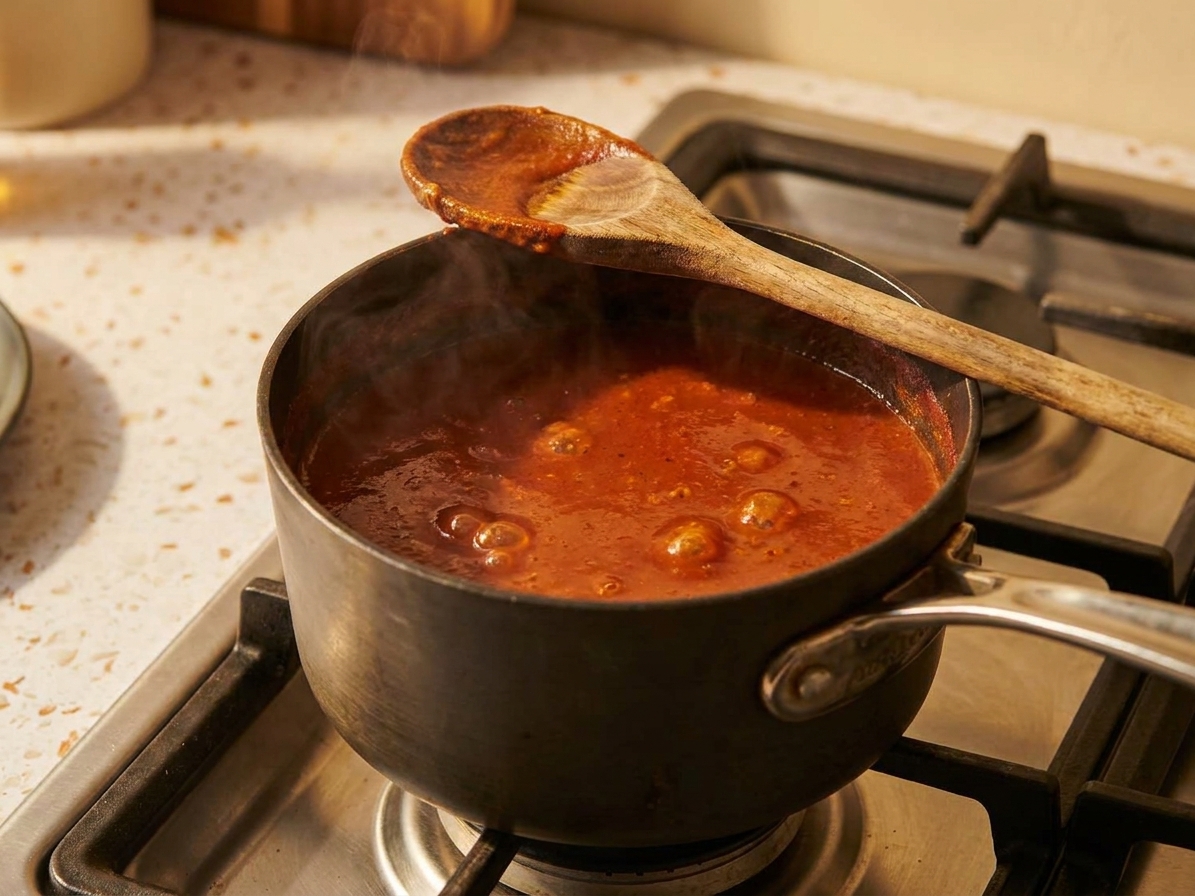
- Add broth carefully. Reduce heat to medium-low. Slowly pour in the tomato-onion broth (it will bubble and steam), then add the bay leaf if using. Stir once to evenly distribute the rice, then bring to a gentle simmer.
- Cover and cook. Cover with a tight-fitting lid and reduce heat to low. Cook at the barest simmer until the liquid is absorbed and you see small steam holes across the surface, 15 to 18 minutes. Do not lift the lid during cooking.
- Rest off heat. Turn off the heat and keep the lid on. Let the rice rest for 10 minutes. This finishes cooking the centers and helps the grains stay separate.
- Fluff and finish. Remove the bay leaf. Fluff the rice gently with a fork, lifting and turning rather than stirring in circles. Taste and adjust salt. If using, sprinkle with cilantro and add lime juice or serve with lime wedges.
Notes
Liquid ratio: This recipe uses 1 1/2 cups rice to 2 1/2 cups total broth plus 1/2 cup tomato sauce. The tomato sauce counts as part of the cooking liquid. If you swap in thicker crushed tomatoes, blend well and keep the total liquid the same.
Toast cue: Aim for pale golden, not deep brown. If the rice gets too dark, the finished dish can taste bitter.
Stuck rice on the bottom: If you get a little browned layer, do not panic. Fluff the rice above it and leave the crispy bits behind, or treat them like a cook's snack.