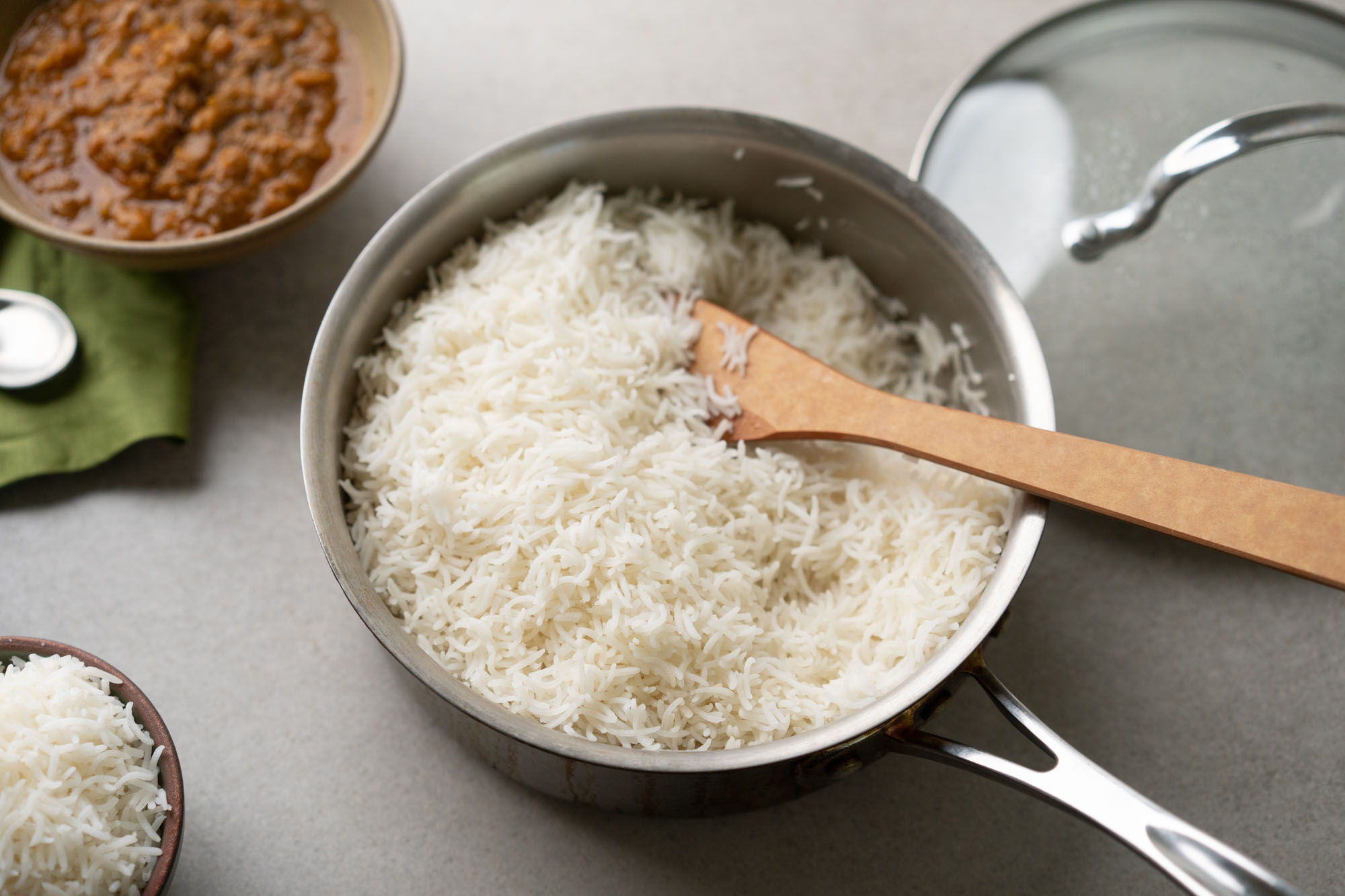

If you have ever lifted the lid and found rice that is crunchy, gummy, or weirdly wet, you are not alone. White rice looks simple, but the little details matter: the water ratio, keeping the simmer gentle, and giving it time to rest before you fluff. This is the method I taught in cooking classes because it is consistent, weeknight-friendly, and does not require any special equipment.

The basic ratio
For most supermarket long-grain white rice (not converted, not parboiled), this is my go-to starting point:
- 1 cup long-grain white rice
- 1 1/3 to 1 1/2 cups water (I start at 1 1/2 for a new brand, then adjust next time)
- 1/4 teaspoon kosher salt (optional but recommended)
- 1 teaspoon neutral oil or butter (optional, helps limit foaming on some stoves and adds flavor)
This makes about 2 1/2 to 3 cups cooked rice, enough for 3 to 4 servings depending on what you are serving with it.
What you need
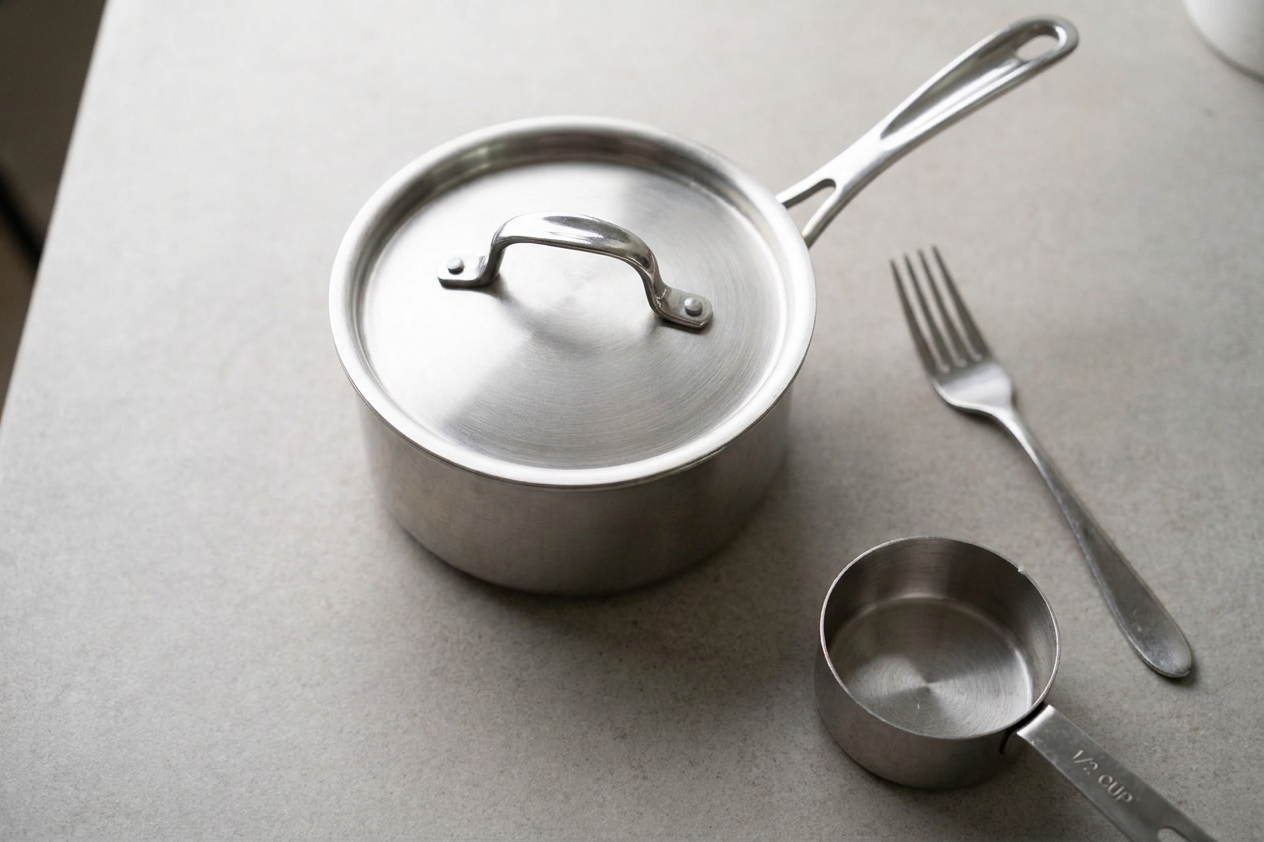
- A small to medium saucepan with a tight-fitting lid
- A fine-mesh strainer (helpful for rinsing)
- A fork or rice paddle for fluffing
Step-by-step
- Rinse (optional, but recommended if you want extra separate grains). Put the rice in a fine-mesh strainer and rinse under cool water, swishing with your fingers, until the water runs less cloudy, about 15 to 30 seconds. Drain well, then let it sit in the strainer for 30 to 60 seconds so extra water does not throw off your ratio.
- Combine and bring to a boil. Add drained rice, water, salt, and oil or butter (if using) to your saucepan. Stir once to evenly distribute, then level the surface. Bring to a boil over medium-high heat.
- Cover and simmer gently. As soon as you see an active boil, cover the pot and immediately turn the heat down to low, meaning the lowest setting that maintains a barely bubbling simmer. (Low is different on every stove, so listen for soft bubbling, not a loud boil.) Cook for 15 minutes. Do not lift the lid during this time.
- Turn off the heat and rest. After 15 minutes, turn off the heat and leave the pot covered for 10 minutes. This is where the rice finishes steaming and the moisture evens out so the grains turn fluffy instead of wet on the bottom and dry on top.
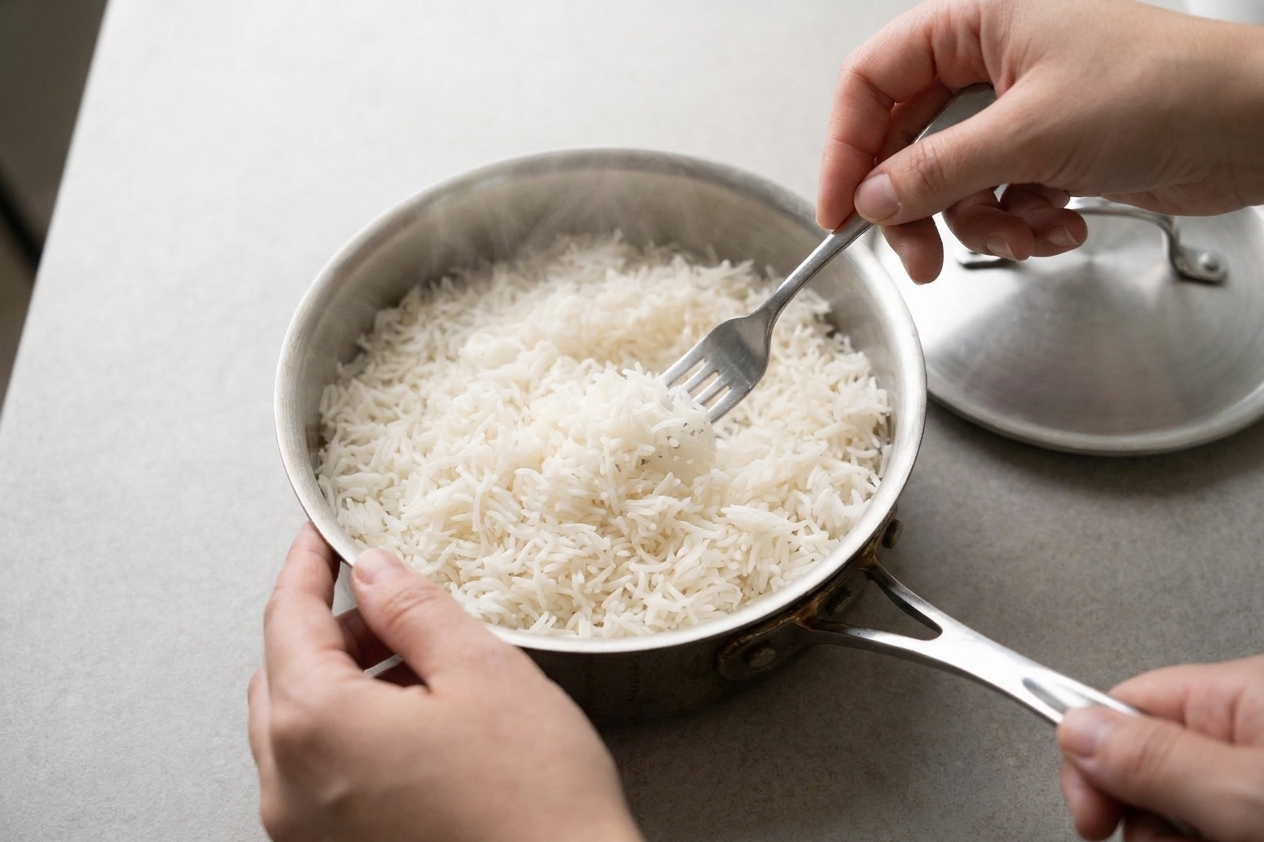
- Fluff properly. Remove the lid. Use a fork or rice paddle to fluff by gently lifting and turning the rice from the edges toward the center. Do not mash or stir in tight circles. That breaks grains and makes rice stickier.
Rinsing: when it matters
Rinsing removes surface starch. Less starch usually means more separate grains.
- Rinse if: you want fluffy, distinct grains for bowls, stir-fries, or as a side for saucy dishes.
- Skip rinsing if: you want the rice a little more cohesive (helpful for rice balls, some comfort-food style plates), or you are truly in a hurry. The method still works.
My waste-reducing tip: If you do rinse, rinse quickly and drain well. You do not need to run water for minutes.
How to tell it worked
- During simmer: you should hear a very soft bubbling, not a loud boil. If you hear aggressive boiling, the heat is too high.
- After resting: the surface should look dry and steamy, and the grains should separate easily when lifted with a fork.
- Taste: tender all the way through, no chalky center, not waterlogged.
Common problems
Rice is crunchy or undercooked
This usually means the heat was too low (it never truly simmered) or the lid leaked steam.
- Sprinkle 2 to 3 tablespoons hot water over the rice, cover, and cook on very low for 3 to 5 minutes, then rest 5 minutes off heat.
- Next time: use a tighter lid, or place a clean kitchen towel between lid and pot (lid on top) to reduce steam loss.
Rice is gummy or sticky
Usually from too much stirring, too much water, or simmering too hard.
- Spread rice on a sheet pan for a few minutes to let extra steam escape, then fluff gently.
- Next time: avoid stirring after it boils, and keep the simmer very gentle.
Rice is wet with water still in the pot
The simmer may have been too low, or the pot was too large and heat distribution was uneven.
- Put it back on low heat, covered, for 2 to 4 minutes.
- If you still see water, crack the lid slightly for 30 to 60 seconds to help it evaporate, but watch closely so the bottom does not scorch. Then cover and rest 10 minutes.
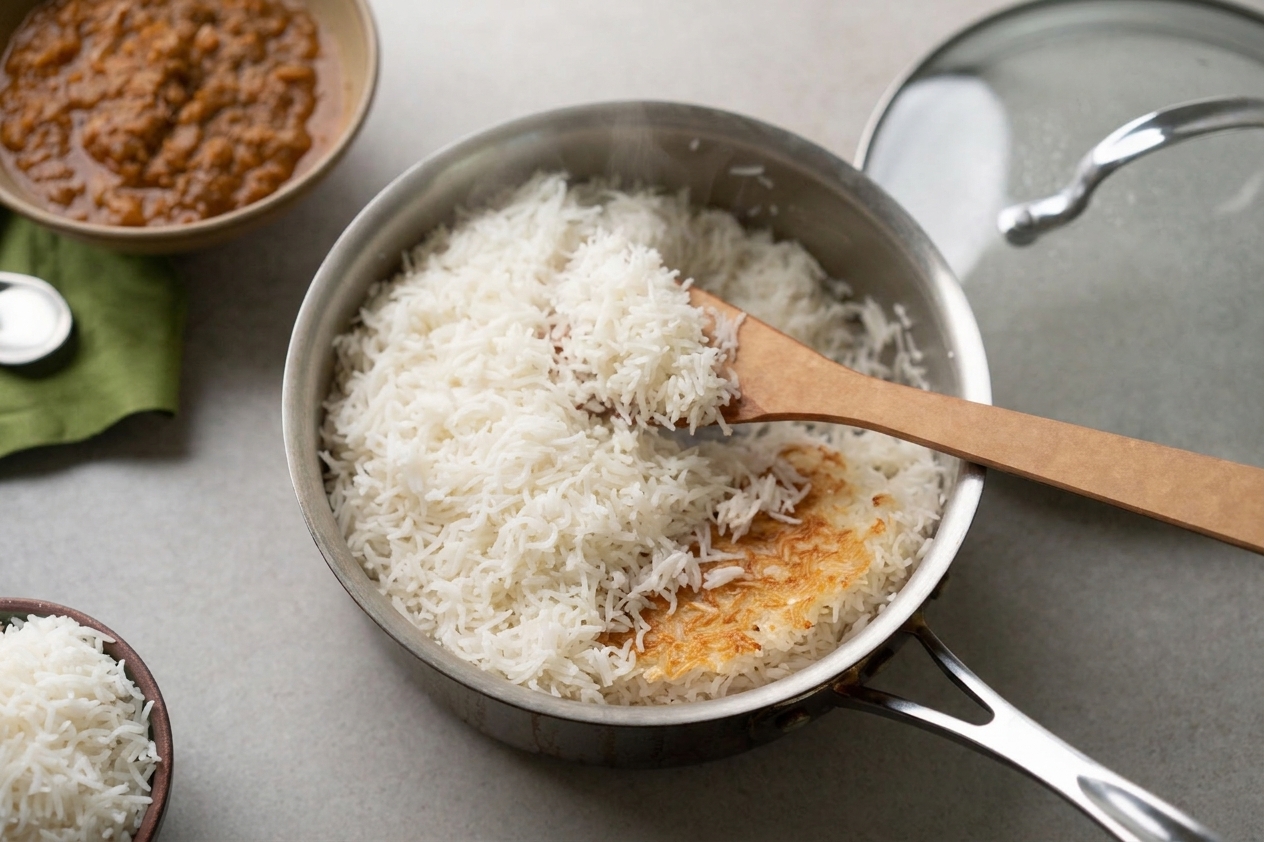
Rice scorched on the bottom
Heat was too high or the pot is very thin.
- Do not scrape the bottom. Transfer the unburnt rice to a new bowl.
- Next time: use a heavier-bottomed saucepan and reduce heat sooner.
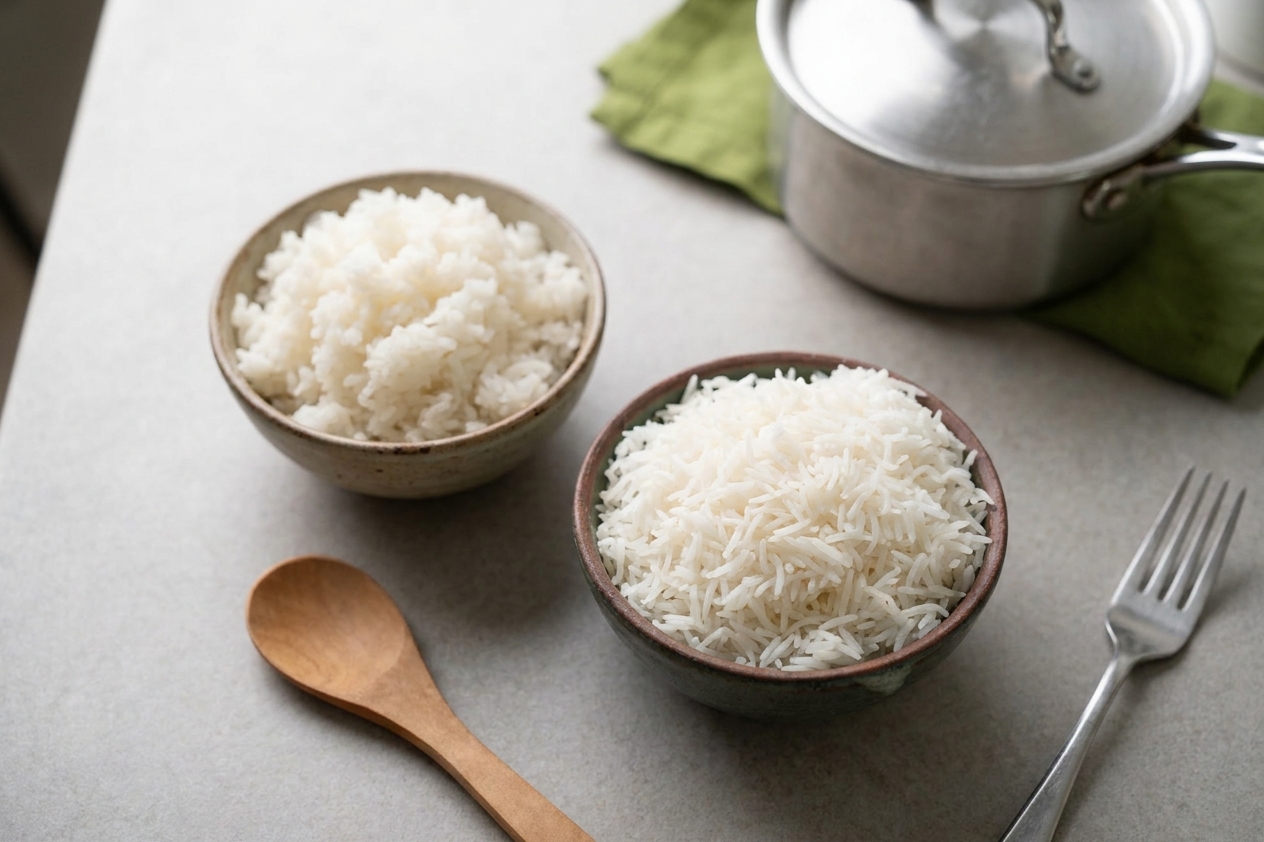
Jasmine and basmati
These are still long-grain rices, but their fragrance and texture shine with small tweaks. Brand and freshness matter, so use these as starting points and adjust by a tablespoon or two next time if needed.
Jasmine rice
- Water ratio: 1 cup jasmine rice to 1 1/4 to 1 1/3 cups water. If you like it softer, nudge up toward 1 1/3. If it is turning mushy, pull back a tablespoon or two next time.
- Timing: simmer 12 to 15 minutes, then rest 10 minutes.
- Rinsing: optional. A quick rinse helps keep it fluffy, but many people like jasmine a touch clingier.
Basmati rice
- Water ratio: 1 cup basmati rice to 1 1/3 to 1 1/2 cups water depending on how dry and separate you want the grains. I usually start at 1 1/2 if it is a new bag, then adjust down if needed.
- Timing: simmer 15 minutes, then rest 10 minutes.
- Rinsing: I strongly recommend rinsing basmati to encourage those long, separate grains.
- Optional soak: If you have time, soak rinsed basmati in cool water for 15 to 30 minutes, then drain well. You may be able to shave a minute or two off the simmer, and the grains often cook up a little longer and more distinct.
- Other methods: Basmati is also great with a boil-and-drain method for very separate grains, but the covered-simmer method above is the one I use most often for weeknights.
FAQ
Should I stir rice while it cooks?
No. Stir once when you combine rice and water, then leave it alone. Stirring while simmering releases starch and breaks grains, which makes rice stickier.
Do I really have to let it rest?
Yes, if you want fluffy rice. Resting off heat for 10 minutes lets moisture redistribute so you do not end up with wet rice on the bottom and dry rice on top.
Can I scale this up?
Yes. Keep the ratio the same. For 2 cups rice, use 2 2/3 to 3 cups water depending on the texture you want. Use a pot that comfortably holds the rice with room for a little expansion, and expect the simmer time to be similar, though getting back to a boil may take a bit longer.
Can I cook white rice without salt?
Absolutely. Salt makes plain rice taste more like itself. If you are pairing it with a salty main dish or sauce, you can skip it.
Storage and reheating
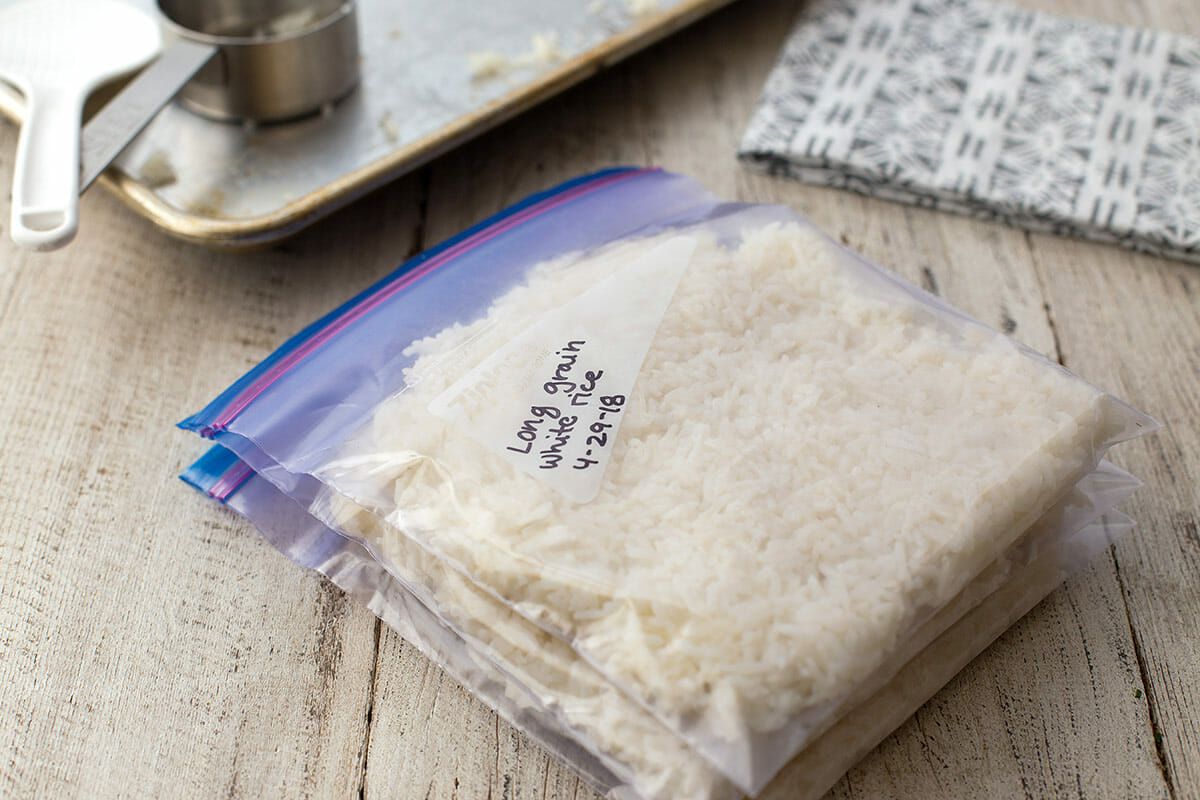
If you are making rice ahead, cool it promptly, refrigerate, and reheat until steaming hot.
- To store: Spread hot rice on a plate or sheet pan for a few minutes so it cools faster, then transfer to an airtight container and refrigerate.
- To reheat: Add a splash of water (about 1 teaspoon per cup), cover, and reheat gently in the microwave or on the stovetop until hot, then fluff.
My best rice habit
If you take one thing from this, let it be this: boil, cover, low simmer, then rest. That rest time is the difference between “fine” rice and rice you actually want to eat straight from the pot.