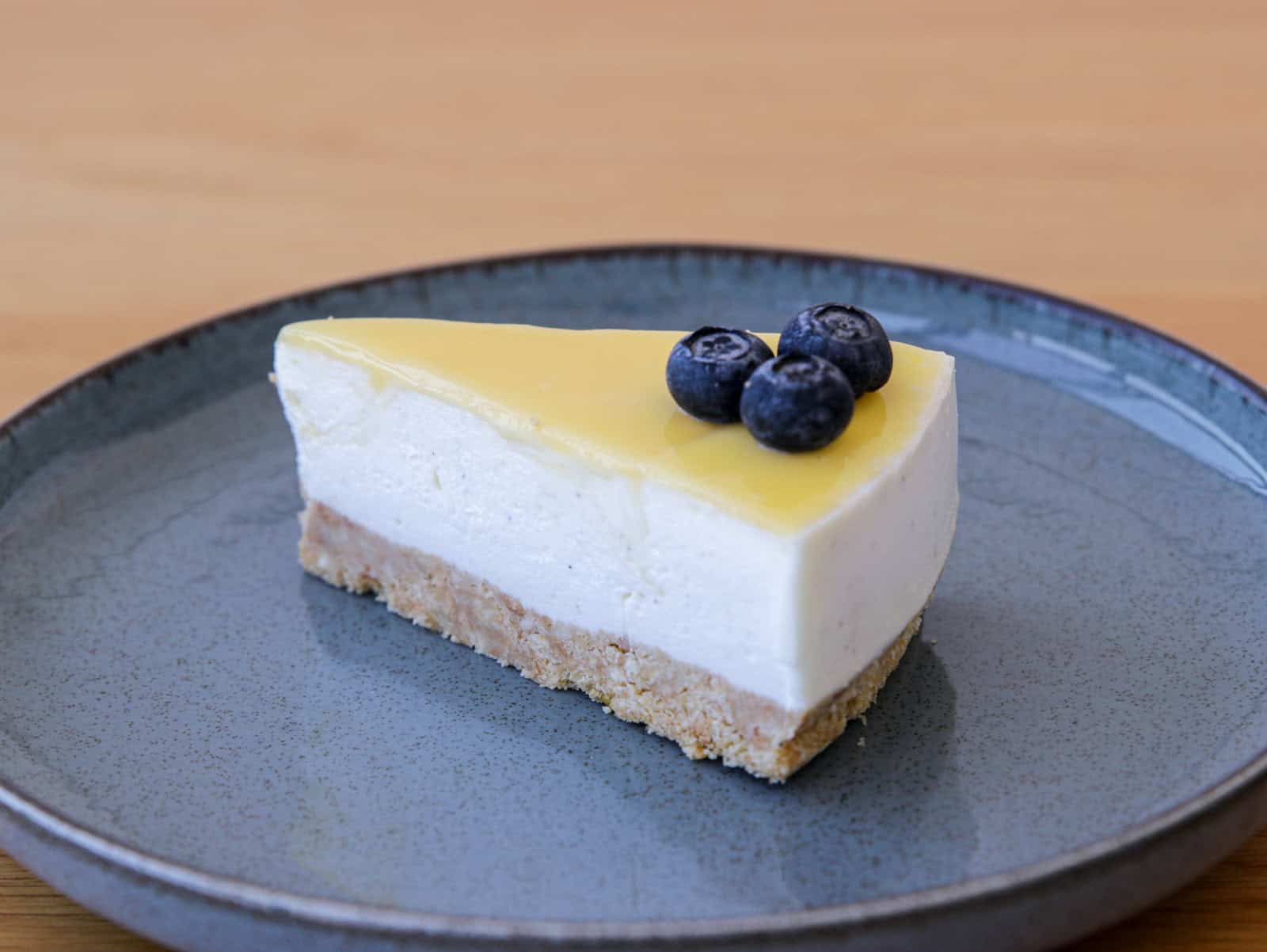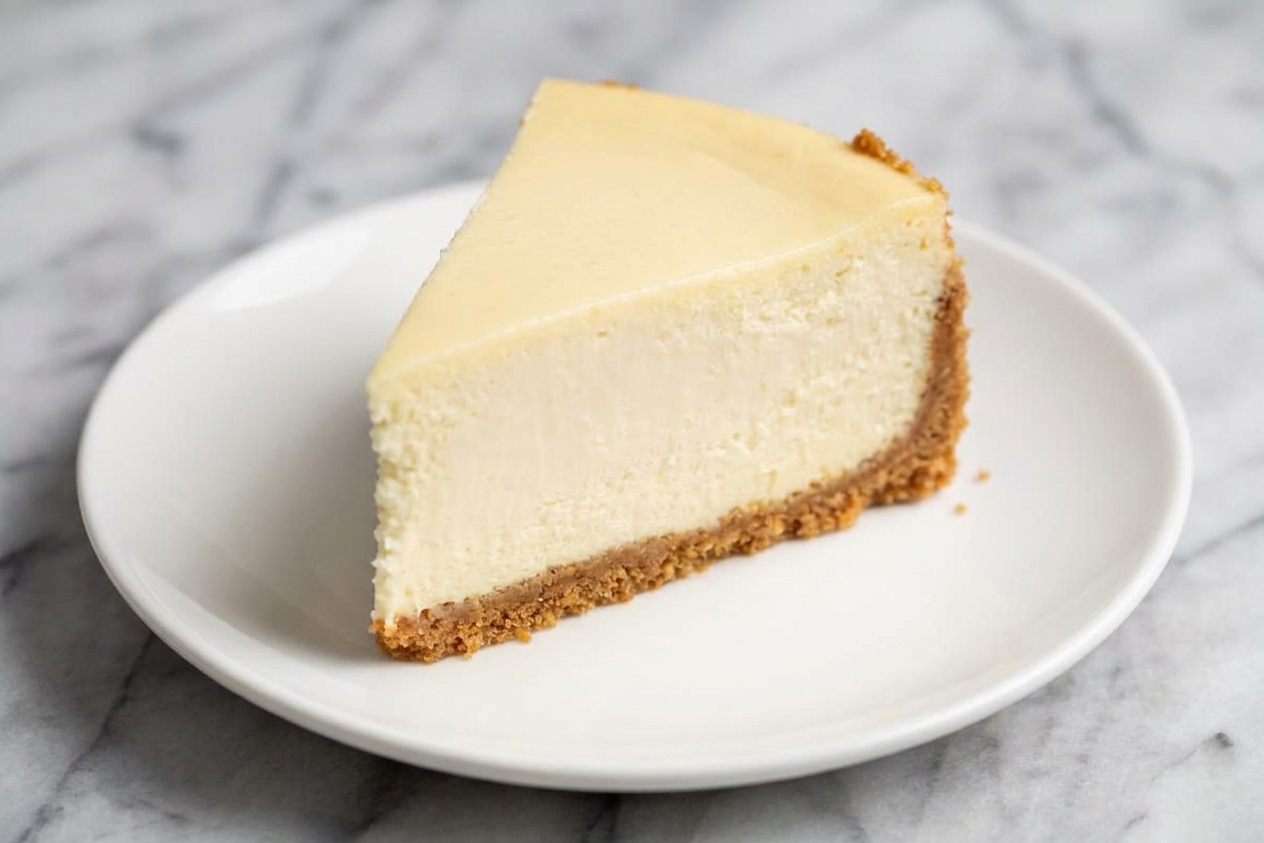

When I teach cheesecake, I say the same thing every time: the goal is not to wrestle it into submission. New York cheesecake is, to me, about gentle heat, patience, and a batter that stays creamy instead of airy, mixed just until smooth. Do those three things and you get that signature slice: tall, dense, satiny, and vanilla-forward with a buttery graham cracker crust.
This is the classic version: a water bath that helps protect the custard from harsh oven heat, and a cooling schedule that helps prevent the top from puffing, cracking, and collapsing. It sounds fussy, but it’s mostly just setting yourself up before you start, then letting time do the work.

One more thing from my slightly-obsessed-with-salt-and-acid brain: cheesecake reads sweeter and flatter when it is under-salted. The fine salt in this recipe makes the vanilla taste louder and the tang taste cleaner. It is subtle, but it is the difference between “nice” and “oh wow.”
What to expect
- Texture: Dense and creamy, not fluffy.
- Flavor: Vanilla first, gentle tang from cream cheese and a little sour cream.
- Top: Smooth and level with minimal browning.
- Doneness: A slight jiggle in the center is normal.
- Timeline: You need an overnight chill for clean slices, so plan ahead.
- Best for: A make-ahead, special-occasion dessert that slices like a dream.
Why this recipe works
- Room temperature dairy blends smoothly. Softened cream cheese and eggs incorporate without lumps, which means you do not need to overmix and whip in extra air.
- A little starch stabilizes the custard. A small amount of cornstarch or flour helps the cheesecake slice cleanly and reduces cracking without making it cakey.
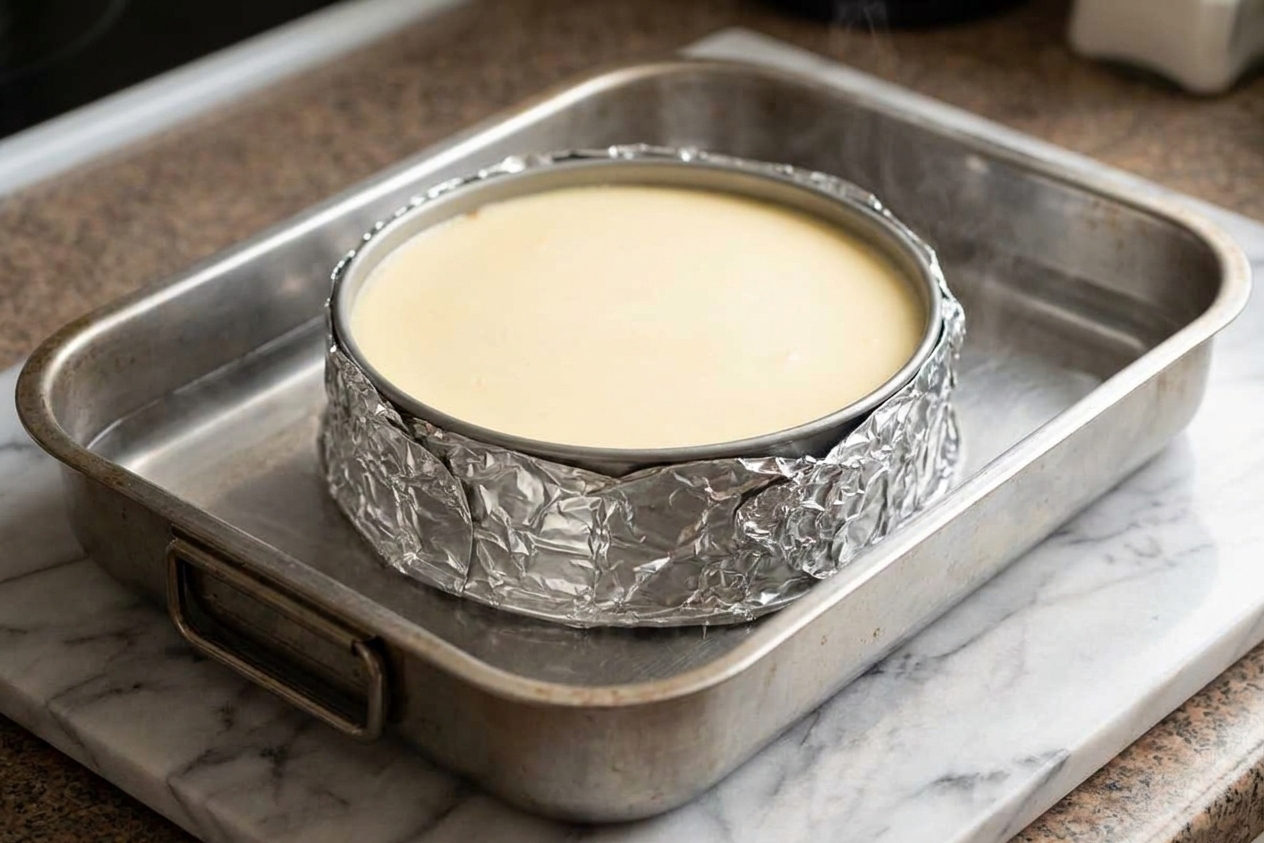
- Water bath means gentle, even heat. Steam buffers the oven’s harsh heat so the edges do not overbake before the center is set.
- The cooling schedule prevents shock. Gradual temperature changes keep the custard from contracting quickly, which is what causes most dramatic cracks.
- Low-and-slow baking protects texture. Cheesecake wants to set like a custard, not rise like a cake.
Ingredient notes
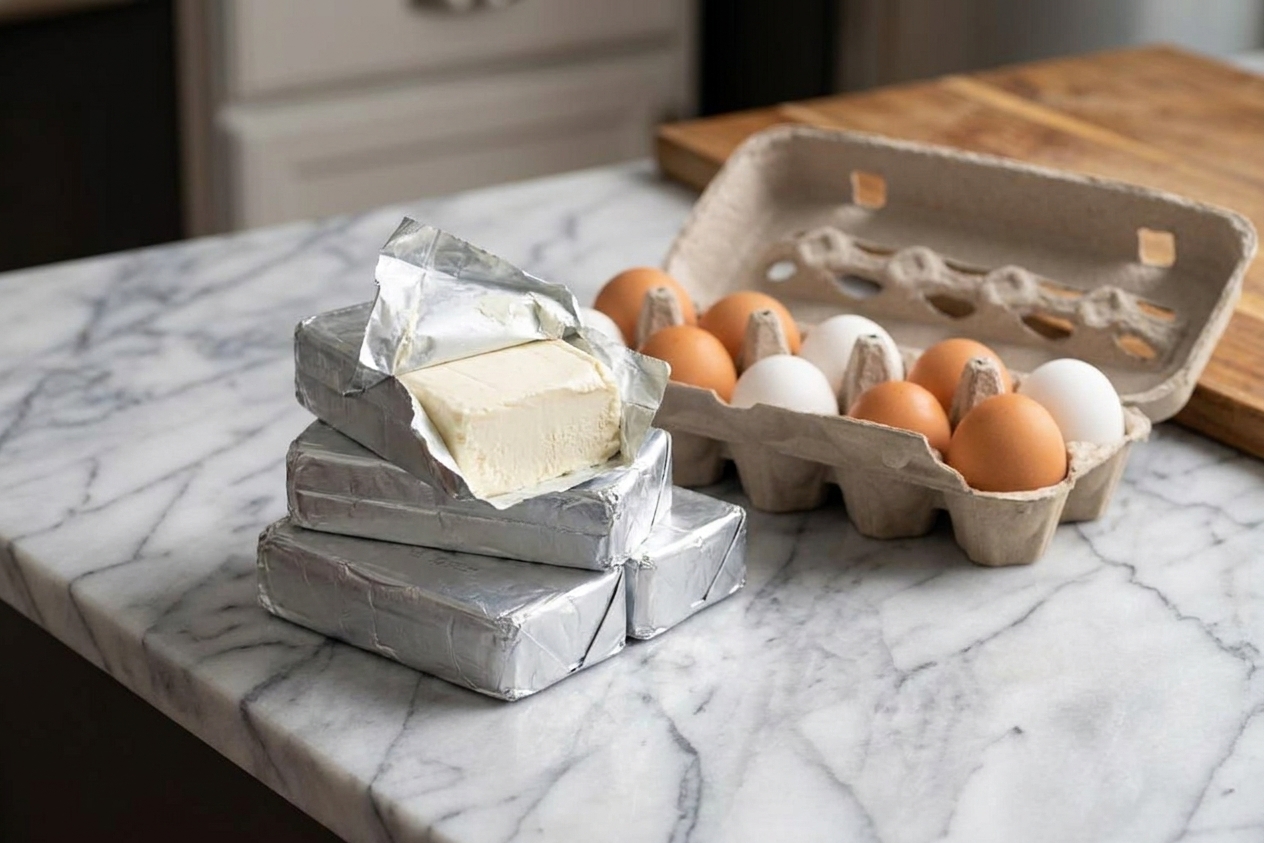
- Cream cheese: Use full-fat block-style cream cheese, not whipped and not the spreadable tub. Block cream cheese gives the classic dense New York body.
- Sour cream: Adds tang and keeps the texture creamy. Full-fat is best. Plain full-fat Greek yogurt can work in a pinch, but the tang is sharper.
- Vanilla: Use pure vanilla extract for the cleanest flavor. Vanilla paste is lovely if you want visible specks.
- Eggs: Room temperature eggs blend in quickly. Cold eggs can seize the batter and tempt you to overmix.
- Sugar: Regular granulated sugar dissolves well and keeps the crumb fine.
- Fine salt: This recipe uses fine salt for even seasoning throughout the batter.
- Graham crackers: Crushing your own tastes fresher than boxed crumbs. If using crumbs, fluff them before measuring so you do not pack them too tightly.
- Butter: Melted butter binds the crust. Salted butter is fine, just keep the added salt modest.
Equipment you will need
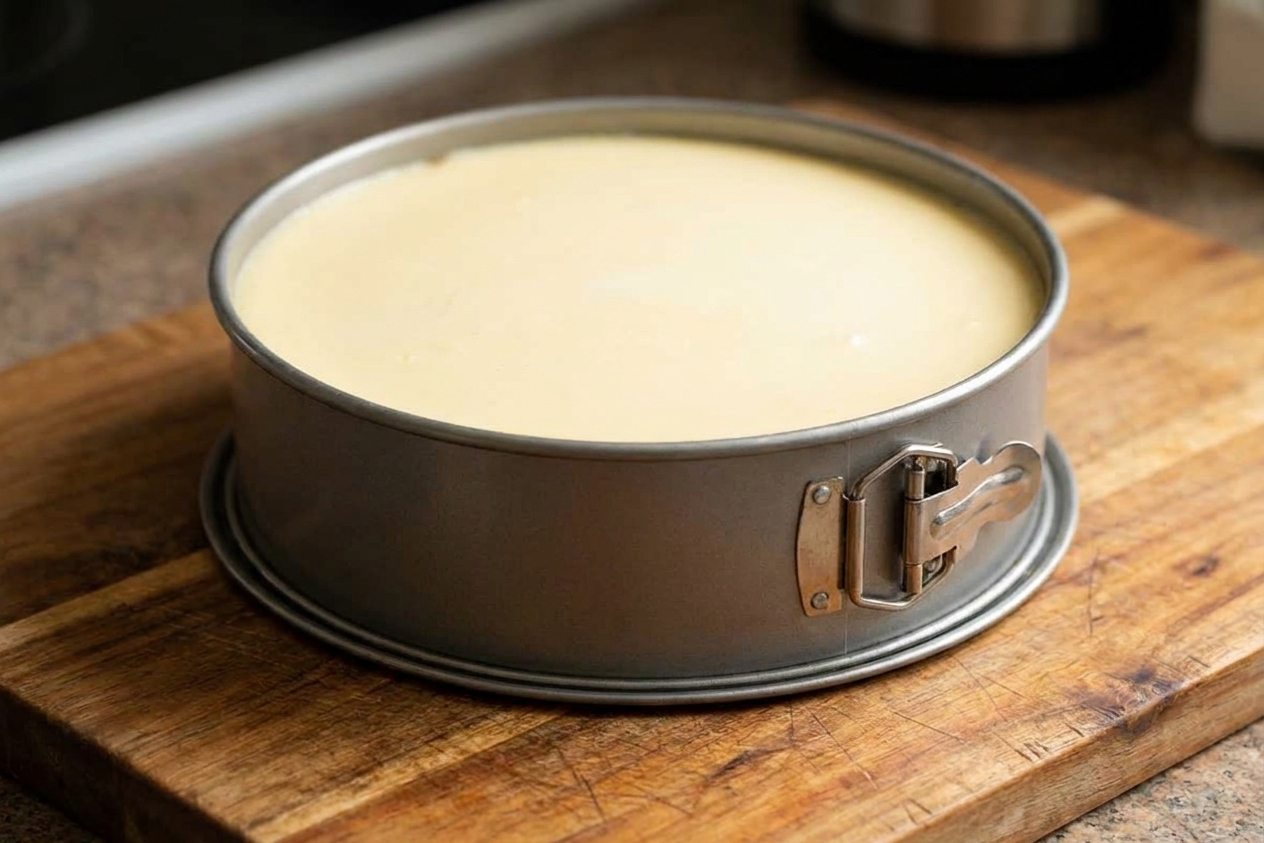
- 9-inch or 10-inch springform pan: For tall cheesecake, 9-inch is ideal. A 10-inch works but will bake up shorter.
- Roasting pan: Large enough to hold the springform for the water bath.
- Heavy-duty aluminum foil: For wrapping the pan to prevent leaks.
- Stand mixer or hand mixer: You can also do it by hand with a sturdy whisk and patience, but keep mixing gentle.
- Rubber spatula: For scraping the bowl so the batter stays uniform.
- Instant-read thermometer (optional): Helpful for doneness. Cheesecake is set around 150 to 155 F in the center.
Pro tips
- Prevent leaks confidently: Wrap the outside of your springform pan with two layers of heavy-duty foil, reaching all the way up the sides. A leak is annoying, not fatal, but this reduces the odds a lot.
- Mix on low: Overmixing whips in air, and air expands then collapses, which can lead to cracks and a drier texture.
- Scrape the bowl often: Cream cheese likes to cling to the sides. Scrape between additions so you do not end up with hidden lumps.
- Use hot water for the bath: Hot tap water is fine. Starting warm helps the oven recover temperature quickly and creates steam sooner.
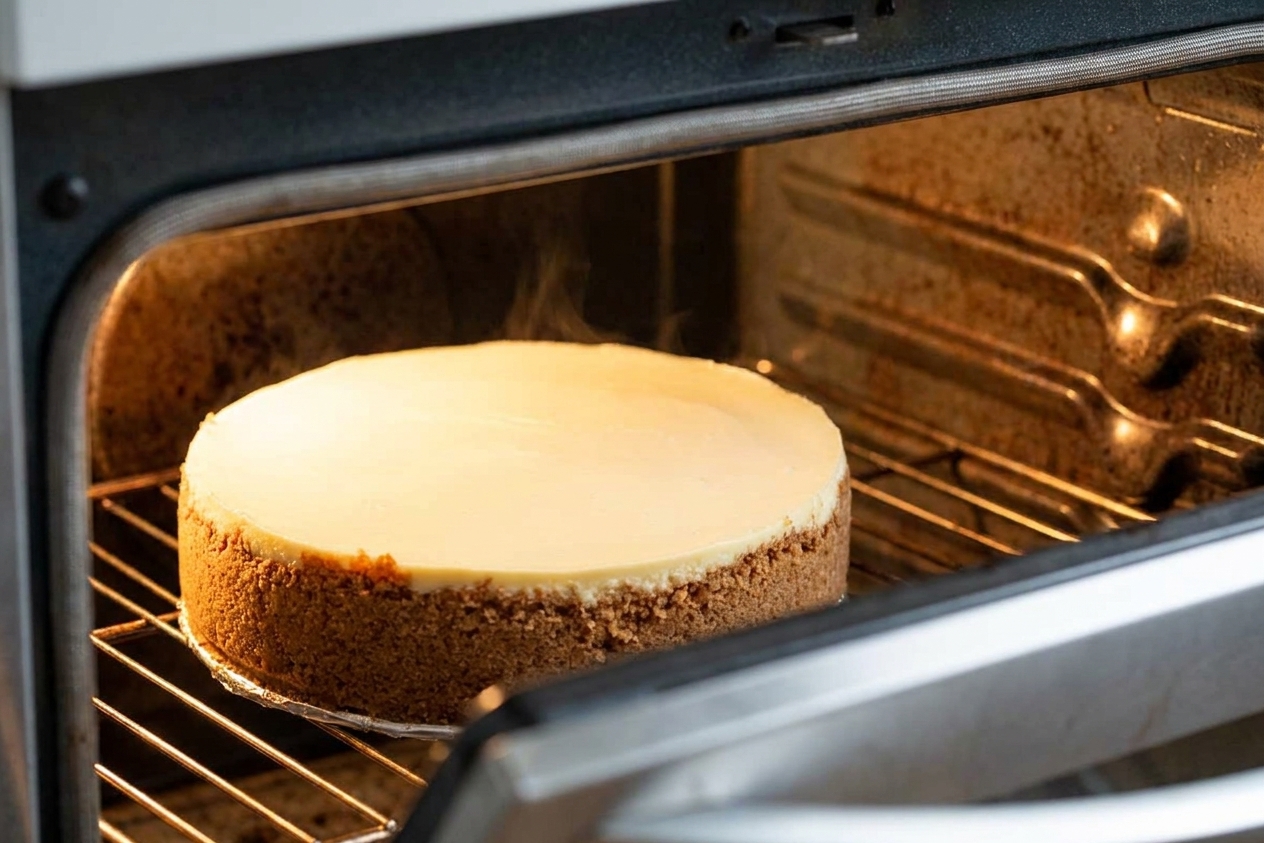
- Know the jiggle: The edges should look set and slightly puffed, while the center still has a small, glossy wobble like set Jell-O, not like liquid batter.
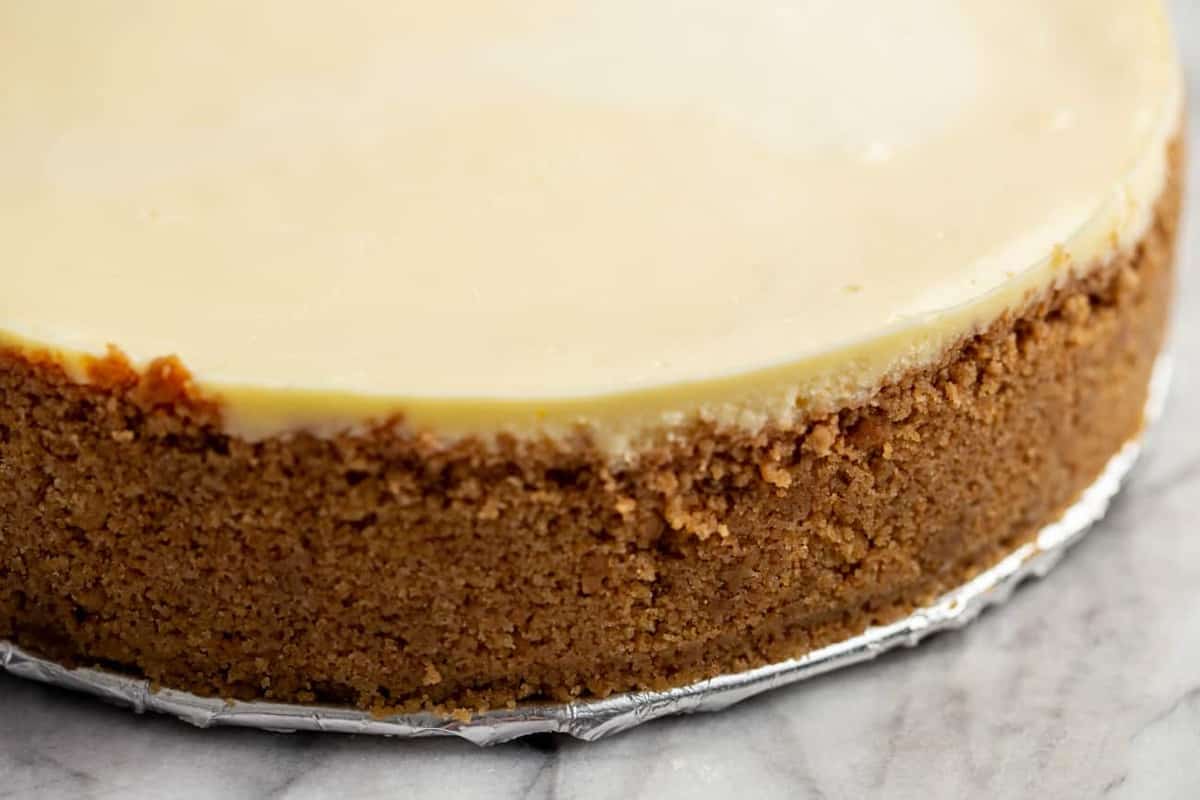
- Cool gradually: Follow the schedule even if it feels slow. This is the smooth top insurance policy.
Substitutes that work
- Graham crackers: Swap with digestive biscuits, Biscoff cookies, or vanilla wafers. Keep the crumb amount the same by weight if you can.
- Sour cream: Plain full-fat Greek yogurt works. Expect a slightly tangier finish.
- Cornstarch: Use all-purpose flour in the same amount.
- Vanilla: Vanilla bean paste can replace extract 1:1. If you only have imitation vanilla, use it, but the flavor is flatter.
- Citrus zest (optional): A little lemon zest is not traditional pure New York style, but it brightens the vanilla without turning this into a lemon cheesecake.
Variations
- Extra-tall deli-style: Use a 9-inch springform with high sides and do not let the crust go too far up the edges. That height comes from the filling.
- Vanilla bean: Scrape in the seeds from 1 vanilla bean (or use paste) for a more aromatic vanilla profile.
- Chocolate crust: Use chocolate wafer cookies in place of grahams for a deeper, slightly bitter crust that balances the sweet filling.
- Mini cheesecakes: Bake in a lined muffin tin without a water bath. Reduce bake time significantly and rely on the jiggle cue.
Serving ideas
- Classic: Serve plain, chilled, with a small pinch of flaky salt on each slice if you like a sweet-salty edge.
- Fresh fruit: Spoon macerated strawberries, blueberries, or sliced peaches over the top right before serving.
- Something crunchy: Add toasted sliced almonds or crushed pistachios on the plate for texture contrast.
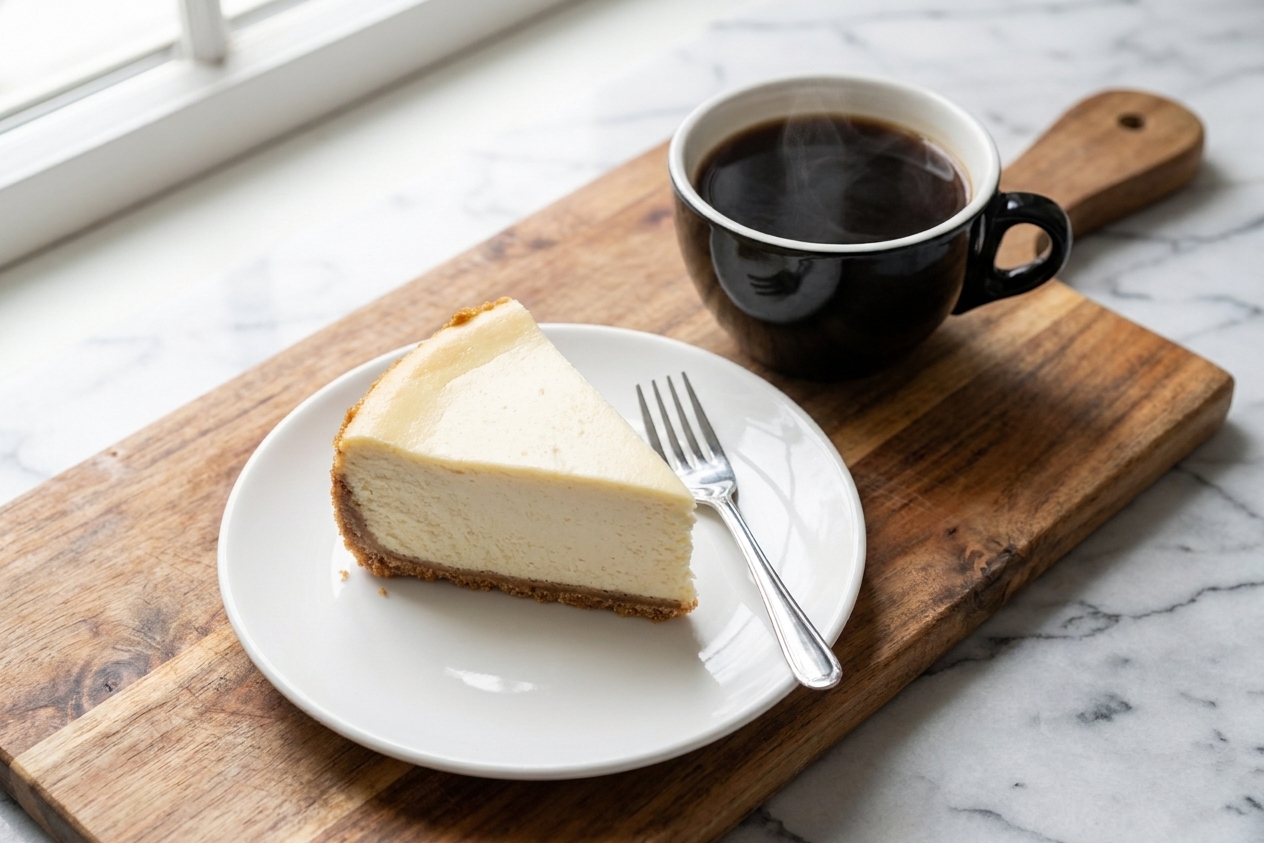
- Coffee shop style: Serve with hot coffee or a strong black tea. Cheesecake loves bitterness.
Storage and reheating
- Refrigerator: Cover and refrigerate for up to 5 days. For the cleanest flavor, store slices in an airtight container.
- Freezer: Freeze whole or sliced. Chill first, then wrap tightly in plastic wrap and foil. Freeze up to 2 months. Thaw overnight in the refrigerator.
- Serving from cold: For the sharpest slices, cut straight from the fridge with a warm, dry knife. For the creamiest mouthfeel, let slices sit at room temp 10 to 20 minutes before eating.
Common mistakes
- Using cold cream cheese: Leads to lumps, which leads to overmixing, which leads to extra air, which can lead to cracks. Start with truly softened cream cheese.
- Skipping the water bath: You can bake without it, but the risk of cracks and a dry ring around the edge goes way up.
- Overbaking: If the center is fully firm in the oven, it will be dry once chilled. Look for that small center wobble.
- Cooling too fast: Going from hot oven to cool countertop is temperature shock. Use the gradual cooling schedule.
- Cutting too soon: Warm cheesecake will seem underdone and will not slice cleanly. Chill overnight for the classic dense set.
FAQ
Do I really need a water bath?
For a tall, dense New York cheesecake with a smooth top, it is the most reliable path. The water bath helps keep the bake gentle and even, which protects texture and reduces the odds of cracking. (And yes, wrapping your pan well matters too.)
How do I know when it is done?
The edges should be set, the very center should still wobble slightly, and the top should look matte around the outside with a small glossy area in the middle. If you use a thermometer, aim for about 150 to 155 F in the center.
Why did my cheesecake crack?
The usual culprits are too much air in the batter, baking too hot or too long, and cooling too quickly. A water bath plus slow cooling helps with most of these.
Can I bake it ahead?
Yes, and it is better that way. Cheesecake needs time to fully set and for the flavor to mellow. Make it 1 to 2 days ahead for stress-free serving.
How do I get clean slices?
Chill overnight, use a large sharp knife, and dip the blade in hot water then wipe dry between cuts.
New York Cheesecake
A classic tall New York cheesecake with a buttery graham crust, baked gently in a water bath and cooled slowly for a dense, creamy texture and a smooth top.
- Prep
- 30 minutes
- Cook
- 1 hour 20 minutes
- Total
- 10 hours 30 minutes
- Yield
- 12 slices
Ingredients
- For the graham crust
- 1 3/4 cups (about 200 g) graham cracker crumbs
- 3 tbsp granulated sugar
- 1/2 tsp fine salt
- 6 tbsp (85 g) unsalted butter, melted
- For the cheesecake filling
- 32 oz (907 g) full-fat block cream cheese, softened to room temperature
- 1 1/4 cups (250 g) granulated sugar
- 2 tbsp cornstarch (or 2 tbsp all-purpose flour)
- 1/2 tsp fine salt
- 1 cup (240 g) sour cream, room temperature
- 2 tsp pure vanilla extract
- 4 large eggs, room temperature
- 1 large egg yolk, room temperature
- For the water bath
- Hot tap water, enough to come halfway up the springform pan
Instructions
- Prep the pan and oven. Position a rack in the center of the oven. Preheat to 325 F. Lightly grease a 9-inch springform pan. Wrap the outside of the pan (bottom and sides) with 2 layers of heavy-duty foil, pressing it snugly to reduce leaks.
- Make the crust. In a bowl, mix graham crumbs, sugar, and salt. Add melted butter and stir until the mixture looks like evenly moistened sand. Press firmly into the bottom of the springform pan (and up the sides about 1/2 inch if you like). Use the bottom of a measuring cup to compact it.
- Prebake the crust. Bake for 10 minutes. Remove and let cool while you make the filling. Keep the oven on at 325 F.
- Start the filling gently. In a stand mixer fitted with the paddle (or a large bowl with a hand mixer), beat the softened cream cheese on low to medium-low speed just until smooth, 1 to 2 minutes. Scrape down the bowl.
- Add dry ingredients. Add sugar, cornstarch, and salt. Mix on low until combined and smooth, about 30 to 60 seconds. Scrape the bowl again.
- Add sour cream and vanilla. Mix on low just until incorporated, stopping once or twice to scrape down the bowl.
- Add eggs without overmixing. With the mixer on low, add the eggs one at a time, mixing just until each disappears into the batter. Add the yolk and mix just until combined. Do not whip.
- Fill the pan. Pour the batter over the crust. Tap the pan gently on the counter a couple of times to pop large air bubbles.
- Set up the water bath. Place the foil-wrapped springform pan inside a large roasting pan. Place the roasting pan on the oven rack, then carefully pour hot tap water into the roasting pan until it reaches about halfway up the sides of the springform pan.
- Bake. Bake at 325 F for 70 to 85 minutes, or until the edges are set and the center still has a small wobble. If using an instant-read thermometer, the center should be about 150 to 155 F.
- Cooling schedule for a smooth top. Turn the oven off, crack the oven door open about 1 inch, and let the cheesecake cool in the oven for 60 minutes. Then remove the roasting pan from the oven, carefully lift the springform pan out of the water bath, and place it on a rack. Peel away the foil. Cool at room temperature for 1 more hour.
- Chill fully. Cover the cheesecake (once no longer warm) and refrigerate for at least 8 hours, preferably overnight, until completely set.
- Unmold and serve. Run a thin knife around the edge, unlock the springform ring, and remove it. For neat slices, cut with a sharp knife dipped in hot water and wiped dry between cuts.
Notes
- Room temp matters: If your cream cheese is still cool in the center, let it sit longer. Soft cream cheese prevents lumps and overmixing.
- Foil insurance: Heavy-duty foil is best. If you only have standard foil, use 3 layers.
- Doneness cue: The center should wobble slightly. It will finish setting as it cools and chills.
- Plan ahead: Cheesecake is at its best after an overnight chill, both for texture and flavor.