Rich, savory ramen at home is not about suffering over a stockpot for 12 hours. It is about layering flavor in the right order: a concentrated broth, a salty-sweet umami base (tare), aromatic fat (oil), springy noodles, then toppings that bring texture and contrast. Once you learn the rhythm, ramen becomes a very doable Tuesday dinner.
Why this recipe works
- Concentration: You want a broth that tastes slightly too intense on its own because noodles and toppings dilute it.
- Tare: Think of it as the seasoning sauce at the bottom of the bowl. This is where salt and depth live.
- Aromatic oil: A spoonful of toasted garlic-scallion oil or chili oil delivers that glossy, lingering finish.
- Contrast: Something creamy, something crunchy, something bright. Even a squeeze of lemon can make the whole bowl sing.
Ingredient notes
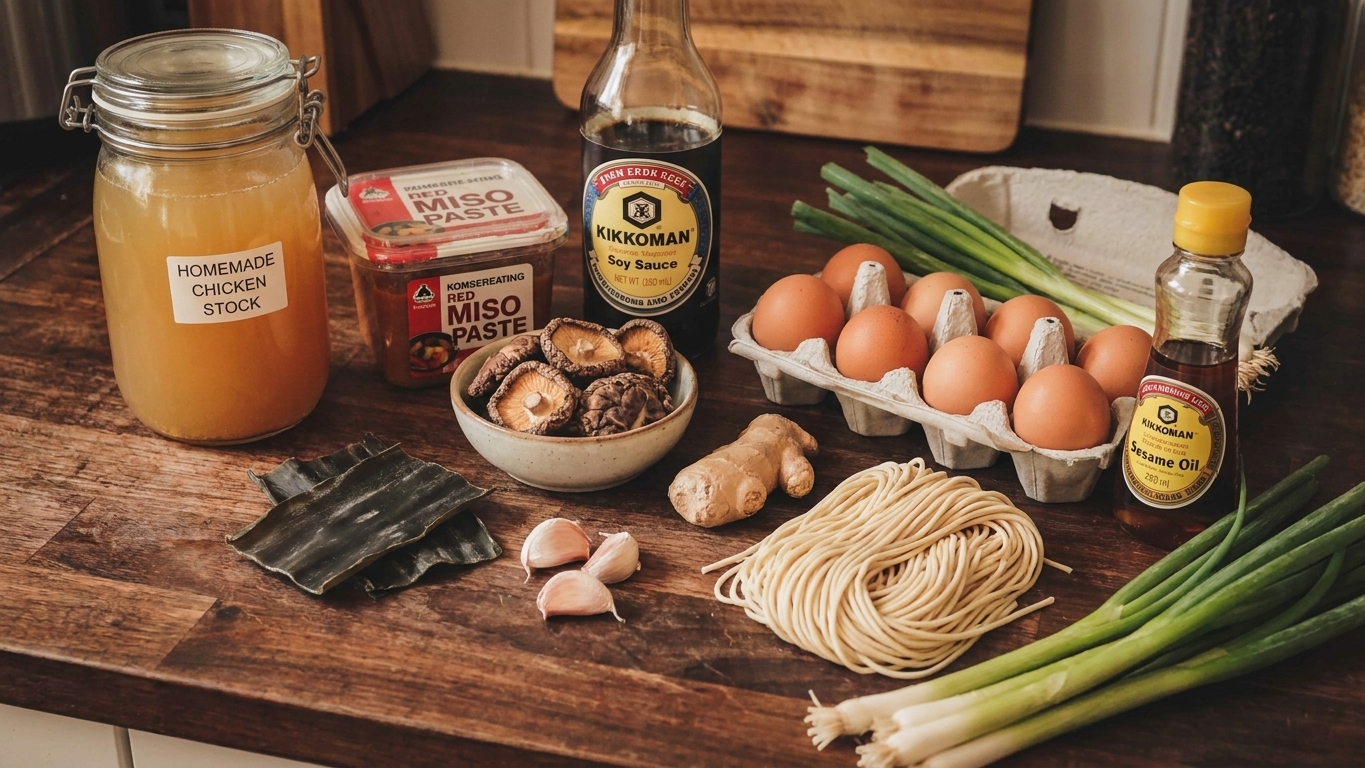
- Chicken stock: Use good chicken stock (or low-sodium broth). If your stock is very mild, you can adjust at the end with a splash of soy sauce.
- Kombu: Keep the broth gentle, not boiling. If it boils hard, kombu can turn a little slimy and overly sea-forward, sometimes a bit astringent. For a cleaner dashi-style flavor, pull the kombu around 10 minutes and keep steeping the rest.
- Dried shiitake: The easiest way to make store-bought stock taste like you did something special. If you only choose one add-in, pick dried shiitake for deep savory flavor.
- Instant dashi (optional): An easy shortcut option, and can be used instead of kombu.
- Noodles: Fresh refrigerated ramen noodles stay springy and cook fast. Dried ramen works great too, just do not overcook. For guidance: about 120 to 150g fresh or 80 to 100g dried per person. Instant ramen noodles are fine too, but toss the seasoning packet.
- Mirin: Choose real mirin when you can. “Mirin-style” can be extra sweet and salty, so reduce the sugar and taste your tare before adding more soy.
- Salt and acid: If your bowl tastes flat, add acid before adding more salt. A half teaspoon of rice vinegar or a squeeze of lemon can wake everything up without making it taste sour.
Equipment you will need
- Medium pot (for steeping and finishing the broth)
- Fine-mesh strainer (to strain the broth)
- Small bowl (to mix the tare)
- Small skillet (for the aromatic oil)
- Second pot (for boiling noodles in separate water)
- Serving bowls (warm them with hot water for best aroma)
Pro tips
- Keep the broth gentle: Heat until steaming with tiny bubbles around the edge, then keep it just below a simmer for 15 minutes.
- Make the tare punchy: Taste it before serving; it should be intense on its own because the broth will dilute it.
- Build in the bowl: Start with 1 tbsp tare per bowl (most people land around 1 to 1 1/2 tbsp), then add broth.
- Cook noodles separately: Boil noodles in a separate pot of water, drain well, and assemble immediately.
- Rinsing noodles is optional: Rinse for a cleaner, clearer broth; do not rinse for more starch cling and a slightly thicker feel (especially with dried noodles).
- Warm your bowls: Hot bowls keep aromatics alive and help the ramen smell like a shop bowl.
- Use acid to fix “flat” broth: Add a little rice vinegar or lemon before reaching for more salt.
Quick bowl formula (per bowl): 1 tbsp tare + 1 to 2 tsp aromatic oil + 1 1/2 to 2 cups hot broth + noodles + toppings.
Substitutes that work
- Chicken stock: Use low-sodium broth.
- Kombu: Use 1 to 2 tsp instant dashi (optional, instead of kombu).
- Dried shiitake: Use 1 to 2 tsp mushroom seasoning (optional) instead.
- Noodles: Use fresh ramen noodles or dried ramen noodles (discard seasoning packets). You can also use instant ramen noodles; toss the seasoning packet and cook the noodles (cook 30 seconds less than the package says if they are thin).
- Protein: Rotisserie chicken, leftover pork chops thinly sliced, crispy tofu, or quick-seared shrimp.
Variations
Miso sesame ramen
Swap tare to: 2 tbsp miso + 1 tbsp soy sauce + 1 tsp mirin + 1 tsp rice vinegar. Finish with extra sesame oil and a spoon of tahini for creamy richness.
Spicy garlic ramen
Add 1 tbsp chili crisp to the oil step. Stir 1/2 tsp grated garlic into the tare. Top with cucumbers or quick-pickled cabbage for crunch.
Vegetarian rich ramen
Use a strong vegetable broth, double the dried shiitake, and add 1 tbsp soy sauce to the broth while it steeps. Finish with toasted sesame oil and sautéed mushrooms for meaty depth.
Serving ideas
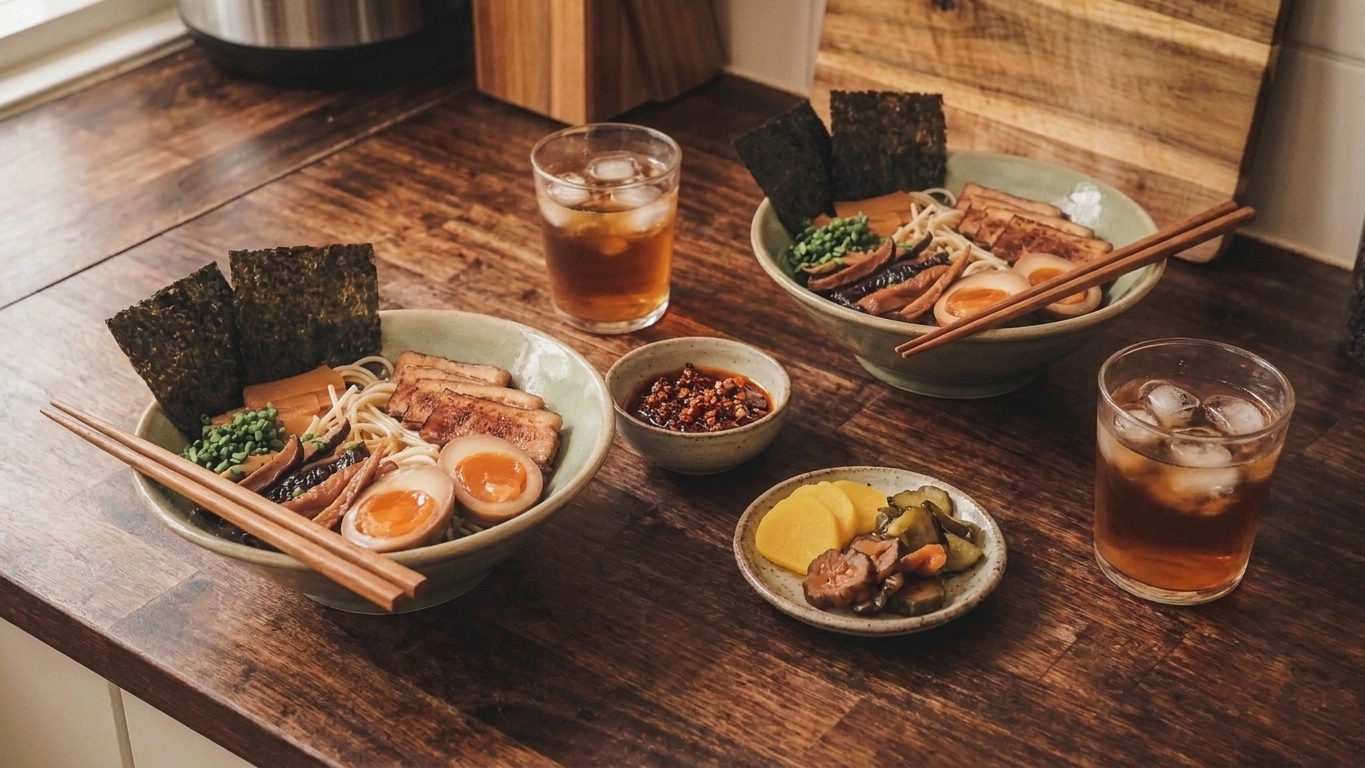
Ramen loves a simple side that does not compete: quick cucumber salad with rice vinegar and sesame, or a small plate of kimchi. Keep it bright, crunchy, and cold against the hot, savory bowl.
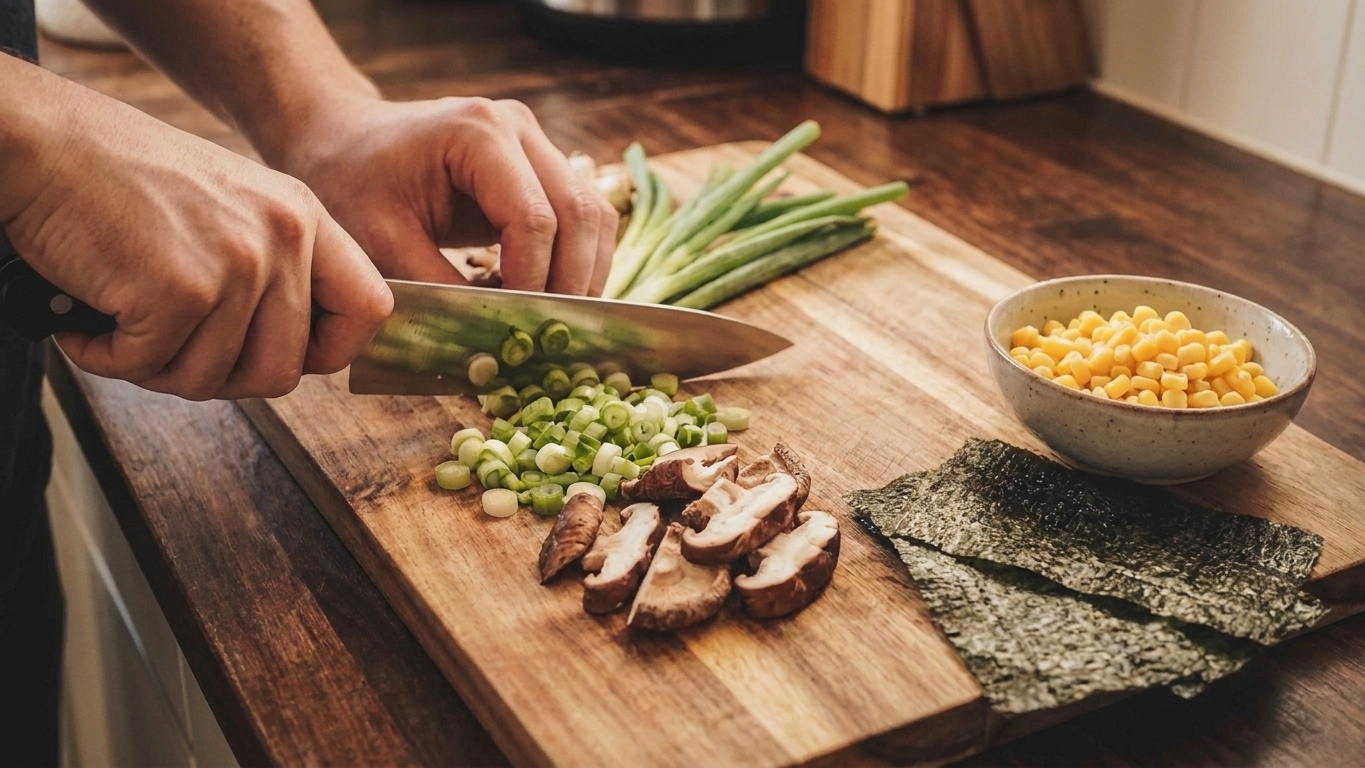
- Protein: leftover rotisserie chicken, sliced pork, crispy tofu, or quick-seared shrimp
- Veg: sautéed mushrooms, spinach, bok choy, bean sprouts, corn
- Crunch: fried shallots, toasted sesame seeds, chili crisp
- Briny: nori, menma (bamboo shoots), a little kimchi on the side
Storage and reheating
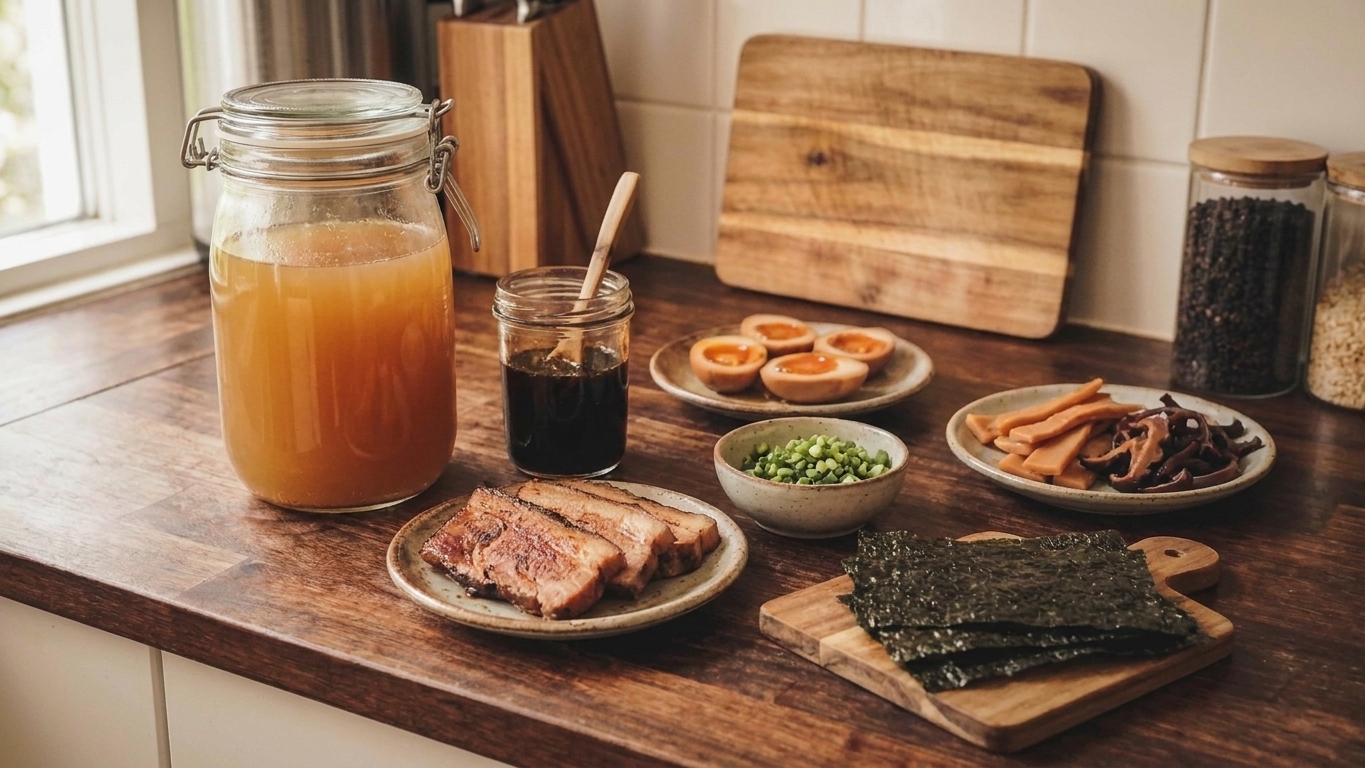
- Broth: Make and strain up to 4 days ahead. Reheat gently.
- Tare: Mix and refrigerate up to 2 weeks. Shake or stir before using.
- Aromatic oil: Store 5 to 7 days. Warm slightly if it solidifies.
- Noodles: Best cooked fresh. If you must prep, undercook by 30 seconds, toss with a touch of oil, and reheat briefly in boiling water.
Jammy soy egg food safety note: Do not reuse the egg marinade as-is. If you want to reuse it, bring it to a full boil for at least 1 minute, cool completely, then refrigerate and use within 2 days.
Common mistakes
- Boiling kombu hard: If it boils hard, kombu can turn a little slimy and overly sea-forward, sometimes a bit astringent.
- Salting the whole pot too early: If broth tastes bland, add more tare in the bowl instead of salting the whole pot. Start with 1 tsp at a time.
- Overcooking or overcrowding noodles: Noodles can feel gummy. Boil in plenty of water and drain immediately.
- Forgetting acid: If the bowl tastes flat, add acid (rice vinegar or lemon) before adding more salt.
- Using cold bowls: Warm your bowls with hot water so the aromatics stay lively.
FAQ
Do I need kombu and dried shiitake?
No, but they are the easiest way to make store-bought stock taste like you did something special. If you only choose one, pick dried shiitake for deep savory flavor.
Can I use instant ramen noodles?
Yes. Toss the seasoning packet, cook the noodles, and use this broth and tare. If the noodles are thin, cook 30 seconds less than the package says so they stay springy in hot broth.
How much tare per bowl?
Start with 1 tablespoon, then taste. Most people land around 1 to 1 1/2 tablespoons. Stock brands vary a lot. Your perfect bowl is the one that makes you take another sip of broth.
What is the best protein for weeknight ramen?
Rotisserie chicken, leftover pork chops thinly sliced, or crispy tofu. For the least effort, warm the protein in the hot broth for 30 seconds right before serving.
Ultimate Rich and Savory Ramen
Ultimate Rich and Savory Ramen (Weeknight Shoyu) is a 35-minute, layered-flavor ramen built from a gently steeped stock boosted with kombu and dried shiitake, a punchy soy-miso tare, and a quick scallion-sesame aromatic oil. Assemble with springy noodles and your favorite toppings for a rich, balanced bowl at home.
- Prep
- 10 minutes
- Cook
- 25 minutes
- Total
- 35 minutes (plus optional egg marinating)
- Yield
- Serves 2 to 3
Ingredients
- Broth base: 4 cups good chicken stock (or low-sodium broth)
- Broth base: 1 cup water
- Umami boosters: 1 piece kombu (about 3 x 4 inches)
- Umami boosters: 3 to 4 dried shiitake mushrooms (or 1 to 2 tsp mushroom seasoning, optional)
- Easy shortcut: 1 to 2 tsp instant dashi (optional, instead of kombu)
- Aromatics: 4 cloves garlic, smashed
- Aromatics: 1 inch ginger, sliced
- Tare (bowl seasoning): 3 tbsp soy sauce
- Tare (bowl seasoning): 1 tbsp white miso
- Tare (bowl seasoning): 2 tsp mirin
- Tare (bowl seasoning): 1 tsp brown sugar
- Tare (bowl seasoning): 1 to 2 tsp rice vinegar
- Aromatic oil: 2 tbsp neutral oil
- Aromatic oil: 1 tbsp toasted sesame oil
- Aromatic oil: 2 scallions (white parts), thinly sliced, plus more for serving
- Noodles: 2 to 3 portions fresh ramen noodles, or 2 packs dried ramen noodles (discard seasoning packets)
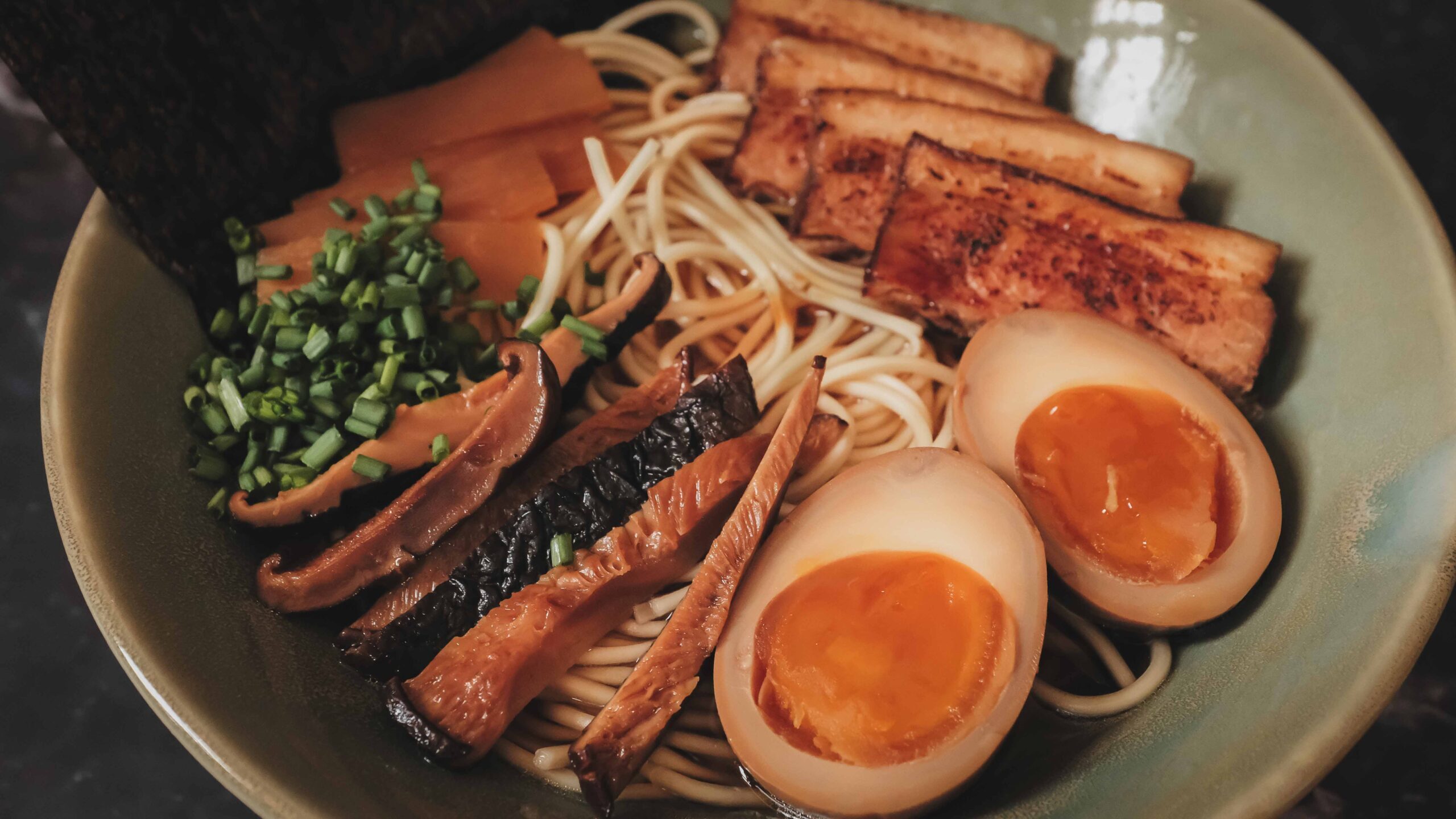
- To serve (pick 2 to 4): jammy soy eggs, leftover roast chicken or pork belly, sautéed mushrooms, spinach, corn, bamboo shoots, nori, chili crisp
Instructions
- Build the broth (gentle, not boiling): In a medium pot, combine stock, water, kombu, dried shiitake, garlic, and ginger. Heat until steaming and tiny bubbles appear around the edge, then keep it just below a simmer for 15 minutes. If it boils hard, kombu can turn a little slimy and overly sea-forward, sometimes a bit astringent. If you like a cleaner dashi-style flavor, pull the kombu around 10 minutes and keep steeping the rest.
- Make the tare: In a small bowl, stir soy sauce, miso, mirin, brown sugar, and rice vinegar until smooth. Taste it. It should be punchy and a bit intense.
- Make the aromatic oil: In a small skillet, warm neutral oil over medium heat. Add sliced scallion whites and cook until fragrant and barely golden, 1 to 2 minutes. Off heat, stir in toasted sesame oil. (If you like heat, add a spoon of chili crisp here.)
- Strain and finish broth: Strain the broth into a clean pot or bowl, pressing lightly on the mushrooms. Return broth to the pot and keep hot. Taste and adjust with a splash of soy sauce if your stock is very mild.
- Cook noodles: Boil noodles in a separate pot of water according to package directions. Drain well. Rinsing is optional: rinse if you want a cleaner, clearer broth, do not rinse if you want more starch cling and a slightly thicker feel (especially with dried noodles).
- Assemble bowls: Add 1 tbsp tare to each bowl (most people land around 1 to 1 1/2 tbsp), then ladle in hot broth (about 1 1/2 to 2 cups per bowl). Add noodles, then drizzle with aromatic oil. Top as you like and serve immediately.
Notes
Salt and acid note: If your bowl tastes flat, add acid before adding more salt. A half teaspoon of rice vinegar or a squeeze of lemon can wake everything up without making it taste sour.
Jammy soy eggs (optional but elite): Simmer eggs for 7 minutes 30 seconds, then chill in ice water. Peel. For a quick marinade: 1/3 cup soy sauce + 1/3 cup water + 1 tbsp mirin + 1 tsp sugar. Marinate 2 to 12 hours (even 30 minutes helps).
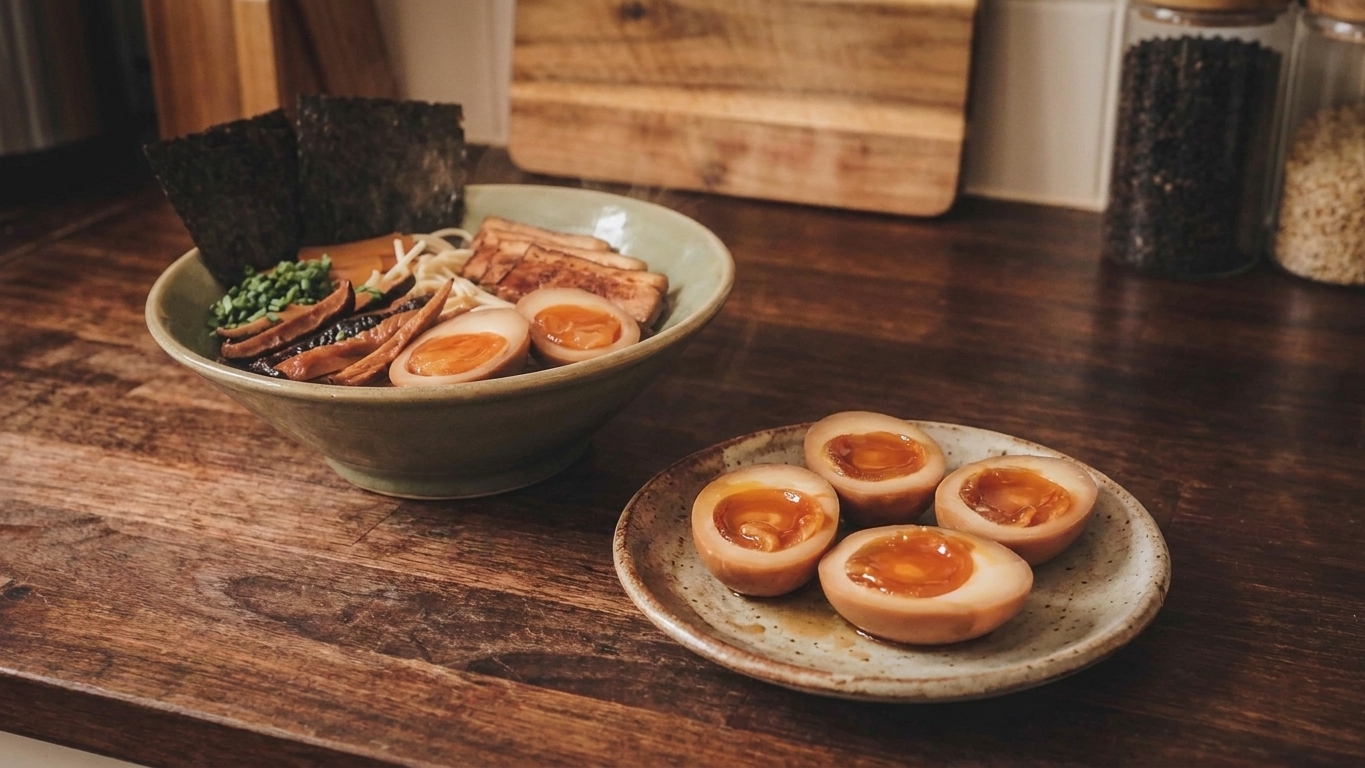
Food safety note (eggs): Do not reuse the egg marinade as-is. If you want to reuse it, bring it to a full boil for at least 1 minute, cool completely, then refrigerate and use within 2 days.
Troubleshooting quick fixes: If broth tastes bland, add more tare in the bowl (start with 1 tsp at a time). If too salty, dilute with hot water or unsalted stock, then add a few drops of vinegar or a pinch of sugar to rebalance. If not rich enough, add a spoon of sesame oil, a small pat of butter, or a tablespoon of tahini. If noodles feel gummy, boil in plenty of water and drain immediately. For more ramen-shop aroma, warm your bowls with hot water before assembling.
Nutrition
- Calories: ~520 per serving
- Fat: ~18 g
- Carbohydrates: ~63 g
- Protein: ~23 g
- Fiber: ~3 g
- Sugar: ~6 g
- Sodium: ~1850 mg
Nutrition values are approximate and will vary by stock brand, noodle type, and toppings.