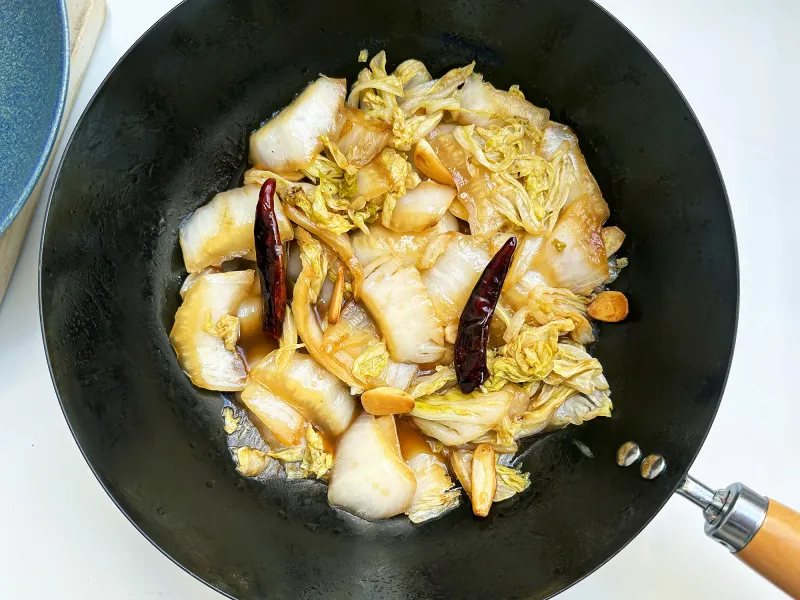
This zesty napa cabbage stir-fry is built for fast weeknights: tender leaves, crisp ribs, and a glossy sauce that hits bright acid, enough salt to make everything pop, and just a touch of sweetness to round the edges. Napa cabbage cooks quickly without sacrificing texture, soaking up sauce while the pale ribs stay snappy and fresh-tasting. It is the kind of recipe that makes a half-head of cabbage feel like a plan, not a problem.
Why this recipe works
Napa cabbage is tender where it counts and crisp where you want it. It cooks fast, so dinner can happen quickly without sacrificing texture. The leaves soak up sauce like a sponge, while the pale ribs stay snappy and fresh tasting.
This stir-fry leans into a balanced profile: bright acid, enough salt to make everything pop, and just a touch of sweetness to round the edges.
Ingredient notes
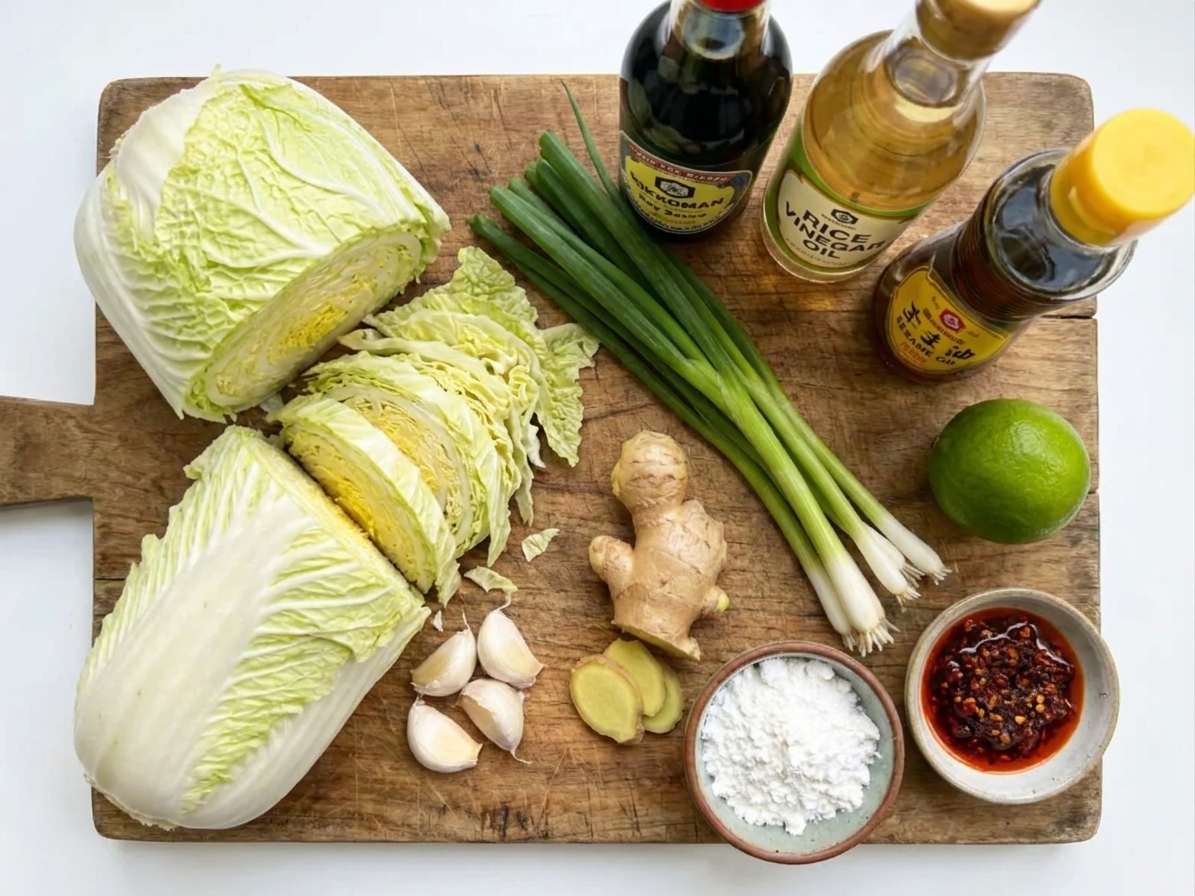
- Napa cabbage: Aim for about 1 1/2 to 2 pounds for one head. Slice ribs and leaves separately so the ribs can go in first.
- Water in the sauce: Napa cabbage releases a lot of moisture. For a punchier, more concentrated sauce, use 3 tablespoons water. For a lighter, saucier finish, use 1/4 cup.
- Salt level: Soy sauce brands vary a lot. If you are salt-sensitive, use low-sodium soy sauce (or start with 2 1/2 tablespoons), then adjust at the end.
- Heat options (optional): Chili crisp, sambal oelek, or red pepper flakes can be added to taste.
Equipment you will need
- Wok or large skillet: A wok is great, but a large stainless skillet works beautifully. The key is surface area and high heat.
- Chef’s knife and cutting board: For separating and slicing ribs and leaves.
- Small bowl or jar: For whisking the sauce.
- Spatula or wooden spoon: For fast tossing.
Pro tips
- Keep ribs and leaves in two piles: Ribs go in first, leaves go in last. This is the easiest way to avoid limp cabbage.
- Dry the cabbage well: If you washed it, shake it well and pat it dry. Extra surface water is a fast track to steaming instead of stir-frying.
- Pre-mix the sauce: Stir-frying moves fast. A pre-mixed sauce prevents overcooked veggies while you scramble for ingredients.
- Whisk again before pouring: Cornstarch settles, so whisk the sauce right before adding it to the pan.
- Do not overcrowd: Keep total add-ins to about 2 to 3 cups so the pan stays hot and the cabbage stir-fries instead of steaming.
Substitutes that work
- Green cabbage instead of napa: Slice thin and expect a longer cook time, about 2 to 4 minutes more. Green cabbage is sturdier and stays crunchier.
- Lemon instead of lime: Lemon works too for zest and juice.
- Tamari instead of soy sauce: Use tamari (including certified gluten-free if needed).
- Gluten-free option: Use tamari or certified gluten-free soy sauce, and double-check chili crisp or sambal since some brands contain wheat.
Variations
This stir-fry is intentionally flexible. Think of napa cabbage as the base and everything else as an opportunity to use what you already have.
Protein options
- Tofu: Use extra-firm, cubed. Brown it first, remove, then toss back in at the end.
- Chicken or turkey: Thinly slice. Stir-fry in oil with a pinch of salt, remove, then proceed.
- Shrimp: Cook 1 to 2 minutes per side, remove, then return at the end.
- Egg: Push veggies aside, scramble an egg in the pan, then toss together.
Extra vegetables
- Mushrooms for savoriness
- Snap peas for crunch
- Bell pepper for sweetness
- Baby spinach added at the very end
Serving ideas
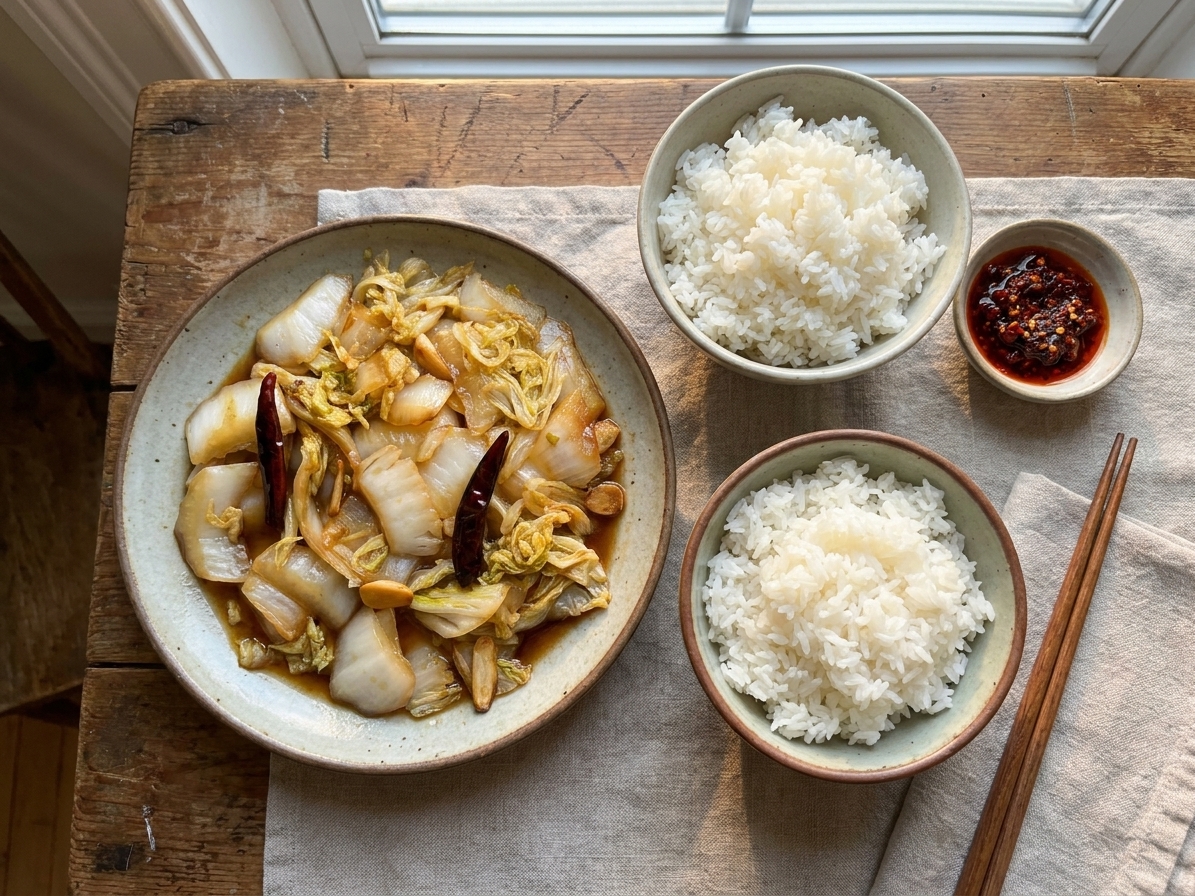
- Classic: Spoon over steamed jasmine rice or brown rice.
- Noodle bowl: Toss with cooked ramen noodles, rice noodles, or udon.
- Low prep: Serve with store-bought frozen dumplings or potstickers.
- Crunch factor: Top with toasted sesame seeds, chopped peanuts, or fried onions.
Storage and reheating
- Make-ahead sauce: Mix the sauce up to 3 days ahead and keep it in a jar.
- Make-ahead cabbage: Slice the cabbage a day ahead and store it in a sealed container with a paper towel to absorb moisture.
- Refrigerate leftovers: Keep for 3 to 4 days.
- Reheating: Reheat in a hot skillet to drive off moisture and revive texture. The microwave works, but it will be softer.
- Freezing: Not ideal. Napa cabbage turns watery after freezing, but it is still usable in soups if you do not mind the texture.
Common mistakes
Watery stir-fry
- Your pan was not hot enough, or it was crowded. Cook in two batches next time.
- The cabbage may have been very wet. Pat it dry after washing.
- Make sure you whisk the cornstarch into the sauce right before adding.
- Let it bubble for 30 to 90 seconds to thicken.
It tastes flat
- Add a squeeze of lime (or lemon) or a splash of rice vinegar for brightness.
- Add a pinch of salt or an extra teaspoon of soy sauce for depth.
- Add a tiny bit more honey to smooth out sharp edges.
It tastes too salty
- Add a few tablespoons of water and more cabbage leaves if you have them.
- Finish with extra lime juice to rebalance without adding more sodium.
FAQ
Can I use green cabbage instead of napa?
Yes. Slice it thin and expect a longer cook time, about 2 to 4 minutes more. Green cabbage is sturdier and stays crunchier.
What is the best pan for stir-fry?
A wok is great, but a large stainless skillet works beautifully. The key is surface area and high heat.
How do I make it gluten-free?
Use tamari or certified gluten-free soy sauce. Double-check your chili crisp or sambal, since some brands contain wheat.
How spicy is this?
As written, it is mild. Add chili crisp or sambal at the end so you can control heat bowl by bowl.
Zesty Napa Cabbage Stir-Fry
A fast, glossy napa cabbage stir-fry with garlic, ginger, scallions, and a zesty lime-vinegar soy sauce that clings thanks to a touch of cornstarch. Cook the ribs first, then the leaves, and finish with scallion greens and extra lime to taste.
- Prep
- 15 minutes
- Cook
- 12 minutes
- Total
- 27 minutes
- Yield
- Serves 3 to 4 as a side, 2 to 3 as a main
Ingredients
- 1 head napa cabbage (about 1 1/2 to 2 pounds)
- 1 to 2 tablespoons neutral oil (avocado, canola, or grapeseed)
- 3 cloves garlic, minced
- 1 tablespoon fresh ginger, finely grated
- 4 scallions, whites and greens separated
- 3 tablespoons soy sauce (or tamari)
- 2 tablespoons rice vinegar
- Zest of 1 lime, plus 1 to 2 tablespoons lime juice (lemon works too)
- 1 to 2 teaspoons honey or sugar
- 1 teaspoon toasted sesame oil
- 1 teaspoon cornstarch
- 3 tablespoons to 1/4 cup water
- Optional add-ins: sliced mushrooms, shredded carrots, snap peas, thinly sliced bell pepper (keep total add-ins to about 2 to 3 cups)
- Optional heat: chili crisp, sambal oelek, or red pepper flakes
Instructions
- Cut the cabbage: Slice the cabbage lengthwise, cut out the dense core wedge, then separate ribs and leaves. Slice the thicker white ribs into 1/2-inch pieces and the leafy greens into wider ribbons, keeping them in two separate piles.
- Make the sauce: In a small bowl, whisk together soy sauce, rice vinegar, lime zest, lime juice, honey, toasted sesame oil, cornstarch, and water. Set it by the stove.
- Heat the pan: Set a wok or large skillet over high heat until properly hot (a drop of water should sizzle on contact). Add oil and swirl.
- Cook aromatics: Add garlic, ginger, and the scallion whites. Stir for 15 to 30 seconds, just until fragrant.
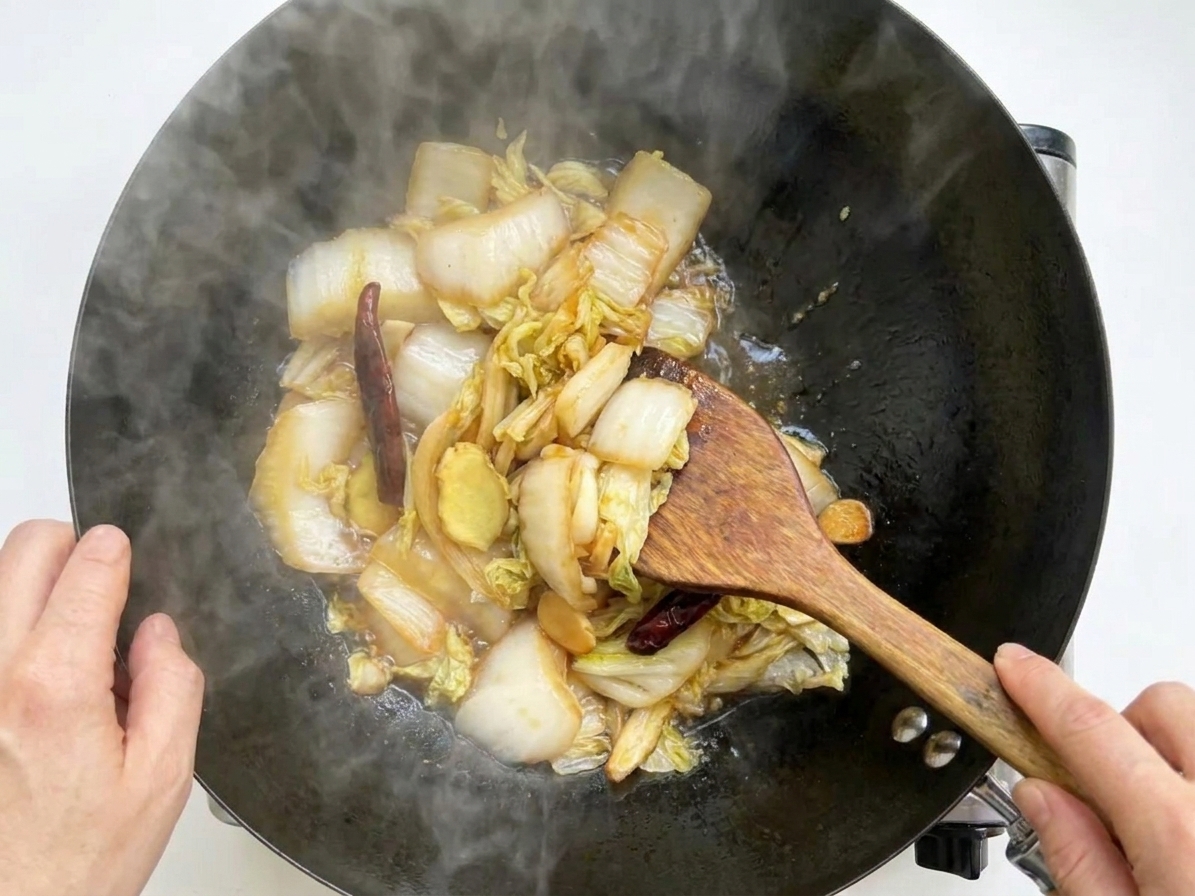
- Stir-fry ribs first: Add the chopped white ribs (and any slow-cooking add-ins like carrots or mushrooms). Stir-fry 2 to 4 minutes, until glossy and crisp-tender.
- Add leaves: Add the leafy greens and toss frequently for 1 to 2 minutes, just until wilted but still lively.
- Sauce and glaze: Whisk the sauce again, then pour it in. Toss 30 to 90 seconds until it thickens and clings.
- Finish: Turn off the heat, fold in scallion greens, and taste. Add more lime juice for extra zip, or a pinch of salt if it needs lift. Add chili crisp or sambal at the end if you want heat.
Notes
- Water choice: Use 3 tablespoons water for a more concentrated sauce, or 1/4 cup for a lighter, saucier finish.
- Salt adjustment: If you are salt-sensitive, use low-sodium soy sauce (or start with 2 1/2 tablespoons) and adjust at the end.
- Texture target: Aim for crisp-tender ribs and leaves that are wilted but not watery. If liquid pools, the heat may be too low, the pan may be overcrowded, or the cabbage may have been very wet.
- Heat level: As written it is mild. Add spicy elements at the end so you can control heat bowl by bowl.
- Waste-reducer tip: Save extra cabbage for tomorrow. It is great shredded into tacos, stirred into ramen, or quickly pickled with vinegar and salt.
Nutrition
- Calories: 150
- Fat: 7 g
- Carbs: 19 g
- Protein: 4 g
- Fiber: 4 g
- Sugar: 10 g
- Sodium: 900 mg
Approximate values per serving (assuming 4 side-dish servings and 1 tablespoon oil).