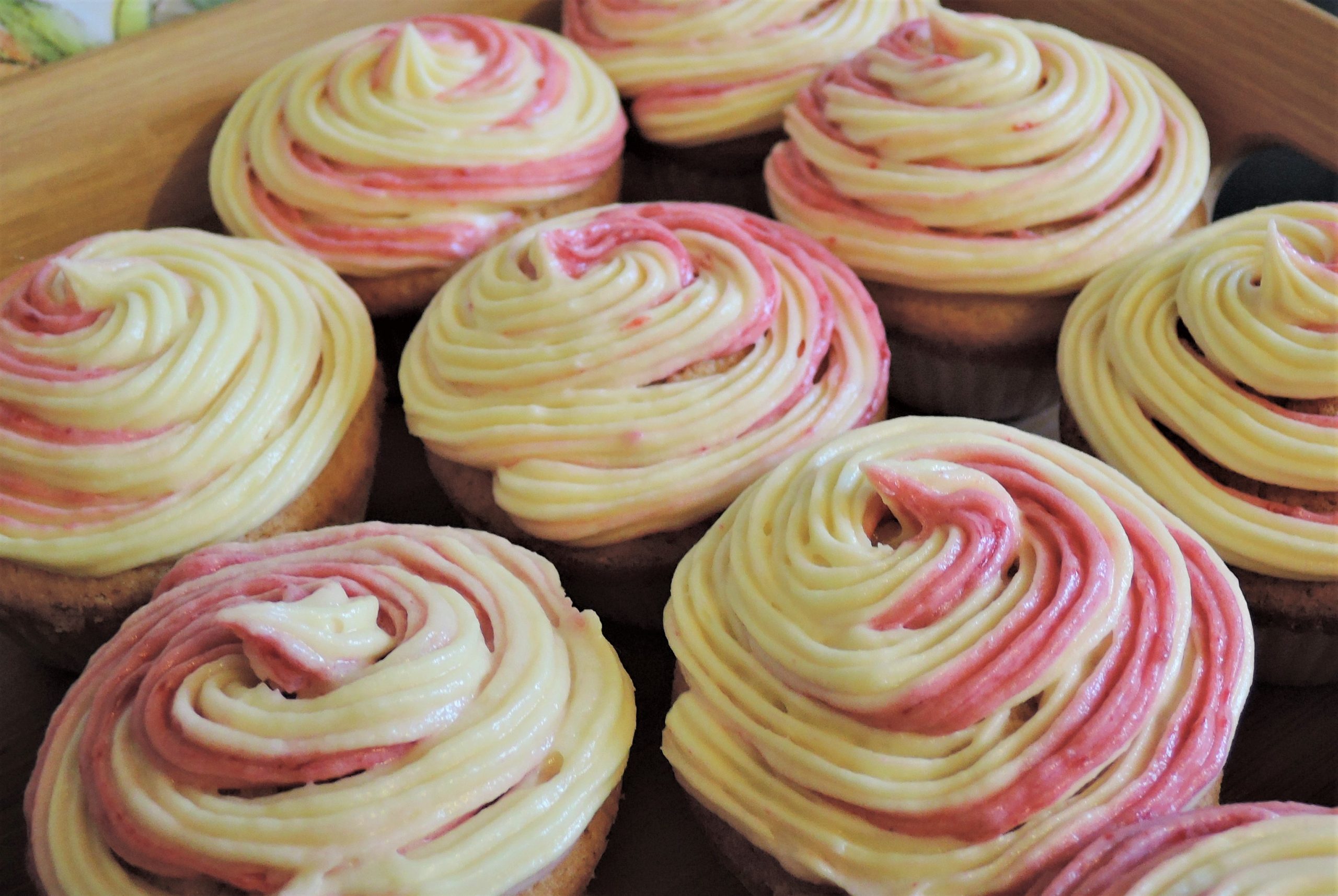
Vanilla buttercream is the classic American style frosting: butter whipped until fluffy, sweetened with powdered sugar, loosened with a splash of liquid, and finished with real vanilla. It is the one I teach first because it is fast, stable, and forgiving.
The key is texture management. You are not just mixing ingredients, you are aerating softened butter and making sure the sugar and liquid blend in smoothly. When the butter is the right temperature and you add the sugar gradually, you get that smooth, cloud-like frosting that spreads cleanly and pipes sharp edges.
Why this recipe works
This buttercream works because it is built on a simple, reliable structure: properly softened butter whipped until fluffy, powdered sugar added gradually for sweetness and body, then a small amount of liquid to fine-tune consistency and vanilla for flavor. When you manage the butter temperature and add the sugar slowly, the frosting turns smooth and cloud-like instead of gritty, and it stays stable enough to spread cleanly and pipe defined edges.
Ingredient notes
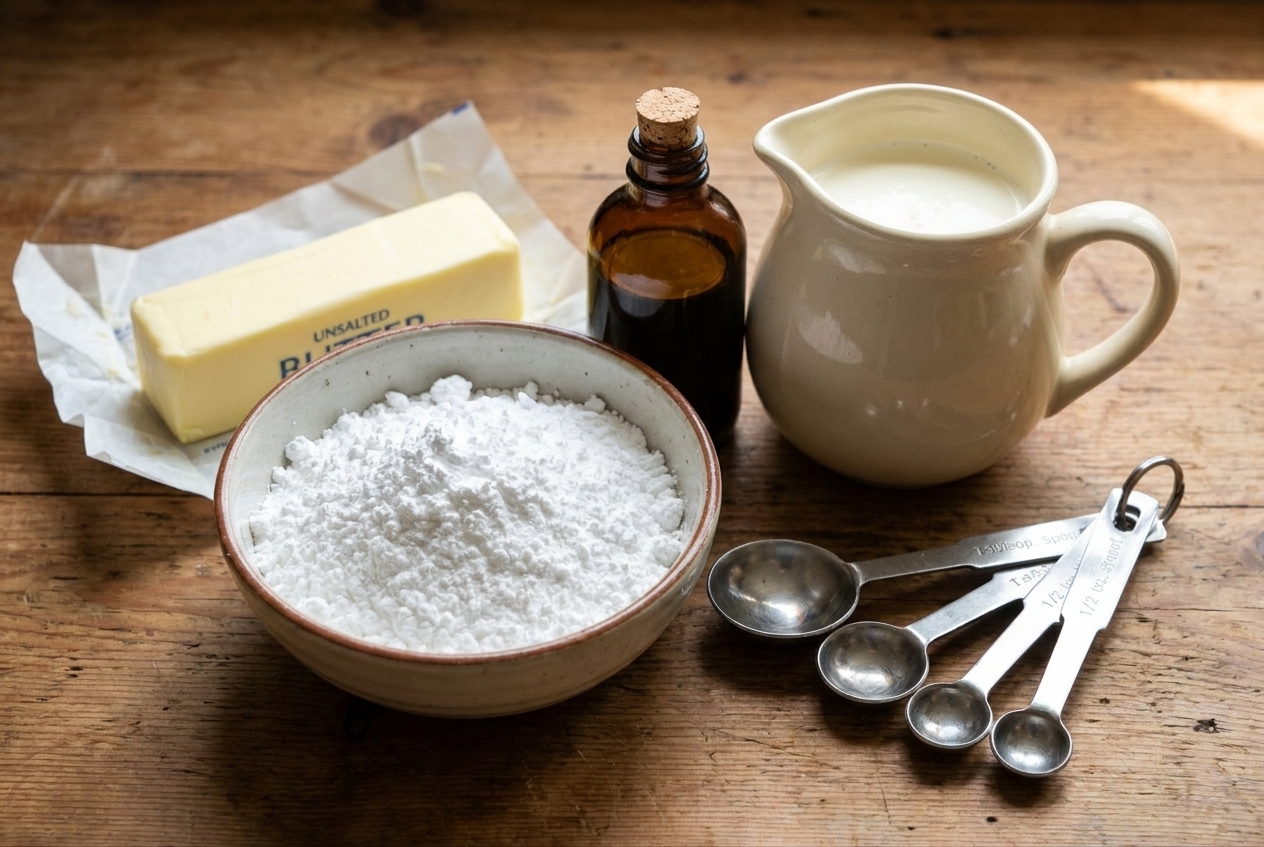
- Unsalted butter (softened): Lets you control the salt level. If using salted butter, reduce added salt or skip it.
- Powdered sugar: Provides sweetness and structure. Sift if yours is lumpy.
- Vanilla: Extract is classic; vanilla bean paste adds tiny specks and a deeper aroma.
- Heavy cream or milk: Adjusts consistency for spreading or piping.
- Fine salt: Optional but highly recommended. It sharpens the vanilla and keeps the sweetness in check.
Quick butter temperature cue: Aim for cool room temperature, about 60 to 65°F (16 to 18°C). Your finger should leave an easy indent, but the butter should not look shiny or greasy.
My Portland-in-winter note: If your kitchen runs cool, butter can feel soft on the outside but still be chilly in the center. Cut it into cubes and let it sit 20 to 30 minutes so it softens evenly. Your mixer will thank you.
Equipment you will need
- Stand mixer with paddle attachment (preferred for a smooth frosting with fewer bubbles) or a hand mixer and a large bowl
- Spatula for scraping the bowl and pressing out air bubbles
- Measuring cups and spoons
- Sifter (helpful if powdered sugar is lumpy)
- Offset spatula for spreading and smoothing
Pro tips
- Start with the right butter temperature: Cool room temperature butter (about 60 to 65°F / 16 to 18°C) whips up fluffy without turning greasy.
- Add powdered sugar gradually: Add it 1 cup at a time on low speed to keep the texture smooth (and avoid a powdered sugar cloud).
- Use the paddle for smoothness: The paddle gives a smooth frosting with fewer bubbles. If you want extra fluff for cupcakes, switch to the whisk at the very end for 15 to 30 seconds, then mix on low to smooth.
- Finish with a short final whip: A final 30 to 60 seconds on medium-high smooths and aerates. If you see large air pockets from over-whipping, mix on low for 30 seconds to knock them out.
- Last-second flavor check: Before frosting, taste and adjust with a pinch more salt, a touch more vanilla, or a teaspoon of cream to loosen.
Substitutes that work
- Salted butter: You can use it. Reduce the added salt or skip it at first, then taste after the powdered sugar is in and add a pinch only if needed.
- Vanilla extract vs vanilla bean paste: Use 2 teaspoons vanilla extract or 1 1/2 teaspoons vanilla bean paste.
- Heavy cream or milk: Either works for adjusting consistency; add slowly to avoid loosening too much.
Variations
- Vanilla bean: Use vanilla bean paste or scrape in seeds from 1/2 bean.
- Brown butter vanilla: Brown half the butter, chill until solid but scoopable, then beat with the other half.
- Almond-vanilla: Add 1/4 teaspoon almond extract with the vanilla.
- Citrus: Add 1 to 2 teaspoons finely grated lemon or orange zest, plus a tiny pinch more salt.
- Chocolate: Beat in 1/2 cup sifted cocoa powder and add an extra 1 to 2 tablespoons cream.
Serving ideas
This recipe makes about 3 cups, which is enough for 12 cupcakes with a moderate swirl, or a 2-layer 8-inch cake with a simple finish.
- 12 cupcakes: 2 to 3 cups for a moderate swirl; 3 to 4 cups for tall bakery-style piping.
- 24 cupcakes: 4 to 6 cups.
- 8-inch 2-layer cake: about 3 to 4 cups for filling and frosting.
- 9-inch 2-layer cake: about 4 to 5 cups.
If you are doing a very smooth, sharp-edge finish, make a little extra. It is much easier to frost cleanly when you are not scraping the bowl at the end.
Storage and reheating
Buttercream is a dream for planning ahead and a great way to use up odds and ends like leftover cake layers, cupcake tops, or slightly stale cookies for cake jars.
Storage
- Room temperature: Up to 1 day in a cool room (below about 70°F / 21°C). If your kitchen runs warm, refrigerate instead. Re-whip briefly before using.
- Refrigerator: Up to 1 week in an airtight container. Let it sit at room temp until soft, then re-whip to restore fluffiness.
- Freezer: Up to 3 months. Thaw overnight in the fridge, then bring to room temp and re-whip.
How to revive leftover buttercream
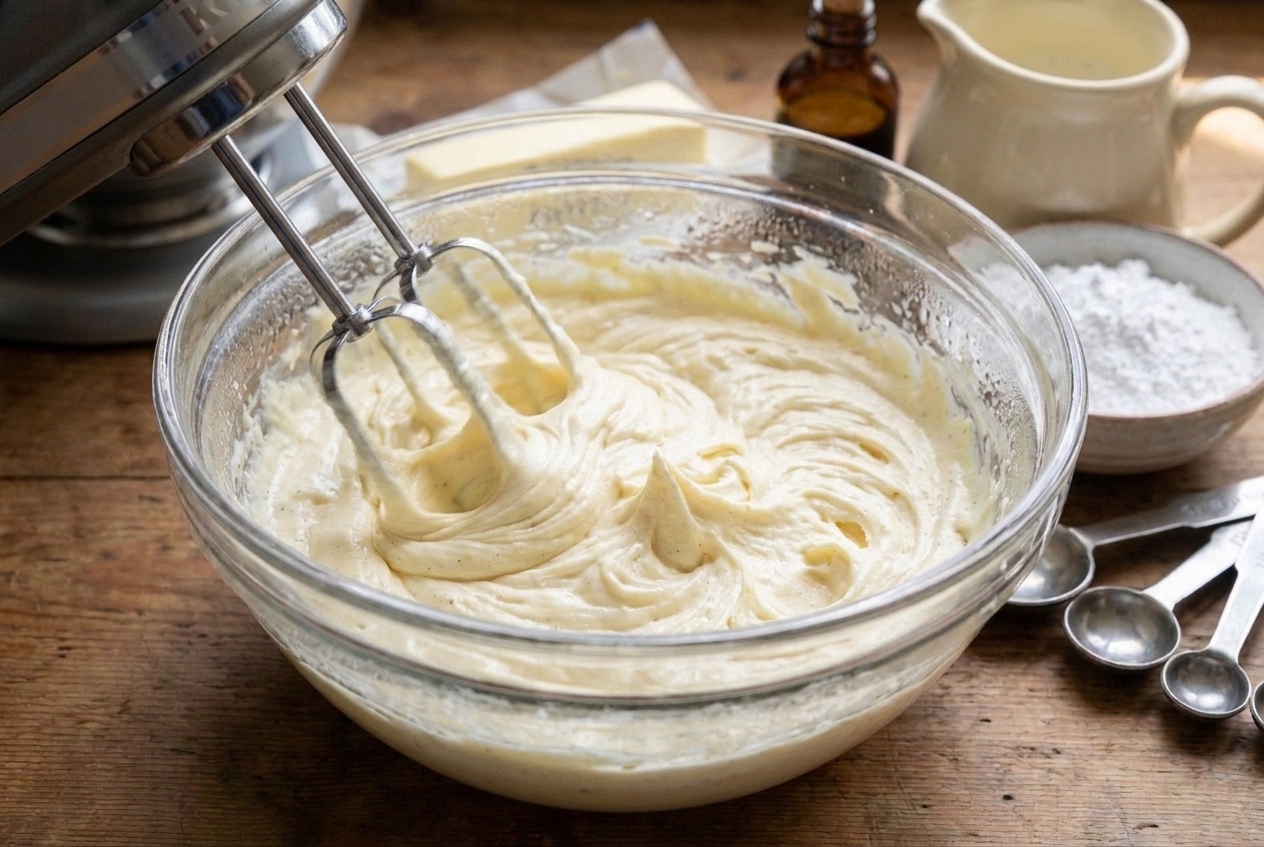
- If it looks split after chilling, keep beating. If needed, add 1 tablespoon room-temperature cream and beat again.
- If it is too stiff, add milk or cream 1 teaspoon at a time.
Common mistakes
Most buttercream issues are normal and fixable in under a minute. Use these targeted fixes.
Too sweet
- Add more salt in tiny pinches and taste.
- Add more vanilla (or a little vanilla bean paste) for a rounder flavor.
- Whip in 1 to 2 tablespoons cream cheese for tang (note: it softens the structure slightly).
- Add 1 tablespoon lemon juice for brightness if it is going on berry or vanilla cake. Add it slowly and mix well. If it loosens the frosting, add a little extra powdered sugar to bring it back.
Runny or loose
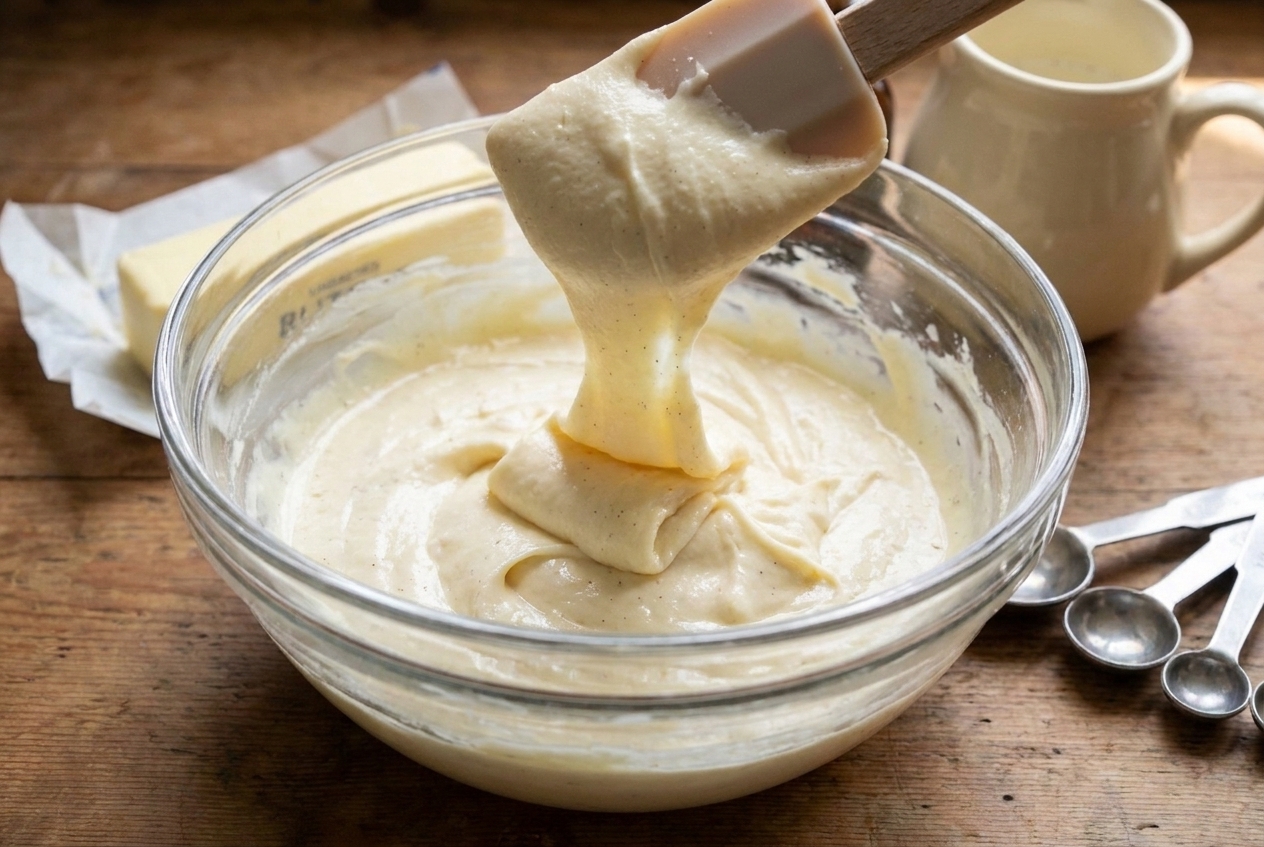
- Butter was too warm. Chill the bowl for 10 minutes, then beat again.
- Add powdered sugar 2 tablespoons at a time until it holds its shape.
- If your kitchen is hot, switch to the paddle (not whisk) and avoid long high-speed mixing that warms the frosting.
Grainy
- Sift powdered sugar next time, especially if it is clumpy.
- Beat longer on low to medium to dissolve and smooth.
- Make sure the butter was truly soft. Cold butter can create tiny lumps that read as grit.
Curdled or broken
- This often happens when the butter is too cold. Keep mixing on medium and it usually comes together as the butter warms slightly.
- If it stays broken, warm the outside of the bowl for 10 to 15 seconds with a hair dryer (or set the bowl over warm water briefly), then mix again.
Too many air bubbles
- Mix on low for 1 to 2 minutes to smooth it out.
- Press it against the side of the bowl with a spatula a few times to pop bubbles.
FAQ
Can I make buttercream with salted butter?
Yes. Skip the added salt at first, then taste after the powdered sugar is in. Add a pinch only if it needs it.
Can I color vanilla buttercream?
Absolutely. Gel food coloring is best because it adds strong color without thinning the frosting. Add a little at a time at the end, then mix on low to avoid air bubbles.
Why does my buttercream taste like powdered sugar?
Two common causes: not enough salt, and not enough whipping. Salt brings balance, and whipping helps the butter taste more creamy and less flat. Also make sure your vanilla is fresh. Old extract can taste muted.
Can I use this under fondant?
Yes. Use a slightly firmer consistency, and chill the frosted cake until the buttercream is set before laying fondant on top.
Vanilla Buttercream Frosting
Classic American-style vanilla buttercream made by whipping cool room-temperature butter until fluffy, gradually blending in powdered sugar, then finishing with vanilla, salt, and just enough cream or milk to reach your ideal spreading or piping consistency. Makes about 3 cups (enough for 12 cupcakes with a moderate swirl, or a 2-layer 8-inch cake with a simple finish).
- Prep
- 10 to 15 minutes
- Cook
- 0 minutes
- Total
- 10 to 15 minutes
- Yield
- Makes about 3 cups
Ingredients
- 1 cup (226 g) unsalted butter, softened to cool room temperature
- 3 1/2 to 4 cups (420 to 480 g) powdered sugar, plus more as needed
- 2 teaspoons vanilla extract (or 1 1/2 teaspoons vanilla bean paste)
- 2 to 4 tablespoons heavy cream or milk, as needed
- 1/4 teaspoon fine salt (use 1/8 teaspoon if you are salt-sensitive)
Instructions
- Whip the butter: In a stand mixer with the paddle (or a hand mixer in a large bowl), beat the softened butter on medium-high for 2 to 3 minutes, scraping the bowl once or twice. You want it lighter in color and visibly fluffy.
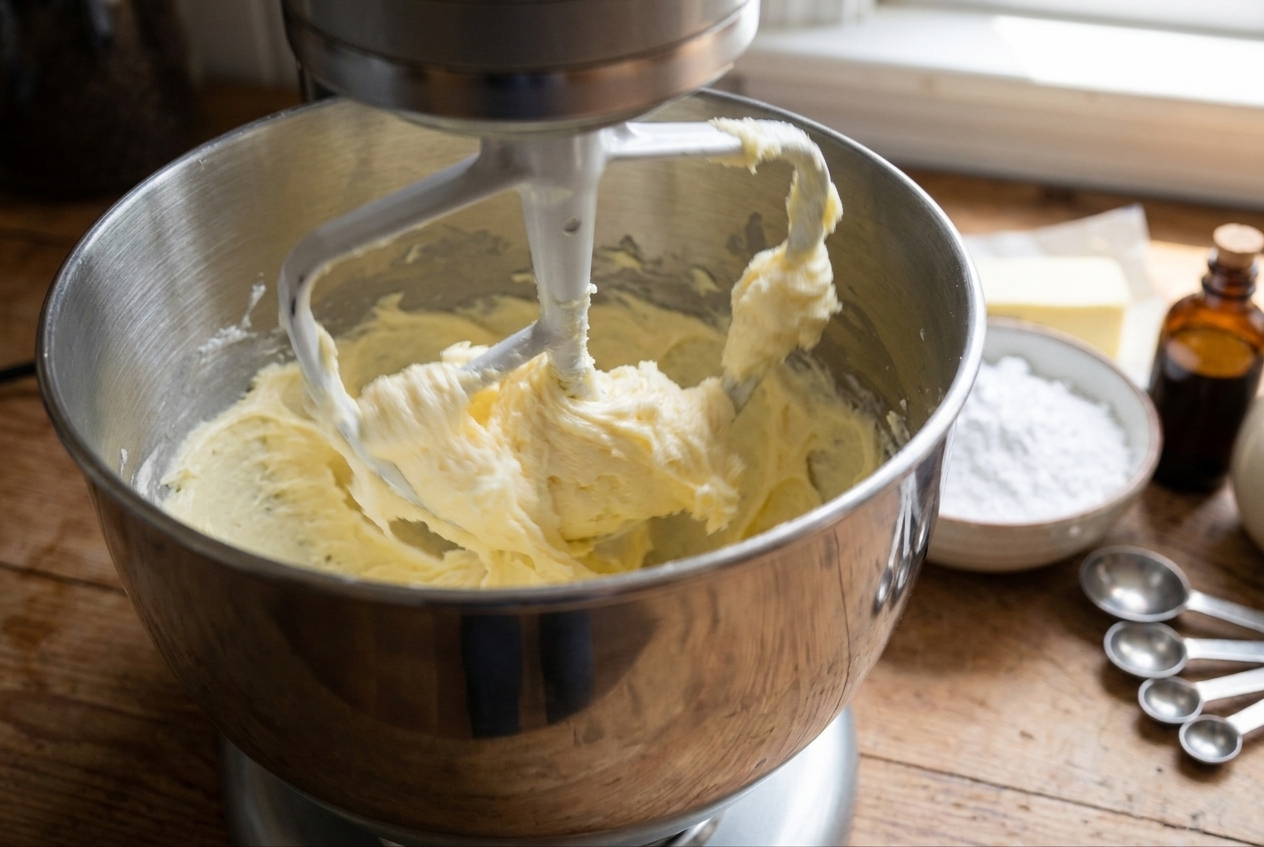
- Add sugar gradually: Reduce speed to low. Add powdered sugar 1 cup at a time, letting each addition mix in before adding the next. Stop and scrape the bowl and paddle as needed.
- Flavor and balance: Add vanilla and salt. Mix on low to combine.
- Adjust consistency: Add cream or milk 1 tablespoon at a time until it is the texture you need. Mix briefly after each addition.
- Finish with a final whip: Increase to medium-high and beat 30 to 60 seconds to smooth and aerate. If you see large air pockets from over-whipping, mix on low for 30 seconds to knock them out.
Notes
Texture cues
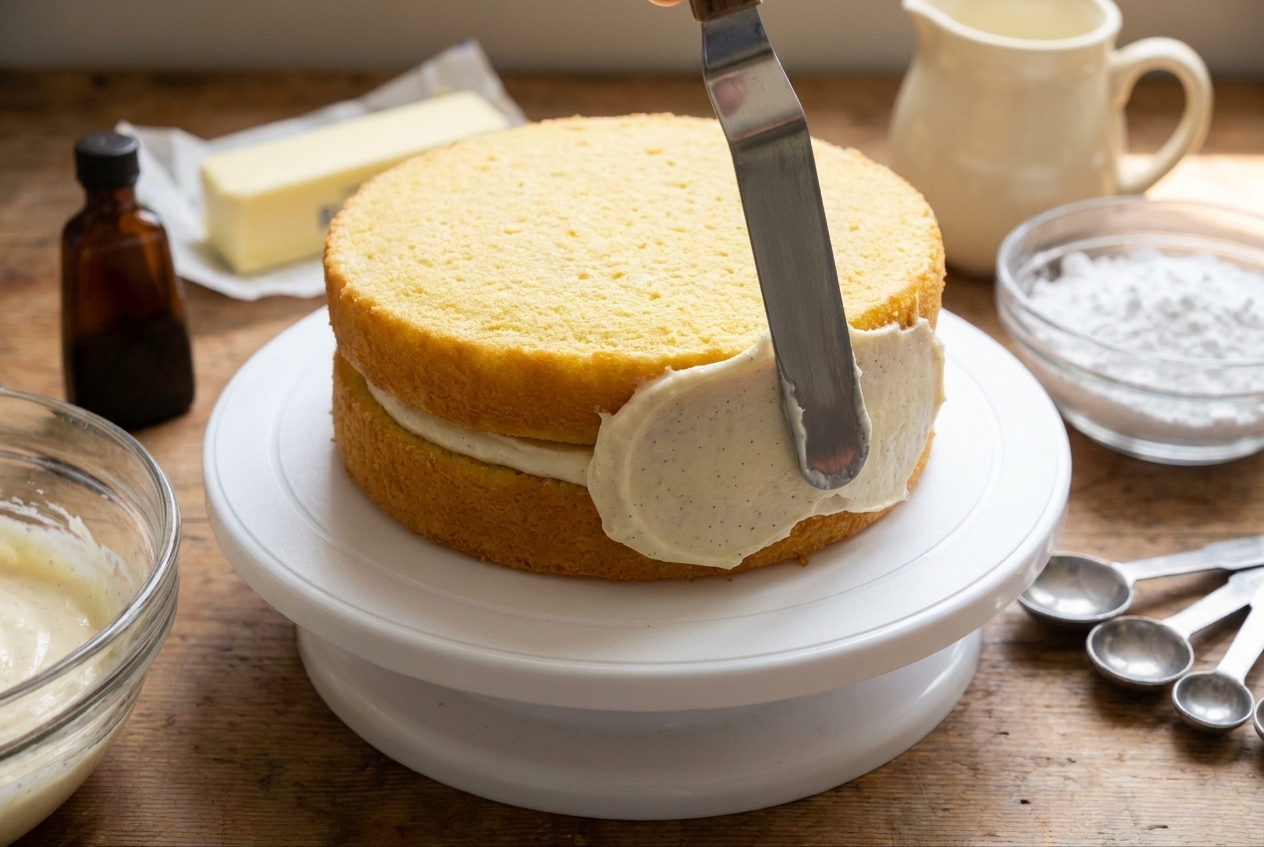
- For spreading on cakes: It should feel creamy and glide like soft butter when you swipe a spatula through it. Peaks should gently slump.
- For piping borders and cupcakes: It should hold a firm peak with defined ridges. If it droops, add a bit more powdered sugar or chill it briefly.
- For a thin crumb coat: Add an extra tablespoon of cream or milk so it spreads in a very thin layer without tugging the cake.
Scaling note: You can halve or double this recipe. If doubling, make sure your mixer bowl is large enough and add the sugar slowly to avoid a powdered sugar cloud. If measuring by cups, sifting helps with consistency.
Whisk vs paddle: I default to the paddle because it makes a smooth frosting with fewer bubbles. If you want extra fluff for cupcakes, you can use the whisk at the very end for 15 to 30 seconds, then switch back to low to smooth it out.
Nutrition
- Calories: 210
- Fat: 11 g
- Carbs: 29 g
- Protein: 0 g
- Fiber: 0 g
- Sugar: 28 g
- Sodium: 40 mg
Nutrition values are approximate and will vary based on the amount of powdered sugar and cream used.