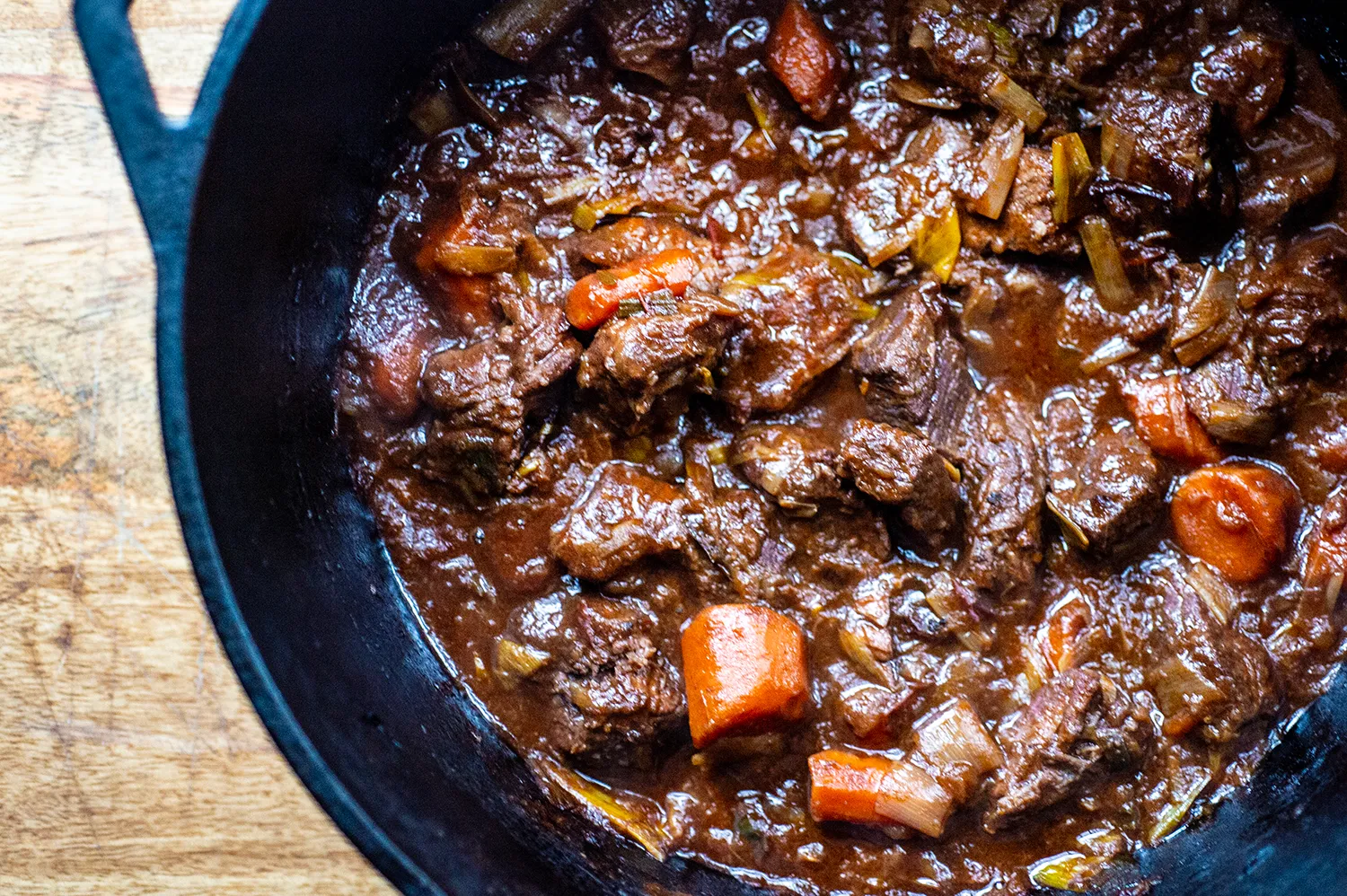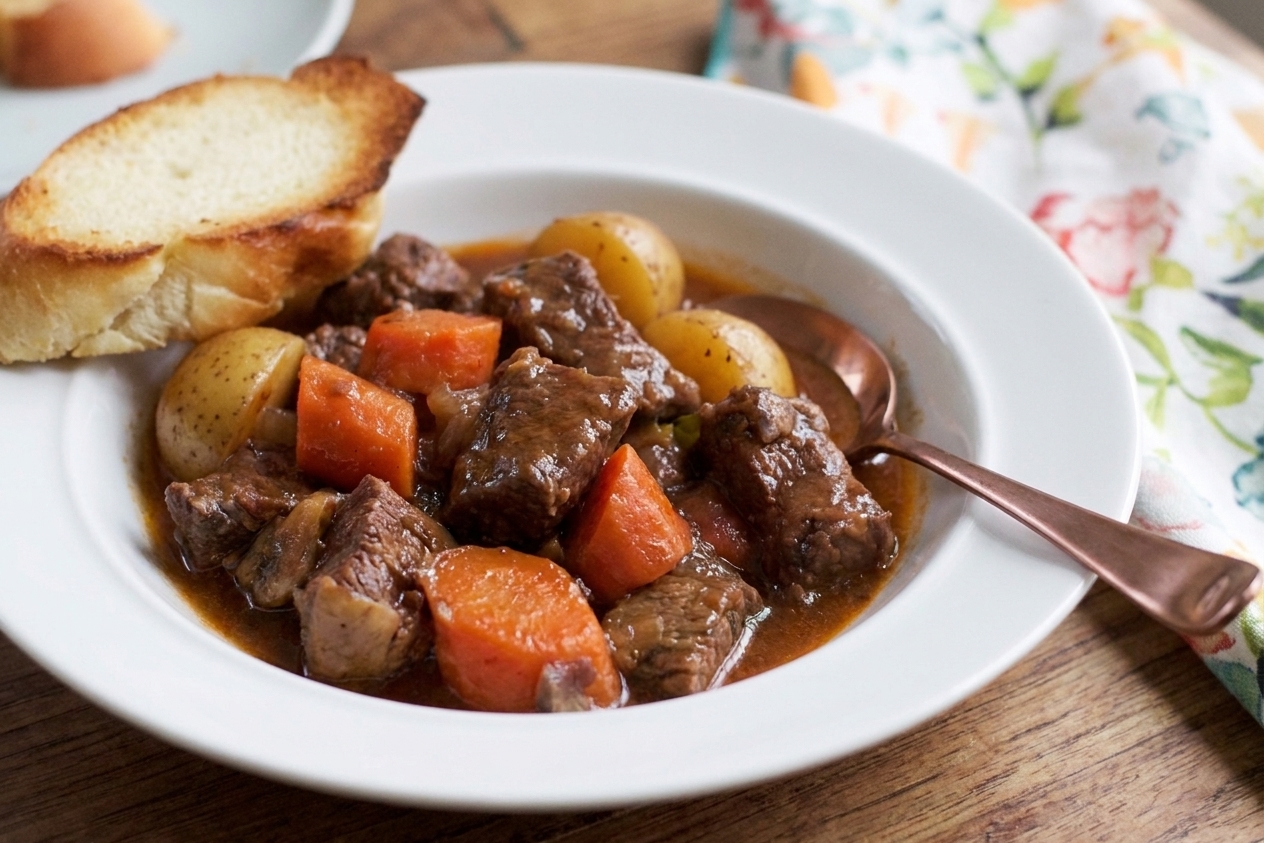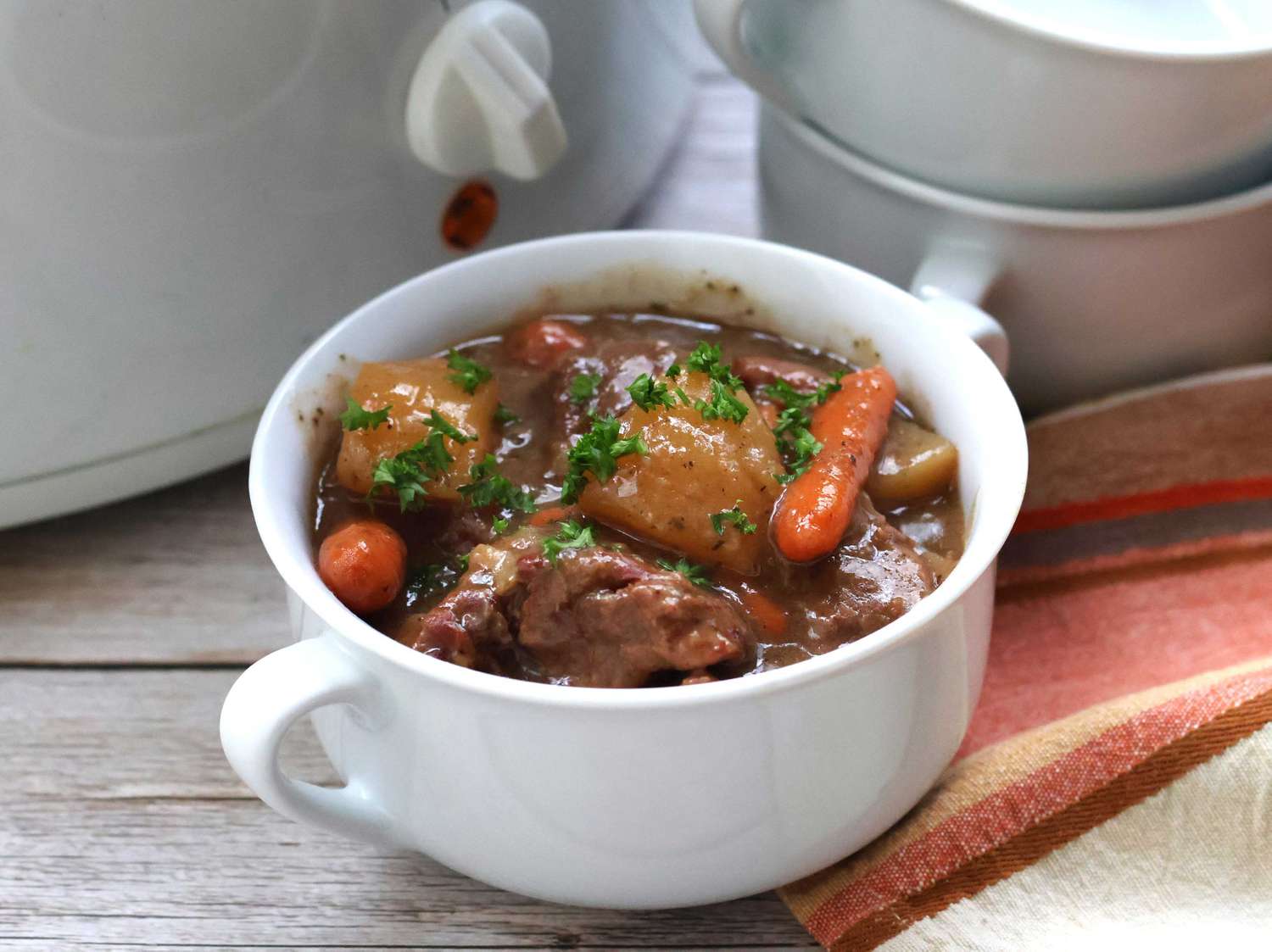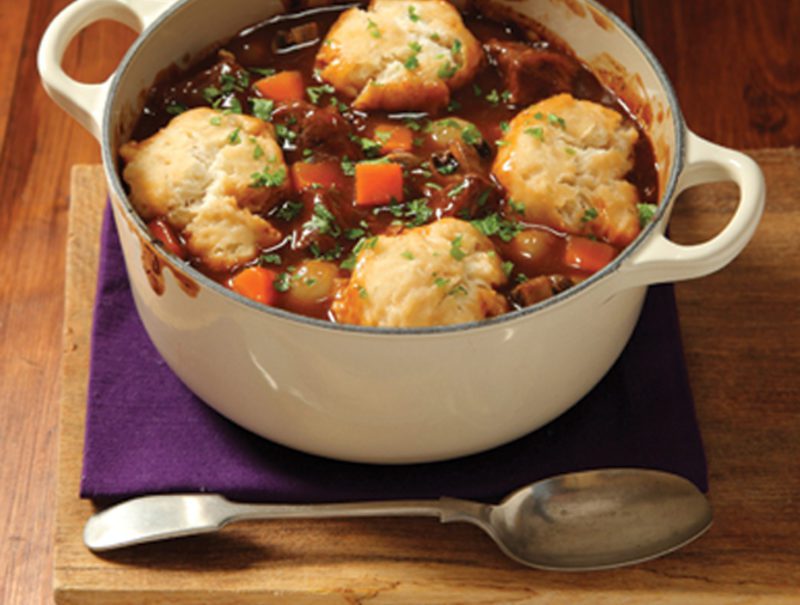


Beef stew is already comfort in a bowl. Add drop dumplings and it turns into the kind of dinner that makes everyone hover around the stove asking, “Is it ready yet?” The good news is dumplings are simple. The tricky part is how you cook them so they stay fluffy inside and your stew stays glossy and spoonable, not starchy and over-reduced.
This recipe starts with a classic beef stew base and finishes with soft, savory dumplings that steam right on top. I will walk you through the key variables I rely on every time: when to add the dough (only after the beef is tender), what the stew should look like so there is enough moisture to steam the dumplings through, and the doneness cues I trust when I do not want to stir and stir and accidentally turn dinner into gravy paste.
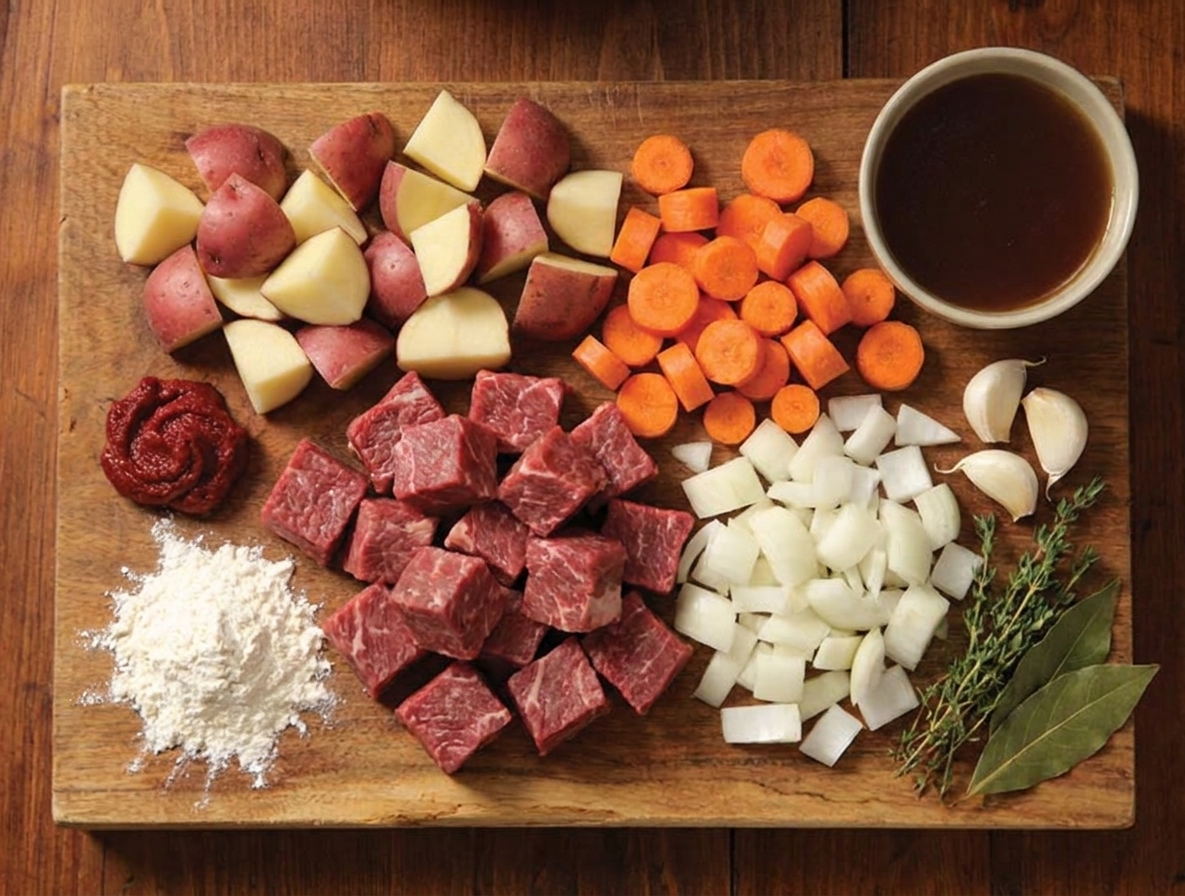
What to expect
- Rich, classic stew flavor from browning the beef and cooking the tomato paste until it darkens.
- Fluffy drop dumplings that cook by steam under the lid, not by being boiled under the surface.
- A stew that stays brothy and not over-thickened, because we keep the simmer gentle and avoid unnecessary stirring once the dumplings go on.
Why this recipe works
- Beef gets properly browned, which builds deep flavor before any liquid goes in.
- Tomato paste is cooked briefly to remove raw acidity and add caramelized richness.
- The stew is finished first, so the dumplings only need a short, controlled steam to cook through.
- Dumplings are dropped onto a gentle simmer with enough surrounding broth to create steady steam without boiling them apart.
- Minimal stirring at the end keeps the stew from turning cloudy and over-thickened once the dumplings are on top.
Ingredient notes
Beef chuck: The best weeknight-friendly cut for stew. It has enough fat and connective tissue to turn tender. Cut into 1 1/2-inch cubes so it stays juicy.
Flour (for stew): Tossing the beef with flour helps browning and gives the broth a light body. It should never feel gluey if you keep the simmer gentle and do not over-reduce.
Yukon Gold potatoes: Creamy but still hold their shape. Russets can work, but they break down more and thicken the stew.
Baking powder: This is the lift in the dumplings. Check that yours is fresh so the dumplings puff instead of turning heavy.
Buttermilk: Makes dumplings tender and lightly tangy. No buttermilk is not a dealbreaker. See substitutes.
Fresh parsley: Stirred into the dumpling dough and sprinkled at the end, it brightens the whole pot.
Equipment you will need
- Large Dutch oven or heavy-bottomed pot with a tight-fitting lid
- Sheet pan or large plate for holding browned beef
- Wooden spoon
- Medium bowl for dumpling dough
- Cookie scoop or two spoons for dropping dumplings
- Instant-read thermometer (optional, for checking dumplings)
Pro tips
- Brown in batches. If you crowd the pot, beef steams and you lose that flavorful crust.
- Keep dumpling dough shaggy. Overmixing makes dumplings tough. Stir just until no dry flour remains.
- Drop dough onto stew, not into broth. Aim for the solid surface so dumplings sit on top and steam.
- Leave space. Dumplings expand. A 1-inch gap between scoops helps them cook evenly.
- Resist peeking early. Give the dumplings 10 minutes before you lift the lid to check.
- If the stew thickened too much before dumplings: Add broth in small splashes until you see liquid pooling around the vegetables again.
Substitutes that work
- Buttermilk substitute: Mix 3/4 cup milk with 2 1/4 teaspoons lemon juice or white vinegar. Let stand 5 minutes, then use.
- Broth: Beef broth is classic, but chicken broth works if that is what you have. Season a little more aggressively at the end.
- Potatoes: Red potatoes hold shape well. Sweet potatoes are tasty but soften faster, so cut them a bit larger.
- Gluten-free: Use a 1:1 gluten-free flour blend for both the stew coating and the dumplings. Dumpling texture will be slightly more delicate.
Variations
- Herby dumplings: Add chopped chives or dill with the parsley.
- Cheddar dumplings: Fold 1/2 cup shredded sharp cheddar into the dumpling dough.
- Spicy warmth: Add a pinch of cayenne to the dumplings and a splash of hot sauce to the stew at the end.
- Mushroom boost: Brown 8 ounces sliced cremini mushrooms after the beef, then proceed with onions and garlic.
Serving ideas
- Serve as-is with a big spoon and extra black pepper.
- Add a crisp side salad with a sharp vinaigrette for contrast.
- Finish bowls with chopped parsley and a small squeeze of lemon to wake everything up.
Storage and reheating
Refrigerate: Store in an airtight container for up to 4 days. Dumplings will soften as they sit, which is not a bad problem to have.
Reheat: Warm gently on the stove over medium-low heat until steaming hot, adding a splash of broth or water to loosen. Avoid a hard boil, which can break down potatoes and make the stew overly thick.
Freezing: Freeze the stew base well. Dumplings are best made fresh, but you can freeze leftovers. Expect a softer dumpling texture after thawing.
Common mistakes
- Adding dumplings too early: They overcook while you wait for the beef to tenderize.
- Stew too thick before dumplings: Dumplings need steam from broth. Add liquid before you drop the dough.
- Boiling hard under the lid: This can make dumplings turn tough or dense and reduces the stew too fast. Keep it at a gentle simmer.
- Overmixing the dough: Leads to dense dumplings. Stir until just combined.
- Lifting the lid repeatedly: Dumps heat and steam. Set a timer, then start checking near the end.
FAQ
Can I bake the dumplings separately?
You can, but you will miss the best part, which is how the dumplings soak up a little stew flavor from the steam. If you prefer separate biscuits, bake them and serve on the side.
Why did my dumplings turn out dense in the middle?
Usually it is one of three things: the stew was too thick to generate steam, the dough was overmixed, or the lid was lifted too often. Next time, loosen the stew with broth before dropping dough and keep the lid closed, then start checking a dumpling around the 10-minute mark.
Do dumplings need to be submerged?
No. Drop dumplings should sit on top of the stew. They cook from steam trapped under the lid, with a little help from the moist heat rising off the broth.
How do I keep the stew from getting cloudy once dumplings go in?
Keep the simmer gentle, do not stir after the dumplings are added, and avoid boiling hard. Stirring breaks dumplings and releases extra starch into the broth.
Beef Stew with Dumplings
A classic, rich beef stew finished with fluffy drop dumplings. The dumplings steam on top in about 15 minutes, with specific cues for liquid level and doneness so the stew stays silky, not over-thickened.
- Prep
- 25 minutes
- Cook
- 2 hours 25 minutes
- Total
- 2 hours 50 minutes
- Yield
- 6 servings
Ingredients
- 2 1/2 pounds beef chuck, cut into 1 1/2-inch cubes
- 2 teaspoons kosher salt, plus more to taste
- 1 teaspoon black pepper, plus more to taste
- 1/3 cup all-purpose flour
- 2 tablespoons neutral oil (like canola or avocado), plus more if needed
- 1 large yellow onion, diced
- 3 garlic cloves, minced
- 2 tablespoons tomato paste
- 1 cup dry red wine (optional)
- 4 cups beef broth, plus more as needed
- 1 tablespoon Worcestershire sauce
- 2 bay leaves
- 1 teaspoon dried thyme (or 1 tablespoon fresh thyme leaves)
- 4 medium carrots, cut into 1-inch chunks
- 1 1/2 pounds Yukon Gold potatoes, cut into 1 1/2-inch chunks
- 1 cup frozen peas (optional)
- 2 tablespoons chopped fresh parsley, plus more for serving
- 1 tablespoon lemon juice or red wine vinegar, to finish (optional but recommended)
- For the dumplings:
- 1 1/2 cups all-purpose flour
- 2 teaspoons baking powder
- 1/2 teaspoon kosher salt
- 1/4 teaspoon baking soda
- 6 tablespoons cold unsalted butter, cut into small cubes
- 3/4 cup cold buttermilk
- 2 tablespoons chopped fresh parsley
Instructions
- Season and flour the beef. Pat the beef dry. Season with 2 teaspoons kosher salt and 1 teaspoon pepper. Sprinkle with 1/3 cup flour and toss until lightly coated.
- Brown the beef in batches. Heat 2 tablespoons oil in a large Dutch oven over medium-high heat. Add beef in a single layer and brown well on 2 sides, 3 to 4 minutes per side. Transfer browned beef to a plate and repeat, adding a little more oil if the pot looks dry.
- Saute the aromatics. Lower heat to medium. Add the onion and a pinch of salt. Cook, scraping up browned bits, until softened, 5 to 7 minutes. Add garlic and cook 30 seconds, just until fragrant.
- Cook the tomato paste. Stir in tomato paste and cook 1 to 2 minutes, until it darkens slightly and smells sweet, not raw.
- Deglaze. If using wine, pour it in and simmer 2 to 3 minutes, scraping the bottom, until slightly reduced. If not using wine, use a splash of broth to deglaze.
- Simmer the stew. Return beef and any juices to the pot. Add beef broth, Worcestershire, bay leaves, and thyme. Bring to a gentle simmer, then reduce heat to low. Cover slightly ajar and simmer until the beef is starting to turn tender, about 1 hour 30 minutes.
- Add vegetables. Add carrots and potatoes. Keep at a gentle simmer, partially covered, until beef is fork-tender and potatoes are cooked through, 35 to 45 minutes. Skim excess fat if desired.
- Adjust liquid level for dumplings. Before adding dumplings, make sure there is visible broth pooling around the solids and the surface is gently simmering. If the stew looks tight or very thick, add 1/2 cup broth or water at a time until it loosens. Bring back to a low simmer.
- Make the dumpling dough. In a medium bowl, whisk 1 1/2 cups flour, baking powder, 1/2 teaspoon salt, and baking soda. Add cold butter and work it in with fingertips until you have pea-size pieces. Stir in buttermilk and parsley just until a shaggy dough forms. Do not overmix.
- Drop dumplings. Using a cookie scoop or two spoons, drop heaping tablespoon-size portions of dough onto the surface of the stew, spacing them about 1 inch apart. Dumplings should sit on top of the solids, not be submerged.
- Cover and steam. Cover with a tight-fitting lid and keep the stew at a gentle simmer. Cook for 10 minutes without lifting the lid, then begin checking for doneness. Total time is usually 10 to 15 minutes, depending on dumpling size, pot width, and how well your lid seals.
- Check doneness and finish. Quickly lift the lid and test one dumpling by splitting it open. The center should look like a cooked biscuit crumb, not wet dough. If needed, cover and cook 3 to 5 minutes more. If you prefer using a thermometer, treat it as a backup and look for a hot, fully set center (often around 200°F to 205°F in this style of dumpling). When dumplings are cooked, stir in peas (if using) and 2 tablespoons parsley around the dumplings. Taste and adjust salt and pepper. Finish with lemon juice or vinegar if desired for brightness.
- Serve. Ladle stew into bowls, making sure each serving gets a dumpling. Top with more parsley and black pepper.
Notes
- Gentle simmer only: Once dumplings go in, keep the heat low enough that you see quiet bubbling, not a rolling boil. A hard boil can make dumplings turn tough or dense and it reduces the stew too fast.
- Liquid matters: Dumplings cook by steam. If your stew is very thick before dumplings, loosen it with broth or water first.
- Do not stir after adding dumplings: Stirring can break them and cloud the stew. Stir in peas and parsley carefully around the edges at the end.
- Wine option: If you skip wine, add a splash more broth and consider finishing with a little vinegar or lemon for balance.