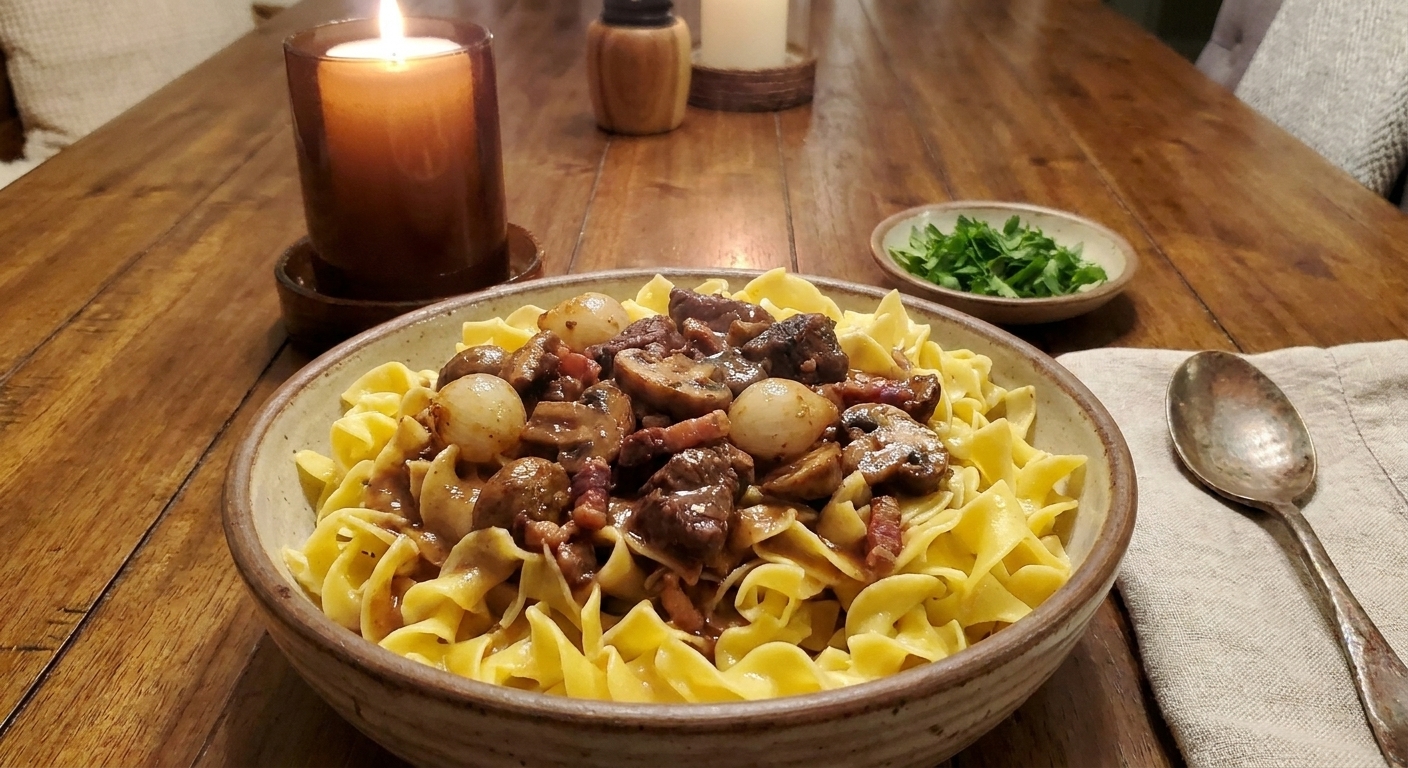

I love beef bourguignon for the same reason I loved teaching it in cooking classes: it looks fancy, but it is mostly about a few high-impact moves you can absolutely do on a weeknight or a lazy Sunday. You brown beef until it smells nutty and looks deeply bronzed, render bacon for smoky richness, then braise everything in red wine until the sauce turns silky and the meat yields with a fork.
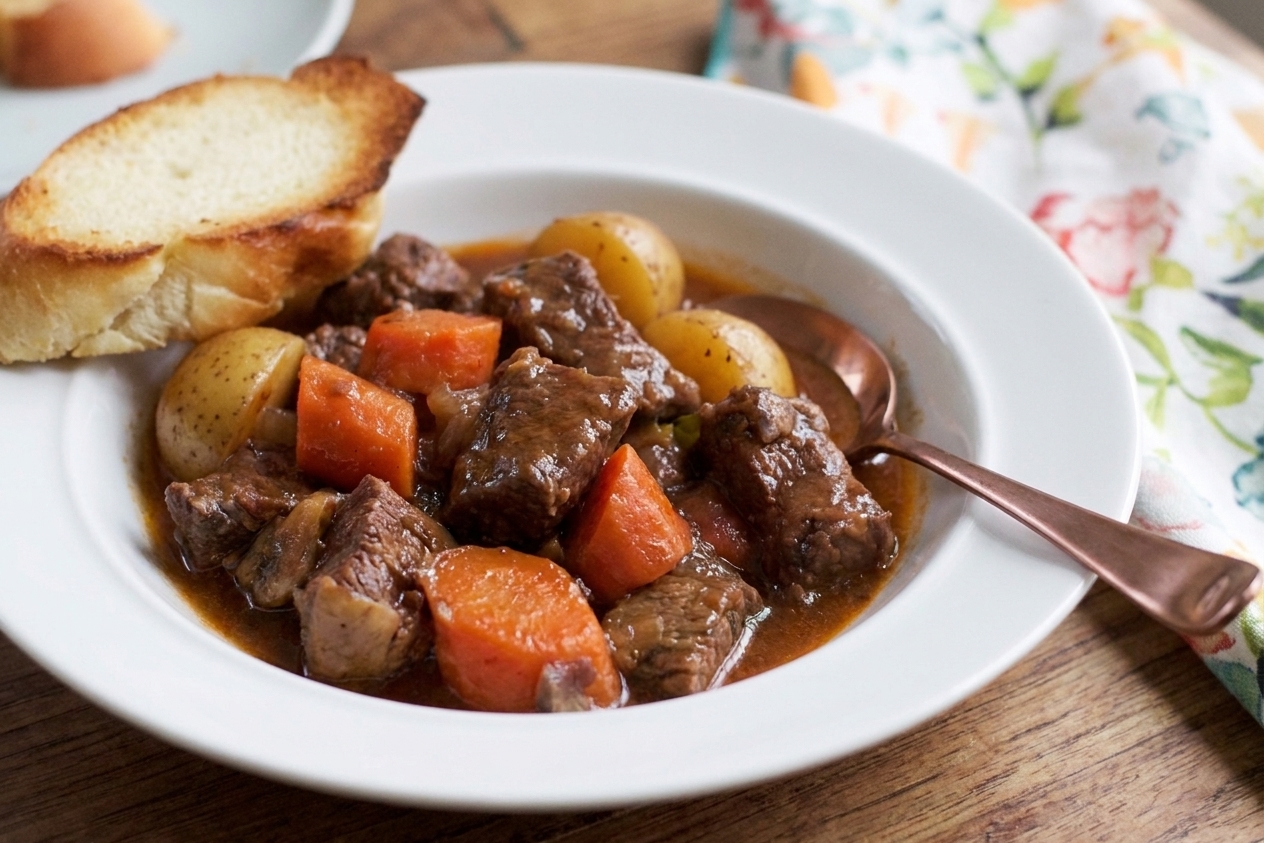
This version keeps the soul of the classic: bacon, mushrooms, and pearl onions in a red-wine braise. No potatoes, no detours. The goal is a glossy, wine-dark sauce that clings to every bite. If you take nothing else from me, take this: give the beef space to brown, and reduce the wine hard in the same pot right after the tomato paste, before the stock and beef go back in. Those two steps are what separate “nice beef stew” from true bourguignon.

What to expect
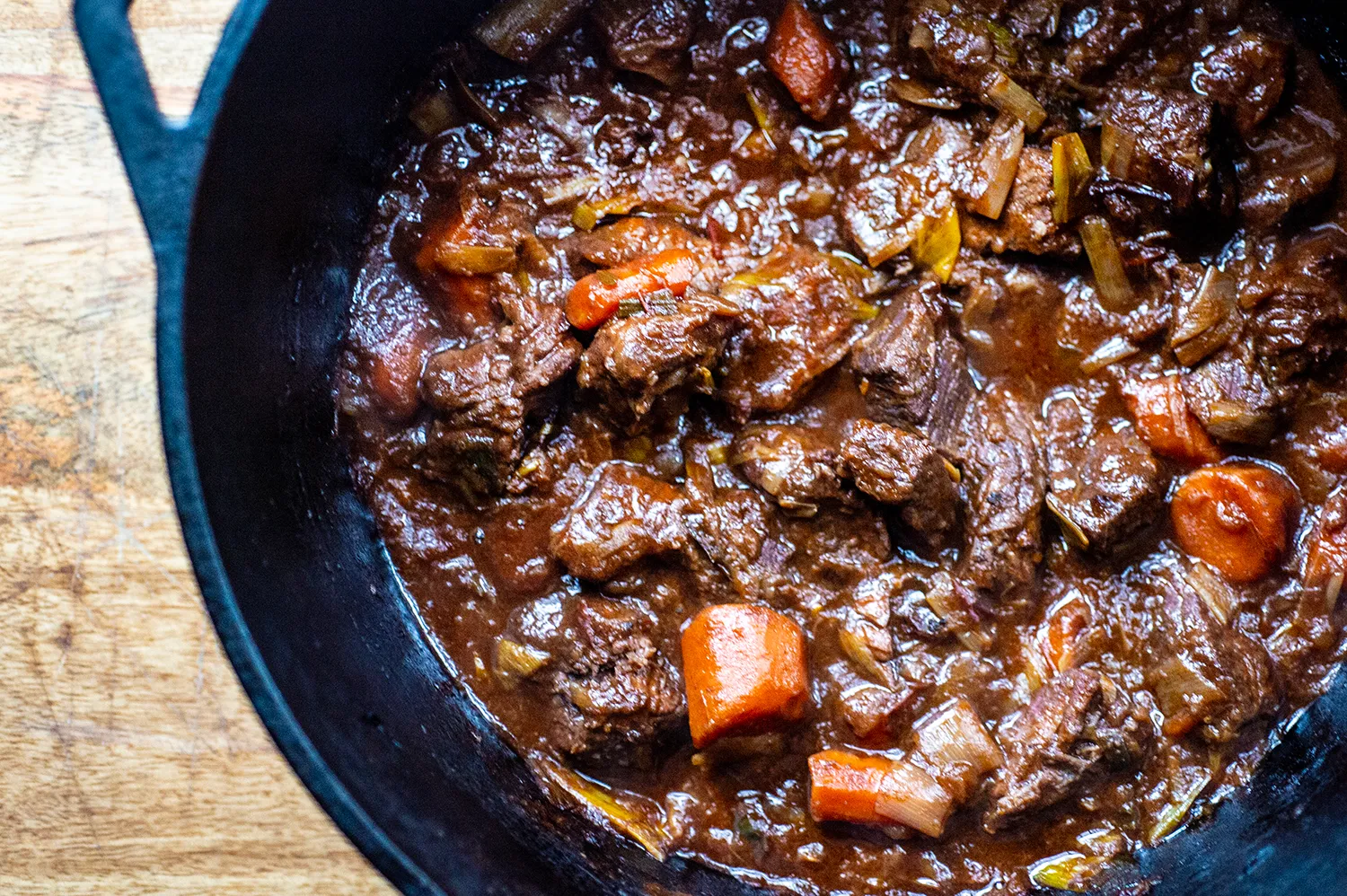
Expect a deep, savory braise with gentle acidity from the wine, a little sweetness from the onions, and earthy mushrooms that soak up the sauce. The beef should be fork-tender, not shredded, and the sauce should look shiny and lightly thickened, like it wants to coat a spoon.
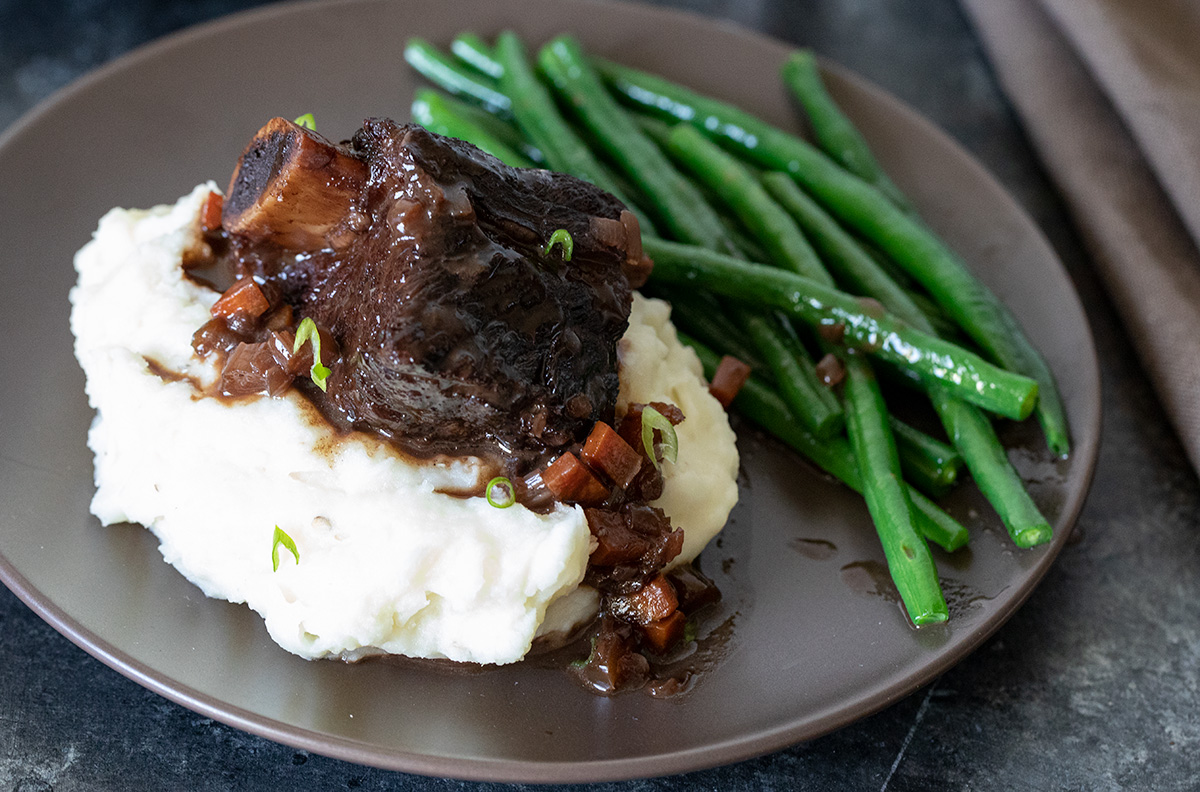
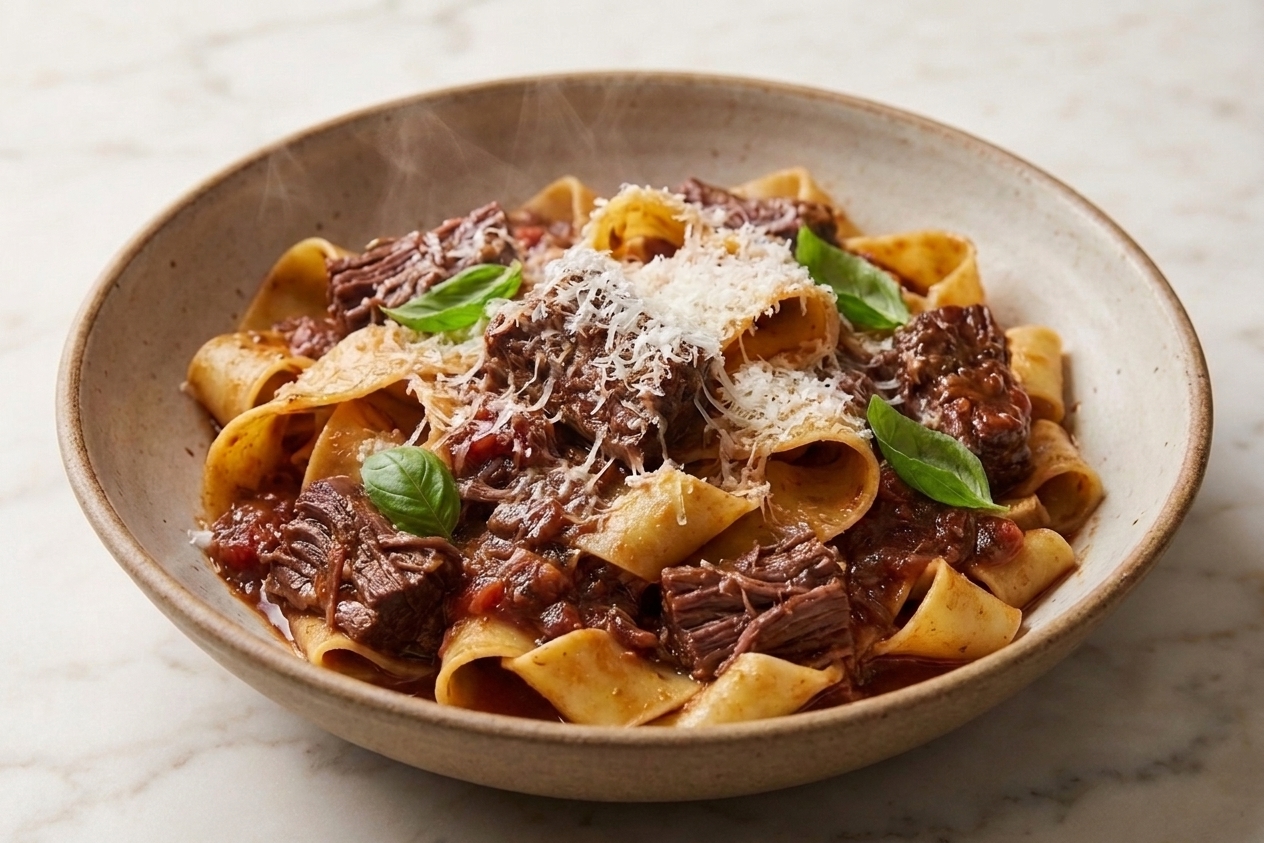
I like serving bourguignon with something that acts like a sponge: buttered egg noodles, creamy polenta, or mashed potatoes. Choose one, warm it well, and give it a pinch of salt before topping with the stew. That last pinch matters.
Key techniques
Browning
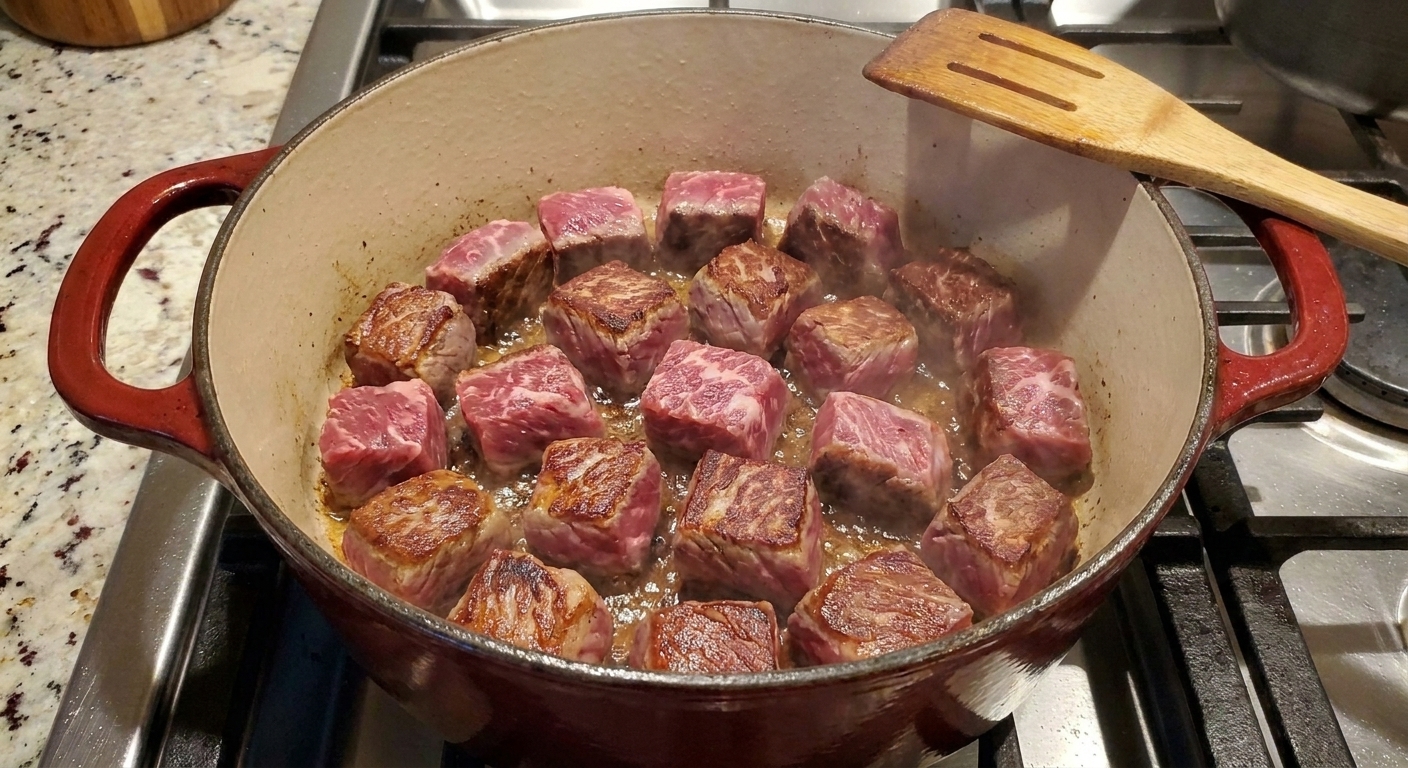
Brown the beef in batches in a heavy pot. You are looking for a dark golden crust, not gray meat. If the pot is crowded, the beef steams and you lose the roasty, almost toasted flavor that makes the finished sauce taste like it cooked all day.
Wine reduction
After you sauté the aromatics and tomato paste, pour the wine into the Dutch oven and boil it hard to reduce by about one-third, or until it no longer smells sharply of alcohol and the bubbles look tighter and glossier. This quick reduction softens the wine’s edges and concentrates its flavor so the braise tastes round and integrated, not raw and winey.
Glossy sauce
You can get there two ways: a light flour dusting on the beef before browning, or a small beurre manié (soft butter mashed with flour) stirred in near the end. Either way, the goal is a sauce that coats a spoon and finishes satiny, not thick like gravy.
Mushrooms and pearl onions
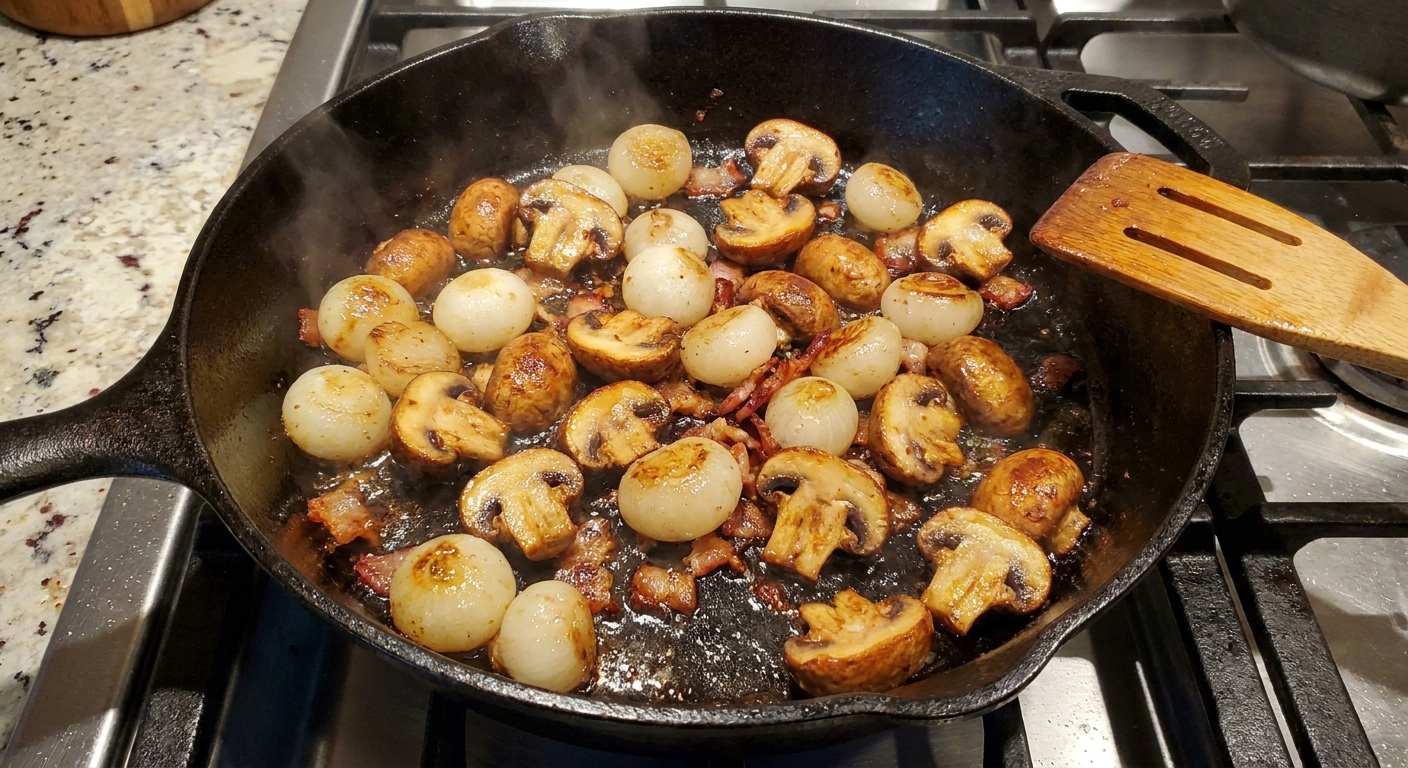
For the cleanest flavor and best texture, I like to brown the mushrooms and pearl onions separately, then fold them in near the end. They stay distinct instead of melting into the braise, and they bring a fresh hit of savoriness right when the sauce is at its glossiest.
Why this recipe works
- Batch browning builds the base flavor. The fond on the bottom of the pot dissolves into the braising liquid and becomes the backbone of the sauce.
- Reducing the wine concentrates flavor. It softens sharp alcohol aroma and gives you a richer, more balanced braise.
- Bacon fat carries aroma. Rendering bacon first seasons the whole pot and gives the mushrooms and onions a savory head start.
- Late-added mushrooms and onions stay distinct. They turn tender while keeping their shape, so the final dish feels layered instead of mushy.
Ingredient notes
Beef
Chuck roast is my go-to for bourguignon because it has enough connective tissue to turn meltingly tender without drying out. Cut into 1 1/2-inch cubes so it stays meaty after the long braise.
Red wine
Choose a dry red you would happily drink. Pinot noir is classic for Burgundy style, but other dry reds work too. Avoid anything labeled sweet. You will reduce it, so any off flavors get louder.
Bacon
Look for thick-cut bacon if you can. You want lardons that stay chewy-crisp around the edges, not tiny shards that disappear.
Pearl onions
Frozen pearl onions are a weeknight gift. No peeling marathon, and they braise beautifully. If you only have fresh, blanch and peel them before cooking.
Mushrooms
Cremini are ideal here. They have more flavor than white button mushrooms and hold their shape well.
Equipment you will need
- Dutch oven or heavy oven-safe pot with a tight-fitting lid, 5 to 7 quarts
- Large skillet (optional but helpful for browning mushrooms and onions separately)
- Tongs for turning beef cubes cleanly
- Fine-mesh strainer (optional) for a very smooth sauce
- Wooden spoon for scraping up fond
Pro tips
- Dry the beef well. Pat cubes dry with paper towels before seasoning. Surface moisture is the enemy of browning.
- Salt in layers. Season the beef before browning, then taste the sauce at the end. Bacon and stock vary a lot in saltiness.
- Reduce the wine until the smell softens. Aim for roughly a one-third reduction, and watch the bubbles turn tighter and glossier as it concentrates.
- Keep the simmer gentle. In the oven, aim for an occasional lazy bubble, not a rolling boil. Aggressive bubbling can make the beef tough.
- Make it ahead if you can. Like most braises, it is even better the next day when the flavors knit together.
Substitutes that work
- No pearl onions: Use thick wedges of yellow onion. Sear cut-sides for color, then braise until tender.
- No cremini mushrooms: Use button mushrooms or a mix of mushrooms. If using delicate mushrooms, add them later so they do not collapse.
- No fresh thyme: Use a small pinch of dried thyme. Dried is stronger, so go light.
- No beef stock: Chicken stock works in a pinch. The wine and beef still bring plenty of depth.
- Gluten-free thickening: Skip flour. Reduce the sauce uncovered at the end, or thicken with a cornstarch slurry (add gradually, simmering between additions).
Variations
- Extra mushroom-forward: Brown the mushrooms deeply in a separate pan and fold them in near the end for maximum flavor and texture.
- More herb perfume: Add a small bay leaf to the braise, then remove it before serving.
- Shallot finish: Stir in 1 tablespoon minced shallot off-heat and let it sit 5 minutes for a subtle fresh bite.
- Smoother sauce: Strain out the vegetables, blend them with a ladle of sauce, then stir back in for a velvety texture.
Serving ideas
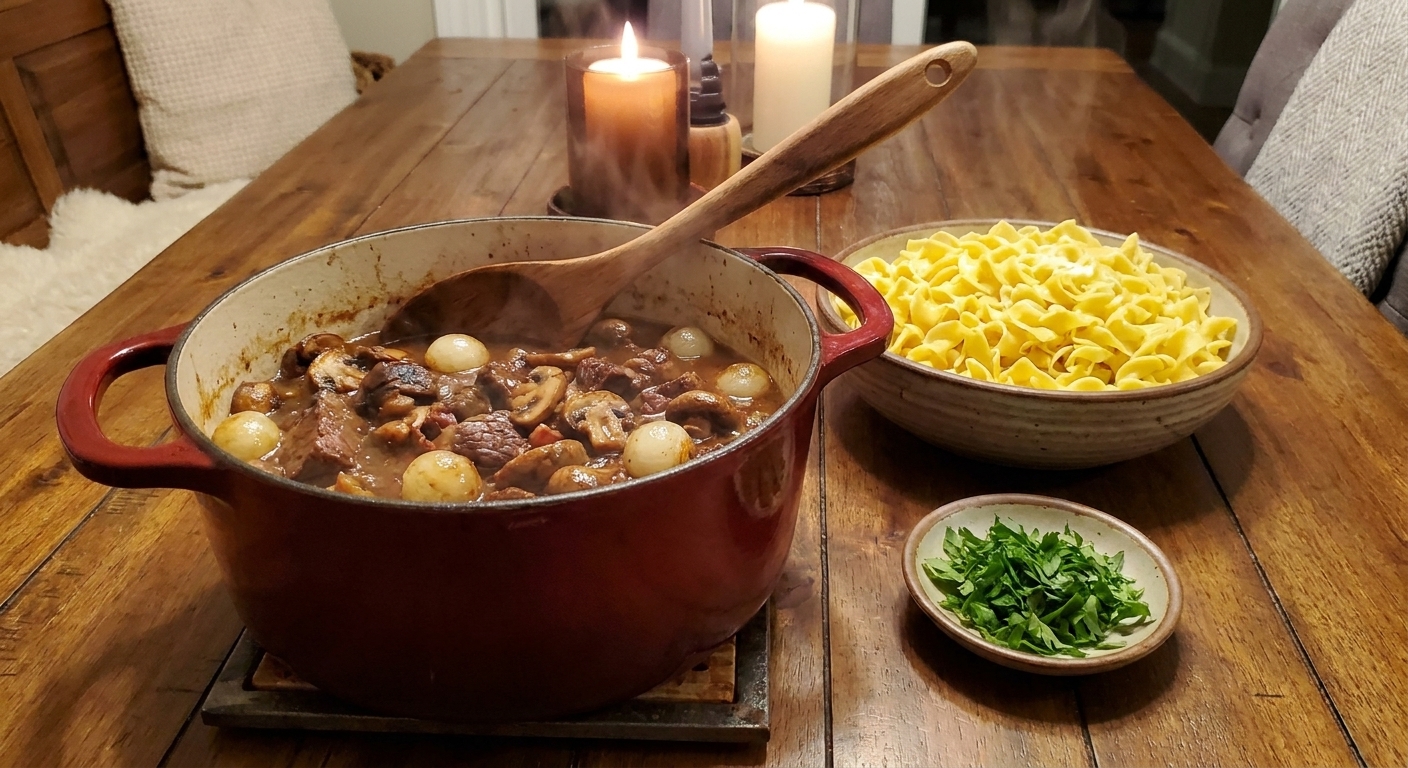
My favorite starch choice is buttered egg noodles because they catch the sauce in all the right places. A close second is creamy polenta for maximum comfort. Mashed potatoes are also classic and practical.
- With egg noodles: Toss noodles with butter and a pinch of salt, then ladle bourguignon over top.
- With polenta: Make it looser than usual so it spreads into the bowl like a creamy base.
- With mashed potatoes: Make them a little less stiff so the sauce can mingle.
- Finishing touches: Chopped parsley for freshness, and a tiny splash of red wine vinegar if the sauce tastes flat.
Storage and reheating
- Refrigerate: Cool completely, then store airtight for up to 4 days.
- Freeze: Freeze for up to 3 months. Thaw overnight in the refrigerator for best texture.
- Reheat: Warm gently on the stove over medium-low, stirring occasionally. Add a splash of stock or water if the sauce has thickened too much.
- Skim fat if needed: The next day, any excess fat will rise and solidify. You can lift it off for a cleaner sauce.
Common mistakes
- Crowding the pan: If the beef steams, you lose browning flavor. Work in batches and be patient.
- Skipping the wine reduction: Adding raw wine straight to the braise can taste sharp. Reduce it first until the alcohol edge softens.
- Boiling instead of braising: A hard boil can tighten the meat. Keep it at a gentle simmer in the oven.
- Overcooking mushrooms: If mushrooms go in too early, they can shrink into little sponges. Brown and add them later.
- Not tasting at the end: A braise often needs a final tweak: salt, pepper, and sometimes a small hit of acid.
FAQ
What wine is best for beef bourguignon?
A dry red you enjoy drinking. Pinot noir is traditional, but any medium-bodied dry red can work. Avoid sweet reds. You will reduce the wine, so flavors concentrate.
How much should I reduce the wine?
Reduce it by about one-third, or until it no longer smells sharply of alcohol and the bubbles look tighter and glossier, before adding the stock and returning the beef to the pot.
How do I know the beef is done?
When a fork slides in easily and you can pull a piece apart with gentle pressure. If it is still chewy, it needs more time.
Can I make it the day before?
Yes, and I recommend it. Chill overnight, then reheat gently. The sauce tastes deeper and more integrated the next day.
Why is my sauce thin?
Either it needs more reduction, or it needs a small amount of thickener. Simmer uncovered to reduce, or whisk in a little beurre manié and simmer until glossy.
Beef Bourguignon
Beef braised in red wine with bacon, mushrooms, and pearl onions until the meat is fork-tender and the sauce is glossy and rich.
- Prep
- 30 minutes
- Cook
- 3 hours 15 minutes
- Total
- 3 hours 45 minutes
- Yield
- 6
Ingredients
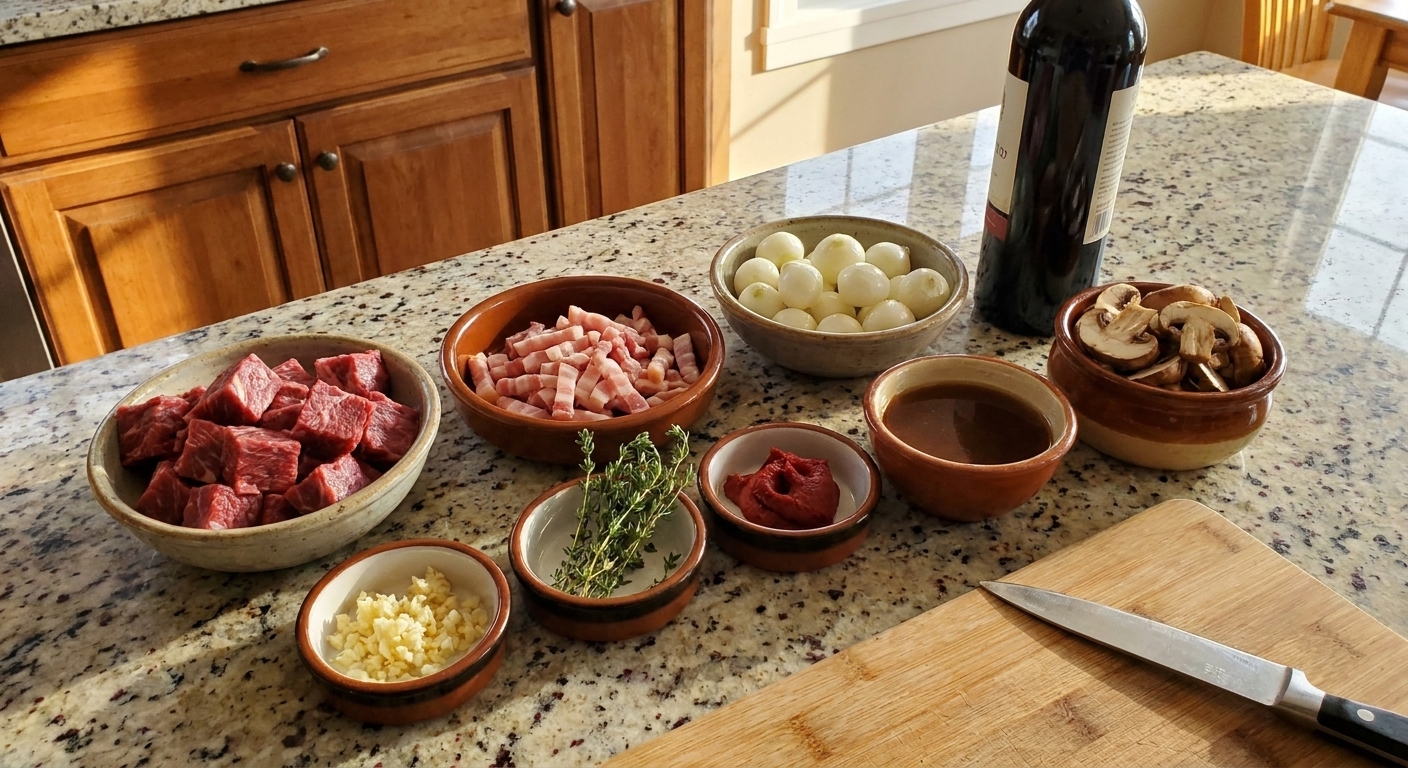
- 3 lb beef chuck roast, cut into 1 1/2-inch cubes
- Kosher salt, to taste
- Freshly ground black pepper, to taste
- 2 to 3 tbsp all-purpose flour (optional, for light thickening)
- 6 oz thick-cut bacon, cut into lardons
- 2 tbsp neutral oil (as needed, for browning)
- 1 large yellow onion, finely chopped
- 2 medium carrots, sliced into coins
- 4 cloves garlic, minced
- 2 tbsp tomato paste
- 1 (750 ml) bottle dry red wine (about 3 cups), divided
- 2 cups beef stock, plus more as needed
- 4 to 6 sprigs fresh thyme
- 2 bay leaves
- 1 lb cremini mushrooms, halved (quartered if large)
- 1 (10 to 12 oz) bag frozen pearl onions, thawed
- 2 tbsp unsalted butter (optional, for finishing)
- 1 tbsp red wine vinegar (optional, to brighten at the end)
- 2 tbsp chopped fresh parsley, for serving
Instructions
- Heat oven: Position a rack in the lower third of the oven and preheat to 325°F.
- Prep and season the beef: Pat the beef cubes very dry with paper towels. Season generously with salt and pepper. If using flour, toss the beef with 2 to 3 tablespoons flour until lightly dusted, shaking off excess.
- Render the bacon: In a large Dutch oven over medium heat, cook the bacon lardons, stirring occasionally, until the fat renders and the bacon is browned at the edges, 6 to 10 minutes. Use a slotted spoon to transfer bacon to a bowl, leaving the fat in the pot.
- Brown the beef in batches: Increase heat to medium-high. Add a drizzle of oil if the pot looks dry. Add beef in a single layer, leaving space between pieces. Sear until deeply browned on at least 2 sides, 6 to 10 minutes per batch. Transfer browned beef to a plate and repeat until all beef is browned.
- Sauté aromatics: Reduce heat to medium. Add the chopped onion and carrots to the pot and cook, scraping up browned bits, until softened and lightly golden, 6 to 8 minutes. Stir in garlic and cook 30 seconds.
- Cook the tomato paste: Stir in tomato paste and cook until it darkens slightly and smells sweet and toasty, 1 to 2 minutes.
- Add wine and reduce: Pour in about 2 1/2 to 3 cups of the red wine. Bring to a strong simmer and boil, stirring and scraping the bottom, until reduced by roughly one-third and the alcohol smell softens, 8 to 12 minutes.
- Braise: Add the beef and any juices back to the pot, along with the cooked bacon. Add beef stock, thyme sprigs, and bay leaves. The liquid should come about 2/3 of the way up the meat. If needed, add a splash more stock or wine. Bring just to a simmer, cover, and transfer to the oven. Braise until the beef is fork-tender, 2 1/2 to 3 hours, turning the meat once halfway through if you remember.
- Brown mushrooms and pearl onions: About 30 minutes before the beef is done, heat a large skillet over medium-high. Add a small spoonful of bacon fat from the pot (or a bit of oil). Add mushrooms and cook until they release moisture and then brown deeply, 8 to 10 minutes. Add pearl onions and cook until lightly browned and hot through, 4 to 6 minutes. Season with a pinch of salt.
- Finish the stew: When the beef is tender, remove the Dutch oven from the oven. Discard thyme stems and bay leaves. Stir in the browned mushrooms and pearl onions. If the sauce is thinner than you like, simmer uncovered over medium heat for 10 to 20 minutes to reduce. For extra gloss, stir in 2 tablespoons butter until melted.
- Taste and balance: Taste the sauce and adjust with salt and pepper. If it tastes heavy or flat, stir in up to 1 tablespoon red wine vinegar, a little at a time, until it tastes bright and balanced.
- Serve: Ladle over buttered egg noodles, creamy polenta, or mashed potatoes. Finish with chopped parsley.
Notes
Wine note: You will use most of a standard 750 ml bottle. If you prefer, replace a small portion of the wine with extra stock, but keep enough wine for a true bourguignon-style braise.
Make-ahead: Cool, refrigerate overnight, then reheat gently. The flavor improves and excess fat is easy to lift off the top.
Texture control: For a slightly thicker sauce without flour, simply simmer uncovered at the end until it coats a spoon.