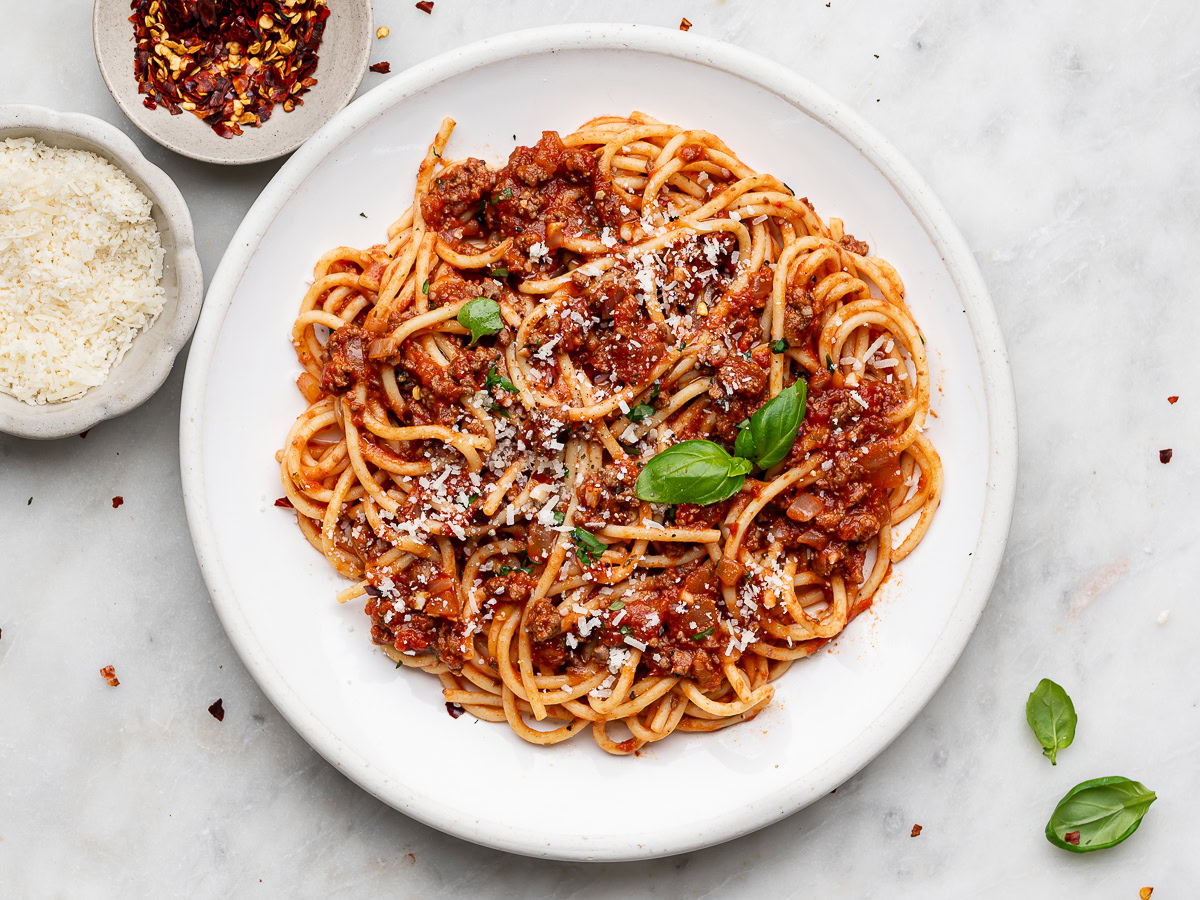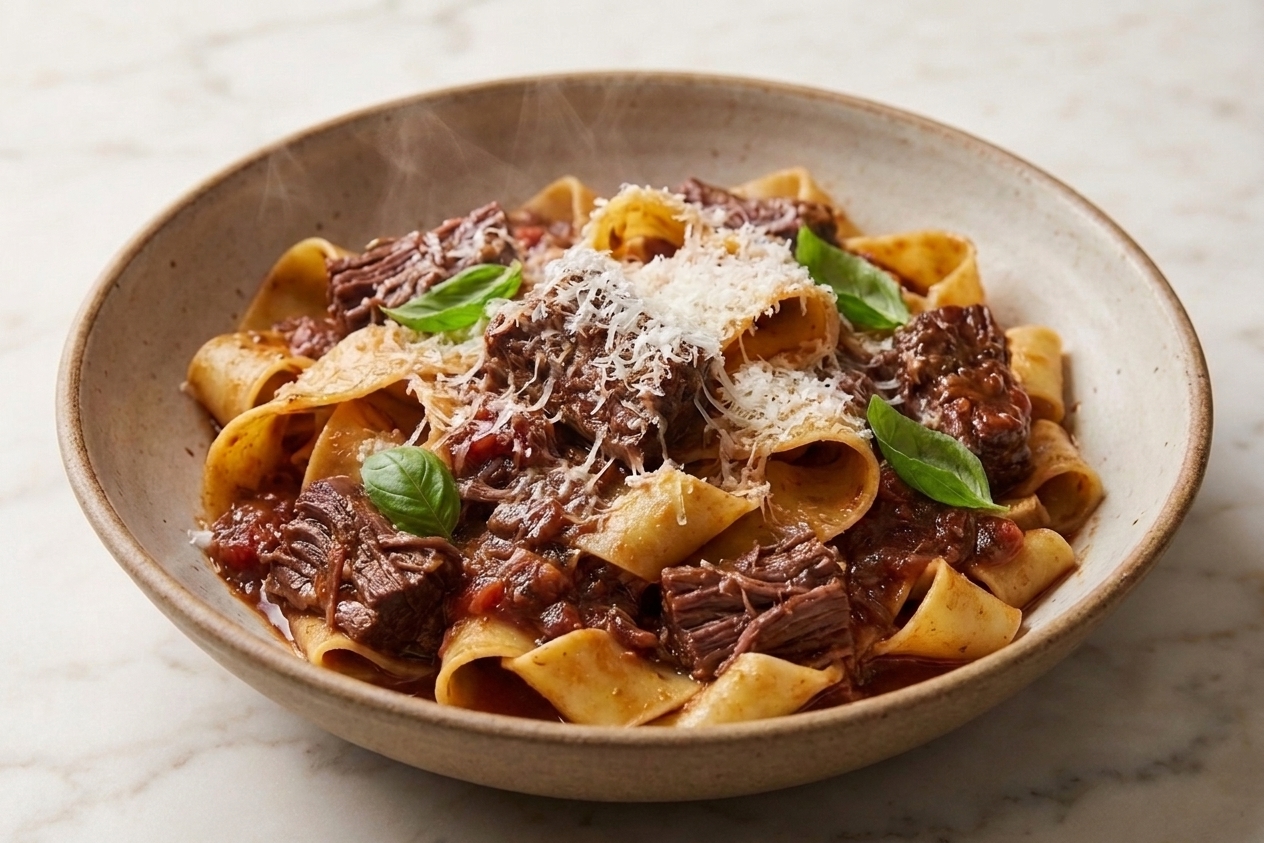

If you want that restaurant-style bowl of pasta where the sauce clings to every ridge and the meat tastes like it’s been simmering all day, this short rib ragu is it. We braise bone-in short ribs low and slow in a tomato-and-red-wine braise until the beef practically falls apart, then shred it and reduce the sauce until it turns rich, glossy, and thick enough to coat a spoon.

My favorite part is the transformation at the end. What starts as a brothy braise becomes a thick, silky pasta sauce once you shred the beef back in and let everything simmer uncovered. That last reduction is where it all comes together, and it’s also where you get to taste and dial in salt and a touch of acid, usually a splash of red wine vinegar, so the whole pot pops.
It’s also a dream for make-ahead cooking. Chill it overnight and you can usually lift off the hardened fat cap in one satisfying piece, then rewarm the ragu and toss with pasta for the kind of dinner that feels fancy but behaves like leftovers.
Why this recipe works
- Bone-in short ribs bring built-in richness. The collagen and marrow melt into the sauce, giving you a naturally velvety texture.
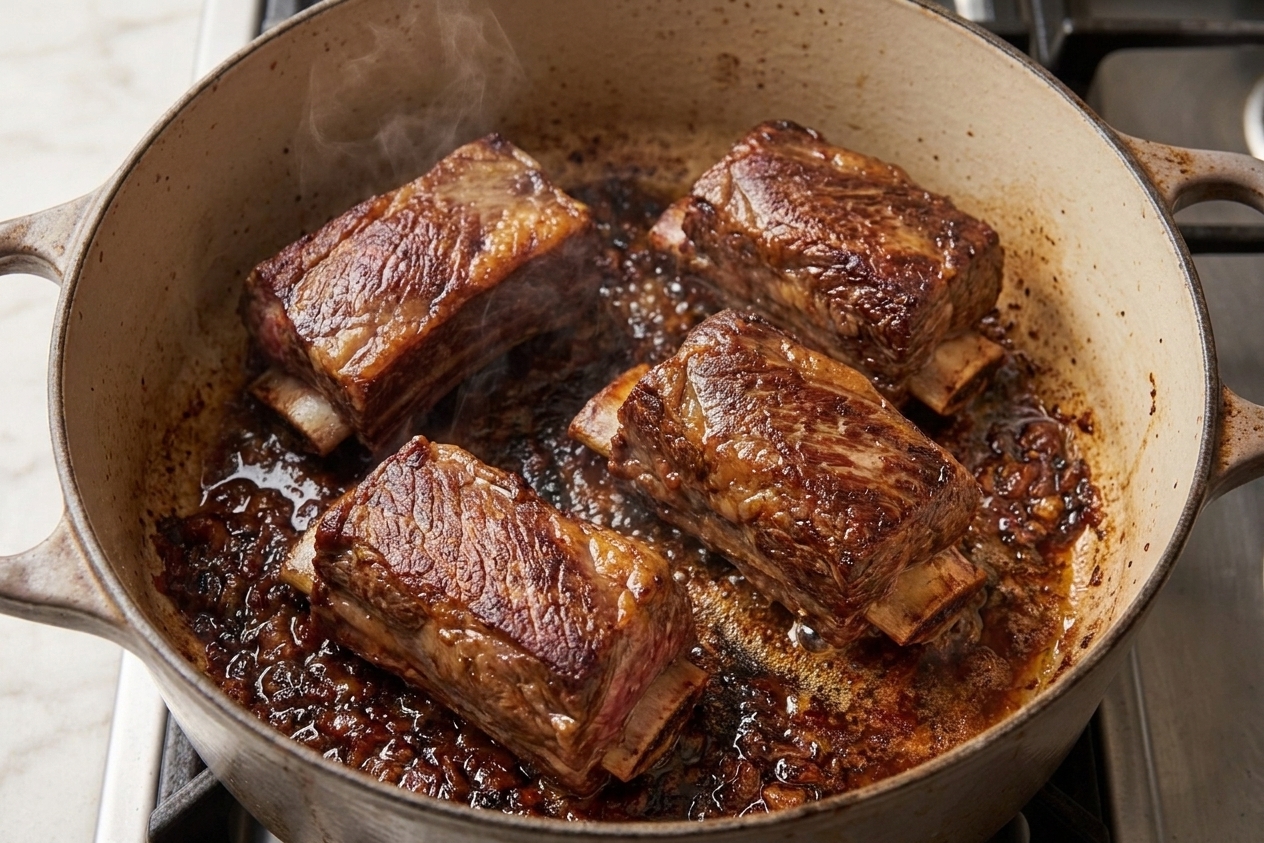
- We sear first, then braise. Browning the ribs creates deep flavor from the fond, which becomes part of the ragu.
- Tomato plus red wine creates balance. Tomato adds sweetness and body; wine adds acidity and complexity so the sauce does not taste flat.
- Shred, then reduce. Shredding increases surface area so the beef absorbs the sauce. Reducing uncovered concentrates flavor and gives that glossy, clingy finish that actually sticks to noodles.
- Chilling improves the texture. A night in the fridge lets the flavors meld and usually makes defatting easy, which keeps the ragu luxurious instead of greasy.
Ingredient notes
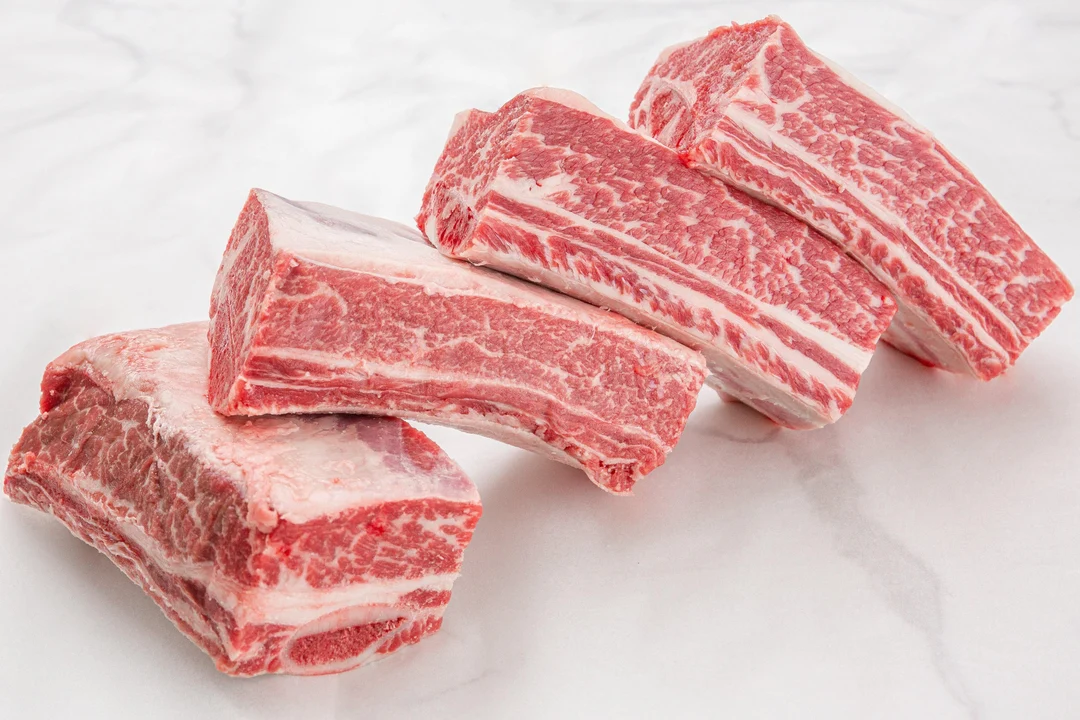
- Bone-in beef short ribs: Look for English-cut short ribs, thick rectangles of meat on a single bone. Plan on 1 short rib per person if they are large, or about 3 to 4 pounds total for 6 servings of pasta.
- Red wine: Use a dry red you would drink. Cabernet, Merlot, Syrah, or a red blend all work. Avoid sweet wines.
- Tomatoes: A good-quality canned crushed tomato or whole peeled tomatoes (crushed by hand) gives the ragu body. Tomato paste is optional but helpful for deeper flavor.
- Aromatics: Onion, carrot, and celery create a classic base and add sweetness so you do not need to add sugar.
- Broth: Beef broth adds depth, but chicken stock works fine. If you use low-sodium, you can control salt at the end.
- Dairy to finish: A knob of butter or a splash of cream at the end is optional, but it boosts sheen and rounds out the acidity.
Equipment you will need
- Dutch oven or heavy oven-safe pot with a tight-fitting lid (5.5 to 7 quarts is ideal)
- Tongs for browning and turning ribs
- Wooden spoon for scraping up fond
- Fine-mesh strainer (optional, if you want a smoother sauce)
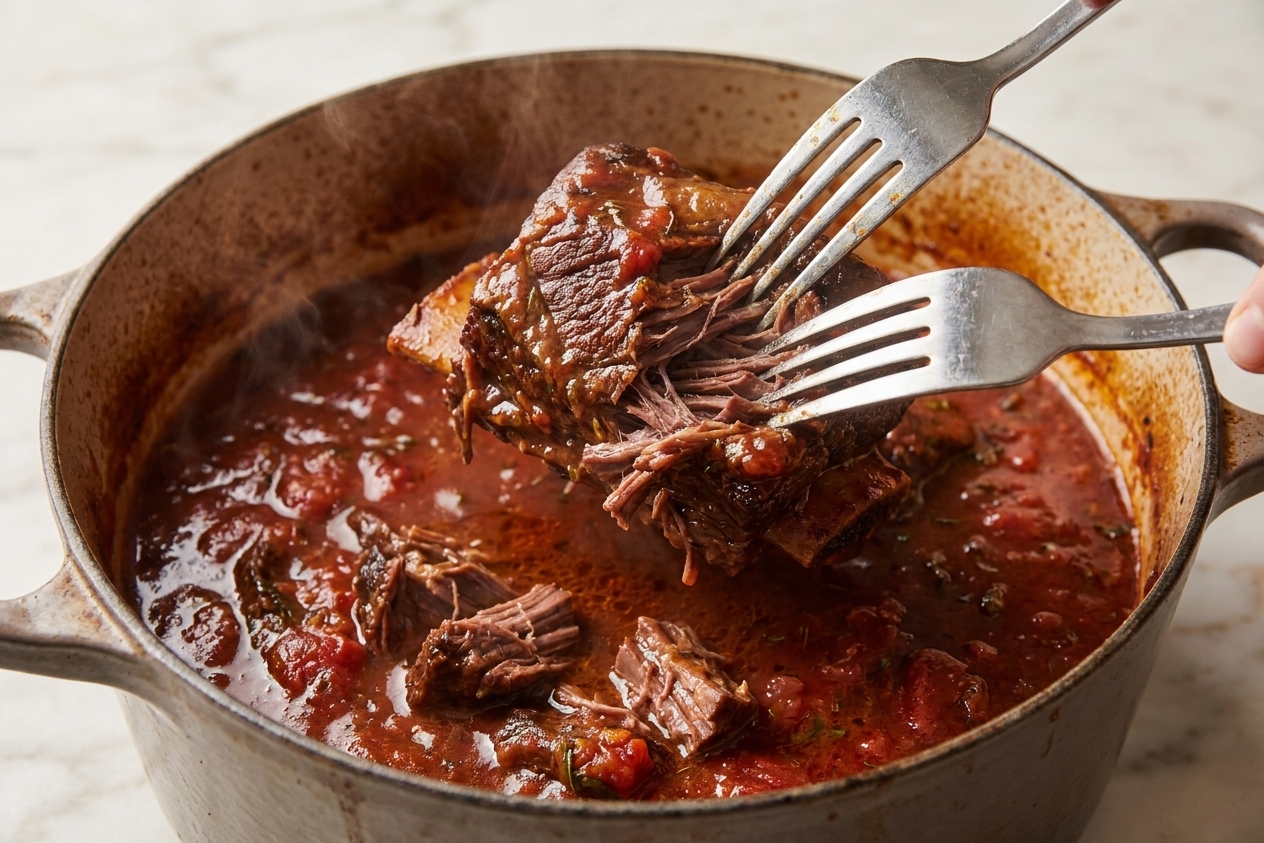
- Two forks for shredding, or a sturdy spoon for pulling meat apart
- Fat separator (optional, but helpful if you do not chill overnight)
Pro tips
- Brown in batches. Crowding steams the meat, which means less browning and a lighter tasting sauce.
- Scrape the pot when you add wine. Those browned bits are concentrated flavor.
- Braise until the bone wiggles easily. If you have to tug, keep cooking. Short ribs get tender on their own schedule.
- Reduce uncovered at the end. This is how you turn braising liquid into pasta sauce. Simmer until the ragu coats the back of a spoon and leaves a clean line when you drag a finger through it.
- Finish the pasta in the sauce. Toss cooked pasta with ragu and a splash of pasta water for 1 to 2 minutes so the sauce emulsifies and clings.
- Taste for acid and salt right before serving. A spoonful of ragu should taste bold and complete. A tiny splash of red wine vinegar or a squeeze of lemon can wake it up if it tastes heavy.
Substitutes that work
- No short ribs: Chuck roast cut into large chunks works well. It will shred similarly, though you lose a bit of gelatin from the bones.
- No red wine: Replace with additional broth plus 1 to 2 tablespoons balsamic vinegar added near the end, to mimic wine’s acidity and depth.
- No celery or carrots: Use what you have. Fennel is delicious here, or even extra onion.
- Gluten-free: Serve with gluten-free pasta or creamy polenta. The ragu is naturally gluten-free as written.
- Dairy-free finish: Skip butter and finish with a drizzle of good olive oil for shine.
Variations
- Spicy short rib ragu: Add crushed red pepper flakes when you sweat the aromatics, or stir in Calabrian chiles near the end.
- Herb-forward: Add rosemary and a bay leaf to the braise, then finish with chopped parsley.
- More vegetables: Stir in finely chopped mushrooms with the onion for a deeper, woodsy flavor and less food waste if you have mushrooms to use up.
- Orange zest finish: A little grated orange zest at the end is gorgeous with red wine and beef. Keep it subtle.
Serving ideas
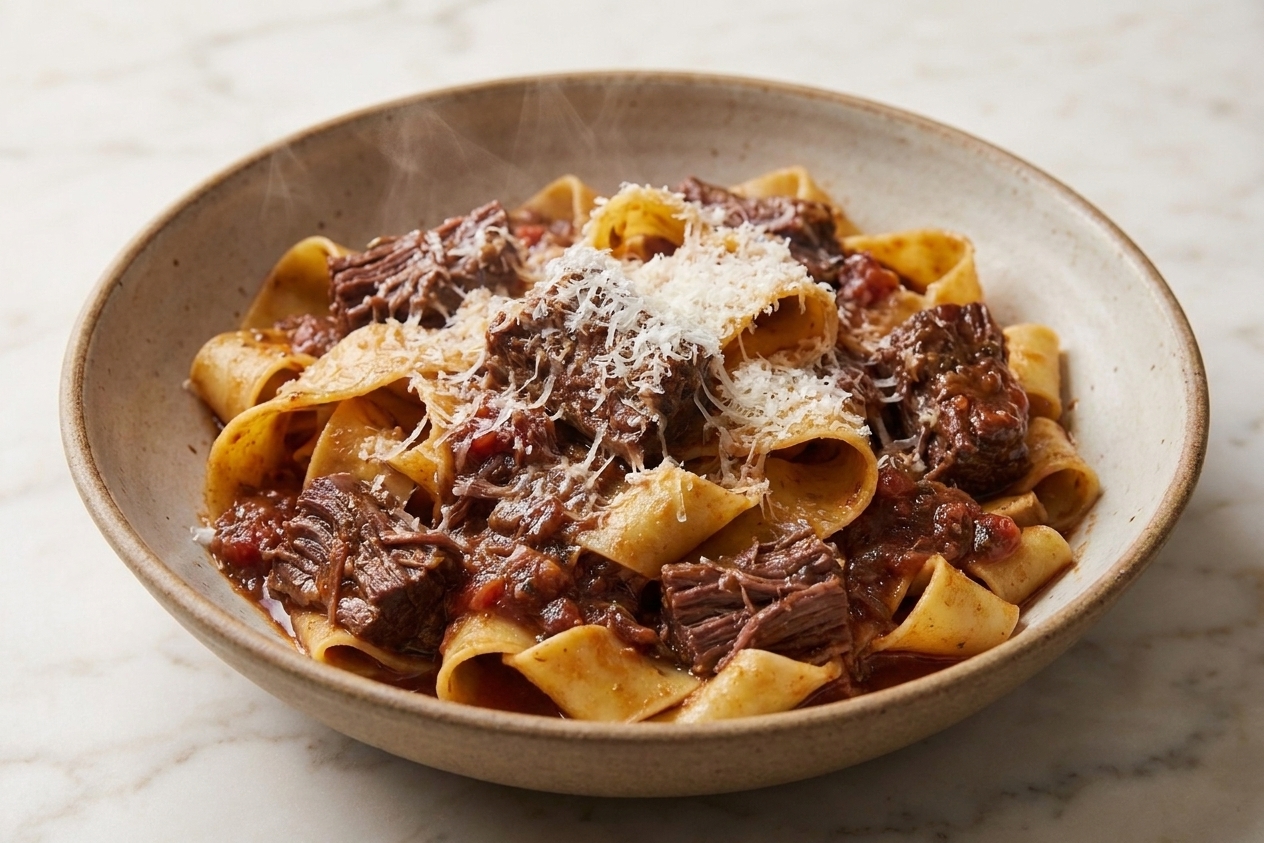
- Best noodles: Pappardelle is my top pick. Tagliatelle, rigatoni, paccheri, and orecchiette are also excellent because they hold onto thick sauce.
- Cheese: Parmesan is classic. Pecorino Romano is saltier and sharper if you love that punch.
- Something green: A lemony arugula salad or roasted broccolini balances the richness.
- For a dinner party: Serve family-style in a warm bowl, then pass extra cheese and flaky salt at the table.
Storage and reheating
- Refrigerate: Cool ragu completely, then refrigerate in an airtight container for up to 4 days.
- Make-ahead chilling and defatting: Chill overnight, then lift off the solid fat on top. This makes the sauce taste rich, not oily.
- Freeze: Freeze ragu (without pasta) for up to 3 months. Thaw overnight in the fridge.
- Reheat: Warm gently in a pot over medium-low heat, loosening with a splash of water or broth. For pasta night, save a bit of pasta water and finish the noodles in the ragu.
Common mistakes
- Not browning the ribs enough: Pale searing leads to a flatter sauce. You want deep golden brown edges.
- Undercooking the braise: If the meat is tough, it is not done. Keep going until it shreds easily.
- Skipping reduction: Braising liquid is not automatically ragu. Simmer uncovered until thick and glossy.
- Over-saucing the pasta: Start with a moderate amount of ragu, toss, then add more as needed. The goal is coated, not swimming.
- Forgetting to taste at the end: Long-cooked sauces need final seasoning. Salt, and often a touch of acid, is what makes the flavors feel clear and intentional.
FAQ
Can I make this in a slow cooker?
Yes. Brown the short ribs and sauté the aromatics on the stove first, then transfer everything to the slow cooker. Cook on low until the meat shreds easily. Finish by reducing the sauce on the stove uncovered, because slow cookers do not reduce well.
How do I get that glossy, restaurant-style finish?
Reduction plus pasta water. Reduce the sauce until it coats a spoon, then toss with hot pasta and a splash of starchy pasta water so the sauce emulsifies and clings.
Should I shred the meat in the pot or on a board?
I like pulling the ribs out to a board, shredding, then returning the meat to the pot. It is easier to remove bones and excess fat cleanly that way.
Do I need to strain the sauce?
No. I usually keep it rustic. If you want it smoother, you can blend or strain some of the vegetables, but keep the shredded beef in the pot.
What if my ragu tastes too acidic?
Simmer 10 more minutes to mellow it, then add a small knob of butter. If it still tastes sharp, a tiny pinch of sugar can help, but I’d try butter first.
Short Rib Ragu
Bone-in short ribs braised in tomato and red wine until fall-apart tender, then shredded and simmered uncovered until the sauce reduces into a glossy, clingy ragu for pasta.
- Prep
- 25 minutes
- Cook
- 3 hours 30 minutes
- Total
- 3 hours 55 minutes
- Yield
- 6 servings
Ingredients
- 3 1/2 to 4 lb bone-in beef short ribs (English-cut)
- 2 tsp kosher salt, plus more to taste
- 1 tsp freshly ground black pepper
- 2 tbsp olive oil
- 1 large yellow onion, finely chopped
- 2 medium carrots, finely chopped
- 2 celery ribs, finely chopped
- 4 cloves garlic, minced
- 2 tbsp tomato paste
- 1 1/2 cups dry red wine
- 1 (28 oz) can crushed tomatoes
- 2 cups beef broth (or chicken broth)
- 2 bay leaves
- 1 tsp dried oregano (or 1 tbsp chopped fresh oregano)
- 1 Parmesan rind (optional)
- 1 to 2 tsp red wine vinegar (optional, to finish)
- 2 tbsp unsalted butter (optional, to finish)
- 1 lb pappardelle (or rigatoni)
- Grated Parmesan and chopped parsley, for serving
Instructions
- Heat oven: Arrange a rack in the lower middle of the oven and preheat to 325°F.
- Season the ribs: Pat the short ribs dry. Season all over with the salt and pepper.
- Brown: Heat the olive oil in a large Dutch oven over medium-high heat. Working in batches, sear short ribs until deeply browned on all sides, 2 to 4 minutes per side. Transfer to a plate.
- Sauté aromatics: Reduce heat to medium. Add onion, carrots, and celery to the pot with a pinch of salt. Cook, stirring and scraping up browned bits, until softened and lightly golden, 8 to 10 minutes. Stir in garlic and cook 30 seconds.
- Build the base: Stir in tomato paste and cook until it darkens slightly and smells toasty, 1 to 2 minutes.
- Deglaze: Pour in the red wine. Bring to a simmer and scrape the bottom of the pot thoroughly to dissolve the fond. Simmer 3 to 5 minutes to reduce slightly.
- Add braising ingredients: Stir in crushed tomatoes, broth, bay leaves, oregano, and Parmesan rind if using. Nestle the short ribs back into the pot along with any juices. Liquid should come about halfway to two-thirds up the ribs. Add a splash more broth if needed.
- Braise: Cover with a lid and transfer to the oven. Braise until the meat is very tender and the bones wiggle easily, 3 to 3 1/2 hours.
- Shred: Remove pot from the oven. Transfer ribs to a board. Pull off and discard bones and any large pieces of fat. Shred the meat with two forks into bite-sized strands.
- Reduce into ragu: Return shredded meat to the pot. Set pot over medium heat and simmer uncovered, stirring occasionally, until the sauce thickens, looks glossy, and coats the meat, 20 to 35 minutes. Remove bay leaves and Parmesan rind.
- Season to finish: Taste and adjust with salt and pepper. If it tastes heavy or muted, stir in 1 to 2 teaspoons red wine vinegar. For extra sheen, stir in butter until melted.
- Cook pasta: Bring a large pot of salted water to a boil. Cook pappardelle until just shy of al dente. Reserve 1 cup pasta water, then drain.
- Toss: Add pasta to the pot of ragu (start with about two-thirds of the sauce if you like a lighter coating). Toss over medium-low heat for 1 to 2 minutes, adding splashes of reserved pasta water until the sauce clings to the noodles.
- Serve: Divide into bowls and top with grated Parmesan and parsley.
Notes
Make-ahead: The ragu gets even better after a night in the fridge. Cool completely, refrigerate, then lift off the solid fat on top before reheating. Rewarm gently, loosening with a splash of water or broth, then toss with pasta.
Choosing pasta: Wide noodles (pappardelle, tagliatelle) or ridged tubes (rigatoni, paccheri) hold this sauce best.
Grease management without chilling: If you do not have time to chill, skim fat from the surface with a spoon, or use a fat separator for the braising liquid before you reduce.