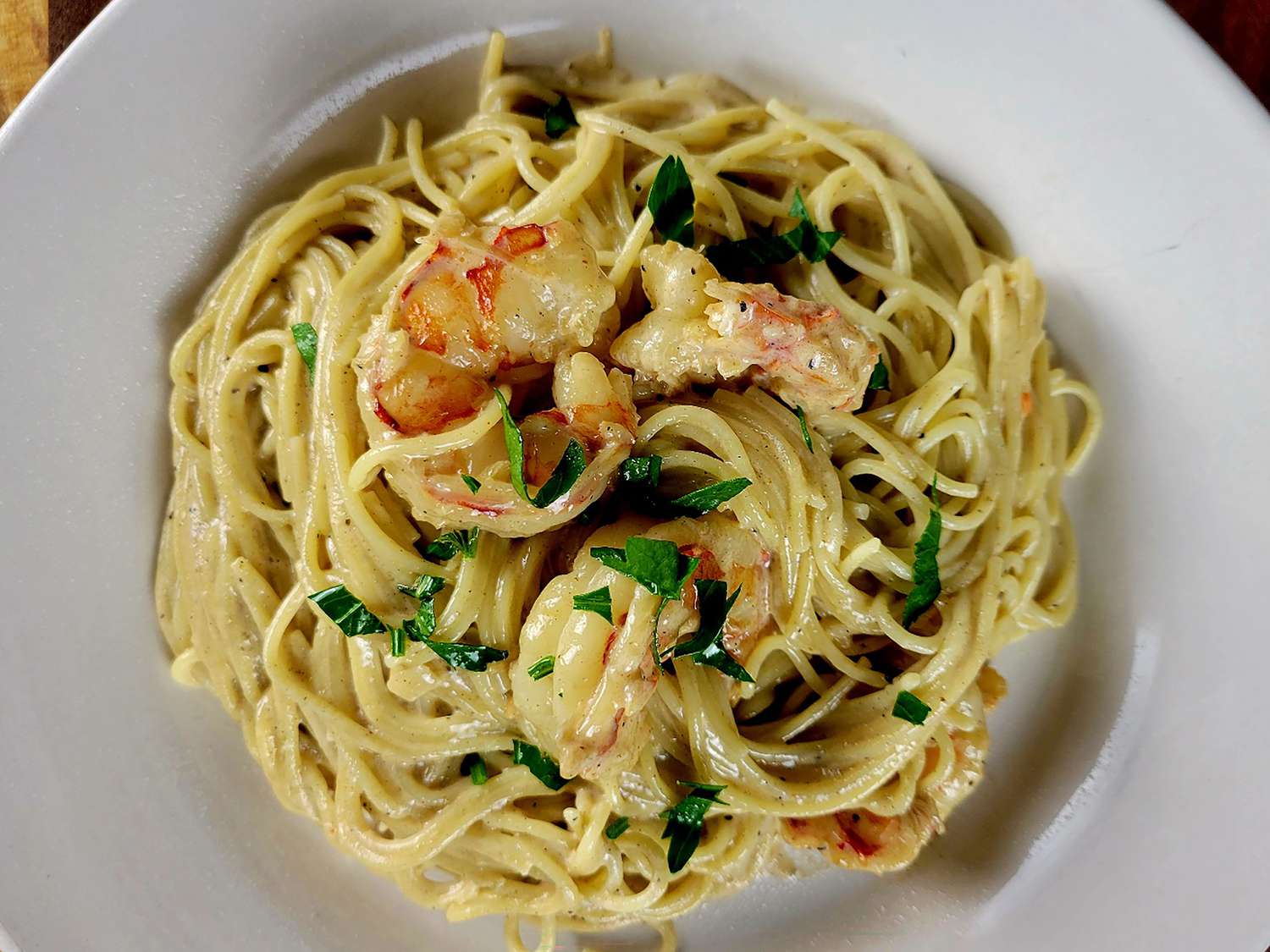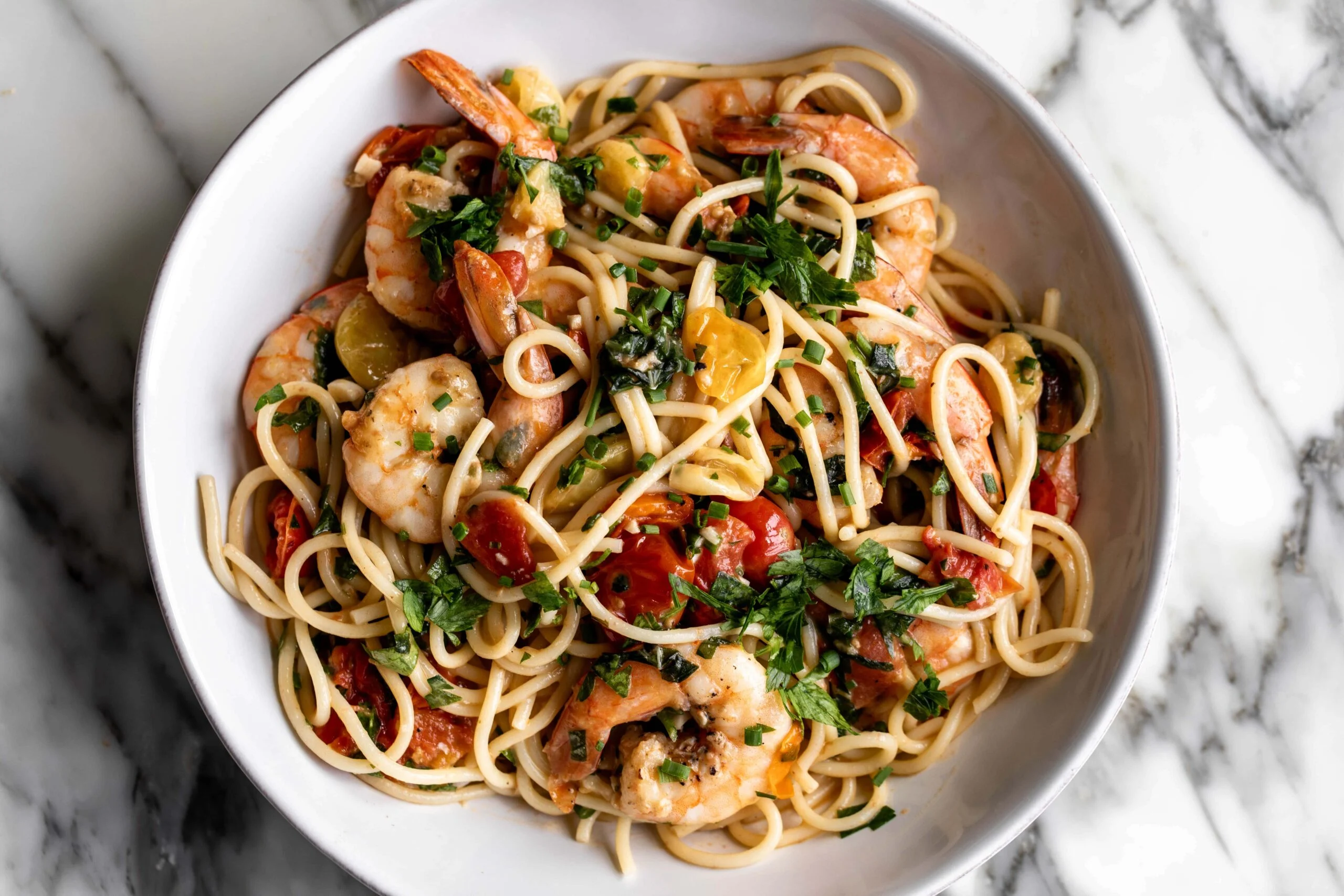

Shrimp scampi is one of those dishes that looks restaurant-fancy but is really just a fast, high-reward pan sauce situation. Think: thinly sliced garlic sizzling in butter and olive oil, a splash of white wine, lemon zest and juice, and just enough starchy pasta water to pull everything into a silky, glossy sauce that clings to linguine. No cream needed and honestly, no cream wanted. The whole point of scampi is that bright, briny, buttery snap.

If you’ve ever made scampi and ended up with an oily puddle at the bottom of the bowl, you are not alone. The fix is emulsification: you build the sauce in the pan, then finish the pasta directly in it with a splash of pasta water. That starch acts like a bridge between fat and liquid so the sauce turns shiny and cohesive instead of separated. And if it ever does look like it’s breaking, a little more hot pasta water plus a good toss usually brings it right back.
Let’s also talk shrimp doneness, because shrimp go from juicy to rubbery in a truly impressive 60 seconds. The goal is just-cooked: opaque, curled into a loose C-shape, and still springy. If they curl into tight little O’s, that’s a common sign they’ve gone too far, so use it as a quick clue along with texture.
Fresh vs thawed shrimp
If you live near a dock and can buy truly fresh shrimp, yes, grab them. For most of us, the best weeknight move is frozen shrimp that you thaw quickly and treat well. Depending on where you live and what species you’re buying, shrimp at the seafood counter were often previously frozen anyway, so you are frequently paying extra for someone else to thaw them.
My thawing routine is simple: cold running water, a quick toss once or twice, and then stop as soon as the shrimp are fully pliable and no longer icy in the center. Then pat them very dry. Dry shrimp sear, wet shrimp steam, and steaming makes it harder to get that quick, flavorful cook without overdoing it.
What makes scampi taste like scampi
Scampi is all about a few bold, clean flavors working together.
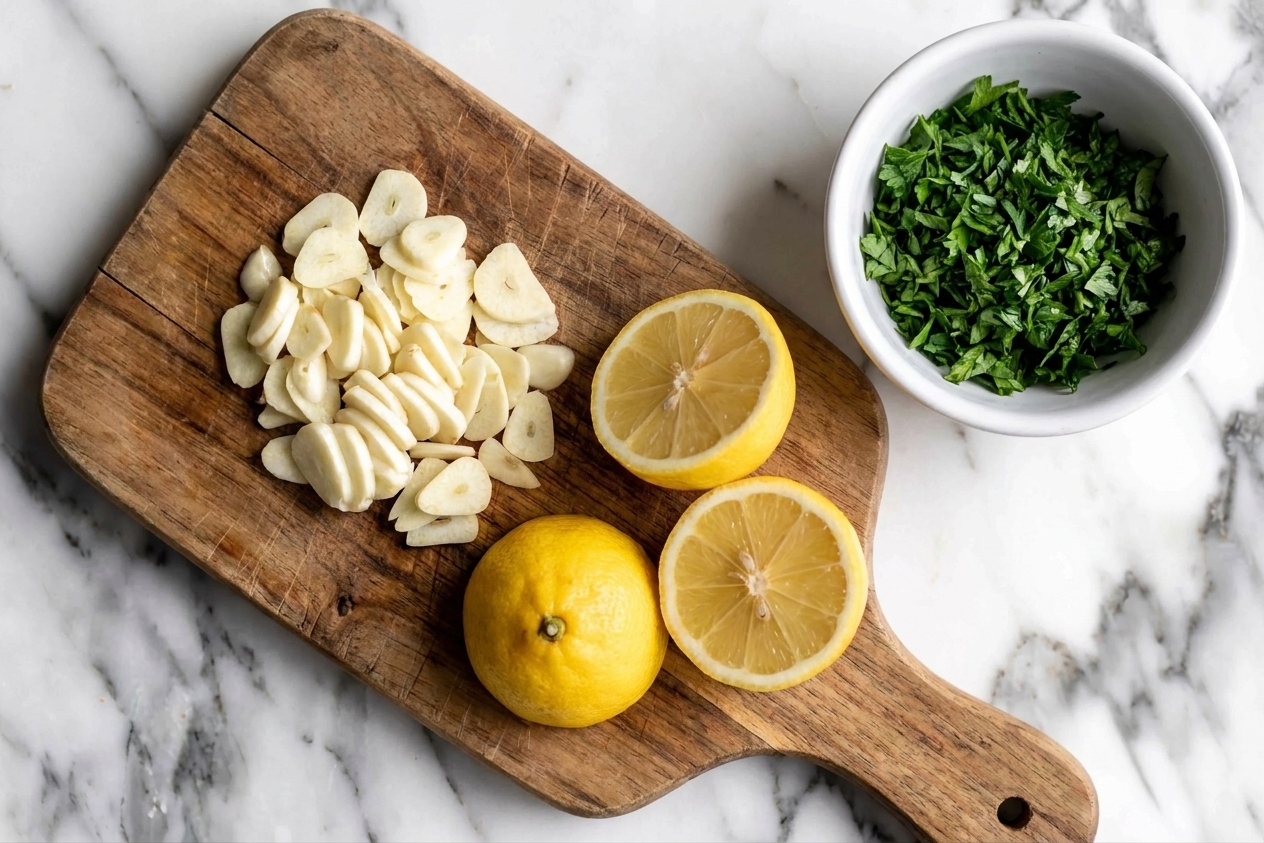
- Garlic: sliced or thinly chopped. Sliced gives you sweet, mellow garlic that you can actually see and taste.
- Dry white wine: it adds acidity and complexity. Think pinot grigio, sauvignon blanc, or an unoaked chardonnay.
- Butter plus olive oil: butter for richness, oil to slow browning and widen the margin of error.
- Lemon: zest for aroma, juice for brightness. Add juice at the end so it stays fresh.
- Pasta water: the non-negotiable for a sauce that looks glossy instead of greasy.
Why this recipe works
- We finish the pasta in the pan. Tossing linguine in the sauce with pasta water creates a cohesive emulsion that clings to every strand.
- Shrimp cook separately and briefly. A quick sear prevents rubbery shrimp and keeps the pan sauce from over-reducing while you wait.
- Butter goes in at the end. Off heat, butter melts into the wine-lemon mixture and turns it satiny instead of oily.
- No cream. The wine, lemon, and pasta water do the heavy lifting for a true scampi flavor: bright, briny, and buttery.
Ingredient notes
Shrimp
Look for large shrimp like 16/20 or 21/25 count (that is how many shrimp per pound). Bigger shrimp stay juicier and are easier to nail. Peel and devein for the fastest eat. Tail on looks pretty but tail off is more weeknight-friendly.
White wine
Choose a dry wine you would actually drink. If you prefer to skip wine, swap with seafood stock or chicken stock plus an extra squeeze of lemon at the end.
Garlic
Sliced garlic gives a classic scampi vibe and is less likely to burn than finely minced garlic. Keep the heat moderate and stir often.
Butter and olive oil
Use unsalted butter if possible so you can control salting precisely. Olive oil keeps the butter from browning too aggressively while you cook the garlic.
Lemon
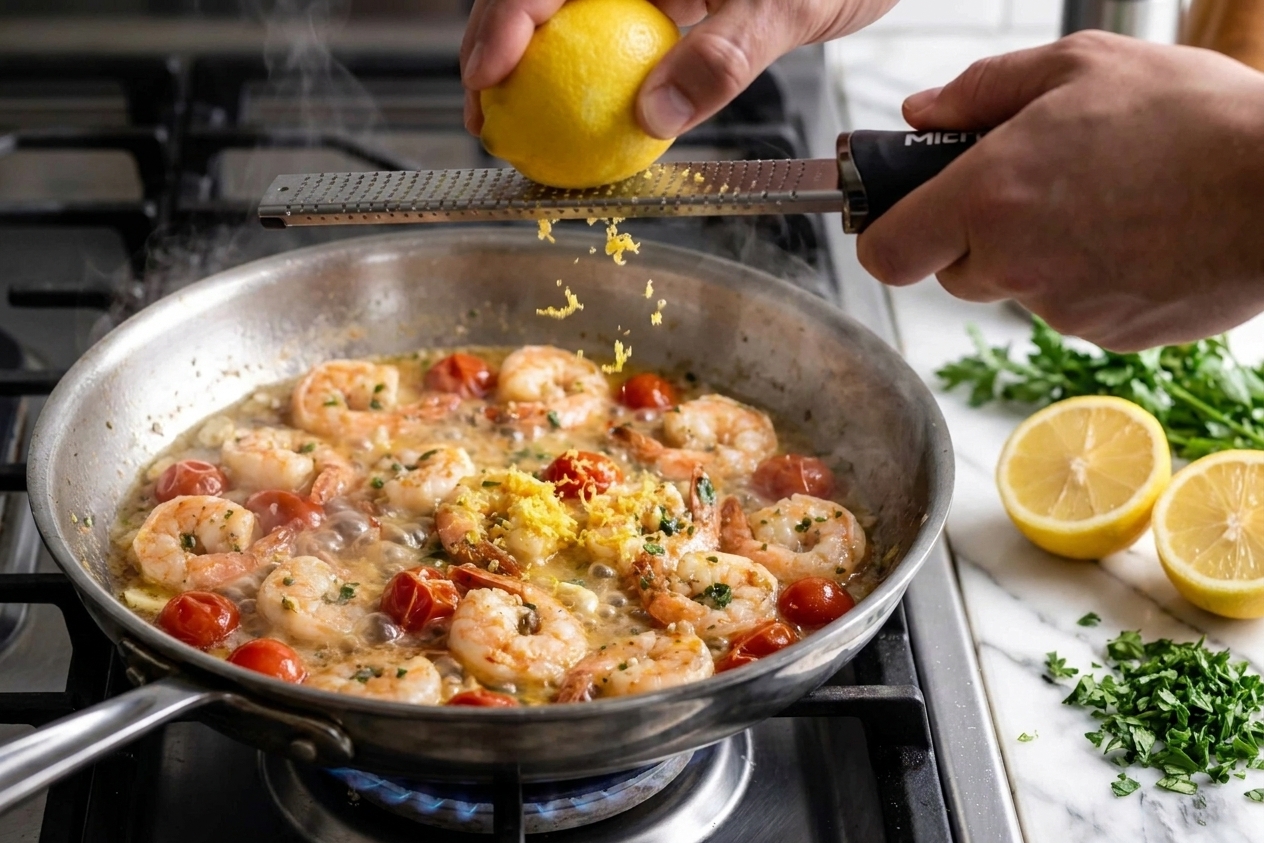
Use both zest and juice. Zest perfumes the sauce. Juice brightens it. Add juice at the end so it tastes fresh, not muted.
Parsley and red pepper flakes
Parsley balances the richness. Red pepper flakes are optional but highly recommended for that gentle heat that makes everything taste more vivid.
Equipment you will need
- Large pot for boiling linguine
- Large skillet (12-inch is ideal) for cooking shrimp and building the sauce
- Tongs for tossing pasta into the sauce
- Microplane or fine grater for lemon zest
- Fine mesh strainer or colander for draining pasta (save the pasta water first)
Pro tips
- Salt your pasta water like the ocean. Scampi is simple, so seasoning matters. Well-salted pasta water seasons from within and improves the final sauce.
- Reserve more pasta water than you think. Scoop out at least 1 1/2 cups. You might not use it all, but you want enough to keep the sauce glossy while tossing.
- Pat shrimp dry. This is the difference between quick searing and sad steaming.
- Cook shrimp just to opaque. Pull them when they are mostly opaque with a touch of translucency in the thickest part. They will finish as you toss everything together.
- Kill the heat for the final butter. If the pan is screaming hot, butter can separate. Off heat, it melts in smoothly.
- Taste, then lemon. Add lemon juice at the end in small splashes. You want bright, not mouth-puckering.
Substitutes that work
- No white wine: Use seafood stock or chicken stock. Finish with extra lemon juice and zest to mimic the wine’s lift.
- No linguine: Spaghetti, fettuccine, or angel hair all work. For short pasta, use shells or orecchiette and toss aggressively to help the sauce cling.
- No fresh parsley: Use a smaller amount of fresh basil, or skip herbs and add extra lemon zest.
- Garlic sensitive: Use fewer cloves and slice them thick. Thick slices mellow as they cook.
- Butter alternative: You can reduce butter slightly and add more olive oil, but the sauce will be less classic and less silky.
Variations
- Tomato scampi: Add a handful of halved cherry tomatoes right after the garlic, then proceed. They burst and add sweetness.
- Extra briny: Stir in a teaspoon of capers at the end.
- Green veg moment: Toss in baby spinach at the very end until just wilted, or add asparagus tips to the pasta pot during the last 2 minutes of boiling.
- Breadcrumb topping: Toast panko in olive oil with a pinch of salt and lemon zest. Sprinkle over bowls for crunch.
- Spicy scampi: Increase red pepper flakes or add a pinch of Calabrian chile paste with the garlic.
Serving ideas
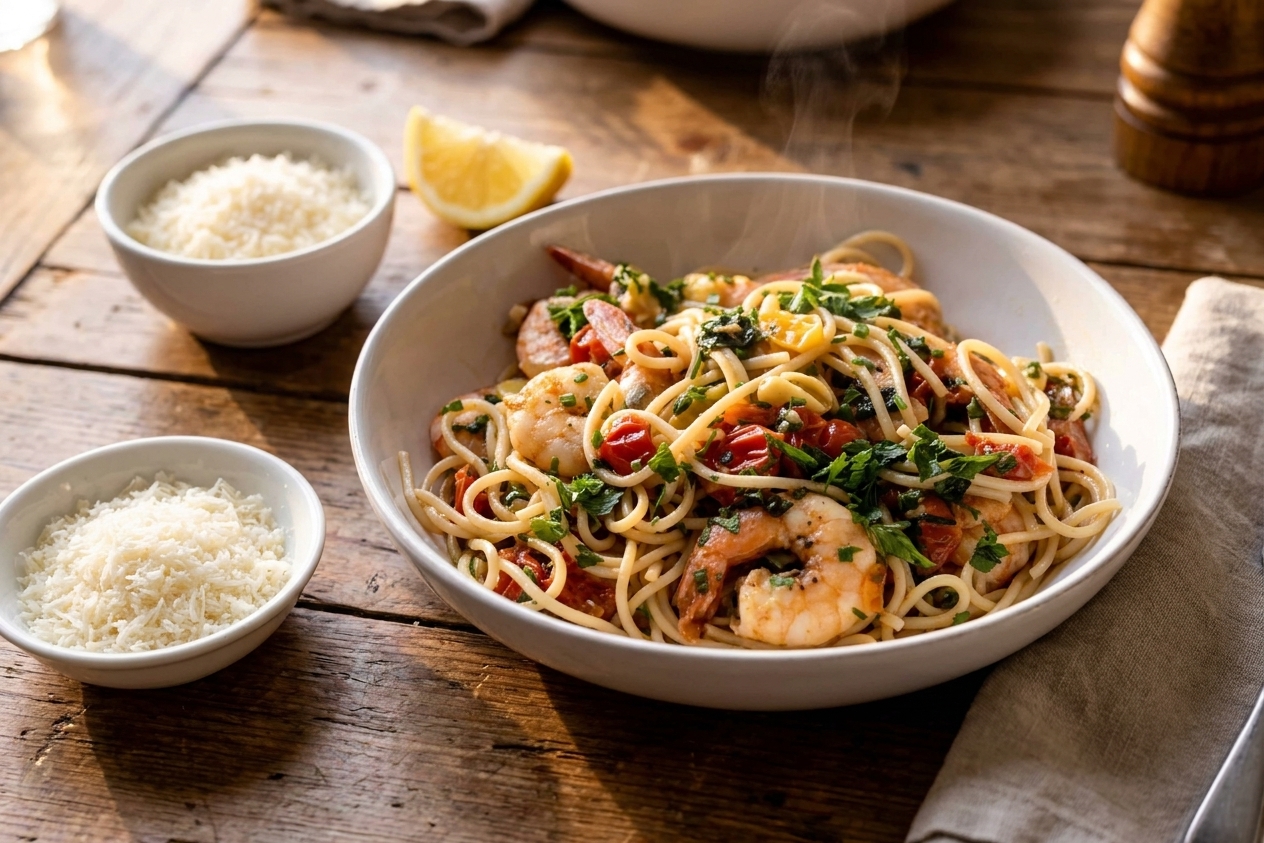
- With a simple salad: Arugula, shaved parmesan, lemon vinaigrette.
- With bread: Warm, crusty bread for swiping every last bit of sauce.
- With vegetables: Roasted broccolini, sautéed green beans, or a quick blistered zucchini situation.
- Finish at the table: Extra lemon wedges, flaky salt, and a drizzle of good olive oil.
Storage and reheating
Shrimp scampi is best the minute it is tossed, when the sauce is glossy and the shrimp are perfectly tender. If you do have leftovers, store in an airtight container in the fridge for up to 2 days.
Reheat gently
Warm in a skillet over low heat with a splash of water to loosen the sauce, tossing until just hot. Avoid microwaving on high, which can turn shrimp rubbery fast.
Freezing
I do not recommend freezing the finished dish. The shrimp texture and the butter emulsion both suffer.
Common mistakes
- Overcooking the shrimp. Shrimp only need a couple minutes per side at most, depending on size. Pull early and let carryover finish the job.
- Burning the garlic. Keep the heat at medium to medium-low once garlic hits the pan. If it browns quickly, your heat is too high.
- Skipping pasta water. This is the emulsifier. Without it, you get oily noodles and watery liquid.
- Reducing the wine too much. You want it to simmer briefly to cook off harsh alcohol, not evaporate entirely.
- Adding lemon too early. Lemon juice dulls with prolonged heat. Add it at the end for that bright pop.
FAQ
Is shrimp scampi supposed to be creamy?
No. Traditional shrimp scampi is a butter, garlic, and white wine sauce brightened with lemon. The “creaminess” comes from emulsifying butter with pasta water, not from dairy like heavy cream.
Can I make scampi without wine?
Yes. Use seafood stock or chicken stock, then finish with extra lemon juice and zest. You will still get a flavorful, glossy sauce.
How do I know when shrimp are done?
They turn opaque and pink, and curl into a loose C-shape. They should feel springy, not firm. Tight O-shaped curls usually mean overcooked.
Should I use fresh or frozen shrimp?
Use the best you can get. Frozen shrimp are often the most reliable choice for home cooks. Thaw quickly under cold running water and pat very dry before cooking.
Why did my sauce break and look oily?
Either there was not enough pasta water, the pan was too hot when butter was added, or the mixture was not tossed vigorously enough. Add a splash of hot pasta water and toss until glossy again.
Shrimp Scampi Linguine
Garlic, white wine, butter, and lemon shrimp scampi tossed with linguine and a glossy, emulsified pan sauce made with pasta water. Fast, bright, and classic, with no cream.
- Prep
- 15 minutes
- Cook
- 15 minutes
- Total
- 30 minutes
- Yield
- 4 servings
Ingredients
- 12 oz linguine
- Kosher salt, for pasta water and seasoning
- 1 lb large shrimp (16/20 or 21/25 count), peeled and deveined (tails on or off)
- 2 tbsp olive oil
- 6 tbsp unsalted butter, divided
- 6 to 8 cloves garlic, thinly sliced (about 1/4 cup)
- 1/2 tsp red pepper flakes (optional)
- 1/2 cup dry white wine
- 1 lemon, zested and juiced (plus wedges for serving)
- 1/3 cup chopped fresh parsley
- Freshly ground black pepper, to taste
Instructions
- Boil the pasta. Bring a large pot of water to a boil. Salt it generously. Add the linguine and cook until just shy of al dente, about 1 minute less than the package directions. Before draining, reserve at least 1 1/2 cups pasta water.
- Dry and season the shrimp. While the pasta cooks, pat the shrimp very dry with paper towels. Season lightly with kosher salt and black pepper.
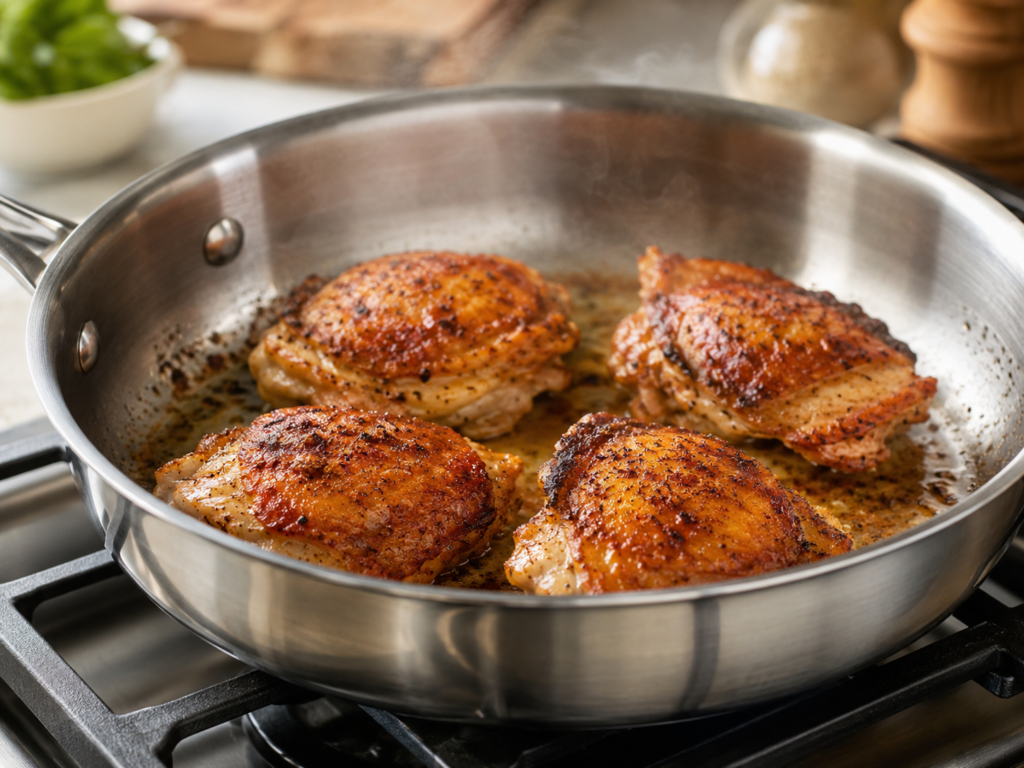
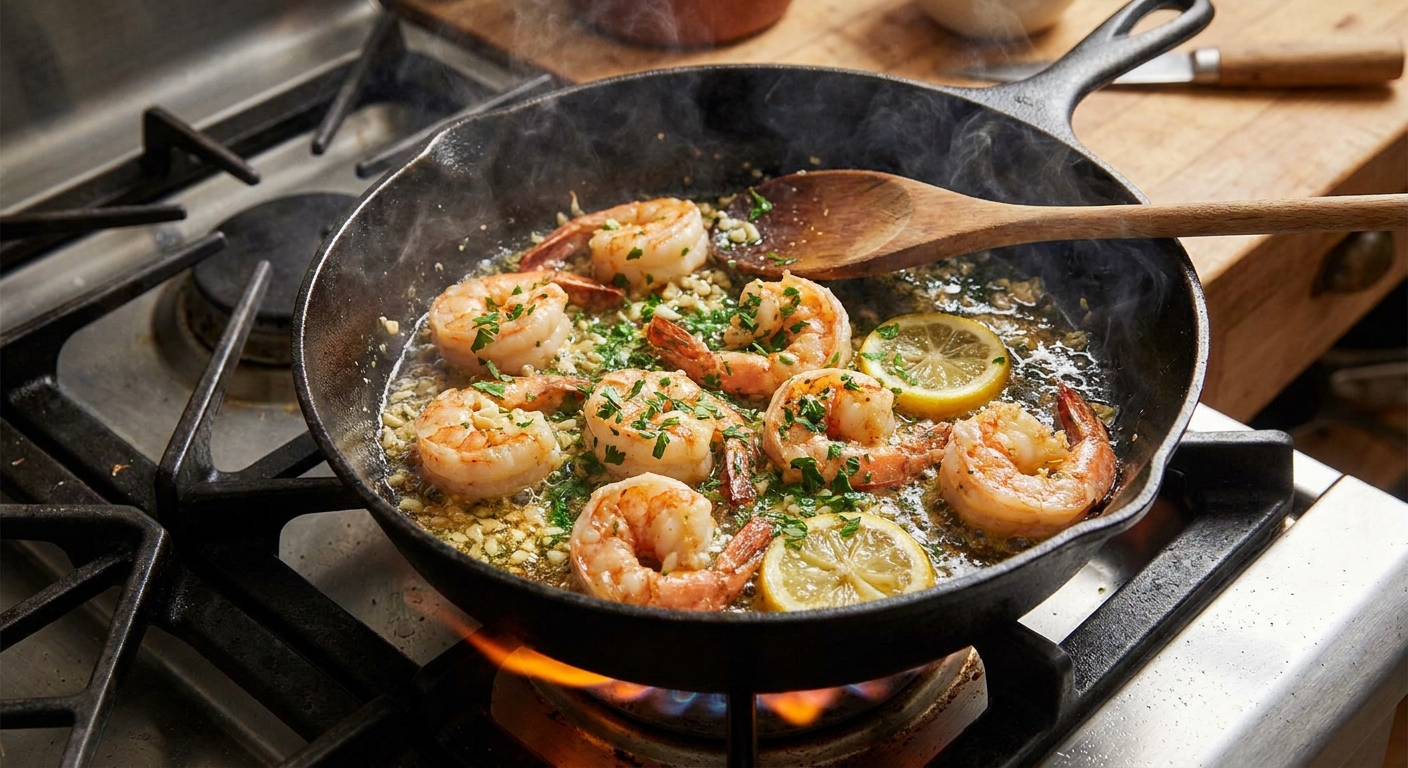
- Sear the shrimp quickly. Heat a large skillet over medium-high heat. Add 1 tablespoon olive oil and 1 tablespoon butter. When the butter melts and starts to foam, add the shrimp in a single layer. Cook until the first side is pink and just starting to turn opaque, 60 to 90 seconds. Flip and cook 30 to 60 seconds more, until mostly opaque. Transfer shrimp to a plate. They will finish cooking later.
- Cook the garlic gently. Reduce heat to medium. Add the remaining 1 tablespoon olive oil and 2 tablespoons butter. Add sliced garlic and red pepper flakes (if using). Cook, stirring constantly, until fragrant and pale golden, 30 to 60 seconds. Do not let the garlic brown.
- Deglaze with wine. Carefully pour in the white wine. Simmer 1 to 2 minutes, scraping up any browned bits, until the wine smells mellow and reduces slightly.
- Build the glossy sauce. Add 1/2 cup of reserved pasta water to the skillet and bring to a lively simmer. Add lemon zest.
- Toss pasta in the sauce. Add drained linguine directly to the skillet. Toss vigorously with tongs for 1 to 2 minutes, adding more pasta water a splash at a time as needed, until the sauce looks glossy and coats the noodles.
- Finish with shrimp, butter, and lemon. Add the shrimp and any juices back to the skillet. Turn off the heat. Add the remaining 3 tablespoons butter and toss until melted and emulsified. Add lemon juice gradually, tossing and tasting, until bright but balanced.
- Herbs and serve. Toss in chopped parsley. Taste and adjust with salt, pepper, and an extra splash of pasta water if needed. Serve immediately with lemon wedges.
Notes
Shrimp doneness cue: Pull shrimp from the pan when they are mostly opaque and curled like a loose C. They finish as you toss everything together.
Pasta water is the sauce: Reserve more than you think you need. The starch is what turns butter plus wine into a cohesive, shiny sauce.
Fresh vs thawed shrimp: Frozen shrimp are often the best option. Thaw under cold running water for 5 to 8 minutes, then pat very dry so they sear instead of steam.
Wine note: If skipping wine, use stock and finish with extra lemon juice and zest for brightness.